2 May 2014, Portland. Game six of the series between the Houston Rockets and the Trail Blazers was being played at the Moda Center. Chandler Parsons had just put the ball back through the rim off a rebound and Houston led ninety-eight to ninety-six. There were nine tenths of a second on the clock.
Nine tenths of a second is just about long enough for a man to take hold of a ball and let it go. Portland inbounded from the sideline. Damian Lillard took it a good way behind the line and released it. When it dropped the game had finished ninety-nine to ninety-eight, the series had closed four to two, and Portland had won a series for the first time since the year two thousand.
Lillard scored twenty-five that night and went six of ten from the three-point line. Hold on to those two numbers.
After the shot he turned and tapped his wrist. There was no watch there. He was pointing at a watch that did not exist, he had been doing it for years, and the building knew exactly what he meant. Dame Time.

This man grew up in Oakland and for a long time he was on nobody’s list. The first to see him was Randy Rahe, who coached at a small school in Ogden, Utah, called Weber State. He watched Lillard play for the Oakland Rebels at an amateur tournament in Texas and offered him a scholarship after the game. Other offers came later, but that one came first, and Lillard went to Ogden.
Nine games into his third year, in December 2010, he broke his foot. The season ended there. His name had just begun to appear on professional boards, and everything stopped at exactly that point. The college association gave him the year back on medical grounds: he would be allowed to play the lost season again. He came back and played one of the best seasons in that small school’s history. In 2012 he went sixth in the draft, and the vote for rookie of the year was unanimous.
The name he uses as a rapper comes from those years too. He calls himself Dame D.O.L.L.A., and because he did not want the letters taken to mean money he spells them out: Different On Levels the Lord Allows. He wrote it into his own name from the start that the difference between the levels is not set by him.
format_quote"He wrote it into his own name from the start that the difference between the levels is not set by him."
Hasan Bekmezci
He stayed in Portland for eleven years. On 23 April 2019 he let go of the shot that put Oklahoma City out of the series over the top of Paul George, from eleven metres beyond the line, as the clock ran to nothing. He turned again, and again he tapped his wrist.
Then in 2023 he left Portland for Milwaukee. On 27 April 2025, in a playoff game again, the Achilles tendon in his left leg tore.
Milwaukee waived him at the end of that summer. It spread the hundred and thirteen million dollars left on his contract over five years and took his name off the list. Lillard went back to the shirt he had worn for eleven years and signed with Portland for three years and forty-two million, with a clause saying he could not be traded. Then he spent the whole season without once stepping on to a court.
By his own account that was the darkest stretch of his career. It is not hard to see why. His name came from the last second, and there was no last second left to him.
format_quote"A man whose whole name comes from the last second spent a year and a half somewhere the clock would not move at all."
Hasan Bekmezci
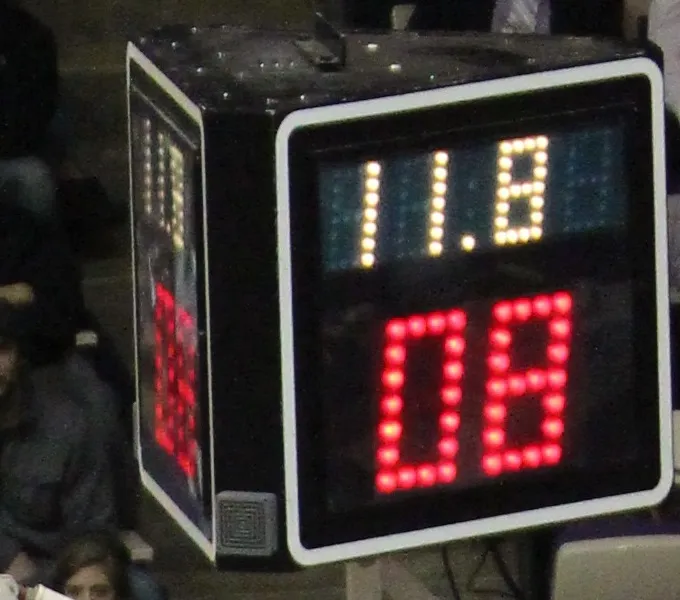
21 October 2026, the Moda Center again. It was the opening game of the season, and Portland scored the first twenty-one points against the Phoenix Suns without reply; the game ended a hundred and twenty-four to eighty-three. Lillard scored twenty-five, made six threes, and did not come out for the fourth quarter.
Those are the numbers I asked you to hold on to. Twelve years earlier, on the night that ended Houston, it was also twenty-five points and six threes. In between stand a broken foot, a torn tendon and a season never played. The line is the same.
format_quote"The same line twelve years apart: twenty-five points, six threes. In between stand a broken foot, a torn tendon and a season never played."
Hasan Bekmezci
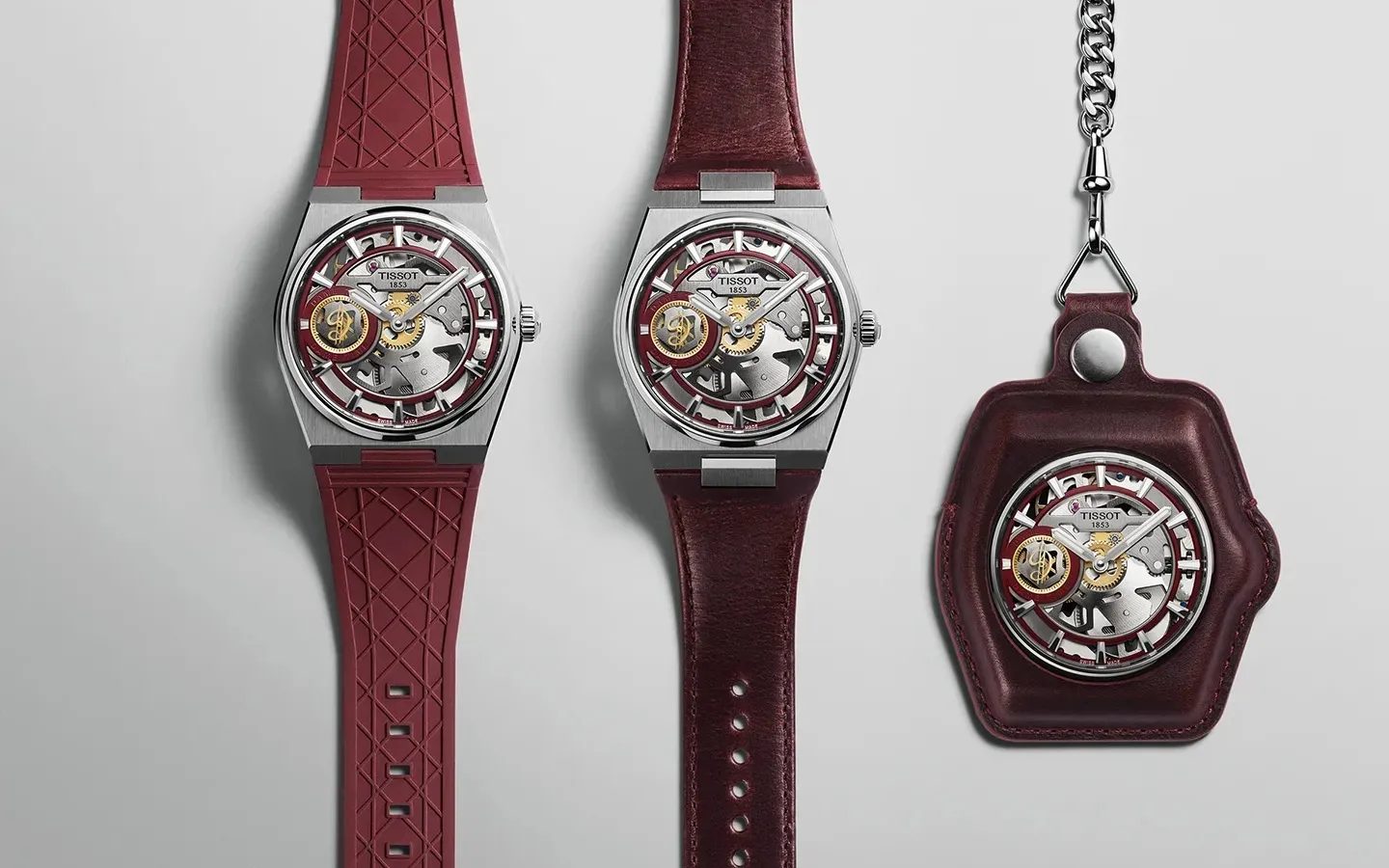
Tissot has been the official timekeeper of the NBA since 2015 and the house’s name sits above the shot clock in the arenas. Lillard has been one of the faces of the brand for some time. This year they made him a watch of his own.
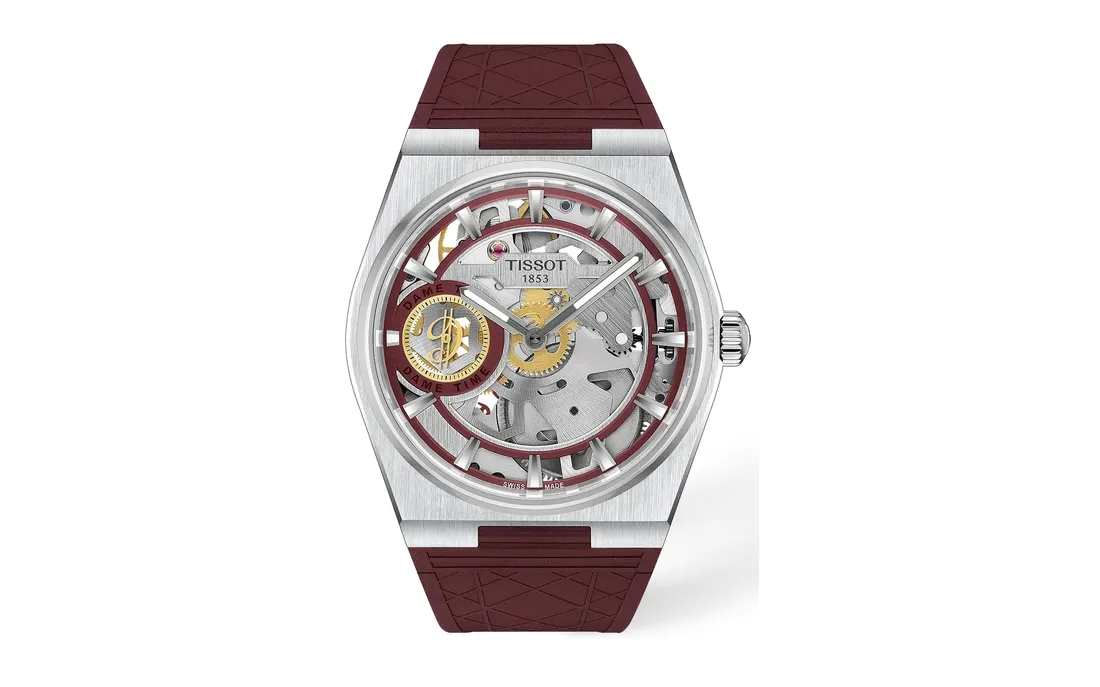
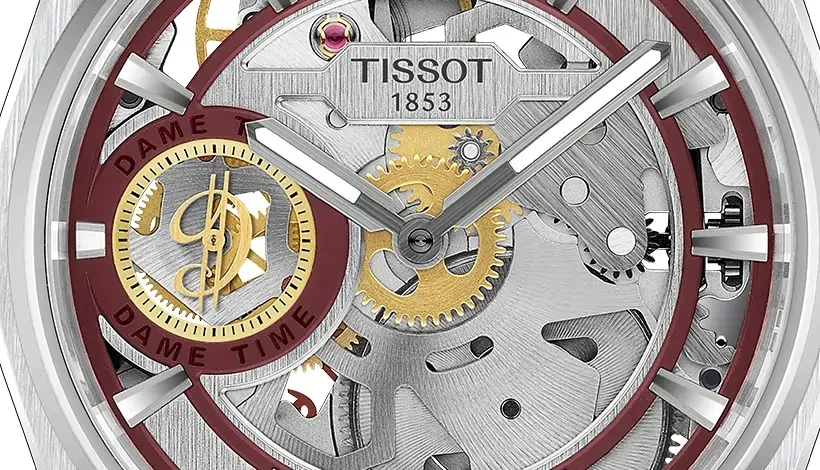
The case is forty-four millimetres: the PRX family’s barrel shape in 316L steel, chamfered along its corners. There is no dial at all. A bordeaux ring stands where one would be, the steel indexes are set on top of it, and the movement itself shows through the middle of the ring. The bridges are brushed steel and the wheels are the colour of gold; Tissot 1853 is lettered on the bridge that runs between twelve and the centre. At six there is one line only: Swiss Made.
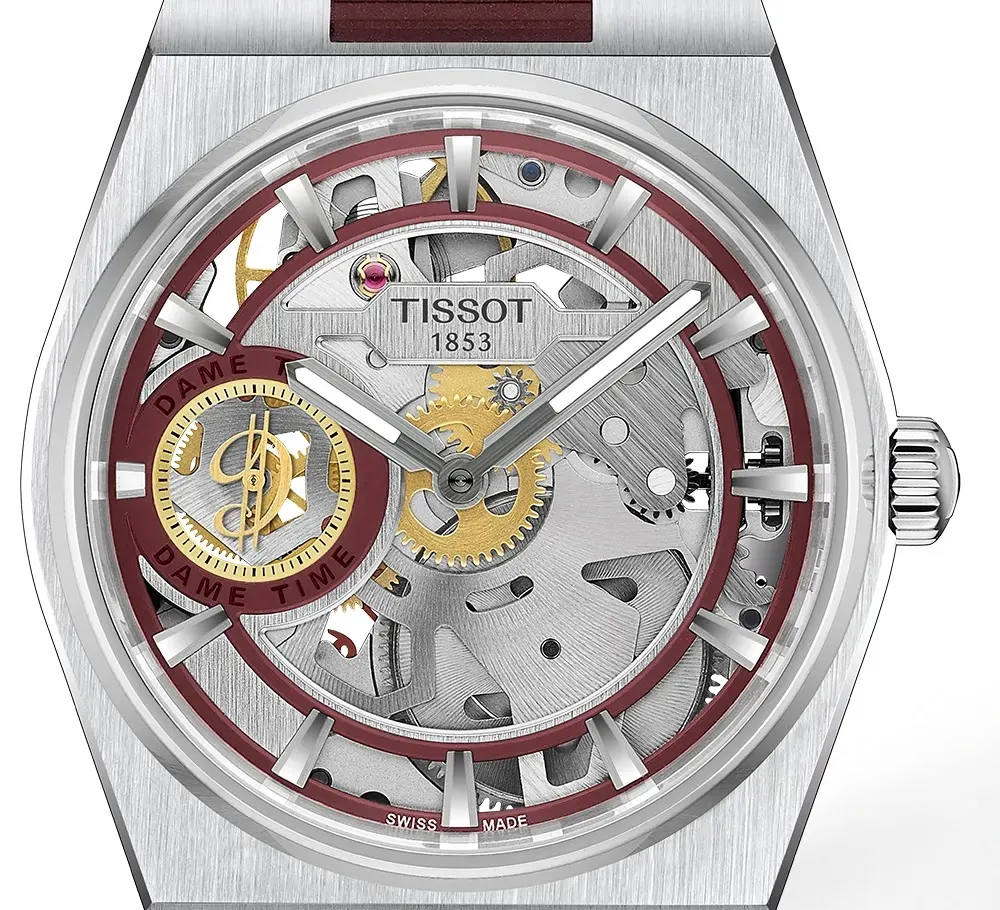
The small seconds sits at nine. A bordeaux ring runs around it with the words Dame Time printed on it twice. The indicator inside is gold and shaped like a letter: a D crossed by two vertical bars. The maker says the shape recalls the American dollar sign and makes no secret of the reference. The man had reduced his own name to a letter years ago; that letter now turns once a minute on a wrist.
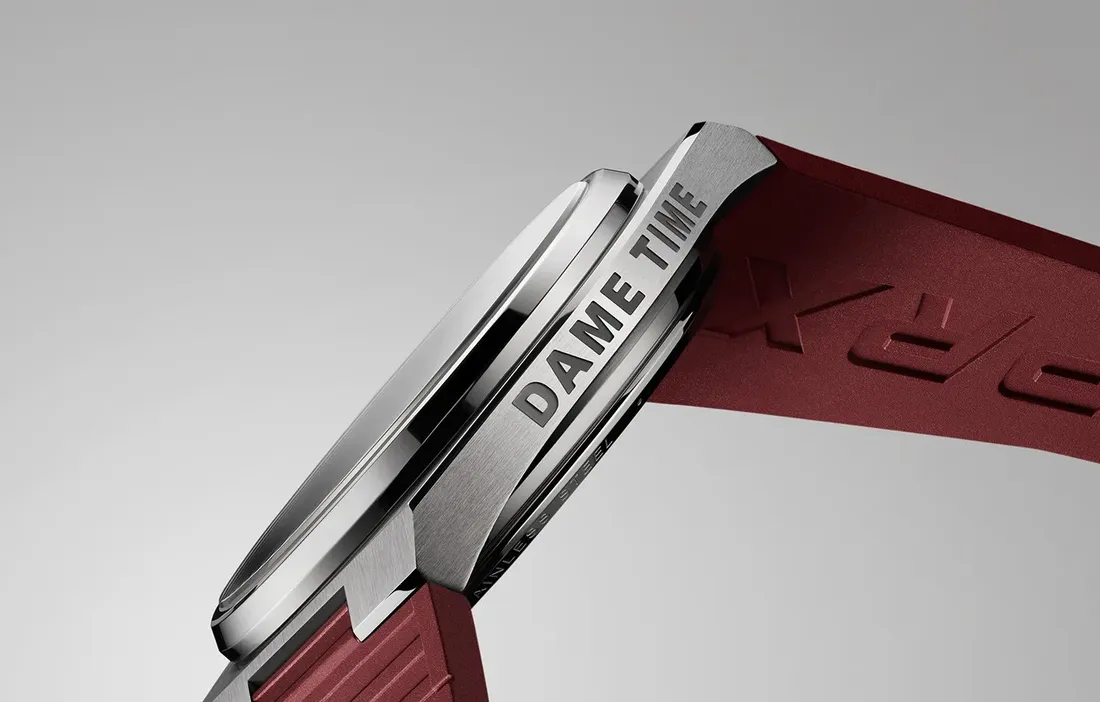
Dame Time is engraved into the polished steel flat on the flank of the case, with Stainless Steel on the lower edge. On the transparent back stands Lillard’s signature.
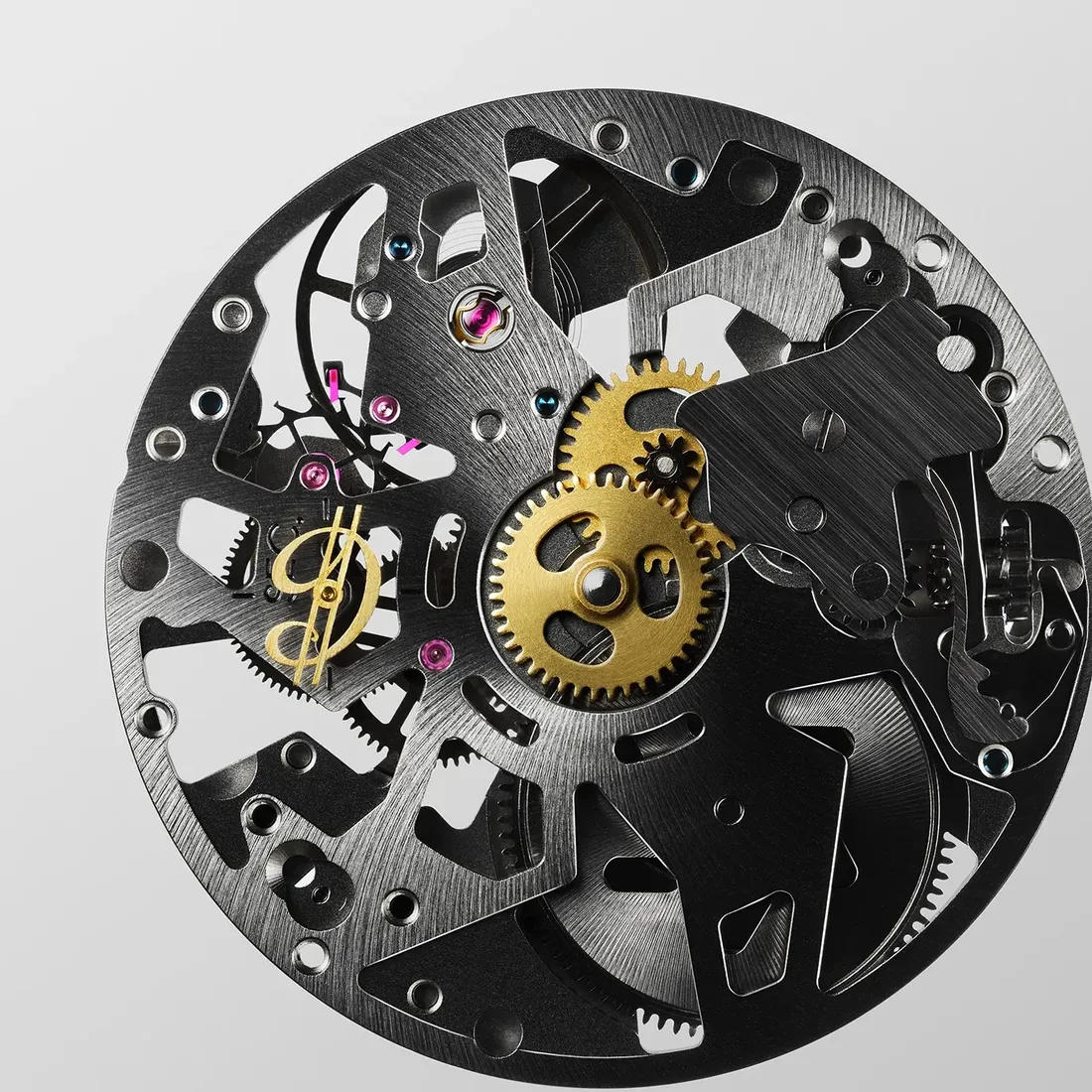
The real matter is under the back. This movement is wound by hand.
It is not automatic. There is no rotor inside it, no swinging weight, no part fed by the motion of the wrist. Most wristwatches run for as long as they are carried; this one does not run because it is carried. Wound, it goes fifty-two hours, a little over two days. Forget it and it stops.
And once stopped it does not start itself. For it to run again somebody has to pick it up, take the crown between their fingers and turn it.
format_quote"A watch that does not wind itself blames nobody when it stops. For it to run again, somebody has to pick it up and turn it."
Hasan Bekmezci
The plate has been hollowed out from edge to edge and finished in anthracite. The gold wheels and the blue and red jewels stand inside that emptiness. The gold D at nine is not an ornament laid on a dial afterwards either; it is there as a part of the movement.
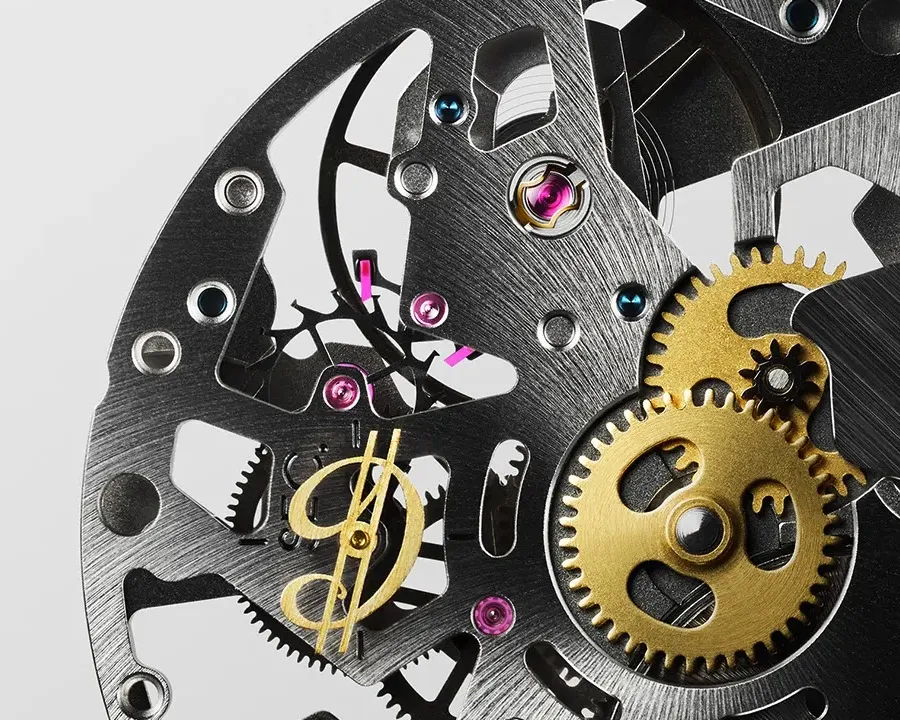
A movement like that brings to mind a man who began running again after a year and a half stopped. The maker says nothing of the kind and neither does the watch; the thought simply occurs to whoever is looking. But it is true that a stopped movement needs a hand from outside before it will run again. A torn Achilles does not knit itself either.
One watch is not all that comes out of the box. Beside the bordeaux rubber strap there is a leather one in the same colour, a pin buckle on the rubber and a folding clasp with pushers on the leather, and both change without tools. The third piece is the interesting one: a small bordeaux leather pouch the case settles into once the strap is off, and a chain on that pouch. The watch, if you want it to, comes off the wrist and goes into a pocket. For a watch built for a man who claims time by tapping his wrist, knowing how to leave that wrist and wait somewhere else for a while is a fine detail.
The numbers go like this. The case is forty-four millimetres across and eleven point two millimetres thick, in 316L stainless steel, with a bezel in the same steel. The crystal is sapphire with an anti-reflective coating and the back is transparent. The hands carry Super-LumiNova, the strap is bordeaux nitrile rubber, and water resistance is ten bar, which is a hundred metres. The movement is wound by hand and gives fifty-two hours. The price is one thousand eight hundred and ninety-five euros.
Looking at this watch, this may be what comes to mind.
Dame Time is a man tapping his wrist to say the moment belongs to him. But that man’s story tells something else. The broken foot, the year he was given back and the torn tendon were none of them in his hands. A man does not make time; time is given to him, and sometimes for a while it is not.
The Creator placed the span, and with it the mind able to count the span. By the name the man chose for himself years ago, he knows it too: the difference between the levels is not set by him.
What falls to the wrist is to count what is given, and while counting not to forget who gave it. The little gold letter at nine repeats that quietly, once a minute.
The watch on its maker’s own page: Tissot, PRX Skeleton Damian Lillard Special Edition