Freiburg was founded in 1120 and it was founded to be a market. Konrad of the house of Zähringen declared a free market place at the foot of the Black Forest, and the name of the town comes from that freedom.
Walk the streets and narrow channels of water run at your feet. They are called the Bächle, they have been here since the thirteenth century, and they were dug to fight fires and water animals. Today they cool the town in summer, and a saying goes round: step into one by accident and you will marry somebody from Freiburg.
At the centre stands a cathedral of red sandstone. Its tower reaches a hundred and sixteen metres and has long been called the most beautiful tower in Christendom. Of the old walls, only two gates are still standing.
One of those gates is the Schwabentor, and on its outer face there is a painting of a merchant with a handcart of barrels.
The story goes like this. A merchant from Swabia set out to buy the town of Freiburg. His barrels were full of gold and he was certain he could pay for it. At the gate the barrels were opened and sand came out; his wife had taken the gold and filled them with sand instead. He was laughed at and went back the way he came.
The tale has no historical footing; it is a joke a town tells. But it is a good joke, because it is about something: being sure of what you own without ever having looked. The man carried the barrels, felt their weight, trusted them and never checked. He believed that what he was carrying was valuable because he was carrying it.
format_quote"The man carried the barrels, felt their weight and never opened them. He believed what he carried was valuable because he was carrying it."
Hasan Bekmezci
The same town is known today for something else entirely.
Freiburg is among the sunniest large towns in Germany and has made that an identity. The Vauban quarter, a settlement of solar houses, and a house standing on a central mast that turns on itself through the day to follow the sun have all become the town’s calling card.
Notice what happened. The town did not put its wealth in barrels. It attached it to something nobody owns, nobody can store and that arrives again every morning. It did the exact opposite of the Swabian merchant.
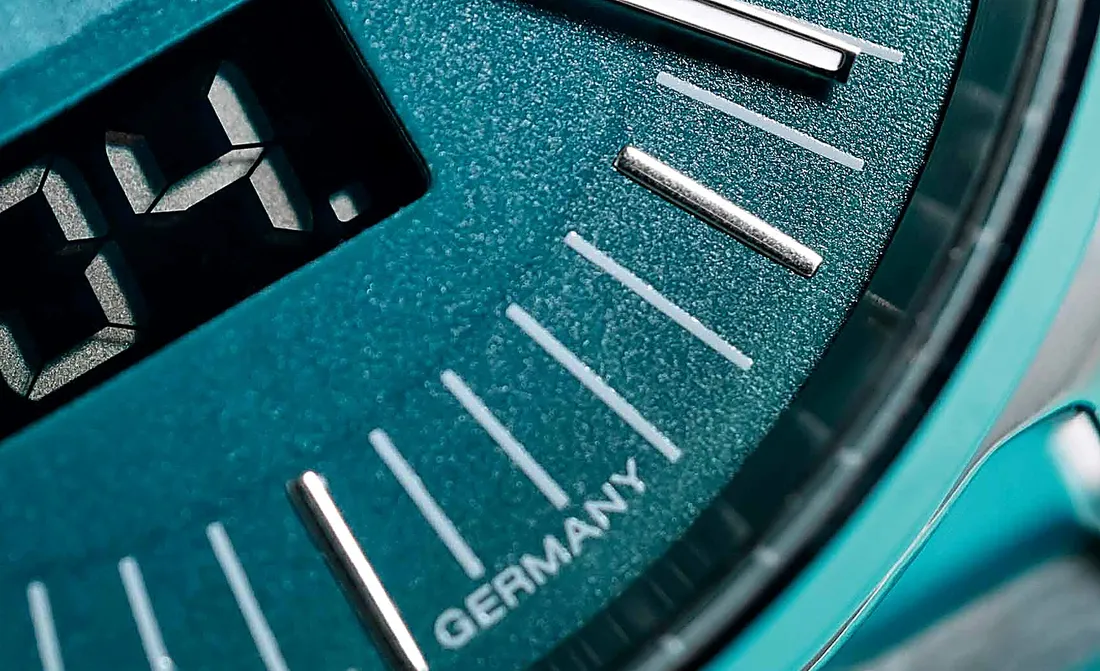
Go an hour north of Freiburg, into the Black Forest, and you come to Schramberg, where there is a watch factory.
Junghans was founded on the fourteenth of April 1861, when Erhard Junghans and his brother-in-law opened a factory for watch components in the Lauterbach valley. The company grew into one of the largest clock and watch makers in the world by the early twentieth century, and in 1918 it built the terraced factory that steps down the hillside; that building is a museum today.
But the mark the house really left began fifty years ago, in a particular stubbornness. In 1985 Junghans produced the first series-made radio-controlled table clock for private use. In 1990 it carried the same idea to the wrist with the Mega 1. In 1993 it became the first maker in the world to build a wristwatch that sets itself by radio signal and draws its energy from the sun. In 2004 it developed and patented the multi-frequency movement that receives the signals of different countries and adjusts itself automatically.
Underneath those sentences lies a quiet admission, and there are very few examples of it in the history of watchmaking.
For four hundred years the whole effort of the craft went in one direction: to build an instrument that stays right on its own. The pendulum, the hairspring, the tourbillon, resonance; all of them are stations on that road. The radio-controlled watch gives that goal up.
This watch does not keep the time. It asks for it. The second it shows is defined by the oscillation of caesium atoms in a laboratory, broadcast from a transmitter, and the watch catches it. Nor does it store its energy inside itself; the dial is a glass solar cell and light comes in through the face.
So the watch owns neither its time nor its power. It borrows both. And precisely for that reason it is more accurate than any mechanical watch running on its own.
format_quote"This watch does not keep the time, it asks for it. The second it shows is defined in a laboratory, and the watch is only a good listener."
Hasan Bekmezci
Put the engineer who developed that movement in Schramberg next to an architect who designs solar houses in Freiburg, and both would describe the same problem.
The engineer would say: the hard part for us is not accuracy. When the signal arrives we are already right. The hard part is the days when it does not. In a cellar, on an aircraft, behind a mountain, the watch is on its own and has to bridge that gap with its own internal rate. Light is the same; after seventy-two hours in the dark the watch goes into sleep mode and protects its energy.
The architect would say: that is exactly my work. The sun is free, but it is not always there. The whole difficulty of a solar building lies not in the sunny hours but in the hours when there is no sun. Good design manages absence rather than abundance.
They are saying the same thing. Skill shows itself not while the supply is flowing but when it is cut off.
format_quote"Skill shows itself not while the supply is flowing but when it is cut off. Good design manages absence, not abundance."
Hasan Bekmezci
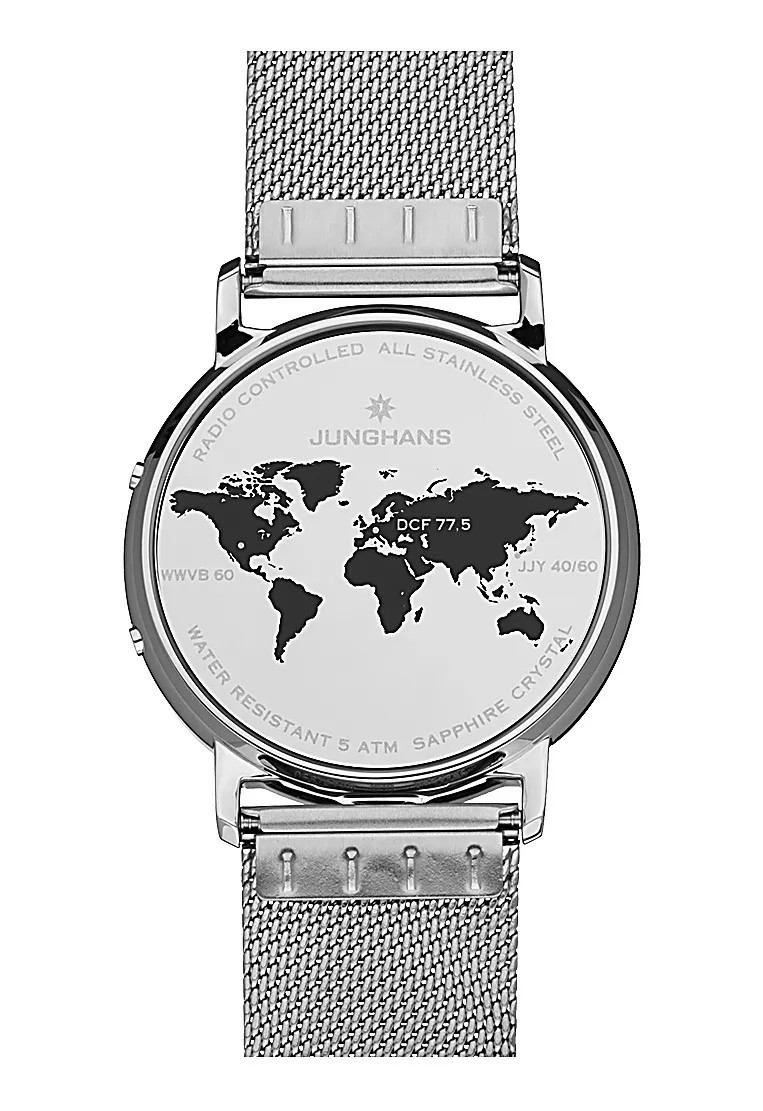
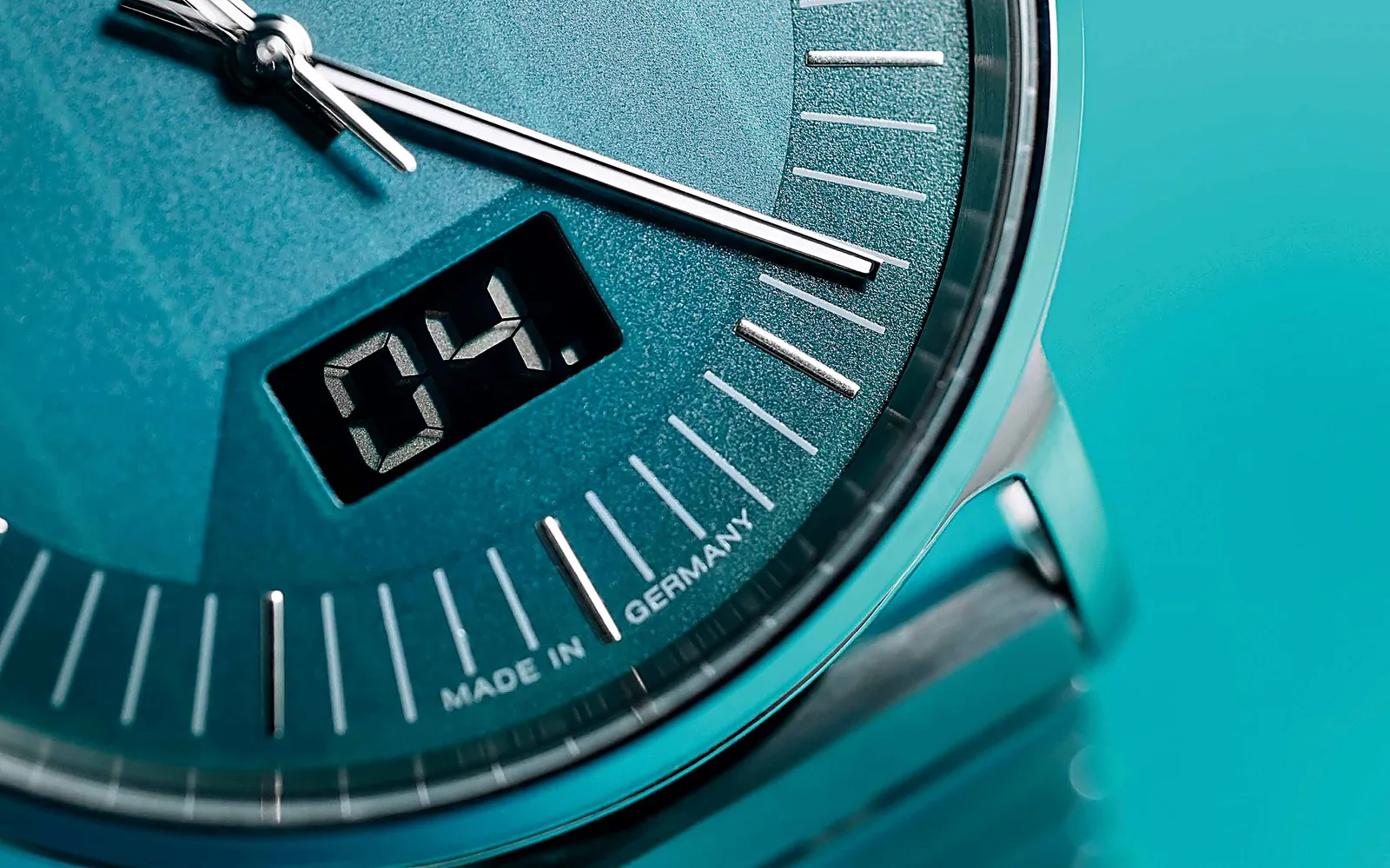
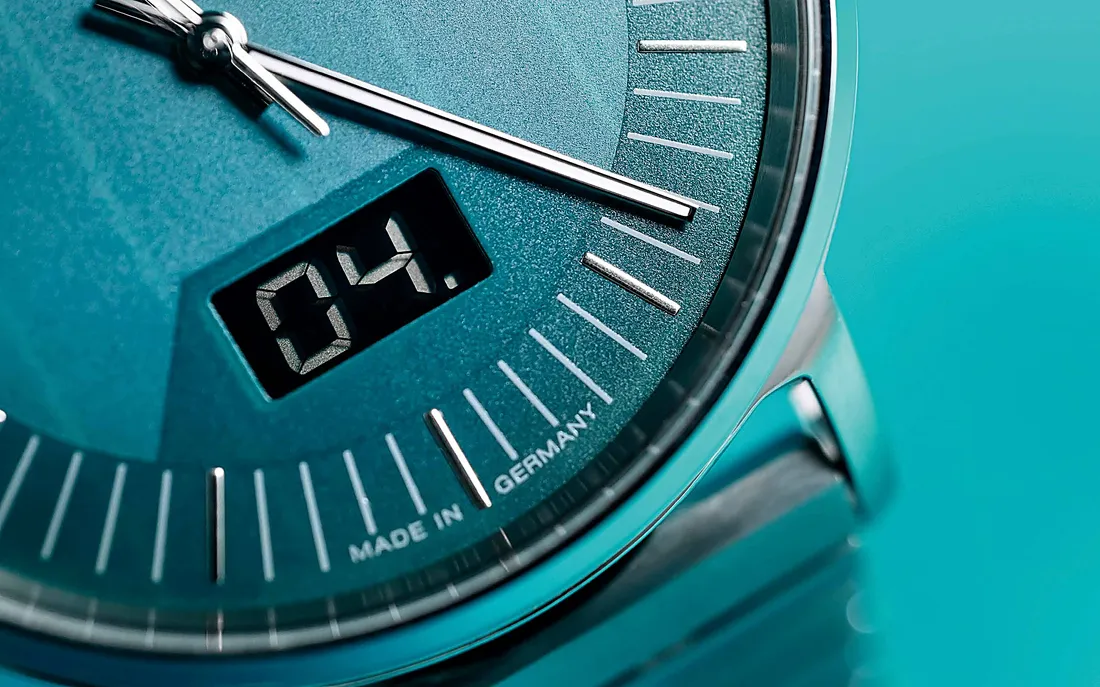
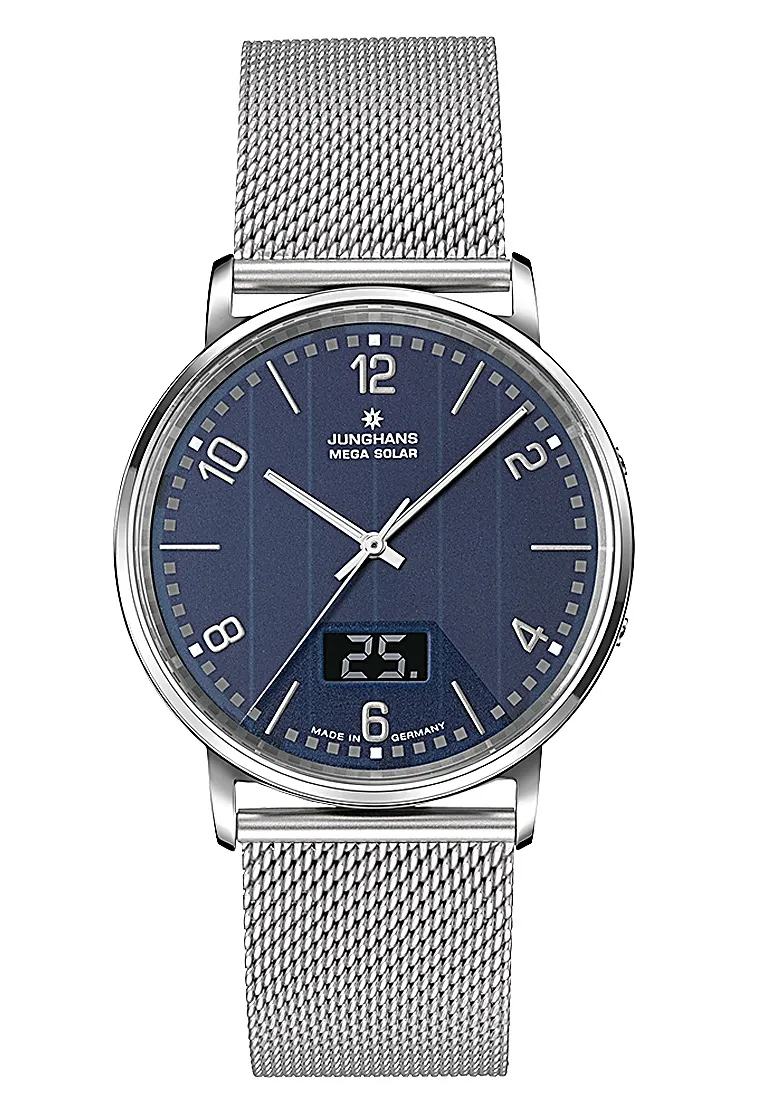
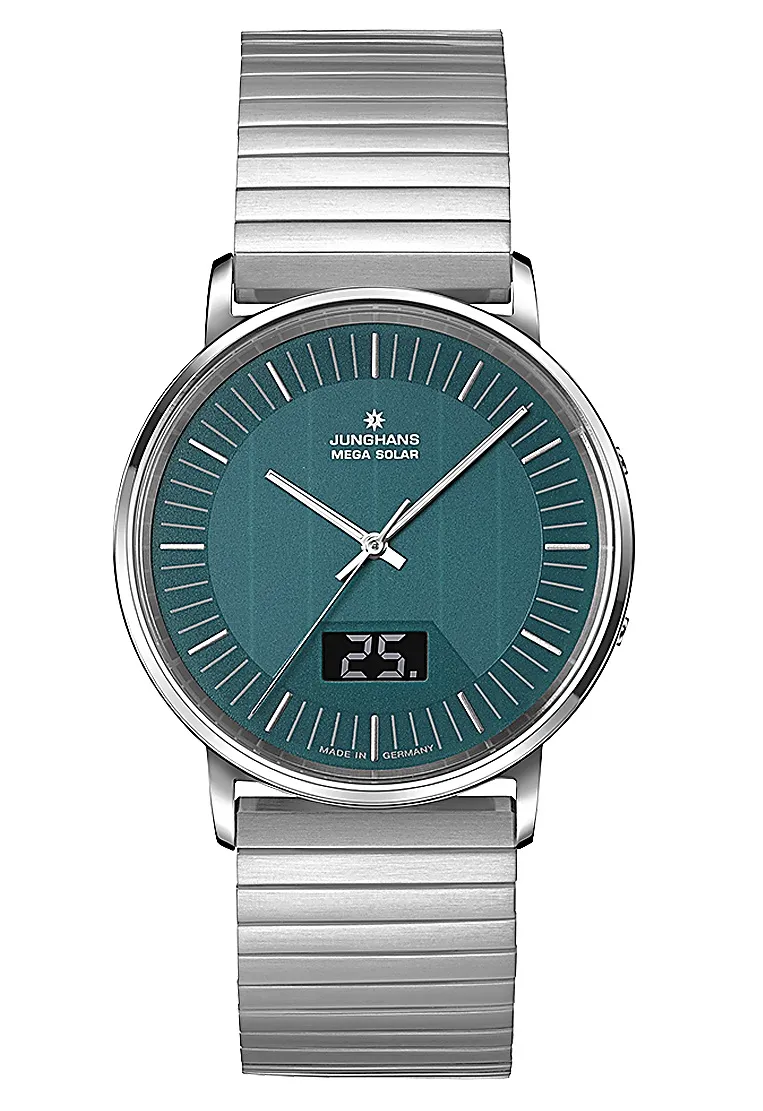
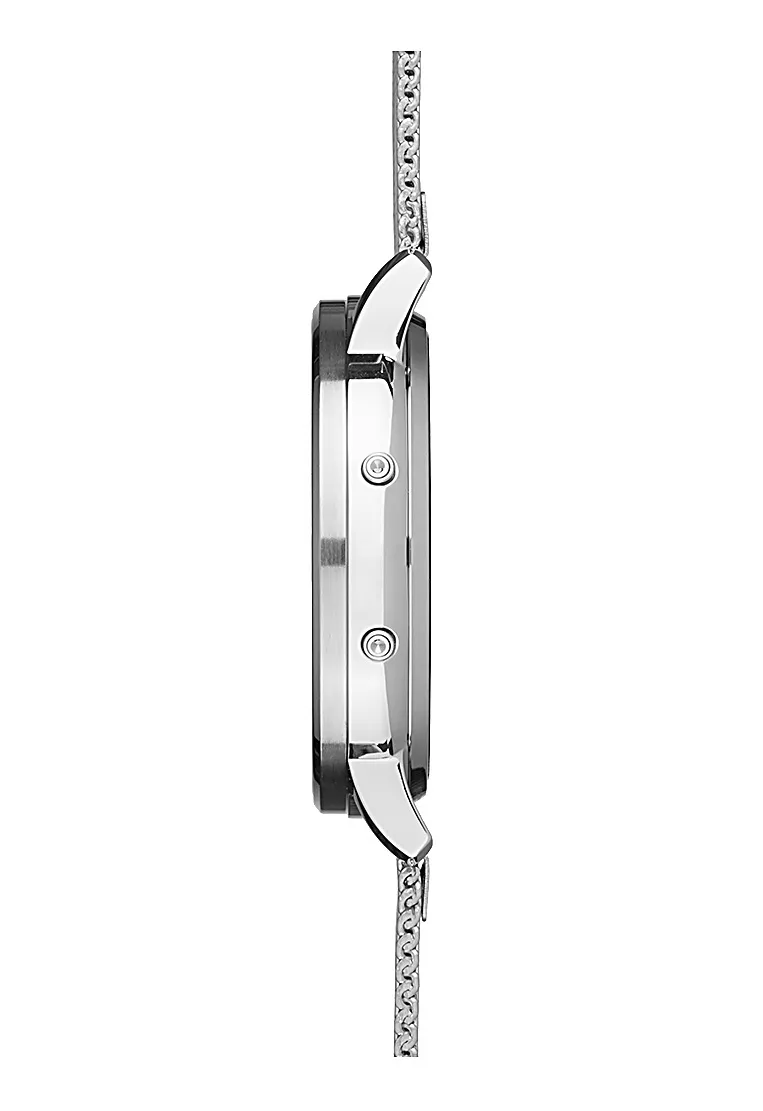
The figures run as follows. The case is stainless steel, thirty-nine point two millimetres across and eight point four millimetres tall. The crystal is sapphire. The back is mineral crystal with a world map printed on its inner face, a fitting decoration for a watch that listens to transmitters in different countries. Water resistance is five bar.
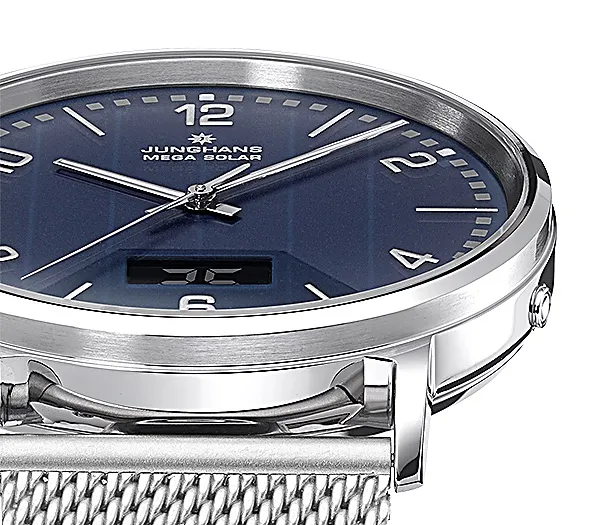
The dial is a glass solar cell, offered in two colours, steel blue and petrol green. It carries applied markers, luminous dots, and hour and minute hands treated with luminous material. Inside runs the multi-frequency radio-controlled movement J615.84, made in Schramberg. It shows a big date, changes to summer time by itself, holds up to twenty-one months of reserve when fully charged, and goes to sleep after seventy-two hours without light. Time zones are changed with the pushers on the side or through an application on a telephone. The blue dial comes on a Milanese mesh bracelet, the petrol green on a steel bracelet with a folding clasp.
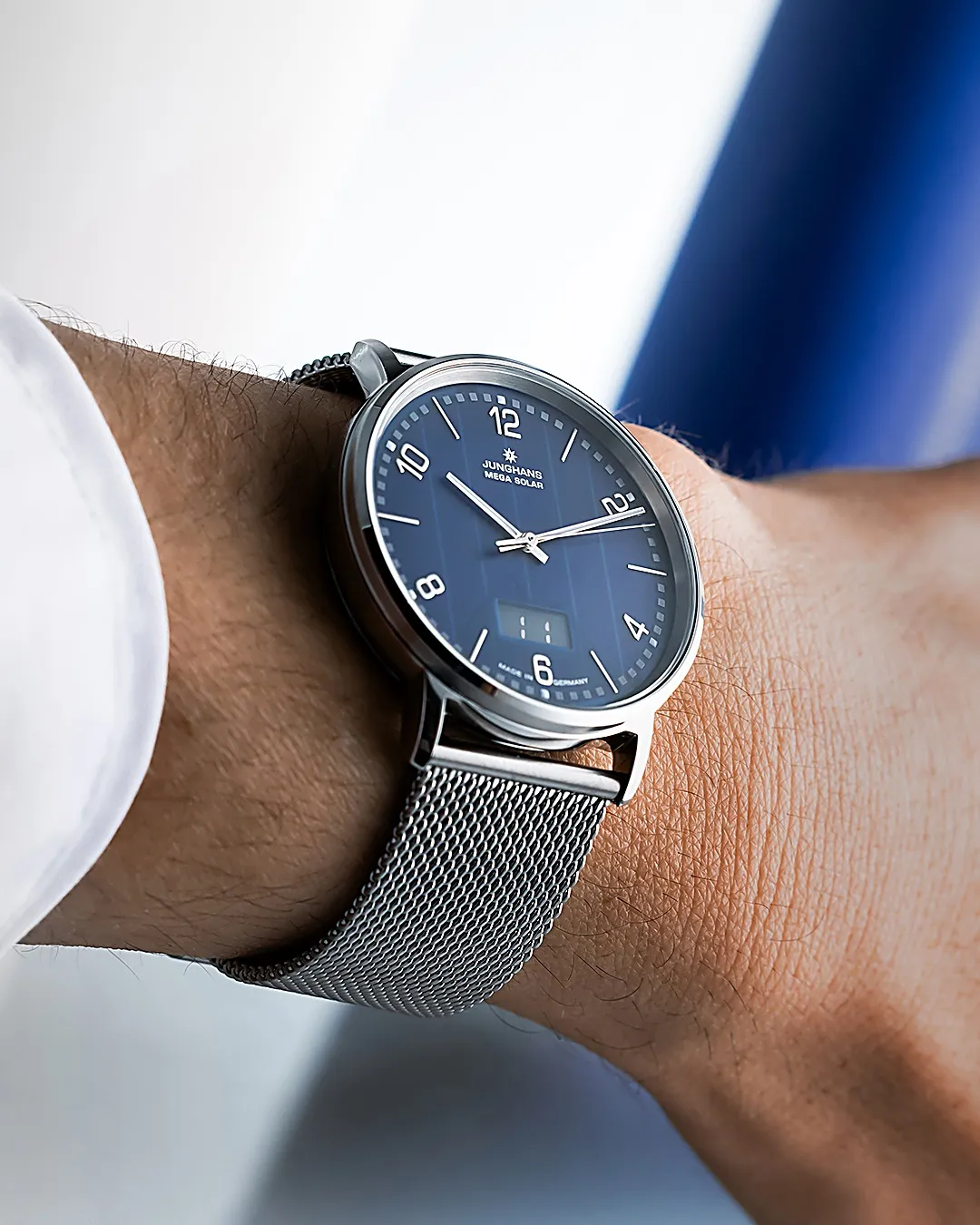
This series began with the colour of the sea and ends with a solar cell. The nine watches in between were all about how hard a person will work to measure something. The last one says the opposite.
The Swabian merchant believed the value lay in the barrels he was carrying. Freiburg did not put its value in a barrel; it attached it to something that arrives every morning, and it did not try to own that thing. The watch from Schramberg does the same: it does not produce the second, it receives it; it does not hoard energy, it gathers it.
A person’s situation is much the same. Most of what we are proud of we did not make. The light was already coming, the caesium atom was already oscillating, the sky was already ordered. What falls to us is to be a good receiver: to turn the right way, to keep the surface clean, and to carry enough patience to last through the hours when nothing arrives.
The Creator gives and we receive. Receiving in full knowledge of that is what gratitude means, and it can be learned even from the face of a watch.
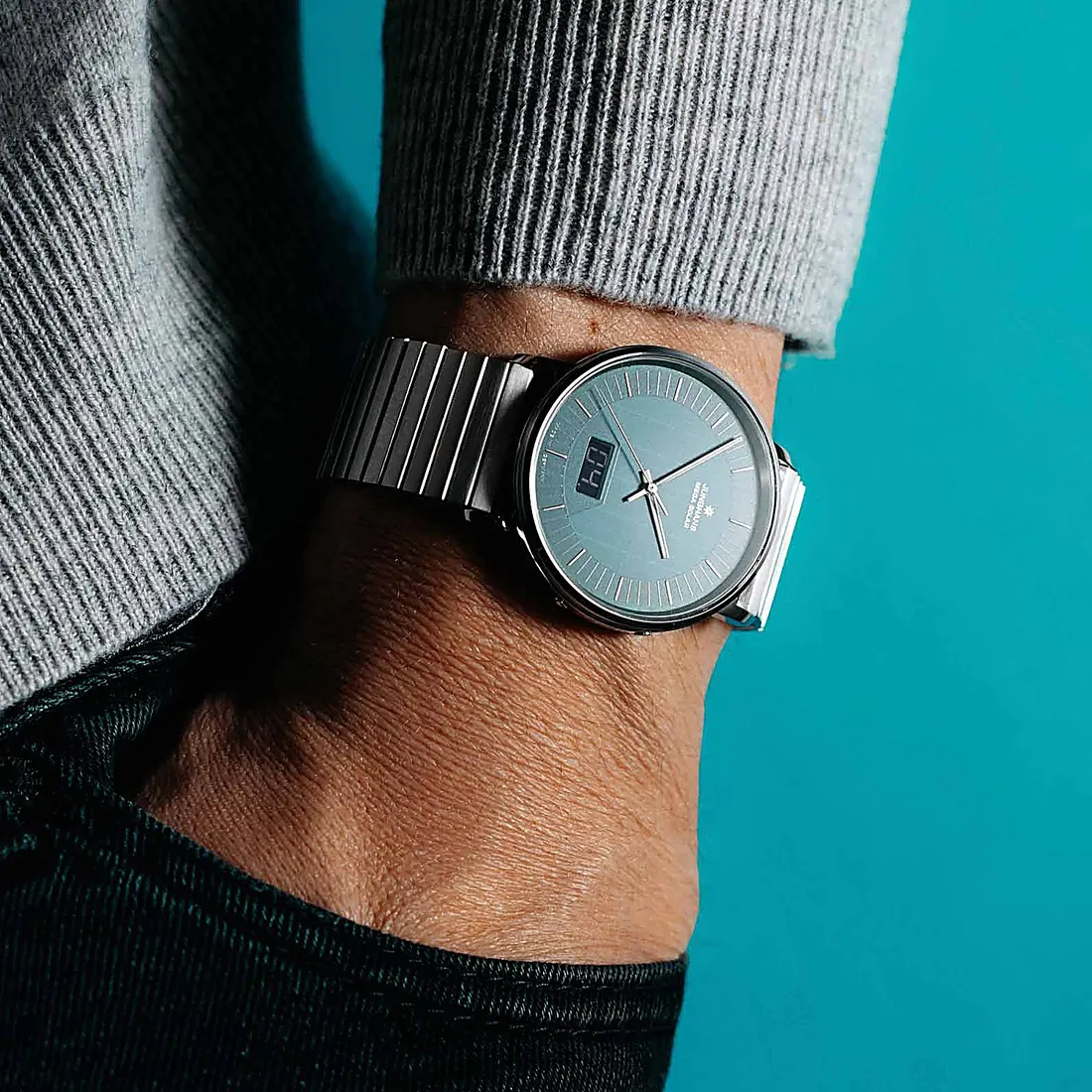
The watch on its maker’s own site: Junghans, Milano MEGA Solar