Monaco covers a little more than two square kilometres, and a good part of that was taken from the sea. The rest sits on a rock.
The rock changed hands in 1297. The story goes that Francesco Grimaldi came to the gate dressed as a monk, was let in, and took the fortress. The family has been there ever since, and its arms still carry two monks holding swords.
The palace stands above, the harbour below, and on the far face of the rock there is a museum. Prince Albert I founded the Oceanographic Museum; the building is set straight into the cliff and opened in 1910. Albert I was more a researcher than a ruler. He went out on campaigns, sounded the depths, followed the currents and genuinely helped to found the science of the sea.
Monte-Carlo, on the higher ground, was designed by Charles Garnier. A few kilometres west, the same architect built the observatory above Nice. That one hand left a dome for looking at stars on one side of the bay and a casino on the other says something true about this coast.
That so small a place is known everywhere is largely the work of a single day.
The first Monaco Grand Prix was run on the fourteenth of April 1929. It was not held on a purpose-built track but through the streets of the town, and it still is. It is the slowest, narrowest circuit on the calendar and the hardest to overtake on. The cars leave the harbourside, climb the hill, turn under the palace, and pass through the tunnel beneath the hotel.
That tunnel is the most interesting place on the lap. The driver goes from full sunlight into an enclosed yellow light, and a few seconds later out into full daylight again, at close to three hundred kilometres an hour.
format_quote"In the tunnel the driver’s eye has not adapted. For those few seconds what guides him is not what he sees but what he has learned by heart."
Hasan Bekmezci
The human eye cannot keep up with that transition. The pupil begins to answer a change of light in about a fifth of a second and has largely settled within a second. But full adaptation of the retina to darkness takes minutes, and the rods can need twenty minutes to reach their limit.
So in the tunnel the driver is working with an eye that has not adjusted. For those seconds the line through the corner comes mostly from memory. He is driving what he knows, not what he sees.
The same limit shows in reaction time. The fastest a person answers an expected signal is around a fifth of a second. A car at two hundred and fifty kilometres an hour covers about fourteen metres in that time. By the moment the foot reaches the brake, the car is a bus length beyond where the decision was made.
In a place where the senses fall so far behind, who is to say who won?
In 1929 the answer was a row of hand-held stopwatches. Men at the line pressed a button as a car went by, pressed it again on the next lap, and read off what lay between. Their own reaction time went into the measurement, of course. As long as they made the same error for everybody, the order still came out right.
Today the timing is done by loops buried in the road, down to the thousandth of a second. The ancestor of that system is still the instrument worn on the wrist: the chronograph.
format_quote"In 1929 the time was kept by hand-held stopwatches. As long as the same error was made for everybody, the order still came out right."
Hasan Bekmezci
A chronograph does three separate jobs, and one button puts them in order.
The first is starting: a clutch connects the movement, which is already turning, to the chronograph wheel. The second is stopping: the clutch disengages and the hand stays where it is. The third is resetting: there is a cam shaped like a heart, a hammer falls onto it, and the cam slides until it rests at its narrowest point, which drops the hand exactly on the starting line.
The last of the three is the hard one. Starting is easy and stopping is easy; returning to zero is not. If the heart cam is not shaped perfectly, the hand lands a little beside zero, and that error repeats at every measurement. The instrument looks as though it works, it may even work beautifully, and everything it says is wrong by the same amount.
format_quote"Starting is easy and stopping is easy. Returning to zero is hard, because a false zero spoils every reading by the same amount."
Hasan Bekmezci
Put a timekeeper from the circuit next to a watchmaker who builds chronographs, and the conversation arrives here.
The timekeeper would say: my job is to record a difference nobody could see. Two cars are sometimes a hundredth of a second apart, and no eye catches that. We no longer trust eyes; we trust a loop in the road. My task is to read what the loop says correctly and to make the starting instant beyond argument.
The watchmaker would say: my task is to keep that instant clean. The hand must not tremble as it starts, must not creep as it stops, and must land exactly where it belongs when it goes back. The worth of a chronograph shows not in how fast it counts but in how honestly it returns to zero.
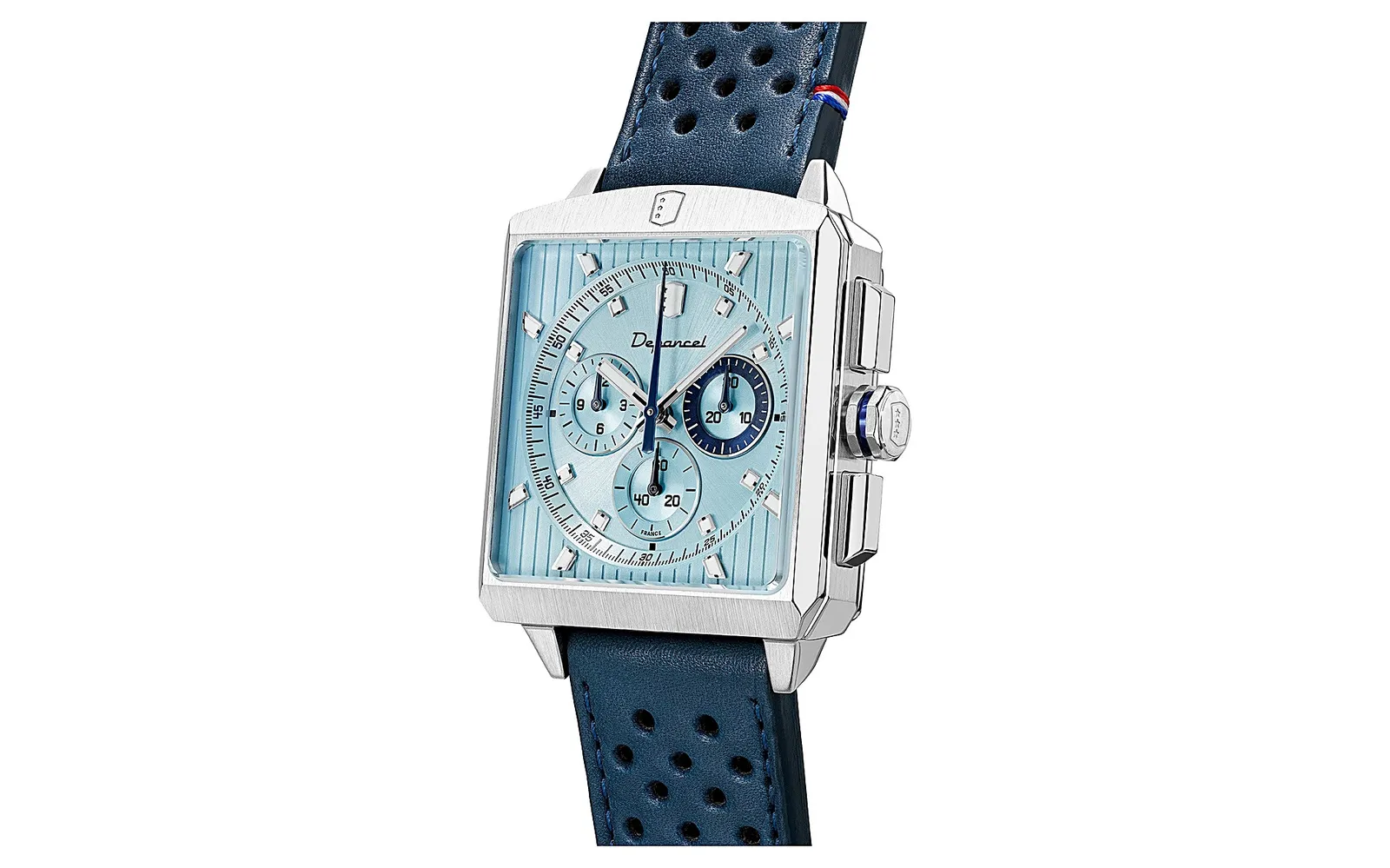
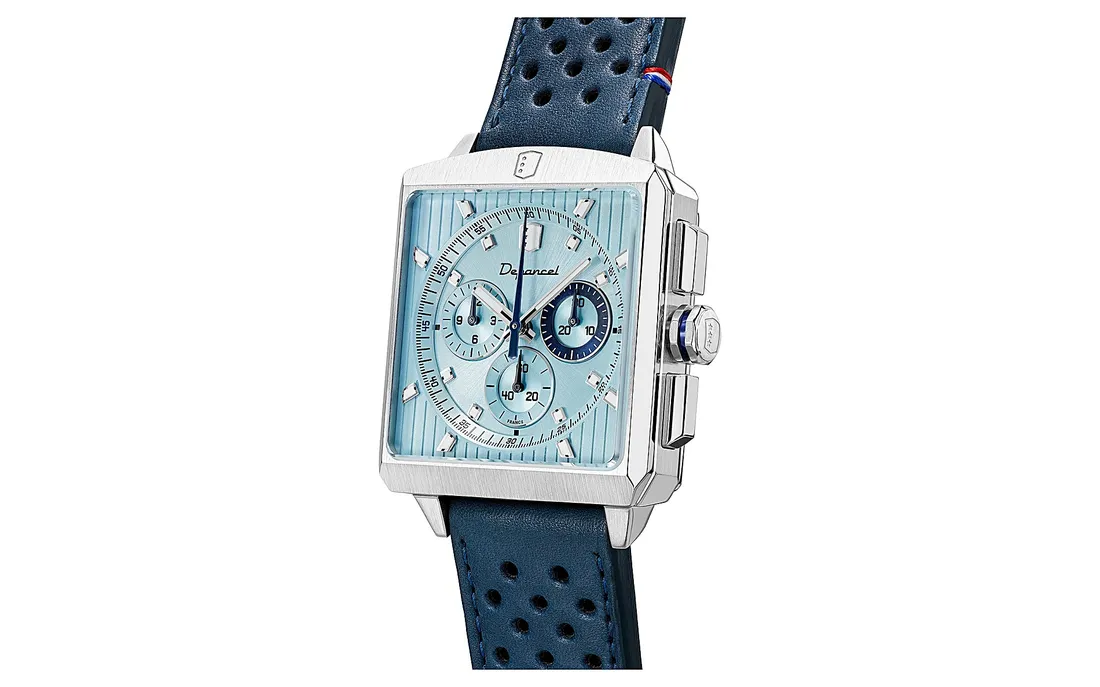
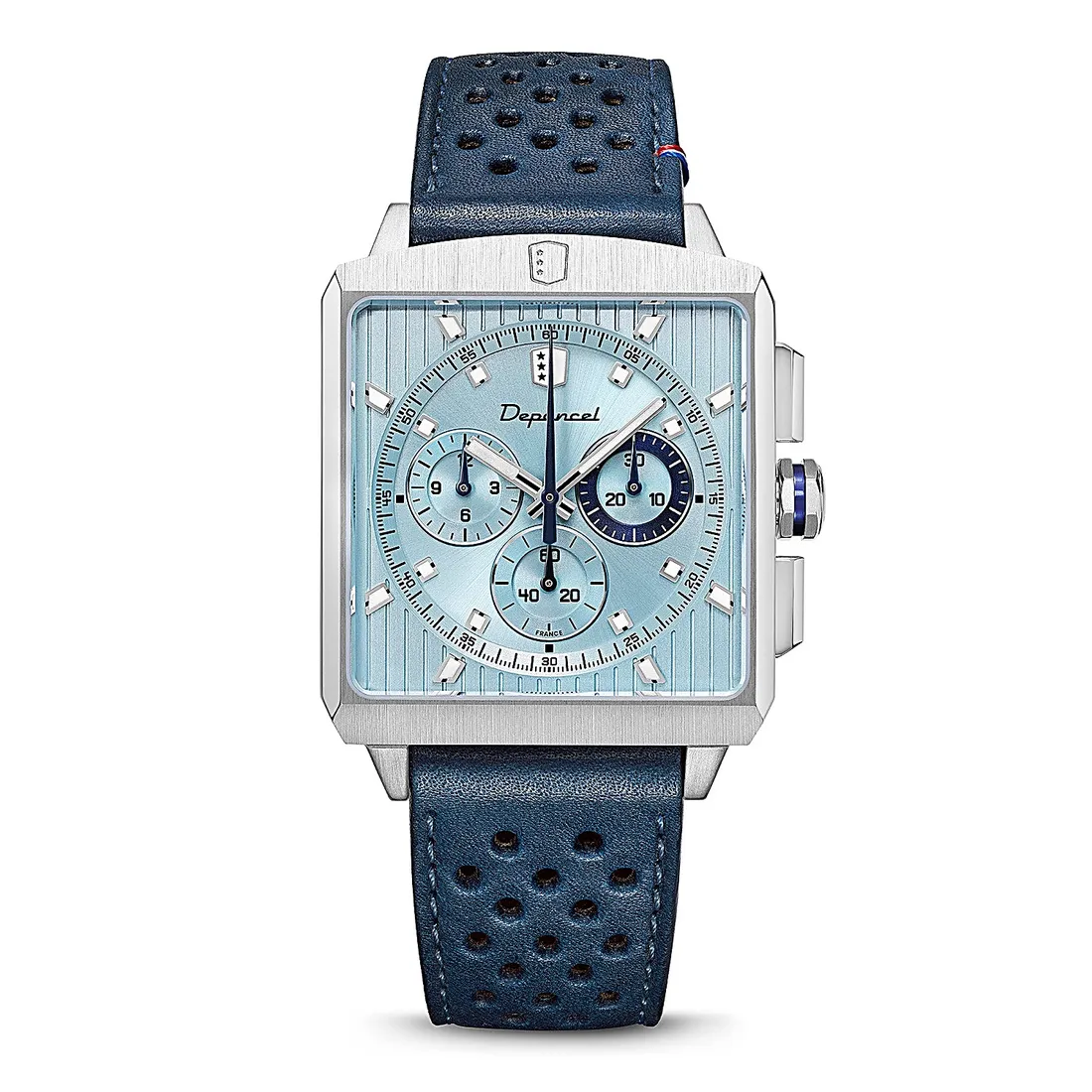
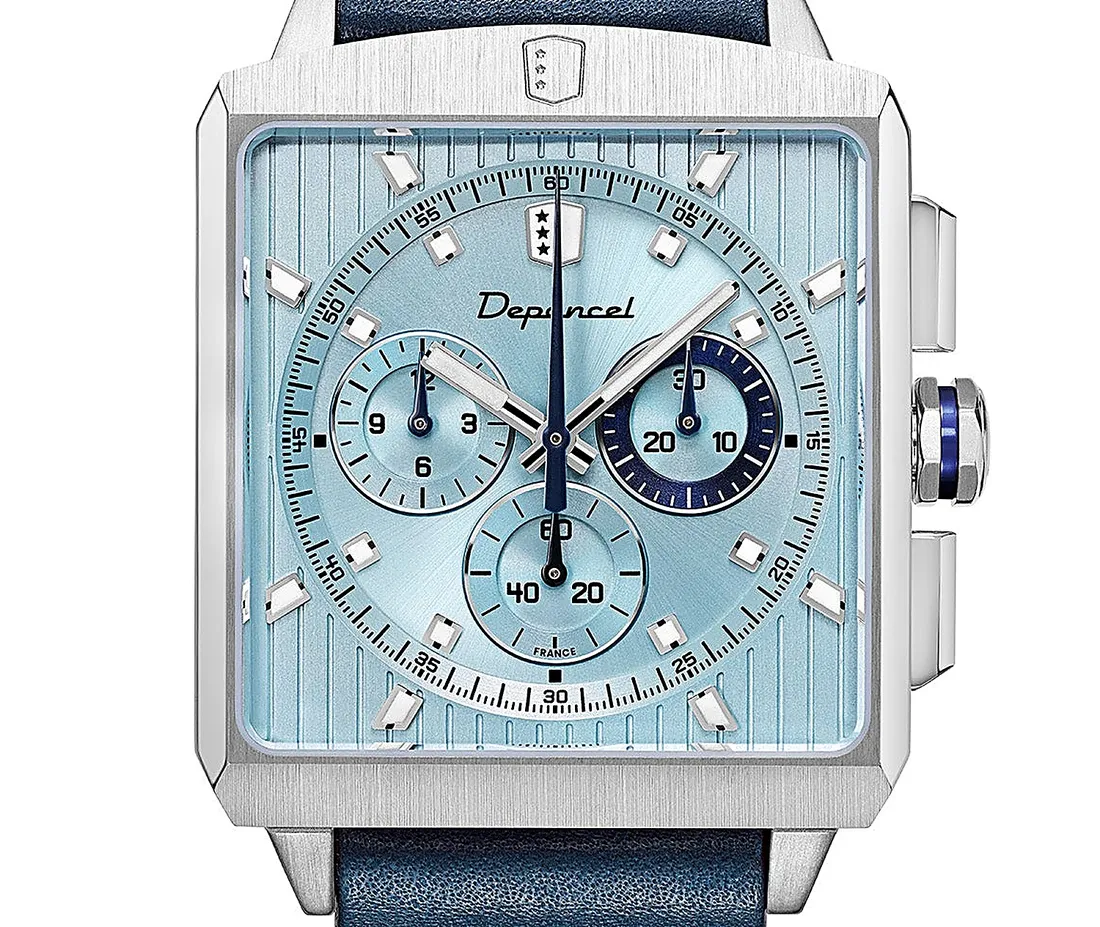
The Série-R Chronograph Ice Blue, introduced by Depancel in June 2026, is a modest and honest example of that tradition.
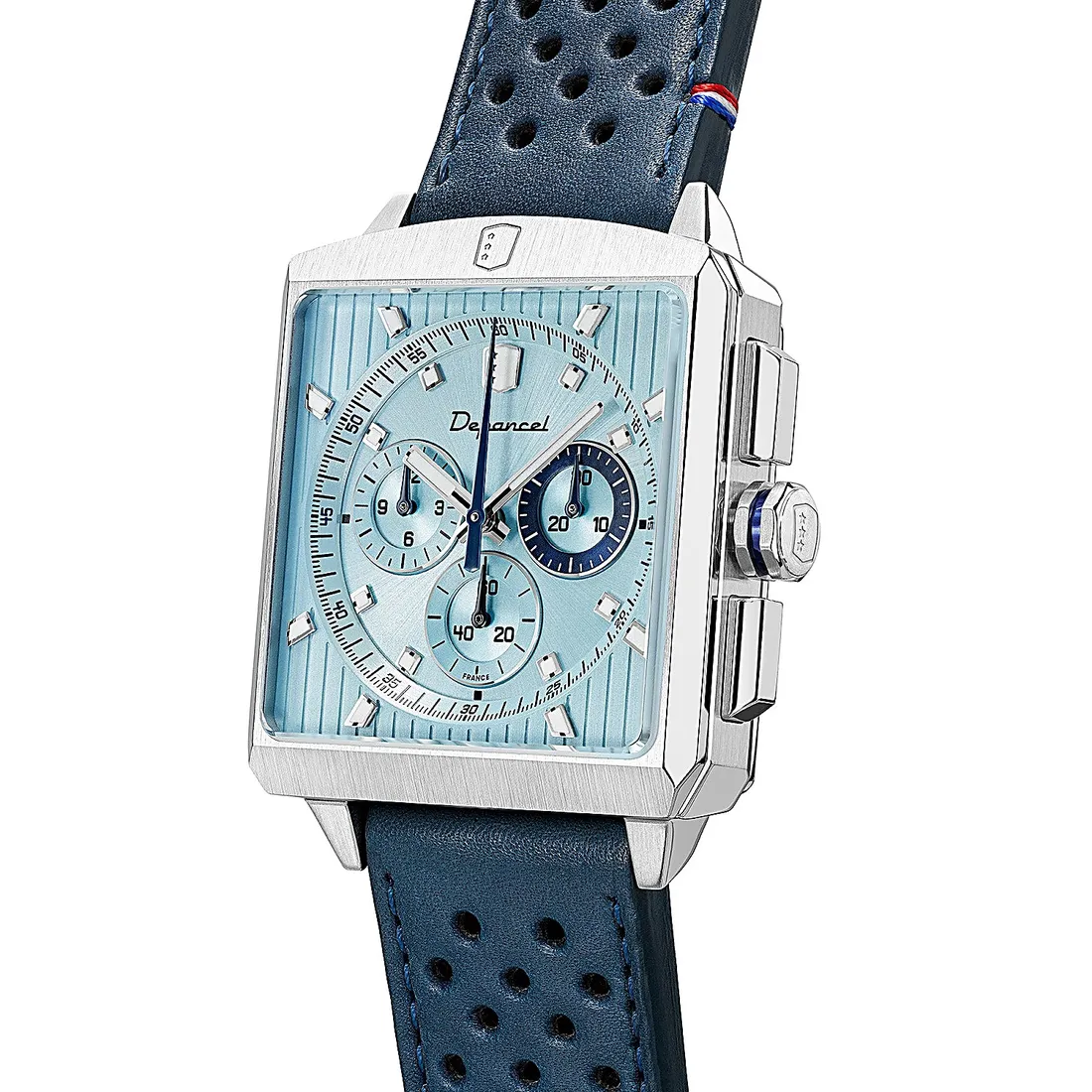
The dial began with a motor car. Depancel came across a Talbot-Lago T26 of 1947 with coachwork by Figoni & Falaschi. That workshop was founded in 1935 at Boulogne-sur-Seine by Giuseppe Figoni and Ovidio Falaschi, and it brought to pre-war French motoring a language taken from aviation: flowing lines, wings wrapped around the wheels, sculpted volumes. The ice blue of the dial is the colour of that body, the vertical lines recall the radiator grilles of the period, and the case takes its architecture from the same source.
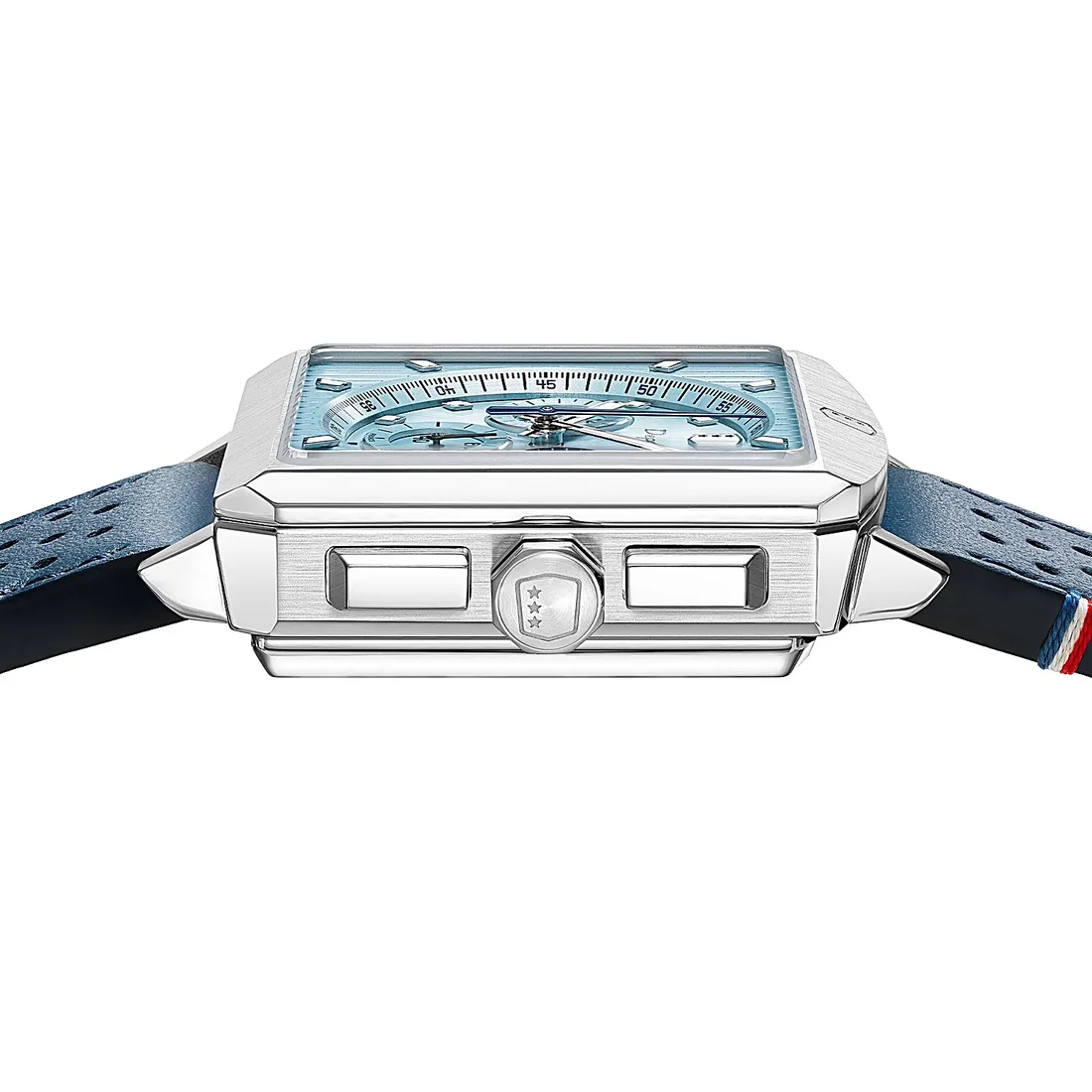
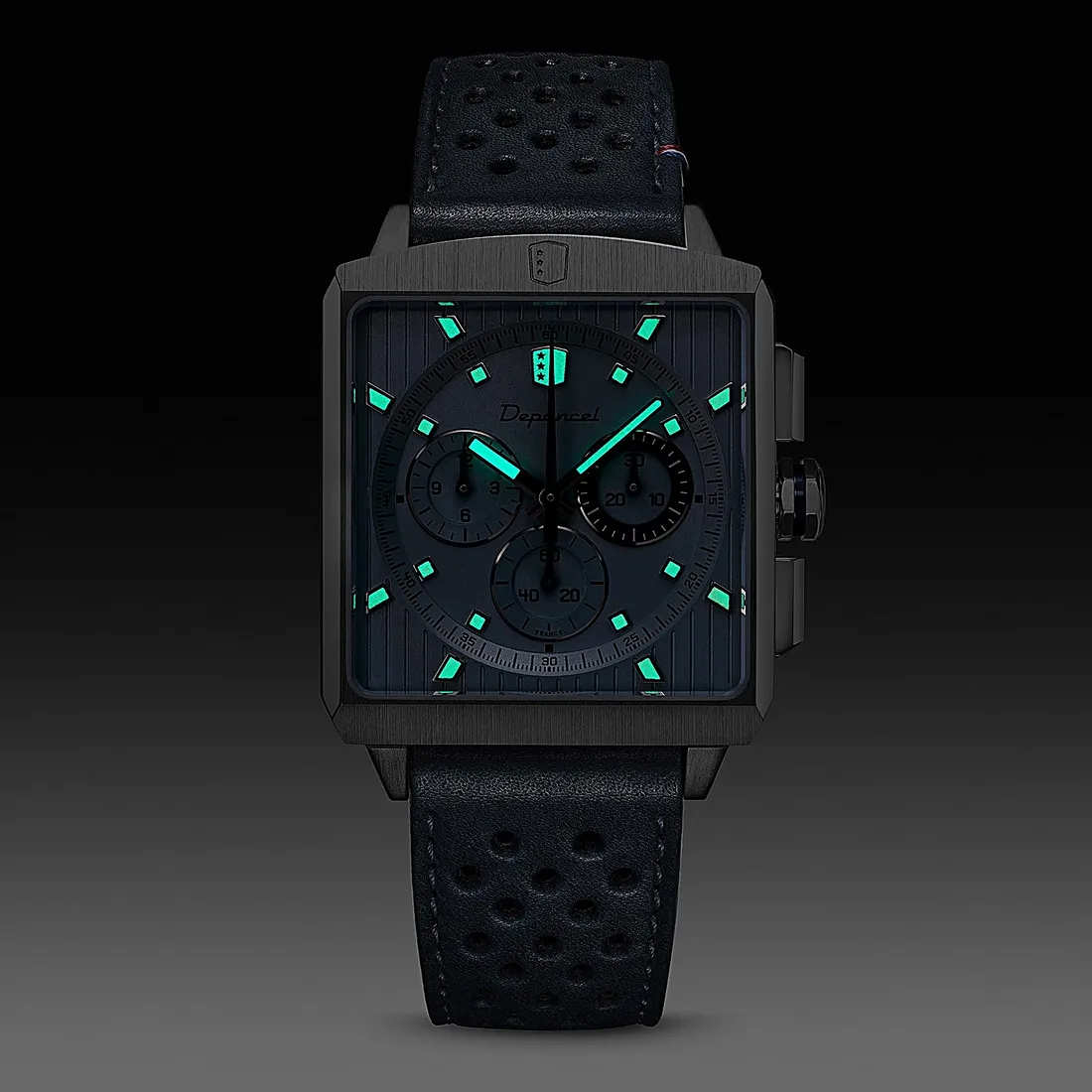
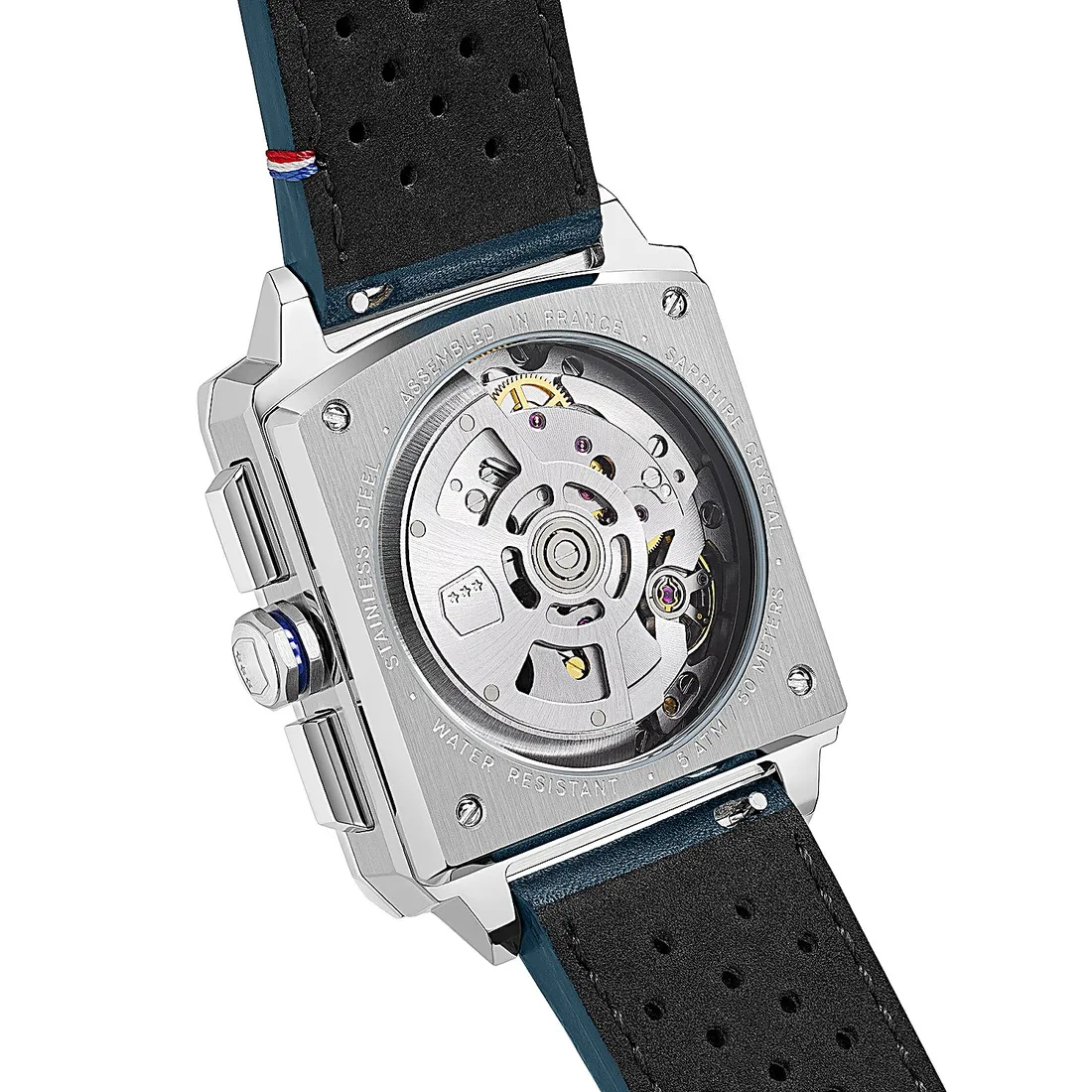
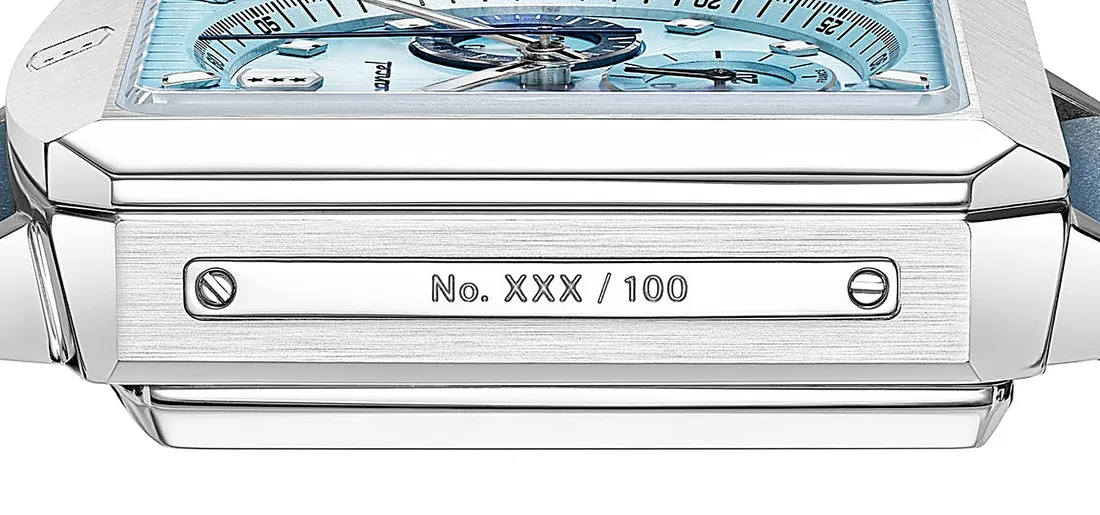
The figures run as follows. The case is 316L steel, forty millimetres by thirty-six, and thirteen point three millimetres tall, or twelve point four without the crystal. It measures forty-eight and a half millimetres from lug to lug and takes a twenty-two millimetre strap. The top surface is brushed vertically while the flanks at three and nine are left polished, and the sapphire crystal is bevelled at its edges to carry the line of the case. Inside runs the Peacock SL-4801 automatic chronograph calibre, giving fifty-five hours of reserve. Water resistance is fifty metres and the luminescent material is C1 white. The edition runs to a hundred pieces, each numbered on the flank of its case, and the price is between one thousand four hundred and ninety-five and one thousand five hundred and twenty-five euros depending on the buckle.
What this watch makes you think about is not speed but honesty.
Measuring depends on trusting a starting point. If you cannot place zero correctly, it makes no difference how finely you divide the scale; your results come out wrong in an orderly way. And that kind of error is the most dangerous, because it is consistent, and being consistent it inspires confidence.
A person’s own life works the same way. We all begin somewhere and our measurements drift along the road. The point is not never to slip. The point is that there should be a way back to zero. In a chronograph a heart-shaped cam opens that way. In a person the possibility of return was built in from the start: the Creator gave a creature that errs the ability to correct as well.
Every year in these streets cars finish a lap a few seconds apart, and that difference depends on an instrument finding zero correctly. The palace on the rock has stood in the same place for seven hundred years, and that continuity depends on a starting point too. Everything measured depends on where you began to measure.
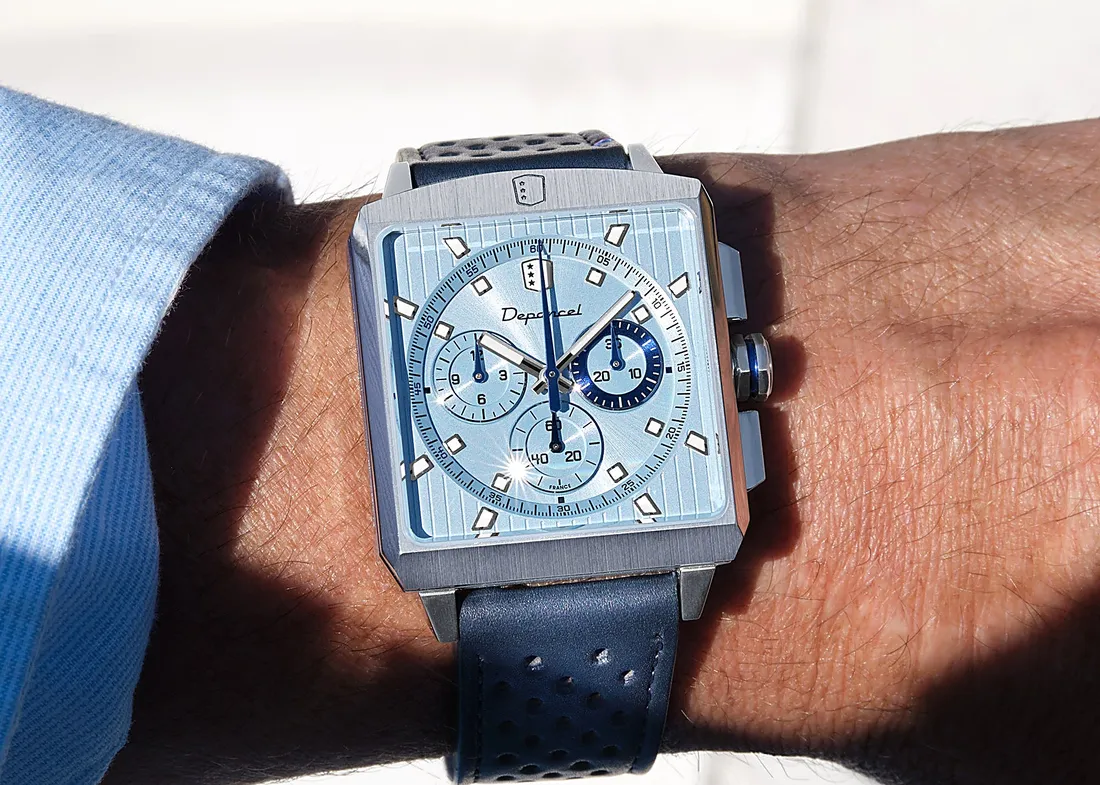
The watch on its maker’s own site: Depancel, Série-R Chronograph Ice Blue