The name written on an object is usually not the name of the hand that made it. For centuries silk was woven in China and sold under a European merchant’s mark; carpets were knotted in Anatolia and hung under the name of a London gallery. The craft stayed in the east and the signature stayed in the west.
Watchmaking is one of the most stubborn examples of that habit. The distance between where a part is made and what is written on it is the least discussed subject in the industry.
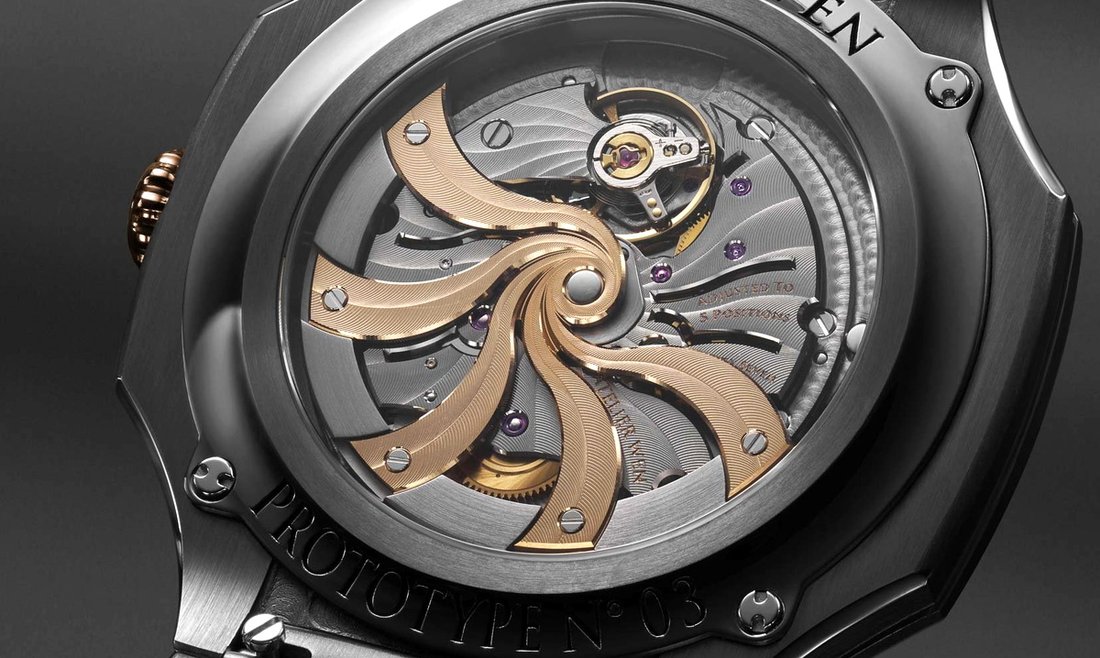
Atelier Wen was founded precisely to take up that distance. French-founded, the house makes its watches in China and, rather than concealing it, writes it on the dial. It also names the craftspeople who did the work on that dial. This is not a technical preference but a position.
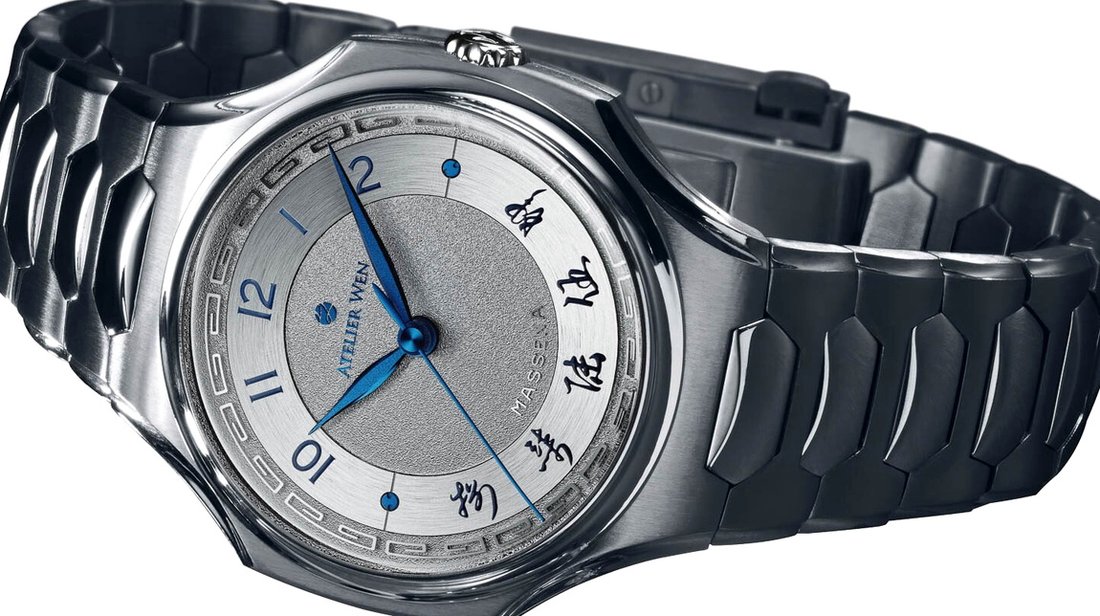
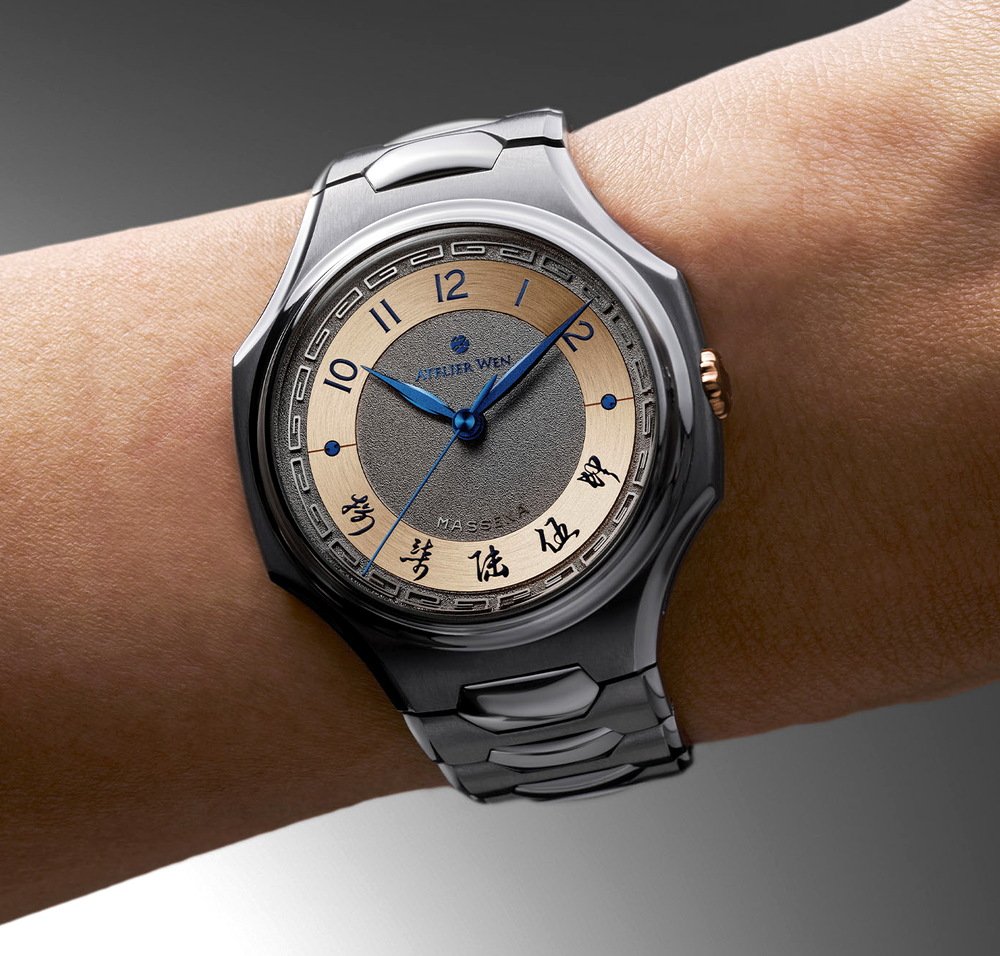
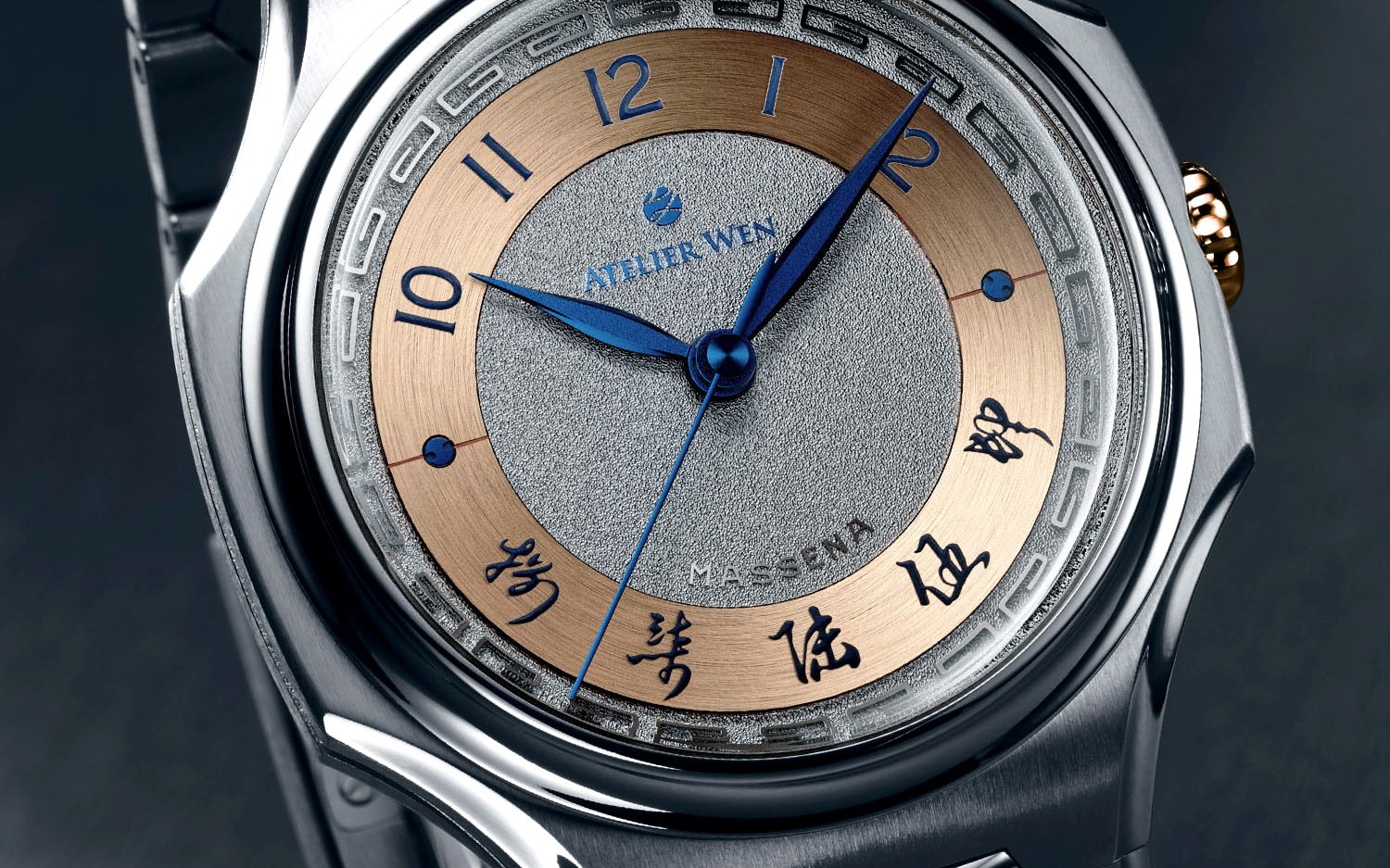
This watch is a special version of the house’s integrated-bracelet model Inflection, made with the New York studio Massena LAB. It is called Shuò, which in Chinese means sparkling or radiant, and the whole point sits inside that word.
The dial is solid gold. But its brilliance does not come from polishing; it comes from the opposite. The surface has been worked by hand in tremblage. Tremblage means trembling the graver as it is pressed into the metal. The tool does not leave a straight line; it leaves small, irregular notches, none of them the same. What results is a frosted texture that refracts light not in one direction but in hundreds.
That is also why it cannot be done by machine. A machine vibrates regularly and leaves a regular texture; the eye catches that regularity at once and the surface reads as dead. The liveliness of tremblage comes from a hand never being able to cut the same notch twice. The imperfection is the technique.
format_quote"The liveliness of tremblage comes from a hand never cutting the same notch twice. Here the imperfection is not an error; it is the technique."
Lucas Mercier
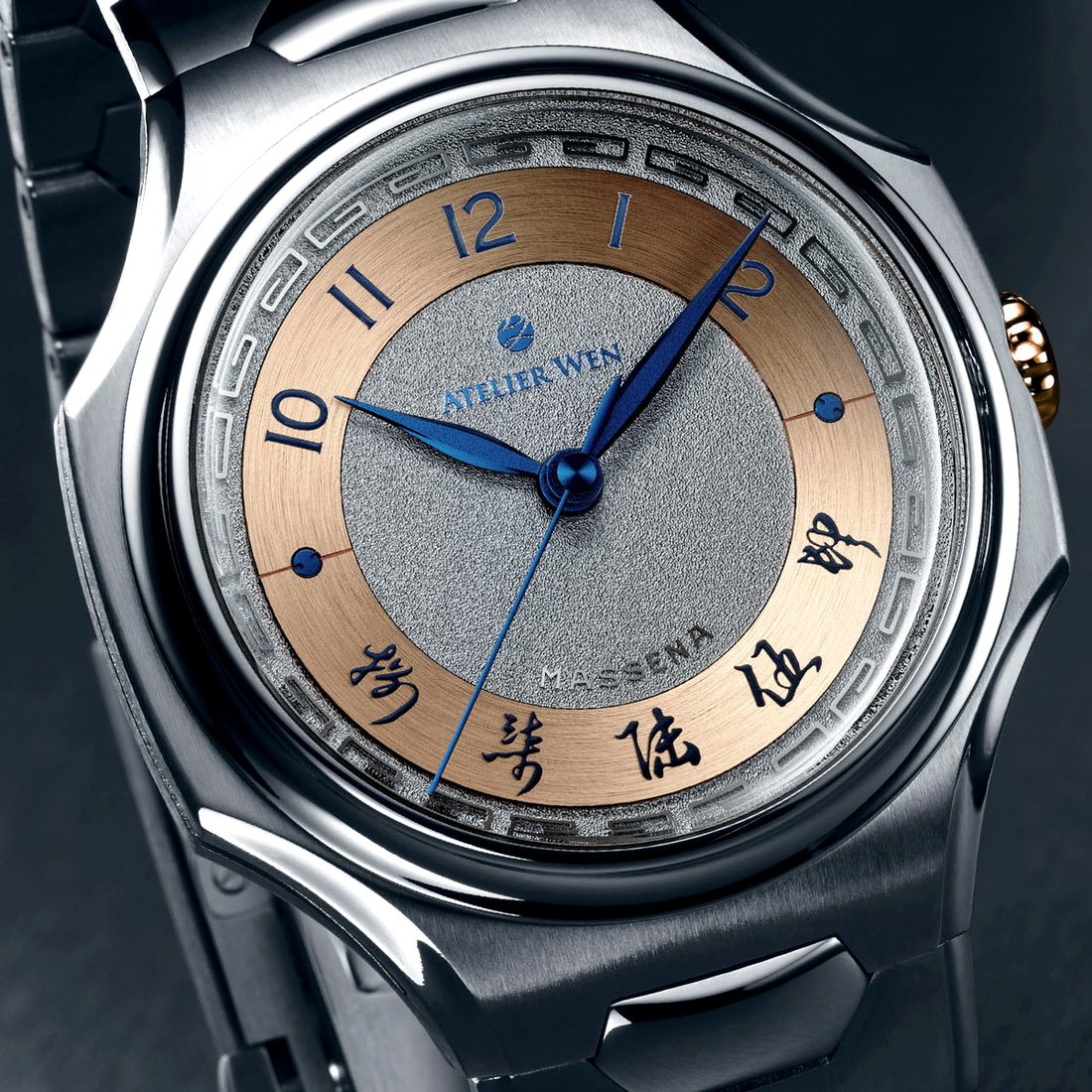
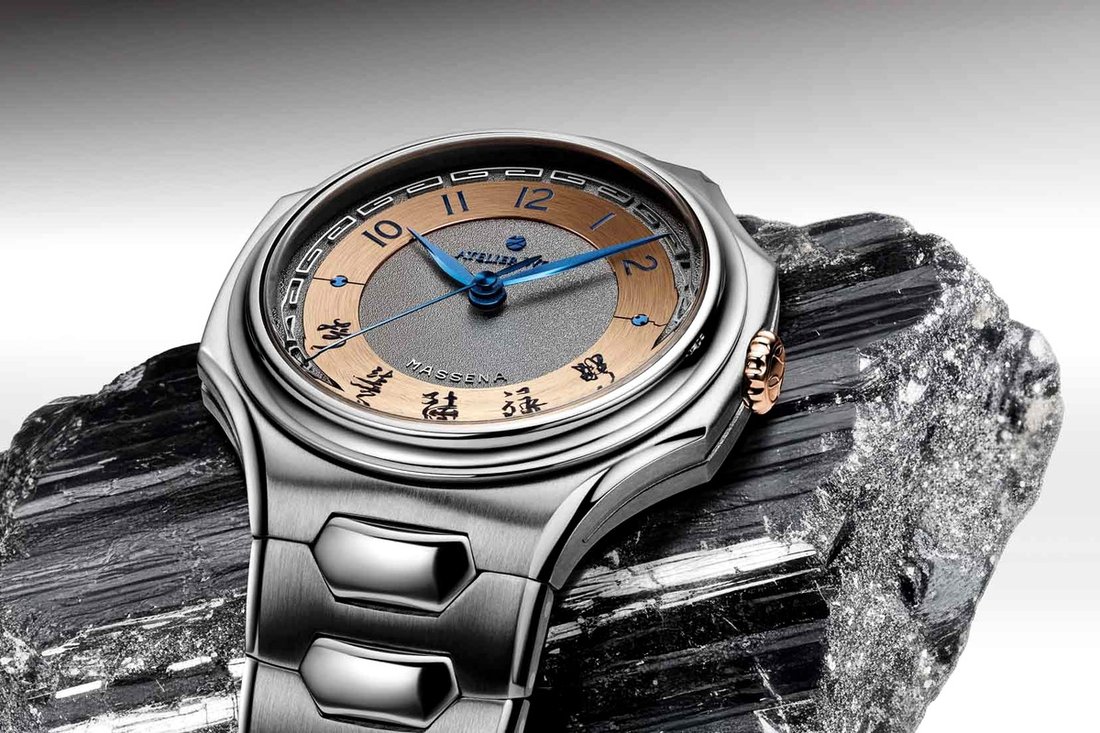
The case is a different problem entirely. Tantalum is rarely used in watchmaking, and the reason is not how it looks but how it behaves.
Tantalum is very dense; it feels noticeably heavier than steel in the hand. Its colour is a blue-tinged grey and it does not oxidise over time. So far so good. The trouble starts in machining: tantalum galls. The metal clings to the cutting edge as if it were welding itself on, the chip drags instead of breaking, the surface tears and the tool dulls quickly. It also work-hardens, which means the more you cut the harder it gets. For a case maker that adds up to several times the hours the same shape would take in steel, and far more frequent tool changes.
A house that chooses tantalum chooses all of that knowingly. What it gets in return is a weight steel cannot give and a tone sitting between grey and blue that shifts with the light.
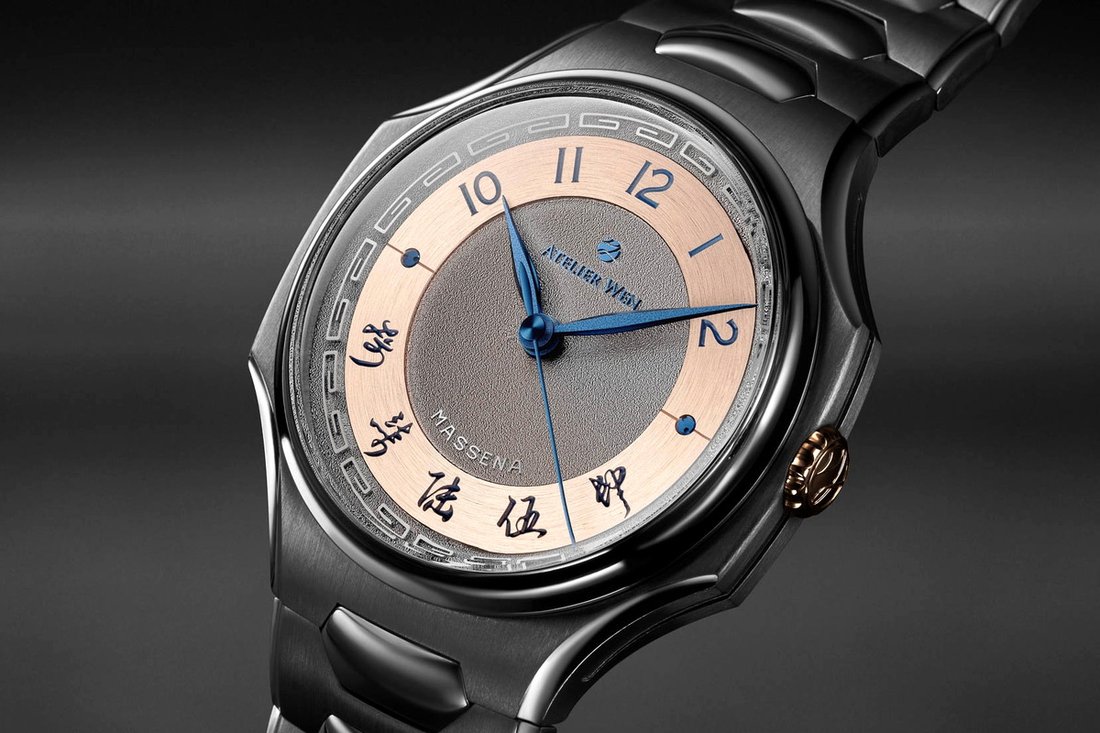
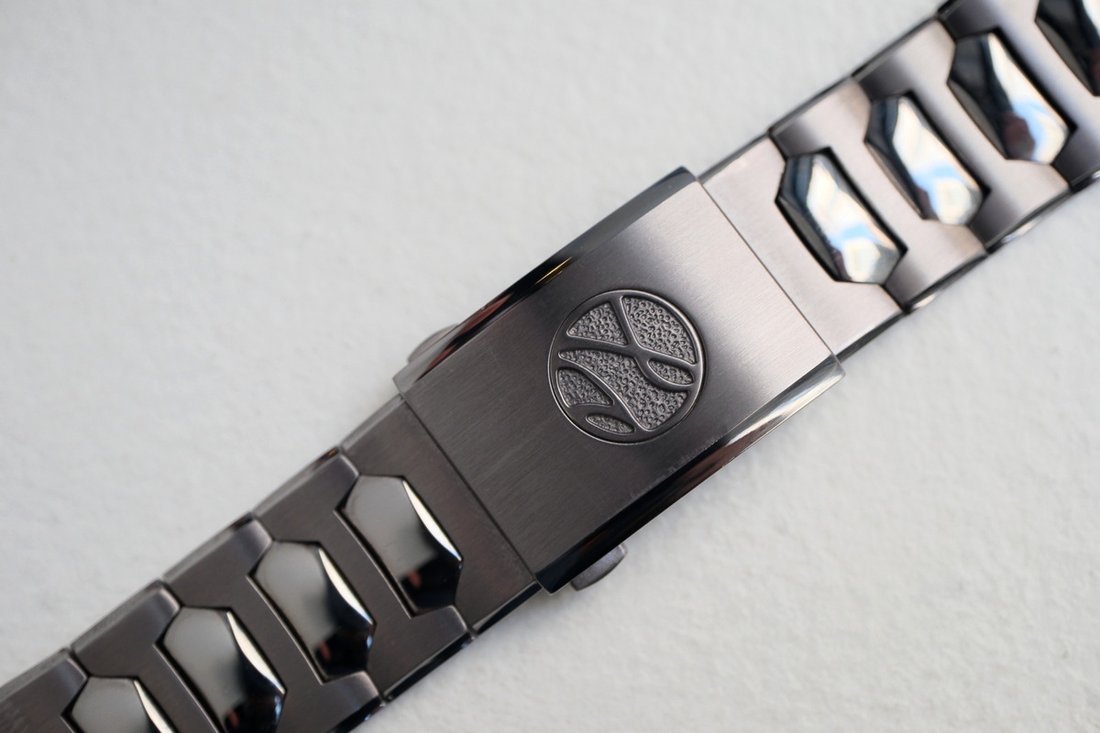
The dimensions are the quiet achievement here. Forty millimetres across, only forty-five lug to lug, and 10.2 millimetres thick including the crystal. On an integrated-bracelet watch it is the lug-to-lug figure, not the diameter, that decides whether a case sits on a wrist. Forty-five is an ambitious number for a forty millimetre case.
Chinese characters have been used among the markers around the dial. That is not ornament either: the numerals of a watch can be written in the script of the culture reading it. The only reason European watchmaking has treated Arabic and Roman numerals as the standard for centuries is habit.
format_quote"The numerals of a watch can be written in the script of the culture reading it. What we take for a standard is usually only a habit."
Lucas Mercier
format_quote"An object that does not hide where it was made is the only thing that earns the name written on it."
Lucas Mercier
The partnership with Massena LAB suits the story. The New York studio has no factory of its own but carries ideas into production, releasing limited runs with other houses. So there are three geographies in this watch: one leg of the design in France, the manufacturing in China, the editing in America.
Ten years ago that sentence would have read like a list of faults. Today it is simply a production reality. And an object that does not hide where it was made is not diminished by saying so. On the contrary, it is the only thing that earns the name written on it.