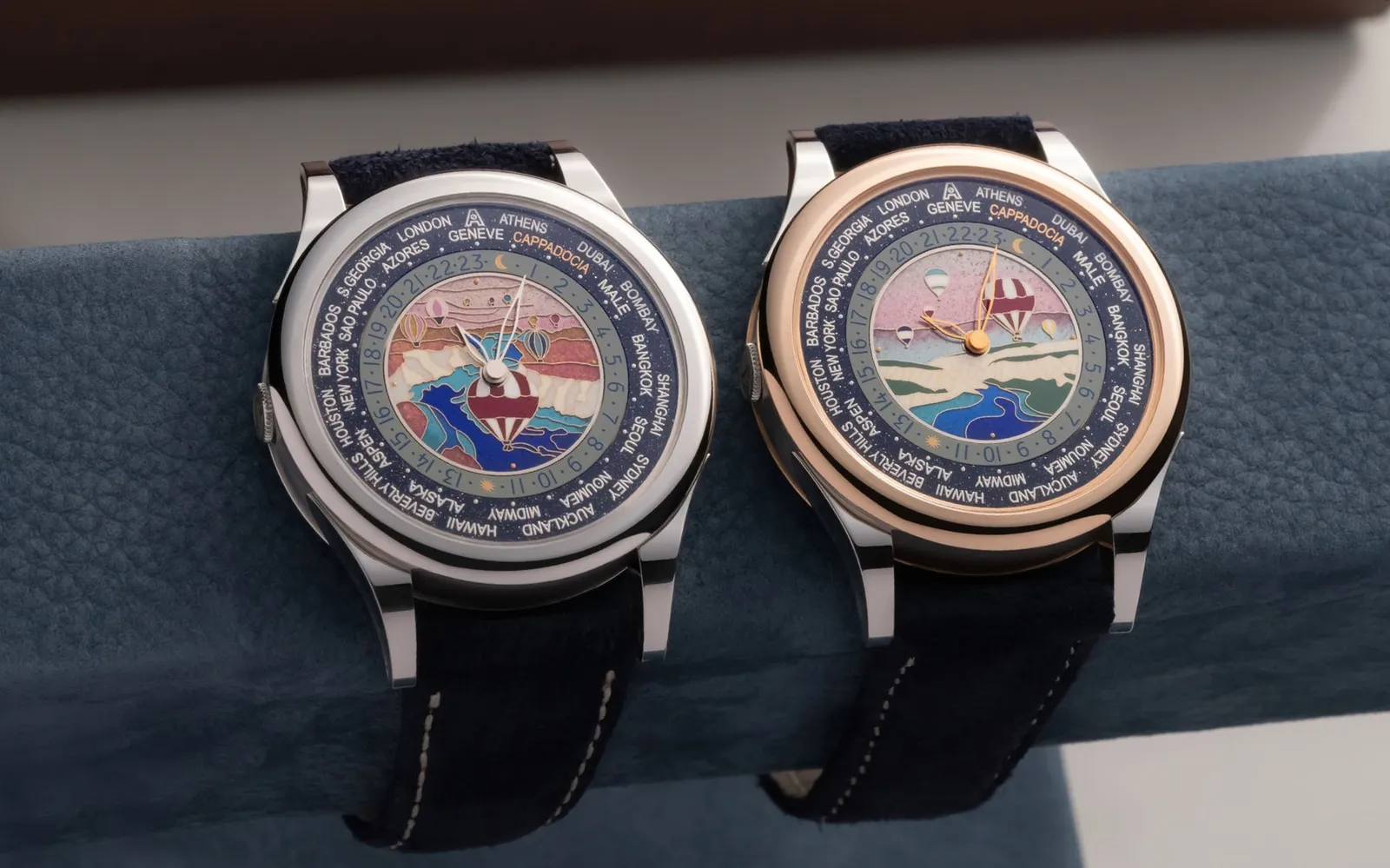
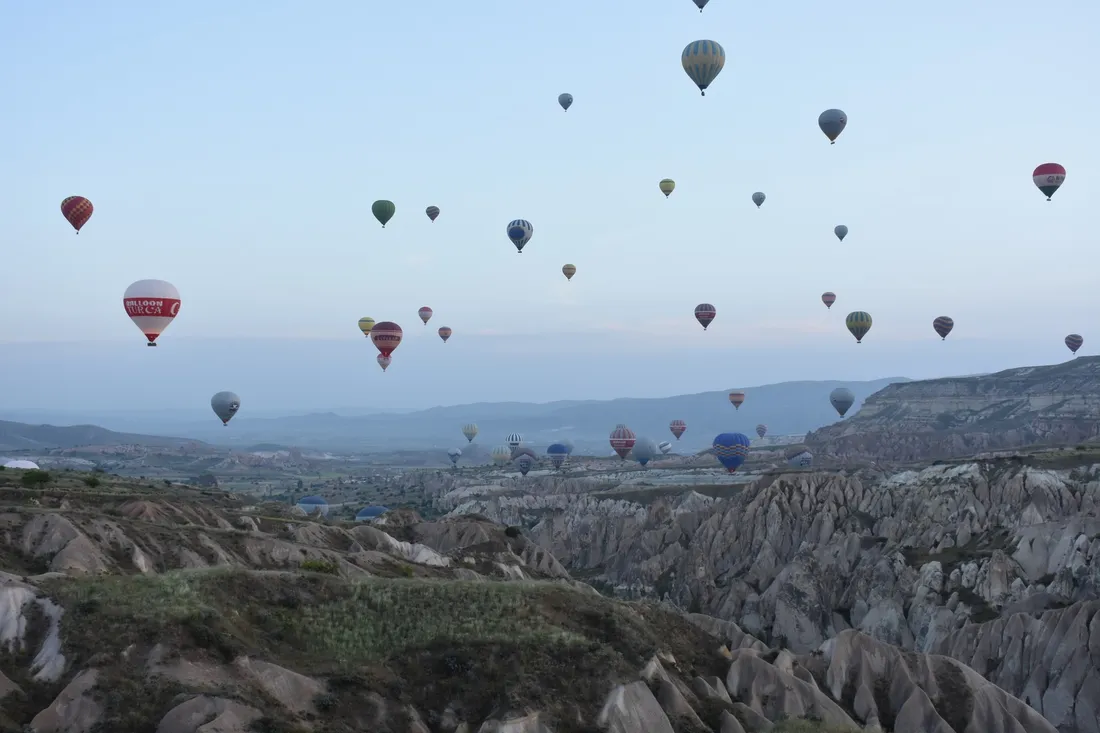
Cappadocia is an enchanted geography where time has been carved by the wind and where earth has set into stone and into dream; there, every fairy chimney is a monument raised to the sky by a wisdom a million years old.
To grasp the truth of time is possible not by seeking its flow in the ticking of mechanical wheels alone, but by listening to the ancient memory of the earth, to the steps of creation set upon the stage by a flawless divine will and plan. When we turn our eyes from the noise of the outer world and look upon that matchless geography of Cappadocia, what we find is not unconscious coincidence but the work of an absolute Artist who charges every particle with a duty. There, in the proud bearing of the fairy chimneys and in the language of the rocks the wind has carved, a divine order that comes from the depths of the earth’s crust can be read.
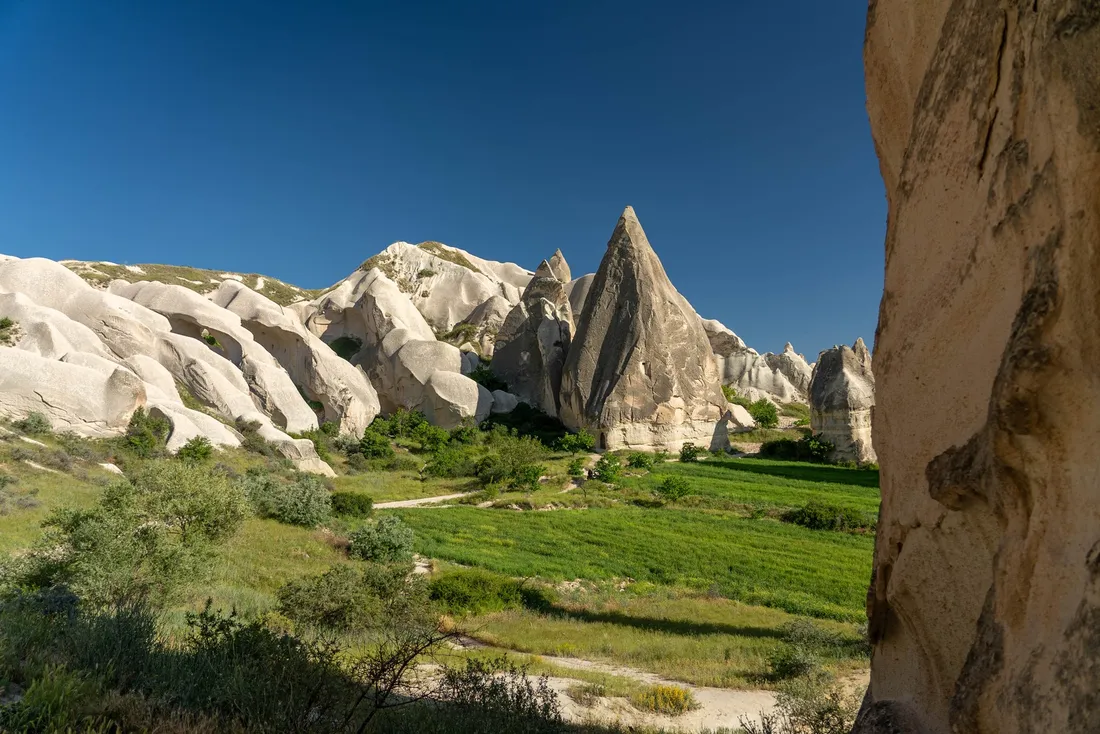
Millions of years ago, in the heart of Anatolia, immense volcanoes such as Erciyes, Hasan Dağı and Melendiz drew the fate of this geography by vomiting onto the surface the terrible pressure and fire beneath the ground. The thick layers of lava and the soft tuffs that burst out with those volcanic eruptions covered the region to a depth of hundreds of metres, like a protective blanket.
How, then, did those magnificent fairy chimneys and pyramidal forms that travellers watch in wonder come about, step by step? Since lifeless stone, water and wind have no will of their own, the working of that immense plan of creation has to be examined closely.
It begins with the material being put in its proper place. The ground heaped up by the eruptions consisted of two different layers: beneath, a soft bed of tuff that can easily be worked; above, layers of basalt and welded ignimbrite, hard as iron and extremely resistant to the weather. It is as if a craftsman had under his hand both a body as soft as clay, easily carved, and a hat of steel to protect the work. By placing the protective layer on top from the very beginning, the Creator determined with flawless measure the fate of the material beneath it.
format_quote"Lifeless stone, water and wind have no will of their own."
Hasan Bekmezci
Then comes the fine labour of water and wind. For millions of years the falling rains, the flood waters and the sharp winds began slowly to hollow out the soft layer of tuff; yet the hard cap stone above prevented the tuff beneath it from being eaten away directly. Raindrops and wind have been used here as a pencil or a chisel. As the waters ran down the steep slopes, they hollowed out and carried off the soft ground around the protective hat. What lay under the hat was preserved, and the sides were emptied.
From this the pyramidal and conical architecture was born. That balanced erosion, which the running water created on the steep slopes, in time produced gothic pyramids and immense cones reaching for the sky. As the hard stone above protected the soft body beneath it like an umbrella, those immense pyramidal structures, tapering downwards, emerged. It is like the ground beneath an umbrella opened on a summer day staying dry while everything around it is worn away by the rain and that ground is left standing high. As long as the umbrella holds, the column beneath it resists the erosion and rises straight towards the sky.
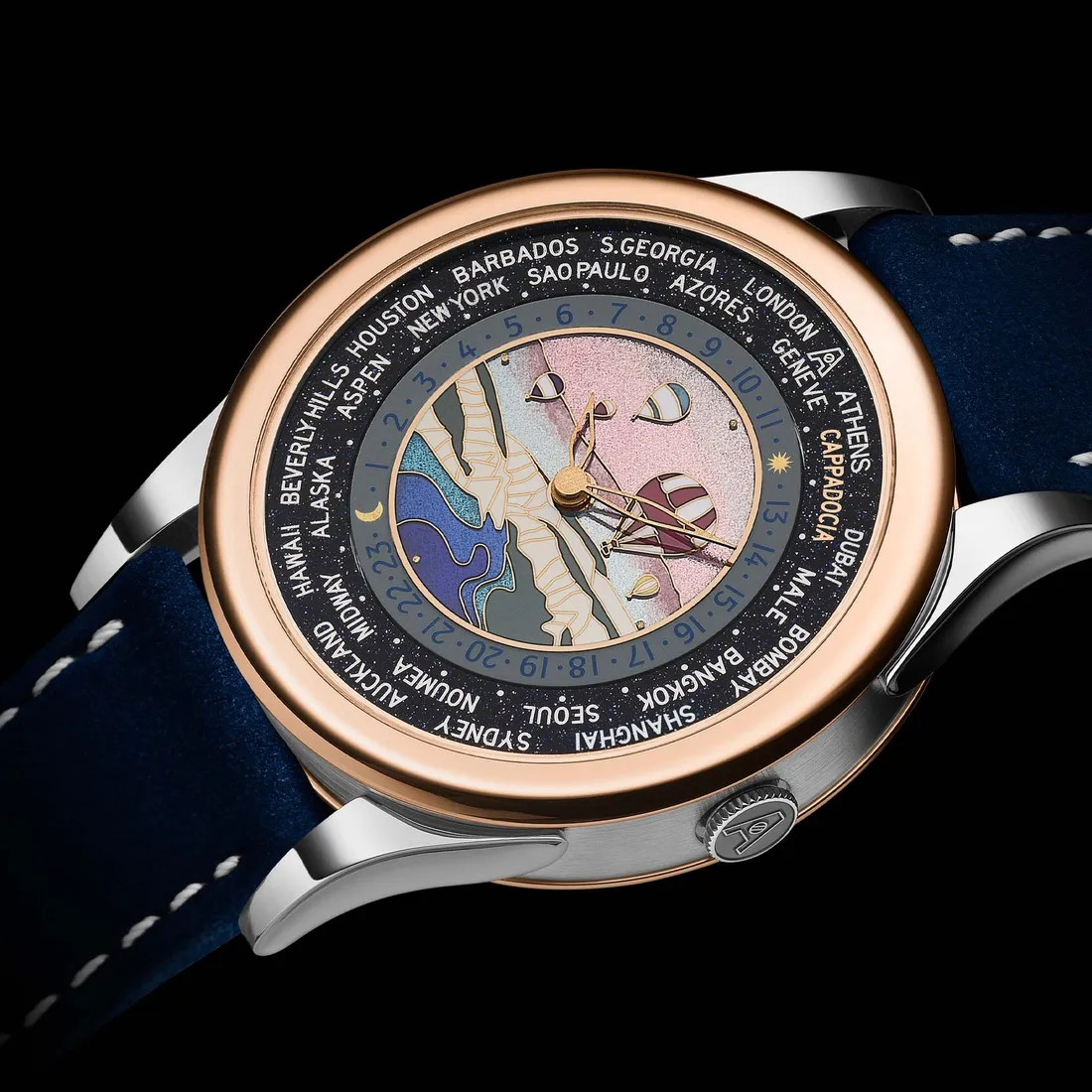
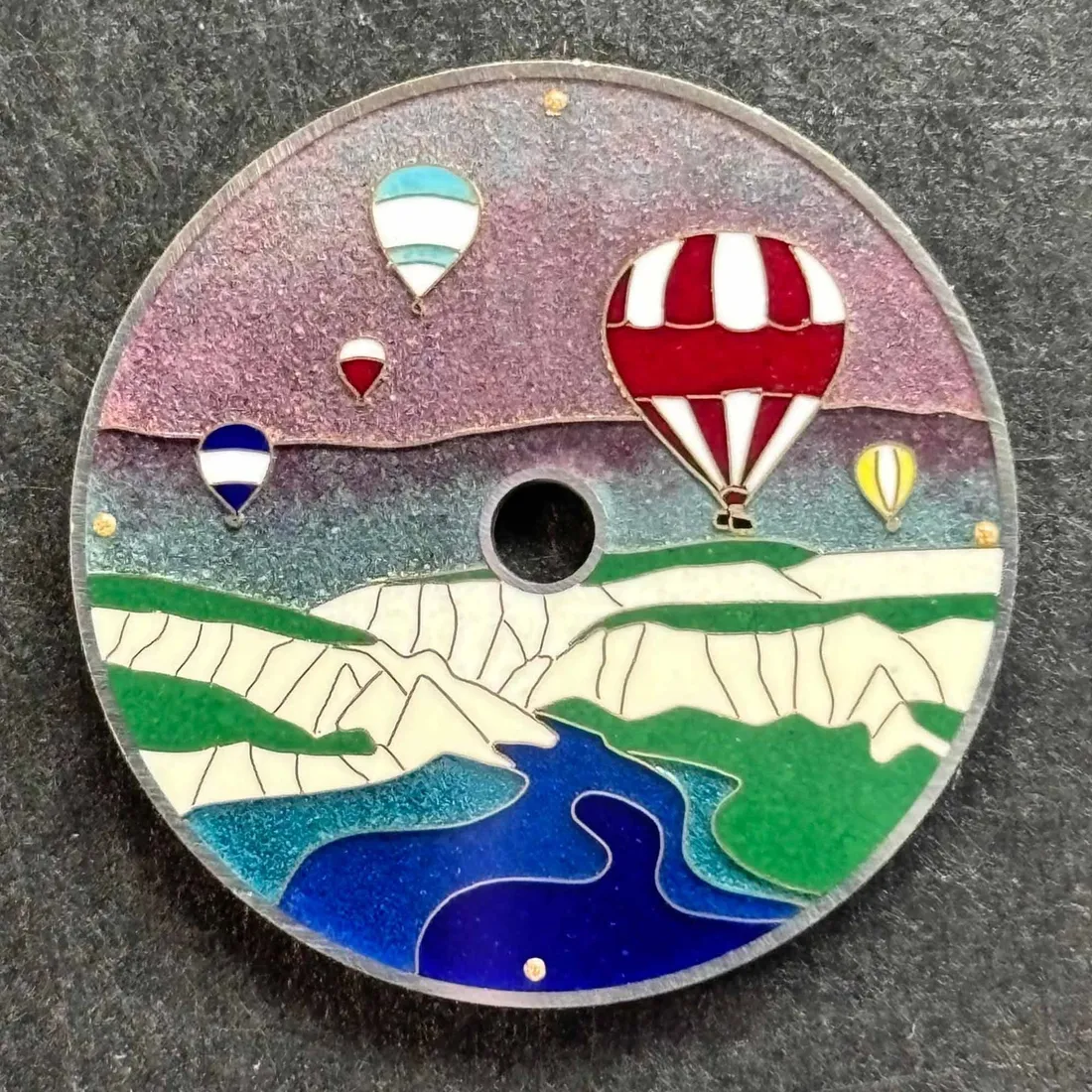
This landscape of the earth, shaped by so flawless a plan, this silhouette of Cappadocia carved by wind and water, was brought to the wrist by ANDERSEN Genève, the house that the genius of independent high watchmaking Svend Andersen founded in 1980, together with BCHH, the brand of the Singaporean collector Benjamin Chee. The series called Celestial Voyager began in 2021, and in each of its chapters it brought a different landscape down onto a dial in enamel; the sunset over Cappadocia was made in two separate versions, in 2022 and in 2024.
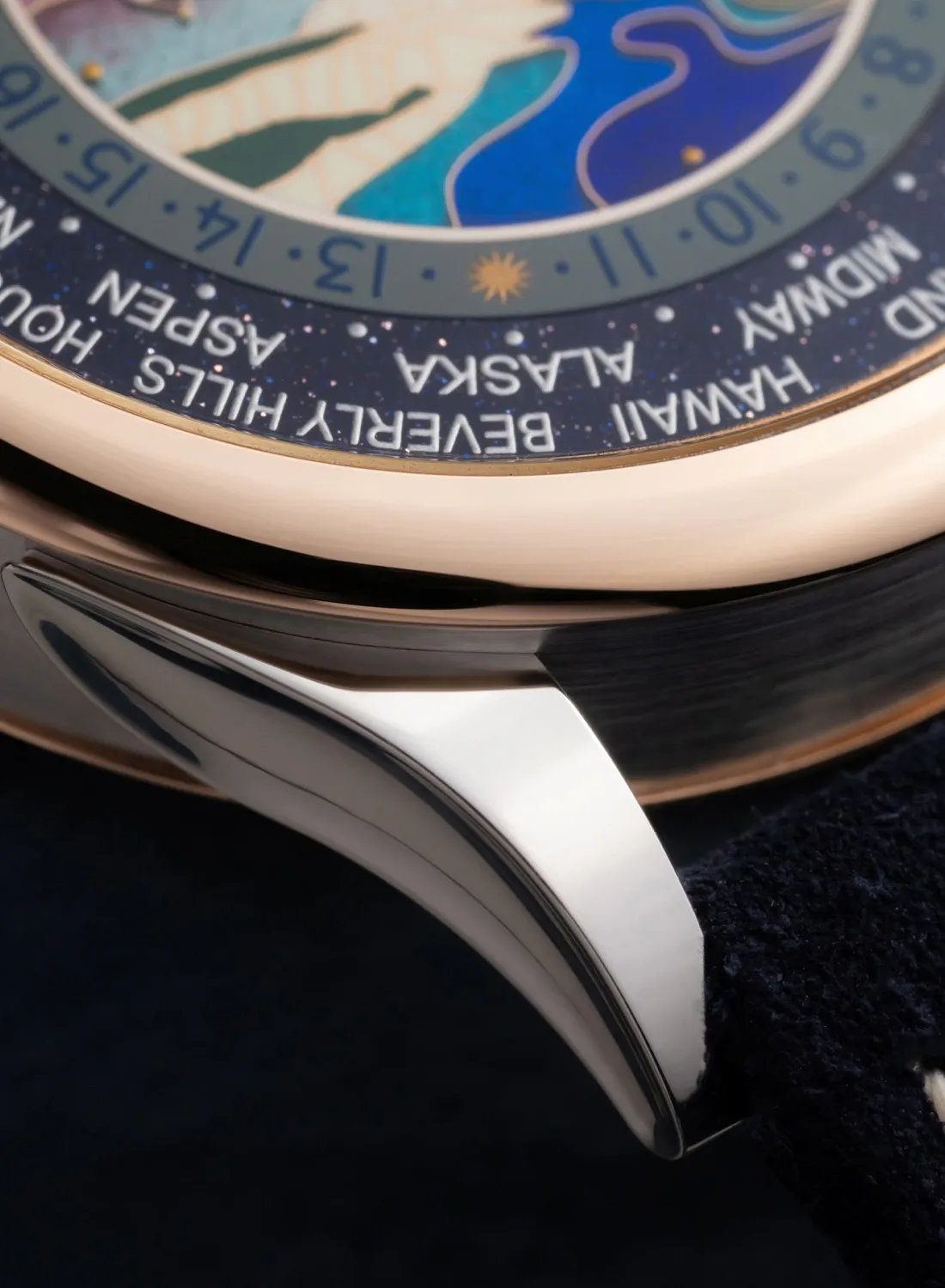
The landscape on the dial is not painted; it is cloisonné enamel. The artisan first cuts fine ribbons from more than a metre of gold wire and solders them onto the surface of the dial, drawing every boundary in the picture; what results is a set of tiny cells, each of which will hold a single colour. The working surface is about the width of a half-franc coin, which is to say some eighteen millimetres. Then enamel made of powdered glass is laid into each cell with a bristle brush, and the dial goes into the kiln. Because the colours arrive layer upon layer, the operation may be repeated twenty times, and every firing carries with it the risk of spoiling the colour laid before it. When that handwork in La Chaux-de-Fonds is finished, the surface is polished until it is level. Every dial is a single copy, because it is not possible to move the same hand twice in the same way.
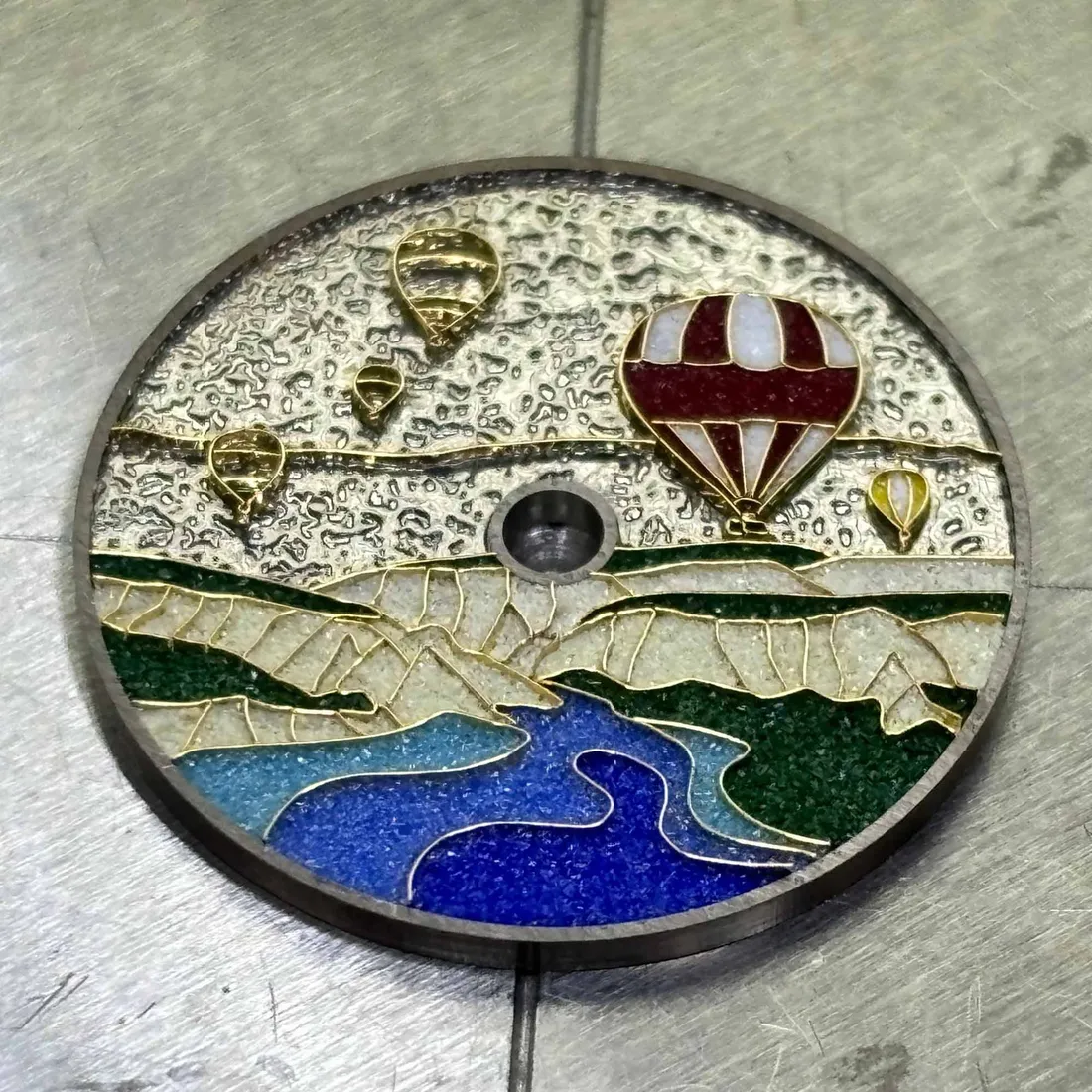
format_quote"The artisan cannot move the same hand twice in the same way; and so every dial is a single copy."
Hasan Bekmezci
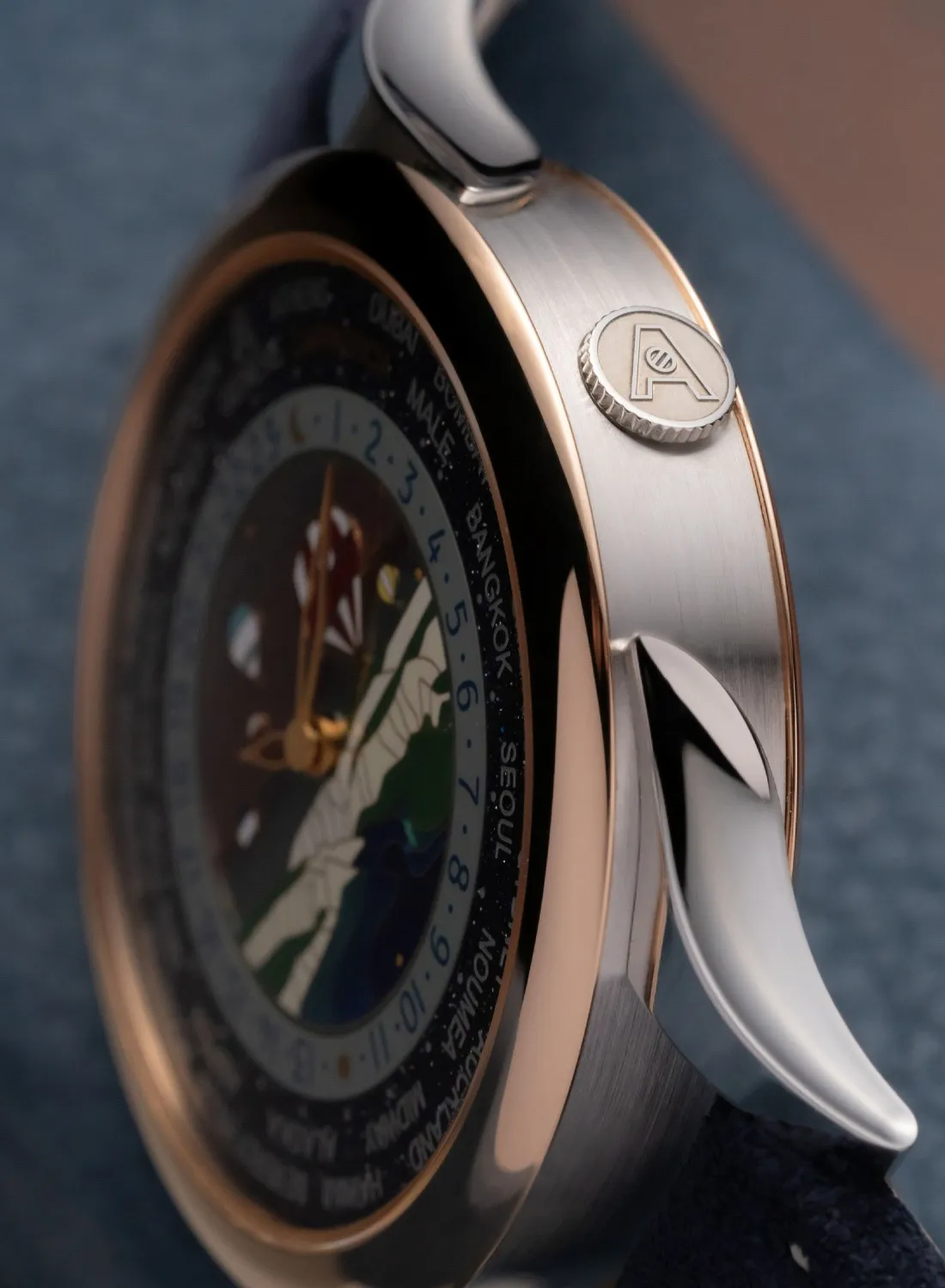
That the name Cappadocia should also appear on the surrounding city ring is the most concrete proof of how this geographical inheritance is made one with a global time zone. The world time complication was built in 1930 by Louis Cottier of Geneva; Svend Andersen, after his nine years at Patek Philippe, opened his own house, stood in 1985 among the founders of the academy of independent watchmakers, the AHCI, and made his first world timer in 1989. The Celestial Voyager case measures thirty-seven point eight millimetres; its lugs are soldered on one by one in the form of an eagle’s wing, and the hands are leaf-shaped and openworked so as not to cover the landscape. On the twenty-four hour ring that turns around the enamel there are a sun and a moon in gold. The 2022 version was made in only ten platinum cases and cost 58,800 Swiss francs; the 2024 version brought platinum and pink gold together in one case and was limited to twenty pieces.
The mechanism beneath the glass is a story of restoration too. The base calibre is the AS 1876 of the house of A. Schild, which worked until the nineteen-seventies; ANDERSEN Genève overhauls this old movement, finishes it again and builds its own world time module on top of it. It makes three oscillations a second and runs for forty hours. The rotor is made of blue gold and engine-turned by hand; since the blue colour is obtained by heating the gold in an oven, no two rotors are ever the same. Fire, in other words, colours both the dial of this watch and the rotor behind it.

format_quote"This watch does not merely count seconds; it brings the time of the world’s different geographies together on one dial."
Hasan Bekmezci
When we look at the Celestial Voyager, what we see is not merely a luxurious object in which metal and enamel have been joined. The pyramidal fairy chimneys that the volcanic eruptions carved out by so flawless a reckoning, the universal law to which wind and water were given in service, that craft which comes to life in the hands of Svend Andersen, and the absolute order that encompasses the universe, are all the voice of one and the same truth.
Every time a human being looks at this dial on his wrist, he sees the immense unity of the fire that comes from the depths of the earth, of that matchless divine wisdom in the wind’s shaping of stone, of the flawless timing in its manifestation, and of the global geography that flows past. Time flows and goes; yet what gives it meaning is the harmony between the divine knowledge written on those matchless monuments of the earth and that eternal cycle engraved in the heart of steel and of enamel.
The watch on its maker’s own page: ANDERSEN Genève, Celestial Voyager