Fire is an unquenchable manifestation that bakes the dough of existence, gives shape to matter and stokes the divine order in the universe. It is no aimless instrument of destruction, but a mighty command of the Creator that leaves its mark upon matter and is held faithful to the measure He has appointed.
The order that reigns in the particles of the universe is disclosed not only in still structures but in those most ardent moments when matter changes its form and its energy, which is to say in the truth of fire. Fire is no work of unconscious coincidence; it is a flawless servant that unties the bonds of matter, purifies it and makes visible the divine laws behind it. The act of burning is the joining of hydrogen, carbon and oxygen in a measure appointed at the molecular level, the release of a stored energy within a circle of wisdom. The Creator has decreed fire not as an element of annihilation but as a seal that transforms existence, that makes metallurgy possible and that draws the physical limits of the flow of time.
Why, then, do these physical laws inscribed upon the universe exist? The Creator did not merely bring this detailed world into being out of nothing; He fixed the chains of cause and effect with these laws in order to establish a field of trial that a human being can comprehend and an order of wisdom upon which he can reason. The laws are so many steps laid down so that the intellect may work, so that justice and moderation may hold in the kingdom, and so that every particle may observe the divine limit appointed to it.
To understand this wisdom of creation in fire requires a deep examination of the divine laws matter sets up with energy, which is to say of the unshakeable principles of thermodynamics, and of the divine intent within them.
The zeroth law establishes thermal equilibrium. If two separate bodies are in thermal equilibrium with a third, they are in equilibrium with each other; heat always flows from the hotter to the colder. The divine intent in laying down this law is to prevent extremes from becoming permanent in the universe, and to make the system habitable by subjecting heat and energy to a just flow. We may liken it to the water levels equalising when the valves are opened between tanks placed in the different rooms of an immense palace. Had this mechanism of equilibrium not been set up, one side of the universe would instantly have reached an absolute heat and been scorched while the other froze at absolute zero. The moderation that life requires, which is to say the middle way and habitable climates, could never have formed; one room of the palace would drown under water while another cracked from drought, and the whole order would collapse.
The first law is the conservation of energy. Energy cannot be created out of nothing, and energy that exists cannot be wholly destroyed; it only changes form. This rule, of course, binds only the physical working within this universe and the transformation among created things; the Creator, who possesses the power that brought the universe out of nothing and set it upon the stage by His will when nothing was, is able to bring into being out of nothing, and to annihilate, whatever He wills. The divine intent in this law is the attestation that nothing in the universe is wasted, that the owner of the kingdom squanders not a single particle. It is like the flawless reckoning a careful palace treasurer enters in his ledger: every gold leaf that comes into the treasury is not lost, it changes form and becomes a necklace, a crown or a coin, yet not a single penny is subtracted from the total. Had the law of the conservation of energy not worked, existence would have mingled into nothingness inconsistently at every moment, or it would have filled with senseless explosions out of nothing. A breath we draw or a piece of wood we burn would vanish into nothing at once, and the universe would turn into an unstable void that was at every moment being exhausted and wholly destroyed.
format_quote"Fire is no aimless instrument of destruction, but a mighty command held faithful to an appointed measure."
Hasan Bekmezci

The second law is entropy, which is to say the increase of disorder. In an isolated system disorder always increases of itself. The divine intent behind this law is to appoint a direction for time, to give the flow of life a dynamism, and to declare in the language of matter that the universe is not eternal, that it has a beginning and an end. In the film Tenet, Christopher Nolan shows how vital entropy is by reversing this one-way flow of time. In the normal world wood burns and becomes ash and smoke; that is the natural flow of life. In the reversed-entropy world of the film, the smoke gathers and becomes wood again. Yet even Nolan shows this in his fiction: entropy must flow in one direction, forwards, or the logic of the universe collapses. Think of a glass falling to the ground and breaking. In laying down entropy the Creator has given time an arrow and turned life into a process with a purpose. Had the law of entropy and the arrow of time flowing forwards not existed, time would have stopped. Everything would have stayed fixed and functionless at the same instant, like a frozen photograph. Yesterday, today and tomorrow would have no meaning; the chain of cause and effect would break, and neither an act could be performed nor a work brought forth.
The third law appoints absolute zero. As the temperature approaches absolute zero, which is to say minus two hundred and seventy-three point one five degrees, entropy falls to nothing and atomic motion ceases. The divine intent in this law is to appoint where the limit of matter’s motion and the boundary of its inertia lie. It is like a perfect orchestra falling wholly silent after the last note is played, and the conductor lowering his hands to end the command; that point of absolute silence is the final limit that gives meaning to the place where motion began. Had there been no limit to matter’s motion and inertia, cooling and stillness would have had no lower bound, and the system would have been dragged into an uncontrolled, bottomless collapse.

format_quote"Entropy must flow in one direction; otherwise the logic of the universe collapses."
Hasan Bekmezci
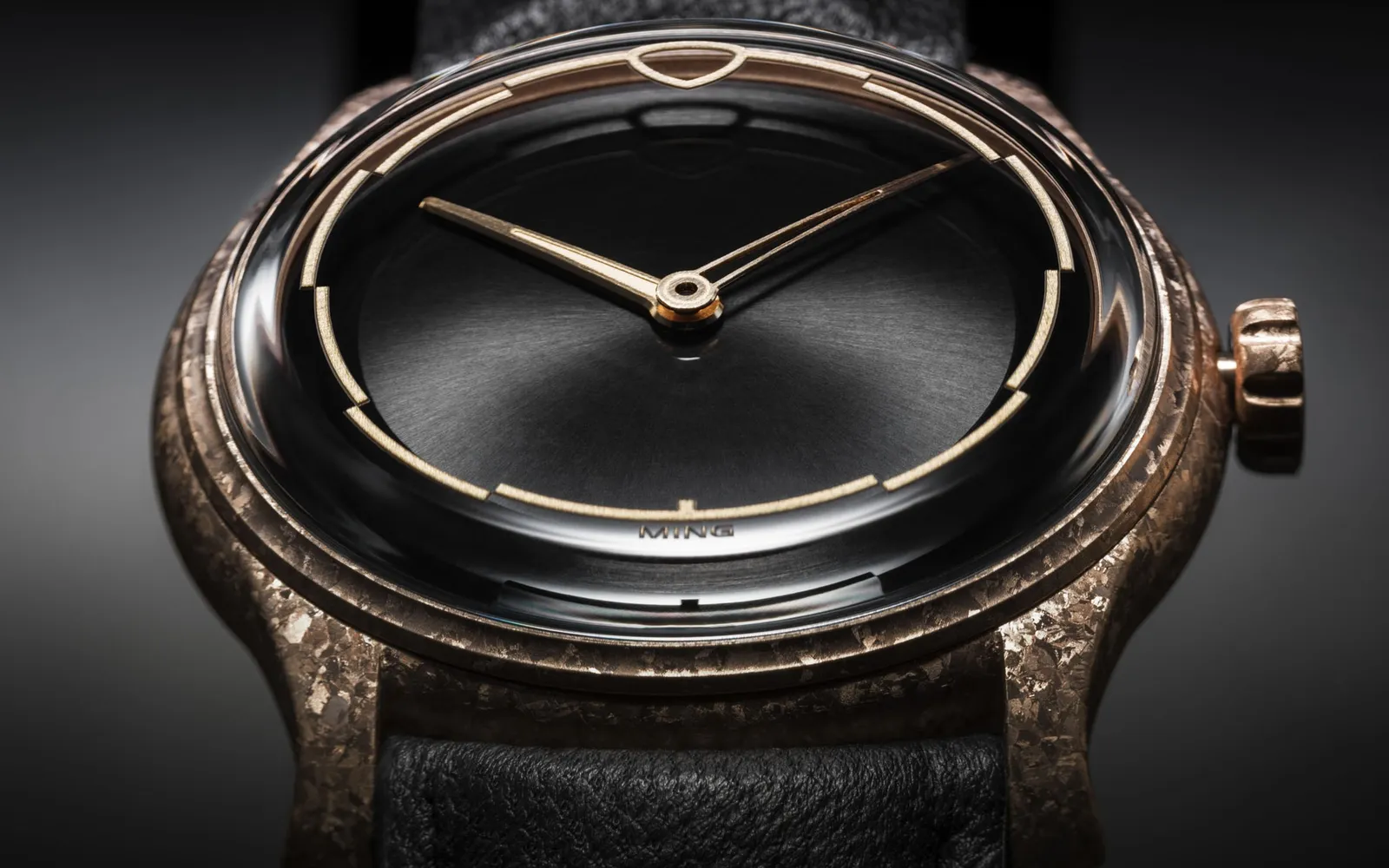
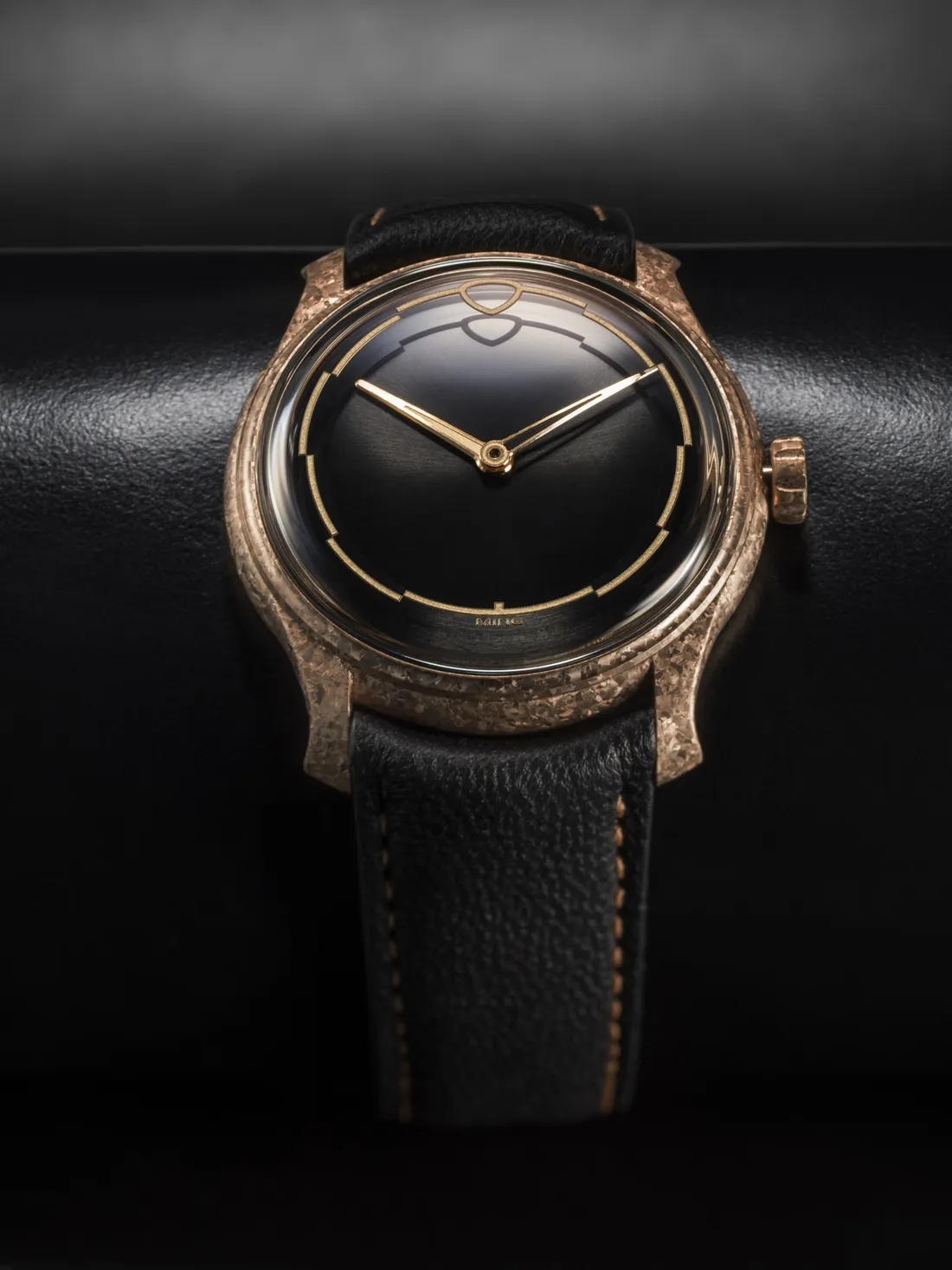
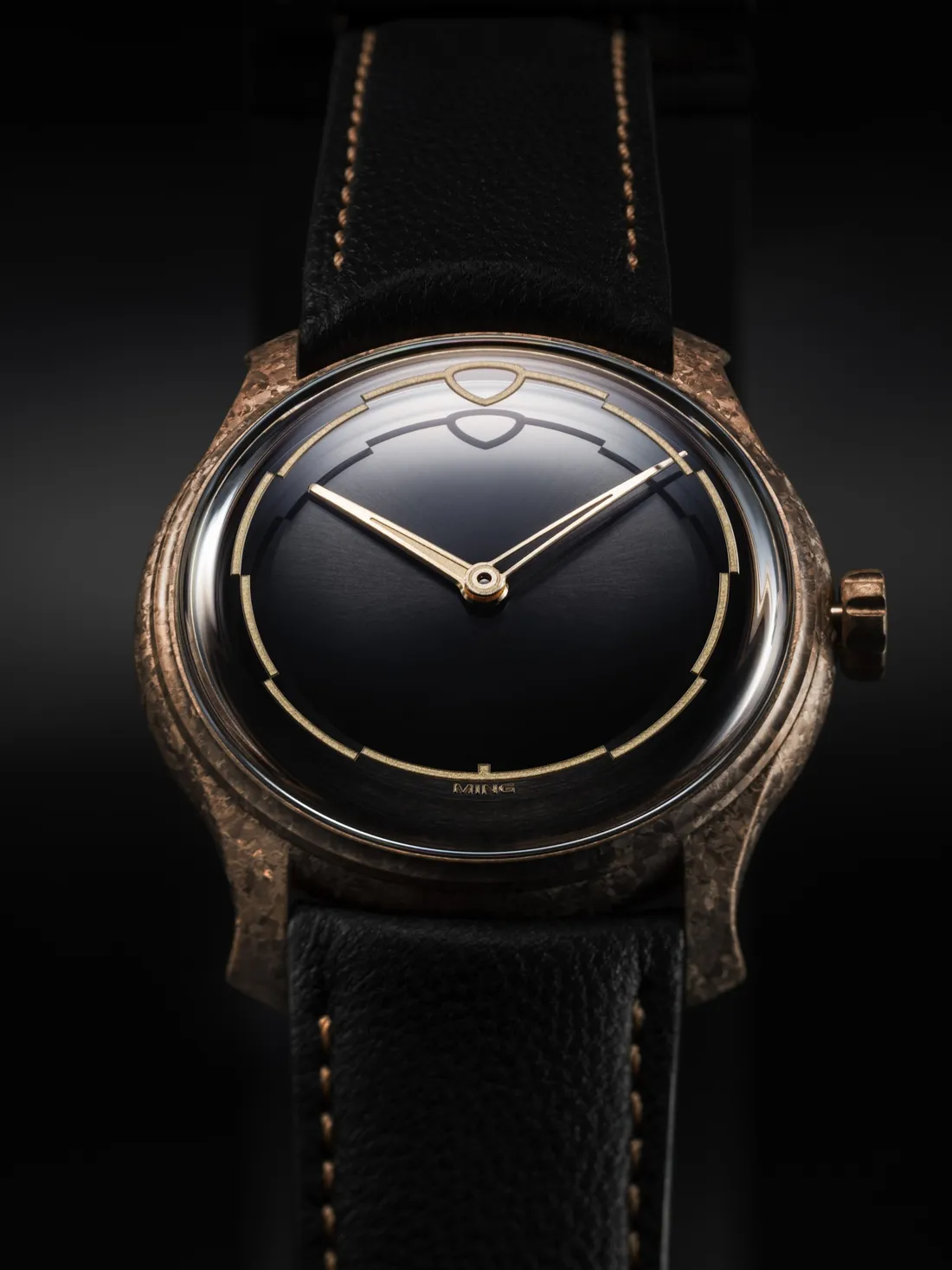
Those laws of thermodynamics that give shape to metal at high temperatures, the seal entropy sets upon time and the controlled manifestation of fire are turned into art by MING, the innovative name of independent watchmaking, in the 51.01 Halo. The most fascinating thing about the case is that the titanium is put through a special process by being heated up to twelve hundred degrees and is then crowned with a rose gold coating.
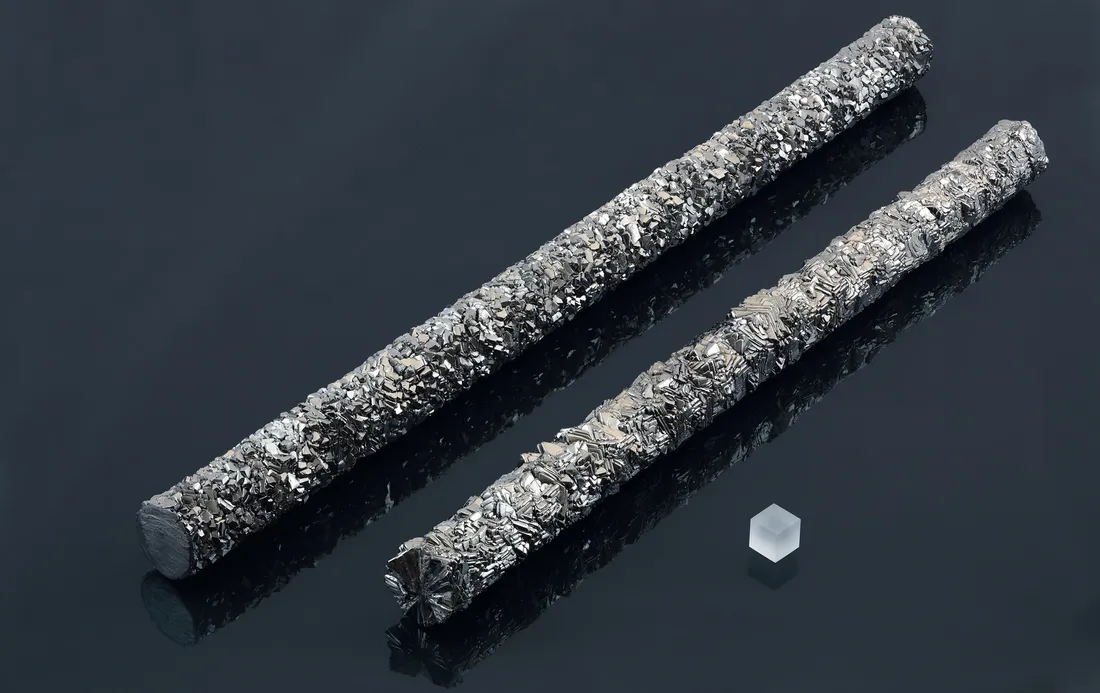
The detail of the process runs as follows. Grade 5 titanium is heated to twelve hundred degrees in an airless vacuum chamber and then cooled under control; that thermal cycle enlarges the crystalline grains already present within the metal. The surface is then etched with acid, and the enlarged grains come into view. The 5N coating that comes last gives the case its warm rose gold colour. The controlled high heat leaves an organic, unique and unrepeatable texture on the surface of the metal. Fire has worked here not as a disaster that burns but as a pen that grants matter an honour, within the frame of the laws the Creator has laid down.
In a model that breaks the classical patterns of the dial, the indices are placed not on the dial but on the box-shaped sapphire crystal. More exactly, they are engraved inside the glass and filled with 5N lacquer so as to hold the colour of the case; contrary to MING’s habit, no luminous material has been used this time. By this means the refraction of light and shadow joins the black depth of the dial and offers an effect with dimension. The black lacquered dial is polished at the centre and circular-brushed at the periphery, and the difference between them leaves the sense of an opaline surface. Both the upper and the lower sapphire carry antireflective coatings on both faces.
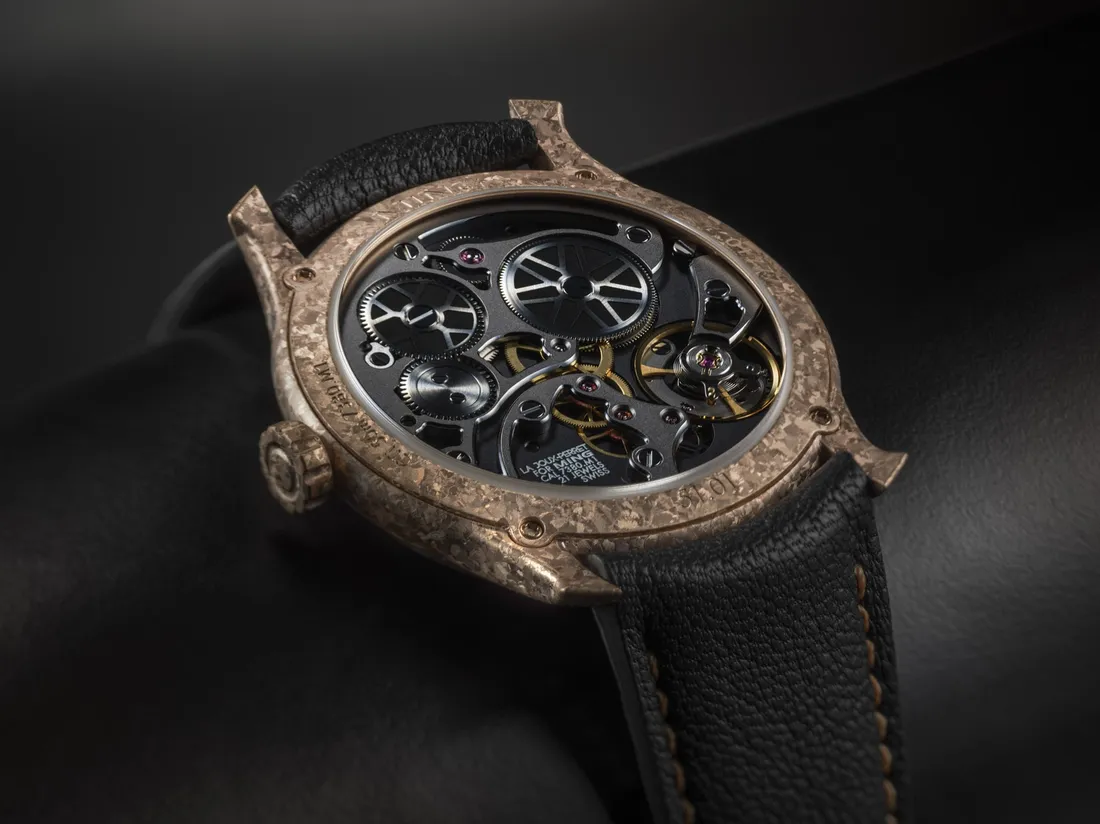
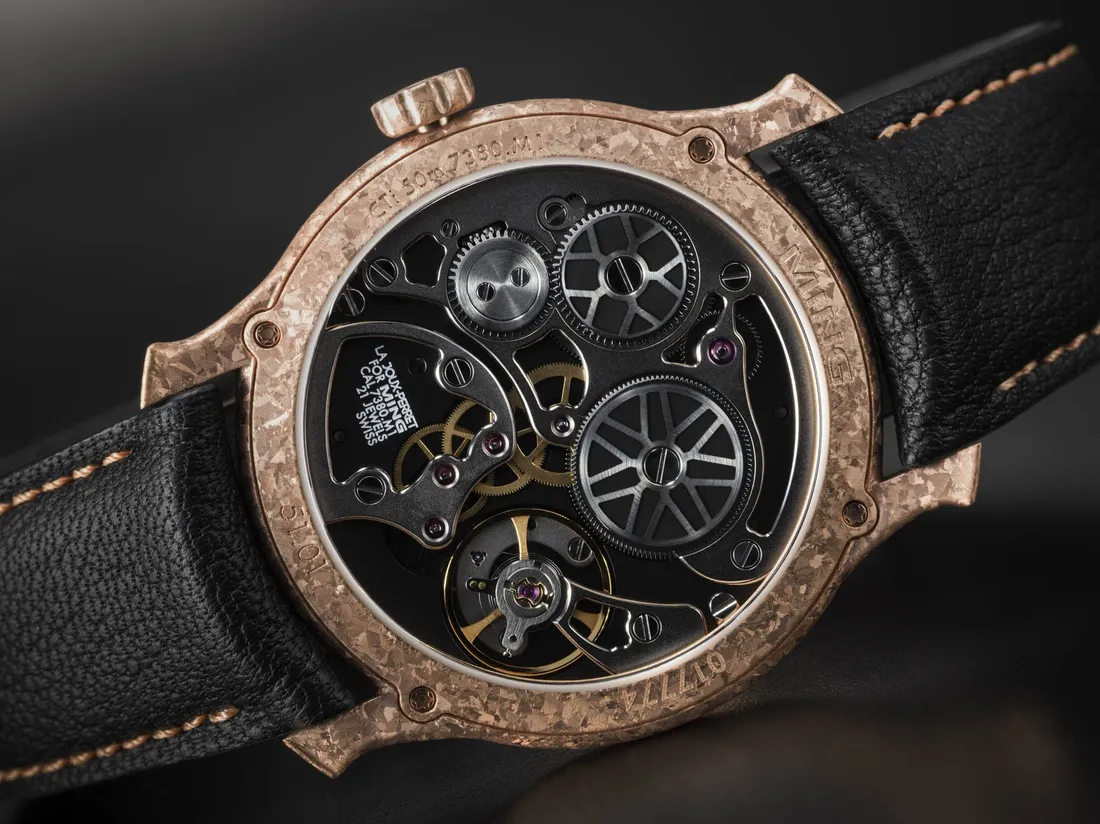
In the heart of the watch beats the calibre 7380.M1, made specially for MING by La Joux-Perret; it is wound by hand and is only 2.7 millimetres thick. It is twenty-nine point four millimetres across, carries twenty-one jewels and makes three oscillations a second. That a ninety-hour power reserve is offered in a structure this thin is a flawless application in the mechanical field of the law of the conservation of energy. The bridges were drawn again for this model, coated in matte anthracite and chamfered by hand; the mainplate beneath them is matte black. On the ratchet and barrel wheels the brand’s spoke pattern can be seen.
format_quote"Fire has worked here not as a disaster that burns but as a pen that grants matter an honour."
Hasan Bekmezci
The strap is in black goat leather by Jean Rousseau Paris, and the buckle at its end is made of the same crystallized titanium as the case and has taken the same 5N coating; the buckle carries a notch for fine adjustment. Water resistance is fifty metres. Limited to only 150 pieces, this work places that particular meeting of fire and titanium in an exceptional position in the world of collecting. The price is 10,900 Swiss francs excluding tax, and the maker writes on its own page today that the watch is sold out, that deliveries are complete and that it will not be produced again.
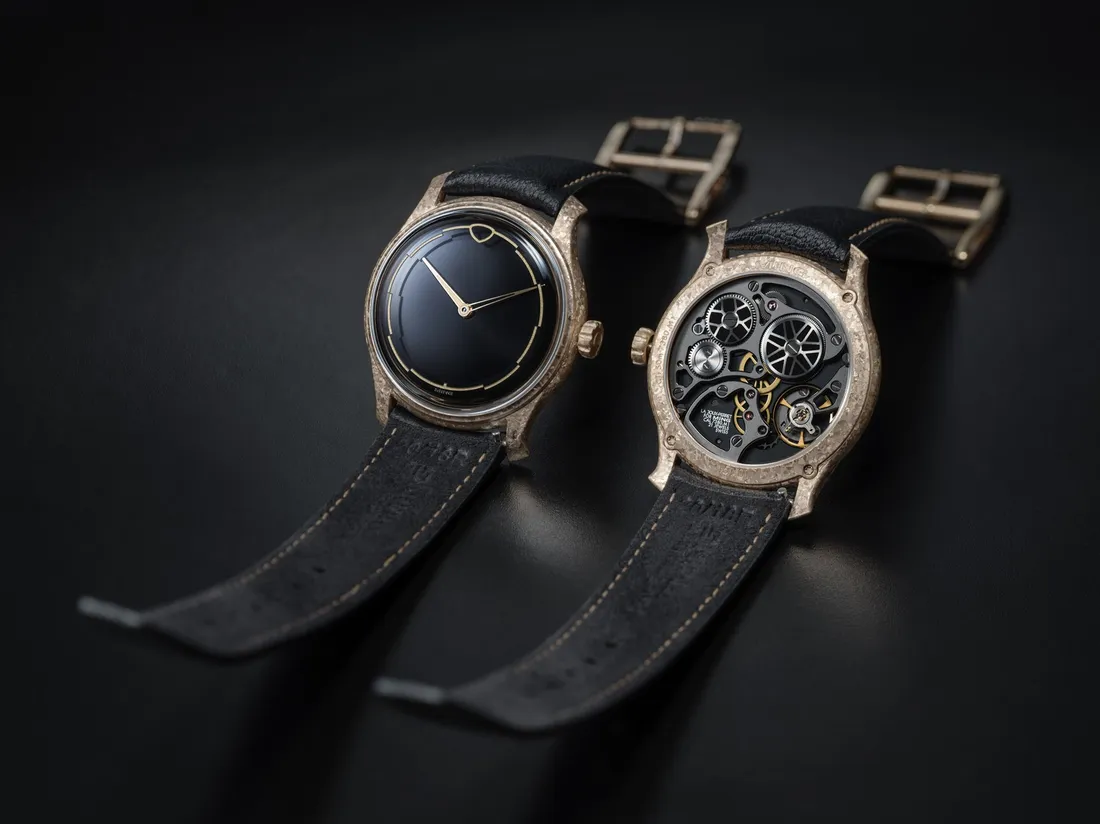
When we look at the MING 51.01 Halo, what we see is not merely a luxurious object in which titanium and sapphire crystal have come together. The thermodynamic laws that bend metal in furnaces of twelve hundred degrees, the unshakeable arrow of entropy that carries time forward, and that layered architecture taking shape in the hands of MING’s designers are all reflections of the same divine order.
Every time a human being looks at this dial carved by fire on his wrist, he sees the transformation of matter in its incandescent state, the wise balance of an energy that does not perish, and that absolute order of creation inscribed upon the particles of the universe. Time flows and goes; yet what gives it meaning is the harmony between the divine knowledge manifested in the heat of fire and that high craft engraved in the heart of steel.
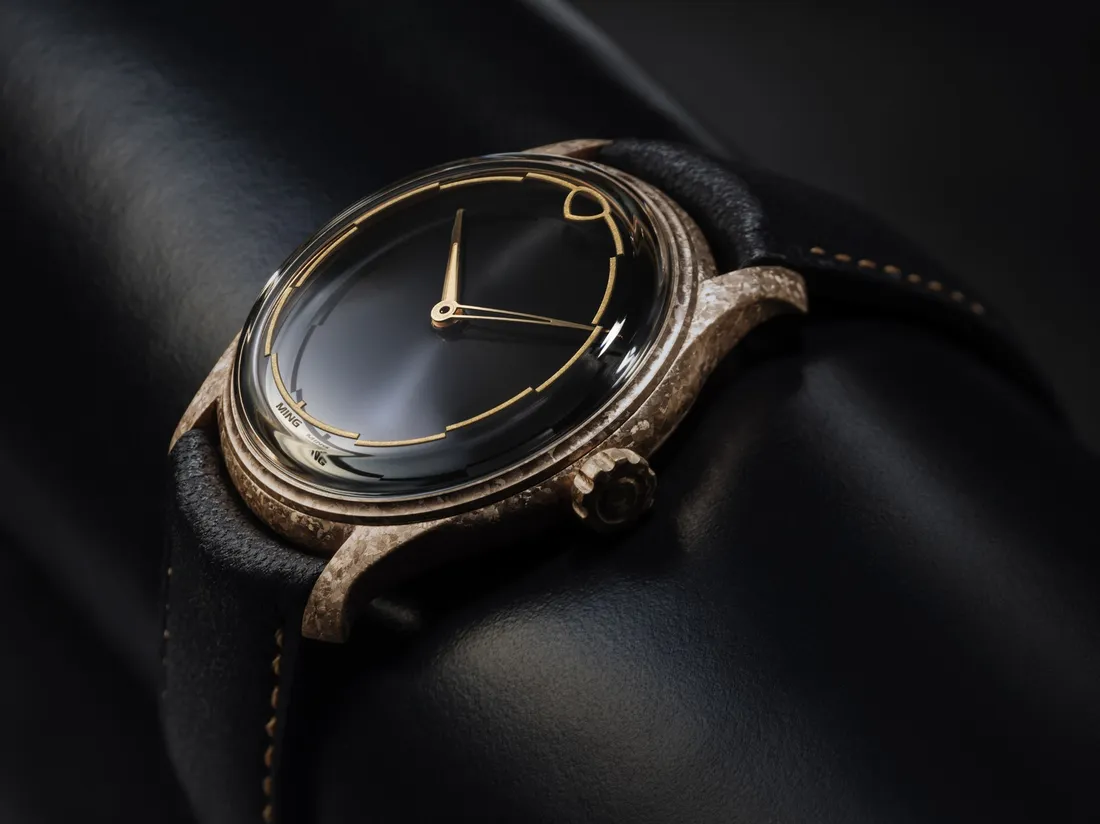
The watch on its maker’s own page: MING, 51.01 Halo