Neuchâtel, 1950. Small numbered movements were being left in a room of the cantonal observatory that stands on the hill above the town. Each of them would stay there for forty-five days, and through all that time nobody would touch them. At the end of the period it was not a name that was announced but a number. The smaller that number, the better the watch was held to be, and the larger it was, the worse; and every year the whole of Swiss watchmaking looked at that number.
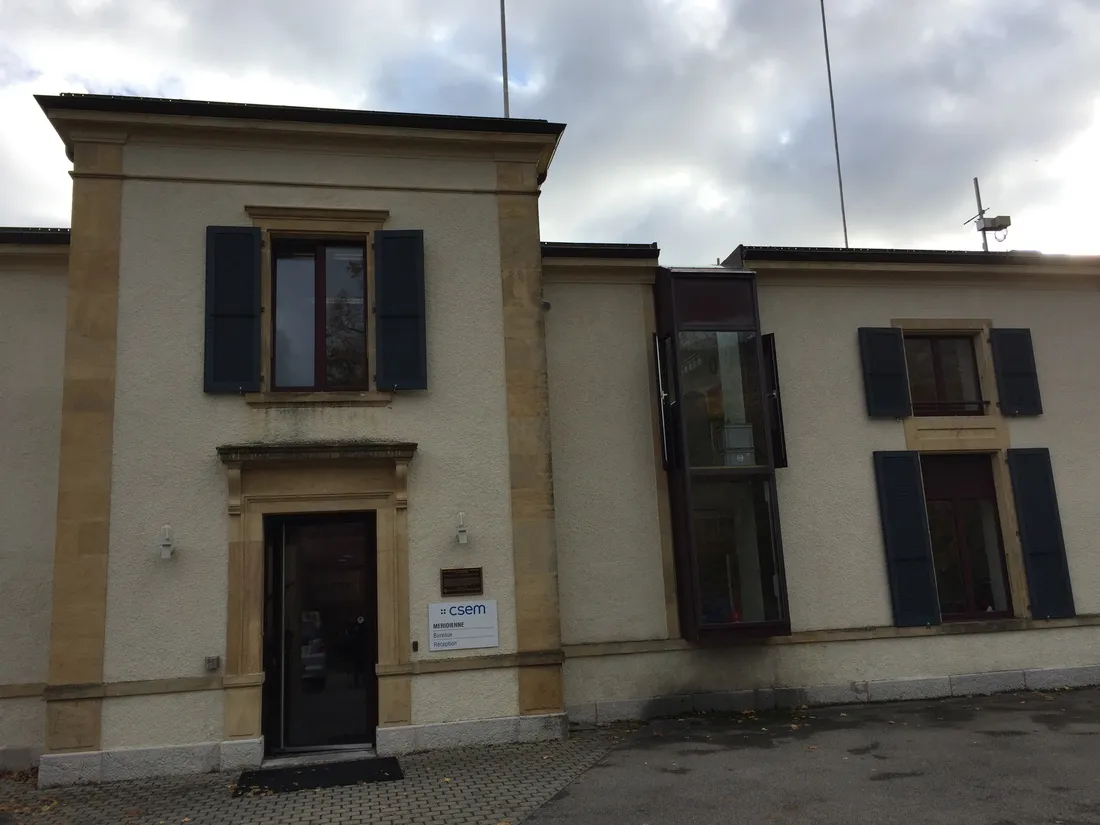
The working of the competition looks simple, and yet it is merciless. The watch is delivered to the observatory and measured over forty-five days, in ten separate series of four or five days each. In every series the position of the movement changes: dial up, dial down, crown up, crown left, crown right. Two separate temperatures enter between them, one cold and one warm. A reading is taken at the same hour each day, and what is read is not whether the watch is right. What is read is how far the watch has departed from yesterday.
The difference matters. A watch that runs five seconds fast a day can be corrected if it gives the same five seconds every day, because its error is known and the regulation closes it. A watch that gives two seconds one day and seven the next cannot be corrected. And it was precisely this that the observatory measured. The mean of the daily departure, the difference that appears as the position changes, the spread between the two largest readings, how the rate shifts when the temperature changes, and whether the watch returns to its former rate were each reckoned separately, all of them weighted, and brought down to a single classification number. Winning the competition, therefore, had less to do with running correctly than with running wrongly in the same way.
format_quote"The observatory did not measure whether a watch was right. It measured whether a watch erred in the same way every day."
Hasan Bekmezci
Zenith entered this examination with a movement it introduced in 1948. The Calibre 135 had been drawn by the house watchmaker Ephrem Jobin, and the distinguishing aspect of the design was the unusual size of its balance. By shifting the barrel that carries the mainspring off centre, Jobin opened up more room for the balance wheel than it would normally have found. A large, heavy wheel is a wheel with more inertia, which is to say that once it has begun to swing it becomes harder to push off its path. The special version built for the competition carried the name 135-O and was produced only to be sent to the observatory.
Two names did the regulating: Charles Fleck and René Gygax. The result is a run with few equals in the history of watchmaking. From 1950 to 1954, the Calibre 135-O came first in the wristwatch category at Neuchâtel for five consecutive years, and the calibre gathered two hundred and thirty-five chronometry prizes in all.
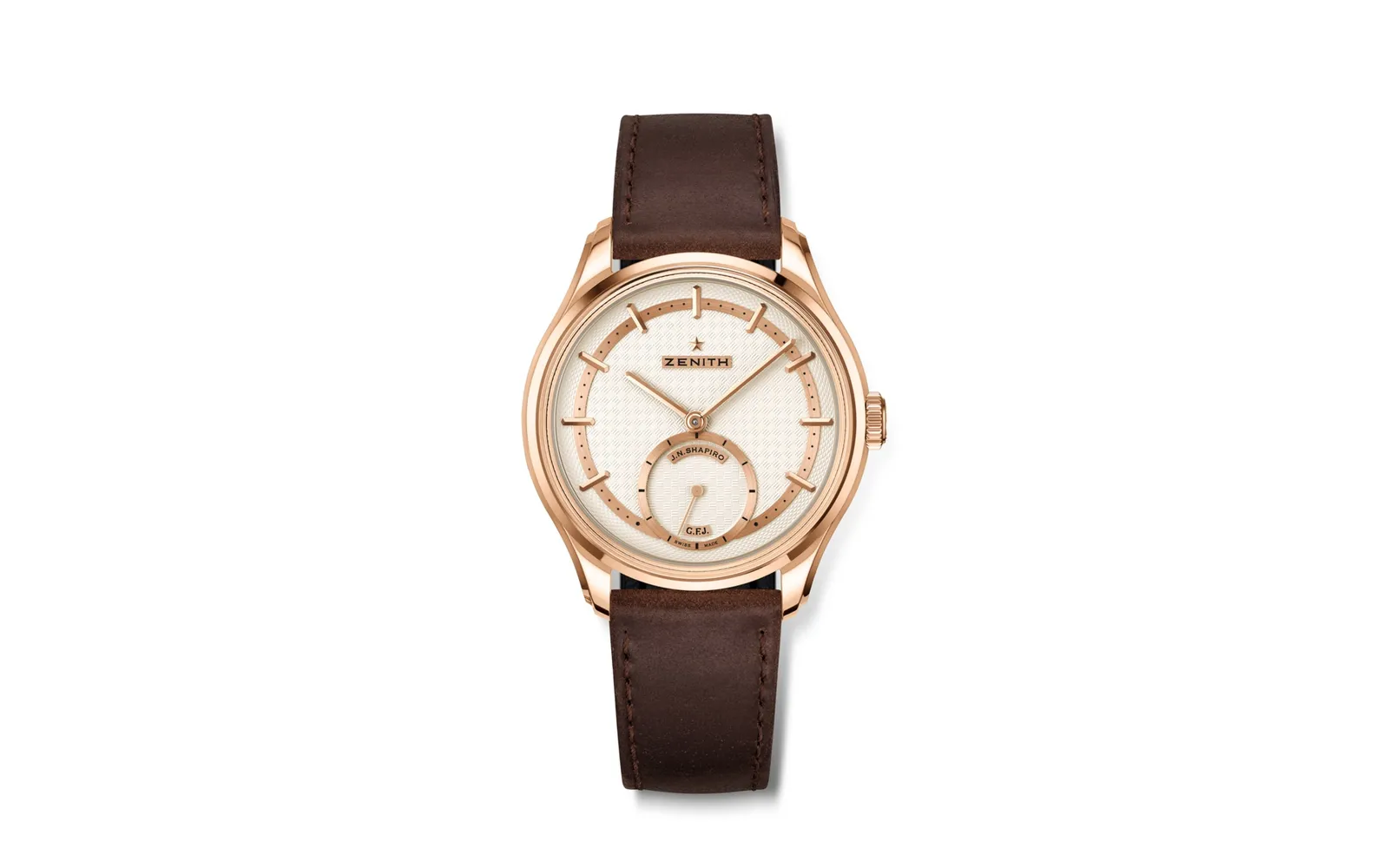
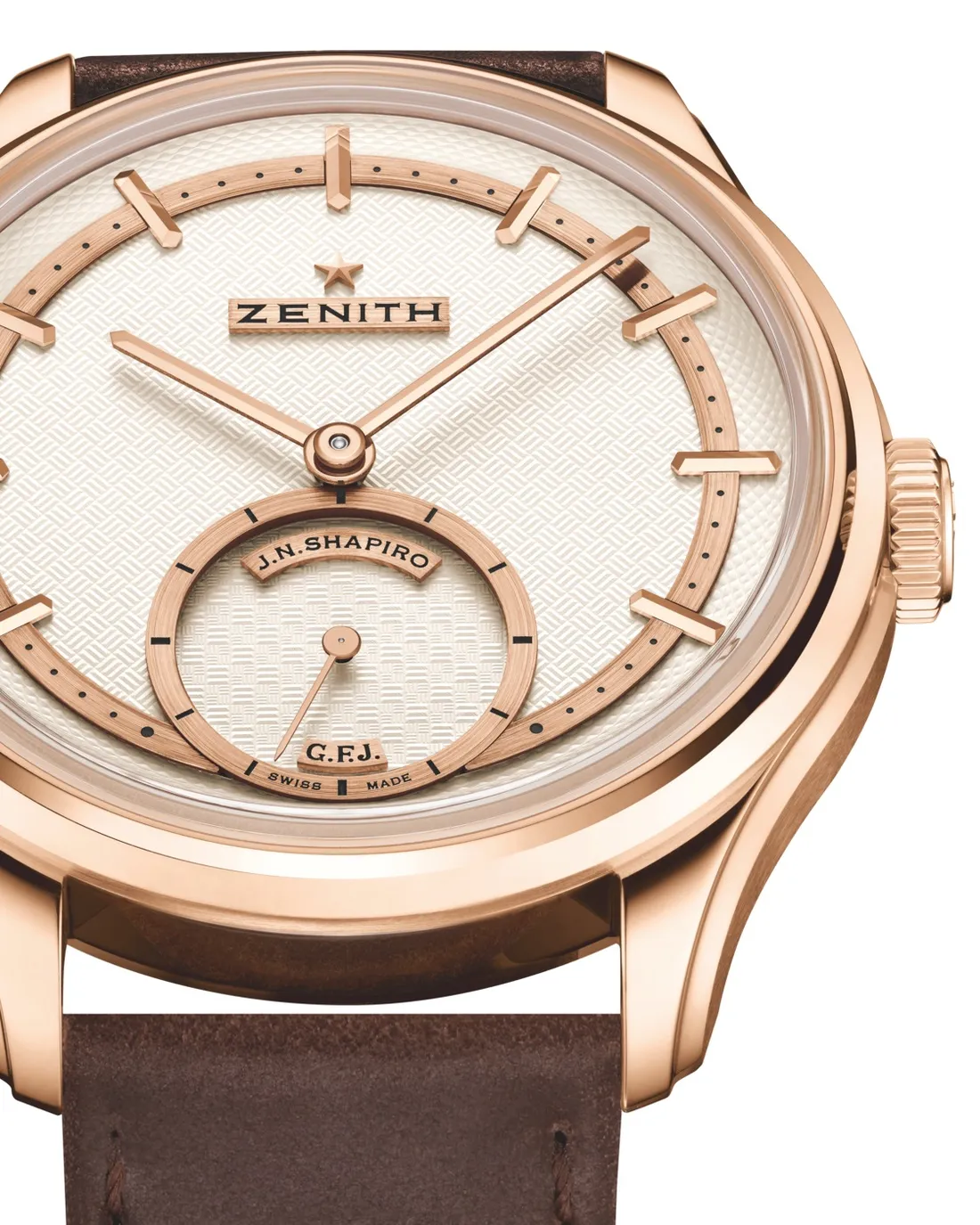
In 2025 Zenith took up this movement again and placed it inside the collection it named G.F.J. The letters are the initials of its founder: Georges Favre-Jacot had established the house at Le Locle in 1865, and the reference number of the watch begins with 18.1865. That same year the collection took the Chronometry Prize at the Grand Prix d’Horlogerie de Genève. This year’s model is the second double-signed version; the first was made with the Japanese house Naoya Hida, and this one was made with the Californian J.N. Shapiro and was unveiled on 12 November 2026.
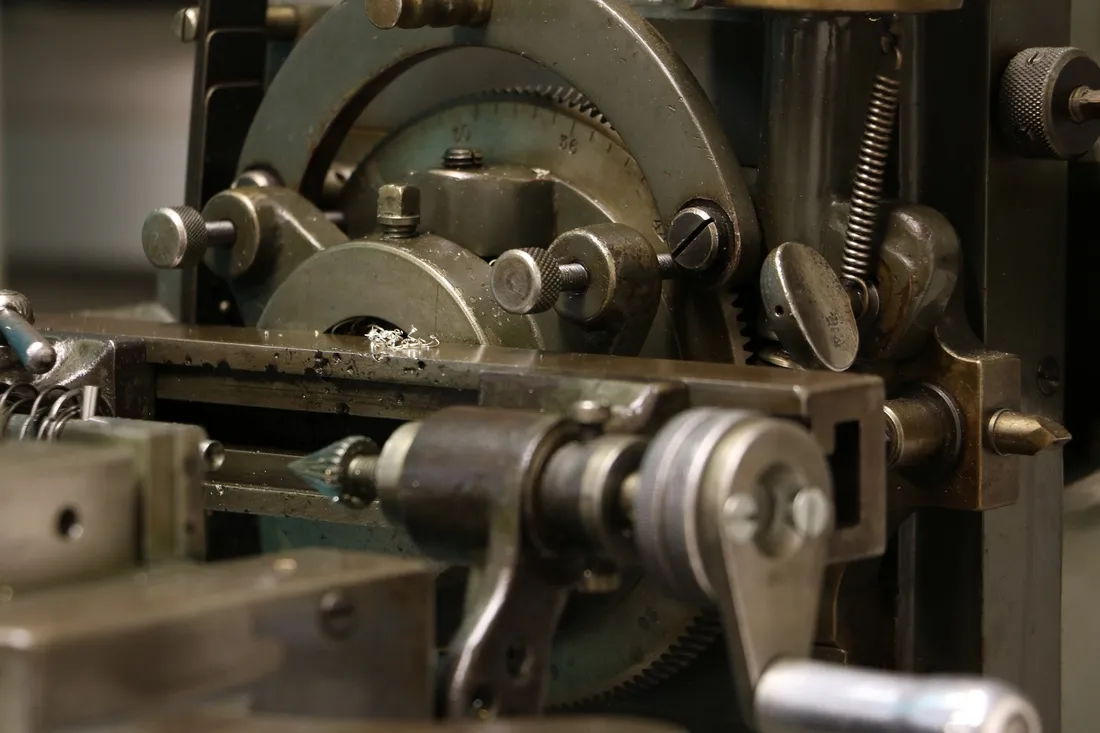
Joshua Shapiro founded his brand in Los Angeles in 2018. Before that he had been a school principal and a teacher of American history, and he taught himself to run the rose engine and the straight-line machine. Guilloché is not the stamping of a pattern onto a surface. The part is fixed to the machine, turns over a template, and a cutter held still takes a few microns off the metal at every revolution. The depth of the pattern and the spacing between its lines are both settled by the pressure of the hand, which is to say that the same machine will not produce the same pattern exactly twice. On the silver dial of this watch there are three separate patterns: barleycorn on the outside, basketweave towards the centre, and in the small seconds at six Shapiro’s own Infinity Weave. That all three break the light differently divides the dial, according to the angle of view, into three separate surfaces. The rings that draw the boundaries between them, the markers and the plate on which the two signatures stand are all of eighteen carat rose gold.
format_quote"The same machine will not produce the same pattern exactly twice; what makes the difference is the pressure of the hand."
Hasan Bekmezci
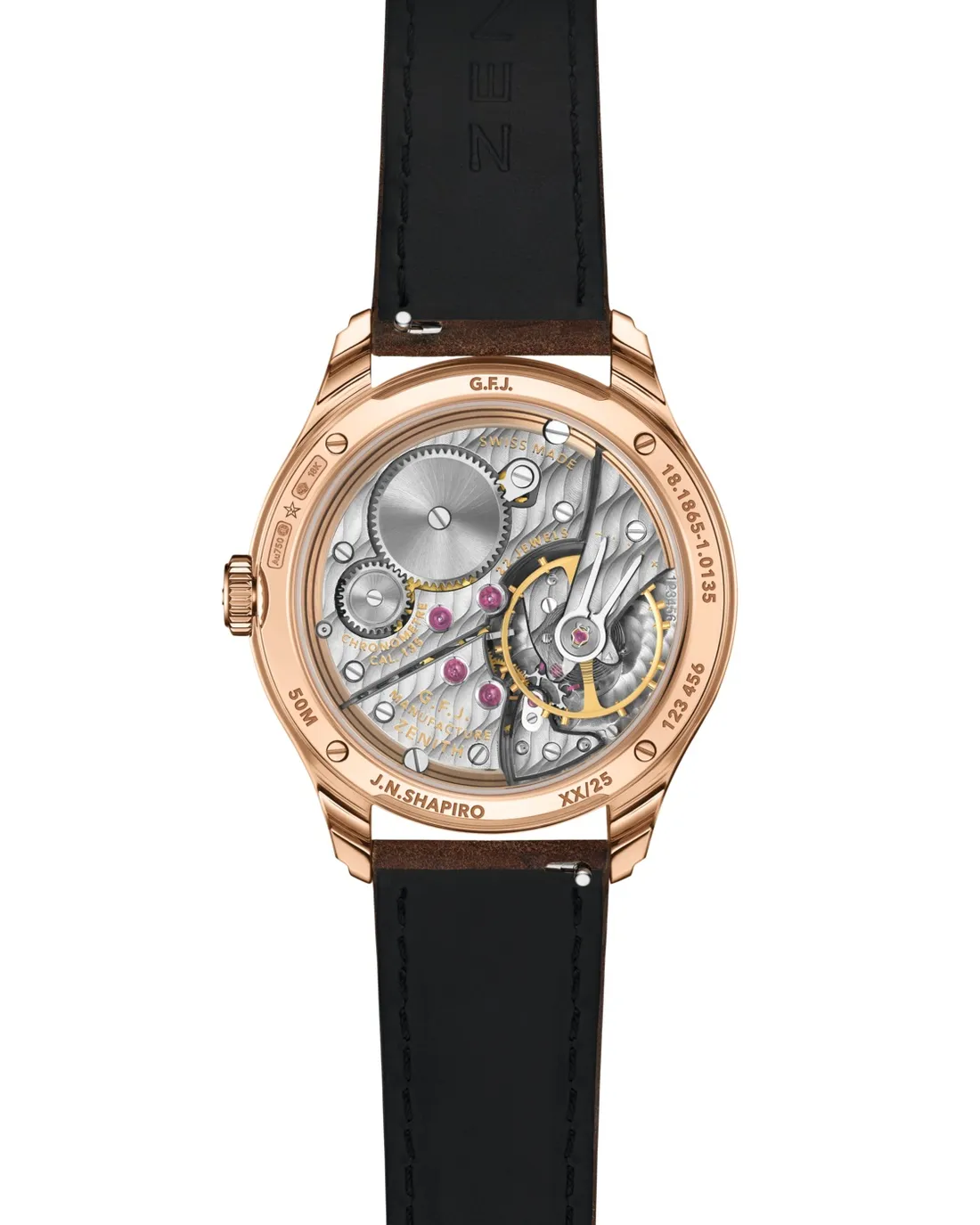
Shapiro’s work did not end with the dial. The bridges visible through the caseback passed through his hands too, and a finish called damaskeening was applied to them. Damaskeening is the signature of American pocket watches at the end of the nineteenth century; it answers to the Côtes de Genève of Switzerland, but it is cut on an engine-turning machine rather than drawn with a brush, and so it leaves waves on the surface rather than straight lines. After the pattern is cut, the bridges are rhodium plated.
Sit an observatory régleur and a guillocheur at the same table, and each would set out his own limit. The régleur would say this: the whole of my work is invisible. For forty-five days nobody can see what I have done, and I cannot see it either; all I hold is a column of figures written out each morning, and I try to make that column descend in a straight line. The guillocheur would say the opposite: the whole of my work is visible, and it has nothing else. If my hand grows heavy on one revolution the line deepens, the silver plate goes to the bin, and I begin again. The régleur would answer: then we are both doing the same thing, because in neither of our trades is there any taking back. And the guillocheur would add: the difference is that a figure tells your mistake, while everyone sees mine.
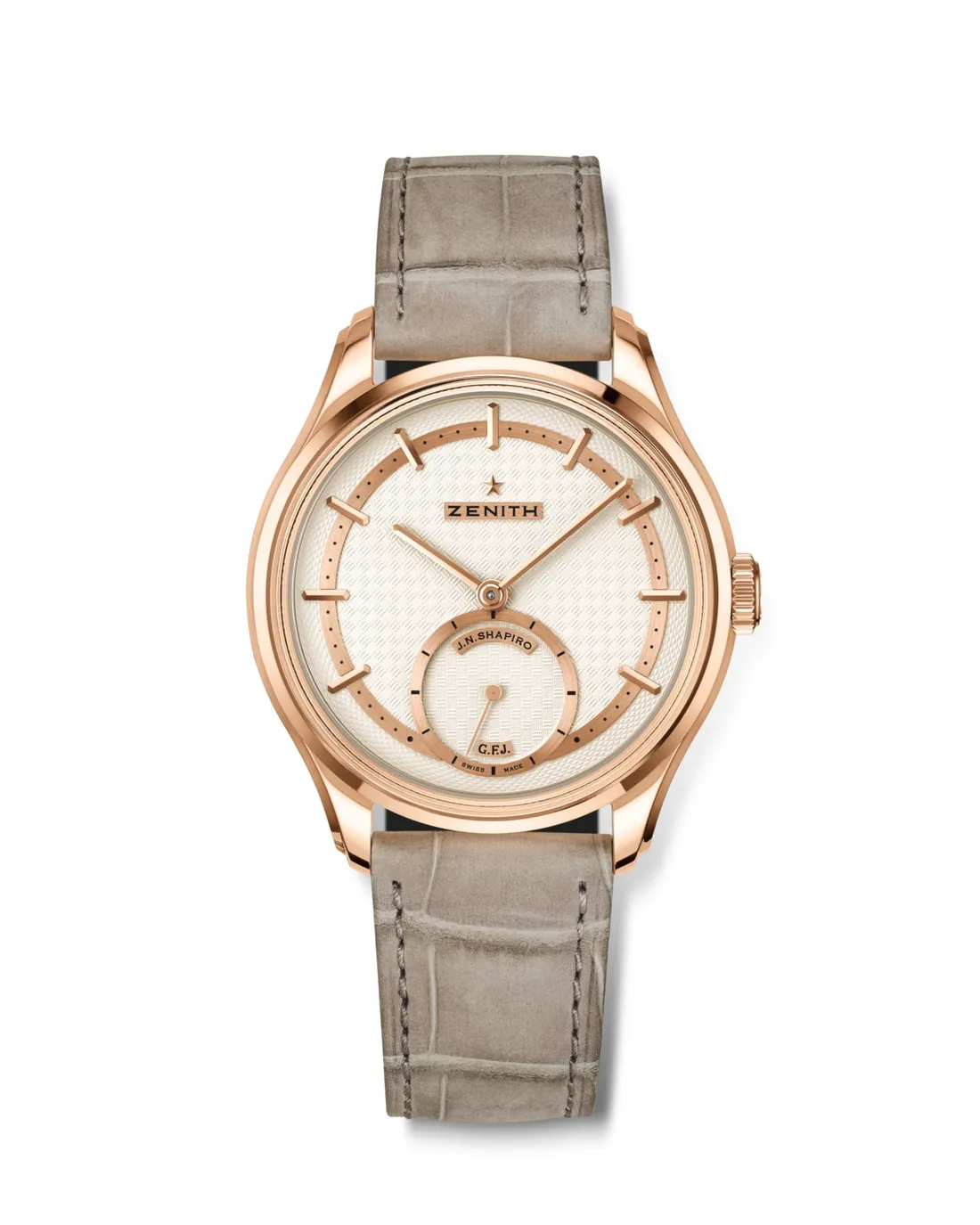
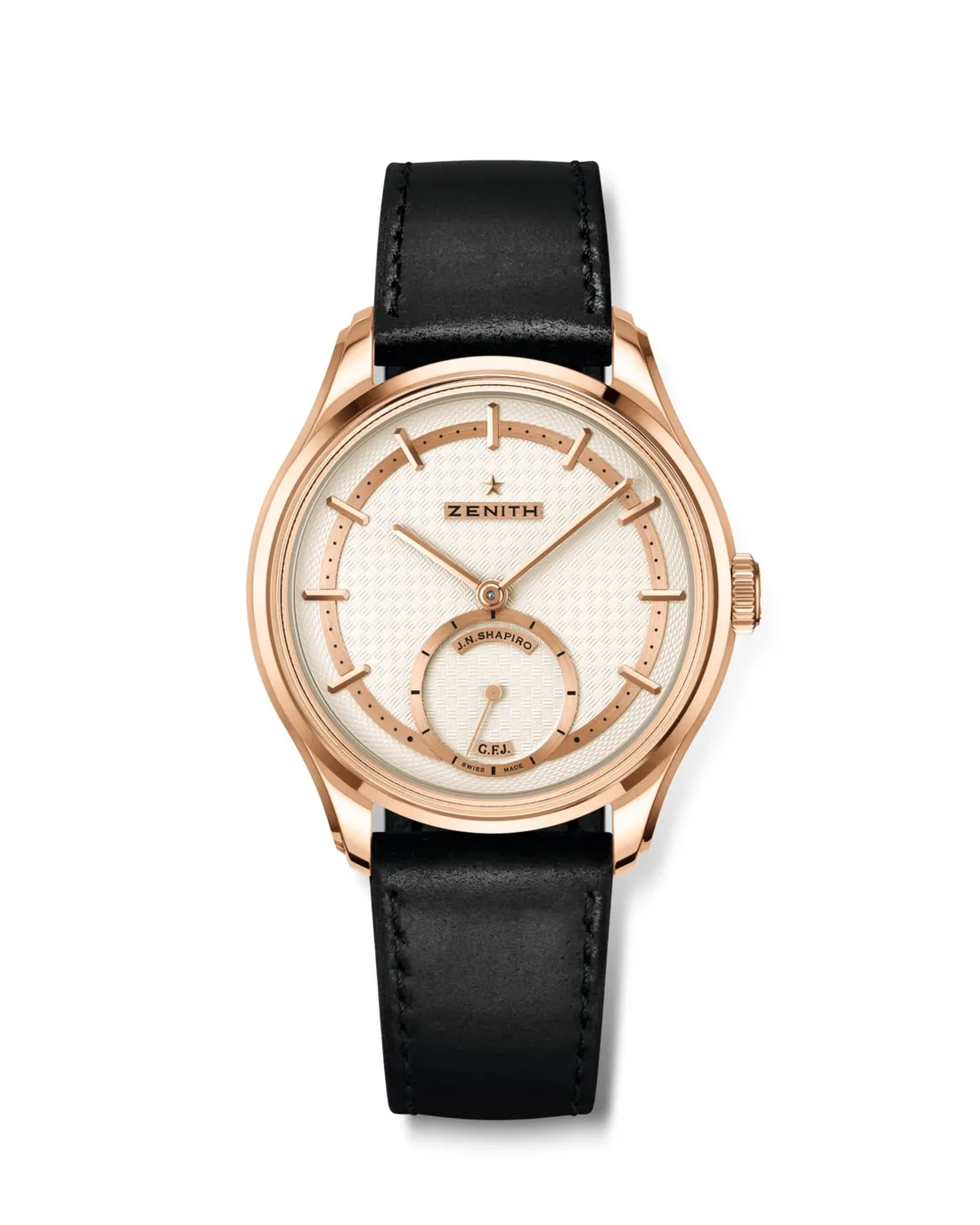
The figures run as follows. The case is of eighteen carat rose gold, thirty-nine point one five millimetres across and ten point five millimetres thick; forty-five point seven five millimetres from lug to lug, with fifty metres of water resistance. There is sapphire crystal at the front and at the back. The Calibre 135 inside consists of one hundred and fifty-seven components, makes eighteen thousand vibrations an hour, which is to say two and a half a second, and runs for seventy-two hours at full wind. The balance wheel is large and its inertia is adjustable; the hairspring carries a Breguet overcoil. The regulator carries Charles Fleck’s double-arrow drawing. There is a stop-seconds mechanism. The movement is COSC certified and regulated to within plus or minus two seconds a day. The calibre in this state is not identical to its state in 1948; Zenith kept the architecture and renewed the manufacturing tolerances and the materials. The watch is delivered with three separate straps; its buckle is of eighteen carat rose gold and the letters G.F.J. are engraved upon it. It was limited to twenty-five pieces and the price is 68,900 Swiss francs.
format_quote"A régleur’s work is invisible and a guillocheur’s is nothing but visible; in neither is there any taking back."
Hasan Bekmezci
Looking at this watch, this is the thought that may come. Nothing that leaves a human hand is flawless, and the people who organised the competition knew that better than anyone. Neuchâtel gave nobody a zero, and could not have; it only measured whose error was the more regular. On the bench in California the case is the same, because the pressure of the hand is never the exact counterpart of the revolution before. What the two have in common is that they try not to abolish the error but to discipline it. The Creator made the human being liable to err; what He gave him was the intellect with which to measure his error and the patience with which to narrow it. The mechanism beneath this dial is a record of that patience, written down seventy-eight years ago.
The watch on its maker’s own page: Zenith, G.F.J. Calibre 135