
The magnolia, one of the oldest flowering plants on earth, is neither a product of coincidence nor the end of an aimless chain of change. It is an ancient monument of botany that the unshakeable physical and biological laws the Creator placed in the universe have brought into being from the first day, by millimetric reckoning and with a flawless art.
Examined from the side of botany and plant science, the magnolia genus possesses matchless morphological and physiological characteristics of its own, such that it deserves a parenthesis to itself among the flowering plants. One of the most magnificent representatives of plant diversity on earth, this immense flower stands before us, in the fullest sense, as a divine work of art, in its deepest botanical details, its anatomical layers and its exceptional place in the ecosystem.
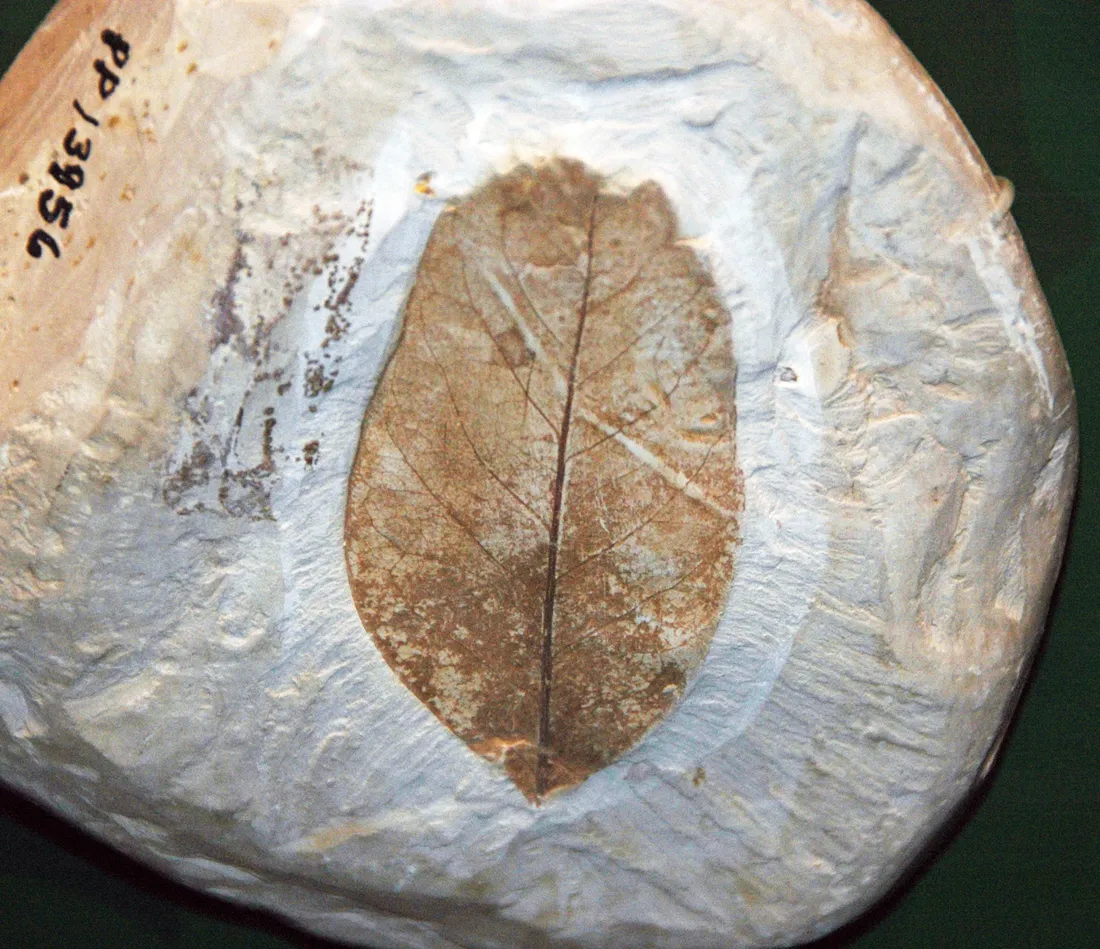
When the palaeontological record and the fossil evidence are examined, it is seen that the magnolias are among the most ancient families of flowering plants, having carried on their existence on earth for millions of years without their essential architecture ever being broken. The scientific findings set out that magnolias existed on earth in their flawless forms even in ages when honeybees and butterflies had not yet come onto the stage. This truth shows that the plant has no need of random processes in order to survive; on the contrary, it shows that from the first moment of creation it was furnished with a complete design able to govern its own ecosystem.
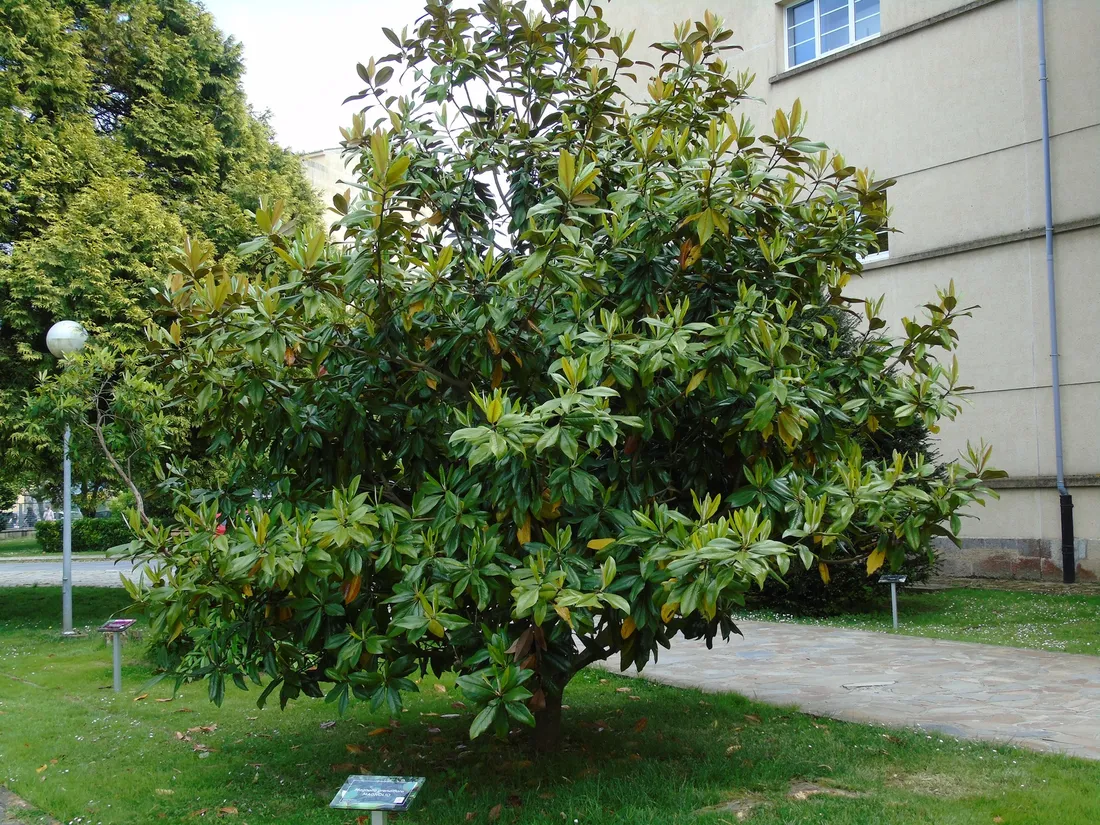
The wood of the magnolia tree is different, too, from that of other modern broad-leaved trees. It consists in large part of tracheid cells and is extremely resistant; the thickness of the cell walls provides a natural strength that protects the plant against mechanical pressure from outside and against the harshness of the seasons.
format_quote"The magnolia has no need of random processes in order to survive."
Hasan Bekmezci
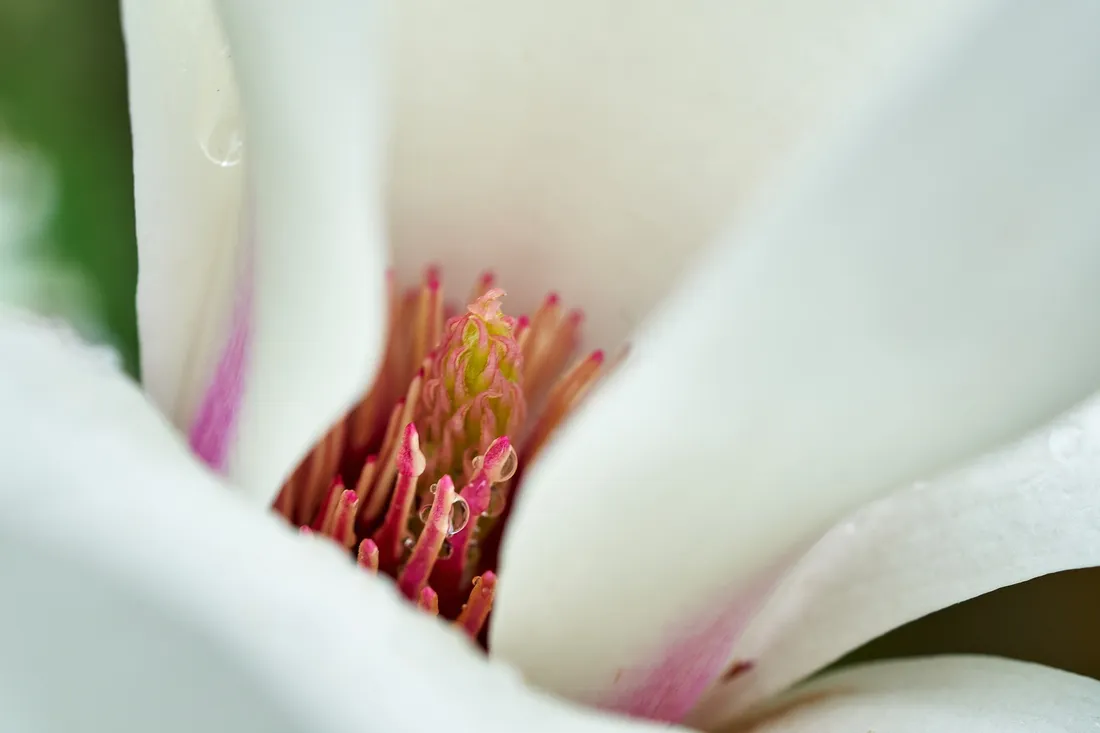
In the flowers we know as classical, the green sepals and the coloured petals are clearly separated from one another. The magnolia flower, however, stands outside this familiar pattern and has an anatomy of its own in botany. In the magnolia there is no division between sepal and petal; in their place, tepals that resemble one another, fleshy, porcelain-like and firm in texture, are arranged in rings. This structure gives the flower both a dignified aesthetic bearing and a natural shield against sudden changes of temperature and against the wind.
Looking into the centre of the flower, one sees that, contrary to the circular arrangement found in many flowers, the reproductive organs are arranged in a spiral form around a conical axis. This spiral geometry is one of the clearest plant manifestations of the mathematical proportions and measure that appear in nature. Upon this conical column rising upwards stand a great number of carpels, which is to say the female organs. These carpels have an outer tissue so thick and so hard that they take on a vital defensive duty in the pollination mechanism of the plant.
One of the most striking wisdoms in the creation of the magnolia flower is its strategy of reproduction and pollination. This plant, which existed when bees were not yet on earth, was designed in a flawless partnership with beetles for the carrying of its pollen. Beetles are creatures that move heavily in flight and have rather hard jaw structures; when they land on a delicate flower they can tear its leaves apart. Yet the magnolia flower has been furnished with a matchless biological engineering against this: its tepals and its carpels are so thick, so fleshy and so durable that the beetles cannot damage the tissue of the flower while they enter it and feed on the pollen.
Magnolia flowers attract the beetles around them by giving off special essential oils and aromatic compounds, particularly in the evening hours; and the magnolol and honokiol obtained from the bark of the plant show besides how rich the chemistry of this genus is. Further, many magnolia species produce a biochemical heat that holds the inner temperature of the flower a few degrees above the surrounding air. That warmth draws into the flower those beetles that seek a sheltered lodging in the cool of the night; and when the beetles, waking in the morning covered in pollen, land upon another magnolia, the continuation of the line is secured. This working is a flawless ecological scenario, reckoned down to its finest detail.
format_quote"The flower gives the beetle not only food, but a room a few degrees warm in the cold of the night."
Hasan Bekmezci

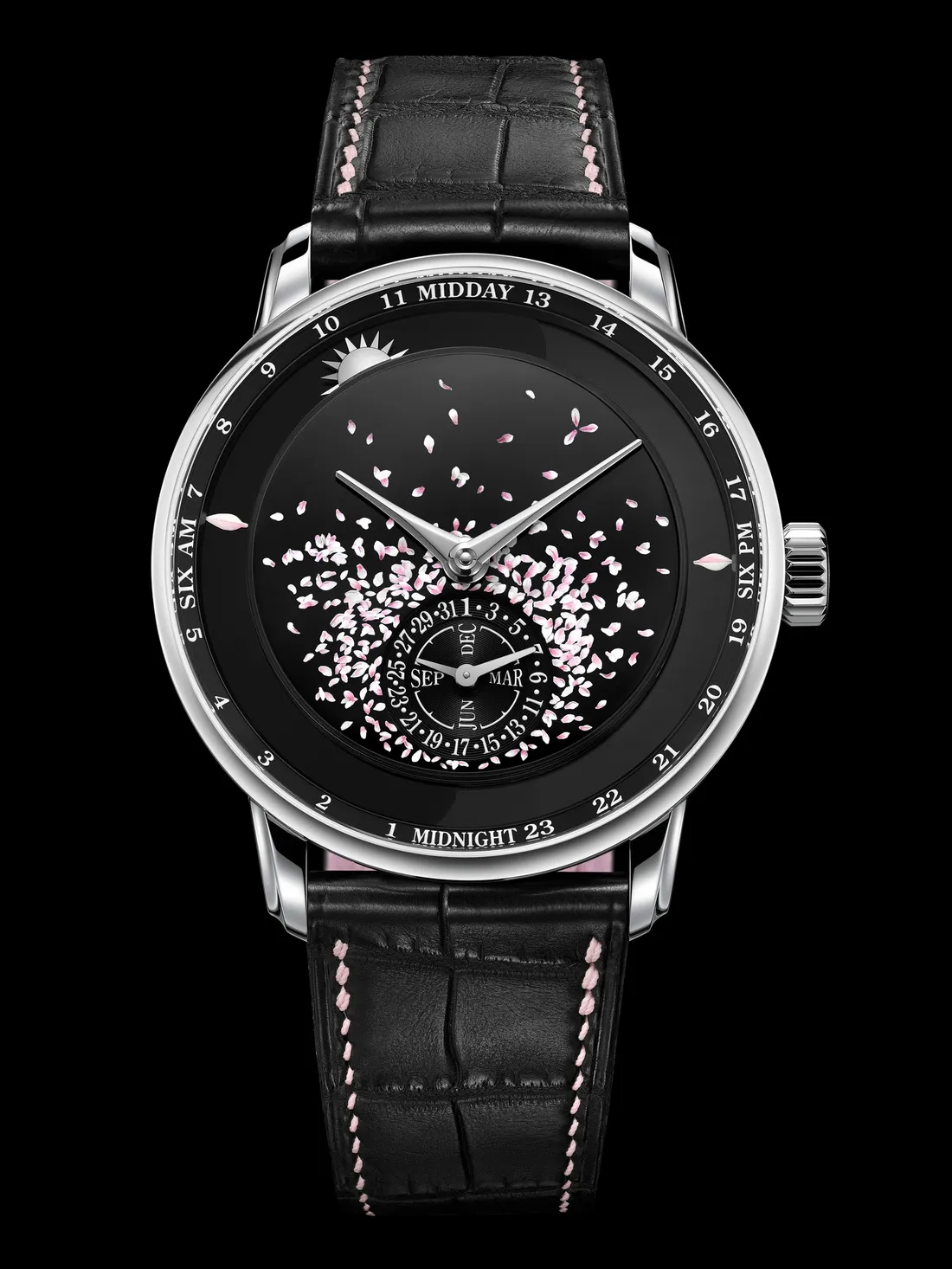
These fine details that the science of botany sets out, and the magnolia architecture that is as elegant as it is armoured, come to life again in the Krayon Anywhere Magnolia, a masterpiece of independent watchmaking that pushes the limits of human will and craft. Krayon was founded in Neuchâtel by two engineers, Rémi Maillat and Fei Hou. The magnolia that comes down onto the dial is no distant imagining: it is the tree that stands directly in front of the manufacture, in the garden of the building on Rue de l’Evole. It opens for a few weeks at the beginning of every April; after a spring rain its petals begin to fall to the ground one by one, and seen from the window of the reception room that falling happens against the blue of the lake.

A human being cannot bring this flawless geometry that exists in nature into being out of nothing; a human being can only read and comprehend this divine order the Creator has inscribed upon the universe, and build his own art with such materials as steel, gold and sapphire. What has been done in this model is to paint onto the dial the porcelain-like elegance of the magnolia petals and their seasonal cycle. The ground is deep black onyx, and the miniature upon it comes from the hand of an experienced miniature painter of the Neuchâtel region. The petals do not merely decorate; they become the indication itself. The two large petals on either side of the dial stand against the twenty-four hour scale on the outer ring and give the two moments that must be read: the upward-facing petal shows sunrise, the downward-facing one sunset. As the date and the month change, those two moments shift, and the two petals move around the dial as well. The sector that remains between them is the length of that day’s daylight.

That the watch reckons mechanically, through its Anywhere complication, the times of sunrise and sunset at any point on earth one wishes, corresponds exactly to the discipline with which the magnolia tree opens and closes according to the movement of the sun and the rhythm of the seasons. The date and the month are read on the small dial at six; the geographical location on which the reckoning rests is set to suit the owner of the watch. The case is of Pt950 platinum, thirty-nine millimetres across and nine and a half millimetres thick. The calibre inside is wound by hand and furnished with a stopwork; it consists of four hundred and thirty-two parts and fifty-five jewels, makes three oscillations a second and runs for seventy-two hours.
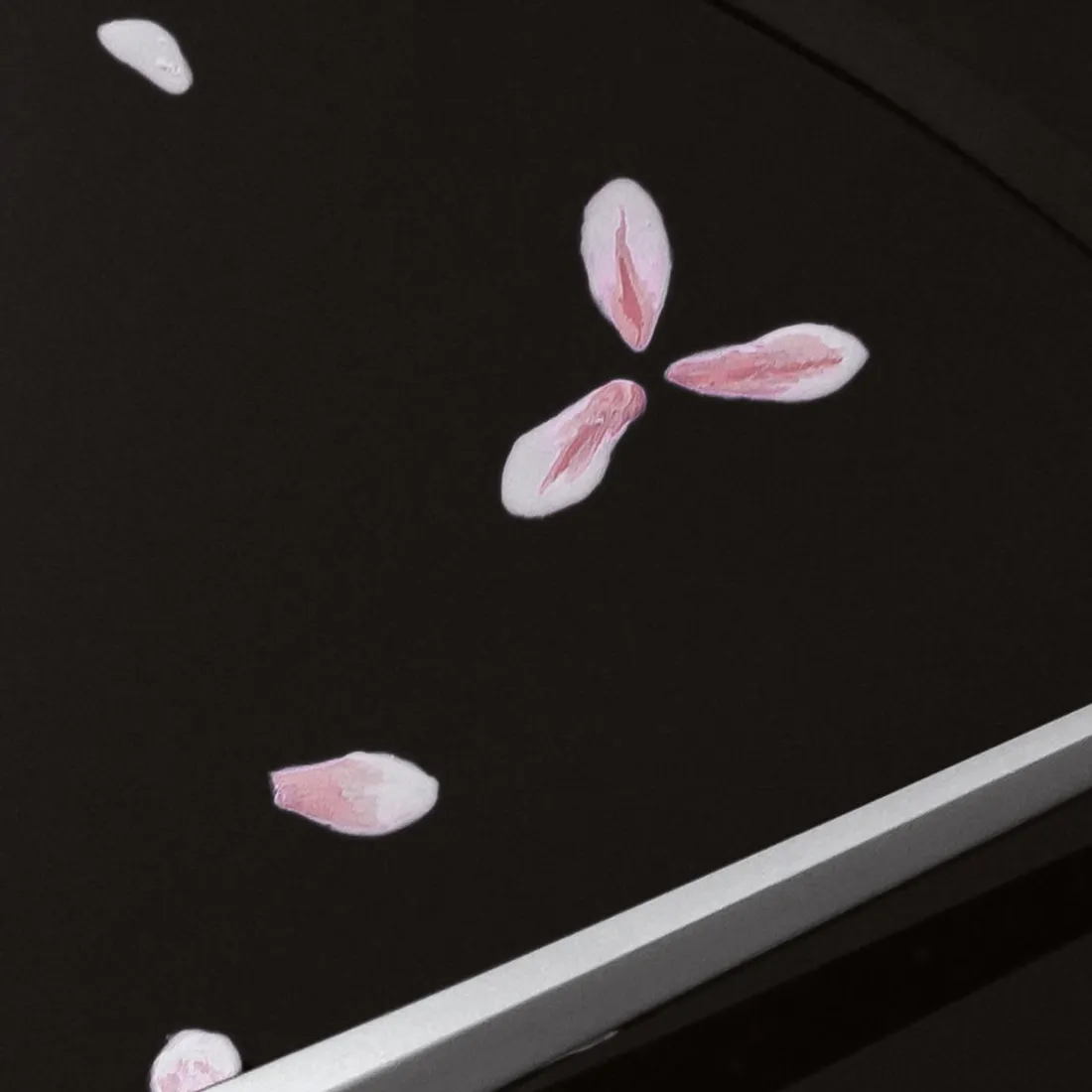
Every magnolia petal on the dial shines as a micro-mechanical mirror of the measure and the fine adjustment that exist in nature. Among the petals scattered over the onyx there is also a hidden signature: three petals come together to build the letter Y, the logo of the house. This work was limited to fifteen pieces in platinum, and no one of the fifteen dials is the same as another. The place where the petals have fallen differs a little on every dial, which is to say that fifteen separate instants of the same season of the same tree have been kept. None of them can ever be repeated exactly.
format_quote"Fifteen separate instants of the same season of the same tree have been kept; none of them can ever be repeated exactly."
Hasan Bekmezci

Along this line reaching from botany to haute horlogerie, as a human being sees the divine power manifested in the spiral arrangement of the magnolia flower, in the miracle of thermogenesis and in those fleshy, armoured carpels, he comprehends for himself that not a single particle of the universe has been left to itself, and that behind every leaf there stands a flawless knowledge and wisdom.

The watch on its maker’s own page: Krayon, Anywhere Magnolia