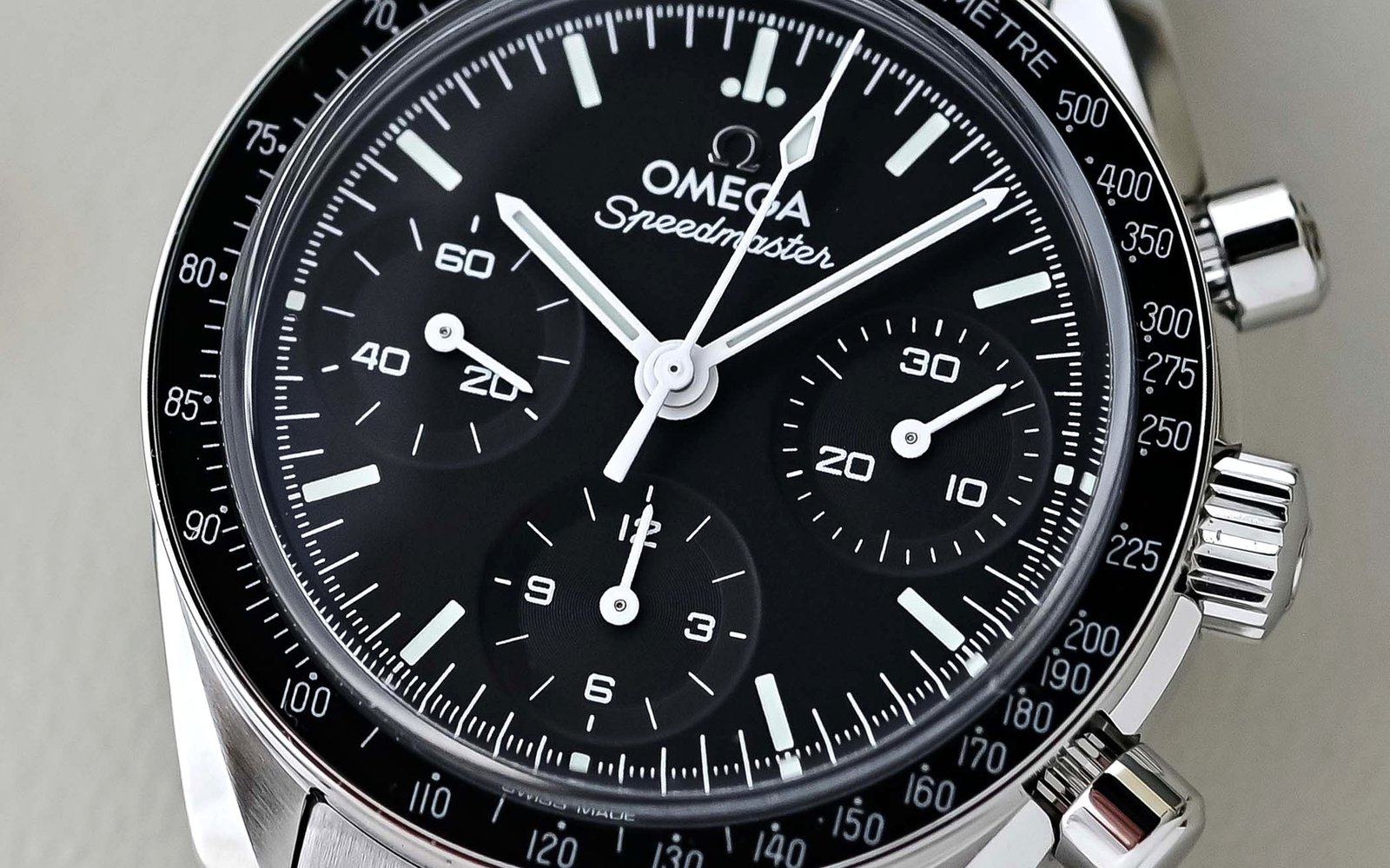
In the nineteen-sixties, while a tachymeter scale was being printed onto a watch bezel, a small variation appeared. On some batches the dot beside the ninety marking landed above the numeral rather than next to it. Nobody noticed; those who did thought nothing of it. When the printing plate changed the dot went back where it belonged, and the matter closed.
Forty years later the same watches began to be collected, and that dot suddenly became a marker. It was the fastest way to tell which period a bezel had been printed in. Collectors gave it a name and a price difference appeared.
Today Omega is deliberately printing that old accident again on a new collection. A brand adopting its own former mistake as an identity is one of the strangest and most human habits in watchmaking.
format_quote"A brand adopting its own old mistake as an identity is one of the most human habits in watchmaking."
Lucas Mercier
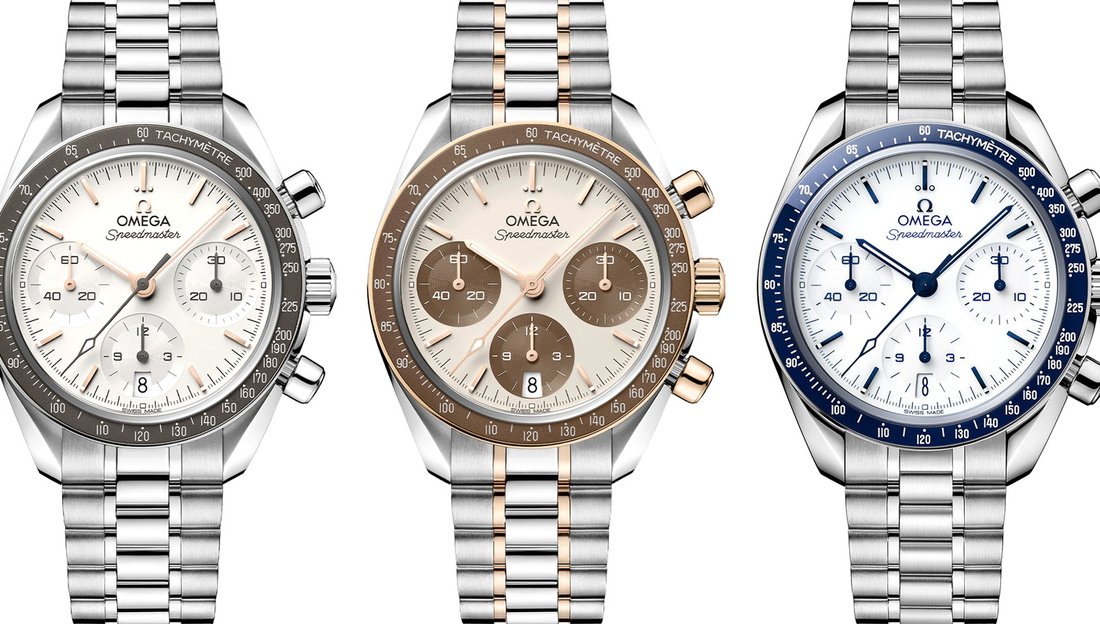
The Speedmaster 38 is, as the name says, the watch for the smaller wrist rather than the forty-two millimetre Moonwatch. Omega has made this size for a long time, but this time the whole collection has been reworked and seven new references released.
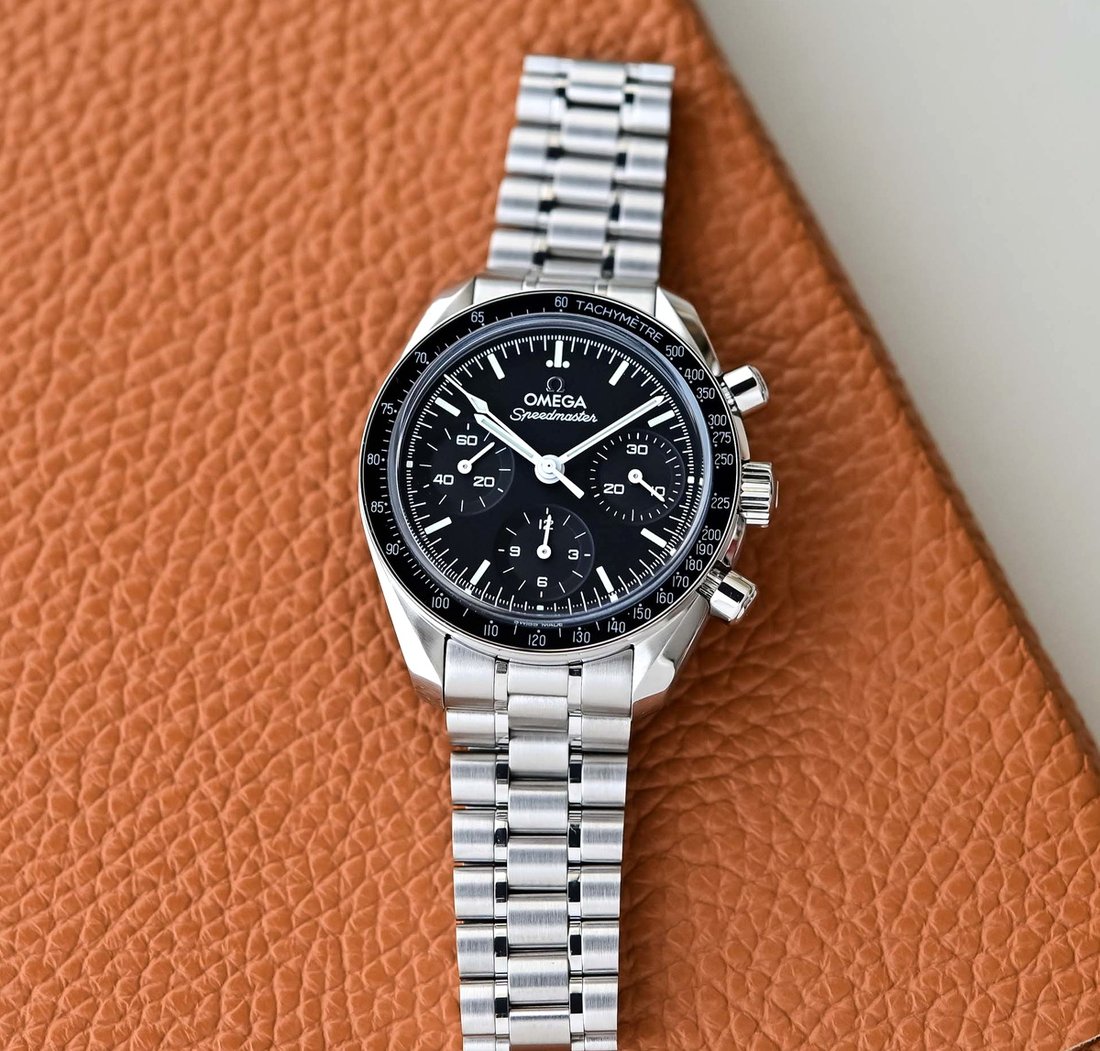
Most of the changes are smaller than a centimetre. The subdials are now round rather than oval. That apparently minor difference is geometric: when you place three counters on a dial, the easy way to keep their diameter is to squeeze them slightly sideways, which produces an oval. A round counter asks for more space, which means the rest of the dial has to narrow. This time Omega gave the space to the counters and pulled the dial closer to the proportions of the Moonwatch.
The text on the dial has been reduced too. On a chronograph dial, what creates the most clutter is what the brand writes about itself; every line takes something away from legibility. The bezel has been thickened, and the scale is printed in that old arrangement.
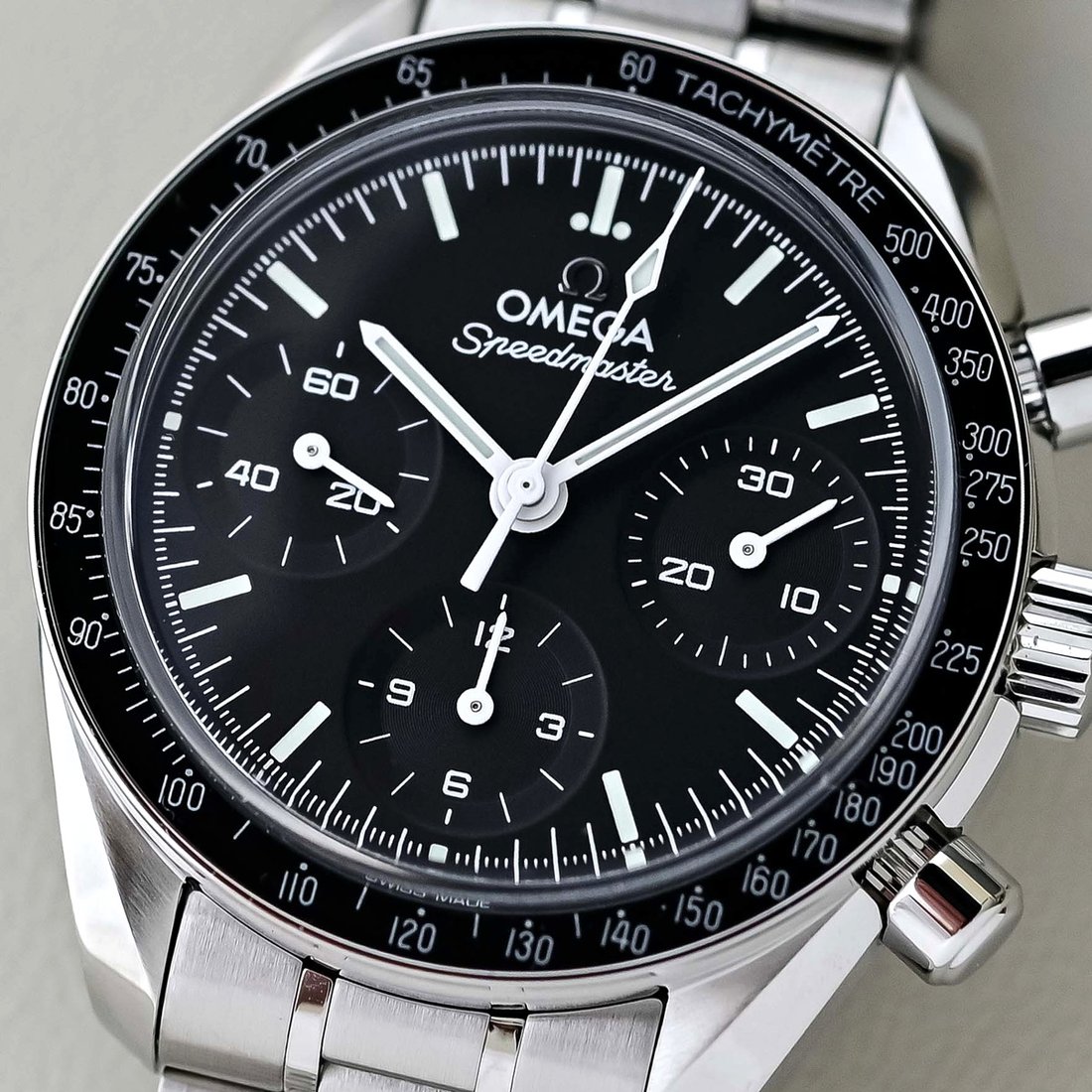
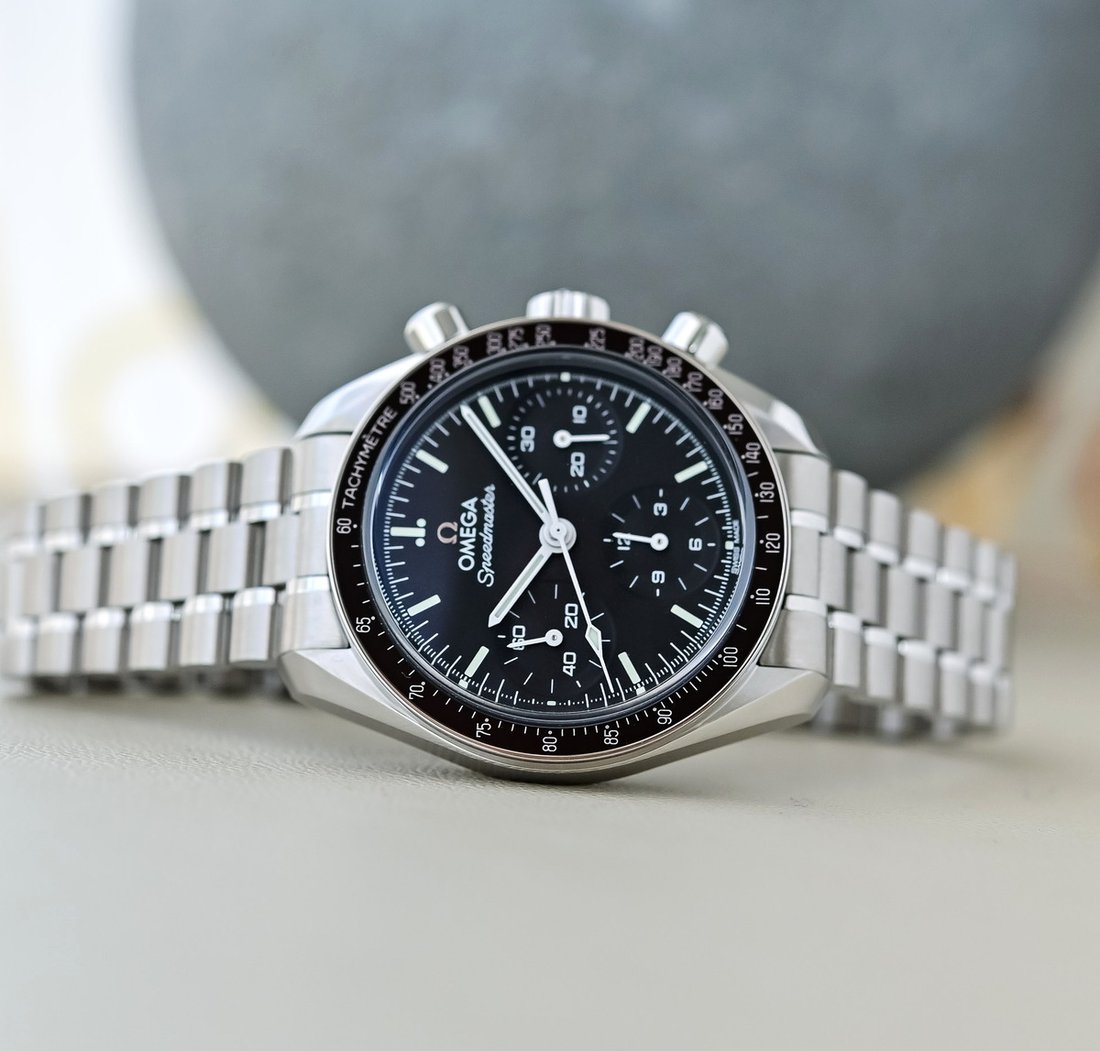
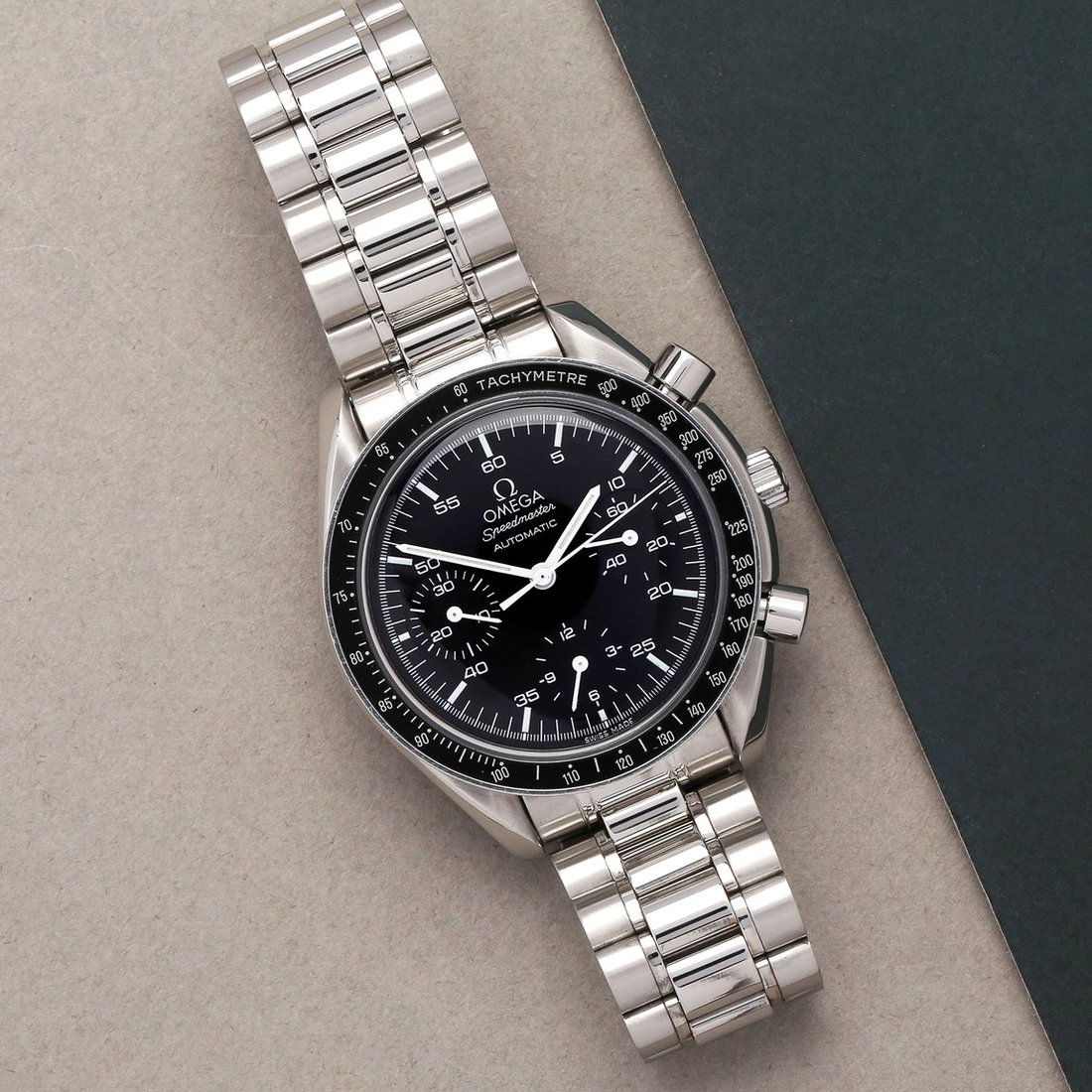
The bracelet has been touched as well. The new collection takes the five-link arrangement used on the Moonwatch. How many rows a bracelet has is not only a visual matter: as the number of rows rises, the links get narrower, the bracelet bends more easily and sits better on the wrist. On a small case that difference is felt more sharply, because when there is little weight the fit rests entirely on the flexibility of the bracelet.
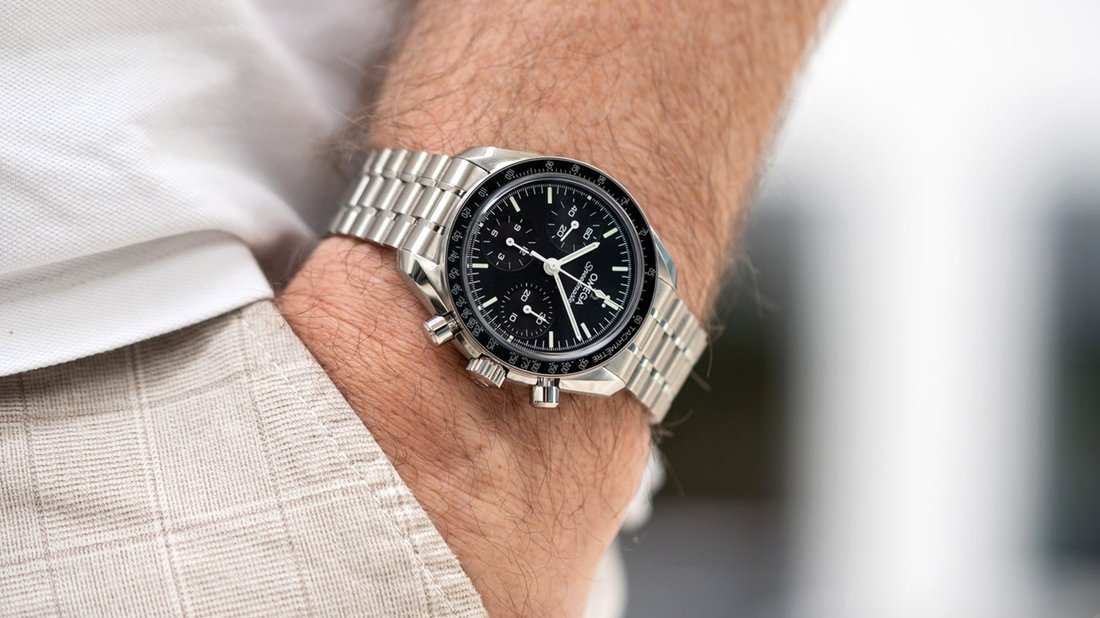
Thirty-eight millimetres sits below today’s average. For years small cases were treated as women’s watches; that division never rested on anything technical, and it is now quietly disappearing. For a chronograph what matters is not the diameter but how many indications the dial can carry without confusion.
format_quote"For a chronograph what matters is not the diameter but how many indications the dial can carry without confusion."
Lucas Mercier
format_quote"The identity of an object sometimes comes not from what was perfect about it but from a fault that happened to stick."
Lucas Mercier
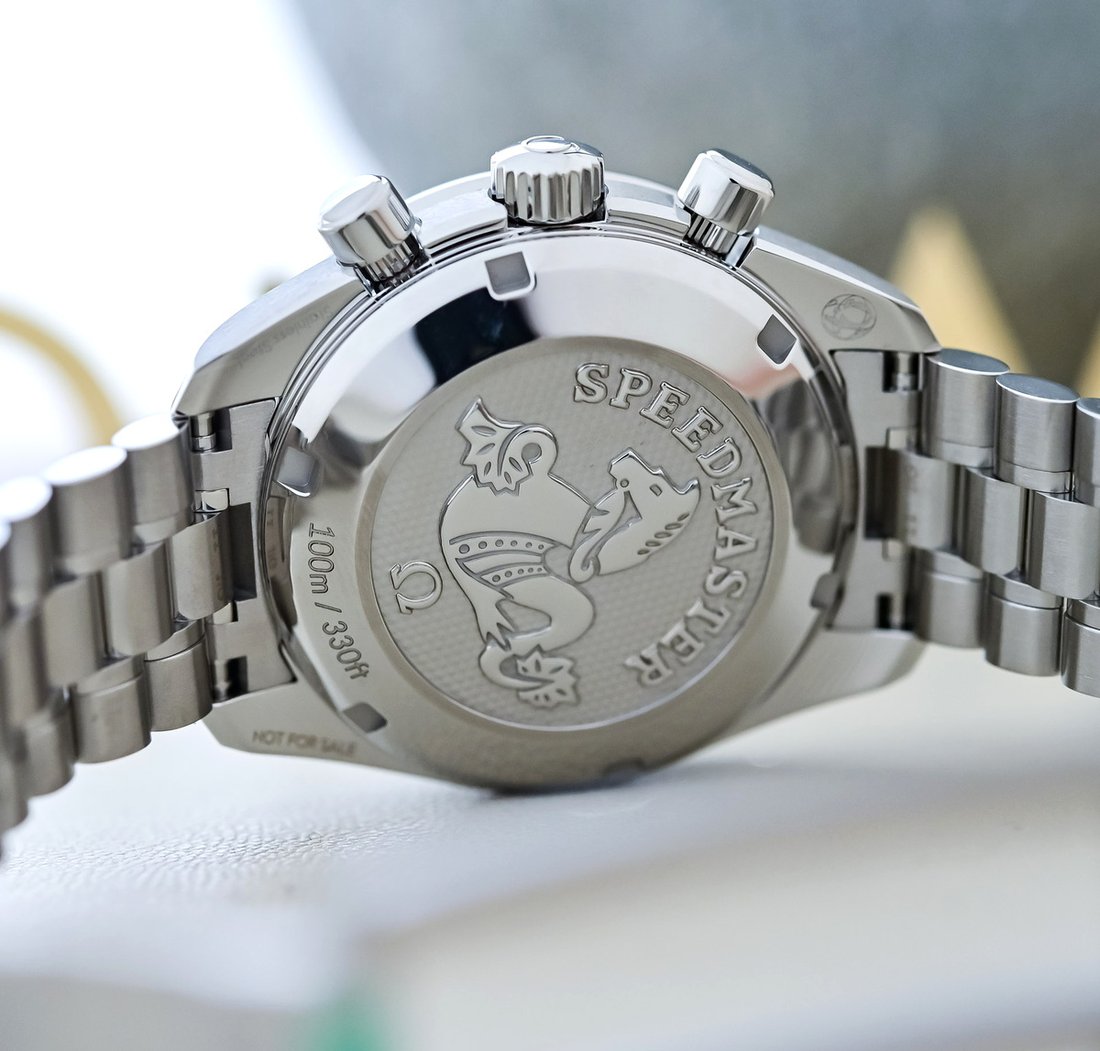
Spreading the collection across seven references shows that Omega is positioning this size as a family in its own right rather than as a junior model. There are different dial colours, different metal combinations and different strap options; what they share is the architecture.
And in the middle of all that renewal sits a dot printed in the wrong place sixty years ago. That dot does nothing. It does not change the accuracy of the tachymeter scale and it does not make anything easier to read. It is only a reminder: the identity of an object sometimes comes not from what was perfect about it but from a fault that happened to stick.