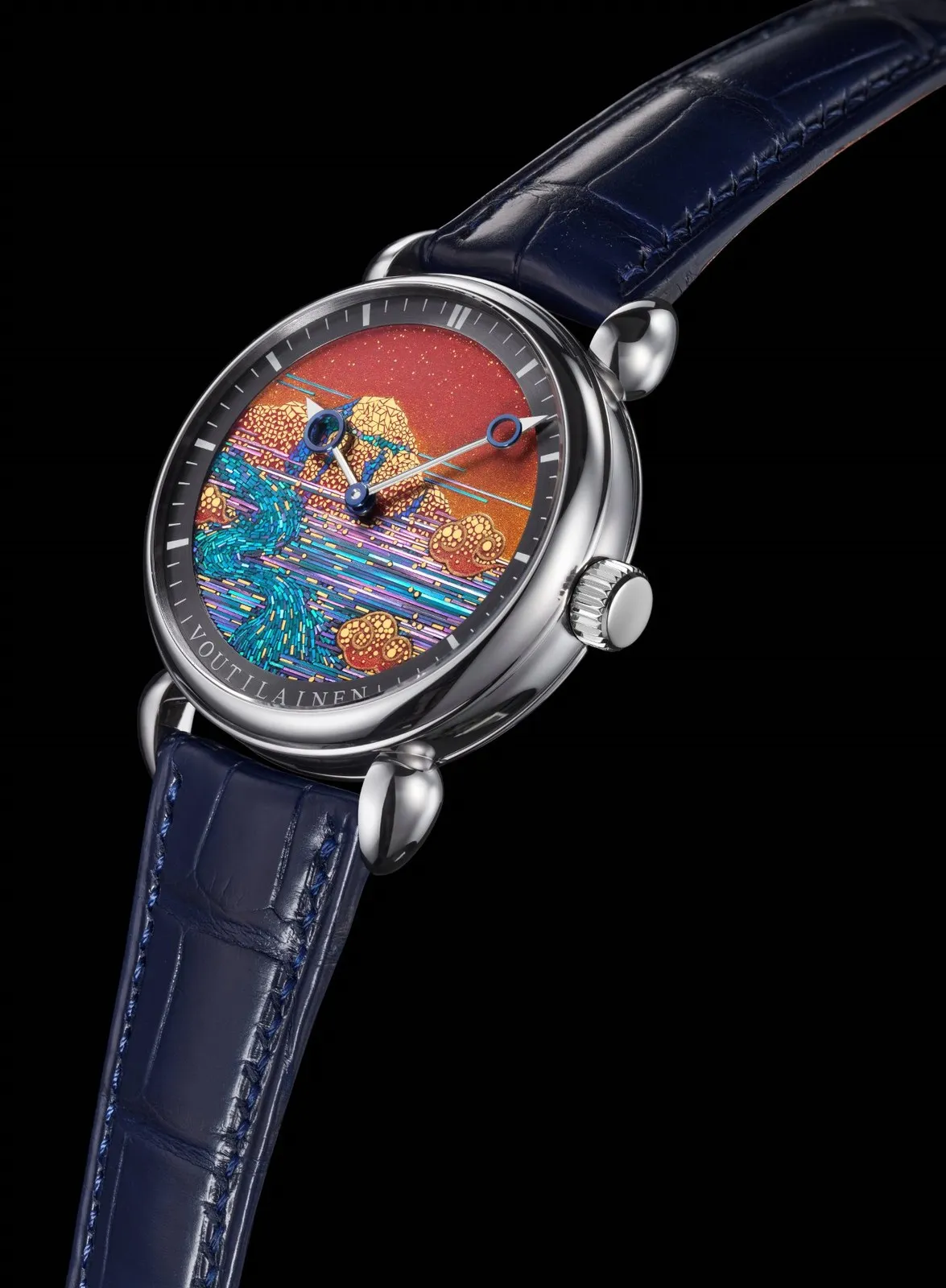
The Dream of the Summit
The story of this watch begins not in a Swiss atelier but, long before it, in the Japan of the 1600s, in the silent palaces of the Edo period (1615-1868). In that age, the objects made for feudal lords were no ordinary things but monuments of patience and time: a world in which a resin bled from a tree, urushi lacquer, was worked layer upon layer through a ritual lasting months and adorned with gold and mother-of-pearl; in which the making of a single box or sword scabbard could swallow a small part of a human life.
The soul of the Voutilainen 28LQU reaches back precisely to those four centuries ago. For the art that adorns this watch's dial, and even its movement, comes from the hand of a single master who carries the near-lost refinement of the Edo period into the present: Tatsuo Kitamura. In telling of this watch, we are really telling not of a watch but of a four-hundred-year-old story.
The Guardian of Wajima: Tatsuo Kitamura
In the town of Wajima, Japan, stands one of the world's foremost urushi lacquer studios: the Kitamura Studio. Under the guidance of Tatsuo Kitamura, using only natural materials, it produces works that represent the very pinnacle of Japanese tradition. Each piece carries the responsibility of preserving the soul, the spirit and the cultural identity of traditional Japan as it was expressed during the Edo period.
Kitamura does not only create new works; in recent years the studio has also devoted its energy to restoring traditional items once used by Edo-period feudal lords. Crafted hundreds of years ago, these objects retain their pristine beauty today thanks to their durability and their capacity to be restored, even when handled directly. This is an art that engages the viewer on a physical level, inspiring awe before the dedication, patience and mastery essential to its creation.
Gold Dust and Cut Shell: The Anatomy of an Art
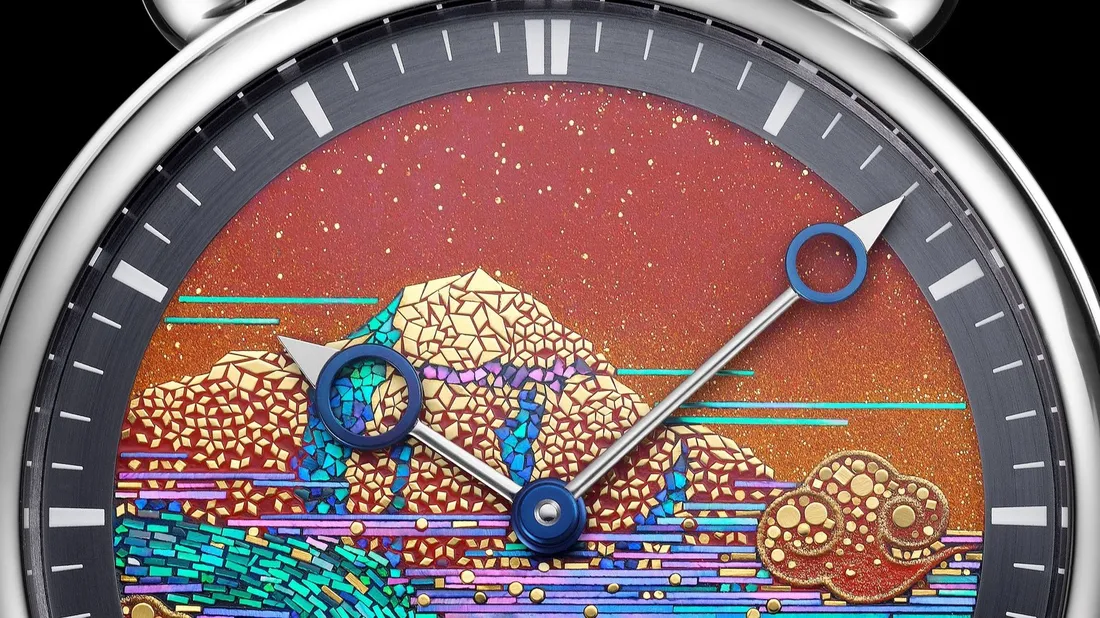
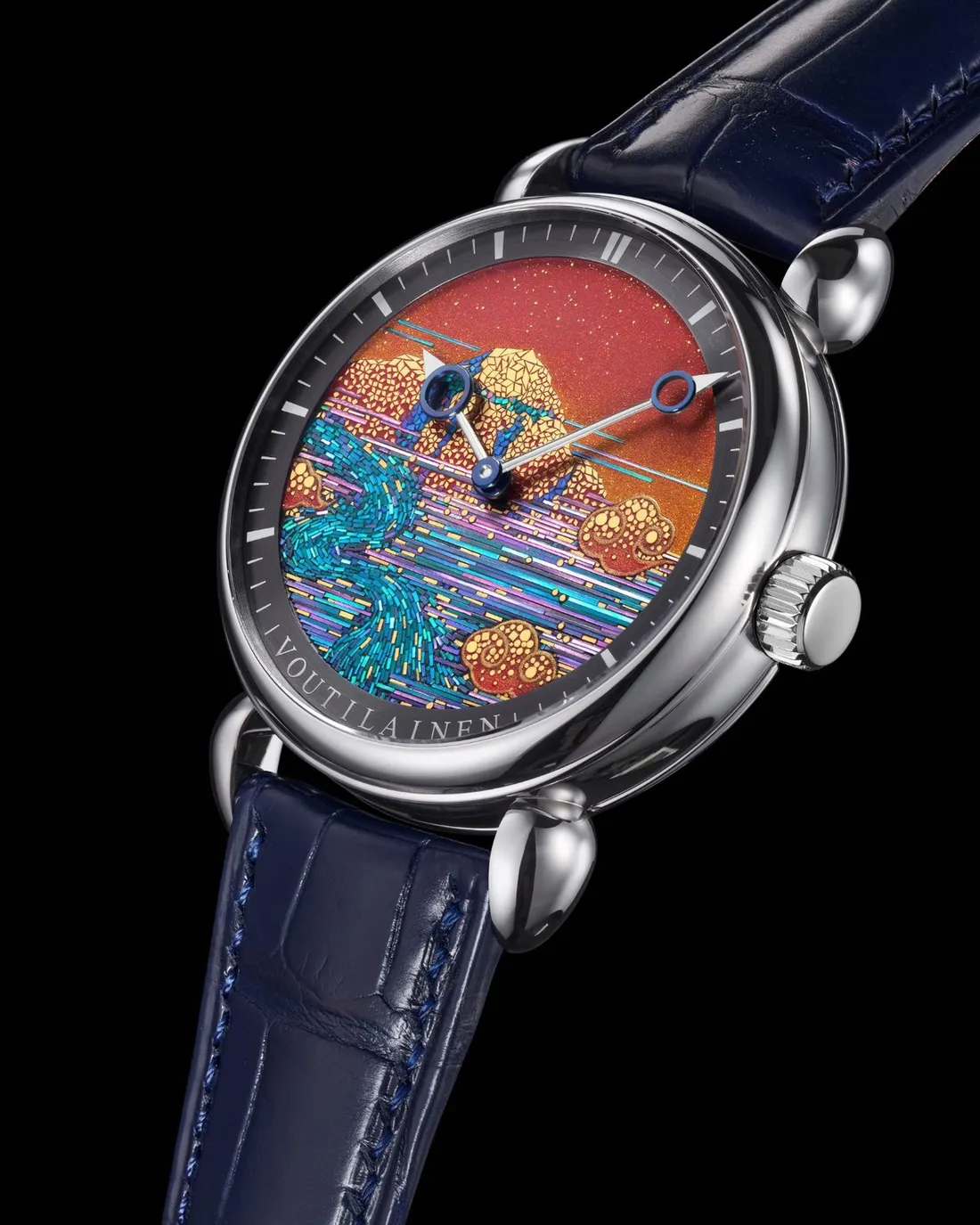
There are certain techniques that speak Kitamura's language. The first is maki-e: the design is first drawn in urushi lacquer; then, while the lacquer is still wet, gold powder is sprinkled (scattered) over it, and this powder fixes the design onto the surface, securing it forever. The second is raden, an art of mother-of-pearl inlay: designs are woven from urushi lacquer, gold powder, cut sheets of gold, and turban and abalone shell.
But what makes Kitamura a legend is his own original technique, Saiei Maki. It brings back to life Somada, an extraordinarily detailed, burnished maki-e art that arose in the 17th century but had vanished entirely before the 19th. Using special shells of many kinds and colours together with fine gold inlay, Kitamura resurrects this lost art, and lends it a contemporary breath besides.
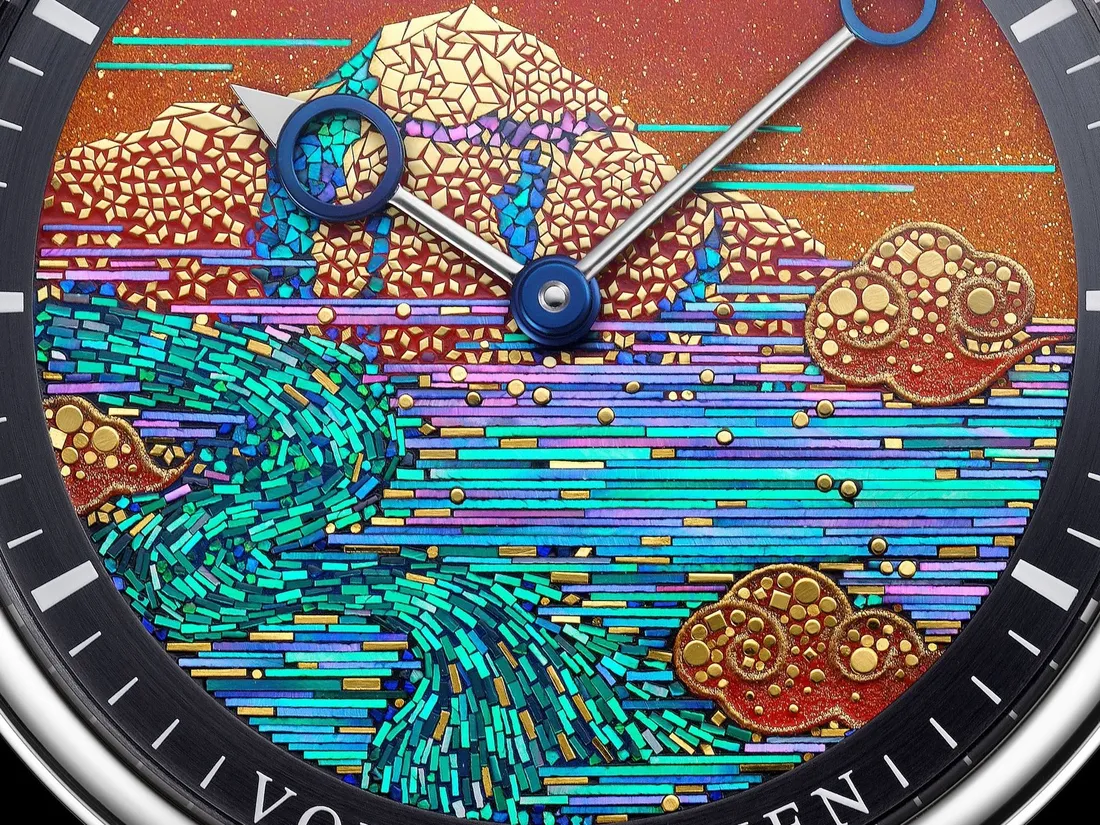
And how difficult is this? Consider: minuscule fragments of shell, down to fractions of a millimetre, are selected one by one for their colour and shimmer, cut by hand and set in place. The urushi lacquer is applied layer upon layer, each layer dried for days, sometimes weeks, in humidity-controlled rooms; a single speck of dust floating in the air can ruin that layer. The surface is burnished and polished again and again; a single wrong move destroys months of labour in an instant. Before these works, one cannot help but ask: how could a human hand achieve this?
The Meeting of Two Summits
The Voutilainen 28LQU is the meeting of these two worlds, these two summits: the most precise mechanics of the West and the most patient lacquer art of the East. Kari Voutilainen set down a flawless movement built with the classical grammar of Swiss watchmaking; Tatsuo Kitamura, the essence of a four-century-old tradition. This partnership carried the handwork of two civilisations onto a single wrist.
Carrying Everest to the Wrist
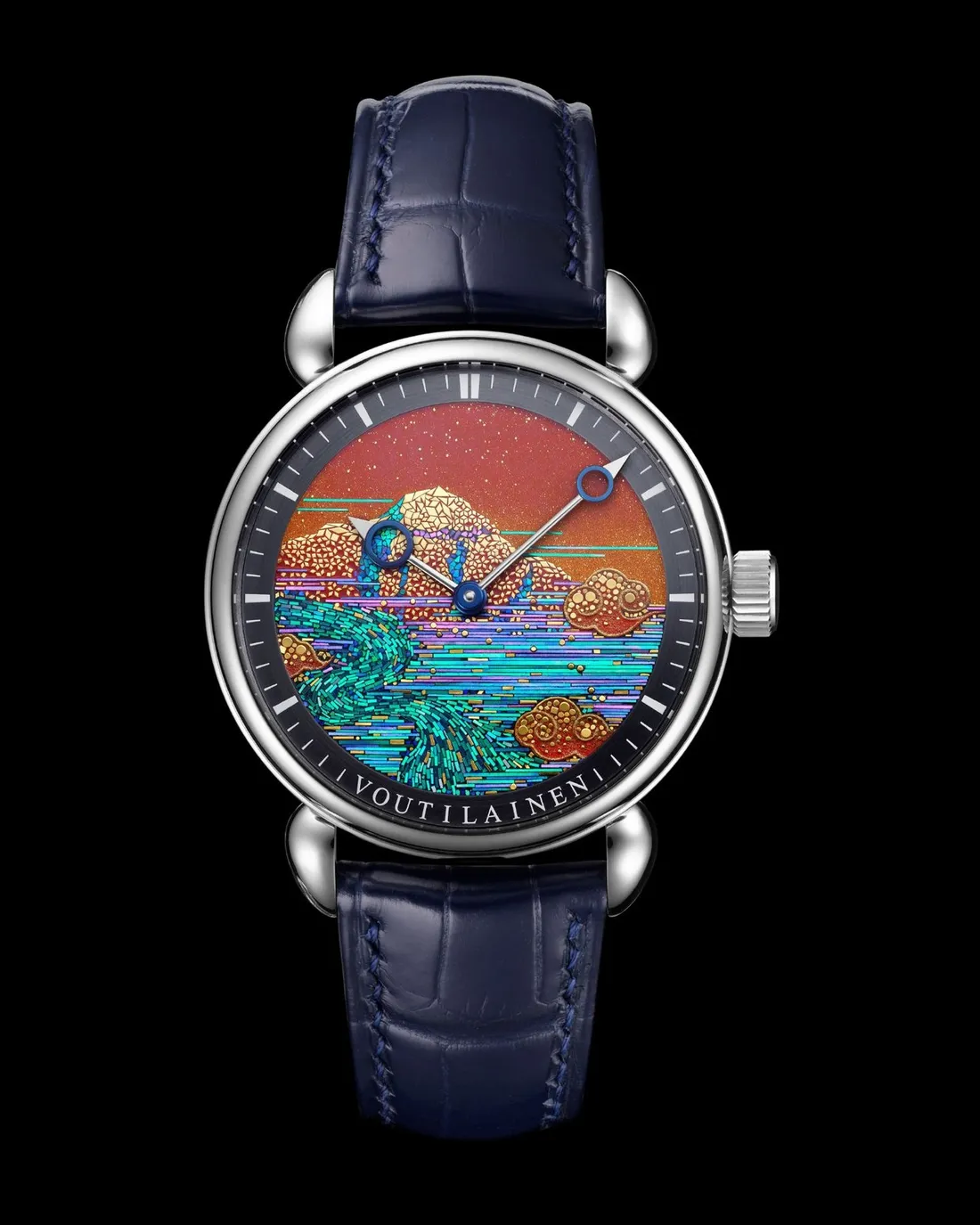
In the name, the 28 refers to Voutilainen's signature calibre family; LQU is a nod to laque, that is, to lacquer. This unique piece was created for a collector who lives with the dream of reaching the world's highest point, the summit of Everest. On the dial, the red-and-orange sky of dawn glows with gold dust; the golden summit of Everest rising before it, the iridescent slopes and the water below are woven, through the raden technique, from countless fragments of shell that turn from turquoise to purple in the light.
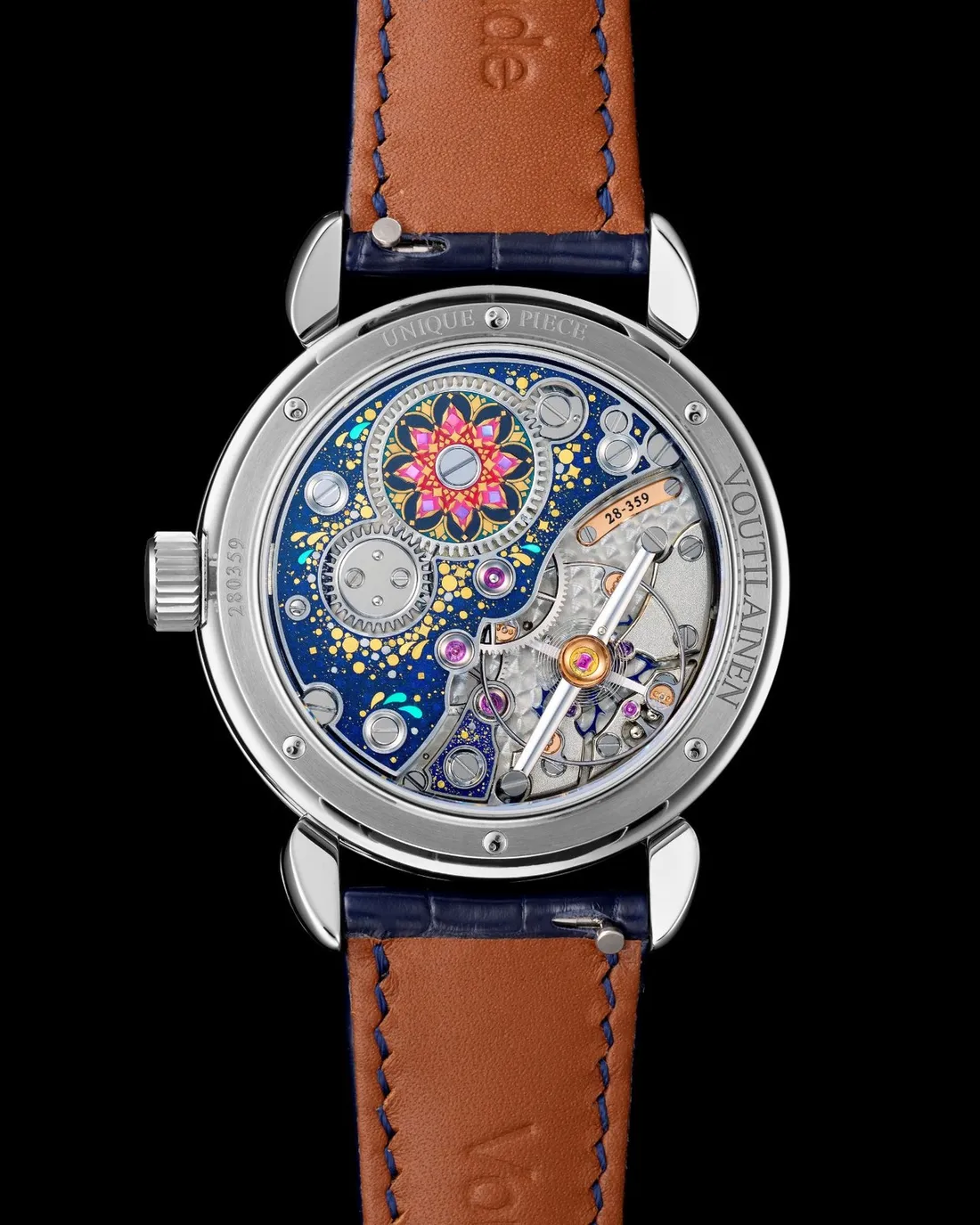
And here is the true audacity: Kitamura's brush did not stop at the dial. Even the titanium bridges and the steel ratchet wheel of the movement were decorated with urushi and gold maki-e; upon them were worked gold star-dust and a pink-and-gold mandala. To adorn the inside of a movement with lacquer is something almost never seen in the history of watchmaking. All this labour required more than a thousand hours of work.
The Heart of Time and an Armour of Tantalum
Beneath this art beats a movement designed and produced in the Voutilainen workshop, 30 mm across, of 165 components and 21 jewels; it runs at 18,000 vibrations per hour and offers a 65-hour power reserve. At its heart lie the master's signature double-wheel direct-impulse escapement, a free-sprung balance wheel 13.50 mm across with rose-gold timing weights, and a balance spring shaped with both a Phillips terminal curve and a Grossmann inner curve. The visible wheels are of solid 18-carat gold, the main plate of German silver.
Fitting for a mountain dream, the case and crown too are made in the workshop from tantalum, a rare and extraordinarily hard metal. With its bluish-grey hue, tantalum is at once one of the most difficult metals to machine and, in a sense, the armour of a climb to a summit. The 39 mm case is protected front and back by anti-reflective sapphire crystal.
A Summit Reached Through Patience
The Voutilainen 28LQU is not merely a watch; it is the union of a dream, a passion for the summit, and two great four-century-old traditions of craft. An art that took root in the silent palaces of the Edo period has, today, met the mechanics of a Finnish master and become the portrait of a mountain. Some summits are reached not on foot but only through patience and art; and when you look at this watch, you see the patience of four hundred years, all at once.