At a radio telescope observatory five thousand metres up in the Atacama Desert, in a night cold that drops to minus twenty, two researchers are standing: an astrobiologist and a molecular biologist.
Look at the vacuum up there, says one, studying cosmic radiation data on the screen. In that deep space where the temperature approaches absolute zero, minus two hundred and seventy-three point one five degrees, and where water is impossible, we assume nothing can live. Then look at the microscopic creature we call the tardigrade. The moment it runs out of water it pushes almost all the water in its body out. It turns the organelles inside its cells into a kind of bioglass matrix and stops time. No metabolism is left, no chemical reaction.
This is not a metaphor. In 2007, tardigrades loaded onto a Russian satellite were exposed directly to the vacuum of open space and to unfiltered solar ultraviolet for ten days. When they came back to earth a significant number revived and went on to reproduce.
Because nature uses stopping and petrifying as its way of overcoming time, the other answers. Bring the movement of matter completely to zero and entropy stops. By vitrifying its cells the way quartz crystals form over billions of years, the tardigrade suspends the corrosive effect of time. It wears the armour of timelessness until a single drop of water touches it.
format_quote"It wears the armour of timelessness until a single drop of water touches it."
Hasan Bekmezci
What tardigrades, the water bears, perform here is called anhydrobiosis in biology: life without water. Where every other creature depends on water, the tardigrade runs a cellular armour that does not rot even in its absence. It works in four stages, and all four can be understood through something from ordinary life.
The first is taking the tun form. The moment the tardigrade senses the water running out, it pulls in its legs, contracts its body and expels almost all its water. It is like a building closing every window and dropping every shutter as a hurricane comes in, pulling in every surface the wind could catch. By shrinking its surface area it brings evaporation and tissue damage down to nothing.
The second is vitrification. Normally, if water is drawn out of a cell, the organelles collide and break. Instead the tardigrade secretes special proteins called TDPs, tardigrade-specific disordered proteins. These proteins do not form a hard crystal; they turn into a bioglass matrix with almost no flow at all. The cell membrane, the DNA and the mitochondria are suspended inside that transparent glass. It is like packing foam around a fragile porcelain, or like a fly sitting undecayed inside amber for millions of years.
The third is the DNA shield. Radiation normally cuts DNA strands like a pair of scissors. A protein called Dsup, damage suppressor, wraps itself around the DNA and prevents radiation from reaching the genetic code. It is like laying steel covers over the manuscripts in a library.
The fourth is bringing the metabolism down to almost nothing. In this state the tardigrade’s metabolic rate falls to one hundredth of one per cent; it burns no oxygen and consumes no food. It is not shutting a computer down but putting it into deep sleep. The current is cut, the memory is written to disk exactly as it stood, and years later, when power returns, it carries on from the millisecond where it stopped.
format_quote"It is not shutting a computer down but putting it into deep sleep."
Hasan Bekmezci
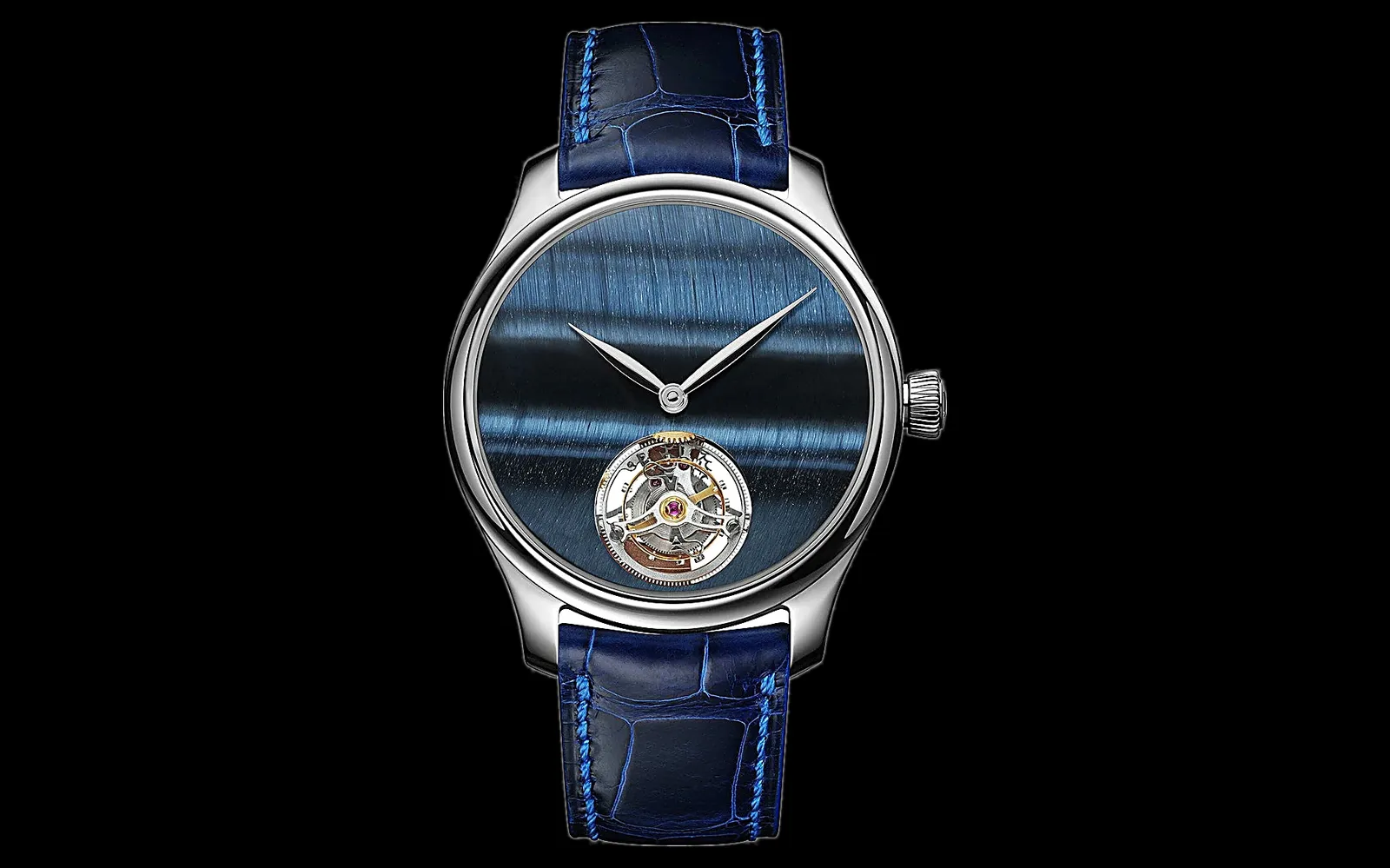
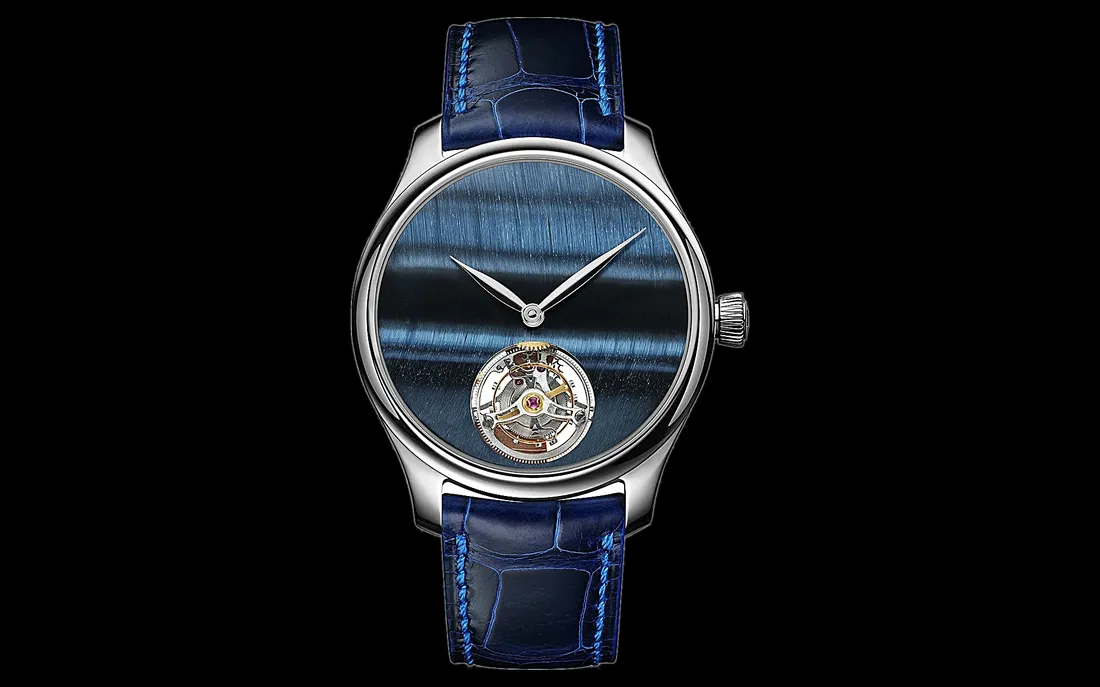
That cellular alchemy of vitrification by which the tardigrade freezes time, and its resonance against gravity, take the form of a work of art in the Endeavour Tourbillon Concept Falcon’s Eye from H. Moser & Cie., the minimalist genius of independent Swiss watchmaking.
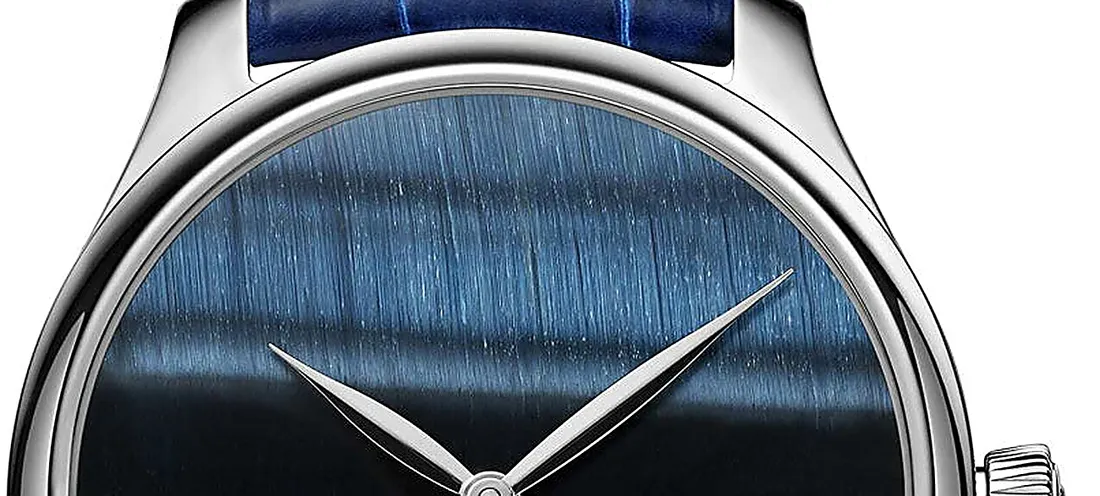
The dial is cut and worked from falcon’s eye, a stone formed under pressure and heat deep in the earth’s crust. Falcon’s eye is the blue relative of tiger’s eye, and both are a quartz. Its formation is worth knowing: silica gradually takes the place of the fibrous mineral crocidolite inside the rock, and the fibres freeze into parallel bands within the stone. Those fibres reflect light in the same direction, which gives the stone the silky shimmer called chatoyancy. Turn your wrist and the light slides along the bands.
No two dials are the same, because no two stones are the same. The fifty dials of this fifty-piece edition carry different lines even when they are cut from the same vein. Think of the organic armour by which the tardigrade vitrifies its cells and steps out of time; this stone on the dial freezes nature’s geological memory of millions of years onto your wrist.
In keeping with Moser’s Concept philosophy the dial carries no numeral, no index and no brand logo. Not even the name of the house. Like the absolute timelessness of pitch-dark space, the dial lets you concentrate on nothing but the fibres of the stone and the time running across them. For a brand to be confident enough to erase its own name is a rare kind of nerve in watchmaking.
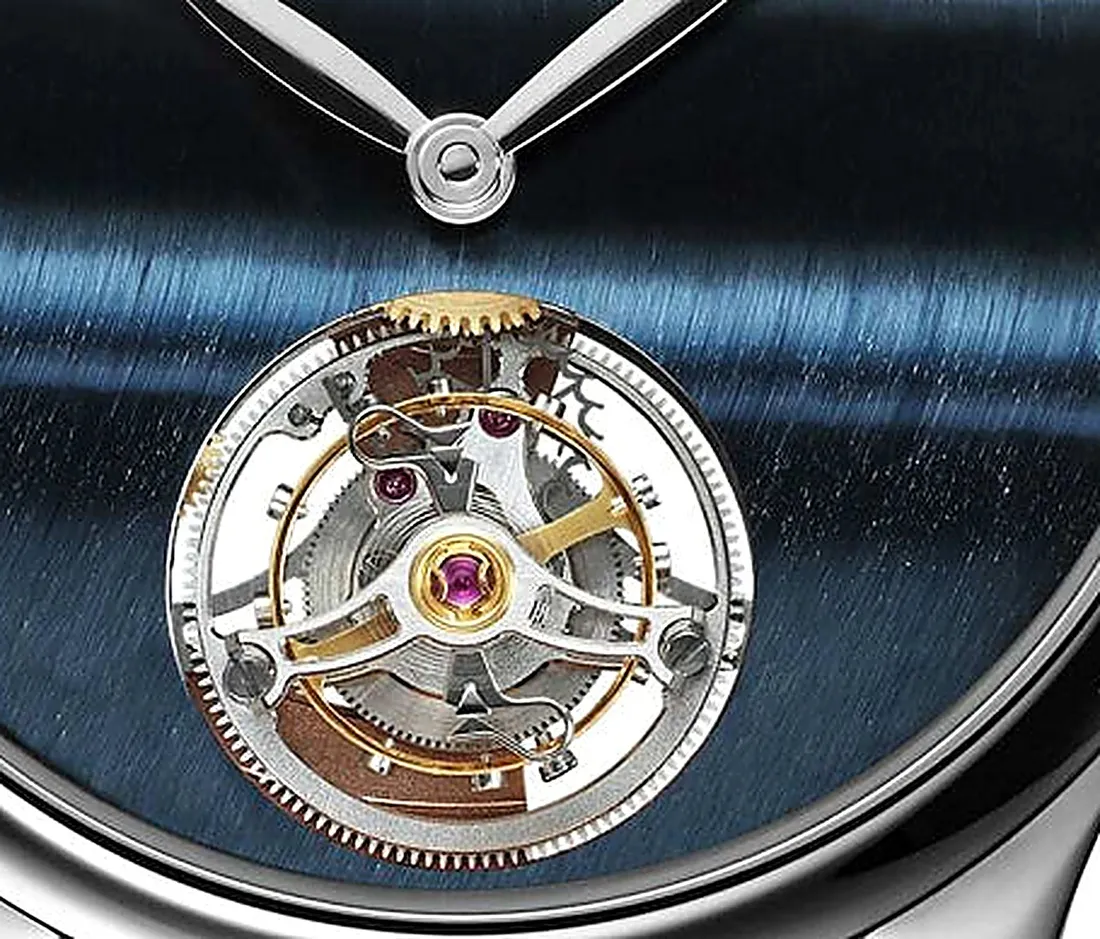
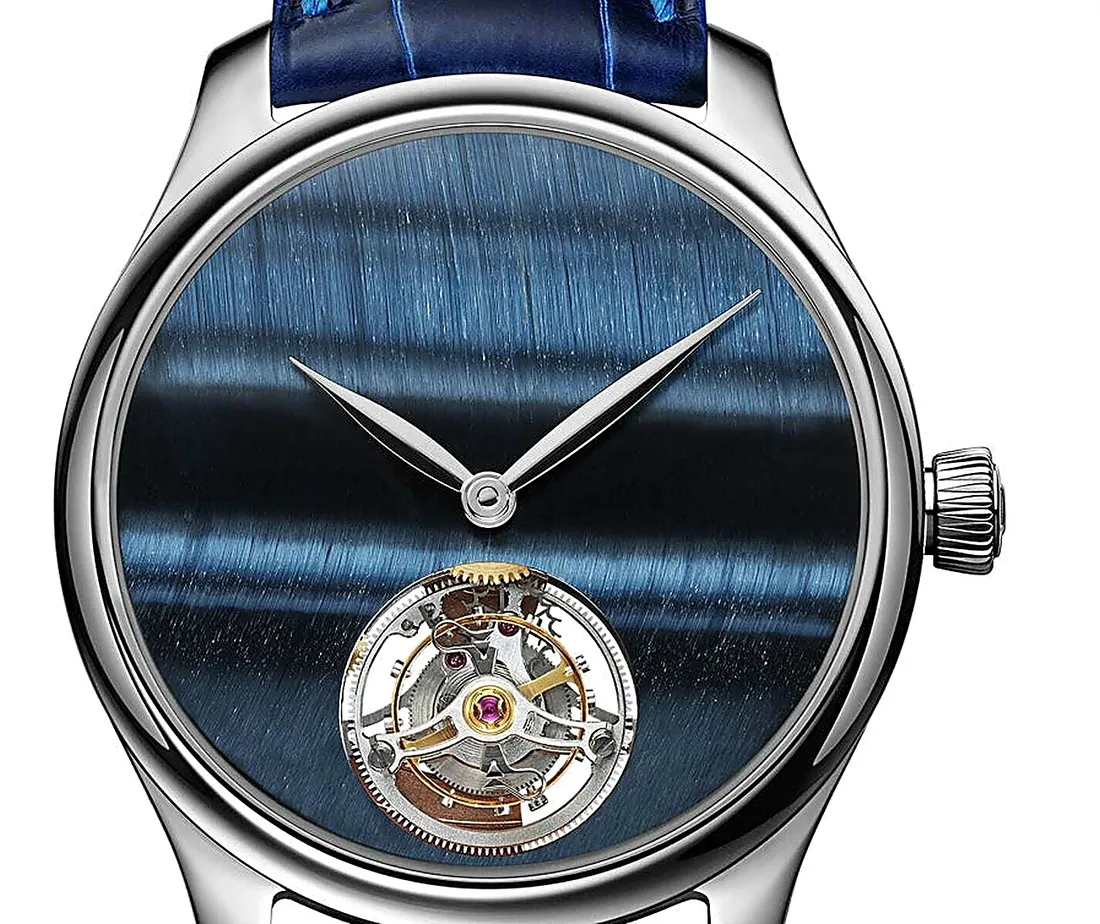
In the round aperture at six, the flying tourbillon turning in open space with no upper bridge to hold it balances the pressure of gravity on the movement by making one full turn a minute.
Moser’s real invention, though, is not the cage but what sits inside it. Instead of a single hairspring the balance carries two identical ones. A single hairspring shifts slightly off centre as it breathes, and that shift produces a different error in every position. Set two hairsprings opposite one another and while one pushes up the other pulls down, so the errors cancel. That double hairspring is patented by Moser.
Inside beats the automatic calibre HMC 804, which runs seventy-two hours. The case is forty millimetres across in eighteen-carat white gold, water resistance is thirty metres, and the strap is blue alligator. The reference is 1804-0222 and fifty were made. It is no longer part of Moser’s current collection; the Endeavour Tourbillon Concept family on the brand’s site has moved on to other stones.
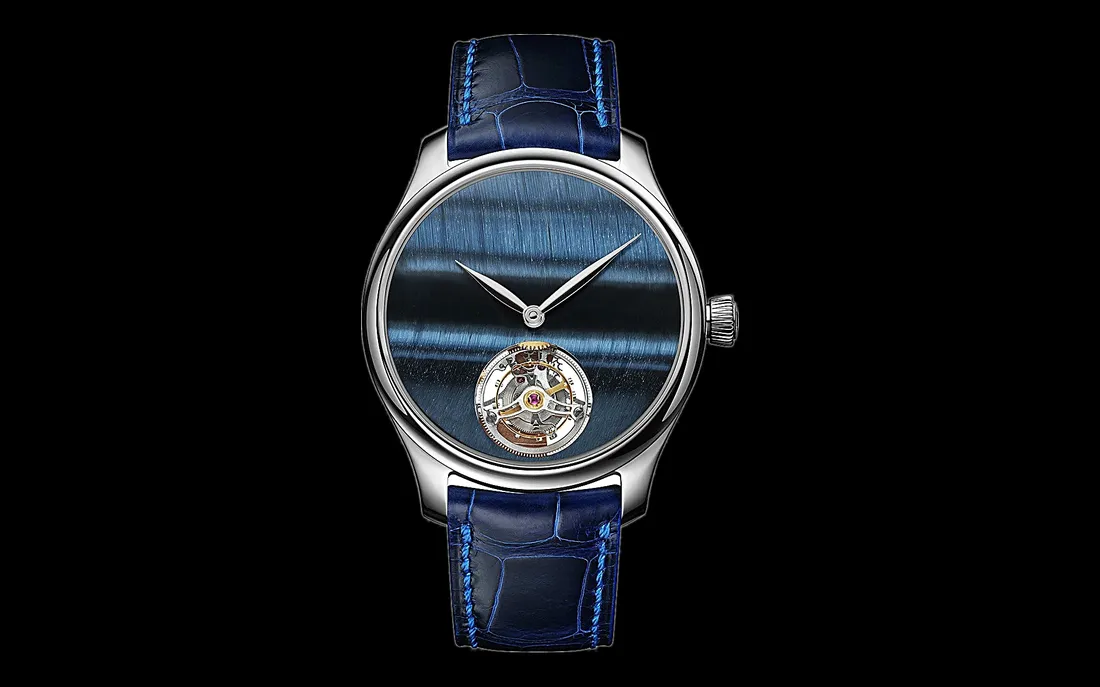
The H. Moser & Cie. Endeavour Tourbillon Concept is not only a watch. On one pure dial it brings together the resistance to time of a tardigrade that turns life into a glass matrix where the water has gone, nature’s geological memory of millions of years, and the quiet answer mechanics gives to gravity.
Set two things side by side. One is a creature half a millimetre long that gives up its water, turns itself into glass, and comes back twenty years later with a single drop. The other is a stone frozen fibre by fibre over millions of years beneath the crust. A human being made neither of them; a human being only saw one through a microscope and cut the other and strapped it to a wrist. The measure was set by the Creator, and it was there while nobody was looking.
Every time you look into the depth of the natural stone fibres on that dial, and at the cage turning in open space below them, you see not the ordinary hours going by but the fact that time can stop.
format_quote"The measure was set by the Creator, and it was there while nobody was looking."
Hasan Bekmezci
The Endeavour collection on the maker’s own site: H. Moser & Cie., Endeavour