On the upper reaches of the Yellow River, before the day breaks, mist hangs over the water. The current here is fierce; it has carved the rock for centuries, impatient and tireless. Legend says that every spring the carp swim against this current, turning their scales into a silver army, upward, always upward. Most fall back. But at the river's highest point, where the water rears up like a wall, there is a threshold: the Dragon Gate.
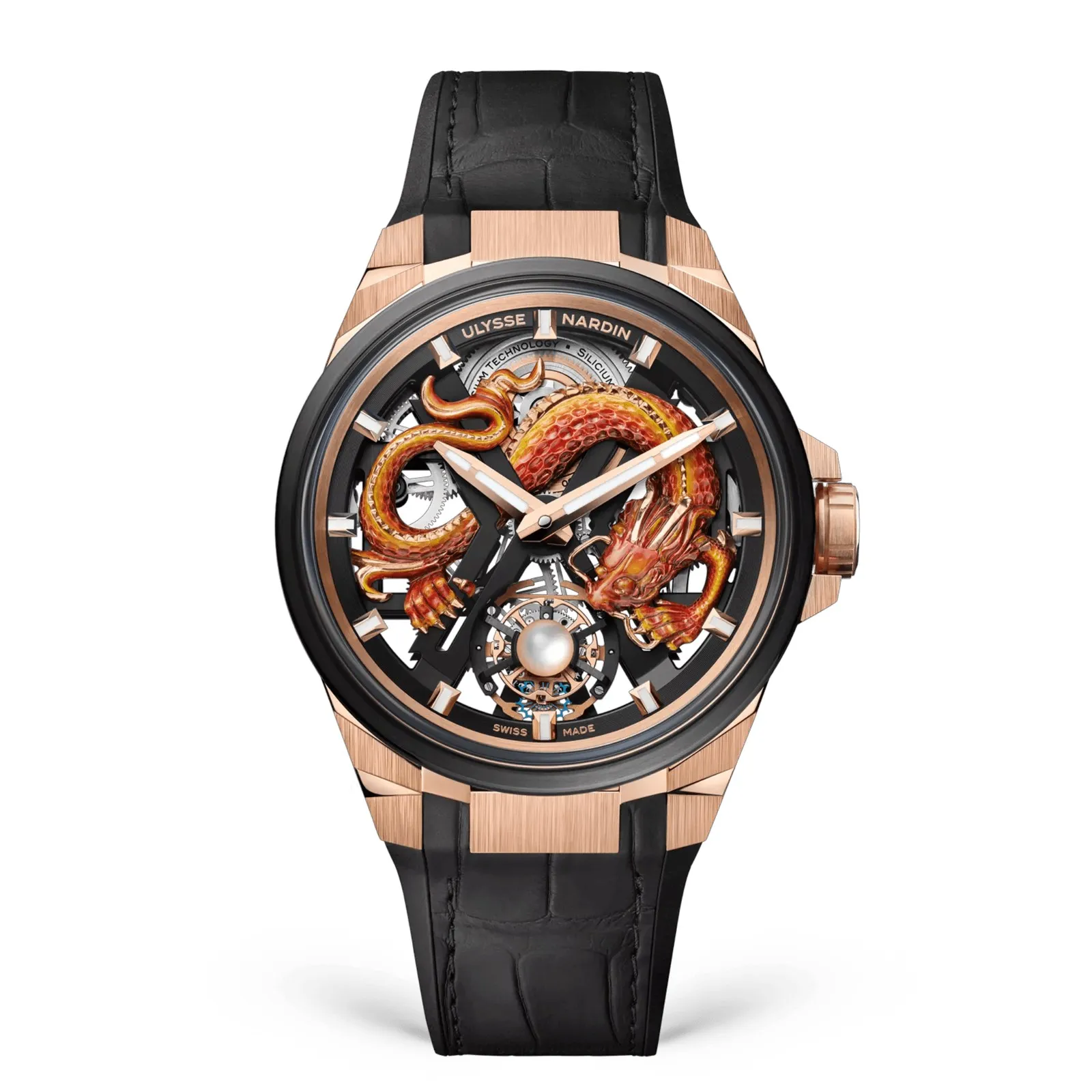
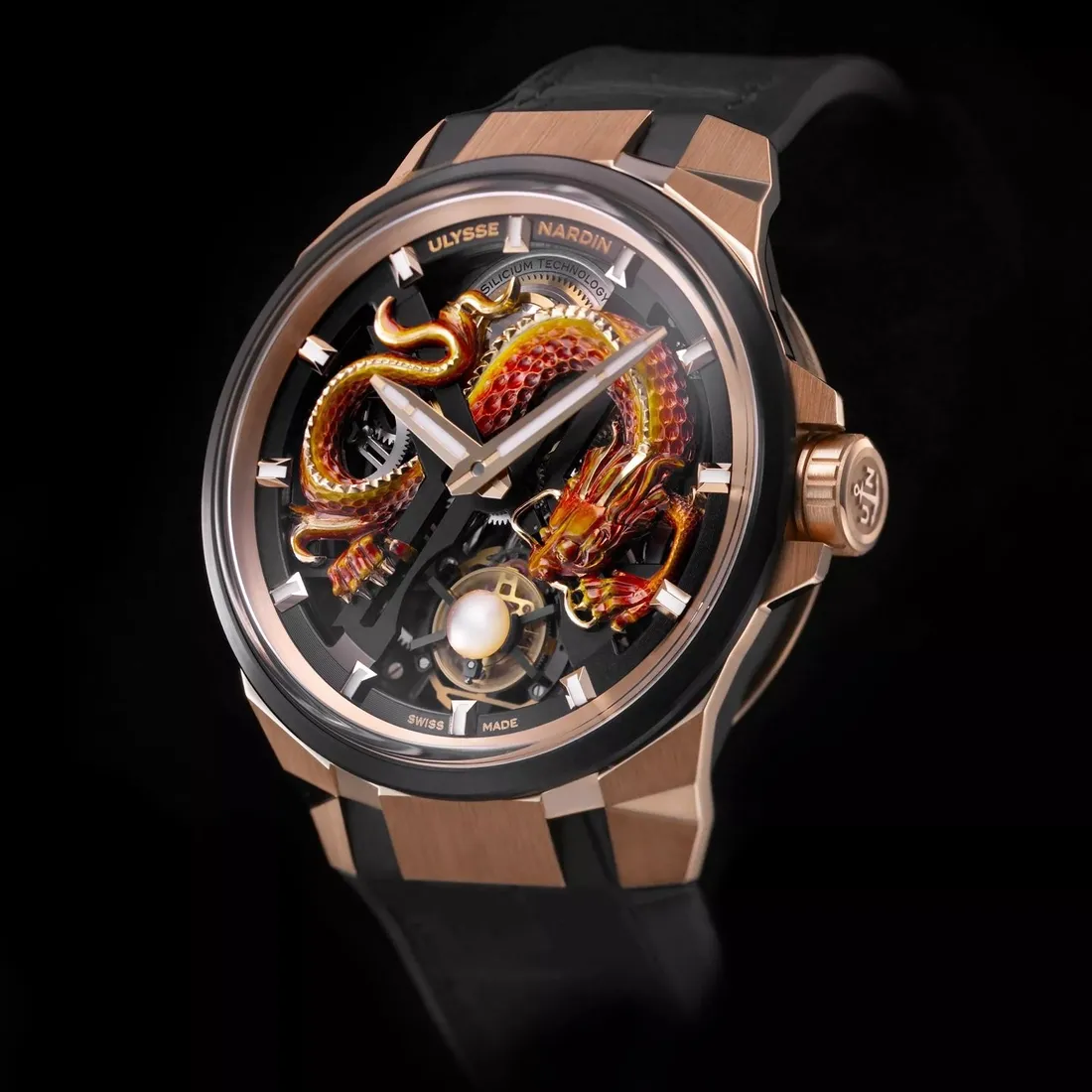
At first glance, Ulysse Nardin's Blast Tourbillon Dragon calls that ancient threshold to mind. For this watch does not tell the story of a carp, but the moment that carp takes wing: across the dial, a dragon of gold and fire coils behind the crystal like a frozen legend.
The Dragon Gate
One of the East's oldest tales tells it this way: the single carp that manages to leap the Dragon Gate is a fish no longer. It leaves the weight of the water behind, rises into the sky, and is transformed into a dragon. This is why, in Far Eastern painting, the dragon is neither a monster nor a hoarder of treasure. It is the emblem of rain and river, of the turning of the seasons, of the thing that endures and changes form. It is the image of a long struggle: of something that longs to be, straining toward what it is meant to become.
And from the moment it takes wing, the dragon is in pursuit of something: a pearl of flame. In the paintings you always see it just at the tip of a claw, level with the open mouth, a sphere never quite grasped. What the pearl signifies has been debated for centuries; some call it wisdom, some the moon, some thunder. But the common thread is this: the dragon chases it because the chase itself carries meaning.
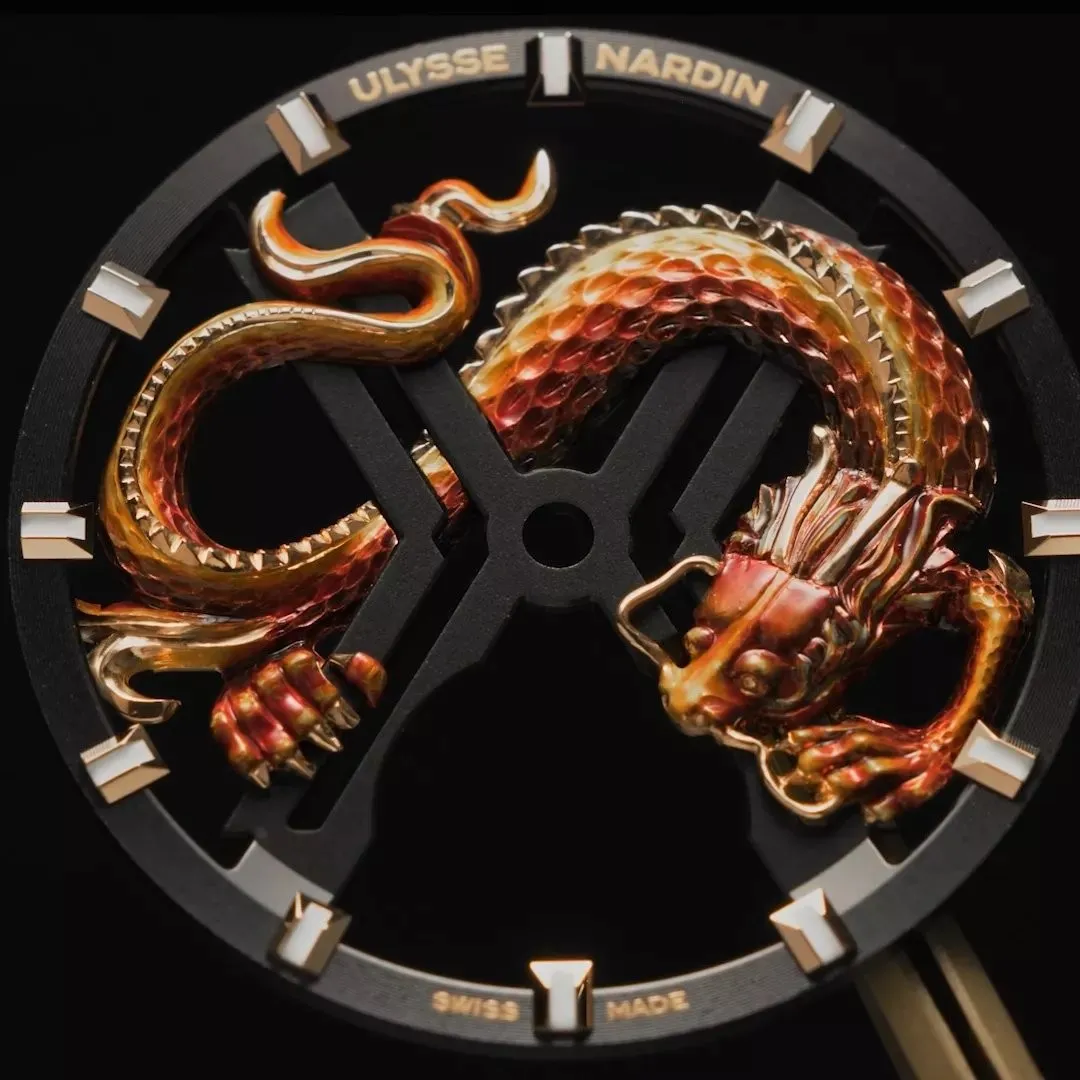
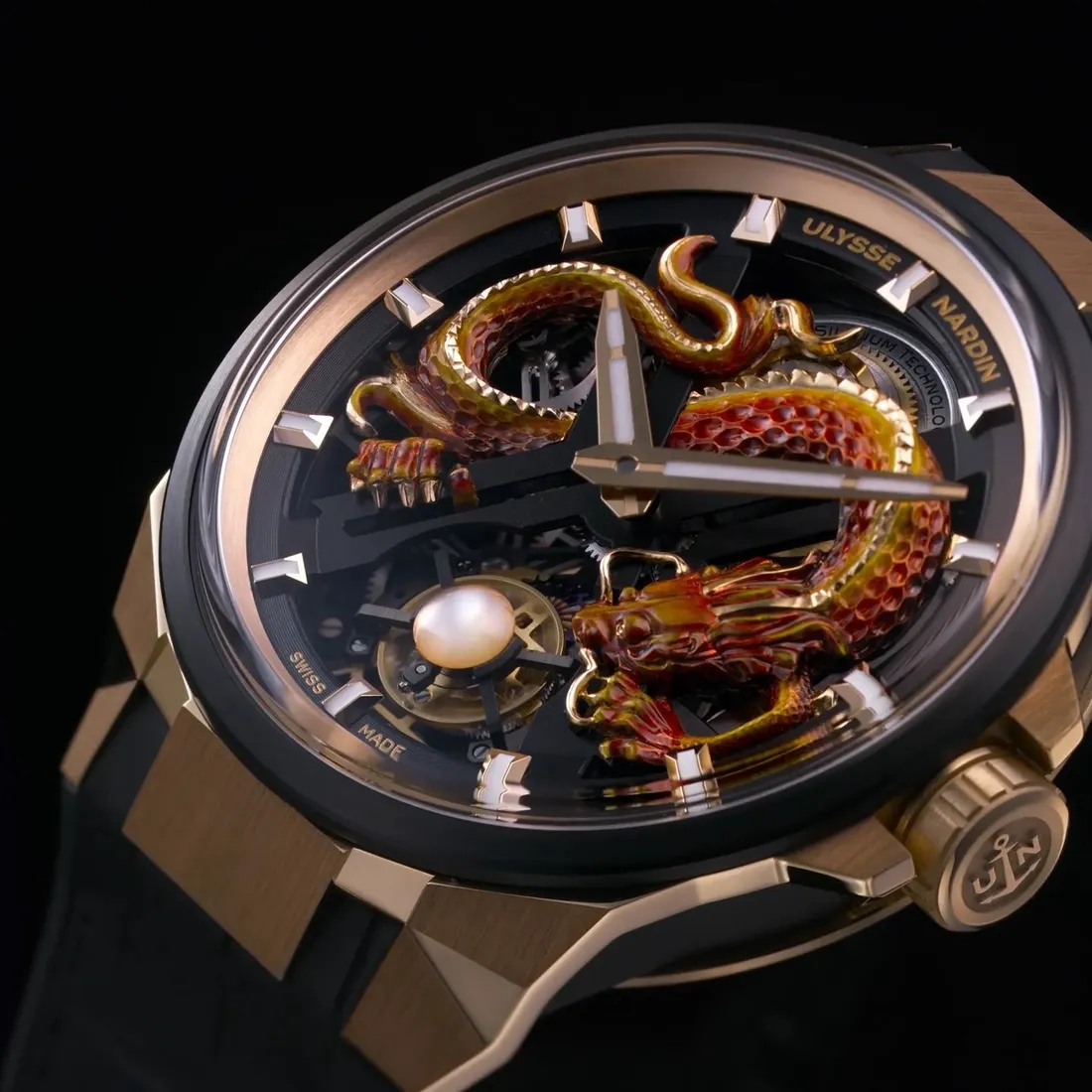
On the dial of the Blast Tourbillon Dragon, that pursuit is held still. The rose-gold dragon winds its body around an X and reaches one claw downward, toward six o'clock. There, at the very centre of a turning cage, sits a real pearl. The dragon reaches for it; the pearl turns, and turns, and stays forever a fingertip away. One cannot help but ask: is it futile to chase what cannot be caught, or is the journey itself the point?
A Pearl at the Heart: The Flying Tourbillon
That turning cage is called a tourbillon. It was born more than two centuries ago, in 1801, as Abraham-Louis Breguet sought a cure for a problem. Pocket watches spend much of the day upright, in a pocket, and gravity pulls the watch's most delicate organ, the balance and its escapement, always from the same direction. This constant pull makes the watch run fast in one position and slow in another.
Breguet's solution was elegant: if we cannot defeat gravity, let us average out its error. Place the escapement inside a small cage, and turn that cage once every minute. Now gravity pulls from one side in one instant and the opposite side the next, and the errors cancel one another out. Much as a spit turning over a fire cooks every side of the meat evenly, burning none.
The tourbillon here is of the 'flying' kind. An ordinary tourbillon cage is held by two bridges, one below and one above. In a flying tourbillon there is no upper bridge; the cage is carried from below alone, invisibly, and appears to hang suspended in the void. This is why the cage in which the pearl turns seems to float in mid-air, holding on to nothing.
The beating of this heart is out of the ordinary too. Ulysse Nardin makes the most critical parts of the escapement, the escape wheel and the anchor, from silicon. Silicon is the essence of sand; but here it has been worked micron by micron into a part as light as a feather and all but frictionless. Its virtues are almost too many to list: it is immune to magnetic fields, it barely expands with heat, and above all it needs no oil. In a traditional movement, the steel parts depend on tiny drops of oil that dry out over time; a heart of silicon beats for a lifetime without lubrication.
This heart runs at a slow, calm rhythm, at 18,000 beats per hour (2.5 Hz). And it draws its power not from one mainspring but from two. Two barrels, two springs: as one runs down, the other stands ready, so that the power flowing to the movement stays even across a full 72 hours. Much as a stream fed by two springs flows longer and more steadily than one fed by a single source.
The X: An Architecture in Space
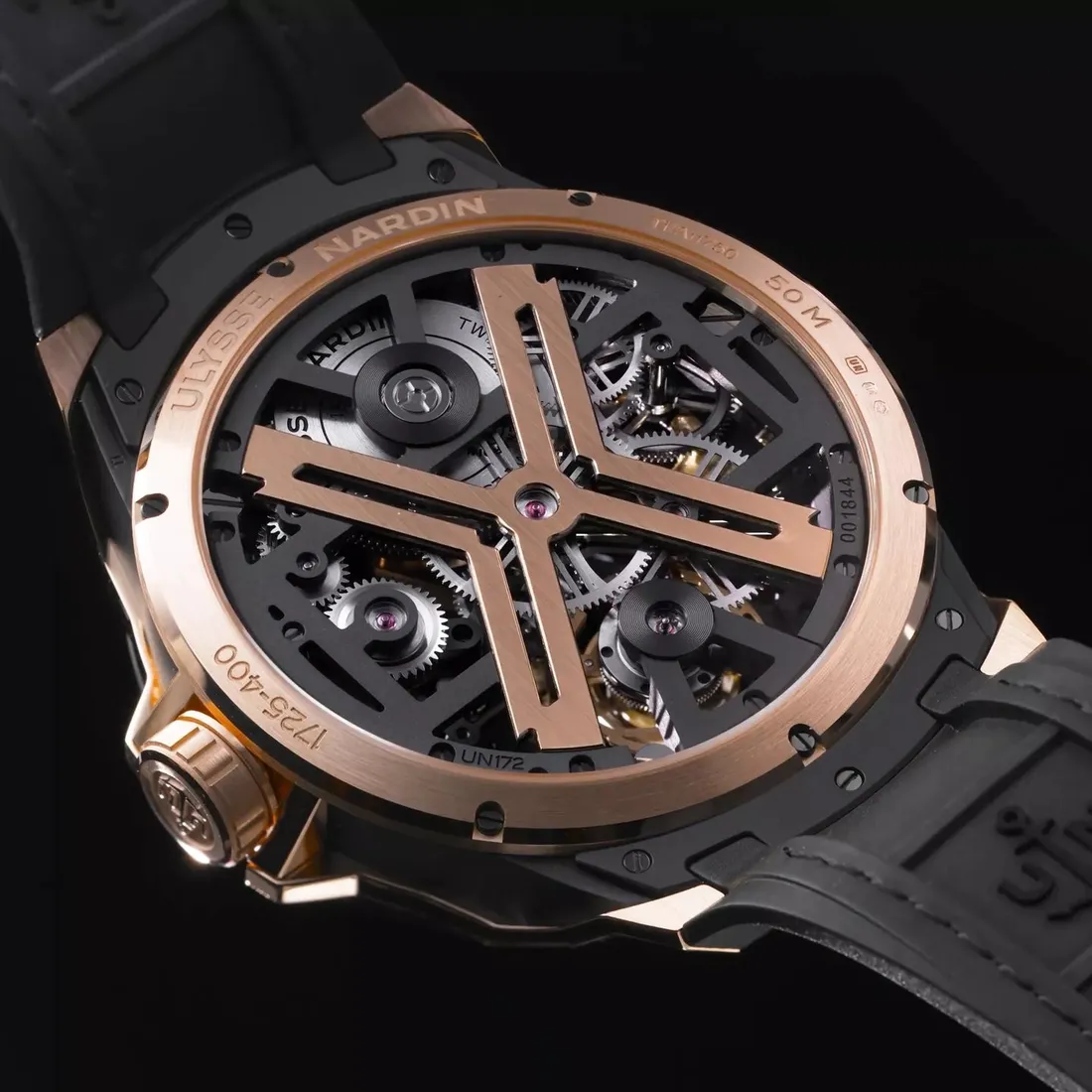
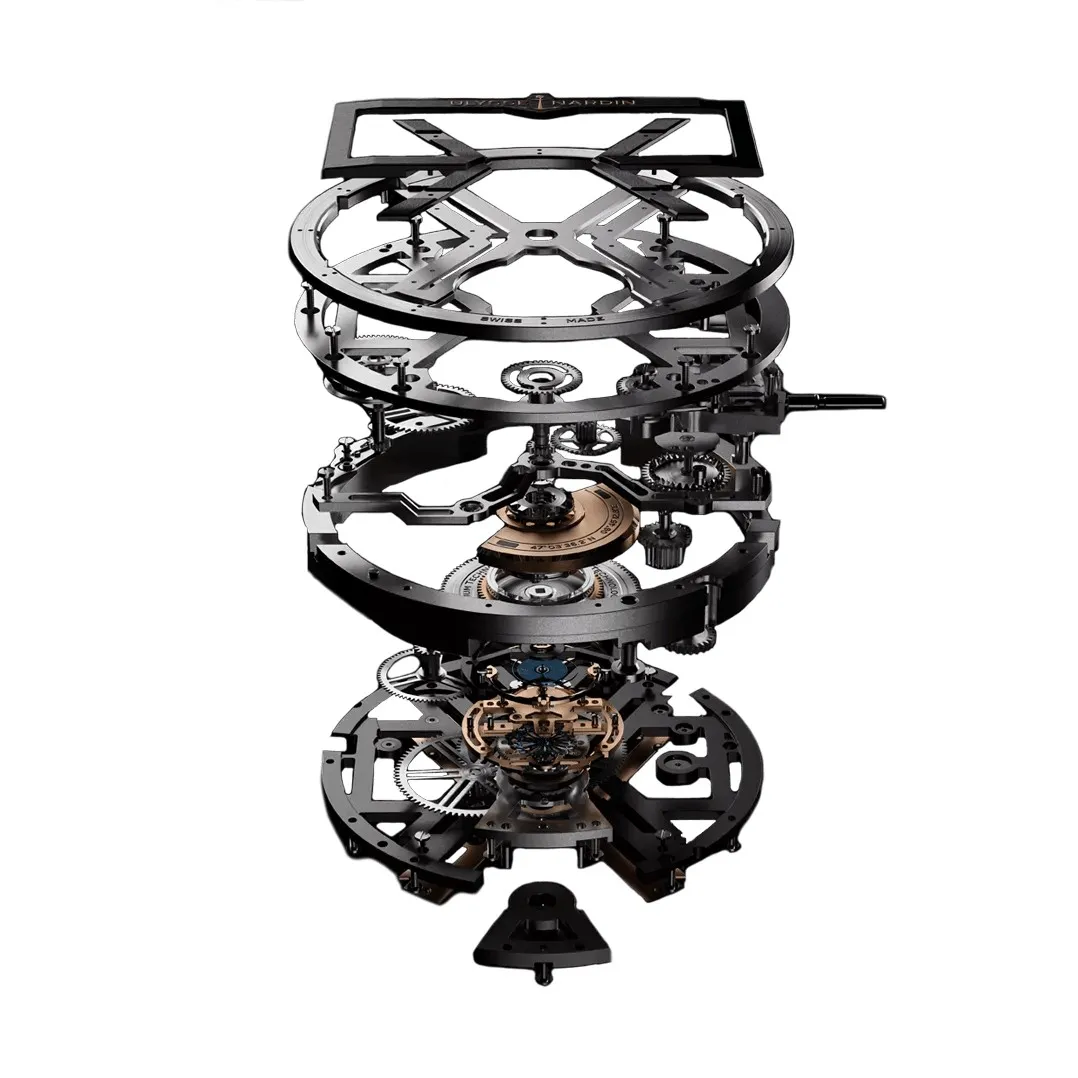
The signature of the Blast collection is that rose-gold X running across the centre of the dial. But it is no mere ornament; it is the load-bearing skeleton of the movement. Ulysse Nardin skeletonised the UN-172 from end to end, removing every non-structural piece of metal, every solid bridge, every unnecessary plate. What remains is only the wheels that carry the power, the slender arms that hold them, and that X. Like a cathedral reduced to its load-bearing ribs; the empty space is now part of the structure itself.
This skeletonising is not only for lightness and transparency. Because the movement is so open, the dragon can live in three dimensions: it rises above the wheels, passes between the arms of the X, dives beneath the hour and minute hands and emerges again. Above a movement of 137 parts, it finds a sky of its own.
(In the Artisan's Workshop)
Let us open a parenthesis here and look at how that dragon behind the crystal came to be. Because it was not cast from a mould.
First came a design that took two years. The dragon had to have a form that looked alive, yet never once touched the turning wheels, the trembling tourbillon, the sweep of the hour and minute hands. A three-dimensional sculpture threading through gaps smaller than a millimetre; at once a work of art and a watch component.
When the design was finished, it passed into the artisan's hands. Before him lay a block of 18-carat rose gold and a set of engraving burins. For three days, bent beneath the loupes, he cut every scale one by one: the sawtooth ridge along the spine, the whiskers, the talons on each claw, the hollows of the eyes. This is exactly what a sculptor does in freeing a figure from marble; only the scale has shrunk to that of a grain of wheat, and the margin for error is very nearly zero.
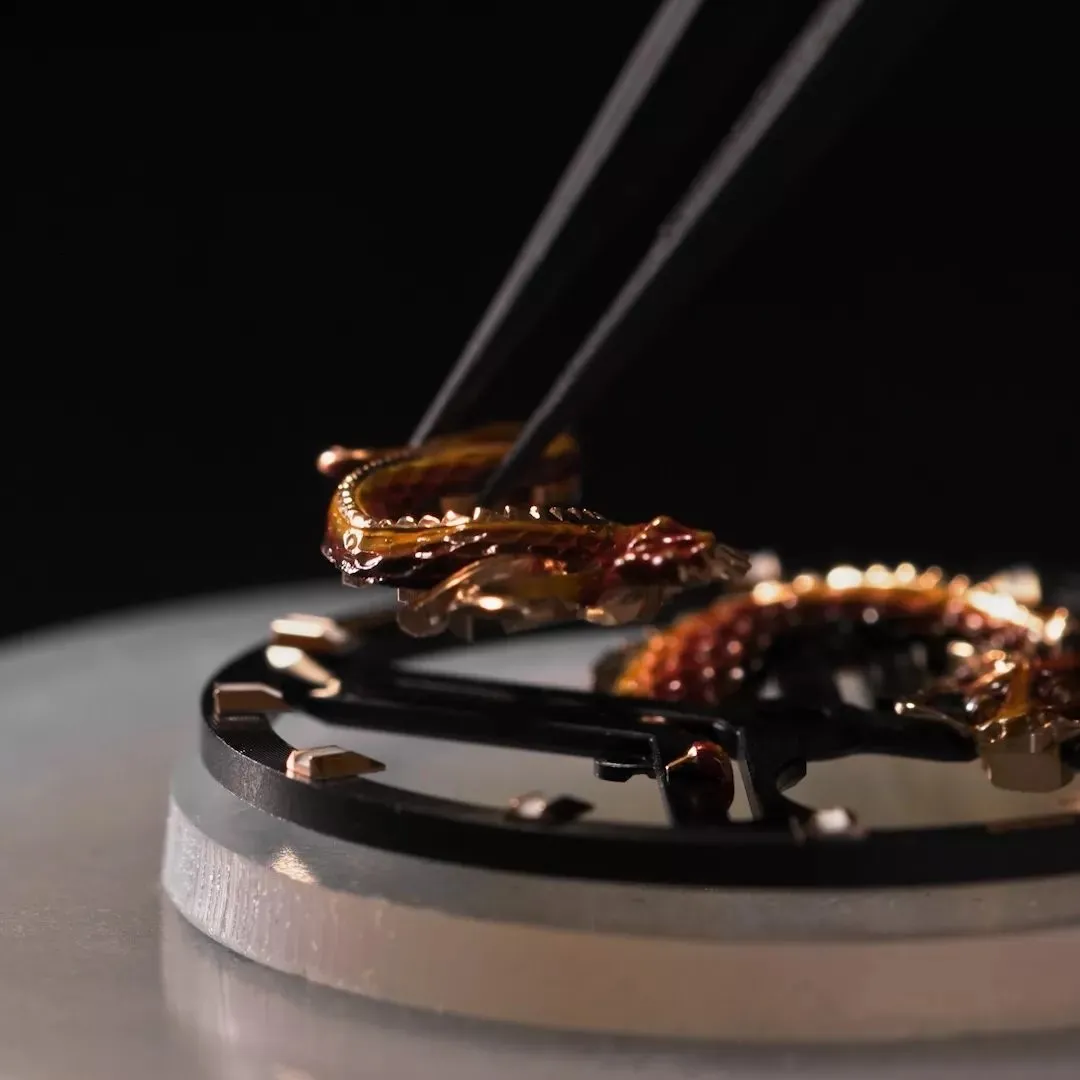
When the engraving was done, the dragon was not yet alive. What gave it fire came on the fourth day. This time the artisan took up the brush and laid gradated shades of red, orange and yellow over the rose gold, layer by layer. The colours had to be blended so seamlessly that the dragon looks not painted from without, but kindled from within: a cool crimson at the tip of the tail, an incandescent orange along the spine, a yellow near to white in the curve of the neck.
It is like painting a sunset onto a grain of wheat. And all this delicacy is carried out under the shadow of a single truth: one slip of the brush can send three days of engraving into the bin in an instant. At the end of four days, a single dragon emerges; and the dragon of every Blast Dragon lives those four days over again, from the very beginning.
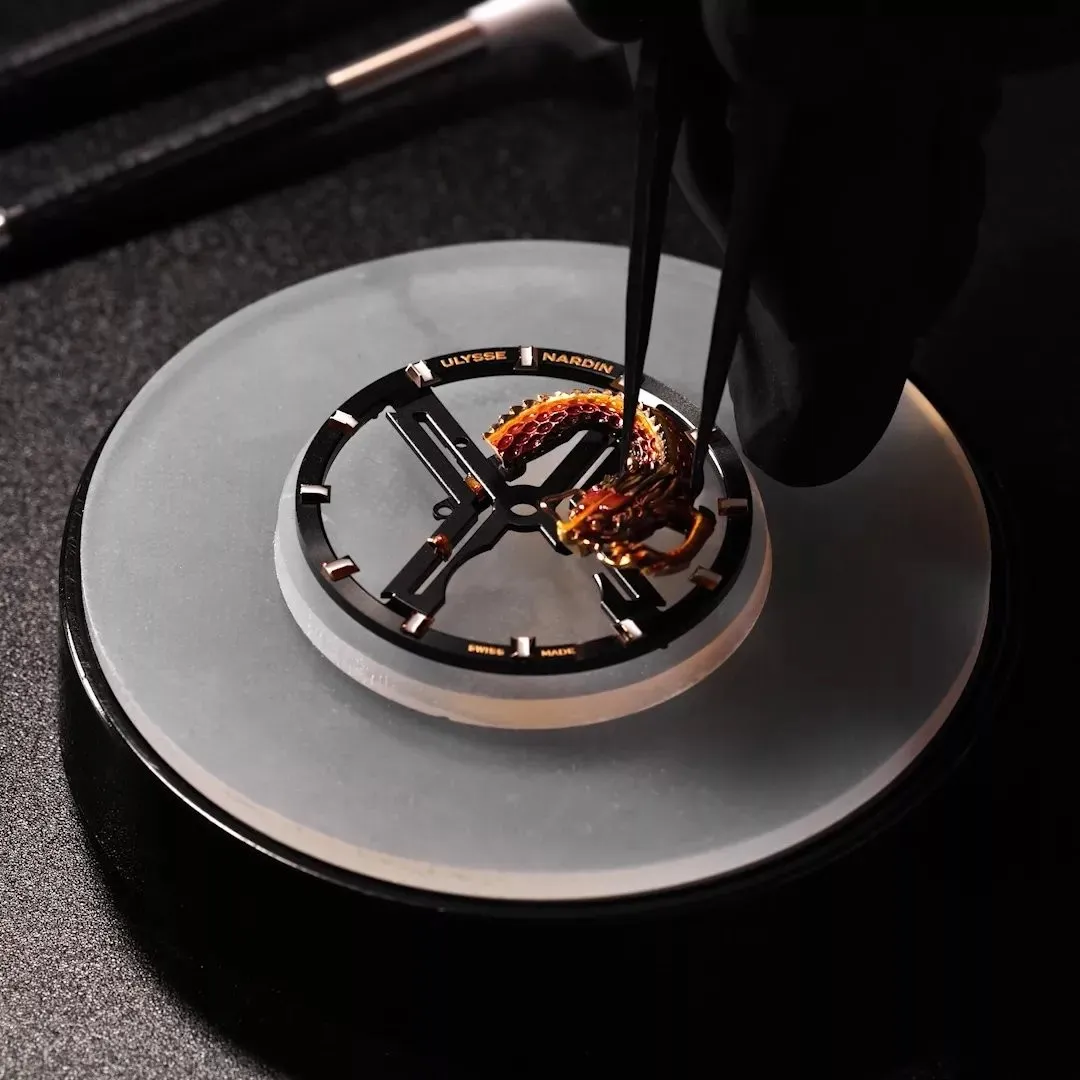
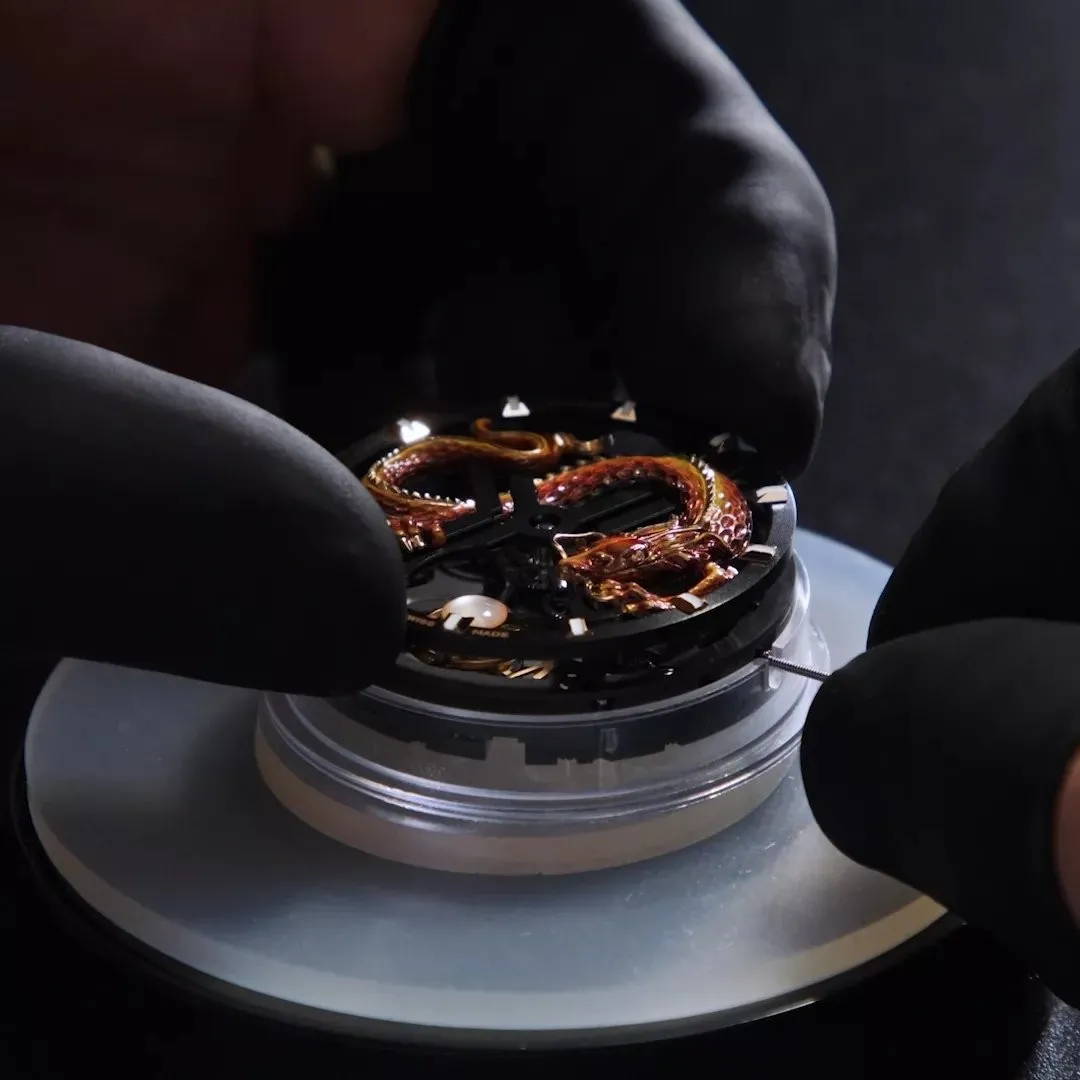
The final stage is perhaps the one that holds the breath the longest. The finished dragon is settled into its place above the running movement; but with such care that not a wheel stops, nor does the tourbillon's rotation falter. Gloved hands, the tip of the tweezers, and that real pearl is placed at the very centre of the cage. Whatever composure a surgeon shows working over a beating heart, it is here as well.
Titanium, Rose Gold and Ceramic
This whole universe rests within a case of 45 millimetres. Ulysse Nardin made the middle case of titanium for lightness; the bezel, the lugs and the crown of 18-carat rose gold for splendour; and set a ring of black ceramic between the two. Embossed on the crown is the maison's anchor, the signature of a house that made its name in marine chronometers. The watch is water-resistant to 50 metres and comes down onto the wrist on a strap of black alligator.
The answer to why such a watch is worth a fortune is hidden here too: when you fasten it to your wrist, what you are really wearing is a two-year design, four days of handwork, a heart of silicon and two centuries of engineering tradition.
Reaching
And we turn back once more to that pearl. Imagine an oyster: a grain of sand has slipped inside and wounded it. For years the oyster wraps that grain in nacre, layer upon layer; it answers pain with beauty, and in the end a sphere is born. That pearl now turns in the heart of a tourbillon, and a dragon of gold reaches for it, and reaches.
Before this dial, one cannot help but ask a few questions. Who taught the oyster to turn its wound into a pearl? Who commanded the essence of sand to become a heart that beats without tiring? And who first set that measure which, at six o'clock, quietly counts out our days without our asking?
Perhaps the dragon's wisdom lies not in grasping the pearl, but in never ceasing to reach for it. On your wrist, the Blast Tourbillon Dragon repeats that reach every second: in pursuit of what cannot be caught, yet a little closer to it with every passing moment.