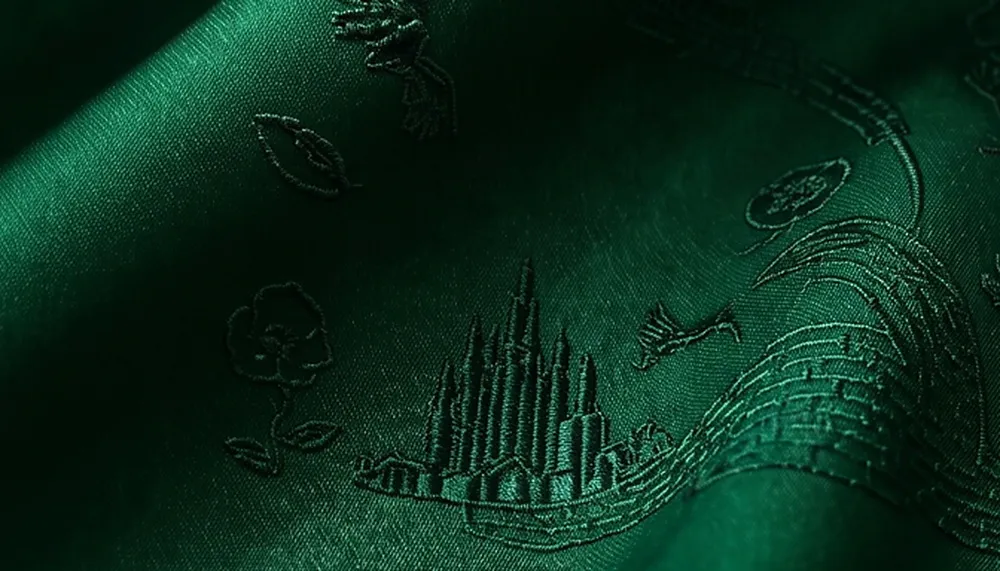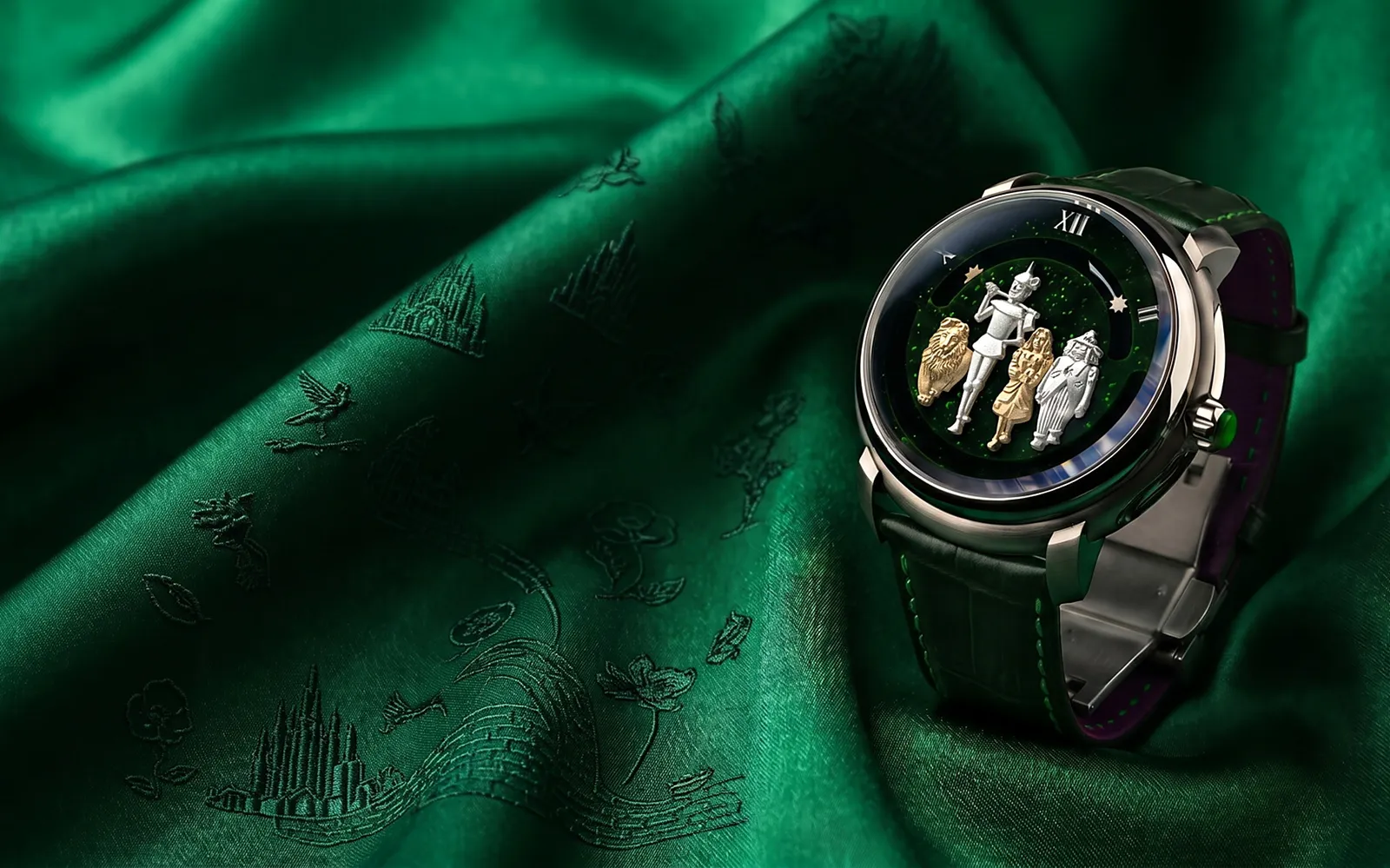
The oldest tragedy of mankind is that we keep looking for the jewel we already carry in some distant temple, in the palms of a mysterious wizard, or behind the walls of an unreachable Emerald City.
We live on the dream of a transcendent power that will come from outside and make up for what we lack. And yet the truth is not behind the final door we reach; it is in the deep metamorphosis the soul goes through while walking towards that door. What we find at the end of the road is usually the thing we brought with us when we set out.
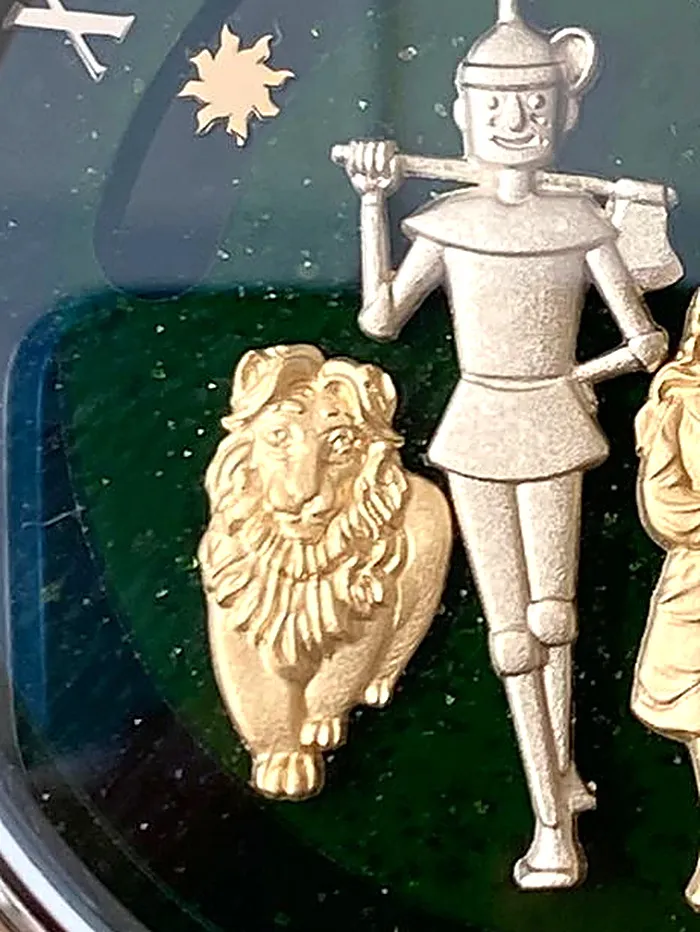
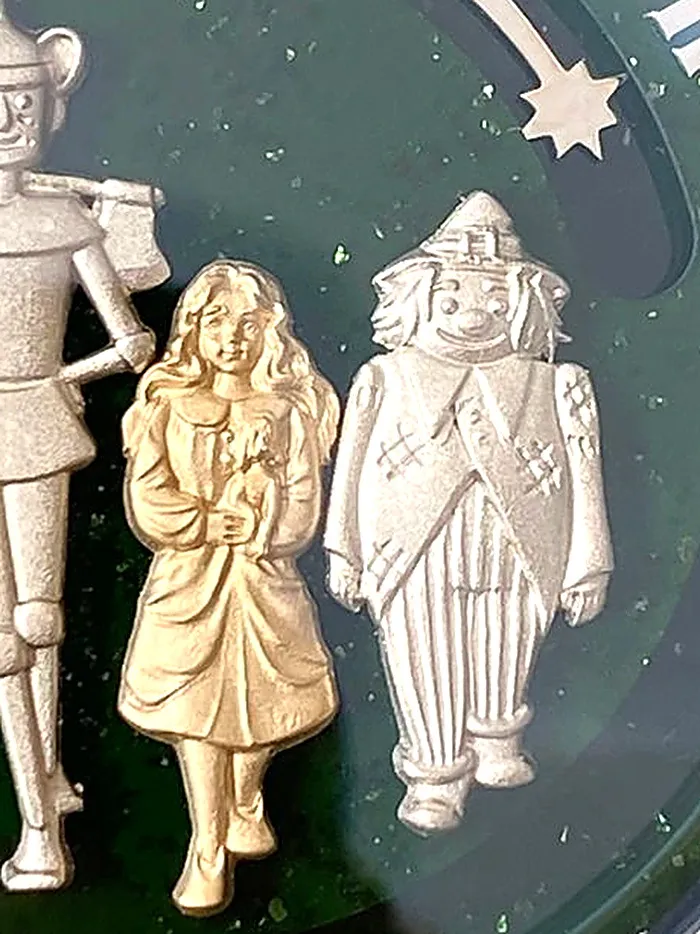
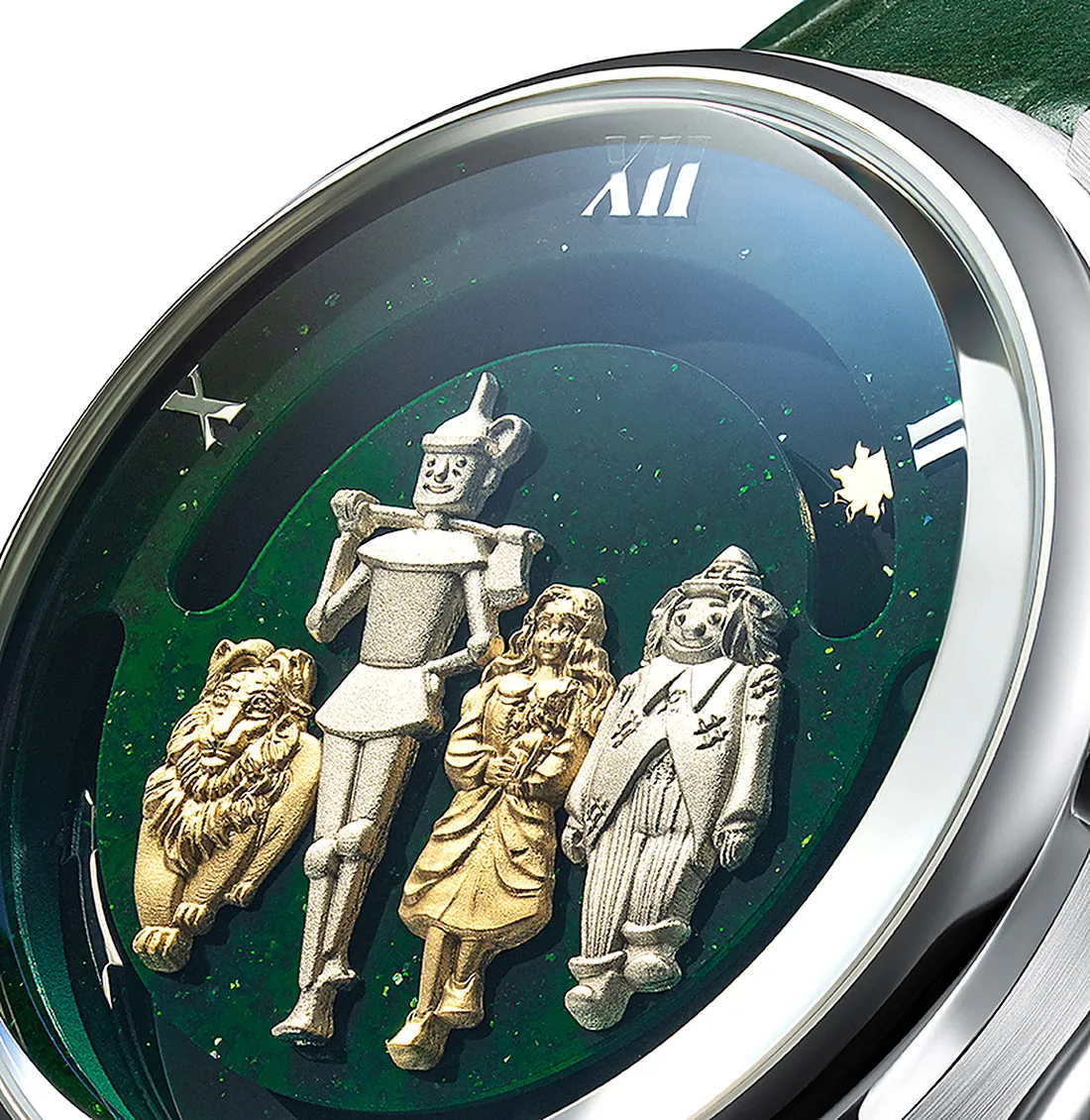
With The Wizard of the Emerald City, listed among the GPHG 2026 entries in the Challenge category, the independent watchmaker Dmitriy Chugunov turns Alexander Volkov’s fairy tale into a piece of deep existential philosophy. The four figures at the centre of the dial stand for the fundamental searches of the human soul, and not one of them knows what it already holds.
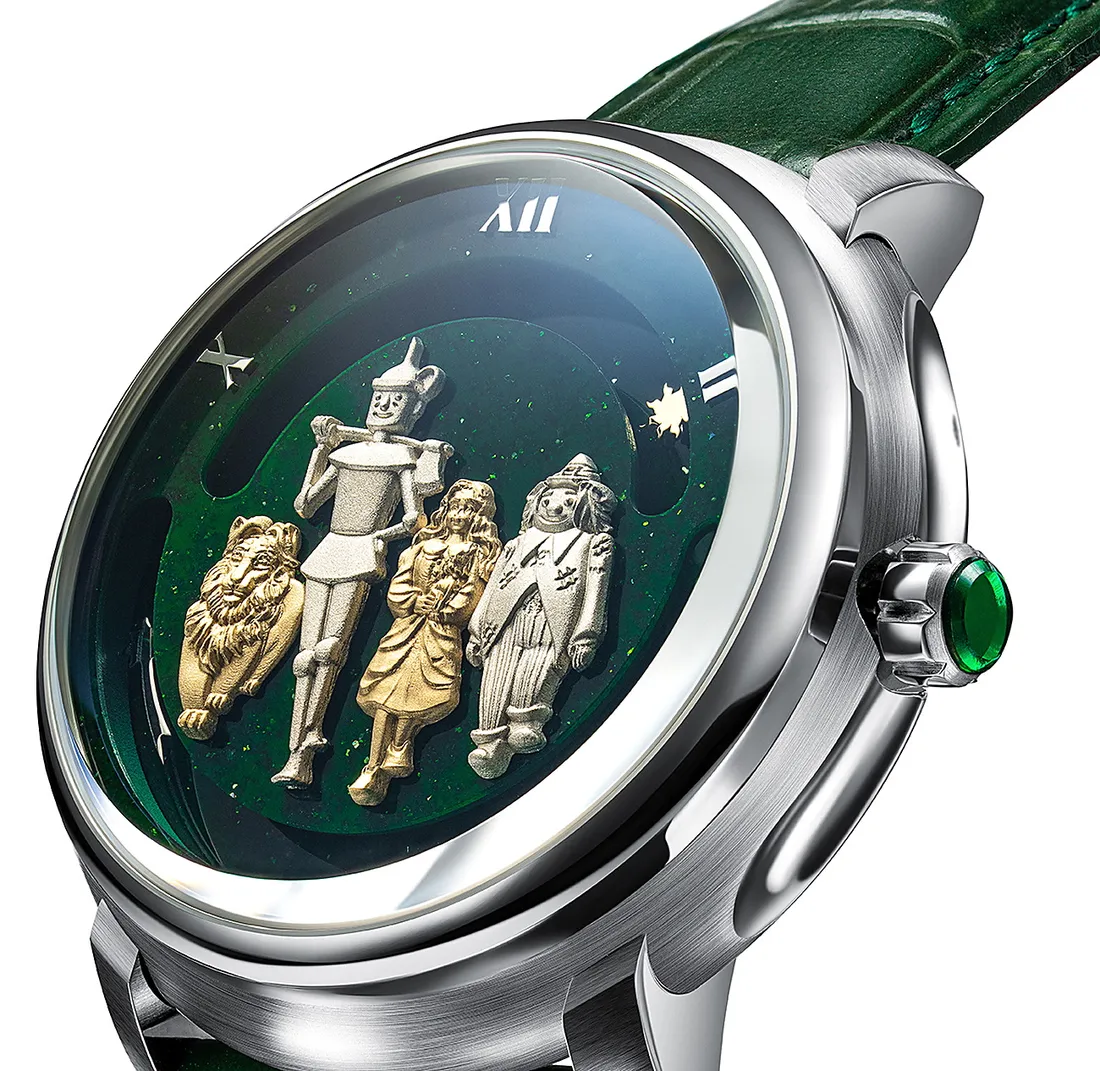
The Scarecrow, who believes himself brainless because he carries straw in his head, stands for a mind blinded to its own potential. All along the road it is he who does the sharpest reasoning. Thought is not a diploma granted from outside; it is the very act that shows itself at the moment of crisis.
The Tin Woodman, complaining about the rusted hollow in his chest, stands for the fragile soul that can feel pain and yet believes itself unfeeling. When he weeps for his friends and rusts, he proves that a heart is a jewel needing no flesh in order to beat, one that exists in love and in sacrifice.
The Lion, frightened of his own shadow, is the error of the man who mistakes the absence of fear for courage. That he throws himself in front of the ones he loves at the moment of danger shows that courage is not fearlessness but the will to take a step in spite of fear. Courage is not the absence of fear; it is the art of sharing one body with it.
And Ellie, the little girl torn from her home by the hurricane, is the emblem of a humanity trying to complete its exile on earth. She is like a single drop of water broken off from a vast ocean and fallen to the ground, evaporating and rising to the sky in order to return to its real source and its real homeland. Man too searches for his own roots in this world like an exiled soul. By holding her friends together for the whole journey, Ellie proves that the real home is not a geographical coordinate or a building of stone, but the unshakeable bonds built along the road and that longing in the soul for the country it came from.
format_quote"What we find at the end of the road is usually the thing we brought with us when we set out."
Hasan Bekmezci
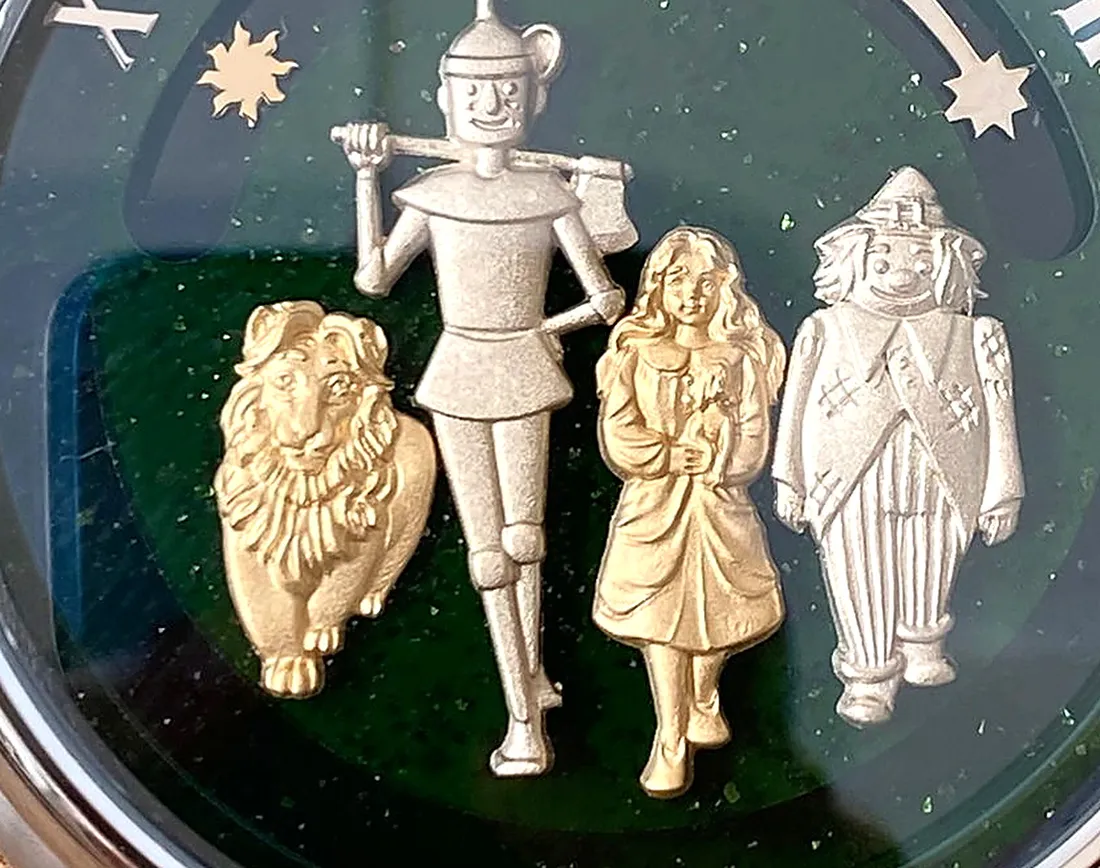
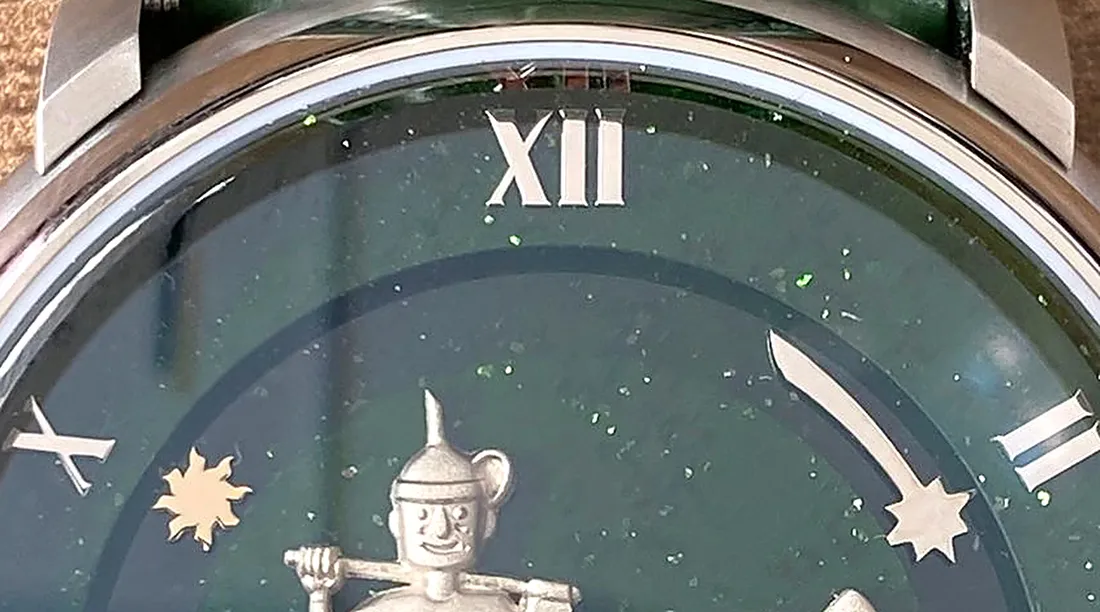
Chugunov seals this philosophical narrative with the craft of watchmaking, and his first decision is the bravest one: he pulls out the hour and minute hands that would cross the centre of the dial and throws them away. Time is not allowed to run steel hands through the hearts of these four figures; the mechanism steps aside in deference to the human story on the dial. The hardest work on a dial is not adding a complication but removing the thing that has no business being there.
Two celestial bodies take the place of the hands. Above the heads of the figures, along the arc where the Roman numerals are set, a star and a comet drift: the star carries the hours, the comet carries the minutes. Time does not pass over them and move on; it stands witness to their existential walk. A watch that makes hands out of the sky leaves you feeling not that you have read the time but that you have watched it.
The ground itself is not a choice of material but the name of a decision: the dial is a disc cut from green aventurine. Inside that stone lie microscopic flakes that catch fire as the light strikes them, so the green is not a colour arrived at with paint but a glitter rising out of the depth of the stone. The light of the Emerald City is told on this dial by a mineral rather than by an effect.
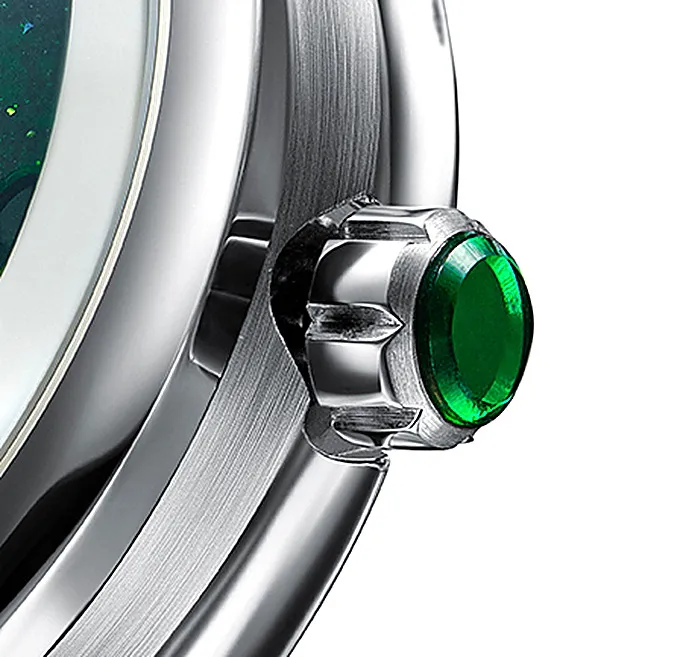
The four bas-reliefs at the centre are in gold and silver. They were made by the jeweller Kirill Chernetsky: each figure is brought out by precision art casting and then worked by hand, every detail polished one at a time. That an expression can be held at a scale below the millimetre is what separates this from ordinary jewellery work. And the stone sitting in the crown is not glass but a real emerald. To put the name of the city in the most-touched place on the case is the quietest way of carrying the story off the dial.
format_quote"The hardest work on a dial is not adding a complication but removing the thing that has no business being there."
Hasan Bekmezci
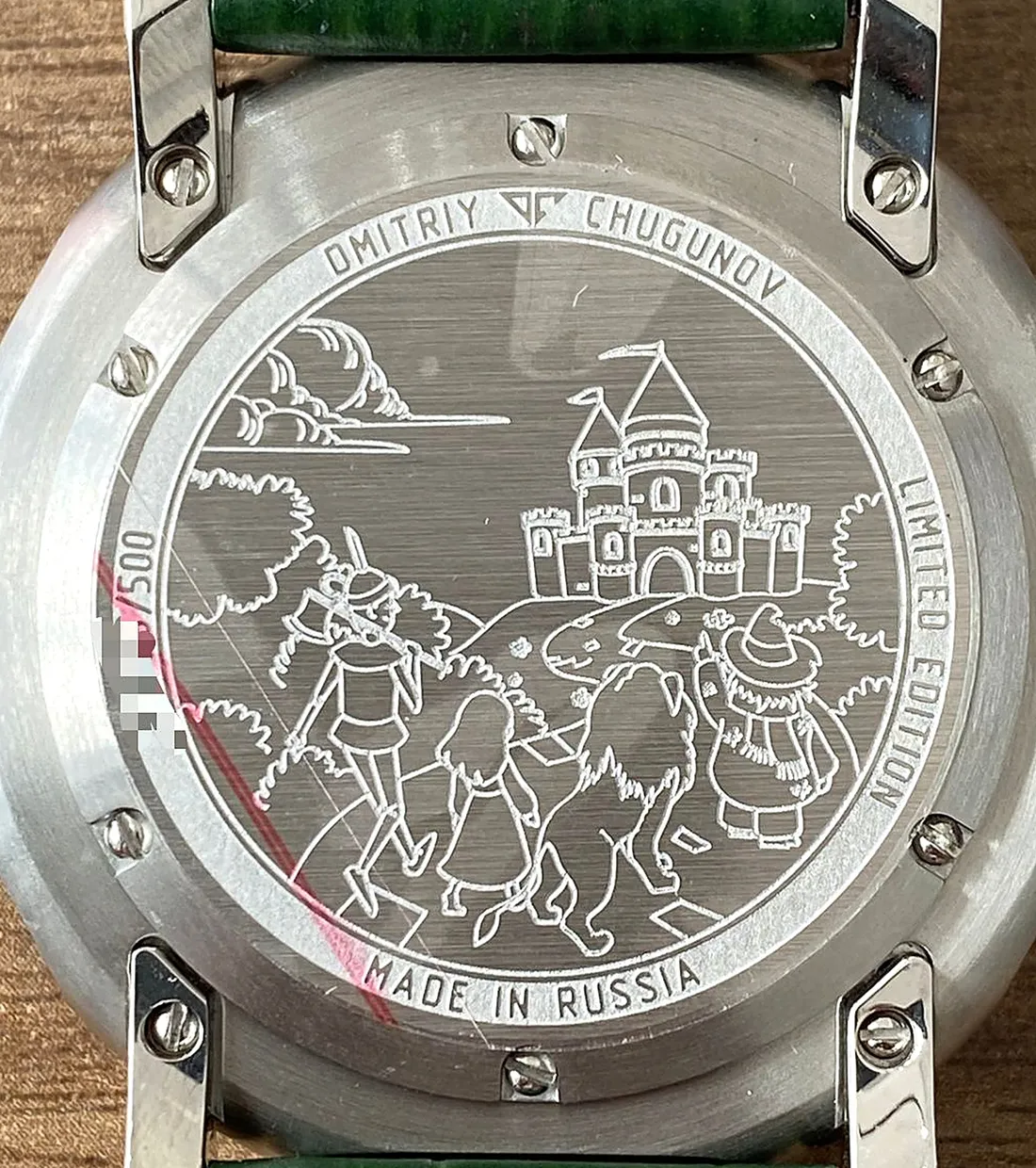
Turn the watch over and there is no display window; the steel back itself has been turned into an engraving surface. The four figures walking the yellow brick road towards the Emerald City, the clouds behind them and the castle rising ahead have all been cut by hand. The serial number and the figure five hundred stand at the edge, and two words below: Made in Russia. To work the face nobody will see is to work for yourself rather than for the buyer.
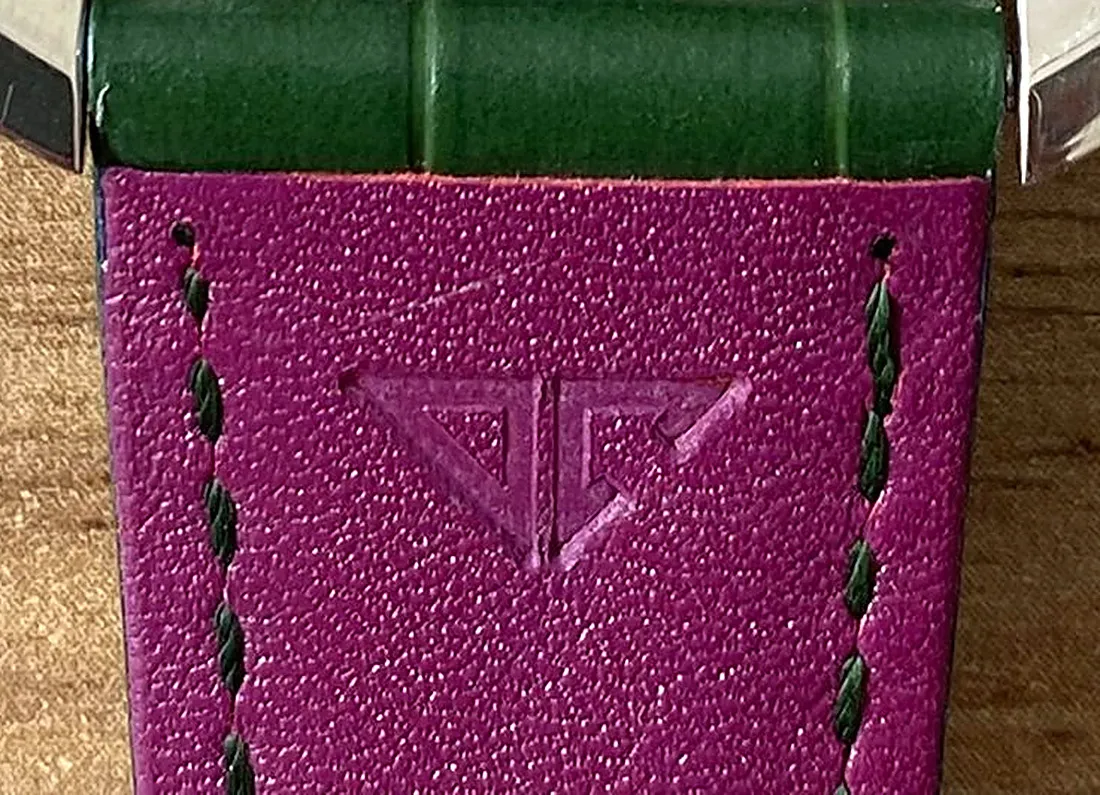
The strap continues the same story: green on the outside, fuchsia on the lining. Every country in Volkov’s tale has a colour of its own, and this strap divides two of them between the visible and the hidden face of the wrist. The lugs are screwed to the case as separate pieces, and the domed sapphire crystal deepens the dial into a diorama rather than a stage. To dome a crystal is not a matter of style but the obligation to leave the figures a height in which to breathe.
format_quote"To work the face nobody will see is to work for yourself rather than for the buyer."
Hasan Bekmezci
With the wheels turning on your wrist, The Wizard of the Emerald City whispers one thing only: the wizard in the Emerald City is an illusion; the mind, the heart, the courage and the belonging you were looking for were already in your steps along the road.
And perhaps the most honest thing about this watch is that it will not let you read the time quickly. You have to find where a star is standing, then look for the comet. That delay of two seconds is the whole point.