Venice in the 1720s. Between the slap of water in the canals, the shadow of the gondolas and the clatter of the Piazza San Marco, a man was walking: Antonio Vivaldi. The musician they called the Red Priest had his ear turned, violin in hand, not to the melodies shut inside palace walls but to the hidden chord at the heart of existence. For him music was not a mathematics assembled in the mind; it was the art of translating the language of the soil, the air and time.
Walking the endless plains of Mantua and its long rows of vines, Vivaldi was standing in the middle of a procession laid on for him. What he saw when he raised his head was not only cloud but one canvas after another, each of them shaped in the hand of time.
In spring every seed under the soil was a microscopic brass band bursting out at the Creator’s command to wake. In the chatter of the birds on the branches Vivaldi heard the ground saying its waking prayer, and in the trickle of melting snow the first breath of the year.
In summer the heat was no heavy stillness settled over the world but a feast of life brought to the boil by the generosity of the sun. In the exhaustion of farmhands with the sweat running off their foreheads, in the thunder of a storm that breaks without warning, he listened to the full voice of power.
In autumn the shedding of the leaves was not a death but the ground undressing in order to be born again, a climate made for reflection. In the rustle of yellowing leaves and the noise of the harvest he caught the song of thanks for what had been given.
In winter the frozen lakes and the hard winds were the world stopping for a whole year and turning inward, a silent act of praise. In the wind whistling at the windows and in the deep quiet beside a fire he composed the loneliness of the season.
Vivaldi understood this. The seasons are four different garments put on the face of time, four great acts in which the art of the Creator is staged afresh every year. Each time he drew his bow across the paper he was not really composing; he was translating into human speech the smell of the soil, the frequency of the wind, the rhythm of the rain, which is to say the endless symphony set into creation. The Four Seasons was born exactly like that, the moment one man’s mind came into tune with the frequency of the world.
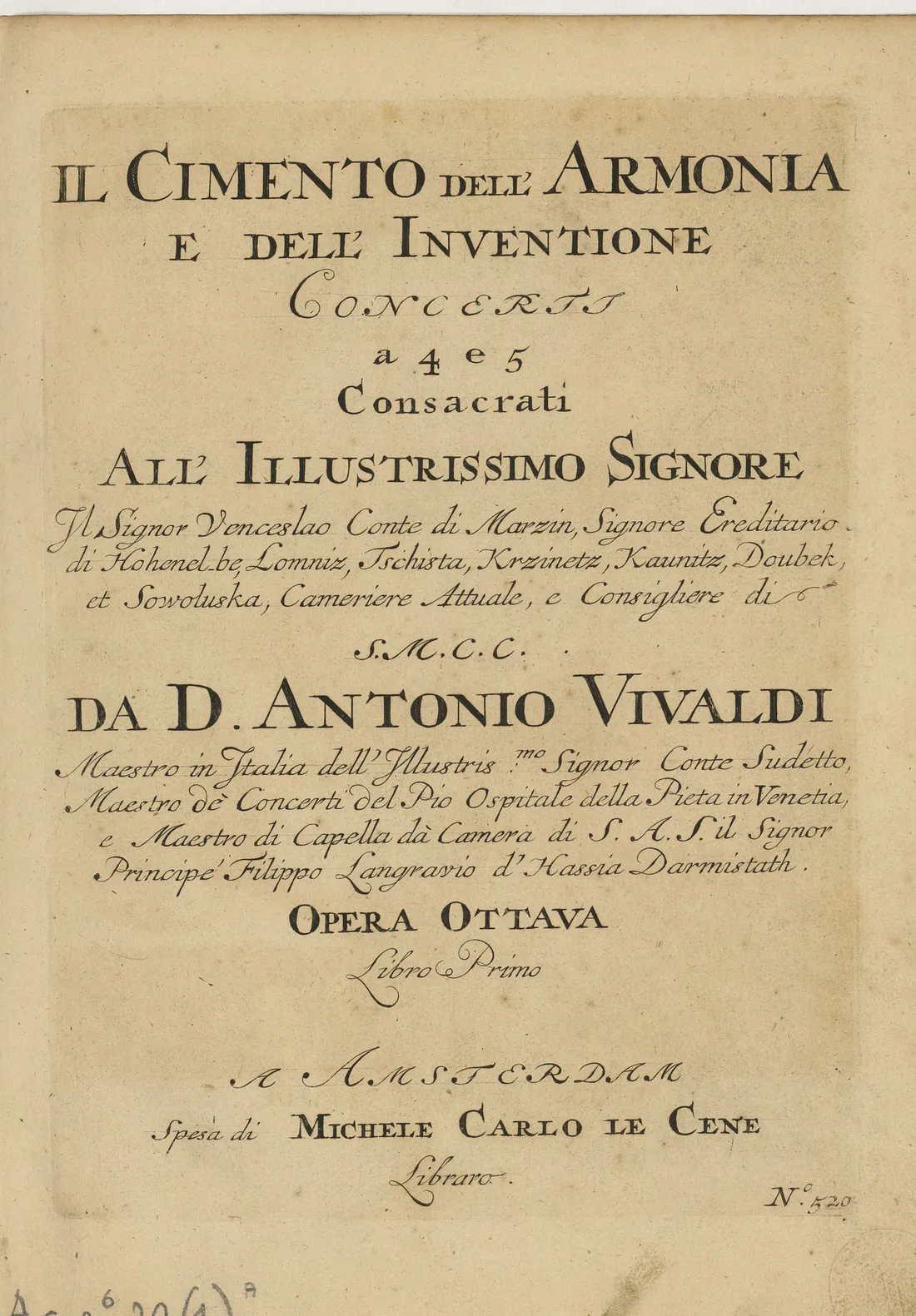
format_quote"Notes are only paint laid over silence; the real composition is hearing the invisible symphony the Creator plays through the world at every instant."
Hasan Bekmezci
But how does a melody born in Vivaldi’s mind, a thought that leaves one human head, become a work of art inside another’s ear? The turning of a composition into art in our hearing is the most bewitching symphony of physics, biology and cosmic time.
One of the great errors we make is the blindness we develop toward the miracles that repeat themselves in the ordinary flow of the day. A single hello, a hummed phrase of Vivaldi, happens only because an enormous biological army falls into step within milliseconds.
First, Broca’s area in the left frontal lobe works like the head writer, casting the words that are about to be spoken; the motor cortex just behind it is the chief engineer who throws the switches on the muscles. The phrenic nerve, slipping down from the spinal cord like a fibre cable, carries the order to the diaphragm, the great sheet of muscle under the ribs. The diaphragm contracts like the bellows of an accordion and fills the lungs, and the chest muscles drive that air up to the larynx under pressure.
In the larynx the vocal folds are brought together by the millimetric tuning of two tiny muscles, the arytenoid and the cricothyroid. Sound is born exactly here, and it owes its birth to a law of fluid physics. Bernoulli’s principle says that a fluid speeds up as it passes through a narrow space, and that the pressure it exerts sideways falls as it speeds up; the way wind squeezed between two buildings on a stormy day turns vicious and pulls the windows outward.
Pressurised air from the lungs races through the narrow gap between the folds, and the pressure between them collapses. That collapse presses the elastic membranes together as though they were kissing. Air builds up behind them and forces them open again, and the air going through sucks them shut again. This opening and closing repeats between a hundred and three hundred times a second. The raw buzz born in the throat comes out of exactly that alternation of vacuum and vibration.
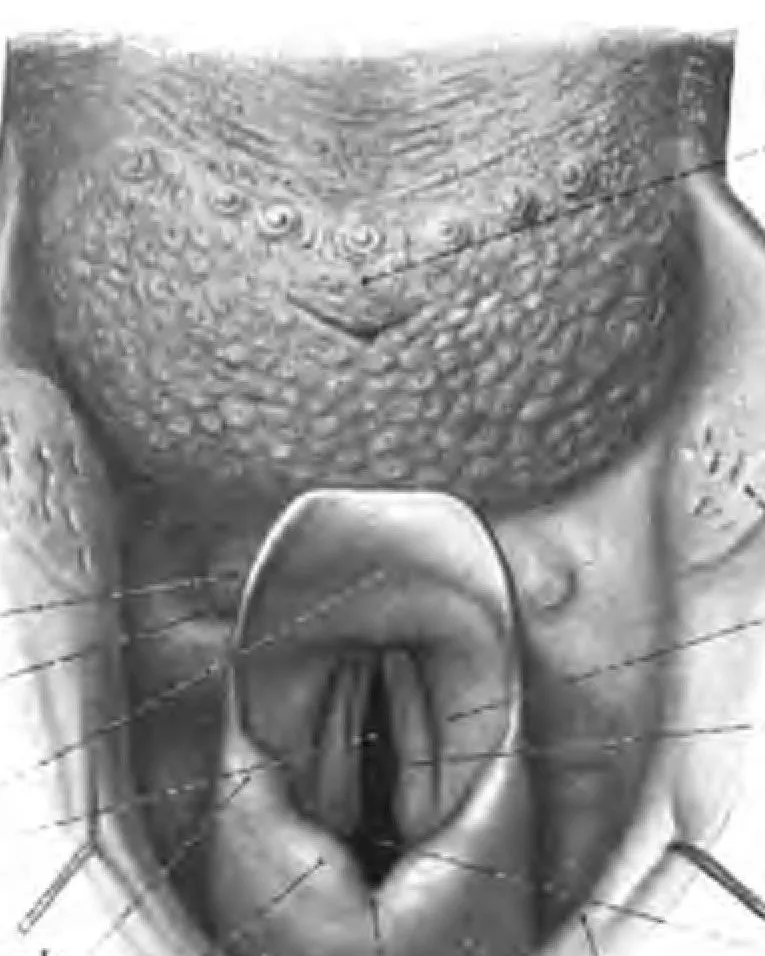
Then the mouth takes over. The tongue, an acrobatic assembly of eight separate muscles, together with the soft palate, the teeth and the lips, carves that raw buzz letter by letter within milliseconds and throws it into the air. For one word to leave a mouth and be understood on the other side, between eighty and a hundred muscles, billions of neurons and countless cells feeding those organs all take the stage at once, in flawless agreement.
How does a word thrown out of the mouth, or a note leaving an instrument, reach the other side? The breath that leaves us does not fly all the way to the listener’s ear. The nitrogen and oxygen molecules in front of the mouth behave like a Mexican wave in a stadium. The spectators in the stand do not get up and run; they stand up where they are and nudge the one next to them. That nudge travels through air at about three hundred and forty metres a second. Sound is not matter itself; it is news passing through matter.
As the Ancient Master of the East stressed in his letters, a patch of air no larger than a fingernail carrying the voices, the accents, the music and the frequencies of billions of people at the same time, without confusing one with another, without spoiling any of them, cannot be the work of those unconscious, lifeless, mindless gas molecules. If this immense order is not given to an owner of infinite knowledge and power, then every single molecule of air has to be credited with an endless intelligence and memory that never mixes up a trillion sounds, and that is a thing the mind cannot accept.
format_quote"A patch of air no larger than a fingernail carries a billion voices without confusing one with another; the order inside that silence is itself a statement."
Hasan Bekmezci
Even if a sound as extraordinary as this were produced and carried through the air unmixed, without an ear to receive it the universe would be one vast desert of silence. The outer ear gathers sound and strikes the eardrum, and the weak vibration in the air now has to be passed into the fluid of the inner ear. So that the energy is not lost on the way from air to water, the three smallest bones in the body, the hammer, the anvil and the stirrup, come into play: they focus the vibration from the broad surface of the drum onto an area some seventeen times smaller, and with the lever ratio between them they raise the pressure roughly twenty-two fold, driving the inner fluid like a hydraulic press.
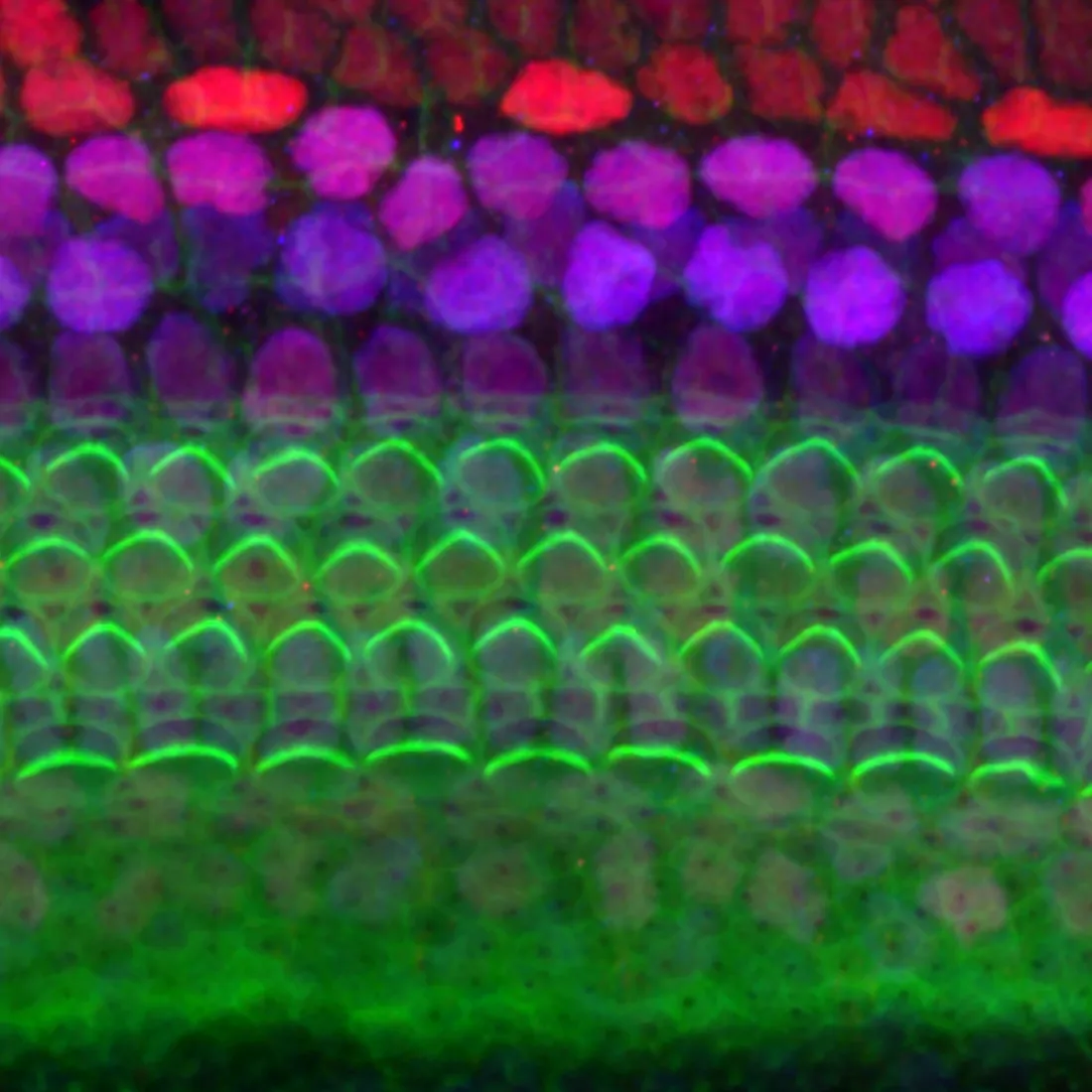
Inside the cochlea there is a particular fluid called endolymph. Unlike every other fluid in the body it is extraordinarily rich in potassium; it sits there like a biological battery already charged. Along a membrane inside the cochlea stand fifteen to twenty thousand hair cells, side by side, and as the fluid moves in waves those microscopic hairs lean. At the tip of the hairs run invisible filaments woven of protein; when the hair leans, the filament is pulled taut and mechanically opens the potassium gate at the top. The army of potassium in the fluid floods into the cell, the voltage changes, a chemical signal is fired from the lower end, and electricity flashes at the nerve ending.
The wave in the fluid is mechanical, the pulling of the filament is mechanical, the passage of the potassium ion is chemical, and what flashes at the nerve ending is electrical. And at the end of all those conversions, meaning is born in the brain’s Wernicke area.
format_quote"The journey of a sound begins in mechanics, continues in chemistry and ends in electricity; meaning is in none of the three."
Hasan Bekmezci
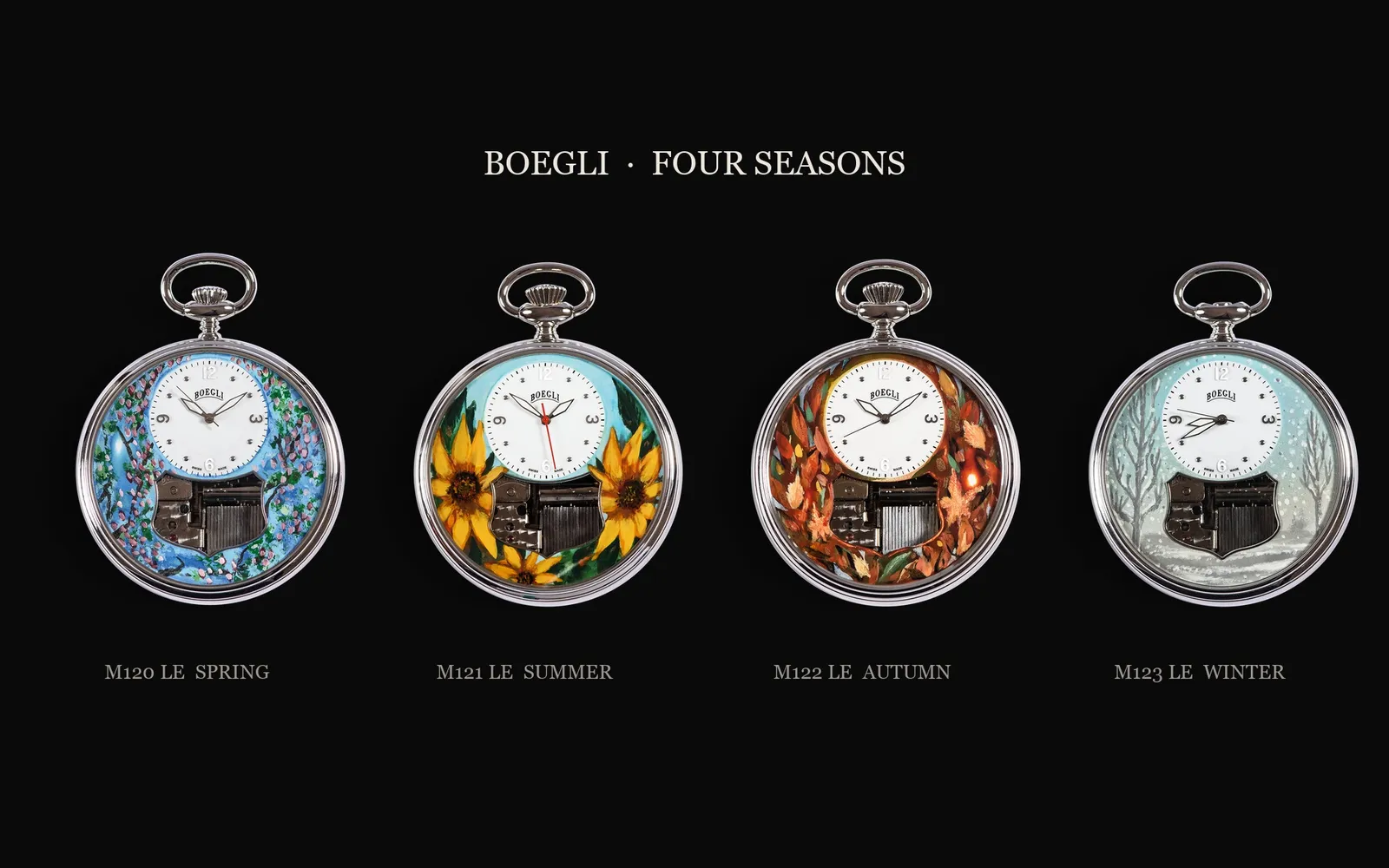
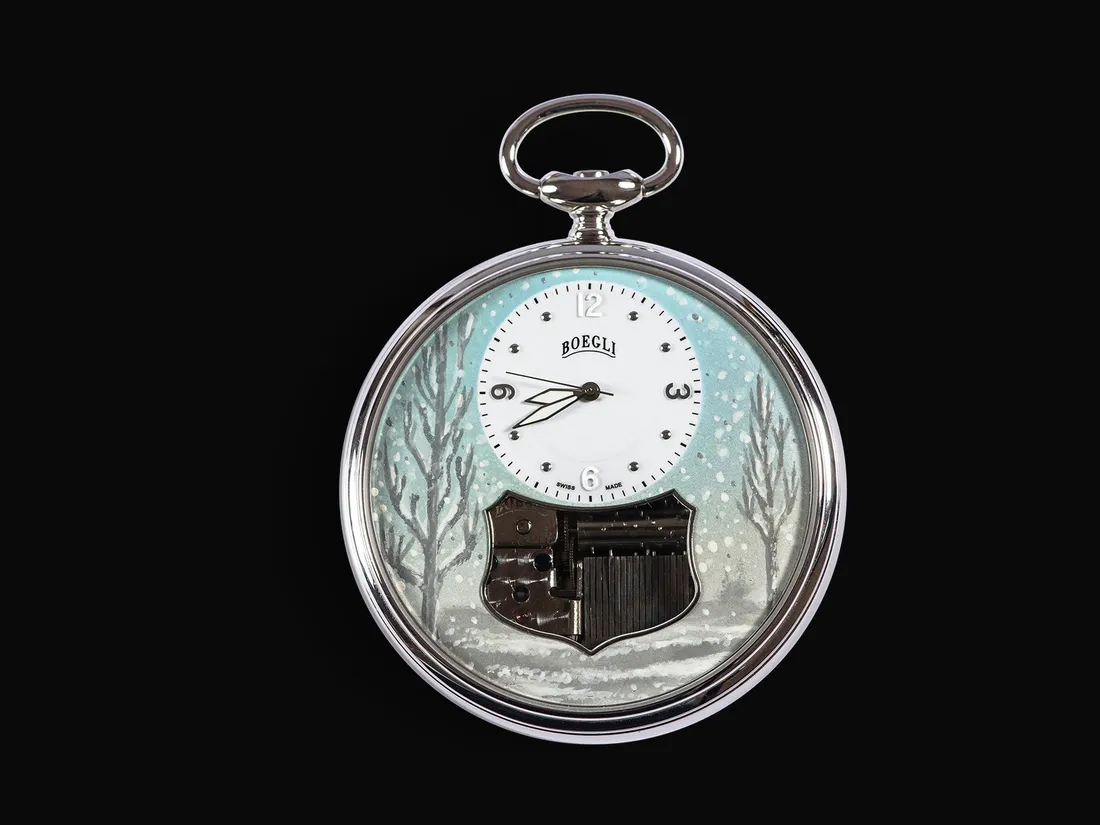
Once all of this biological, physical and artistic groundwork is understood, looking at the Four Seasons collection of the Swiss independent Boegli, what stands in front of us is not merely a timekeeper but a small mirror of that same acoustic and mechanical order.
Boegli is a family workshop on Rue de Nidau in Biel, on the border between French- and German-speaking Switzerland; four generations have done the same work, and the whole claim fits into a few words: the smallest mechanical music box in the world. The module, about the size of a fingertip, is assembled by hand from seventeen parts, plated in chrome or gold, and set into the lower half of the dial in plain sight rather than hidden away.
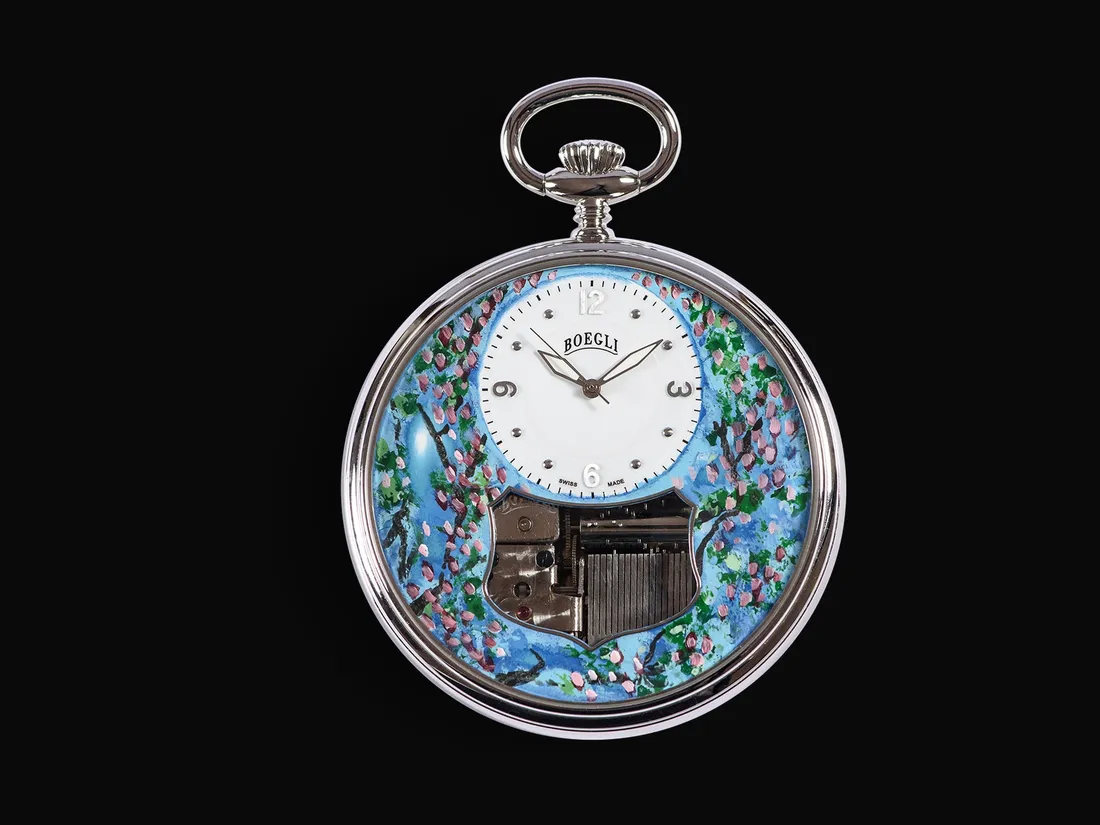
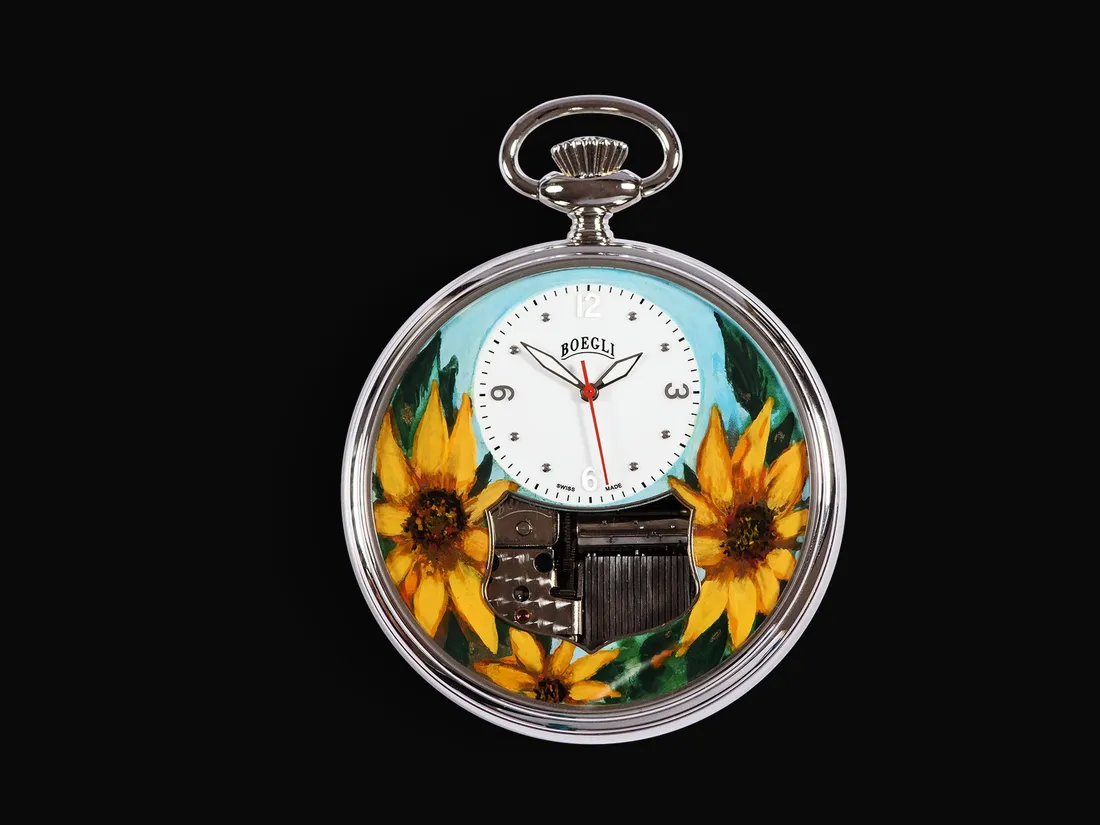
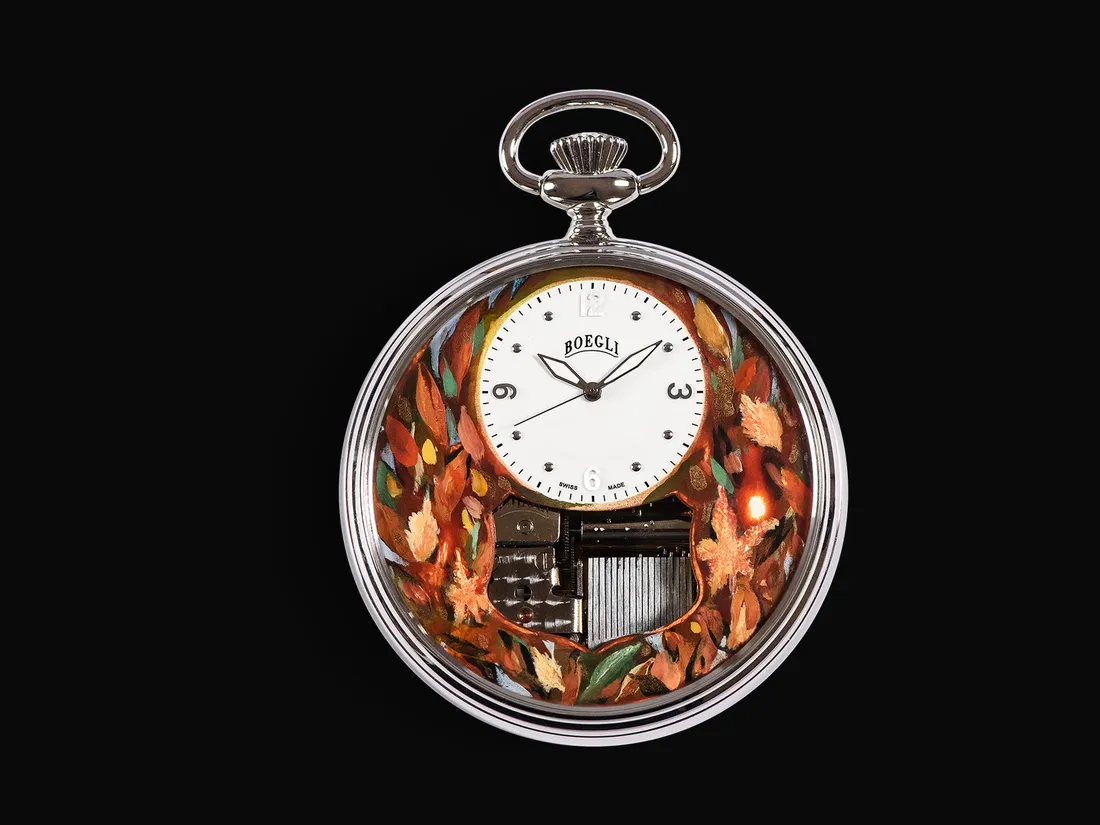
The Four Seasons series is four pocket watches: the M120 LE Spring, the M121 LE Summer, the M122 LE Autumn and the M123 LE Winter, twenty pieces of each. All four have fully polished cases plated in five microns of palladium, and all four carry the hand-wound ETA 2660 with seventeen jewels and a forty-five-hour reserve. The small white enamel dial in the upper half holds nickel appliques; the season surrounding it is painted on, one brushstroke at a time. The pink blossom of spring, the sunflowers of summer, the gold-dusted leaves of autumn and the bare snow-covered trees of winter.
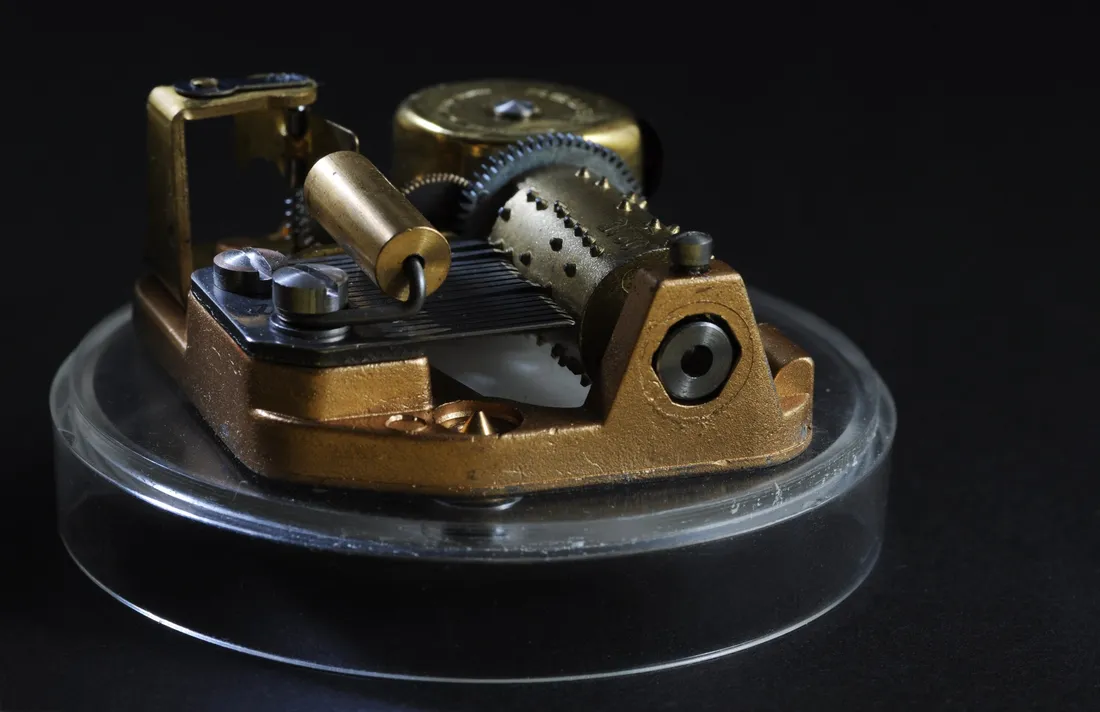
Turn the small lever at the back and the musical mechanism is released. A steel cylinder covered in microscopic pins begins to rotate, and the pins strike, one by one, the teeth of a steel comb of seventeen teeth set opposite them. What comes out is fifty-four notes and exactly sixty seconds: a passage from Vivaldi’s Four Seasons.
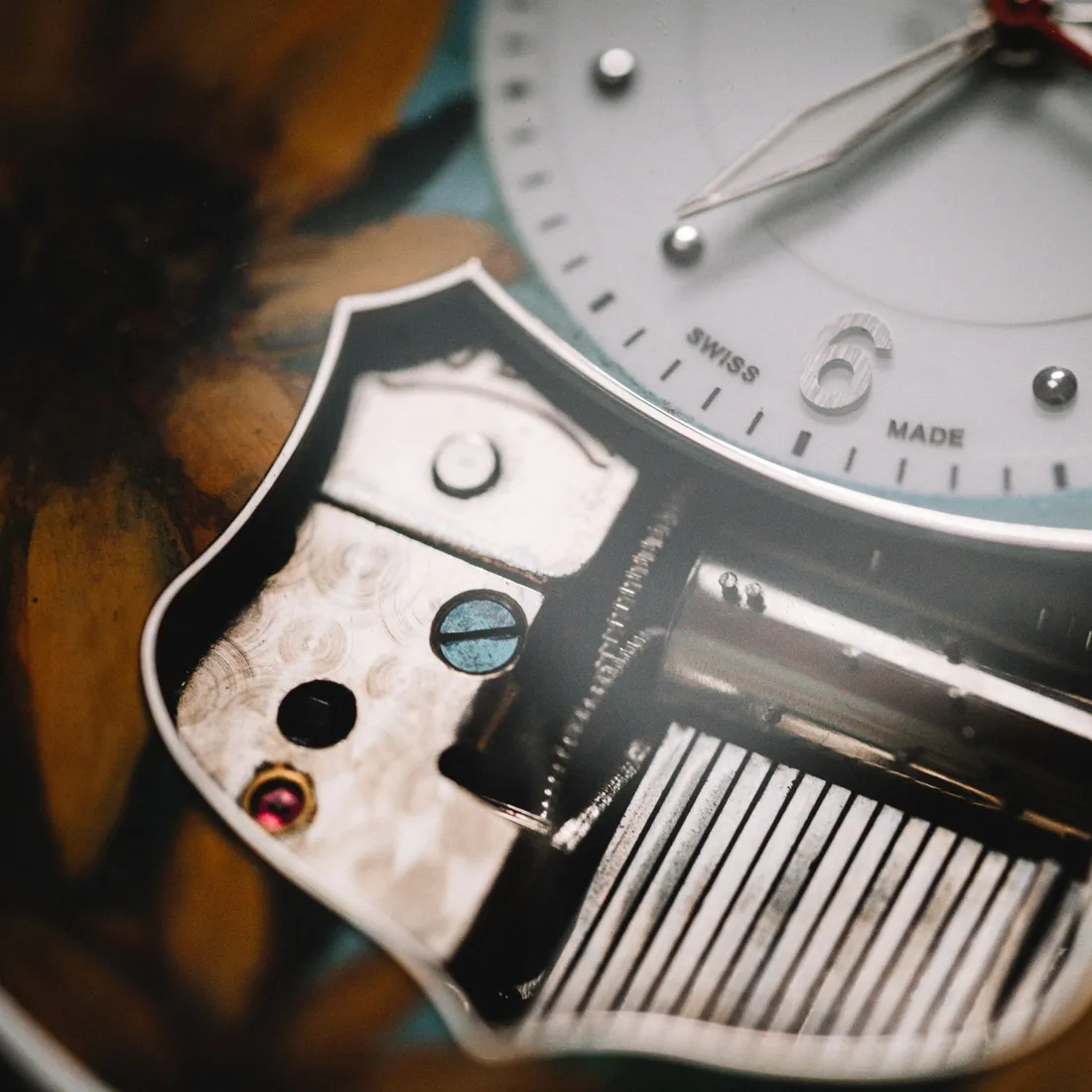
The way that steel comb works shares a surprising amount with what goes on inside the cochlea. In both places a row of elastic structures of graded length, and therefore of graded natural frequency, stands side by side: the long tooth of the comb gives a low note and the short one a high note, while the base of the cochlea answers to high frequencies and its apex to low. Inside the watch a pin strikes the comb and makes a mechanical wave in the air; inside the ear a wave in fluid pulls on the filaments above the hairs and turns the same mechanical movement into electricity. One of them makes a sound and the other reads it, and both work by the same idea of sorting.
format_quote"Fifty-four notes falling off a comb and a lifetime passing through a cochlea are two translations of one and the same law."
Hasan Bekmezci
In inventing these musical watches, or radios for that matter, we created nothing from nothing; we discovered the laws of resonance and frequency already placed in the world by the Creator. Every vibration leaving the steel comb of a Boegli sets off the air molecules in the room and knocks, directly, on the potassium gates inside a human ear.
The Boegli Four Seasons watches offer the fine wheels of Swiss watchmaking, an enamel dial and the mechanics of a music box in the form of a pocket watch, and while they do it they whisper a truth that lies beyond time. Our vocal cords running on Bernoulli’s principle in the throat, the immense clerical duty of the air that never confuses one sound with another, the biochemical knowledge of hair cells pulling a thread to open potassium gates inside our ears, the genius of Vivaldi and the melody falling off the steel comb of a Boegli.
No cell, no atom and no wheel holds a diploma or a consciousness. This whole immense chain is a flawless picture for contemplation, embroidered into creation, into the divisions of time and into the human body by an owner of infinite knowledge and power who sees, designs, knows and governs all of it at once, from the rhythm of the seasons in the macro universe down to the generation of electricity in a microscopic cell.
As time runs on, every note a Boegli plays reminds us not only of the hour but of that magnificent symphony of existence.
The watch, as its maker describes it: Boegli, Four Seasons (Limited Ed.)