Let us take our eyes off the vast galaxies of the universe and turn them to the deepest, most microscopic chamber of matter: the nucleus of the atom. In the heart of an atom, positively charged protons and uncharged neutrons live side by side in a cramped room. And yet one of the least negotiable laws of physics says this: like charges are enemies, and they push each other apart with violence.
Imagine how your hands are forced back when you try to press together the like poles of two strong magnets. Now imagine squeezing those magnets into a space a trillionth of a centimetre across. As two protons come closer inside a nucleus, the electrical repulsion between them reaches the force of a storm. If electromagnetism were all the universe had, no atomic nucleus could exist; protons would fire each other into space like bullets, and the universe would be left a barren desert of gas, nothing but single-proton hydrogen, with no chemistry at all.
But into the middle of that revolt comes the strongest, most implacable force in nature, the one with the shortest reach: the strong nuclear force. It is a universal superglue that puts down the enormous electrical hatred protons have for one another and locks them tight into the heart of the nucleus.
format_quote"Existence is the glue of an invisible mercy that overcomes the fury of matter."
Hasan Bekmezci
At the start of the twentieth century the scientific world was shaken by the same riddle: how do protons stay together in a nucleus without blowing it apart?
On a freezing Japanese evening in 1935, in a dim room at Osaka Imperial University, the young physicist Hideki Yukawa sat at his desk drawing intricate quantum equations on paper. A flash of understanding crossed his mind: if electrons feel one another by throwing and catching photons, the grains of light, then protons in that narrow cell of a nucleus must be throwing and catching something too. They were tossing an invisible ball back and forth, and the ball was locking them together.
Using the uncertainty principle, Yukawa calculated the mass of that mysterious ball and named it the pion. Picture two heavy boats on a stormy sea, about to be dragged apart; the people inside them are throwing heavy weights to each other without pause, and the momentum of every exchange stops the boats from separating. Protons and neutrons throw pions at each other countless times a second, and that traffic overcomes the electrical repulsion and holds matter together. For this piece of mathematics Yukawa became the first Japanese scientist to win the Nobel Prize in Physics, in 1949.
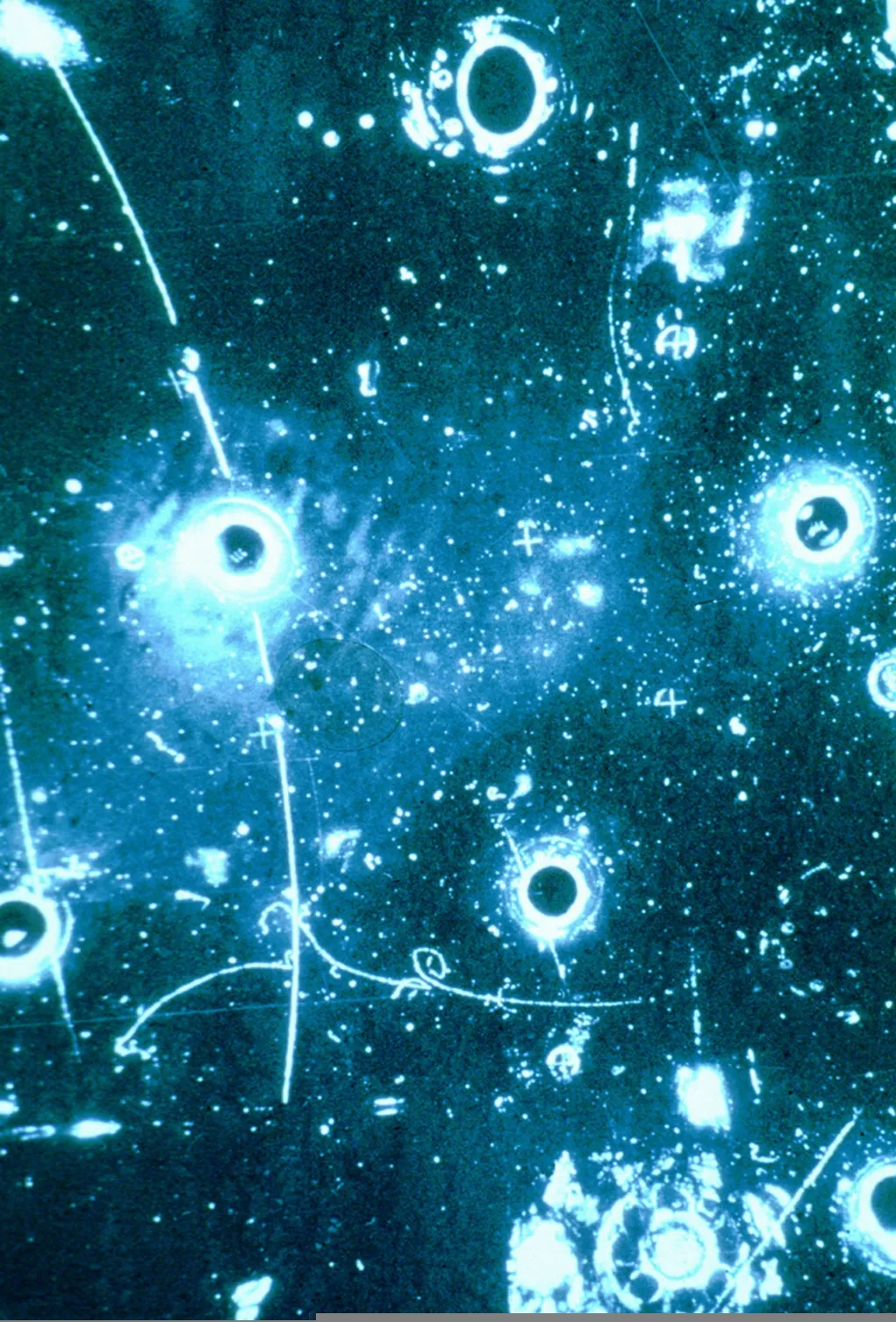
A deviation of half a per cent in the binding energy of the strong nuclear force would be enough to destroy the matrix of existence on the spot.
You are in a bakery, putting the ingredients for bread into the oven, but the heat and the binding of the dough are so weak that the grains of flour cannot knit into bread; at the slightest touch the sack of flour simply scatters. Had the force been a shade weaker, the electrical push of the protons would have won. Two protons would never have locked. Carbon, oxygen, silicon and iron could never have been made in the hearts of stars. No atom but hydrogen could exist in the universe; water, soil, stone, planets and the human body could never have come to be.
The opposite leads to the same door. You pour a glue so savage into the dough that the grains of flour set like stone before the oven door can close, and no baking reaction is permitted at all. Had the force been a shade stronger, protons would have stuck to each other the instant they met after the Big Bang and made diprotons, which is to say helium-2. Every single proton of hydrogen in the universe would have been used up in seconds. With no hydrogen left, the fuel that has fed the Sun for four and a half billion years would never have existed, the main component of water would be missing, and stars would have burned through everything and gone out as soon as they were born.
The calm heat of the Sun and the oxygen atom in our lungs are owed to the knife-edge balance of the value Yukawa put into a formula.
format_quote"What holds two things that push each other apart is a loyalty stronger than the push."
Hasan Bekmezci
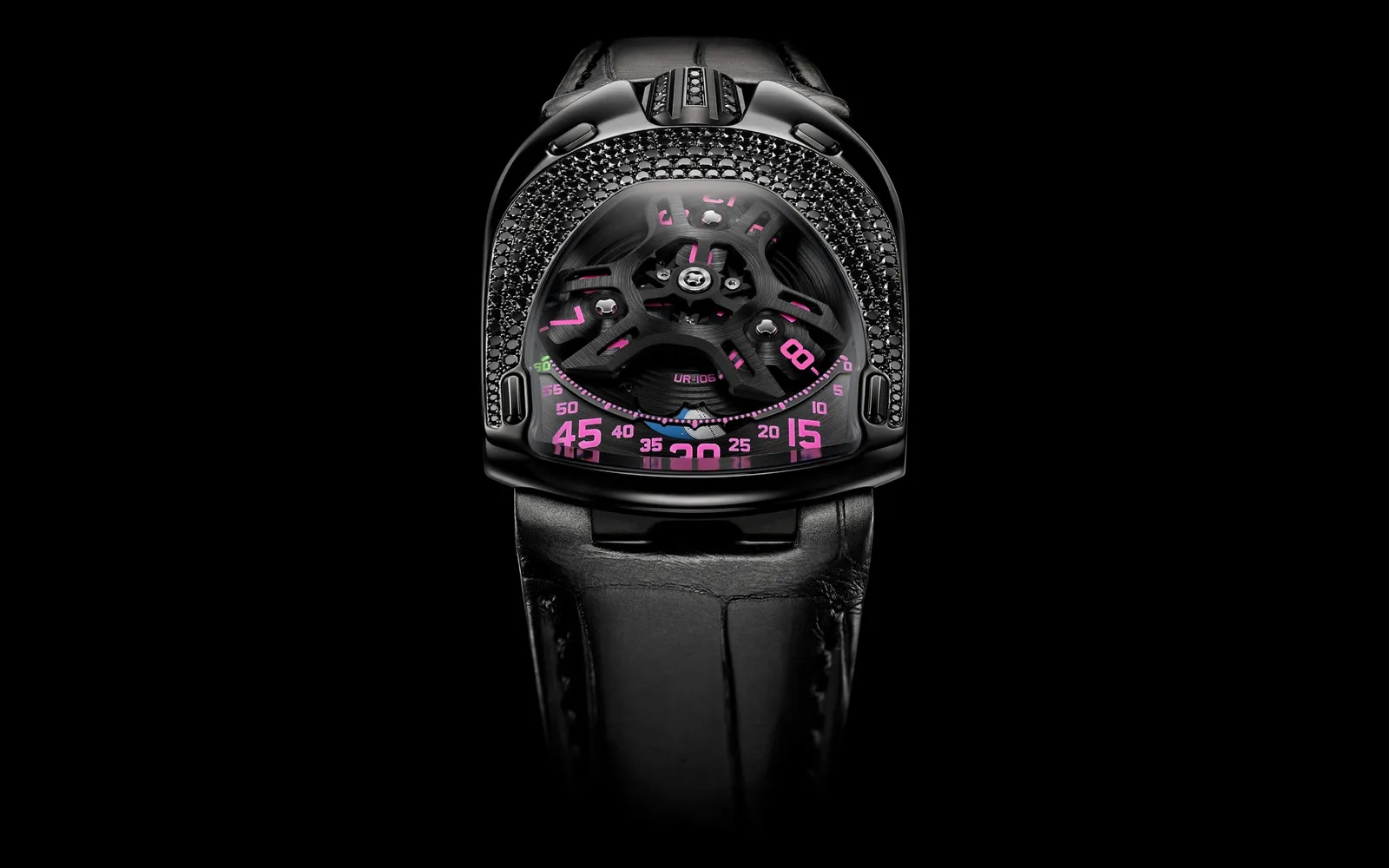
Taking our cue from that locking at the heart of matter and from its orbital order, when we turn to watchmaking we come upon a piece from the archive of URWERK, the house founded by Felix Baumgartner and Martin Frei: the UR-106.
It would not be right to call this the hardest or the most martial thing the house has made. The opposite is true: in Baumgartner’s own words it was born of an intention to make a clean, elegant and feminine watch, and URWERK files it under Poetry in Orbit. Which is exactly what makes it interesting, because when the house sets all of its severity aside, what remains in its hands is the idea the watch was always built on: locked orbits.
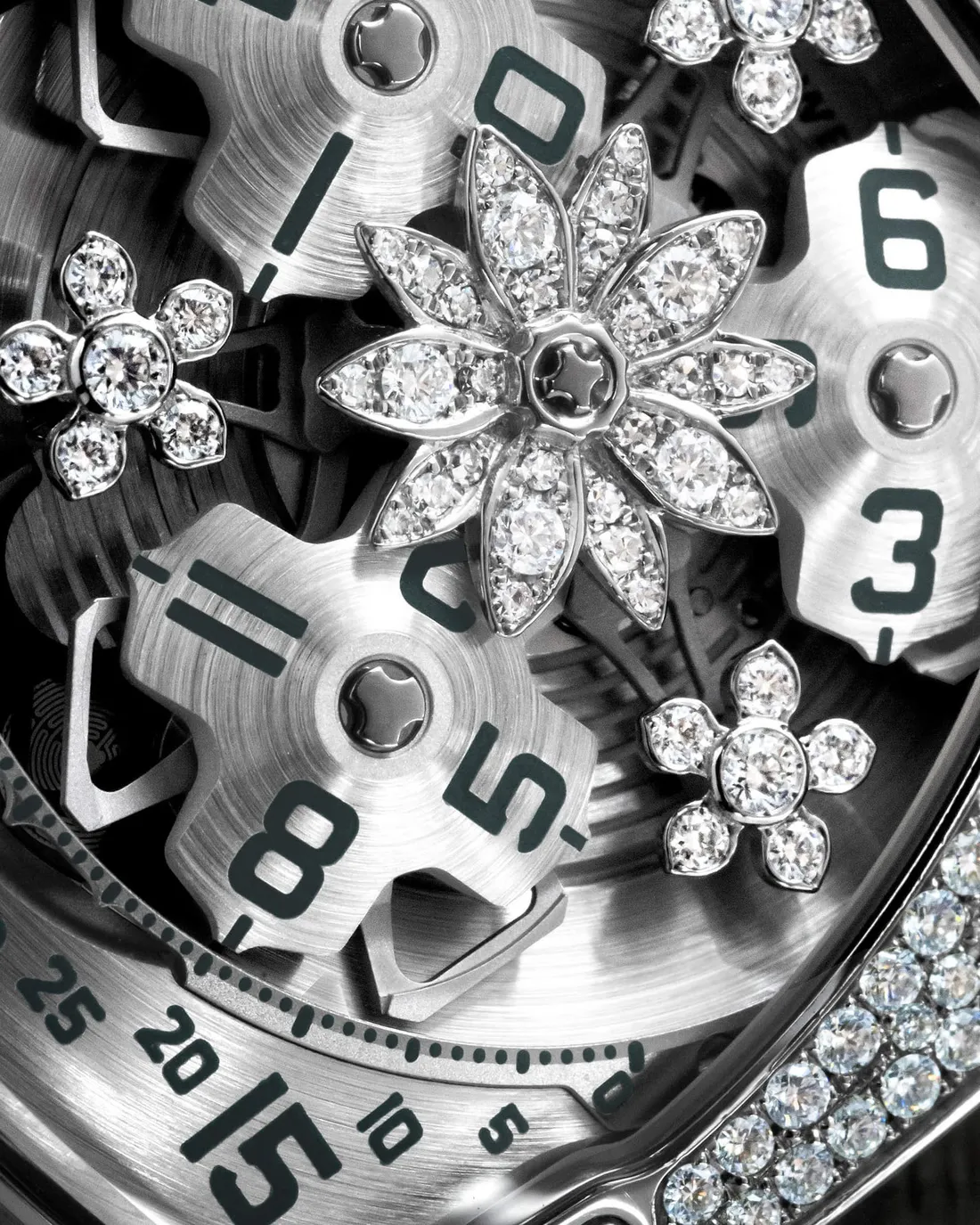
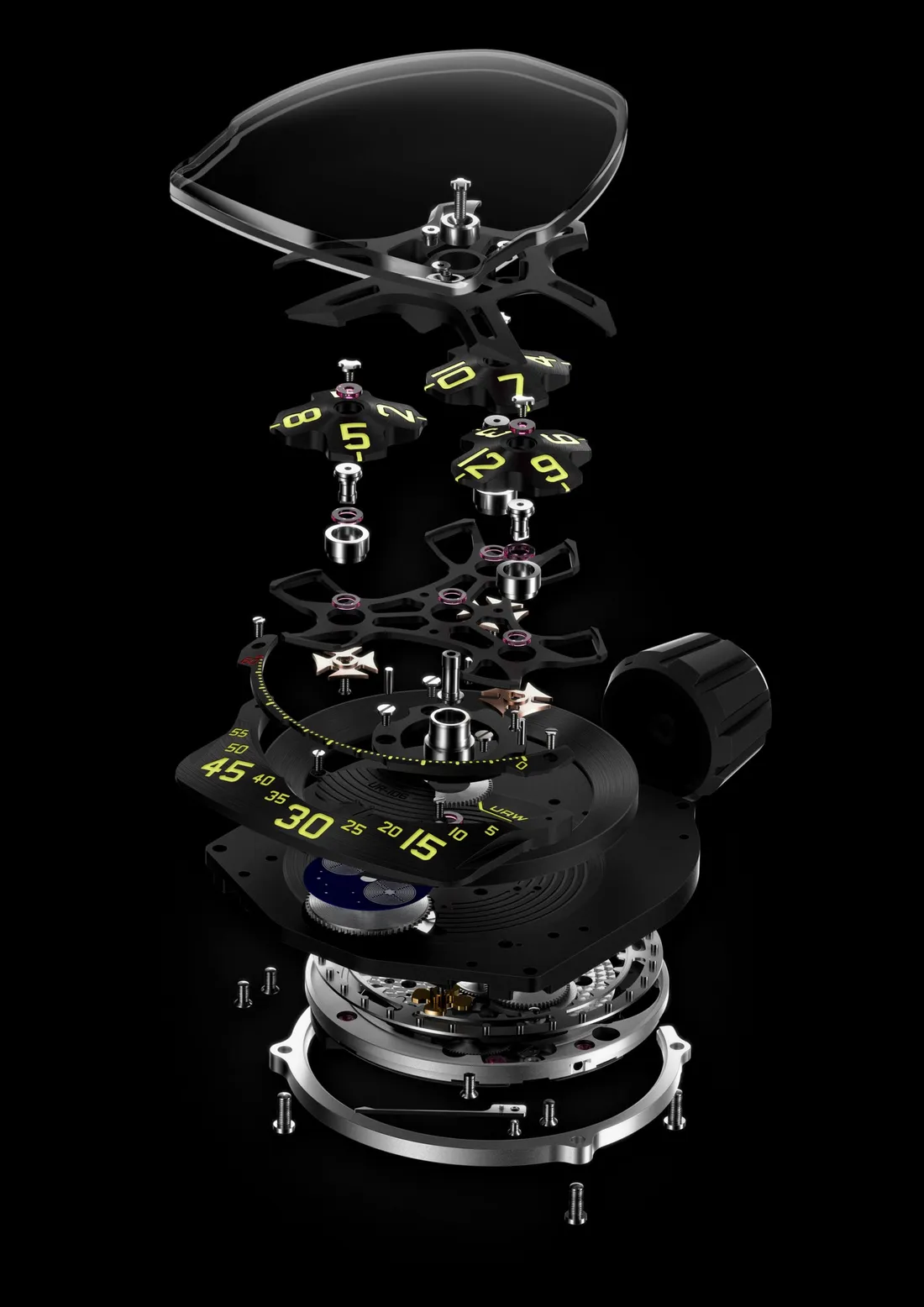
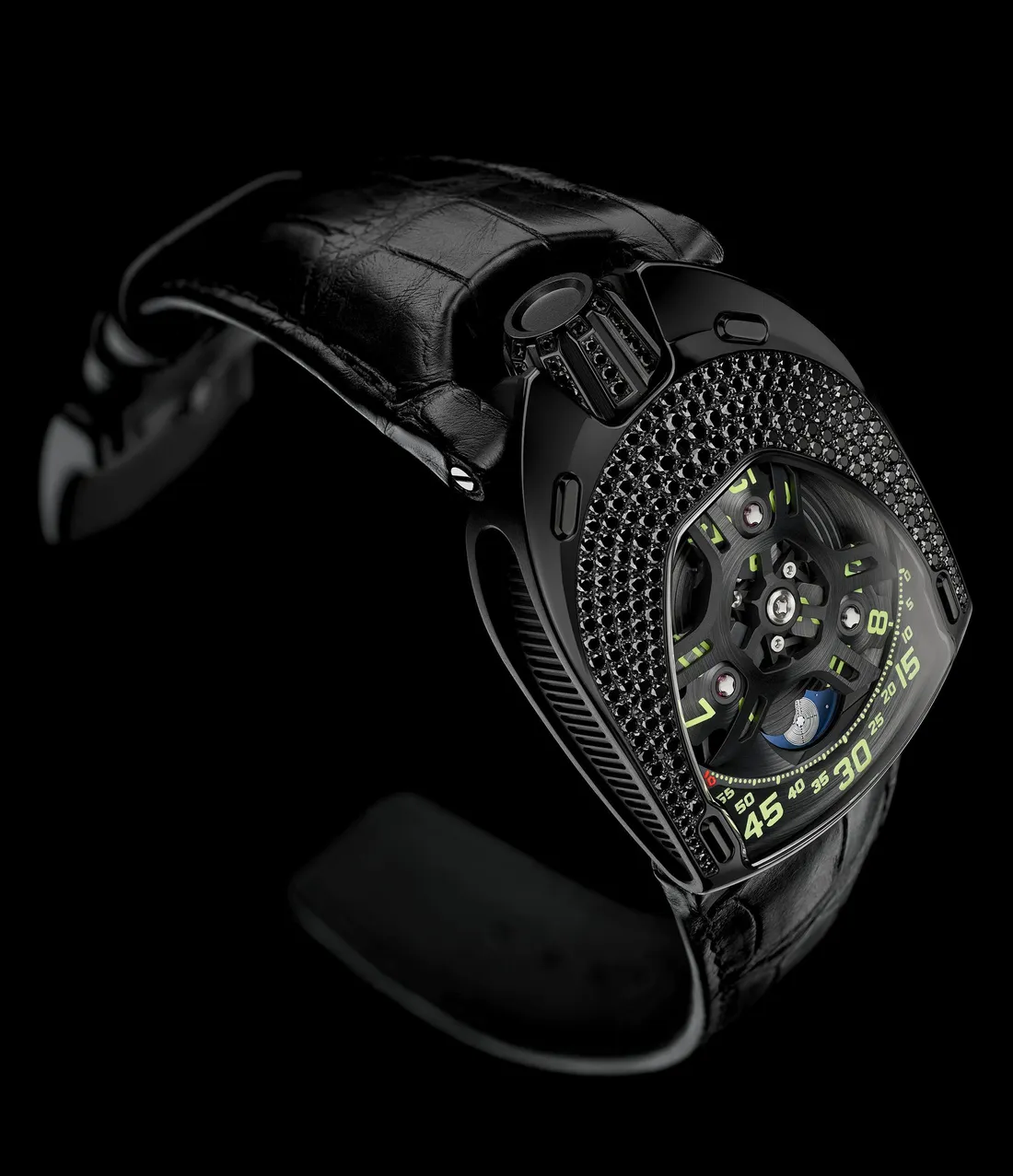
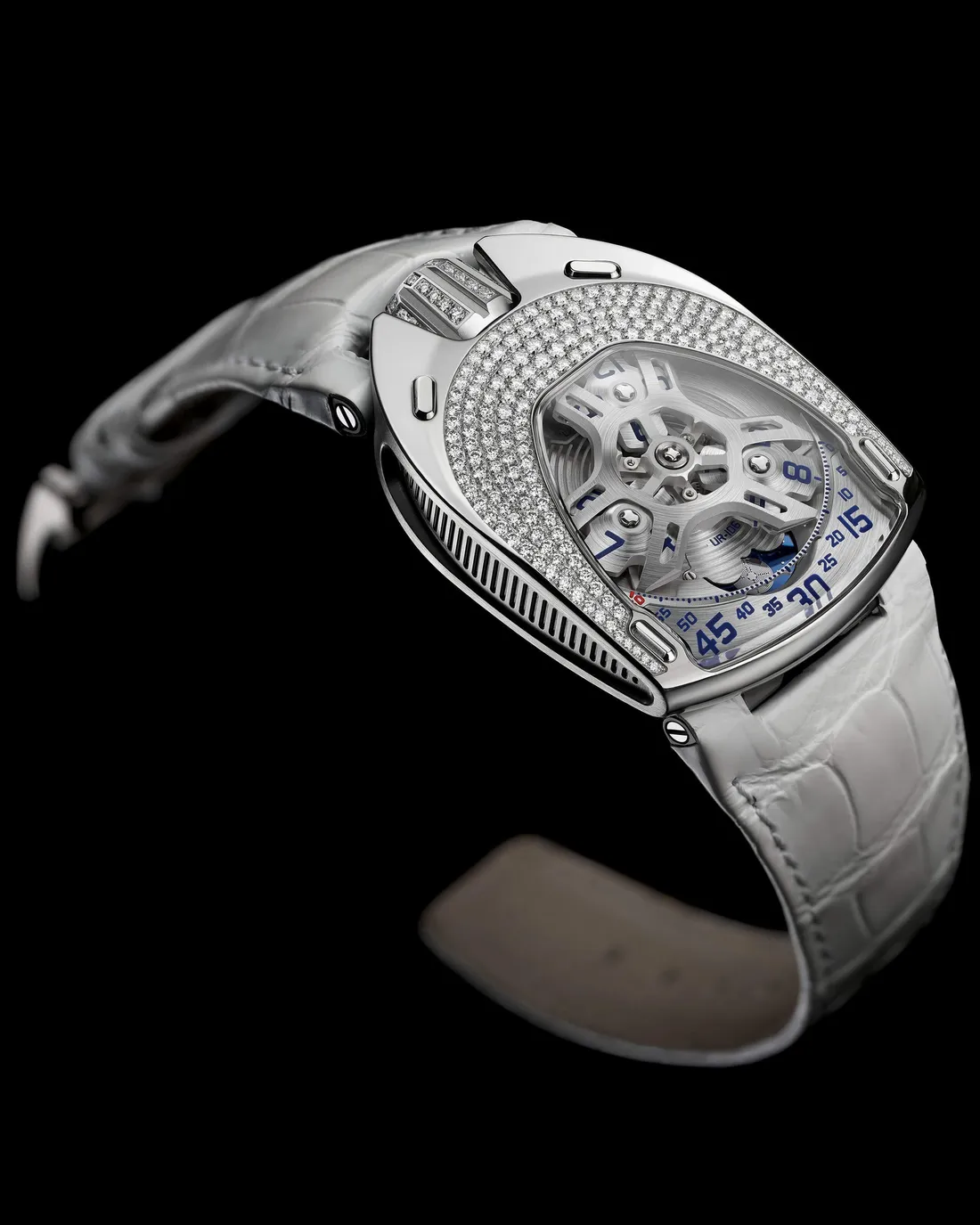
Like protons and neutrons standing locked into one another inside a nucleus, the UR-106 has three satellite hour carriages turning around a central carrousel. Each carriage carries four hour numerals, and the carriages turn both on their own axes and around the centre. The time is read as the carriage on stage sweeps smoothly along the serrated minutes scale below. On every hour one carriage withdraws from the stage as another enters at the same angle.
What keeps the carriages in their orbits is not a chain of gears but Maltese crosses made of beryllium bronze. A Maltese cross is a mechanism that locks the wheel it drives at every step: it advances one step, then holds; advances, then holds. Just as the exchange of pions catches the protons again at every instant, the cross seats the carriage again at every angle. The satellites and the carrousel are in titanium for lightness, peened and brushed by hand; the carrousel and the triple main plates are in ARCAP.
format_quote"On a dial like this the hour is read not by standing still but by completing an orbit."
Hasan Bekmezci
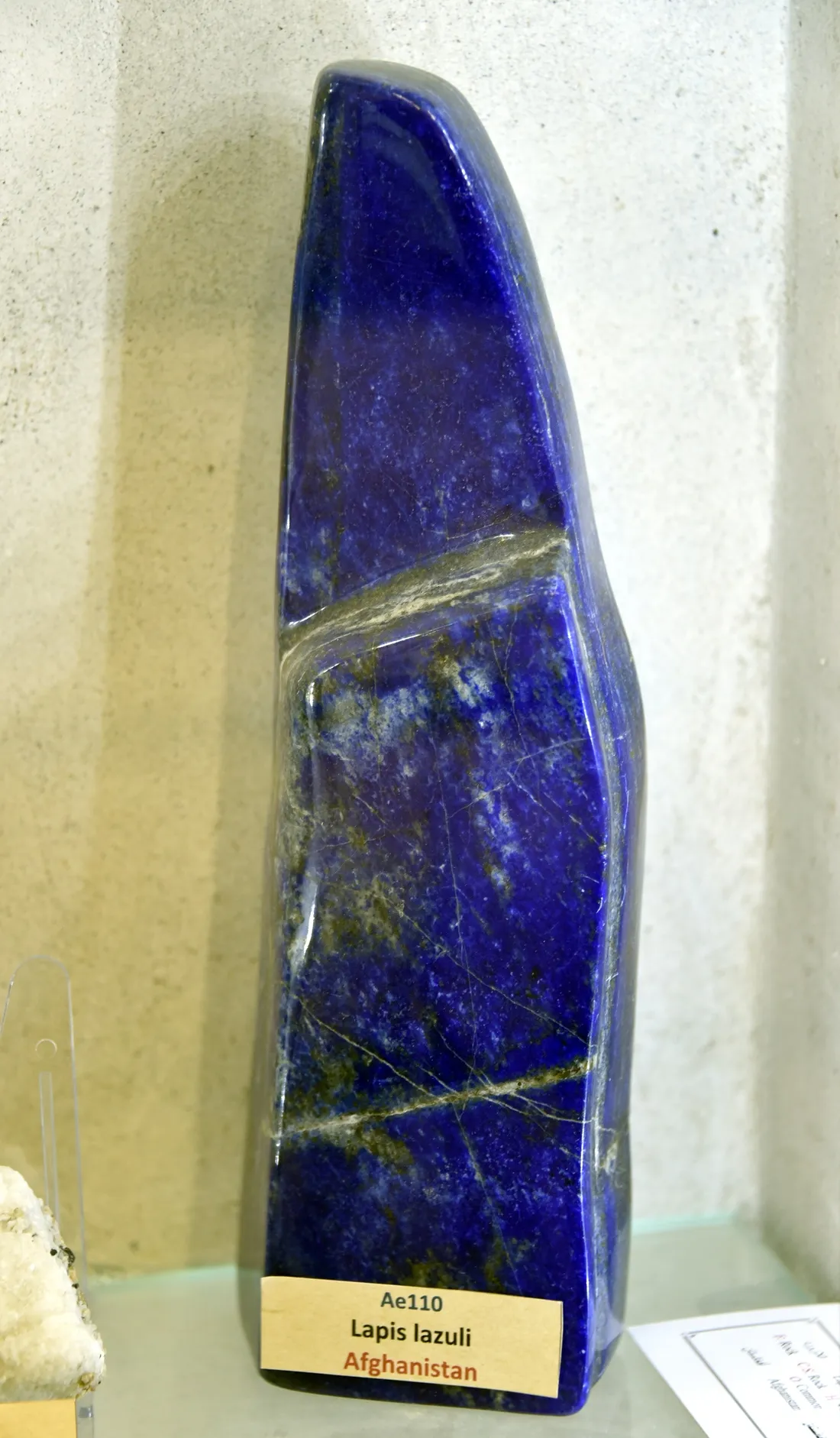
Low on the dial, inside the minutes scale, sits a small moonphase, and that moon is cut from lapis lazuli. Using lapis in a mechanical watch is more than a choice of colour: the stone forms inside a marble in the Hindu Kush mountains of Afghanistan, and takes its colour from clusters of sulphur trapped in the crystal lattice of the mineral lazurite. Which is to say that the blue on the dial is, like the locking inside the nucleus, a binding made visible.
The case measures thirty-five millimetres by forty-nine point four, fourteen point four five thick; the sapphire crystal is anti-reflective and the watch is water resistant to thirty metres. The series has four faces: Flower Power, Black, White and Black Pink. On the dark ones the case is set from end to end with black diamonds, and those stones stand like a frozen aesthetic counterpart to the binding energy imprisoned at the heart of the atom. The contrast between cold metal and diamond is the visual answer to the electrical repulsion and the nuclear locking inside a nucleus.
The automatic calibre beating inside it, the UR-6.01, carries fifty-two jewels, runs on a Swiss lever escapement at twenty-eight thousand vibrations an hour, which is four hertz, and gives forty-eight hours of power reserve. The winding crown has three positions. That unbroken turning is the sculpted counterpart on the wrist of the silent loyalty the strong nuclear force keeps at every point in the universe, without slipping by a second.
format_quote"Time is the ticking of atomic nuclei cooked in the breast of the stars."
Hasan Bekmezci
The strong nuclear force, which Hideki Yukawa discovered on paper in 1935 and which keeps the atomic nucleus from blowing apart, is the guarantee of existence for all the matter in the universe. The URWERK UR-106 is that microscopic locking, that order of turning and fixing time, worked by the human mind into titanium and diamond.
One of them stands for the glue of mercy the Creator placed in the deepest cell of the atom; the other for the human genius that read those microscopic locks and turned them into art on our wrists.
The watch, as its maker describes it: URWERK, UR-106