The tourbillon was invented two centuries ago to solve one problem. A pocket watch stands upright in a waistcoat pocket all day. In an upright watch the axis of the balance lies horizontal, and gravity hangs on the balance always from the same direction. Under that constant pull the balance spring deforms very slightly, the swing loses its symmetry, and the watch errs in the same direction in that position, every time.
Breguet’s answer was not to remove the error but to spread it. Take the escapement into a cage and turn the cage, and the balance passes through every upright position once a minute. If it gains in one position it loses in another, and the total approaches zero. A tourbillon is not a corrector. It is a device for taking an average.
format_quote"A tourbillon does not erase the error. It distributes it evenly through every direction until the total approaches nothing."
Hasan Bekmezci
That answer has a gap, and for two centuries it was not much discussed. A classic tourbillon turns in the plane of the dial. It therefore carries the balance only through positions within that single plane. Lying flat on a table, the balance axis is vertical and gravity pulls along the axis, where it matters least; there is no problem in that position anyway. Stand the watch upright and the cage’s rotation genuinely earns its keep.
But a wristwatch spends the day in countless positions between those two extremes. The wrist is tilted while writing, at another angle on a steering wheel, lying on its side on a pillow while you sleep. A cage turning in the plane of the dial never properly sweeps any of those intermediate positions.
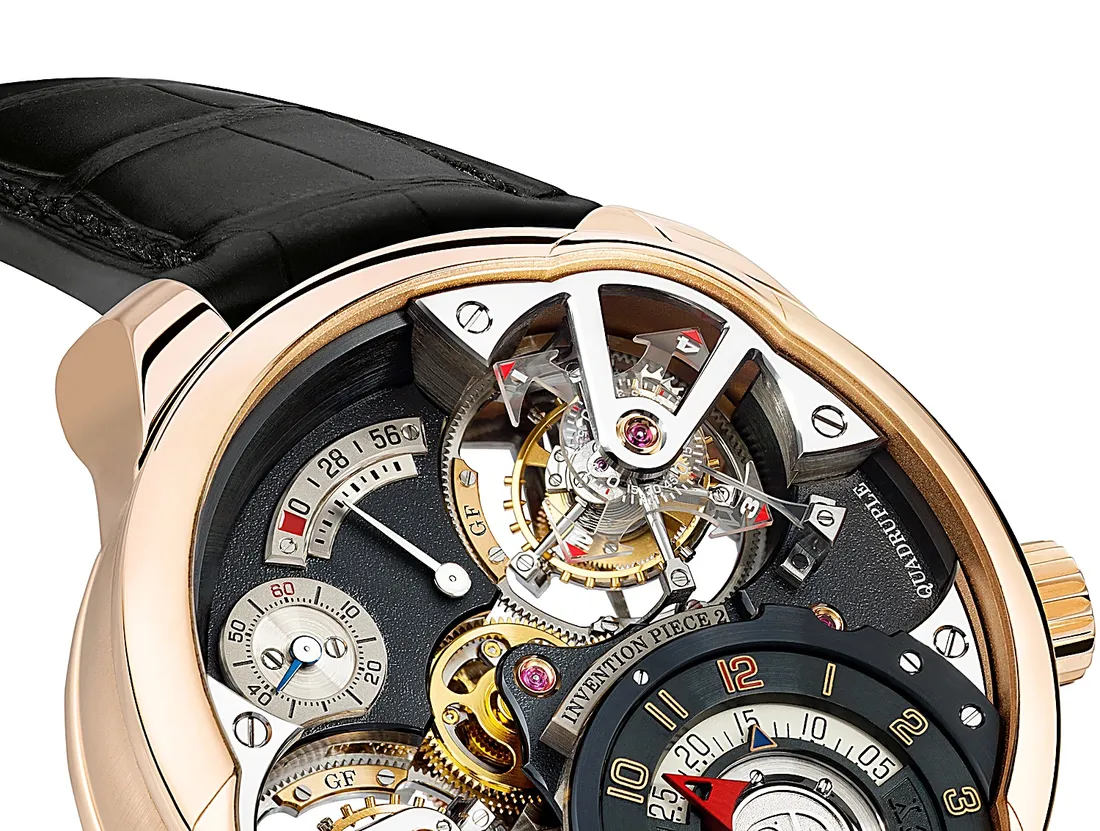
The first fundamental invention at the founding of Greubel Forsey answered exactly this: incline the inner cage. When the cage turns at an angle to the plane of the dial, the axis of the balance travels not across a plane but around the surface of a cone. The averaging now happens in three dimensions rather than two.
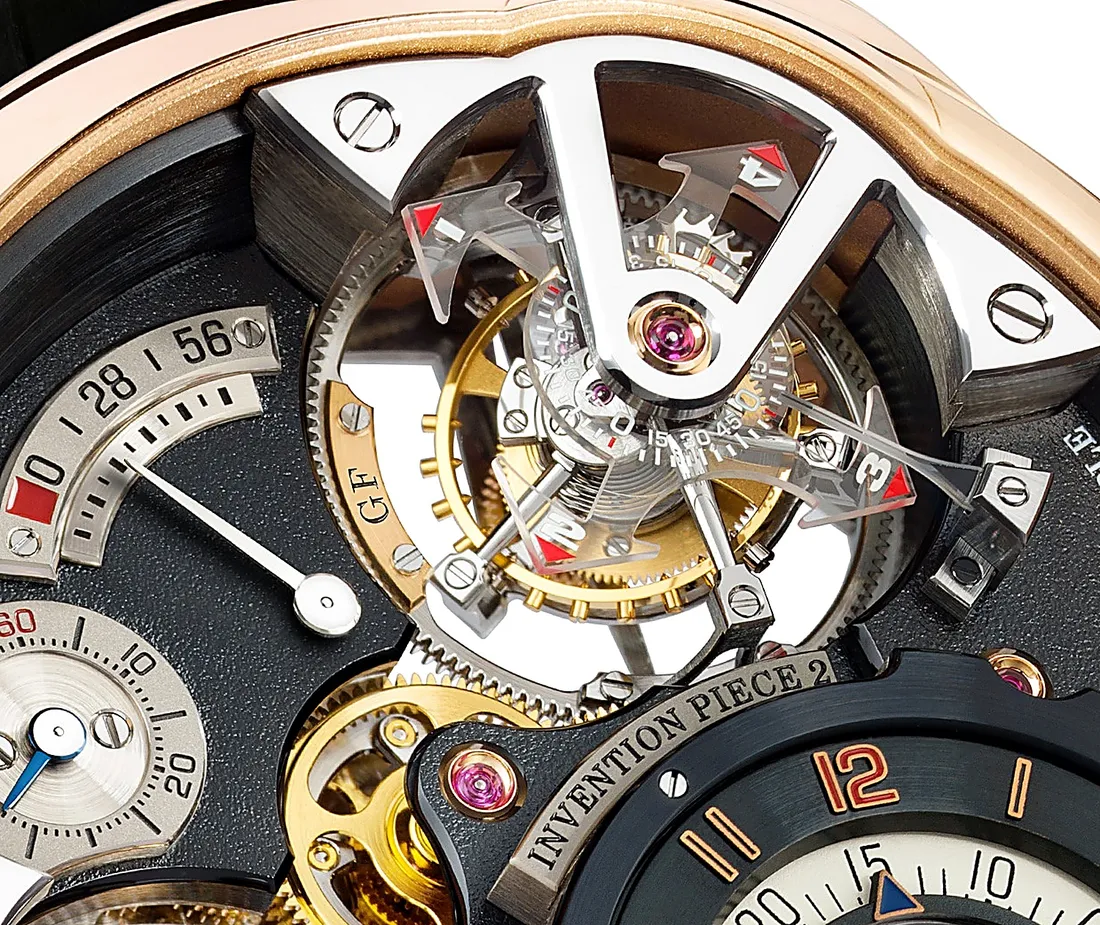
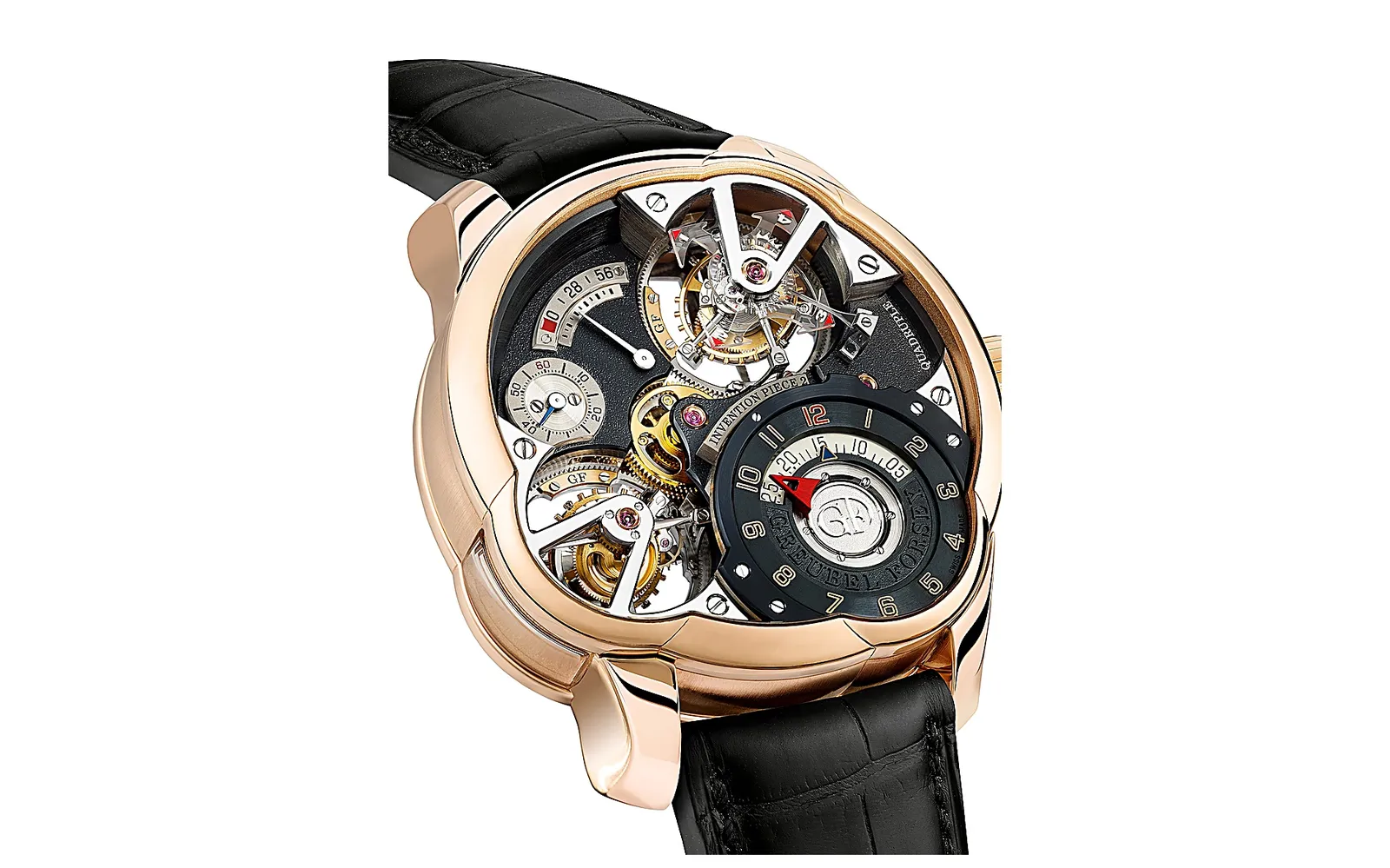
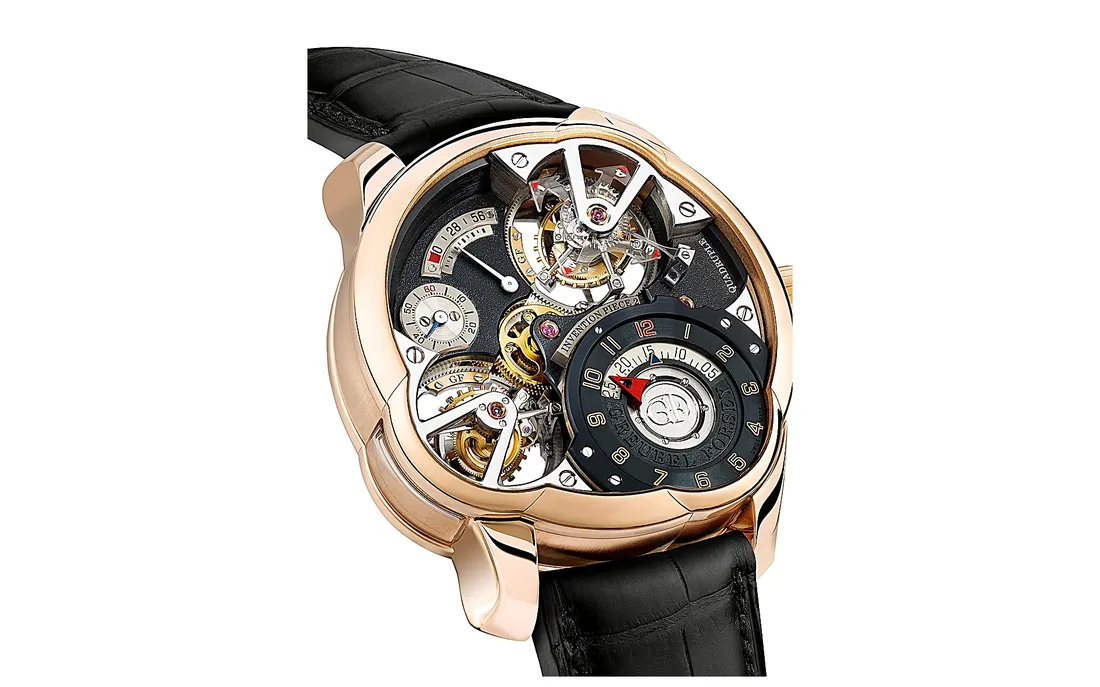
The Invention Piece 2 carries the idea as far as it goes. The calibre is called the GF03n and it holds four cages. Two inclined inner cages, each turning inside its own outer cage. Two complete double tourbillon systems, in other words, working side by side inside one watch.
Building two separate regulators looks foolish at first. Two balances mean two rates; which one will you believe? The answer is: neither. The output of the two systems meets in a differential, and the differential passes their average on to the going train.
format_quote"Asked which of two regulators to trust, the honest answer is neither."
Hasan Bekmezci
Why the average helps is one of the oldest rules in the science of measurement. Take two independent readings and their average is steadier than either one. Provided the errors are independent of one another, the spread of the average narrows against the spread of a single reading by the square root of two. Two balances, in other words, deliver roughly one and a half times the stability of one.
The gain is not free. Two regulators want twice the energy, twice the parts and twice the points of adjustment. Add to that the extra bearings and wheels the inclined cages demand. The watch’s sixteen point three millimetres of height comes straight from this; there is no other way to place four cages side by side rather than stacking them.
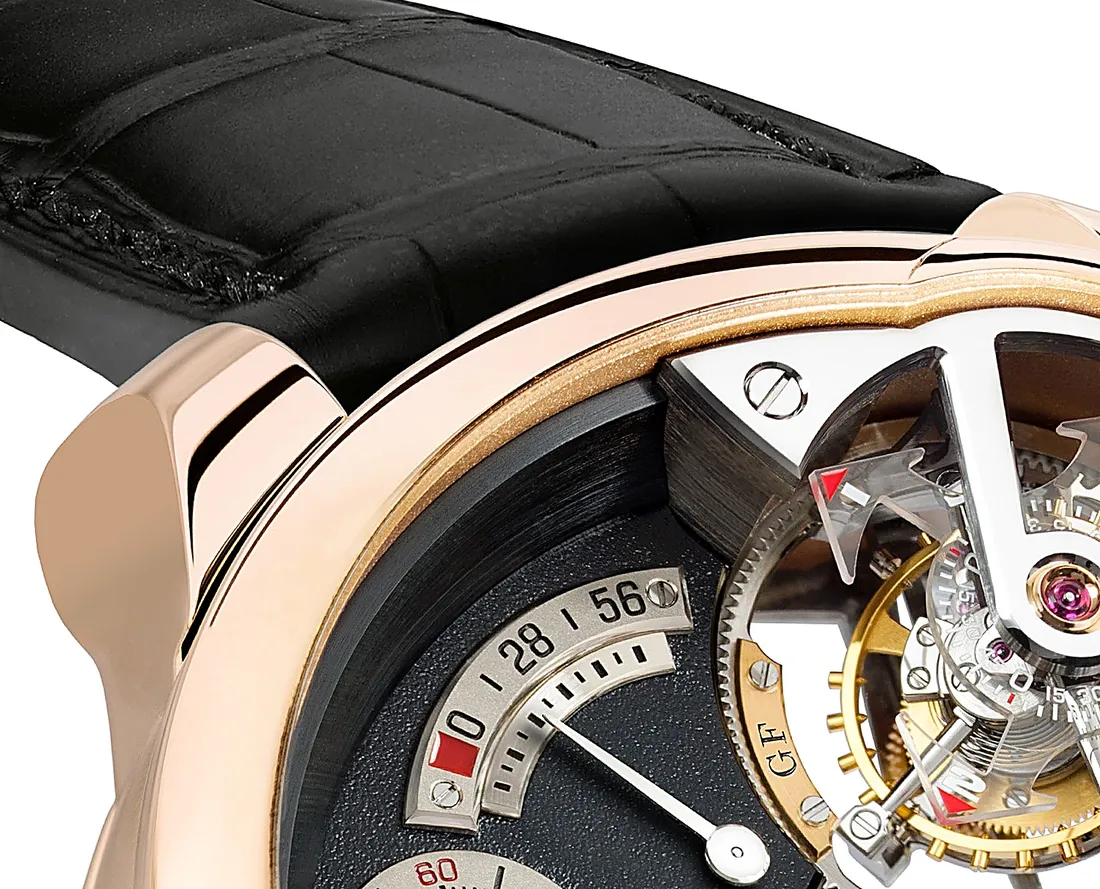
Picture two people at the bench arguing about the design: the constructor who calculated the four cages and the person who will have to sell the watch.
The sales side asks a simple question. How will a customer see that two tourbillons are better than one? It looks twice as beautiful on the dial, granted. But is it twice as accurate?
The constructor is honest. No, not twice as accurate. Steadier by the square root of two. Which comes to an improvement of around forty percent.
The sales side presses. Then why twice the parts and twice the risk?
The constructor names the real point. Because what matters is not the size of the improvement but where it comes from. You could gain forty percent by regulating a single balance better, but that gain comes from the hand of a craftsman, and a craftsman’s hand is not the same twice. The gain that comes from taking an average comes from the architecture, and it is the same in every example. One is skill. The other is method.
format_quote"Skill leaves with the craftsman. Method stays in every example."
Hasan Bekmezci
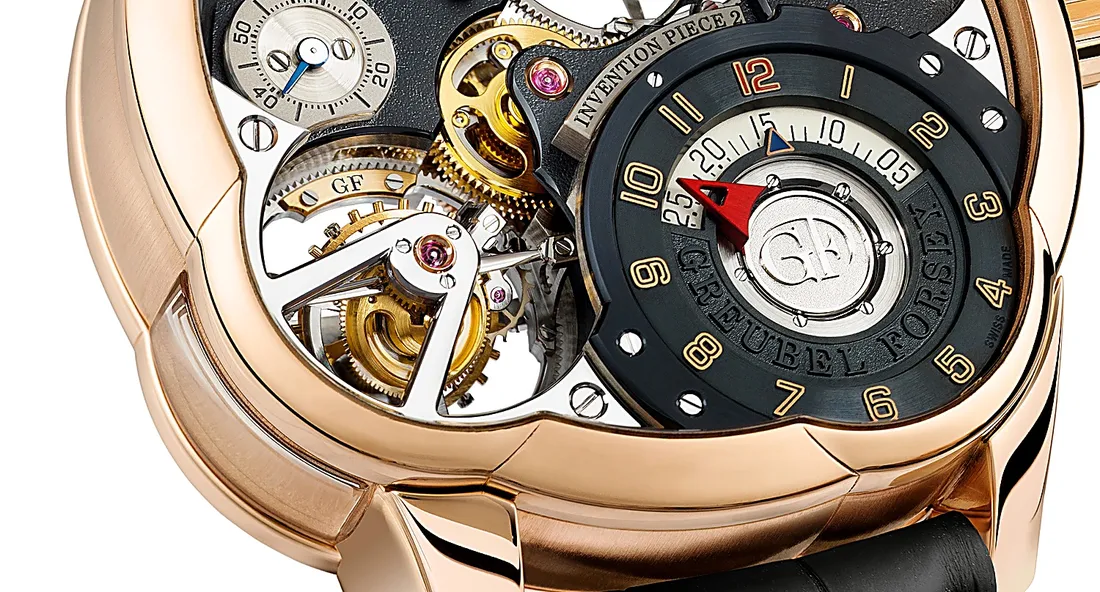
The figures run as follows. The case is red gold, forty-three and a half millimetres across and sixteen point three deep. Water resistance is thirty metres. The movement is wound by hand, beats at three oscillations a second and runs for fifty-six hours. The dial carries hours, minutes, small seconds and a power reserve indicator. The watch was made in a limited series of eleven and cost 730,000 Swiss francs before tax.
The atelier of Robert Greubel and Stephen Forsey has filed more than seventy patents since it was founded and developed ten fundamental inventions. This watch carries the name Invention Piece as the vehicle of the second of them. At the 2012 Grand Prix d’Horlogerie de Genève it won the Complicated Watch Prize.
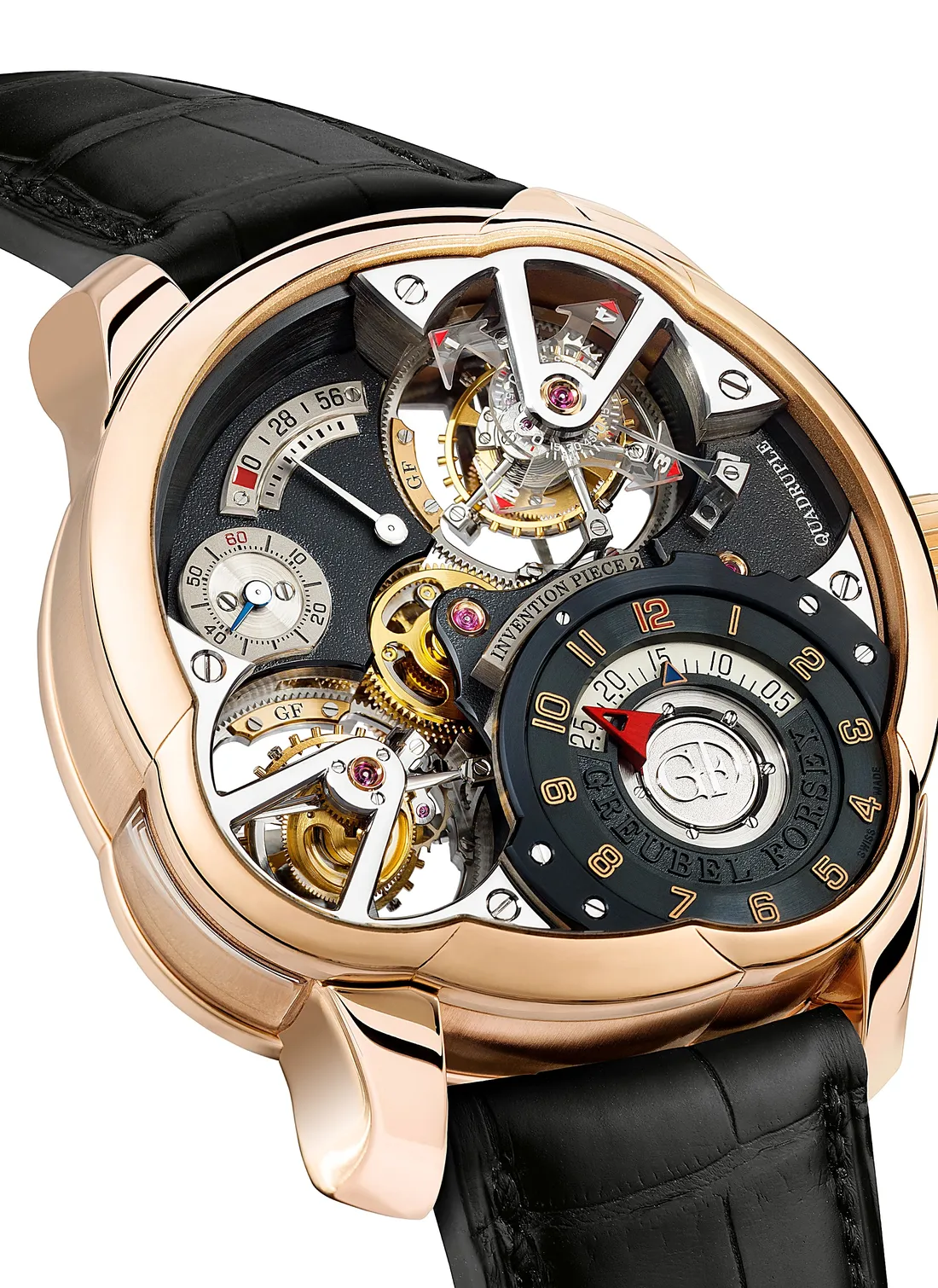
To see what this watch is really saying you have to look at it as an instrument. Four cages, a differential and fifty-six hours of reserve: all that complication is built to refuse a single assumption, which is that I can trust my own reading.
That is one of the hardest things a human mind does. When you measure something it is easy to assume the measurement is right. Working out in which direction and by how much it might be wrong, and then building an arrangement that reduces that error, is far harder. Science has been doing it for two centuries: repeat the measurement, take the average, write down the margin.
Putting that habit inside a watch is another matter. Sitting on your wrist, the Invention Piece 2 reminds you of this: even your best answer is an estimate, and the way to improve estimates is not to believe them blindly but to measure the distance between them and find the middle. Since the measure itself was not set by our hand, all that is left to us is to look more carefully.