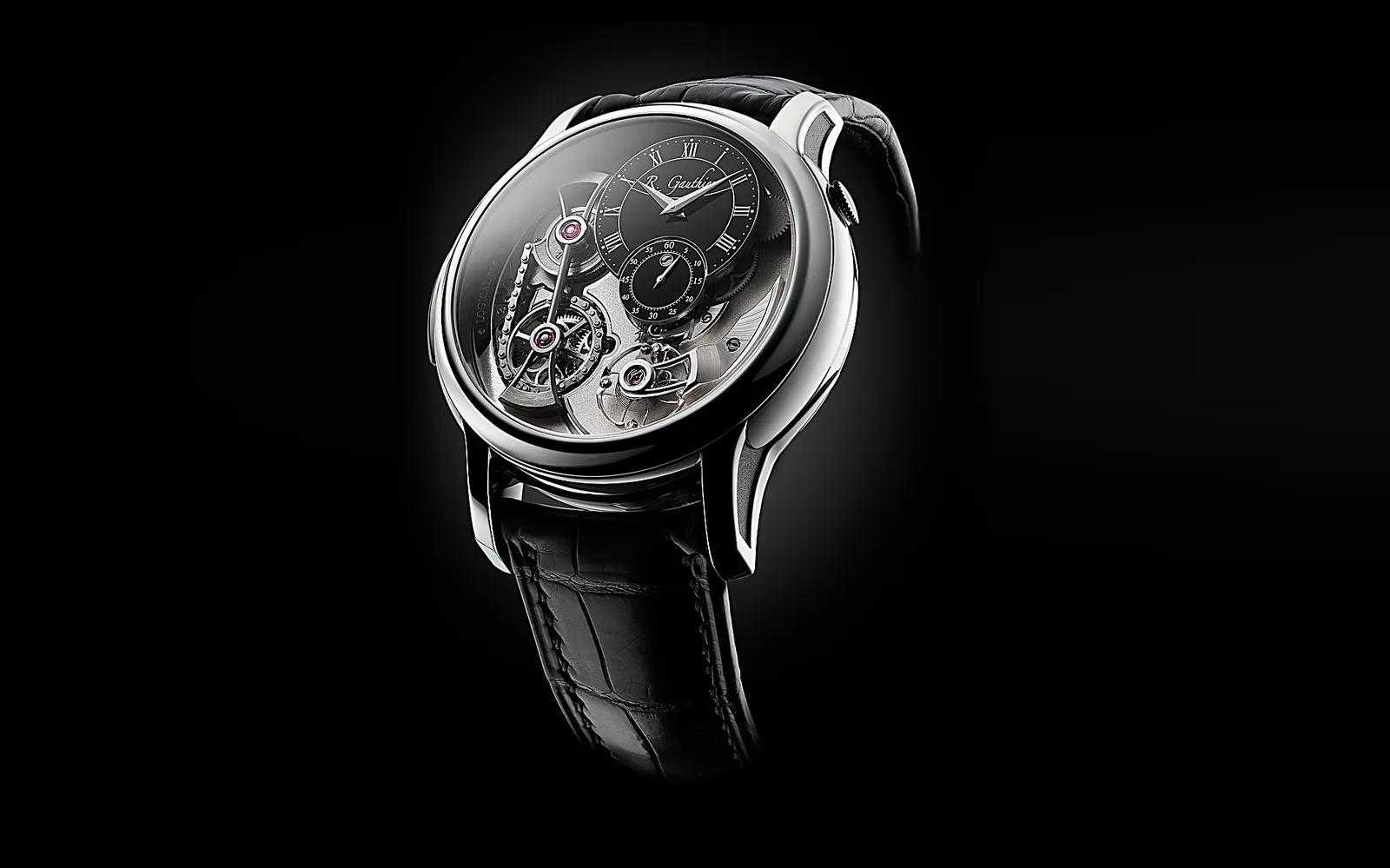
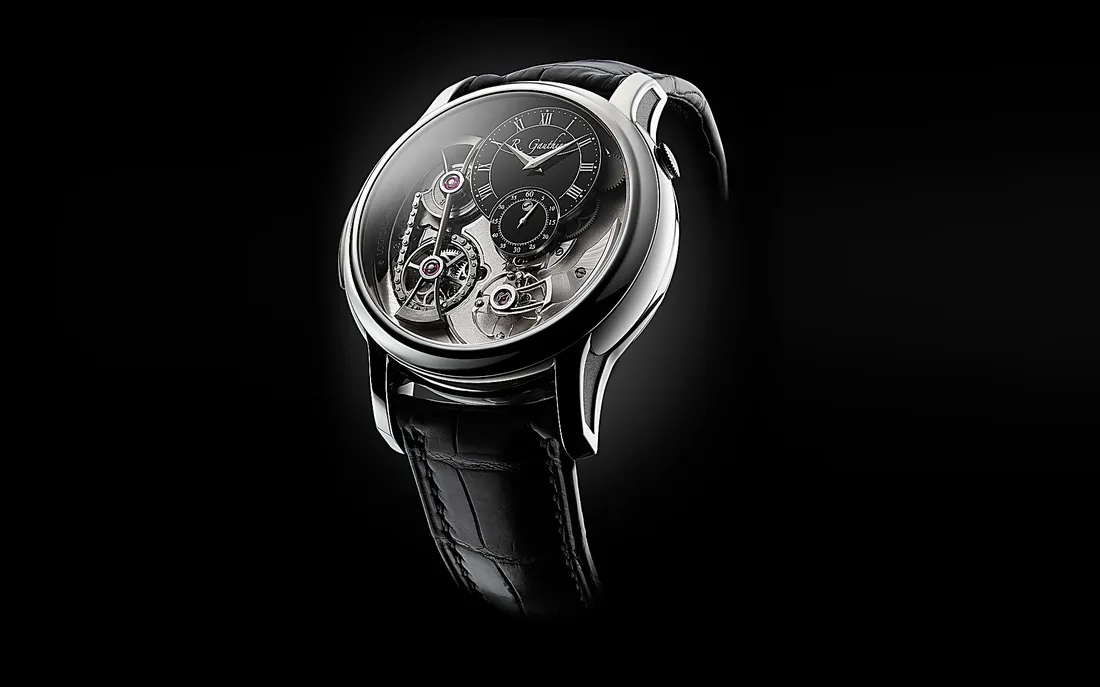
Romain Gauthier states his starting point in his own words: for a watch called precise to be truly precise, it should have constant energy.
The problem is simple and unavoidable. A mainspring is a spring, and a spring pushes in proportion to how far it is wound. Strong when fully wound, weak as it empties. By the time that changing force reaches the escapement it moves the amplitude of the balance, and when amplitude moves, rate moves with it.
There is an answer to this that is three hundred years old, and it is called the fusée. Its essence lies in a single product remembered from school physics: the turning effect on an axle is the force multiplied by the length of the arm. If the force is falling, lengthen the arm. Keep the product the same.
format_quote"Turning effect is force times arm. If the force is falling, lengthen the arm and keep the product the same."
Hasan Bekmezci
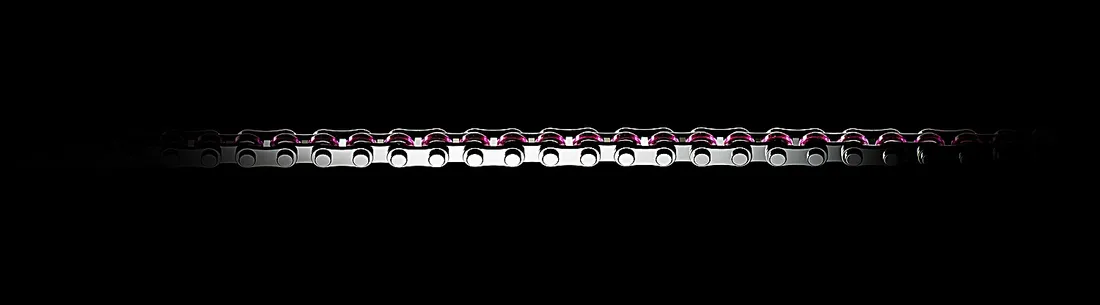
The classic fusée does this with a cone-shaped pulley. A chain runs from the barrel onto the cone. With the mainspring full, the chain works at the narrow end of the cone, on a short arm; as the spring empties the chain moves towards the wide end and the arm grows. Force falls, arm grows, the product holds.
That solution carries two costs. The first is that the cone stands upright; it takes room in height and makes a wristwatch thick. The second is the chain. A chain has hundreds of links and therefore hundreds of articulated contacts, every articulation rubs, and every rubbing point takes back a share of the smoothness you were trying to win.
The Logical One addresses both costs separately.
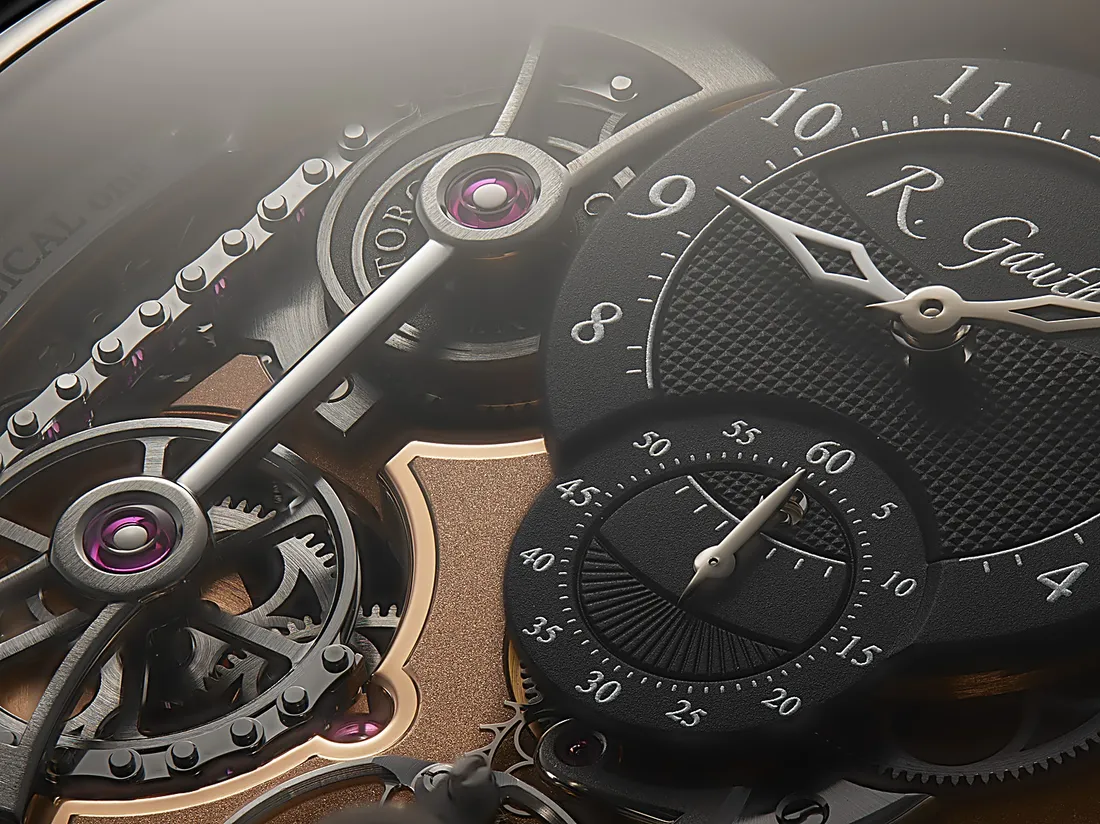
In place of the cone there is a snail cam lying flat. A snail cam is a spiral disc whose radius grows steadily through its turn. It does in the plane what the cone does vertically: as the chain advances from the part of the cam near the centre towards the part far from it, the arm lengthens. Same physics, flat architecture.
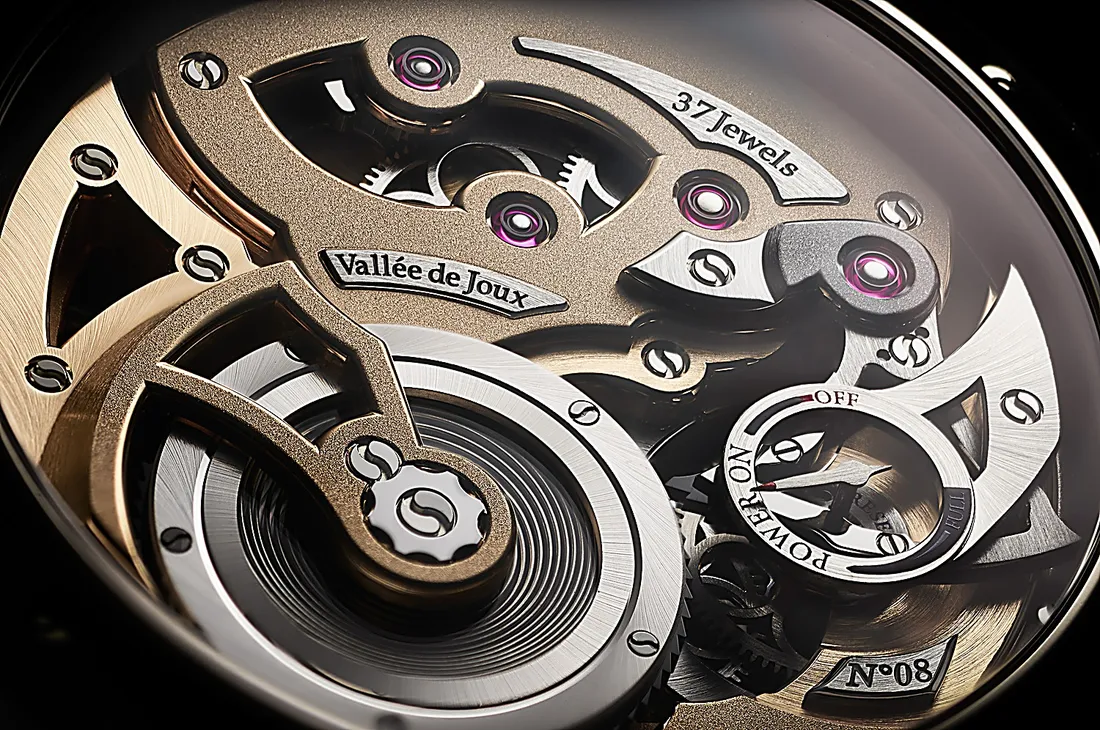
For the friction of the chain, the material was changed. The links turn on rubies. Ruby is already used in watch bearings for its hardness and the low friction it offers against steel; here the same idea is carried into every articulation of the chain.
There is a third detail nobody discusses: the mainspring itself rubs against the wall of its barrel. That barrel is lined with sapphire. In the maker’s own words, all of this together delivers nearly two days of constant force.
format_quote"Ruby sits in watch bearings because it is hard. Here that same idea is repeated at every joint of the chain."
Hasan Bekmezci
Picture two people at the bench arguing about the chain: the founder who designed it and the production manager who costs it.
The production manager puts the account on the table. Every link of this chain is machined separately, every articulation takes its own ruby, and all of it is assembled by hand. This chain alone costs more than an entire ordinary manufacture calibre.
The founder does not dispute the number. True. And what is the alternative?
The production manager names the familiar road. A steel chain. It has worked for centuries.
The founder separates out the real issue. It works, yes, but has anyone measured how well? A fusée exists in order to fight friction. Put friction back inside it and you hand back a share of what you won. The single claim of this watch is constant force. If I economise on the part that carries the claim, there is no claim left, only decoration.
The production manager asks the last question. And will the customer even see it?
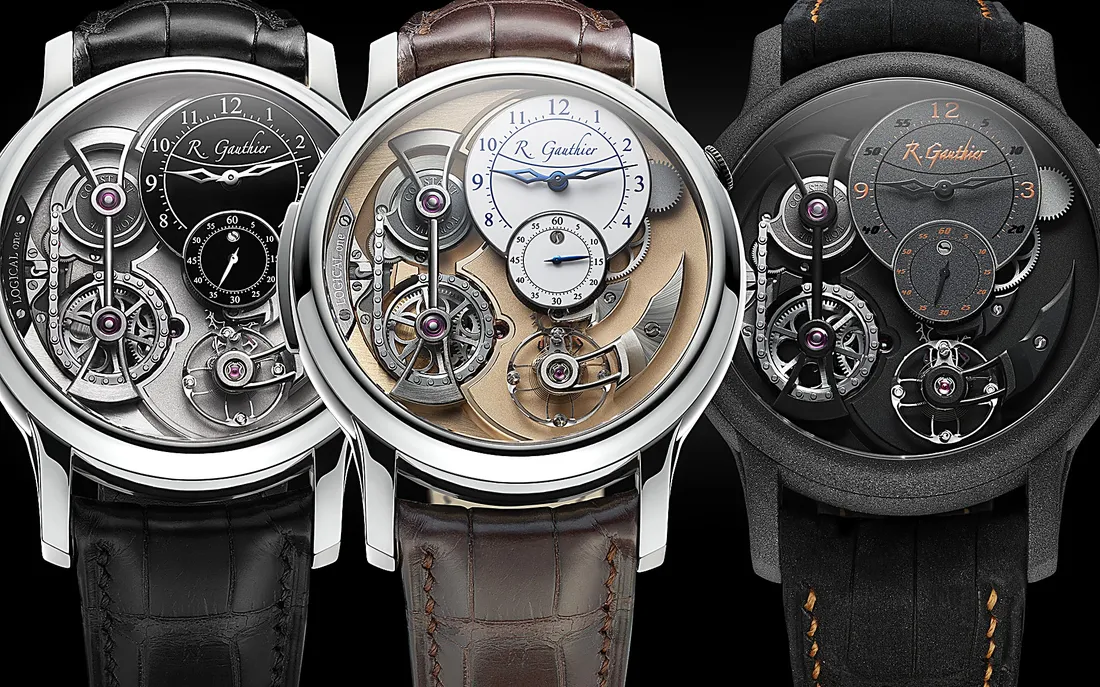
The founder is brief. He will. We put the chain on the dial.
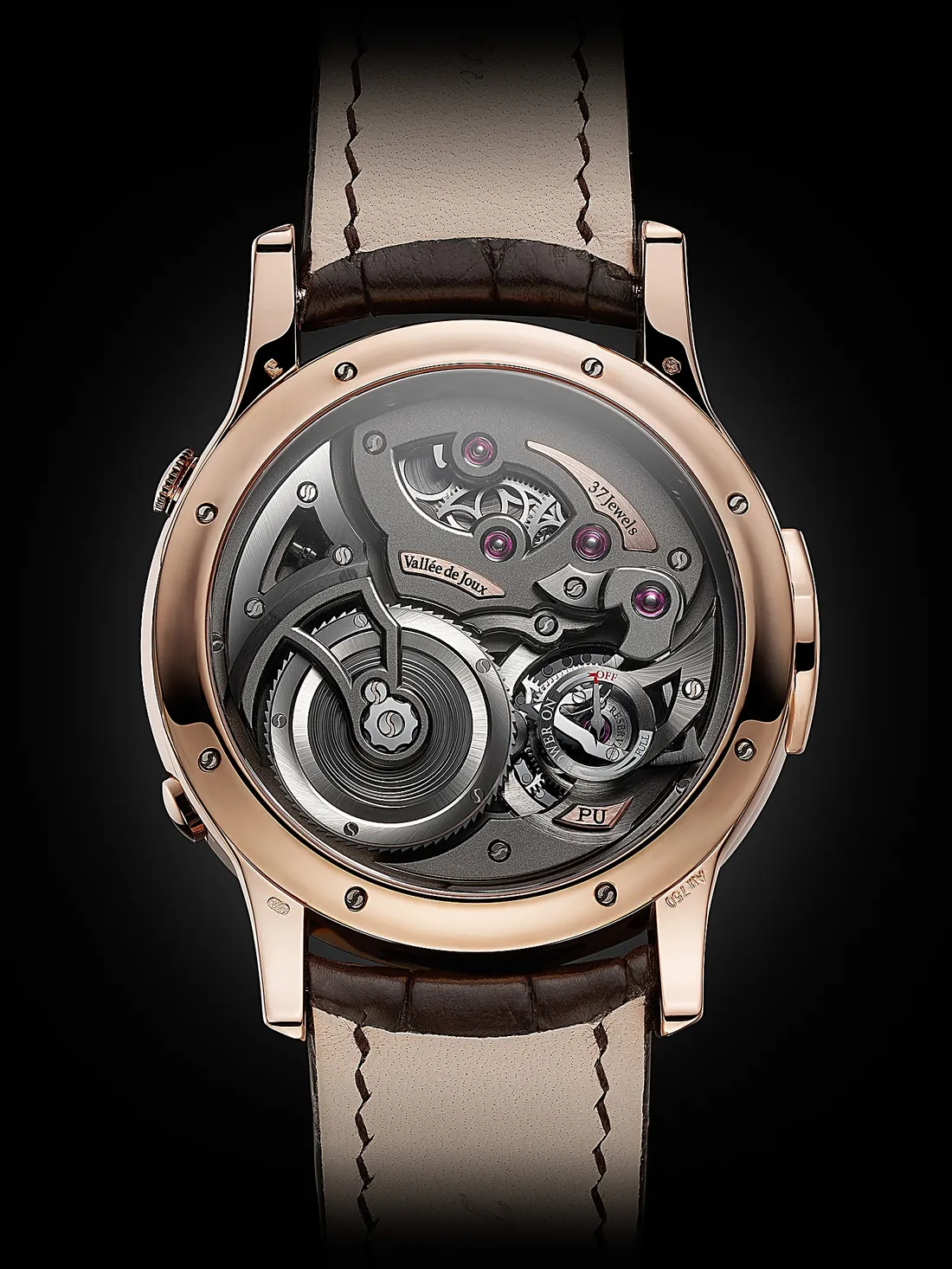
That last sentence is more than a design decision. In watchmaking the movement conventionally sits at the back and the dial covers it. The Logical One does the reverse: it carries the constant-force system, the whole reason the watch exists, onto the face you look at.
The watch therefore does not hide its claim. You can watch the chain travel slowly across the snail cam with your own eyes. Winding draws the chain back; running pays it out again. The energy left can be read without consulting an indicator at all, simply by seeing where the chain has reached.
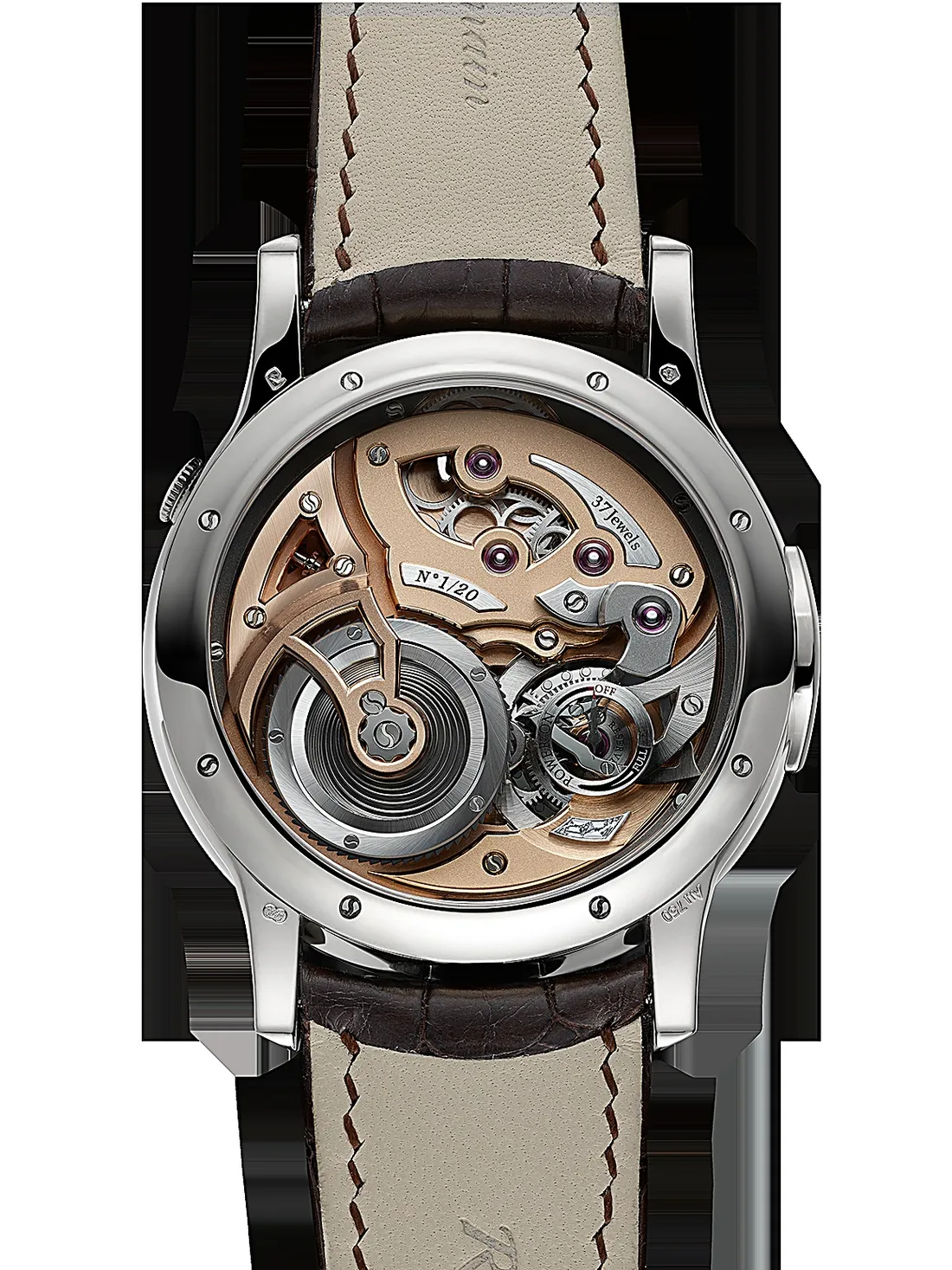
The collection has grown since: natural and black titanium, limited series in red gold, white gold and platinum, and the Secret versions hidden beneath a cover.
What won this watch the Men’s Complications Prize at the 2013 Grand Prix d’Horlogerie de Genève was not complexity. There is no calendar on the dial, no moon phase, no chime. What took the prize was a single function, constant force, carried as far as it will go.
The Girard-Perregaux Constant Escapement, which took the Aiguille d’Or the same year, was wrestling with exactly the same problem. The two gave two different answers to one question. One put a buckled silicon blade immediately before the escapement and made the force forgotten at the point of delivery. The other put a cam and a chain immediately after the barrel and corrected the force before it ever set off.
That both ends of one problem were taken hold of within a single year says something about how fundamental the problem is.
format_quote"One question, two answers in a single year. One made the force forgotten at the escapement, the other corrected it before it set off."
Hasan Bekmezci
The assumption underneath the fusée is a slightly melancholy one: the energy will decline. That is not a fault but the nature of the thing. A spring empties, force falls, and there is no avoiding it.
The fusée does not deny that fact. It accepts that the force will fall and answers by lengthening the arm. It meets weakening not by pretending it away but by growing the lever.
A person’s strength declines too. We tire, we age, we cannot work by pushing as hard as we once did. The wisest thing available at that point is not to push as hard as before but to lengthen the arm: to arrange matters so the same work is done with less force. And it is worth remembering that we invented neither the lever, nor the force, nor the decline. All that was ours to do was to connect them properly.
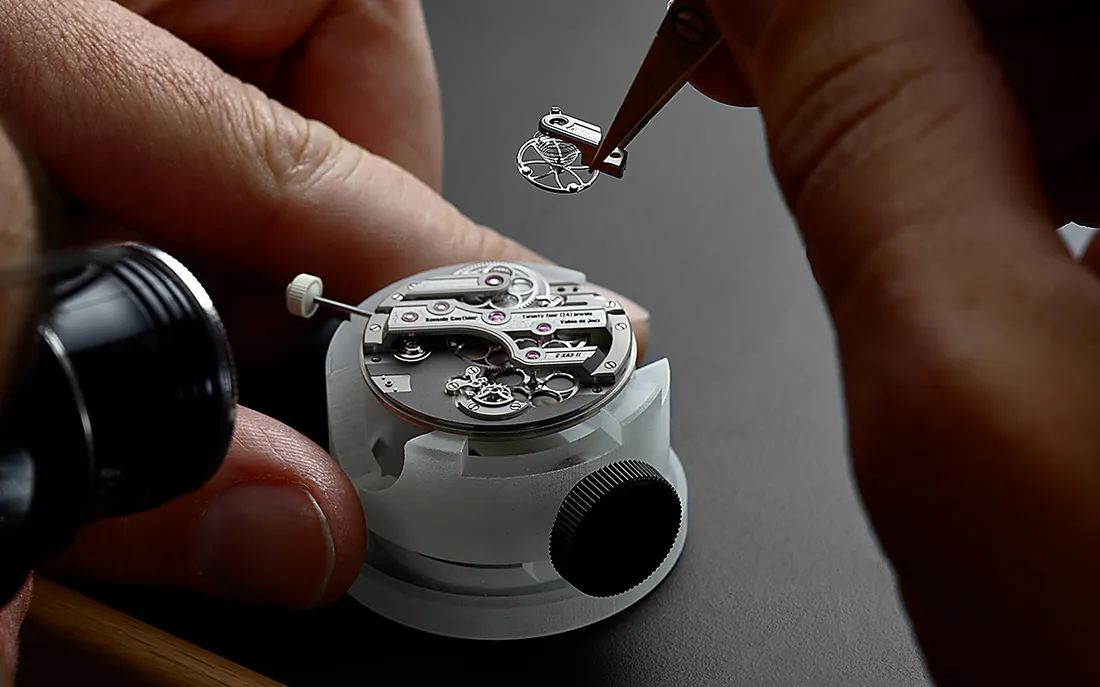
The watch on its maker’s own site: Romain Gauthier, Logical One