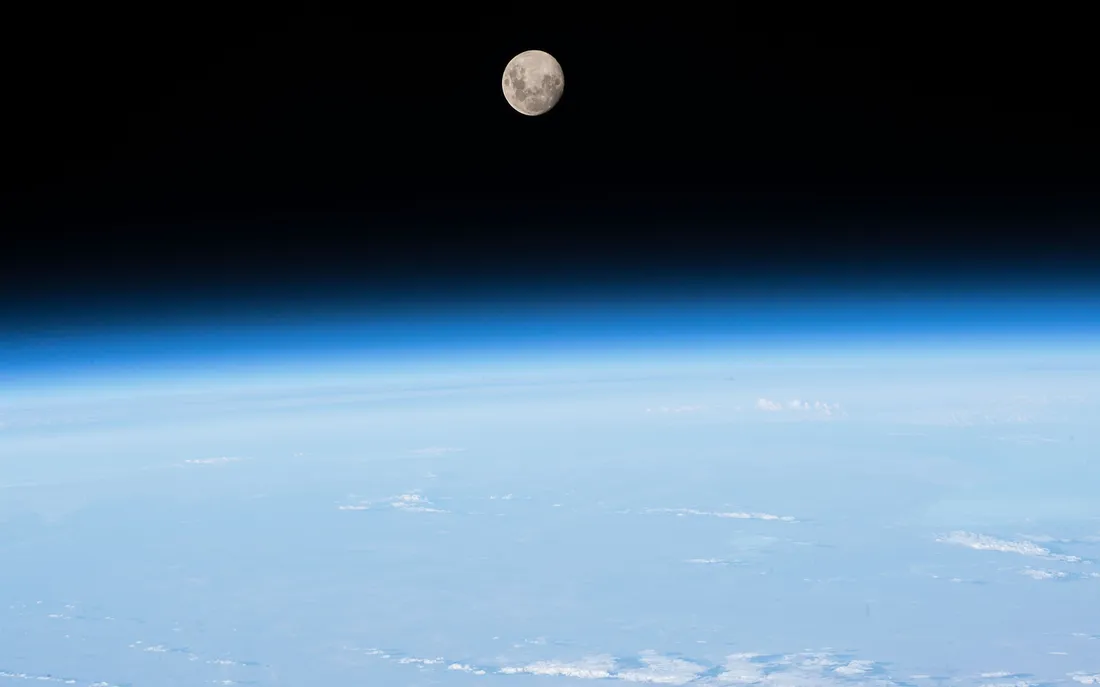
We are standing on a world flung through dark, freezing, endless space at something like a hundred and seven thousand kilometres an hour. At the centre of that enormous turning sits a mass that sets the rhythm of everything: the Sun.
Some nine billion years after the Big Bang, clouds of gas and dust in space fell in on themselves, grew dense and caught fire. That vast furnace of hydrogen and helium is no ordinary source of warmth that happened to settle there. By its gravity the Sun gathers planets of unimaginable weight around itself, from Mercury out to Neptune, in a symphony.
But what is this cloud of gas and dust, and how does it ever come together? What astrophysicists call dust is not the dust we sweep up at home. It is iron, carbon, silicon and hydrogen, scattered into the deep by exploding stars.
Stop and think for a moment. Put flour, sugar and oil on a kitchen counter and wait until morning. What happens? Nothing. Wait a million years. Still nothing. Because there is no inner will among those specks that would assemble them into a cake, and no force to draw them towards one another.
So how do these grains, scattered at random through empty space, suddenly notice each other and decide to join?
This is where an inclination written into the substance of matter comes into play. The Creator has placed in the heart of those lifeless particles such an attraction that, like two lovers, they run towards one another through the dark with the desire to meet. What physicists call gravity and lock away in cold formulae is in truth a longing breathed into those microscopic grains. Who gave two lifeless, unconscious particles the order to go and hold each other? Who put that force in their heart?
And there is more. Take the same matter, set it down again in the same conditions, and would a Sun come out of it that allows life at this precision? Or would a deviation of a millimetre send it collapsing in on itself to some altogether different end?
By that inclination and that gravity the crowded matter heats; heating, it becomes an enormous centre; and at last hydrogen nuclei ignite in fusion and the Sun is lit.
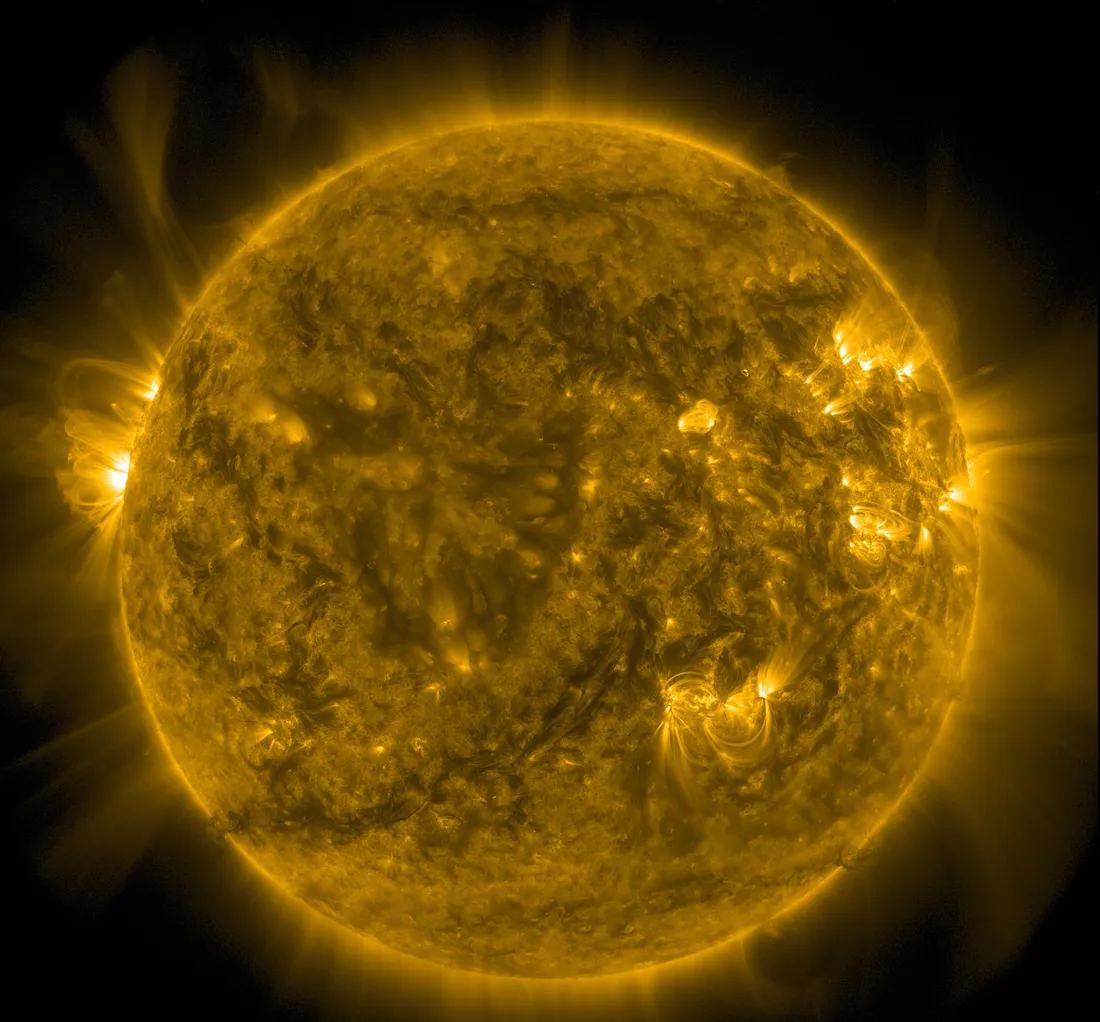
And once lit, what did this great hydrogen furnace do next? Did the Sun decide for itself to stand in the middle of space, to send photons and neutrinos with tenderness to a blue planet at exactly that distance, and to run the factory of photosynthesis in the leaves there?
Does the Sun have a mind, that it should consider a living thing far away and supply it with light at precisely the wavelength it needs? The Sun is only a civil servant; every photon it sends is a merciful hand that the Creator extends to the earth.
Nor does the wonder end once the Sun has formed. In the work done on helioseismology, the study of the Sun’s own tremors, one meets a striking comparison. Shake a tree hard and the fruit on it is torn from the branch and falls. The Sun swings and shudders continuously at its centre, rhythmically shaken, as it were, in the void; and yet it does not fling its fruit away. With those inner oscillations it holds the planets in their orbits with extraordinary precision.
format_quote"The Sun is only a civil servant; every photon it sends is a merciful hand that the Creator extends to the earth."
Hasan Bekmezci
The Sun sends that tender light, the engine of photosynthesis, so that life may green the earth. But the same Sun also scatters lethal cosmic radiation, gamma rays and solar storms into space.
How, then, is the earth protected from that deadly bombardment?
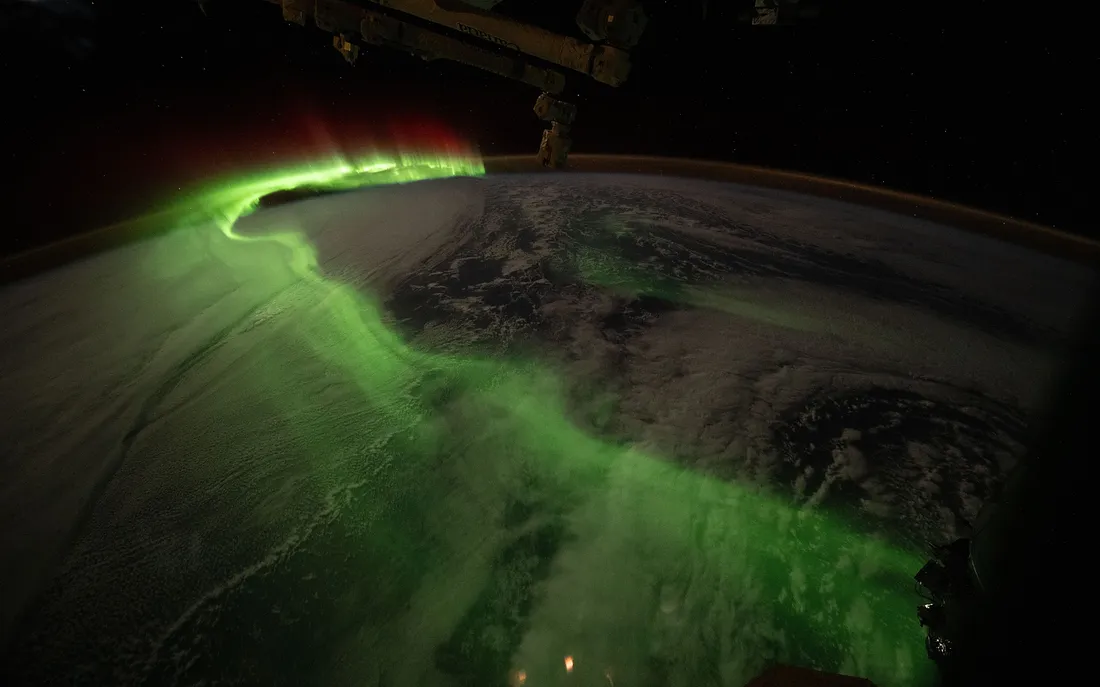
The ocean of molten iron at the core of the planet turns, and in turning raises an enormous invisible shield around it: the magnetosphere. Above the atmosphere the ozone layer is spread. The two together are like a guarded ceiling built over the world. Sunlight, which gives life, filters through that armour and comes in; the killing radiation strikes the shields and bounces back into space. The light that paints the polar night green is the mark the shield leaves as it works. Whose is the mind that wove that shield into place, that knows what to let in and what to keep out?
Beneath that guarded ceiling, the mechanism that takes up all that energy is the sea.
Do the seas have a mind, that they should know what to do? Consider: if the Sun’s scorching heat fell only on land, we would live in a hell of a hundred degrees by day and a frozen desert of minus a hundred by night. Instead the oceans run an unbelievable planetary central-heating system.
And how does a system work that carries trillions of tonnes of water from the equator to the poles and back again, with no electrical cable, no mechanical pump and no metal propeller? What science calls the thermohaline circulation rests entirely on two quantities: temperature and salt.
The Sun scorches the oceans along the equatorial belt. Warming water expands and lightens, and a vast heap of it builds at the surface. Driven on by the winds, that warm mass is pushed north towards the poles like a great river on the ocean’s face. In the Atlantic the river has a name: the Gulf Stream.
When it reaches the Arctic it loses its heat quickly and cools. As water begins to freeze its molecules lock into crystal cages and push the salt out of the structure. This is the critical point: because the freezing fresh water expels its salt, the salt concentration in the shrinking pool of liquid that remains goes up sharply. Heavy mineral ions crowded between the water molecules raise its density at a stroke. Salt water is now far heavier than fresh.
Cooled and made stubbornly heavy by that burst of salt, the great ocean river falls through the icy polar water towards the sea floor like a vertical waterfall. Reaching the bottom, this freezing, salty, heavy water begins to flow back along the ocean floor towards the equator. There it warms, lightens again and rises to the surface. The cycle closes like a faultless wheel.
The sea is the planet’s vast radiator. It takes the fire of the Sun and distributes it to every corner of the world as a warm breath.

format_quote"The sea is the planet’s vast radiator. It takes the fire of the Sun and distributes it to every corner of the world as a warm breath."
Hasan Bekmezci
And when light meets the sea, the most beautiful optical display of all begins. How does that riot of colour come about, and that legendary blue of the sky?
The white light that sets out from the Sun is an electromagnetic spectrum carrying every colour of the rainbow in its breast. On their way down those waves strike the gas molecules of the atmosphere. As the English physicist Lord Rayleigh showed, when the particle the light meets is very much smaller than the wavelength itself, an enormous scattering occurs; and the strength of that scattering goes as the inverse fourth power of the wavelength. The shorter the wave, the more violently it is thrown about.
Red and orange light have long wavelengths, and so pass through the molecules of the atmosphere with little hindrance. Blue and violet have wavelengths that are short, sharp and impatient. The moment they strike nitrogen and oxygen they are scattered in every direction. The immense blue dome that wraps the sky is made by billions of molecules spraying blue light back into the air. Violet scatters harder still, and the reason we do not see a violet sky is that the Sun radiates less there and the eye is less sensitive to that wavelength.
When the light reaches the sea, the water swallows the long red wavelengths of the spectrum and sends the short blue one back. By that physical elegance the sky and the seas put on their blue dress.
Now raise your hand to your eye and imagine the scale of it. The human eye is on average twenty four millimetres across, about the size of a hazelnut.
Set it beside the world of high watchmaking. Think of the most complicated, most priceless astronomical pocket watches ever built, the legendary movements that carry moon phases, perpetual calendars and tourbillons. How many parts do they have? Between a thousand and fifteen hundred; and in the extreme case, the Patek Philippe Calibre 89, one thousand seven hundred and twenty eight. Watches that masters spent years assembling sell at auction for millions.
Now think of the thin layer of retina behind your eye. Into the back of that little twenty four millimetre sphere some hundred and thirty million living parts have been set: around a hundred and twenty million rods, which see in the dark, and around six million cones, which see colour.
A watch of fifteen hundred metal parts is worth millions. What price would you put on the engineering that fits a hundred and thirty million living organisms into twenty four millimetres, each of them with its nucleus, its organelles and its atomic dance, each of them alive? Not millions; even billions would look dim beside that living watch of a hundred and thirty million parts.
format_quote"A watch of fifteen hundred metal parts is worth millions. What price would you put on the engineering that fits a hundred and thirty million living parts into twenty four millimetres?"
Hasan Bekmezci
And consider the complications this living watch carries. It computes in an instant how much of the light the Sun sends for photosynthesis has arrived. Its intelligent diaphragm, the iris, widens in the dark and contracts in bright light, setting the aperture in a thousandth of a second. Its lens flexes within milliseconds and focuses the distance of objects with almost no error. It converts the light it receives into electricity and pours it to the brain at megabytes a second.
And these hundred and thirty million parts do not wear out, ask for no battery and need no oil; they feed and repair themselves. This is not the work of coincidence but of an infinite mind and an immense act of creation.
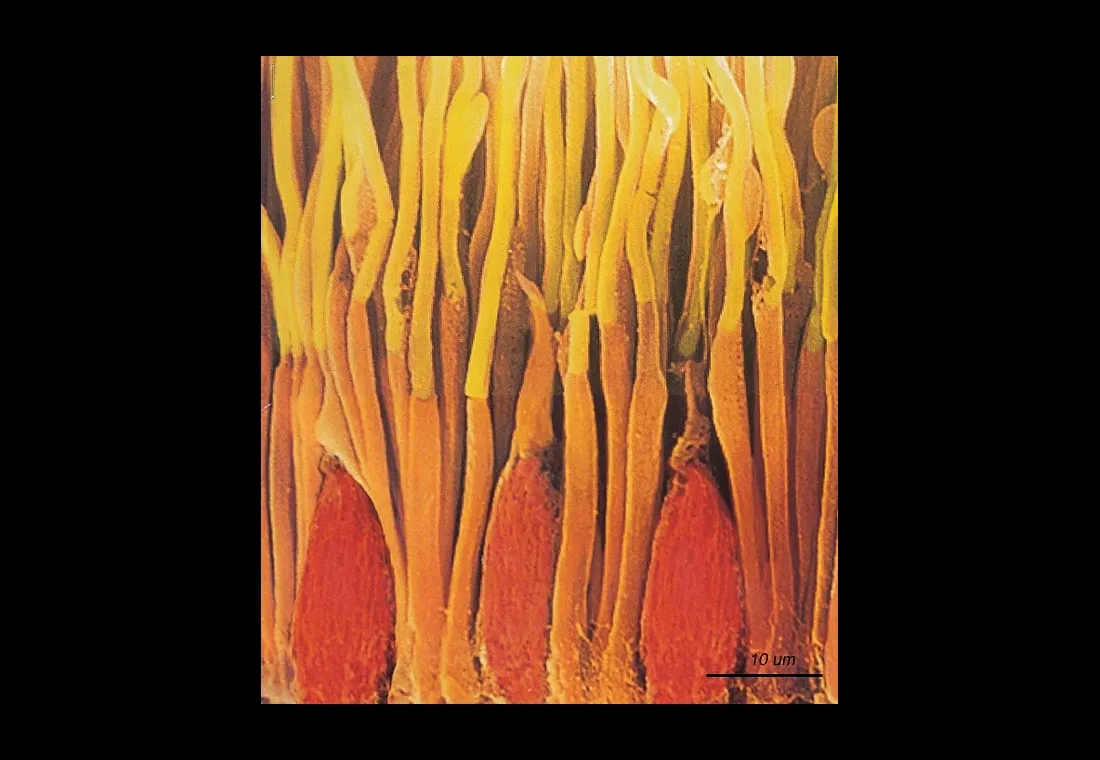
Having followed, step by step, this order in the universe, the unreachable architecture of a hundred and thirty million cells in the eye and the optical splendour of light, we begin to see how helpless the craft of the human hand is before the real thing, and how full of admiration.
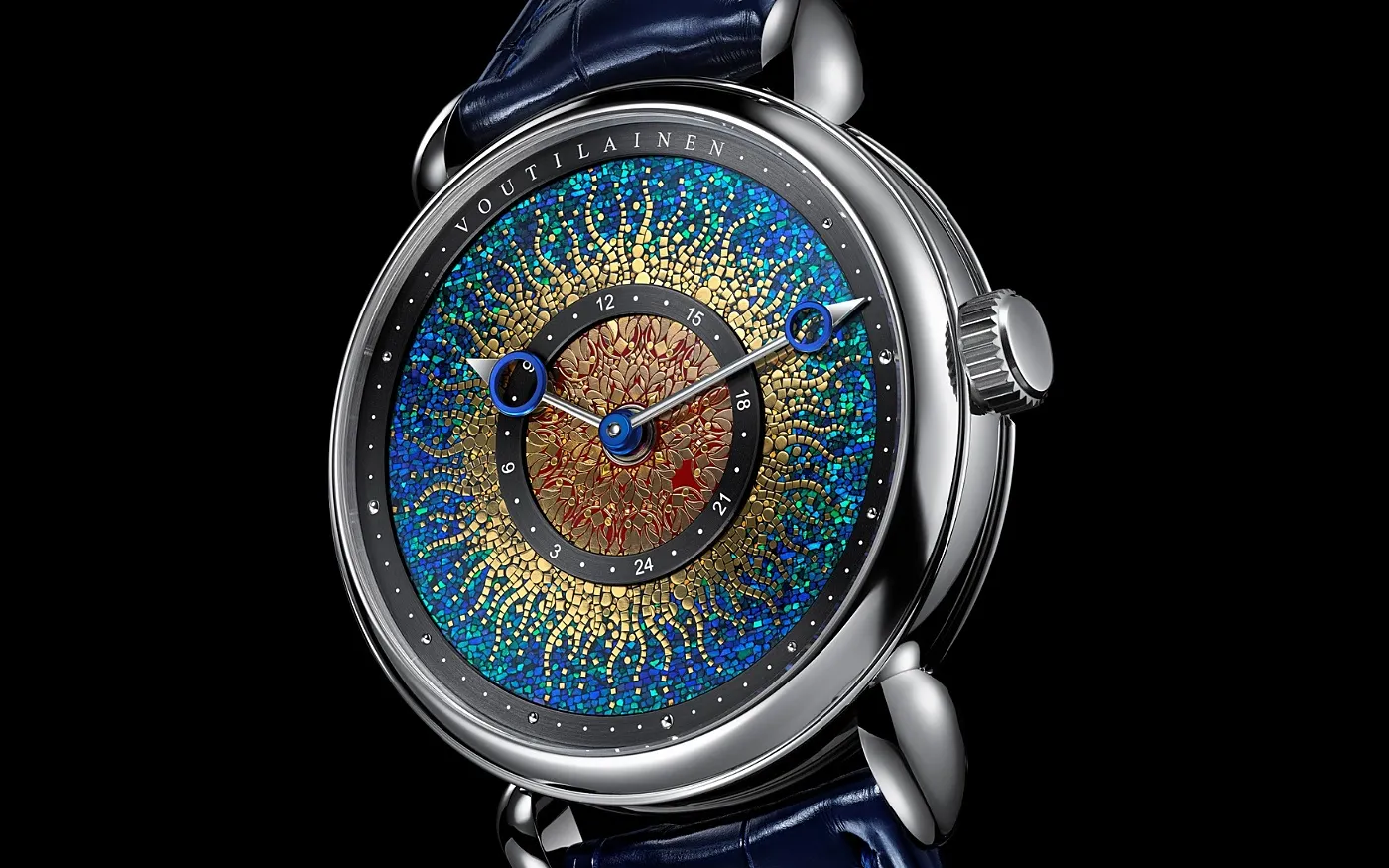
It is exactly here that the Voutilainen 28GML SOUYOU stands, signed together by Kari Voutilainen, the genius of independent high watchmaking, and Tatsuo Kitamura, the master at the summit of Japanese lacquer. Made as a single piece, it won the Artistic Crafts Watch Prize of the Grand Prix d’Horlogerie de Genève in Geneva on the evening of the thirteenth of November, two thousand and twenty five.
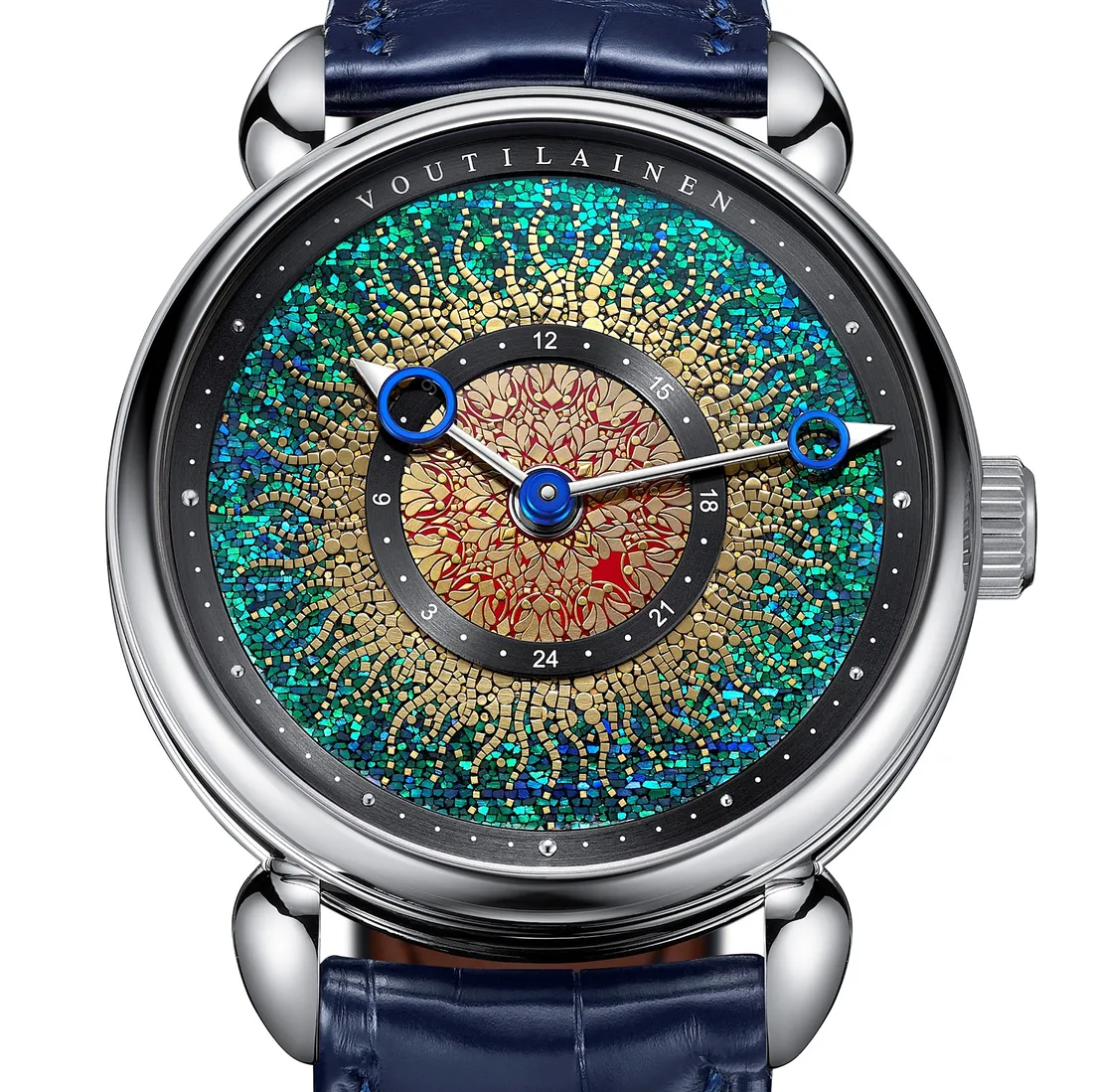
The solid platinum case, thirty nine millimetres across, is a sober armour around the treasure of craft inside it. The calibre 28GML visible through the back is made entirely in the Voutilainen workshop and is wound by hand; it runs sixty five hours and beats eighteen thousand times an hour. Main plate and bridges are German silver, several of the visible wheels are solid gold, and the screw heads are polished to a mirror.
The real distinction of the movement is its balance. Voutilainen regulates an unusually large free-sprung balance, made in his own workshop, with gold timing weights. The balance spring carries the classical Phillips curve on the outside and, within, the little-used Grossmann curve; together they centre the breathing of the spring. Beyond that the calibre has two separate escape wheels, which give their impulse directly to the roller jewel of the balance. That construction spends less energy than the classical Swiss lever, and the result is longer life, a steadier rate and a longer reserve.
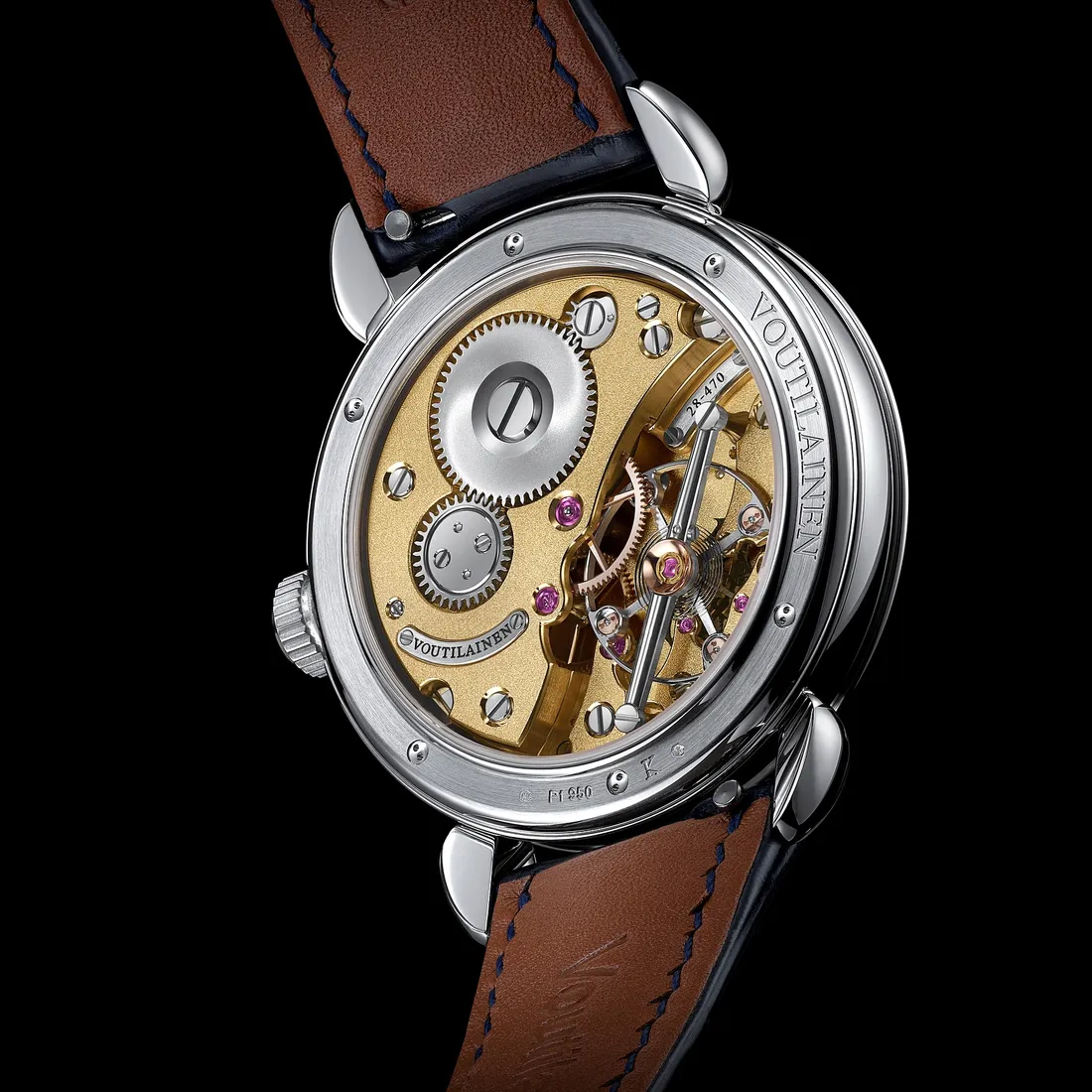
But the real magic of the watch is its dial. SOUYOU is a coined word, and it finds its answer in the contrast of blue, green, gold and red. In the maker’s own description, SOU is the sea in the outer part of the dial, appearing in deep, clear blue-green tones; YOU, in the golds and reds of the centre, is an organic form standing for solar energy. The architecture of the dial therefore builds the order of this article in reverse: the sun in the middle, the sea around it.
Anyone who has read this far will see one more thing when they look at that dial. The concentric mosaic opening outward from the centre calls to mind the iris of the human eye. This is not a claim about what was designed; it is the reading of the person looking. But once seen it cannot be unseen.
format_quote"The architecture of the dial builds the order of this article in reverse: the sun in the middle, the sea around it."
Hasan Bekmezci
The techniques Kitamura applies to this dial push the limits of human patience. Urushi is gathered from the trunk of Toxicodendron vernicifluum, the lacquer tree, drop by drop so that the tree is not killed. Because the sap contains urushiol and is toxic, the gathering is painful work. The resin collected is then cured over months in special humidity rooms at controlled temperature. Hardened, it becomes a surface as smooth as glass and as durable as steel, which does not yellow with age.

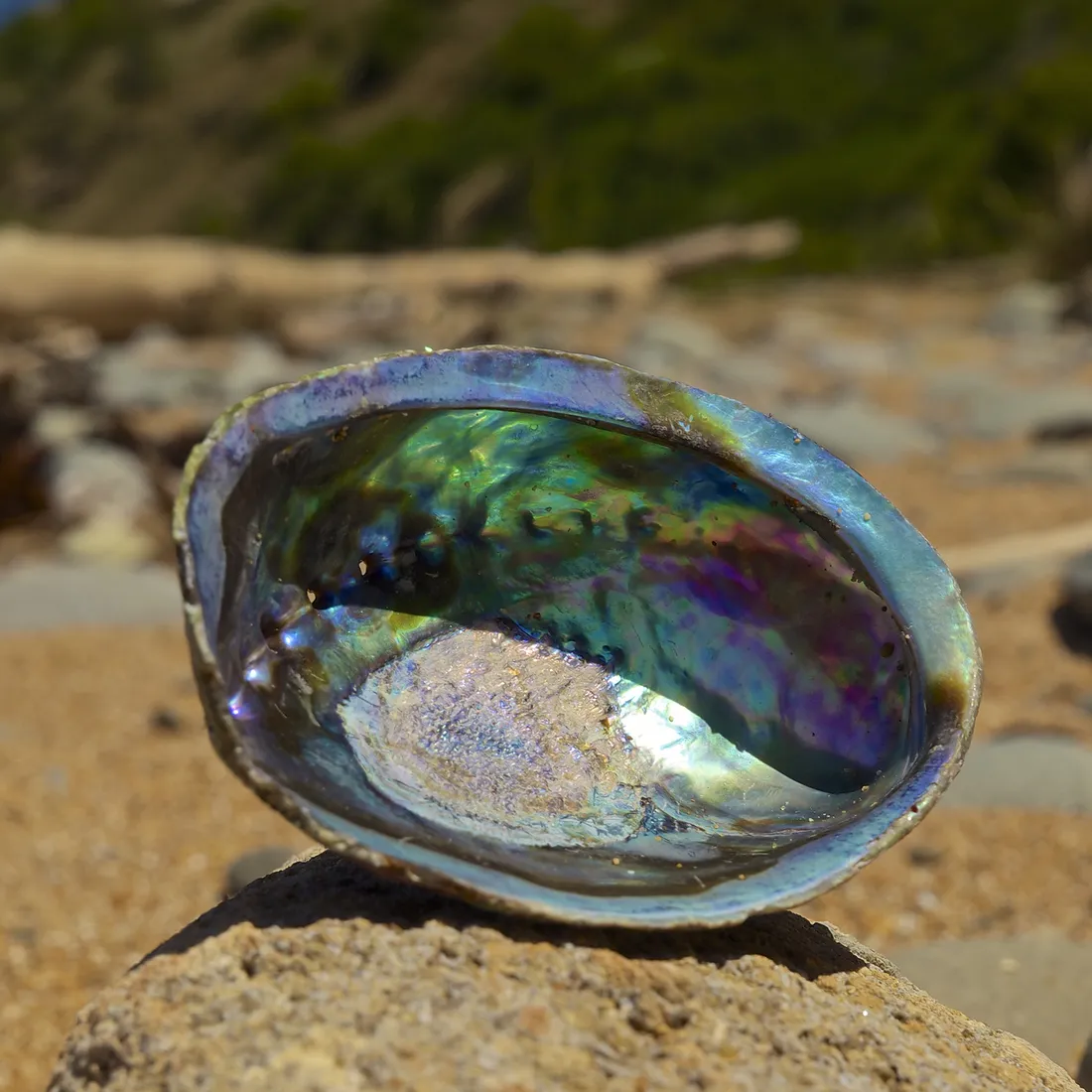
The technique that carries the glitter of the sea onto the dial is kirigai, cut shell. Kitamura uses New Zealand paua abalone and the great green turban for it; the shells are sliced leaf by leaf to a thickness of microns. With tweezers, and with the patience of someone telling beads, the master lays these fragments onto the dial one at a time. That is how the play of light on the surface of the ocean reaches the dial.
The gold arrives in two states. Kinpun is gold powder in various finenesses, dusted onto the wet lacquer with special brushes; kirigane is cut sheet gold, laid piece by piece. In Japanese lacquer the family name for this is maki-e, sprinkled picture. The colour of the dial changes with the angle of the light, exactly as the blue of the sky and the sea trade places as the day turns.
All these layers are the result of more than a thousand hours of work in the Wajima studio.
The watch carries a complication made for travellers. Beside the hours and minutes, a disc at the centre turns once in twenty four hours to show a second time zone, the hour of home. The pointer of that disc is set so skilfully into the gold motif on its red ground that it is read at a glance. To move to the hour of the city you have arrived in, a single press on the crown is enough; the central hour hand falls into place.
Look at the dial whole and the sea on the outside, the sun at the centre and the microscopic layers worked by Tatsuo Kitamura all stand together. With its platinum case, its heavy tick of eighteen thousand beats an hour and a dial brought to life in the hands of Voutilainen and Kitamura, the 28GML SOUYOU takes its place in the museum cabinet as a flawless synthesis of the order of the universe, the immense engineering of the eye, and the highest craft the human hand has reached.
The watch on its maker’s own site: Voutilainen, 28GML SOUYOU