In independent watchmaking the hardest moment is not the first watch. The hardest moment is the third.
The first is a promise; nobody expects too much of it. The second shows the promise was kept. The third has to answer a different question: does this workshop have a language, or did it have two good ideas?
Two men working in Renens, Gaël Petermann and Florian Bédat, showed that third watch in 2026. It is called the Reference 1825, and the calibre inside it is new from nothing.
Two GPHGs and an Expectation
For anyone who does not know the name a short summary is needed, because the weight of the piece in front of us comes from here.
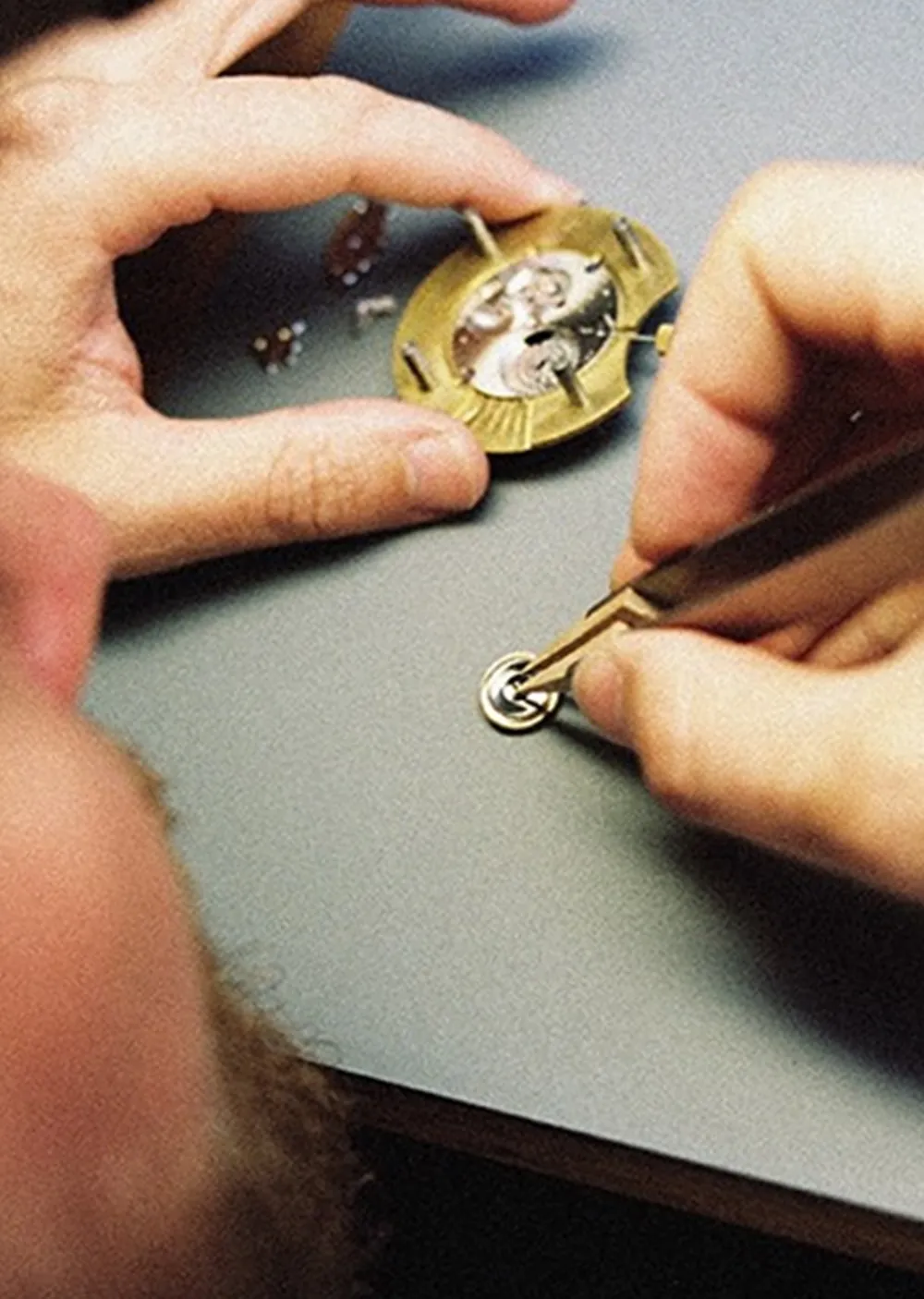
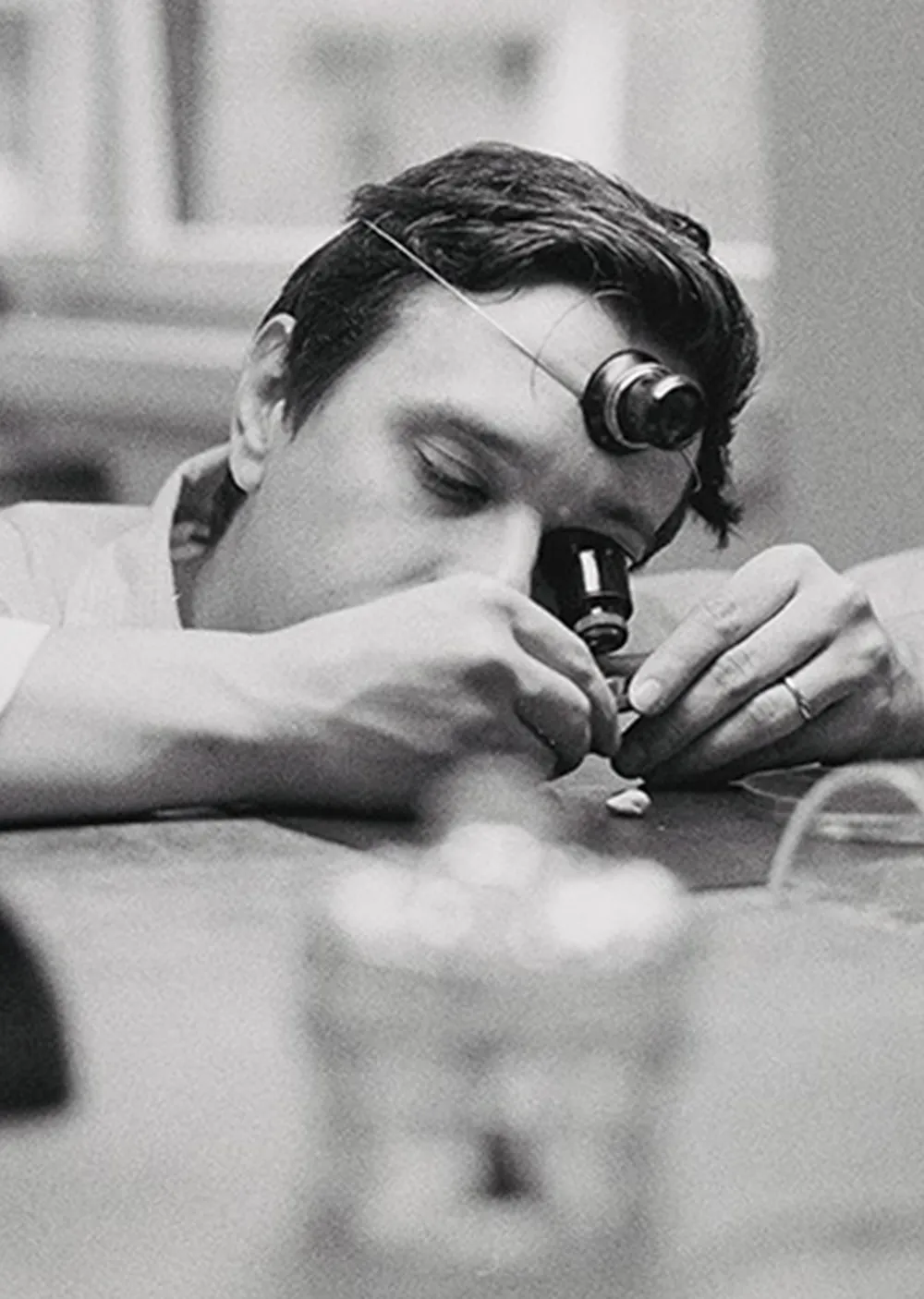
Gaël Petermann and Florian Bédat met at watchmaking school. Gaël worked in Germany at A. Lange & Söhne; Florian first at Harry Winston and then beside Gaël in Glashütte as well. Between them there is also restoration work carried out for Christie's, which is to say both are people who have taken old watches apart, looked inside and learned how they were thought out. In 2017 they set up their own workshop in Renens, just outside Lausanne.
Their first watch was the Reference 1967: dead beat seconds, that is a seconds hand which, instead of sweeping, steps mechanically once every full second. That watch took the Horological Revelation prize at the GPHG in Geneva in 2020, an award the jury gives to a young brand.
Their second watch was the Reference 2941: a monopusher split-seconds chronograph with a jumping minute counter. It won the GPHG Chronograph prize in 2023.
So the third watch was introduced in front of a shelf holding two GPHG statuettes. And the interesting part is this: this time there is no complication.

format_quote"In independent watchmaking the hardest moment is not the first watch. The hardest moment is the third."
A Difficulty Without a Complication
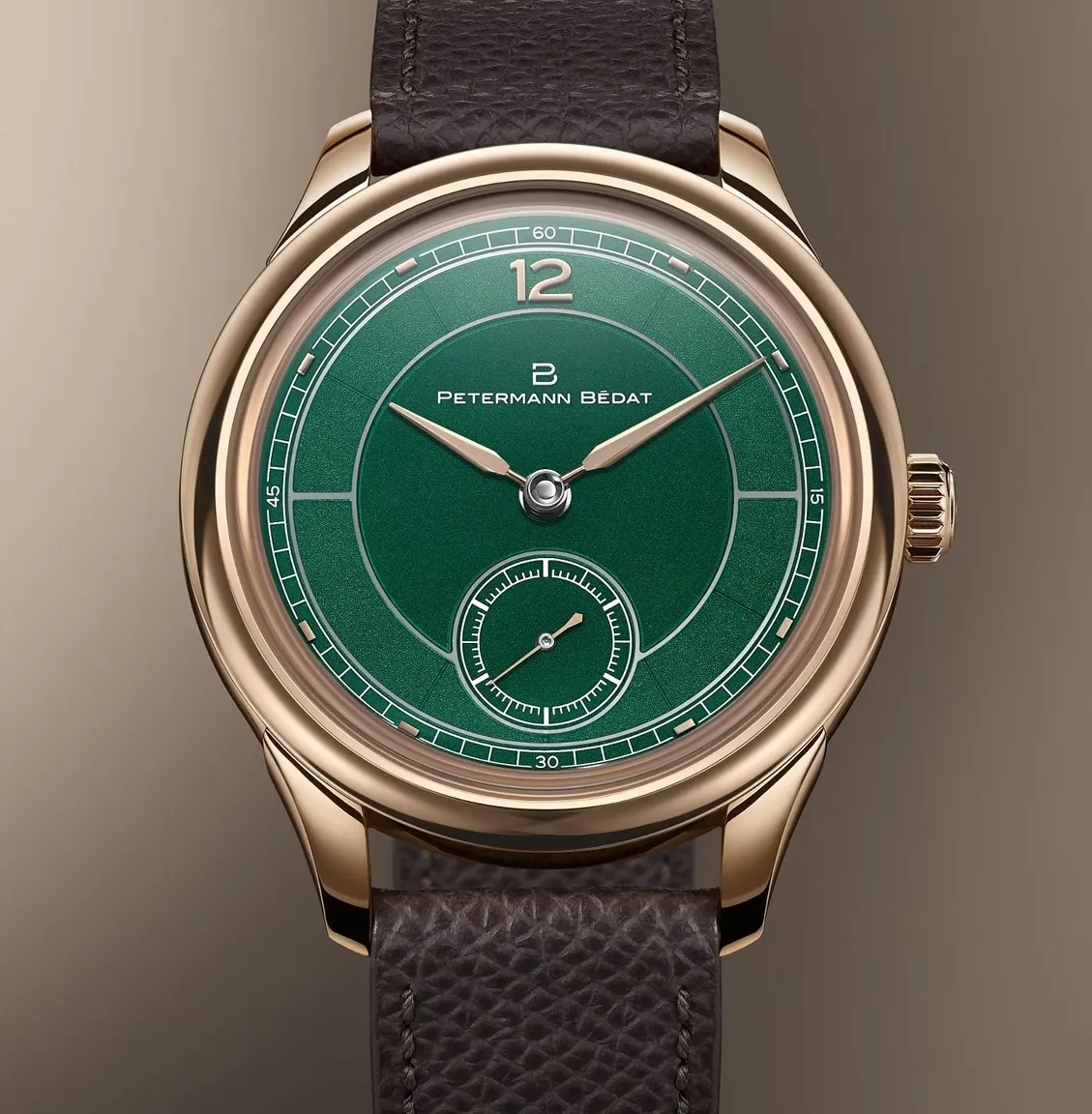
The Reference 1825 shows hours, minutes and small seconds. That is all.
That looks like an easy choice and it is the opposite. In a split-seconds chronograph the crowd saves you: the eye finds somewhere to go, admiration disperses into technical density. In a three hand watch there is nowhere to hide. The proportion of the case, the texture of the dial, the tip of a hand, the curve of a bridge; every one of them is out in the open, one at a time.
How the workshop describes the job is itself telling. In their own words this is a calibre defined not by complication but by form. Which is to say the point was not to add a function but to build an architecture.
Calibre 233: A Bell in the Middle
The new movement is called calibre 233. Hand wound, thirty millimetres across, twenty one jewels. Eighteen thousand vibrations an hour, that is two and a half cycles a second. Power reserve fifty six hours.
Two of those numbers are a deliberate choice. Eighteen thousand is markedly slower than the modern standard of twenty eight thousand eight hundred, and that has two consequences: the parts wear less, and the seconds hand advances with a tick lazy enough to be followed by the eye. This is the rhythm of old pocket watches. The workshop chose that rhythm because the movement's inspiration is also the pocket watches once restored on its bench.
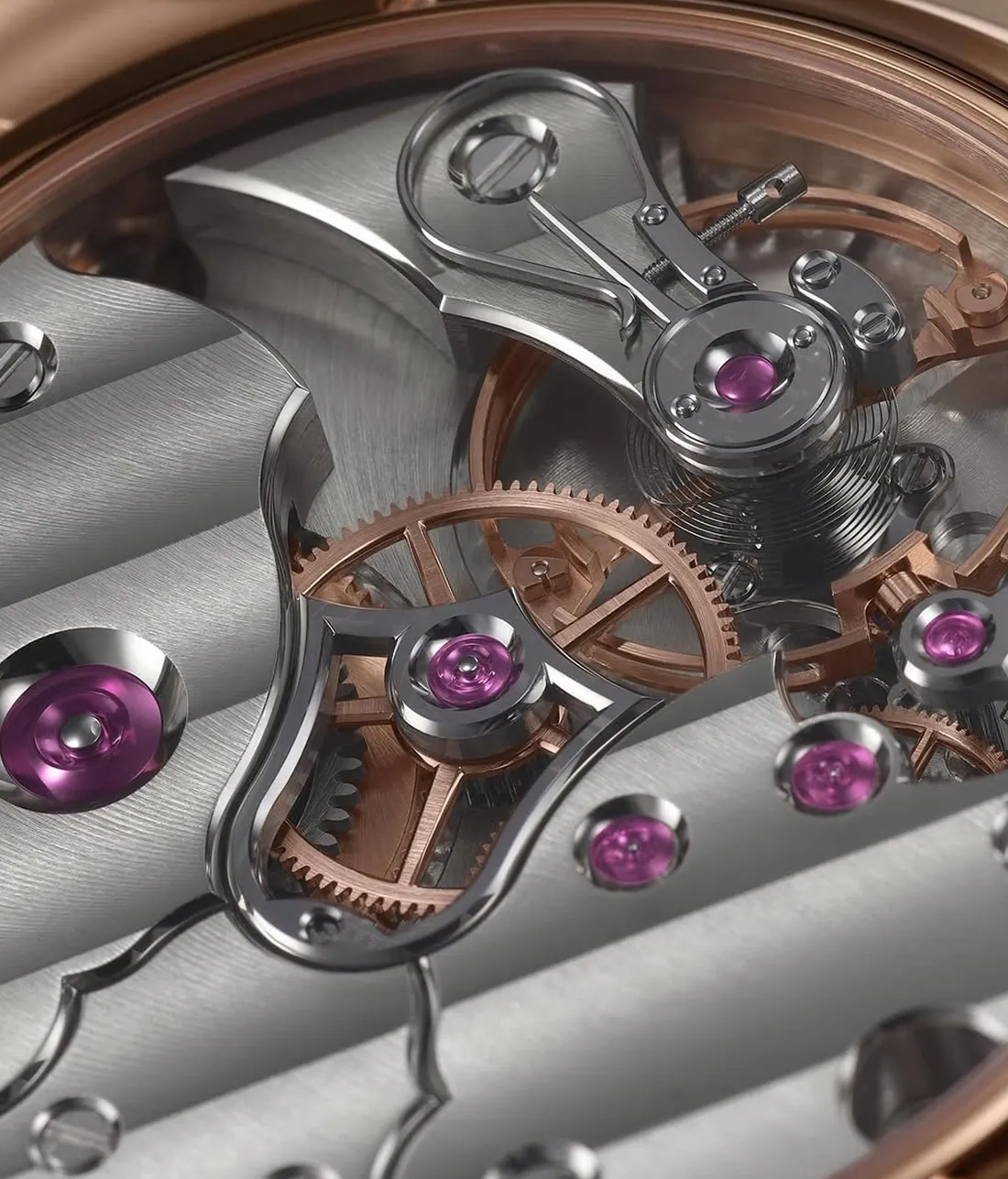
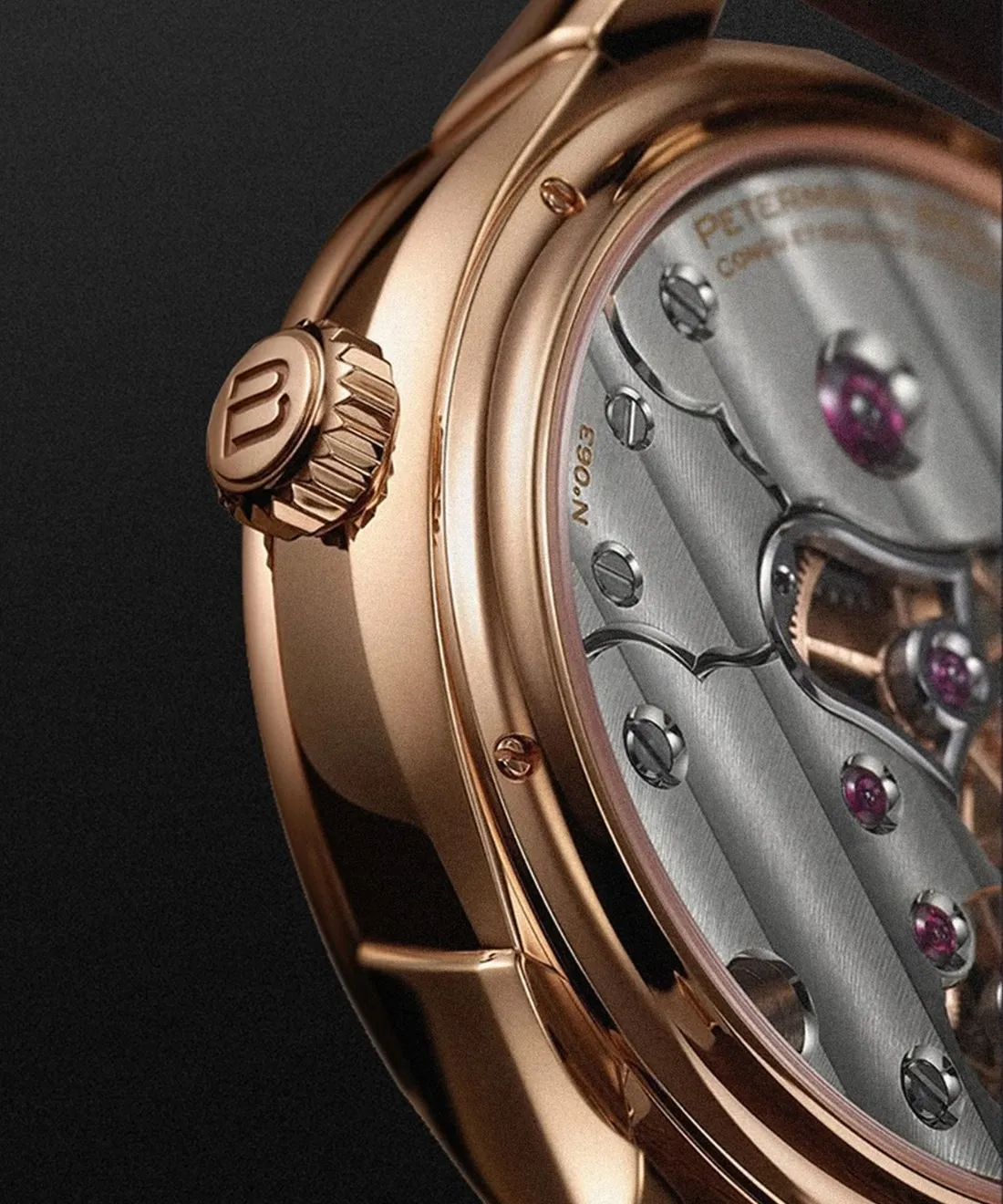
The architecture is built like this: an order that begins symmetrically at the top converges on a single bell shaped steel bridge in the middle, then opens downwards into a freer layout. It is a deliberate middle road between the rigidity of the German three quarter plate and the freedom of Geneva's separate bridges.
Main plate and bridges are in German silver. Choosing that alloy is not an aesthetic whim: German silver is not plated, it is left bare, and over time it takes on a faint golden tone of its own. Which is to say the colour of the movement changes as it ages. Plating freezes a surface; German silver goes on living.
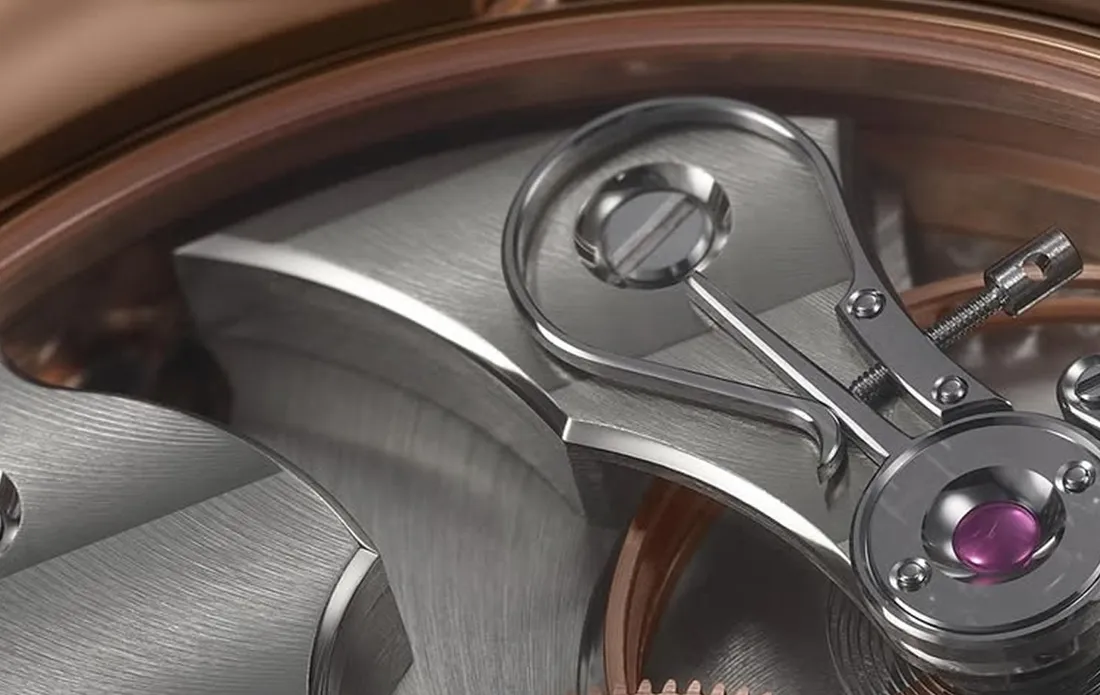
And there is a first: in this calibre all the wheels are in solid gold. A gold wheel costs more than brass and is not mechanically obligatory; but it does not oxidise and it leaves a cleaner edge on the teeth when it is cut. On the regulating side a Swiss classic stands: a swan neck regulator.
The balance spring has a Breguet overcoil. The outermost coil is lifted on a bridge and bent inwards, so the spring behaves more concentrically as it breathes. That detail is a two hundred and thirty year old answer to the same problem, and it is still used in the best watches.
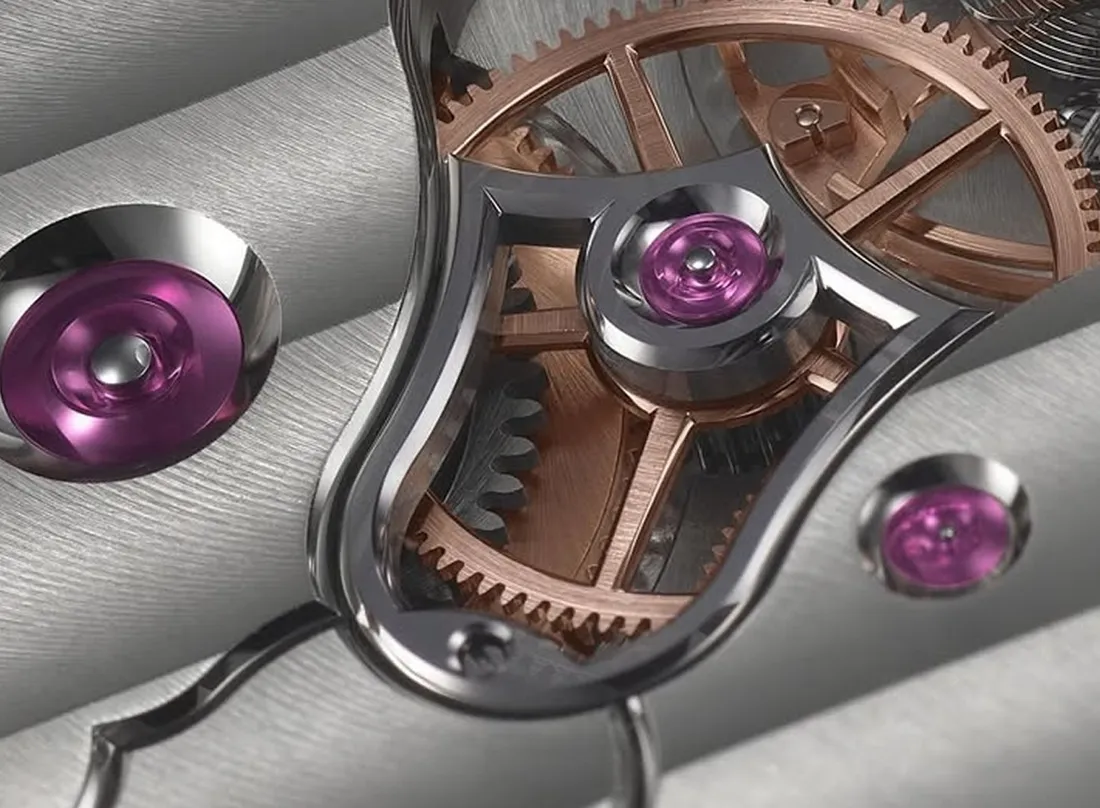
format_quote"German silver is not plated. The colour of the movement changes as it ages; plating freezes a surface, German silver goes on living."
The Dial: Closed for the First Time
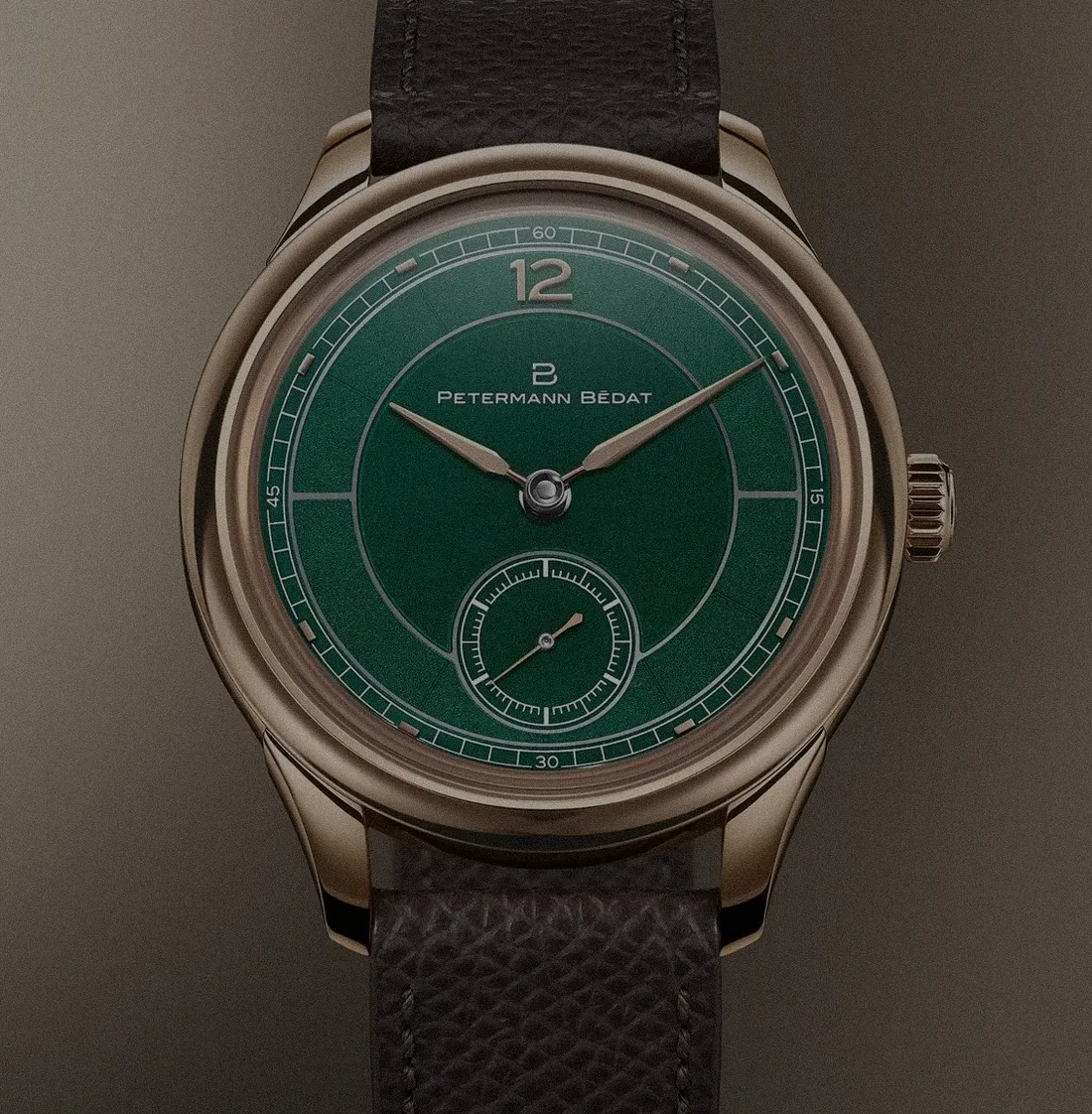
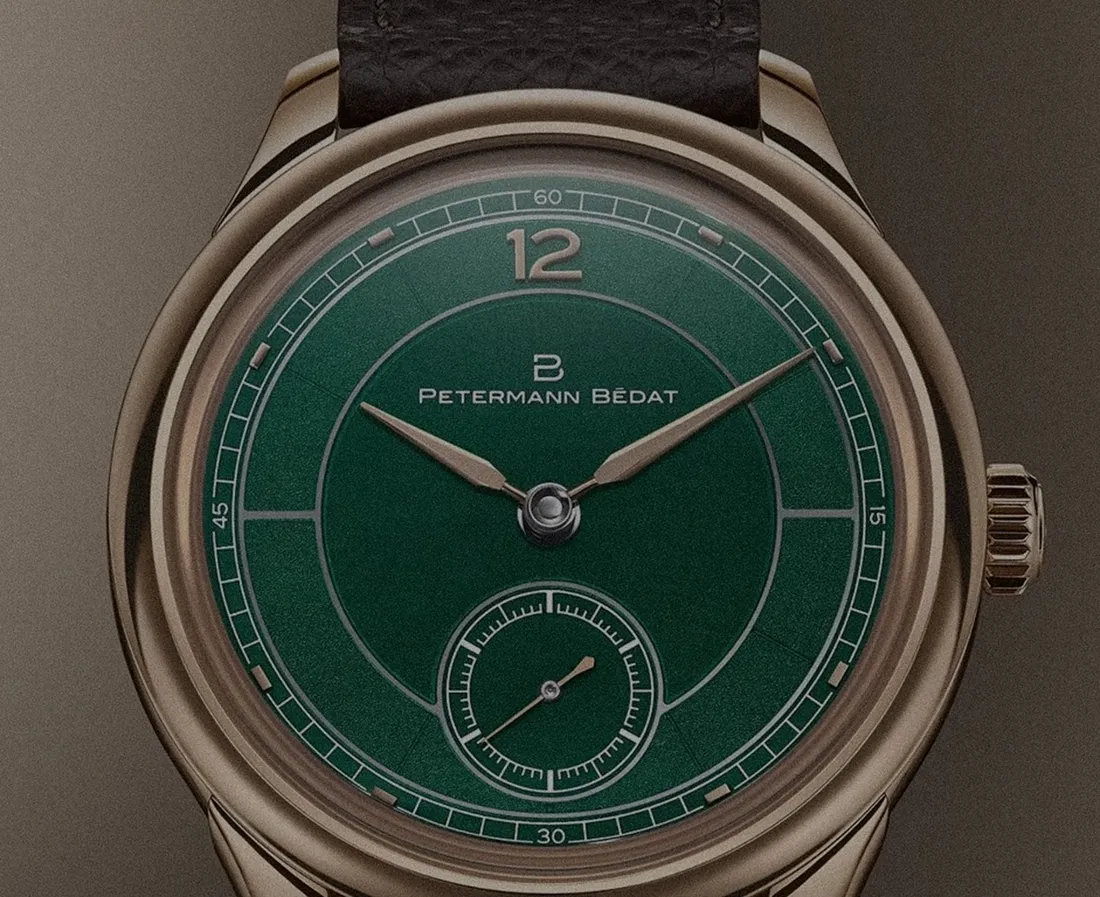
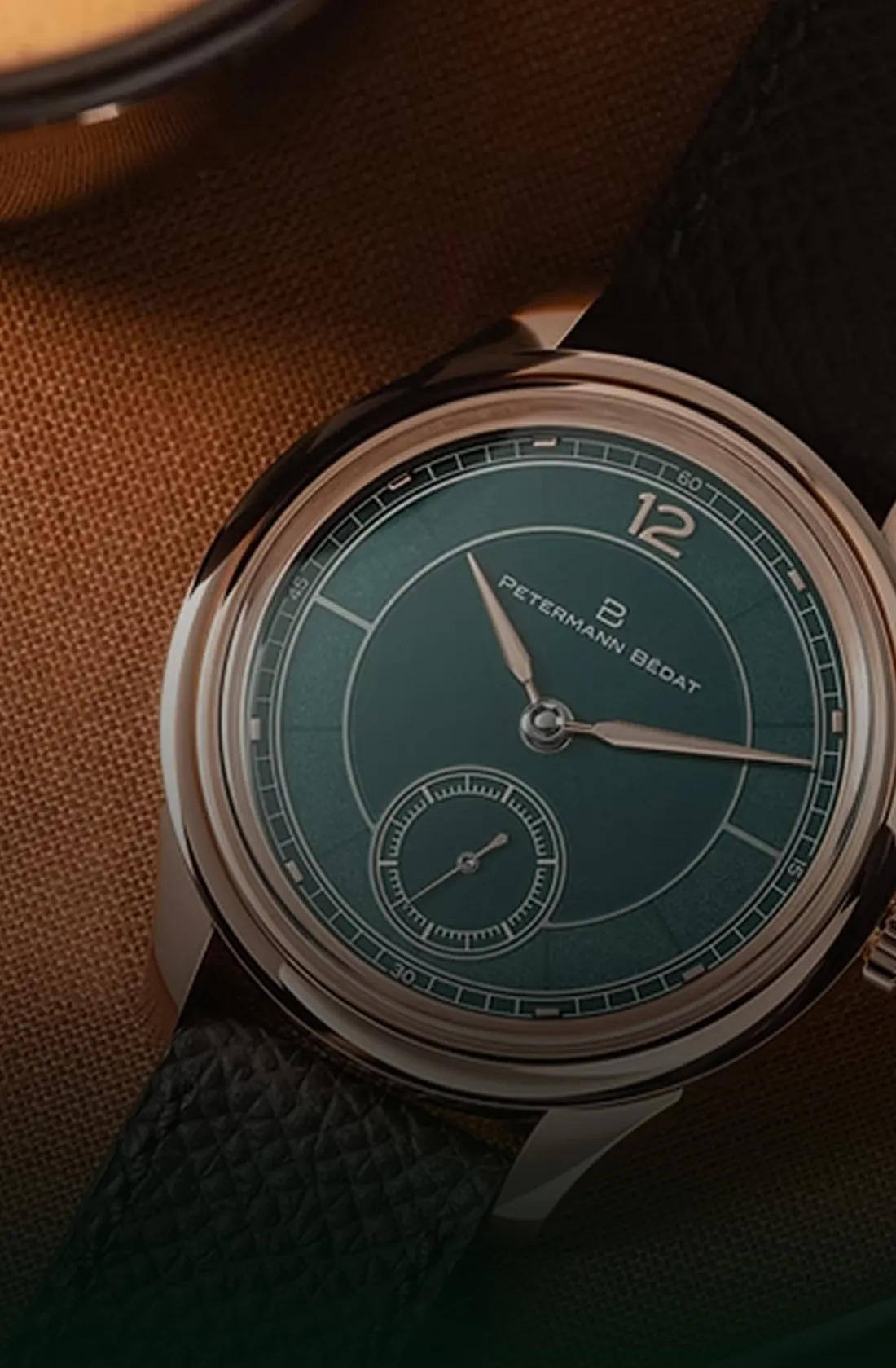
In the workshop's two previous watches the dial was semi-open; part of the movement was visible from the front. In the Reference 1825 there is a fully closed dial for the first time, and that is a deliberate step towards a quieter side.
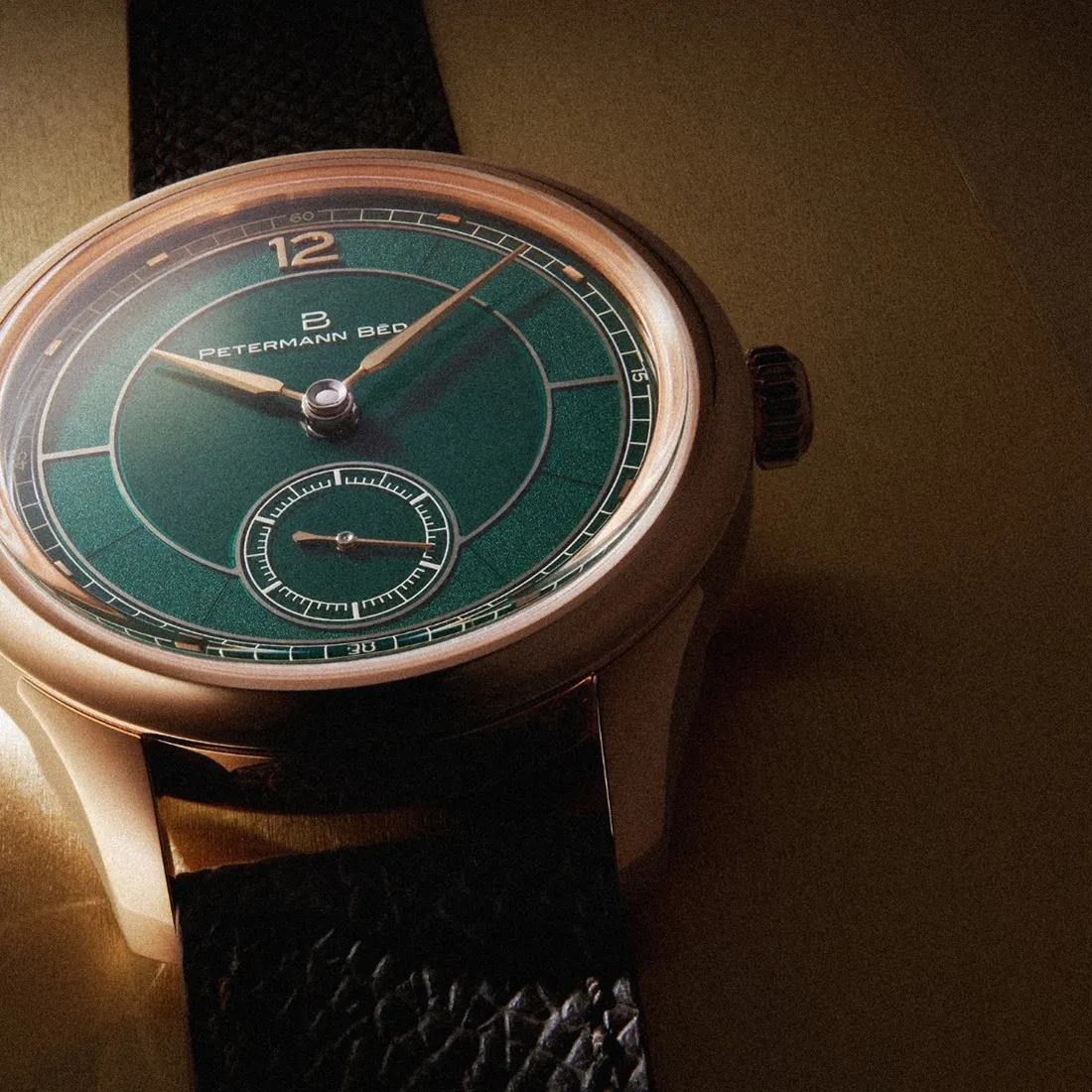
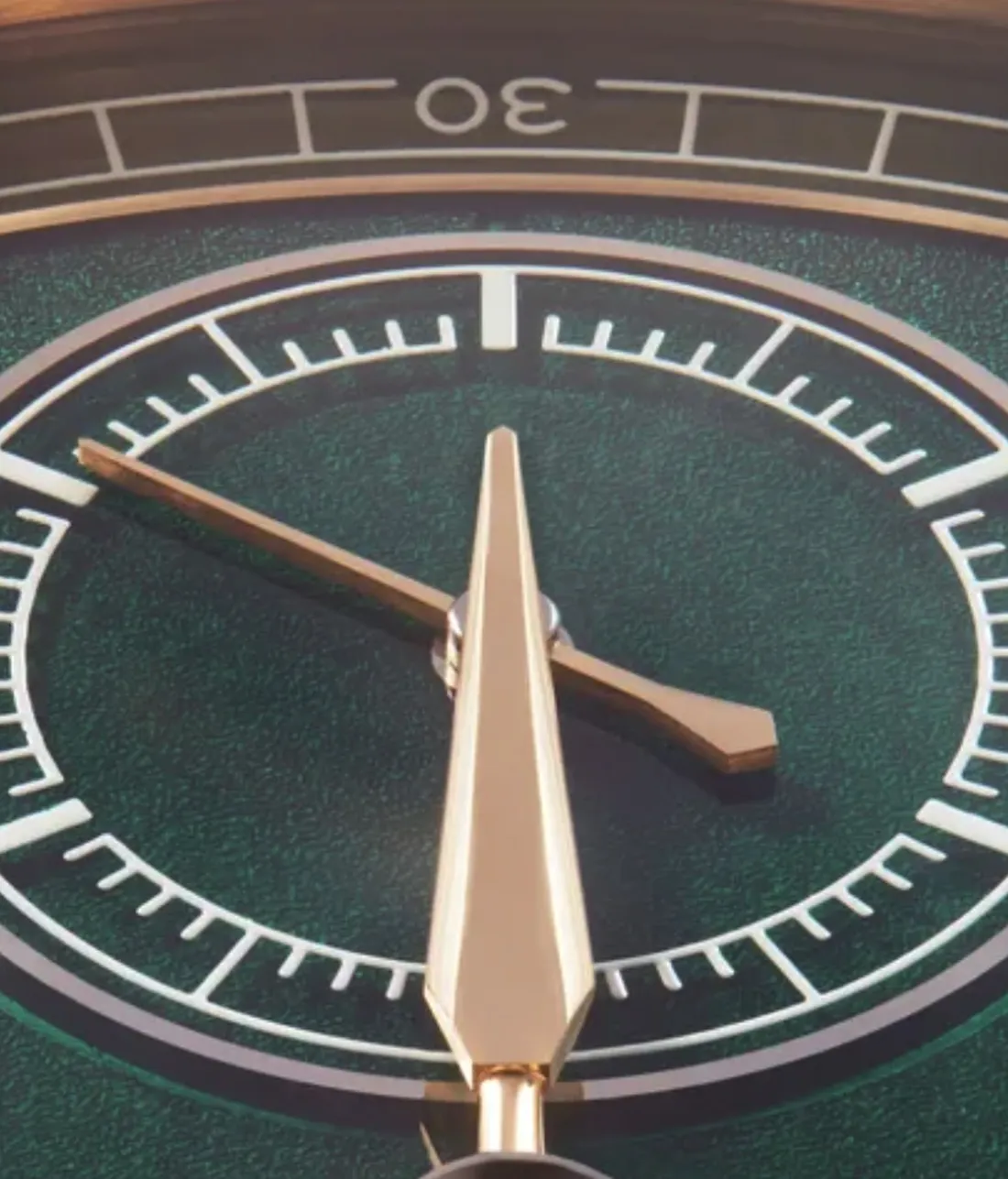
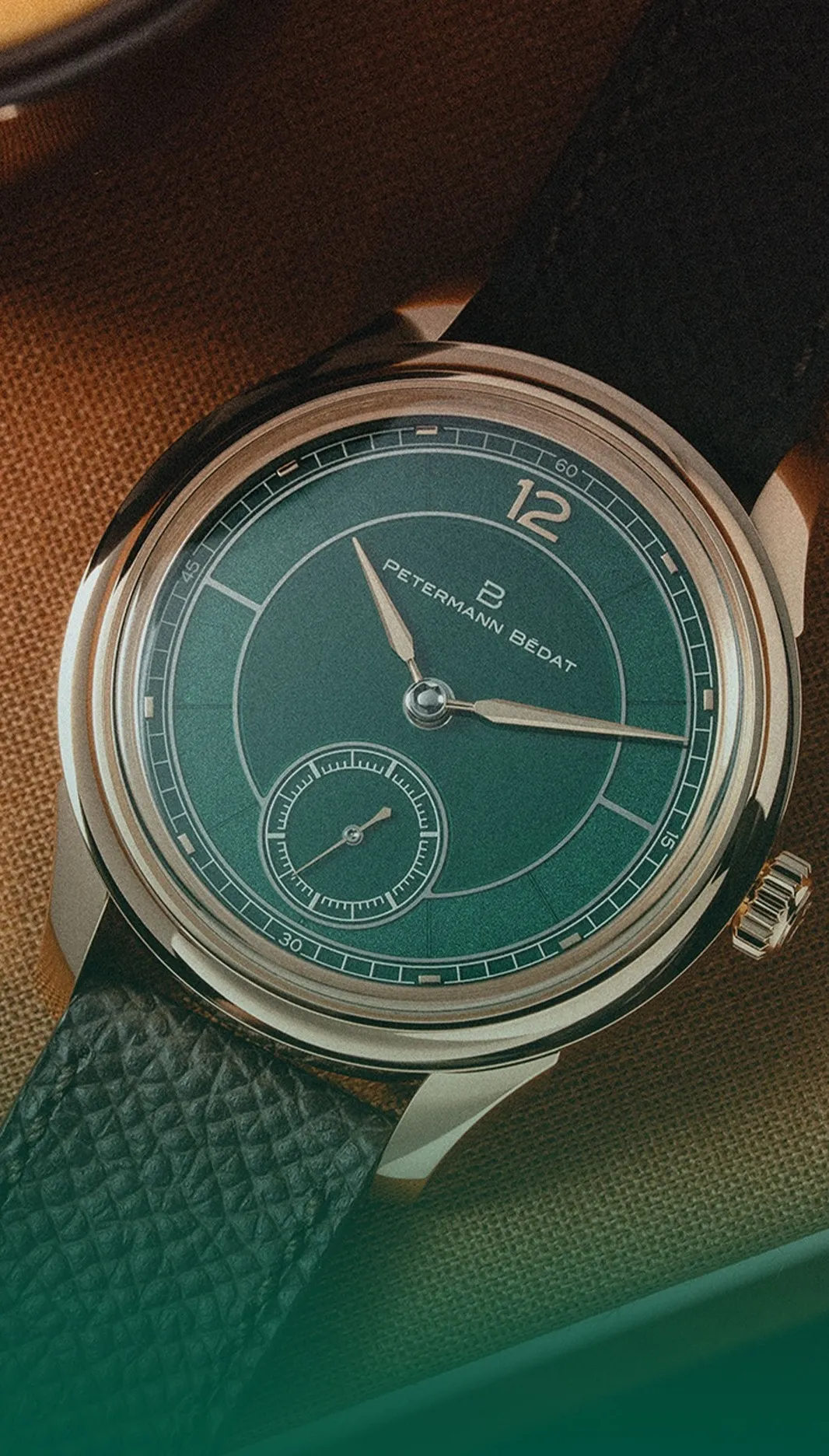
The dial is made by Olivier Vaucher. The plates are in white gold and a texture is applied by laser directly onto the surface. Translucent green grand feu enamel is laid over it.
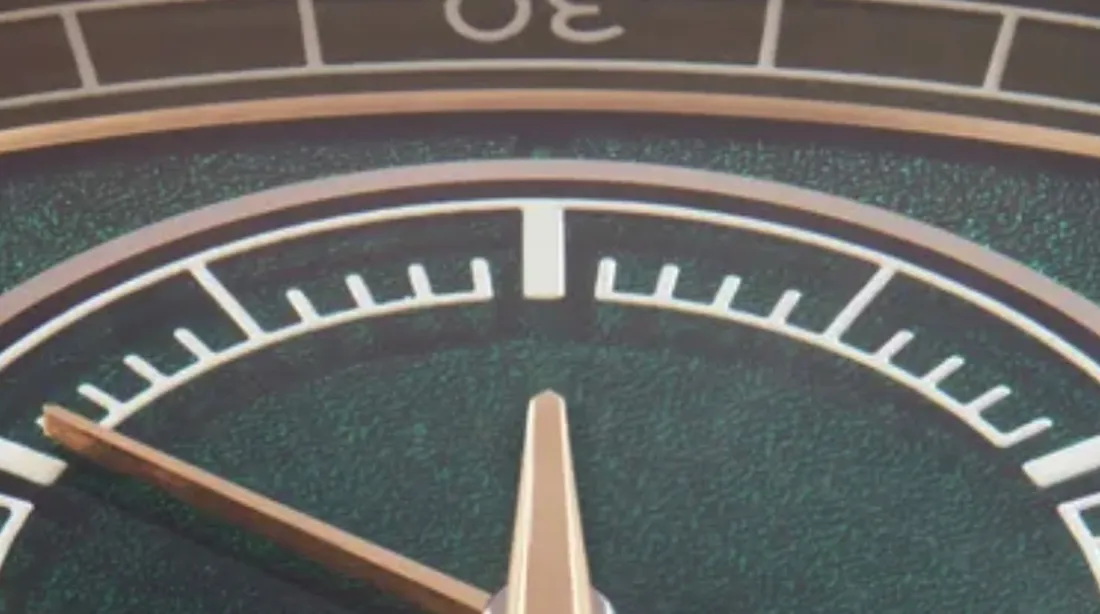
The real trick here is this: because the enamel is translucent, the laser texture beneath it is not lost, it shows through the enamel. So the colour of the dial is not a single green; light enters the enamel, strikes the gold texture and comes back. Turn the dial and the green darkens and lightens, because what you are seeing is not a painted surface but a landscape under glass.
The structure is a sector dial: a circle at the centre, a separate ring around it, a fine border between the two. That arrangement is the mark of the dials of the 1930s and was invented to raise legibility. The twelve index and the hour markers are polished and set onto the dial individually; the minute and second scales and the brand's logo are printed. The hands are in rose gold and finished by hand.
The List of Finishing
To understand where the price goes in an independent watch you have to look at the finishing list. The workshop's own list runs as follows.
Côtes de Genève on the bridges with hand polished chamfers. Sun graining and perlage on the main plate. All the steel parts bevelled, polished and black polished by hand. Circular graining on the wheels, their arms bevelled and polished by hand. Circular graining on the balance. Snail graining on the barrel and the ratchet wheel.
The most expensive item on that list is the black polishing. You flatten and burnish a steel surface until it holds no scratch in any direction; it mirrors light from one particular angle and looks completely black from another. It is done by hand, it cannot be done by machine, and a single mistake sends the whole part back to the beginning.
The case is in rose gold, thirty eight millimetres across and ten point one five millimetres tall including the crystal. The crystal is box sapphire with an anti-reflective coating. The buckle is rose gold.
How Many, and When
The limited edition figure is stated here in an unusual way. The workshop gives no number; instead it writes this: limited by our production in four years, 2026 to 2029.
That sentence is not a marketing game but an admission of capacity. A workshop of two people can only finish a few dozen watches a year, and some of those go to the earlier references. So the reason they give no figure is not mystery but honesty: they do not know exactly how many they can make either.
For comparison: the same workshop's Reference 2941 was limited to just ten pieces in a platinum case.
And one last note. In September the 2026 nominees for the GPHG will be announced. The Reference 1825 is a watch without a complication, with three hands, an enamel dial and hand finishing; which is to say it sits squarely in the jury's classical categories. It is also worth remembering that this workshop has been up there twice already. We will not make predictions, but we will be watching the list.