As the salt wind of the South Pacific swept across the deck of the research boat, the only sound accompanying the waves drifting through the air was the clink of two coffee cups on the wooden table.
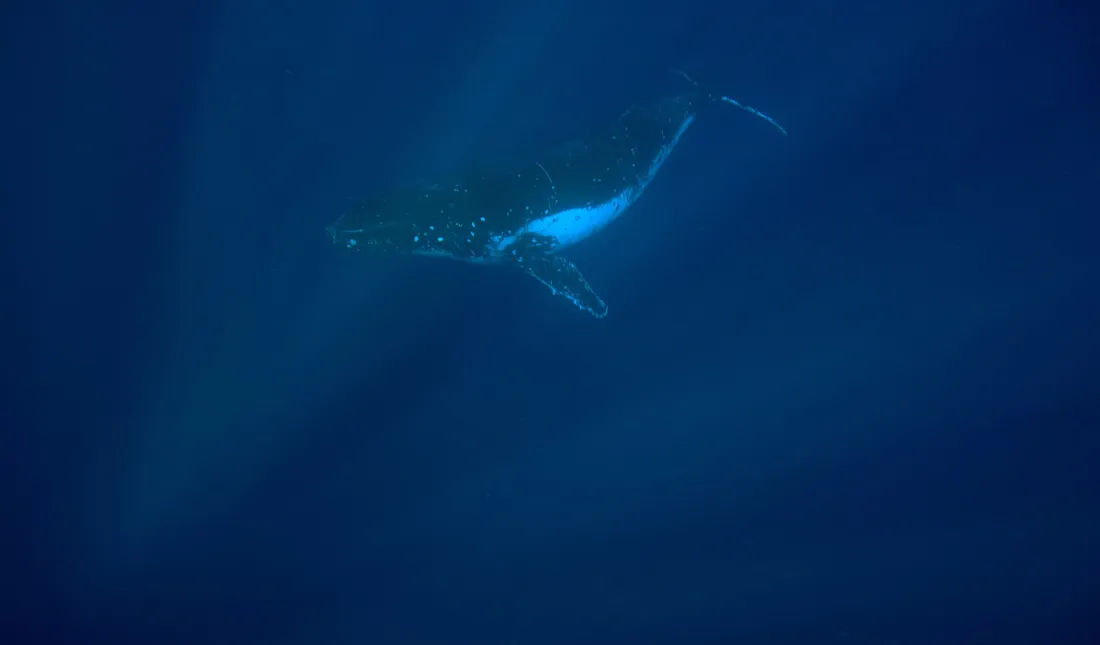
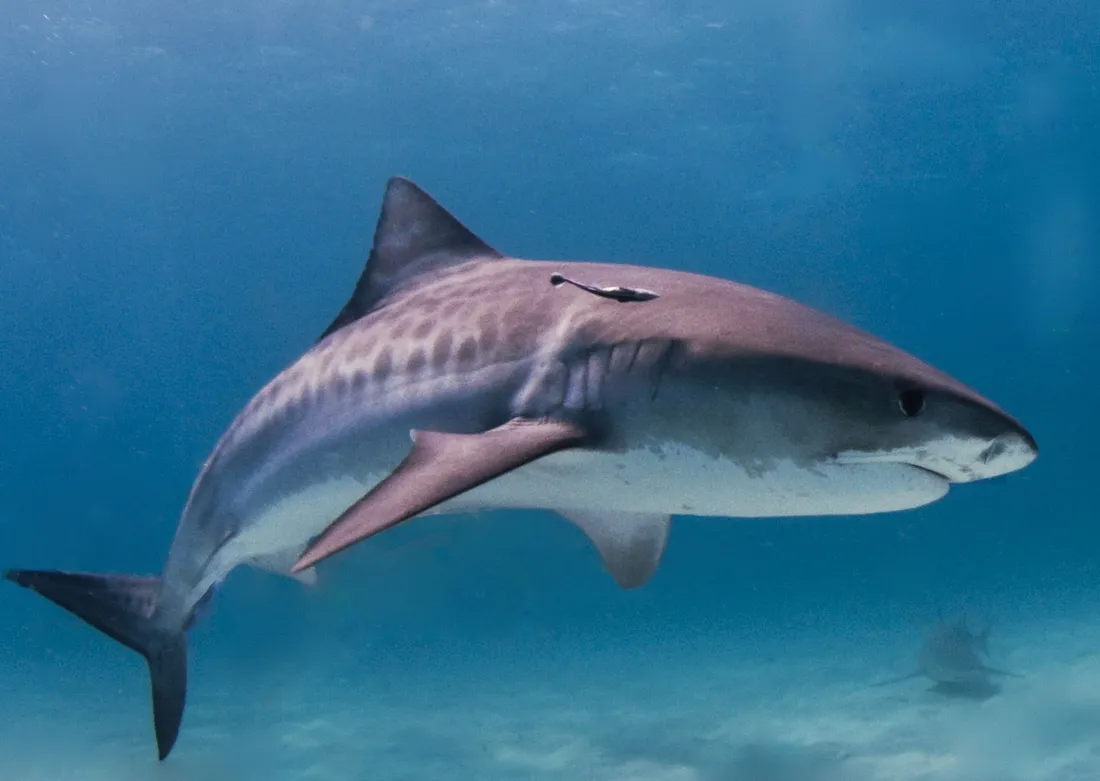
Two different scientific worlds were sitting at that table. One was a marine biologist who had given his life to the great marine mammals of the open sea, and who in October 2017 in the Cook Islands had lived through those unbelievable ten minutes in which a twenty three tonne humpback whale protected him from a tiger shark. The other was a researcher who had given her life to the most delicate and most transparent organisms in the ocean, the jellyfish.
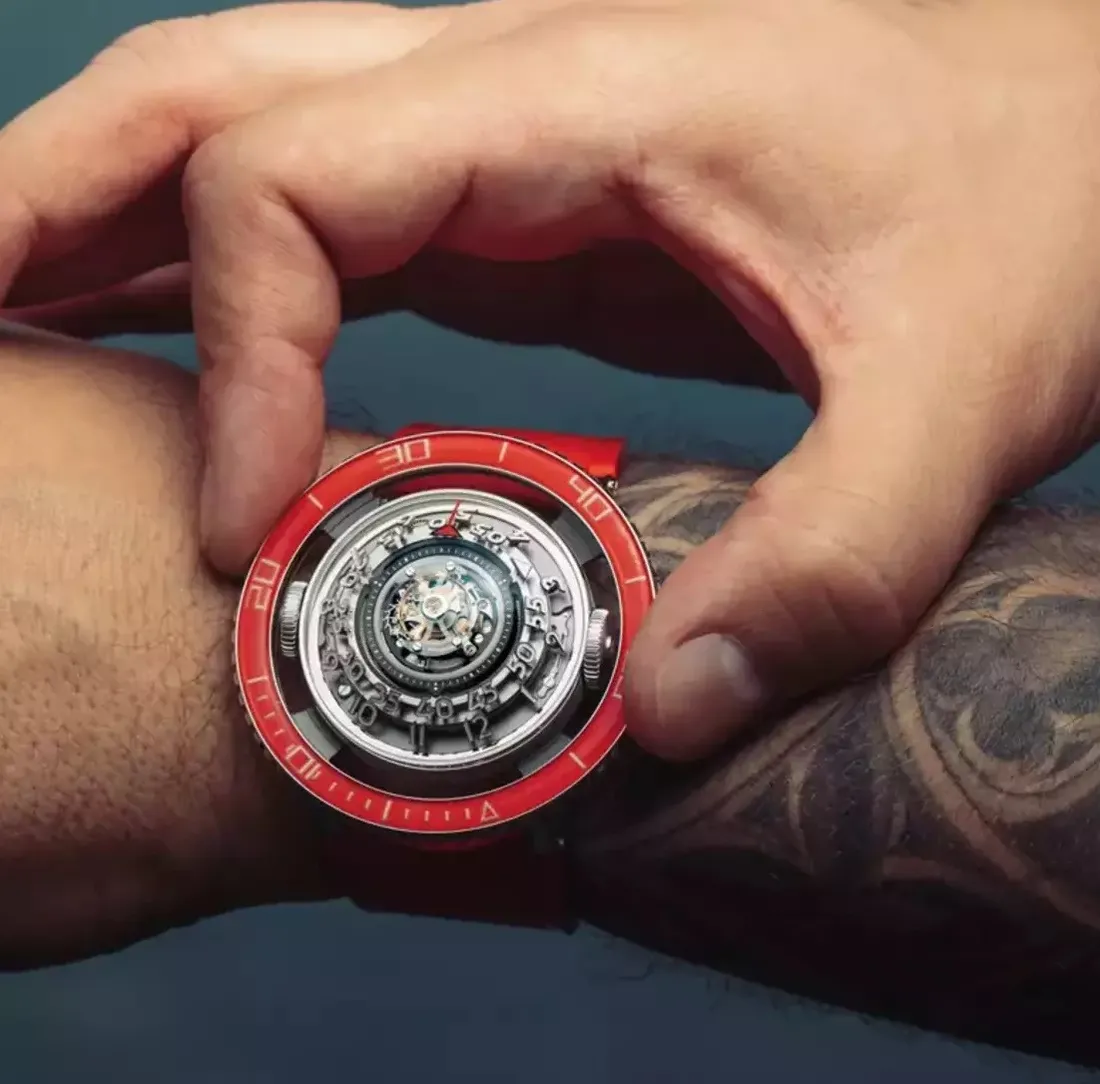
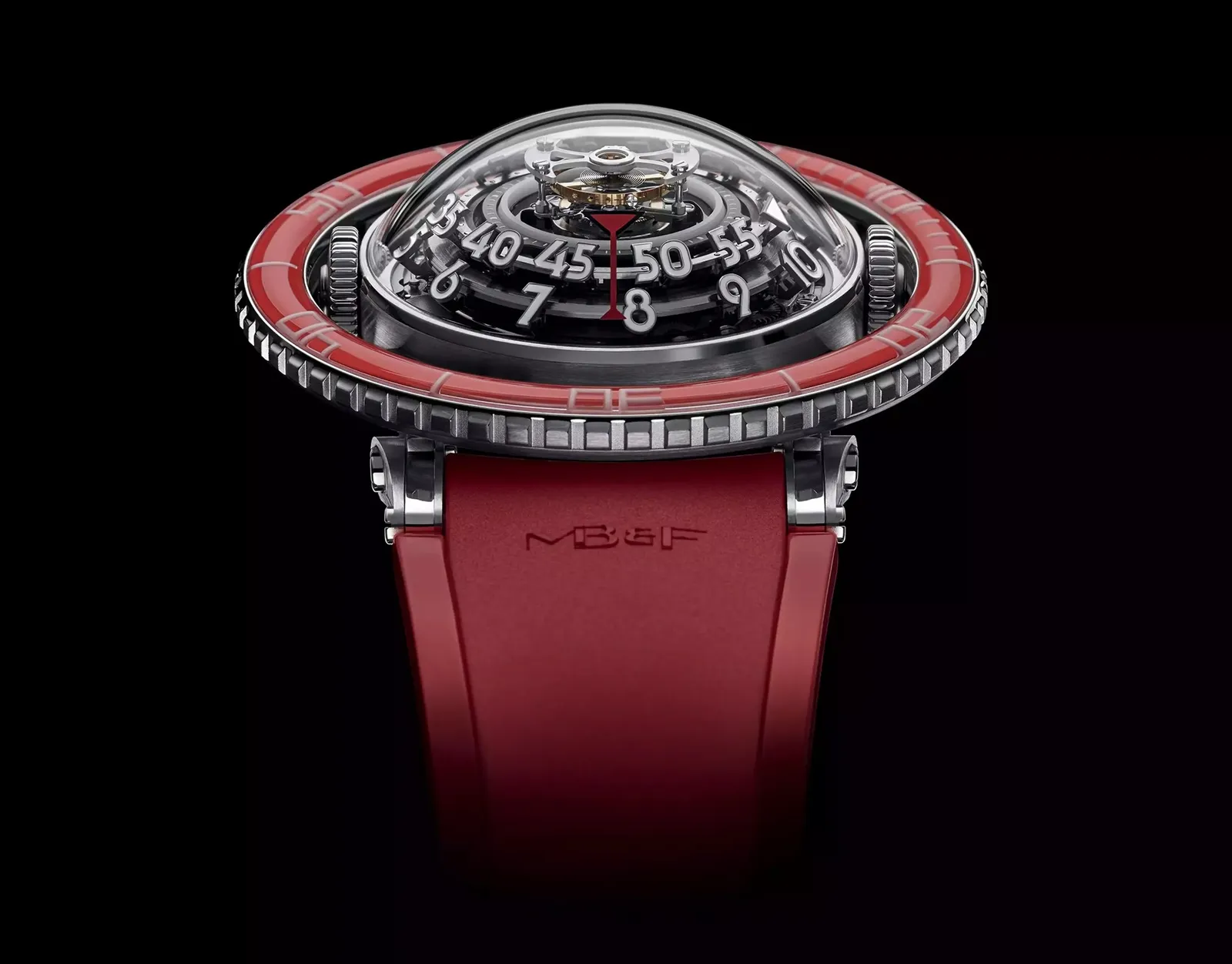
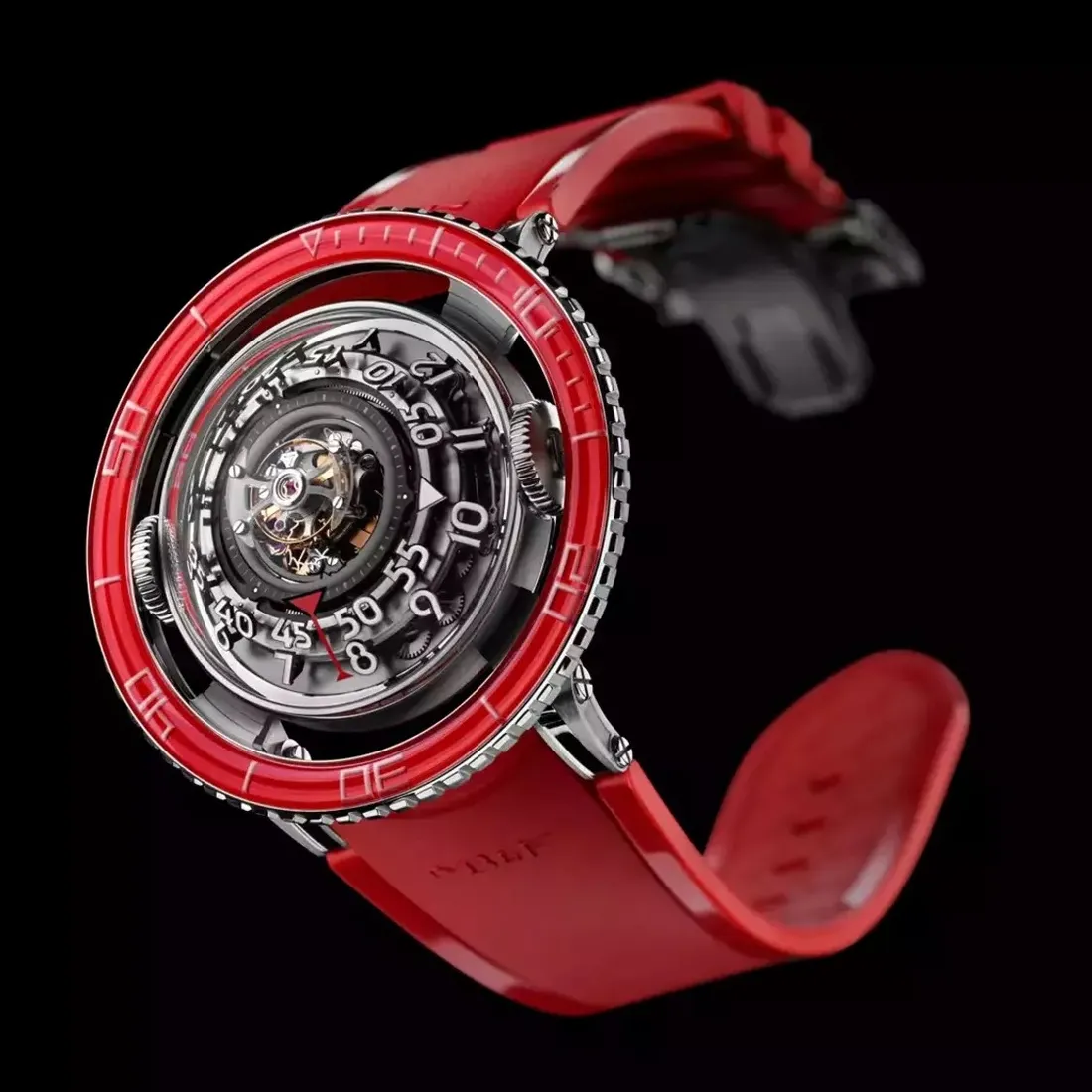
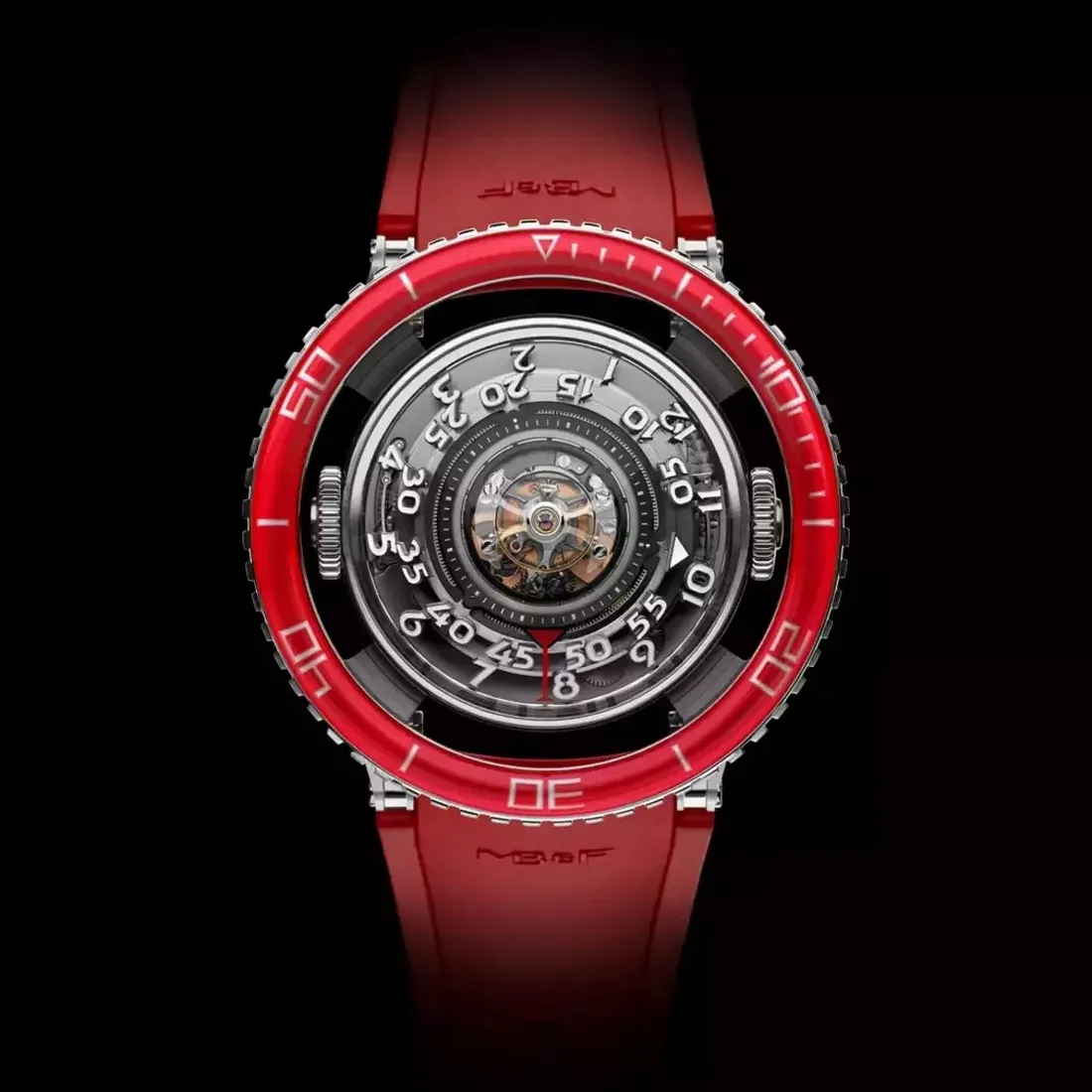
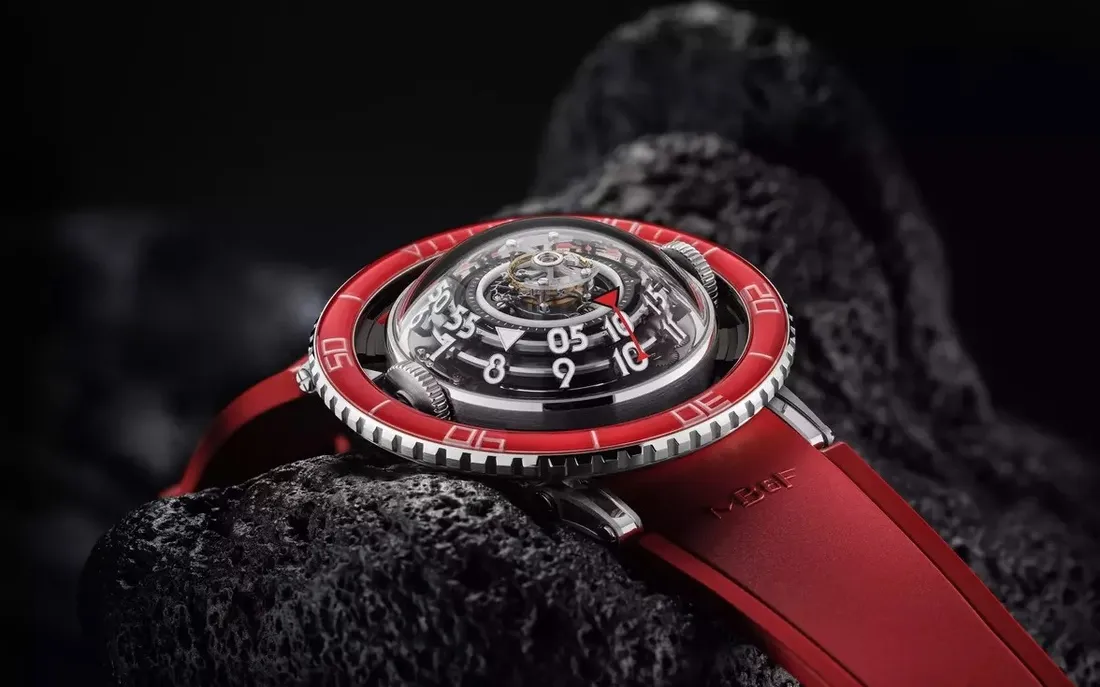
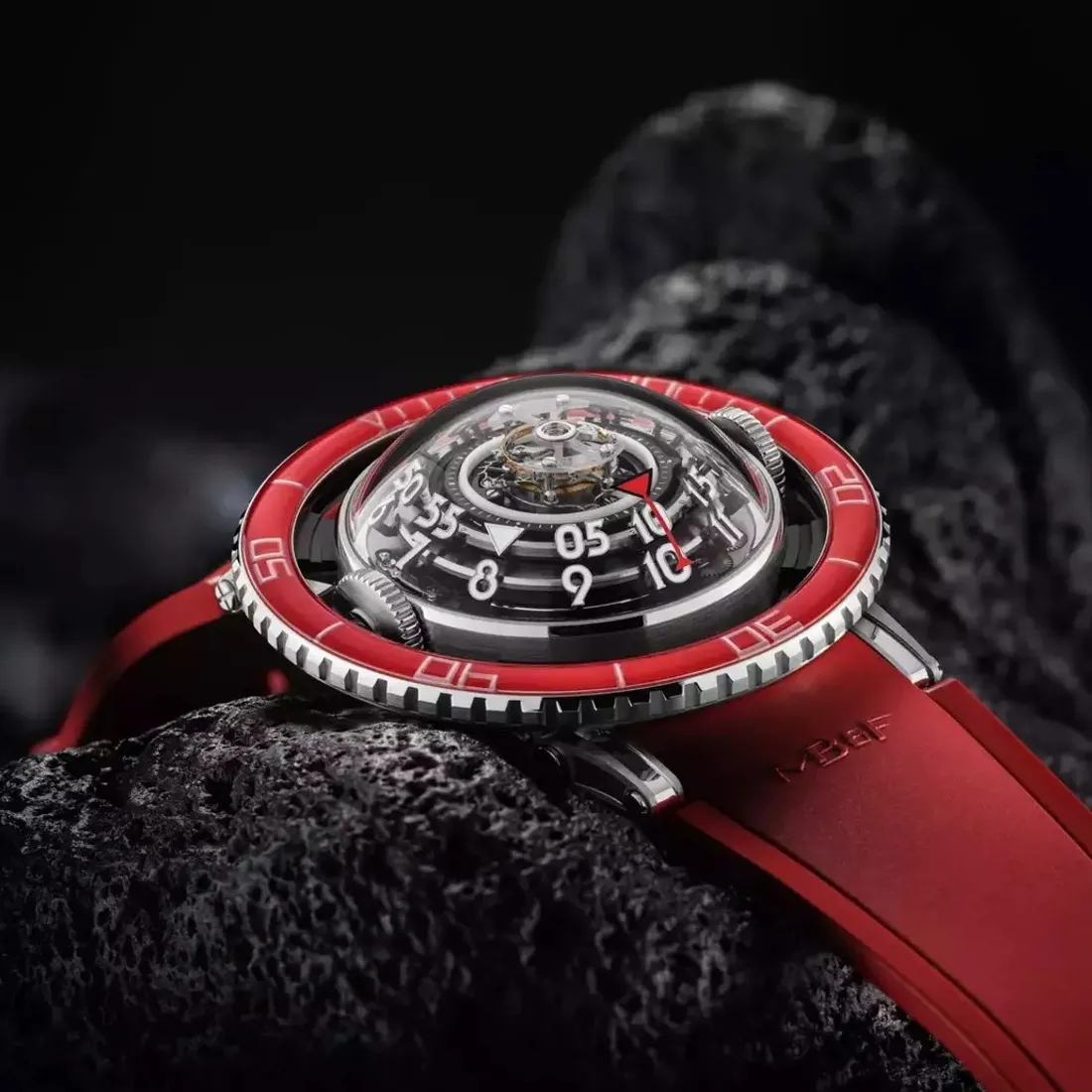
The eyes of both biologists were on the object lying on the table, whose form is almost that of a radial jellyfish: the MB&F Horological Machine N°7 Aquapod.
I. The Signature of Mercy: the Whale, the Shark and the Human
Touching the domed sapphire crystal of the watch with a fingertip, the jellyfish specialist asked about that day.
format_quote"Tell me about that day again. The scientific world is still arguing over whether a humpback whale protecting a human from a tiger shark is altruism, or a blind protective instinct that evolved against killer whale attacks."
Jellyfish Biologist
Both sides of the argument hold data. More than a hundred recorded cases exist of humpback whales interfering with killer whales, and in most of those the animal being protected was not even a humpback calf: seals, sea lions, a grey whale calf, even a sunfish. So the behaviour crosses the boundary of its own species. The explanation offered is this: the instinct to protect a calf is so strongly fixed that a humpback hearing the call of a killer whale intervenes without distinguishing who the target is.
The other side says it is too consistent to be a side effect. Because the animal that intervenes takes a risk, spends energy, and gains nothing in return.
The size of the bill is also at the centre of the argument. A humpback migrates tens of thousands of kilometres a year, and it makes most of that migration without feeding at all, burning only the fat it stored in the summer months. Every extra movement therefore comes straight out of that store. And in spite of that, when it hears the calls of a pod of killer whales it enters an intervention that can last for hours, surfacing and striking the water with its pectoral fins. An animal with a great deal to lose entering an affair in which it has nothing to gain is an item evolutionary accounting has trouble explaining.
The humpback biologist smiled and fixed his gaze on the wide blue.
format_quote"Let the academy invent cold evolutionary terms for it. What I saw that day, in the way that twenty three tonne mass took me under its chest and pushed me gently towards the surface, was something else: that great phenomenon of solidarity and mutual aid which the Creator of mercy has inscribed among living things. The whale was not performing an instinct there but the law of mercy at the heart of existence."
Humpback Whale Biologist
II. The Dance of Micro and Macro: Phytoplankton, Whales and the Human
Looking at the vertical construction of the watch and at the flying tourbillon cage rising at its centre, the jellyfish specialist deepened the contemplation.
format_quote"Do you know, that vertical mechanism at the centre of the watch reminds me of the greatest miracle of the ocean. The tremendous collaboration between whales, the largest living creatures on earth, and phytoplankton, which cannot be seen by the eye. When whales feed in the depths and defecate at the surface, the iron and nitrogen released feed the phytoplankton. And those microscopic creatures produce roughly half of the oxygen on our planet and carry an enormous quantity of carbon to the ocean floor. The largest creature feeds the smallest; together the two become breath for the human being. What a tremendous balance."
Jellyfish Biologist
The name of that cycle in the literature is the whale pump. The point is not the fertiliser but its direction: iron is scarce in the lit upper layer of the ocean, and phytoplankton have to live exactly there, because photosynthesis needs light. By feeding at depth and voiding at the surface, a whale carries the nutrient upwards. Carbon travels the other way; dying cells and faecal pellets sink to the floor and hold the carbon there for centuries.
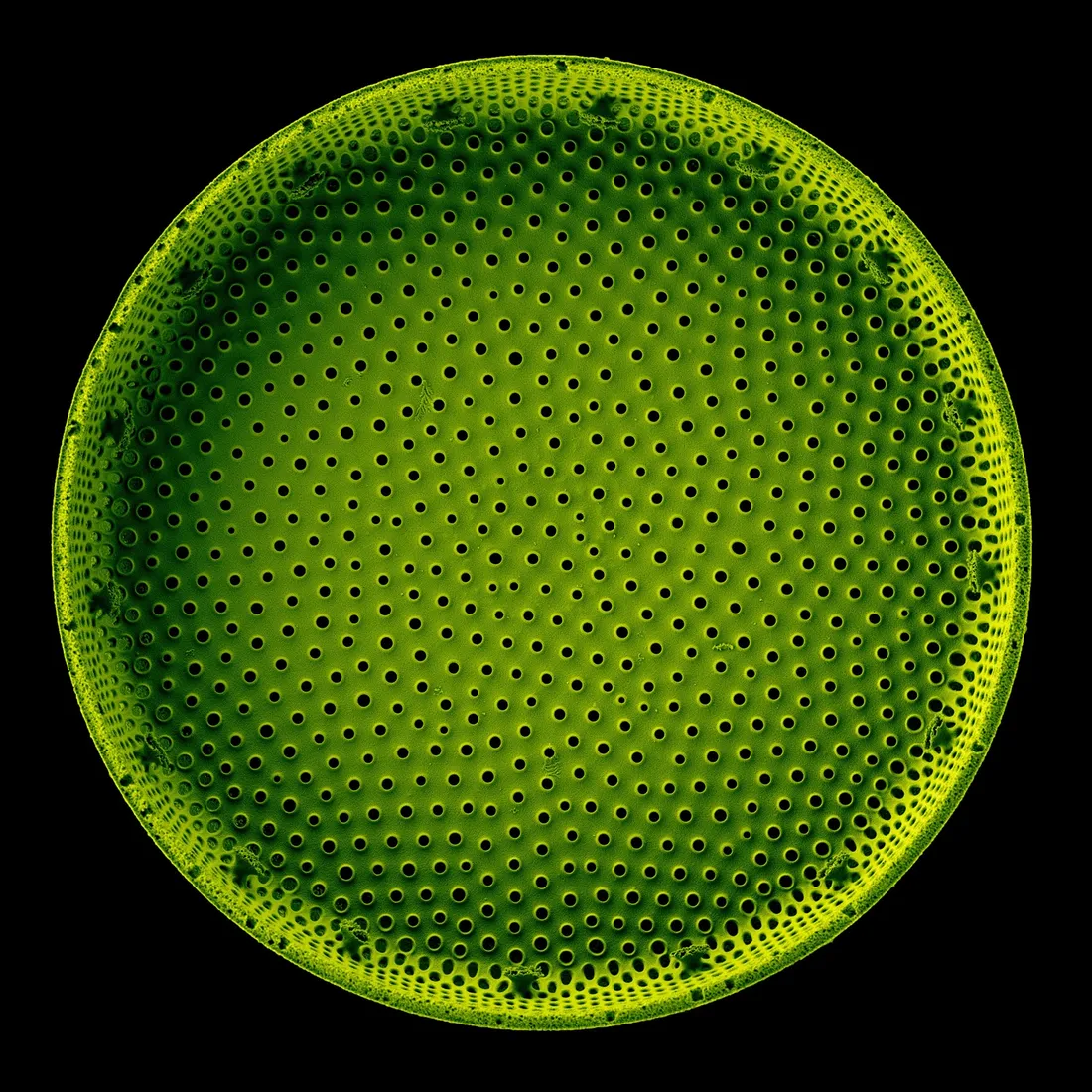
The most widespread group among those microscopic creatures are the diatoms, and their shells are built from silica, the raw material of glass. The diameter of the pores, the distribution of thickness, the order of the lattice: all of it is measured both to let light in and to keep the structure standing. Seen through an engineer's eye this is not a shell but an optimised load bearing system.
The scale of that system is not easy to picture. The total mass of the photosynthesising organisms in the ocean is around one per cent of the mass of the plants on land; and yet they carry out roughly half of the photosynthesis on the planet. The reason is turnover: a forest tree lives a hundred years, a diatom a week. The same mass renews itself dozens of times in a year. And with every round of renewal a quantity of carbon falls downwards.
The last link of the cycle is the whale itself. When it dies its body sinks to the floor and holds tens of tonnes of carbon there for centuries; that descending body is called a whale fall, and a community of creatures that feed on nothing else assembles around it. So the animal carries nutrient upwards while it lives, and carbon downwards when it dies. Two directions, one creature.

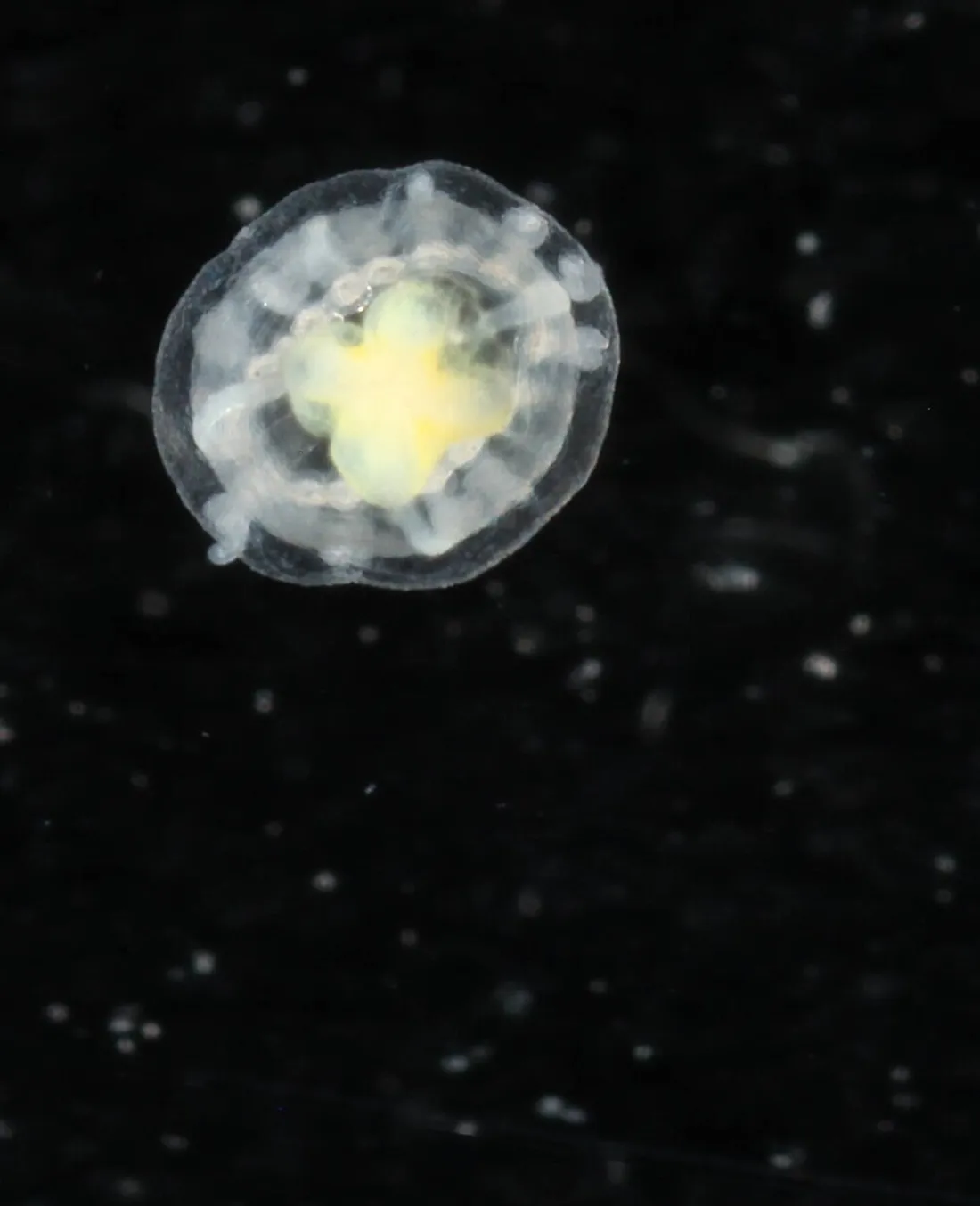
format_quote"Very true. And look, are the jellyfish not the same? There is a species biology calls the immortal jellyfish, Turritopsis dohrnii; it reprograms its cells through transdifferentiation and can go back from the adult stage to the polyp stage. Geneticists and medicine study that phenomenon in cell renewal and in cancer research. The human mind opens the doors of medicine and science through these small creatures."
Humpback Whale Biologist
The subtlety here is this: Turritopsis does not defeat death, it reverses the direction of development. A cell that reprograms itself leaves one mature cell type and passes into another. It has no immunity at all against predators, disease or physical damage; all that is understood is that in this species the one way road called ageing is not one way. Reprogramming human cells backwards in the laboratory asks exactly that question.
A creature no more than a millimetre across can erase the past of a cell. A mechanism about a centimetre across can count time for seventy two hours. As the scale shrinks the work does not get easier, it gets harder.
III. The Dark Chamber: Two Lights Appearing at the Same Moment
The same conversation continued on land two weeks later. This time the table was in the café of a deep ocean aquarium; behind the glass tens of thousands of tonnes of water dropped a blue brightness onto the coffee cups. Both of them finished their coffee and began to walk the galleries.
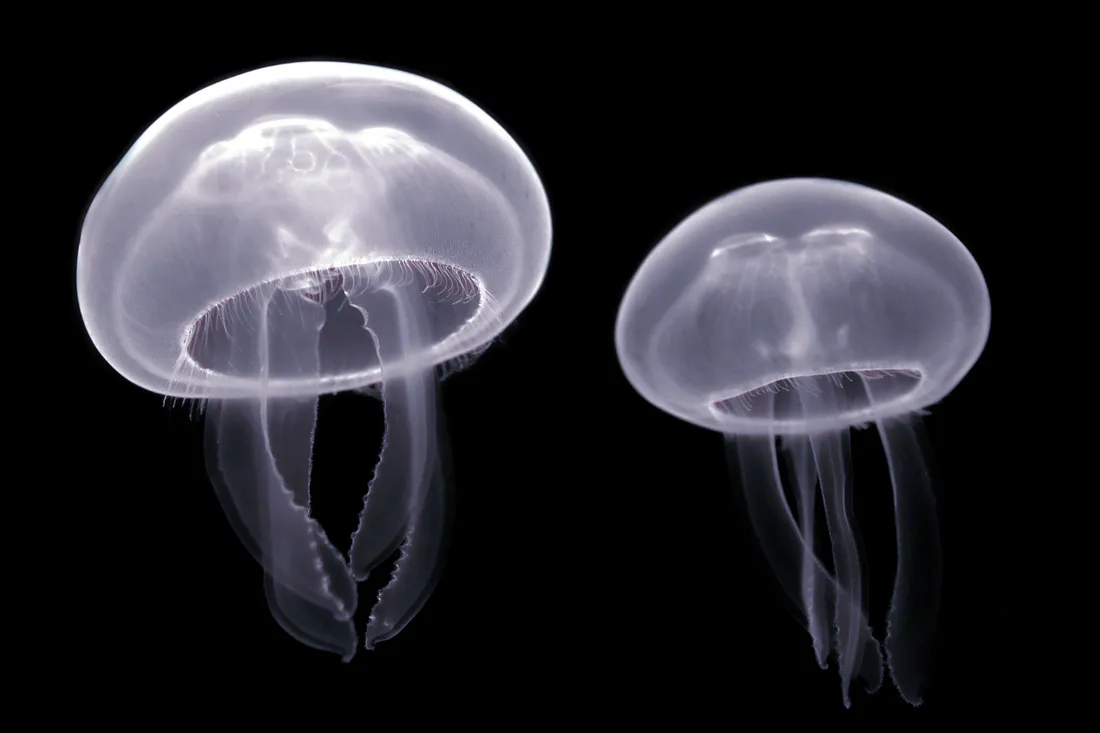
The first halls were given to surface waters. Aurelia aurita, the moon jelly, was pulsing slowly in a cylindrical tank; the four horseshoe shaped organs inside its transparent bell, the gonads, look like a coat of arms when seen from above.
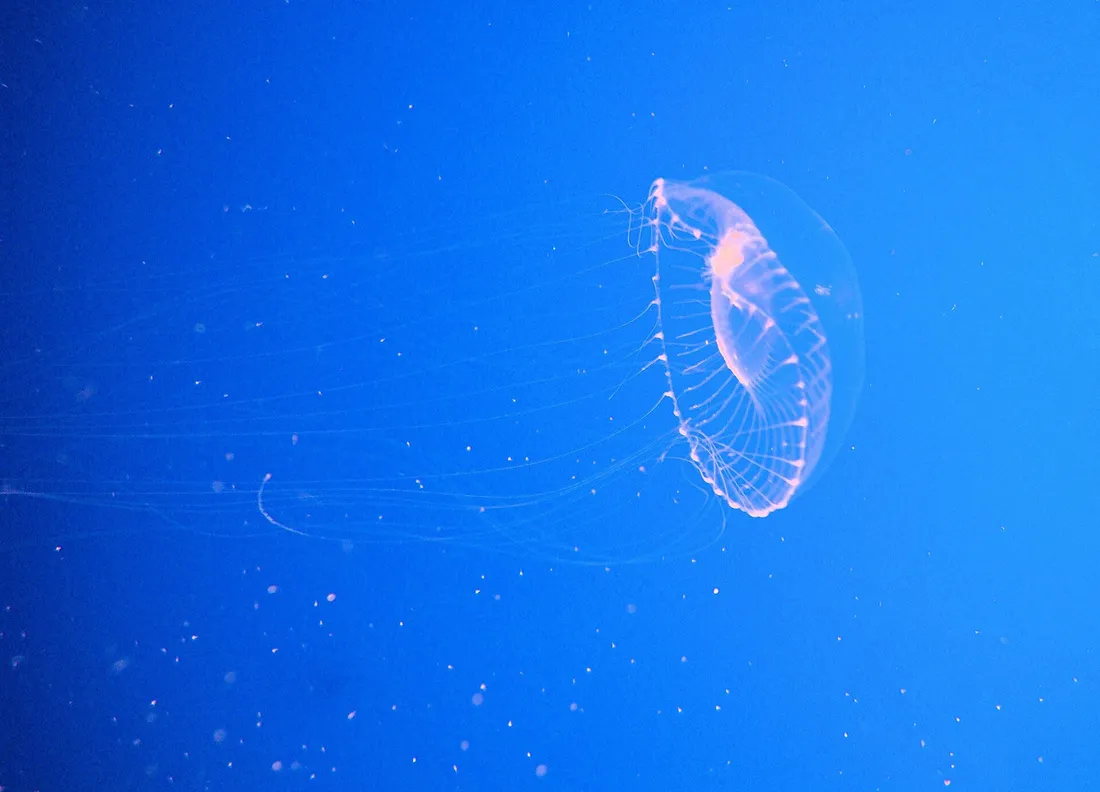
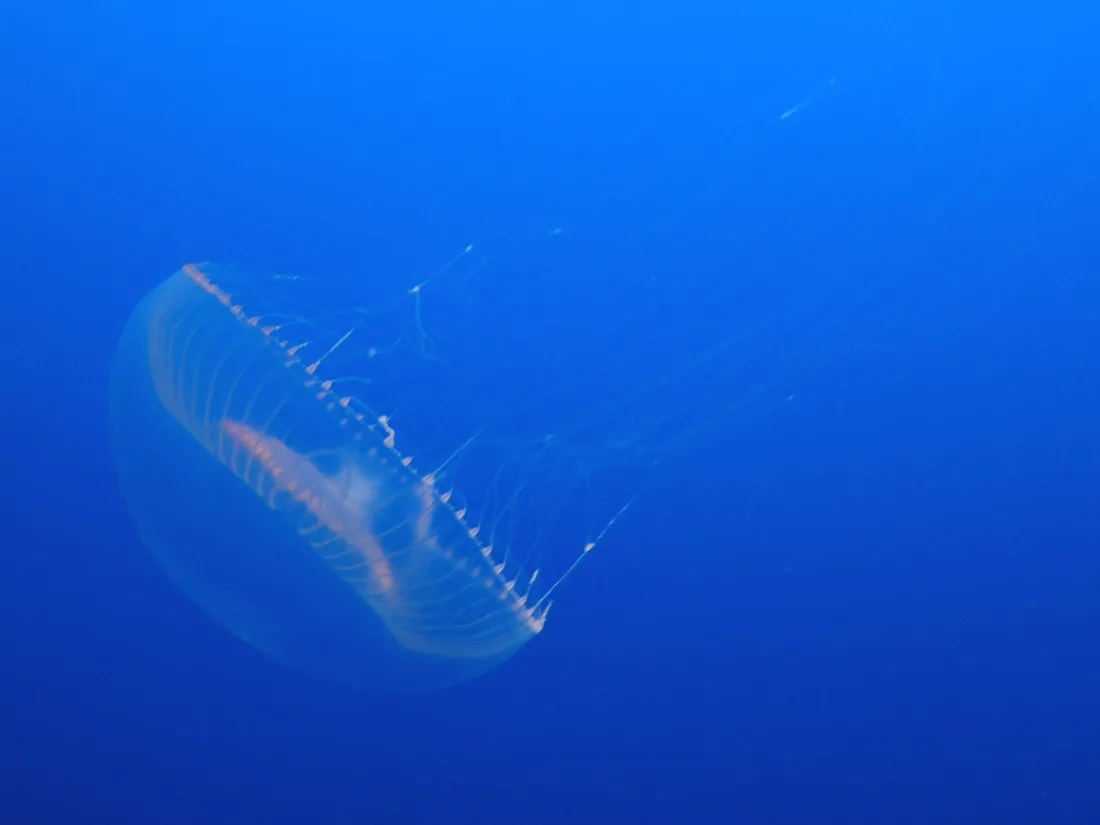
In the next tank was the jellyfish biologist's own subject: Aequorea victoria, the crystal jelly.
format_quote"I want to correct something straight away, because it is very widely misunderstood. This creature is not an inhabitant of pitch dark depths; it lives in waters near the surface along the northeastern coasts of the Pacific. And it does not produce its light with the firefly pair of luciferin and luciferase. Inside it there is a photoprotein: aequorin. Its substrate, coelenterazine, is already waiting bound to the protein. The only thing missing is calcium. The moment a calcium ion binds, the coelenterazine is oxidised and a blue photon comes out at about four hundred and seventy nanometres."
Jellyfish Biologist
The most beautiful part comes after that. Before the blue photon gets out it strikes a second protein: green fluorescent protein, GFP. GFP swallows the blue and gives it back as green at about five hundred and nine nanometres. That is why the creature looks green from outside.
The researcher who isolated these two proteins from the same species in 1962 was Osamu Shimomura, and GFP is today one of the most used instruments in biology: attached to any protein inside a cell, it makes that protein visible in living tissue. The work became the subject of the 2008 Nobel Prize in Chemistry. Which is to say a jellyfish's method of making itself visible turned into the human method of making its own cells visible.
At the end of the gallery there was a curtain, and on it a single warning: your eyes will need two minutes to adjust to the dark.
When they went in they saw nothing at first. Then two things appeared at the same moment.
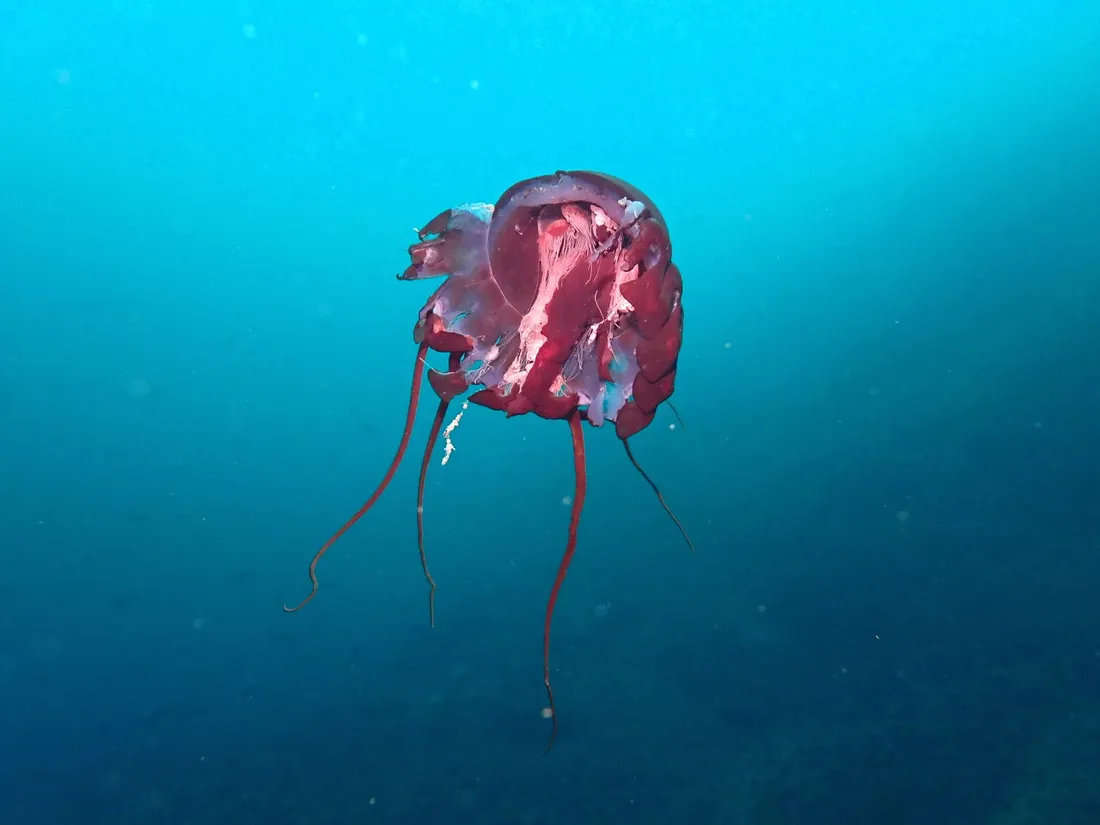
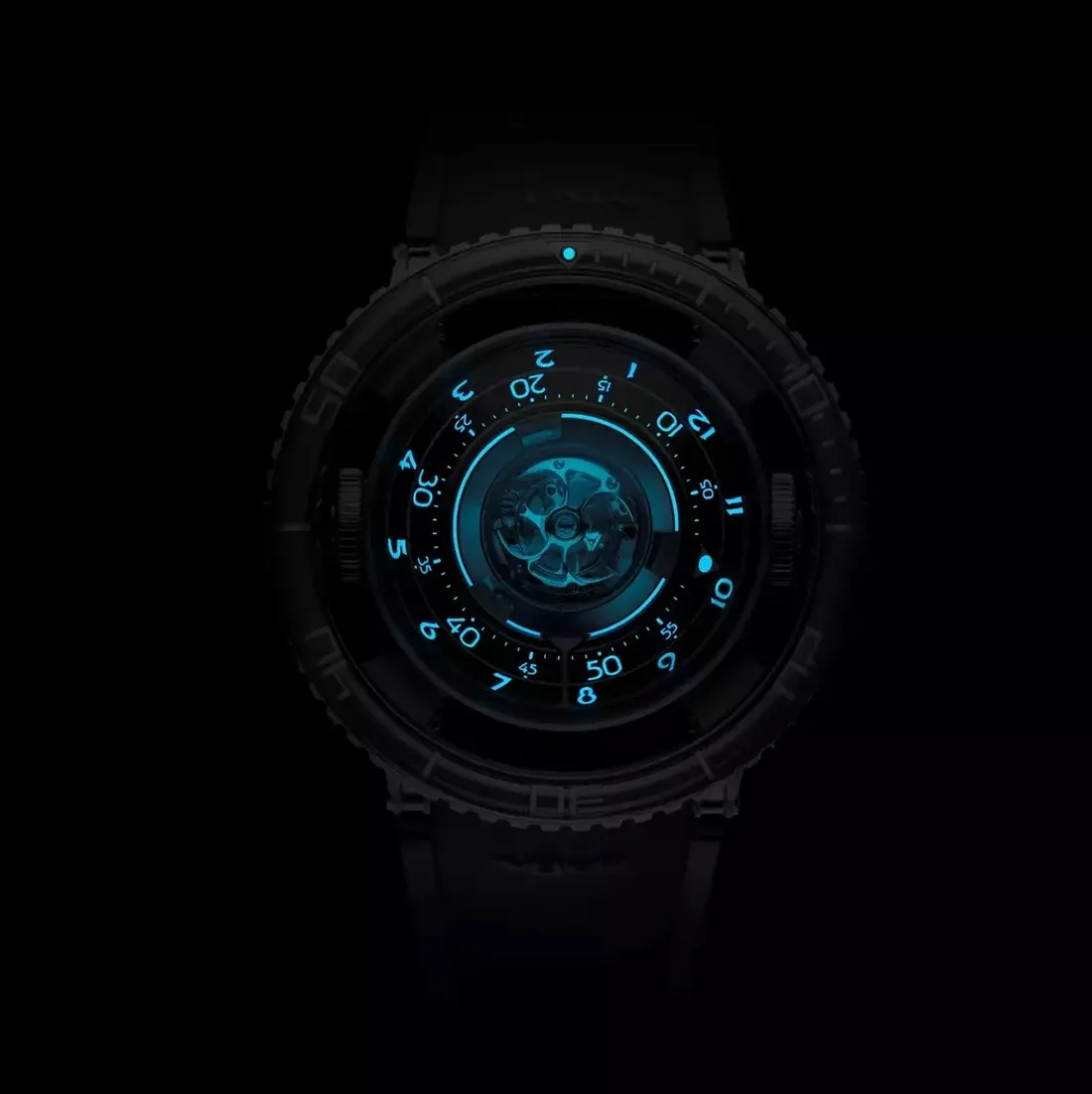
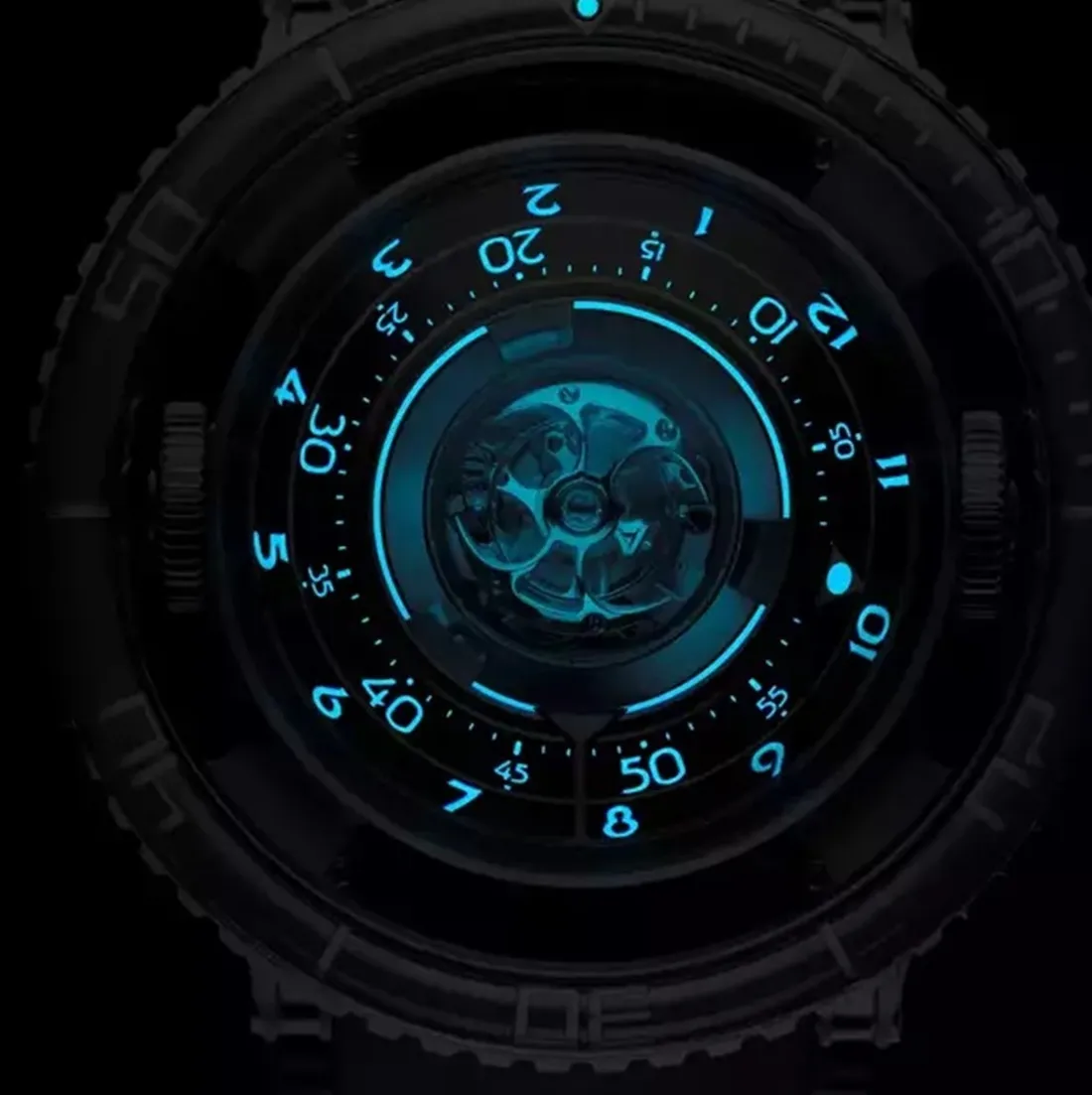
The first was in the tank. The inhabitants of the deep water chamber, the dark red pigmented Periphylla periphylla and its relatives, emerged out of the darkness as a pale blue halo. The second was on the wrist of the humpback biologist. The Aquapod, the watch they had until that day looked at only as a mechanism, was burning with a cold blue light on the numerals of the dial and around the tourbillon.
The reason for that red pigment is understood exactly here. Red is the colour seawater swallows in the first ten metres; which is to say at five hundred metres down there is no such thing as red light. A red animal cannot reflect colour there, and so it looks black. The reason so many deep water creatures are red is not beauty but invisibility. And Periphylla's dark red tissue also stops the light of glowing prey inside its own digestive cavity from leaking out: a creature that has drawn a curtain so as not to give itself away while eating.
And in that darkness light also has a defensive language. Another member of the same group, Atolla, releases a wave of blue light that runs around the rim of its bell when it is attacked. The aim is not to frighten the attacker but to call a far larger predator to the spot; it invites the predator of the animal attacking it. Sailors call it the burglar alarm. Which is to say light in the ocean is sometimes a signature and sometimes a summons.
Neither scientist spoke for a while. Then both noticed the same thing together: the colour of those two lights was almost identical.
format_quote"But the mechanisms are not the same, they are opposites. My creature makes its light chemically: a bond breaks and a photon is born. The light is manufactured on demand, no prior charging is needed, and almost no heat comes out. The price is this: every photon spends a molecule. A resource that runs out."
Jellyfish Biologist
format_quote"And the one on my wrist does exactly the reverse. It does not produce that light, it borrows it and gives it back with a delay. The material is strontium aluminate, with europium and dysprosium added into it. Ultraviolet photons arriving by day lift the electrons in the europium ions to a high energy level. The dysprosium opens trap levels in the crystal lattice, and the electrons stay caught there. When darkness falls, the ambient temperature releases them from the traps slowly, and every returning electron gives the energy difference out as a photon. Nothing runs out, it can be charged an endless number of times. But it has to be charged first, and it fades with time."
Humpback Whale Biologist
What raised them both to a state of wonder was not the difference of the mechanisms but the sameness of the result. One is chemistry, the other solid state physics. One spends molecules, the other borrows electrons. And in spite of that both fall into the same narrow band of colour, that stretch between blue and green from about four hundred and seventy to five hundred and twenty nanometres.
The reason is not coincidence but the same answer given to the same problem by two separate laws of physics. Seawater does not transmit all wavelengths equally; red is absorbed in the first ten metres, blue and green travel furthest. So anything that wants to be seen inside water has to use that band. The second reason is in the eye: the human eye adapted to darkness sees with its rod cells, and the rods are most sensitive at about five hundred and seven nanometres. Which is to say this colour is both the one water carries best and the one the eye sees best.
And there was one more parallel, which both noticed at the same moment. A jellyfish produces its light inside its bell; the light spreads outwards by passing through the tissue. The Aquapod's three AGT Ultra panels also stand not on the surface of the case but inside the movement, illuminating the tourbillon from within. Both show their own organ from the inside.
And the real thing the two systems shared was not even the light: both had to keep something in measure. A jellyfish cannot waste a photon, because its molecules are finite. The watch cannot waste energy either, because it has seventy two hours in its spring. In a dark room, one of them alive and one of them not, two objects were practising the same discipline.
IV. Mechanical Anatomy: HM7 Aquapod
Coming out of the dark chamber, the two scientists laid out the technical detail of the watch by comparing it to the anatomy of the ocean.
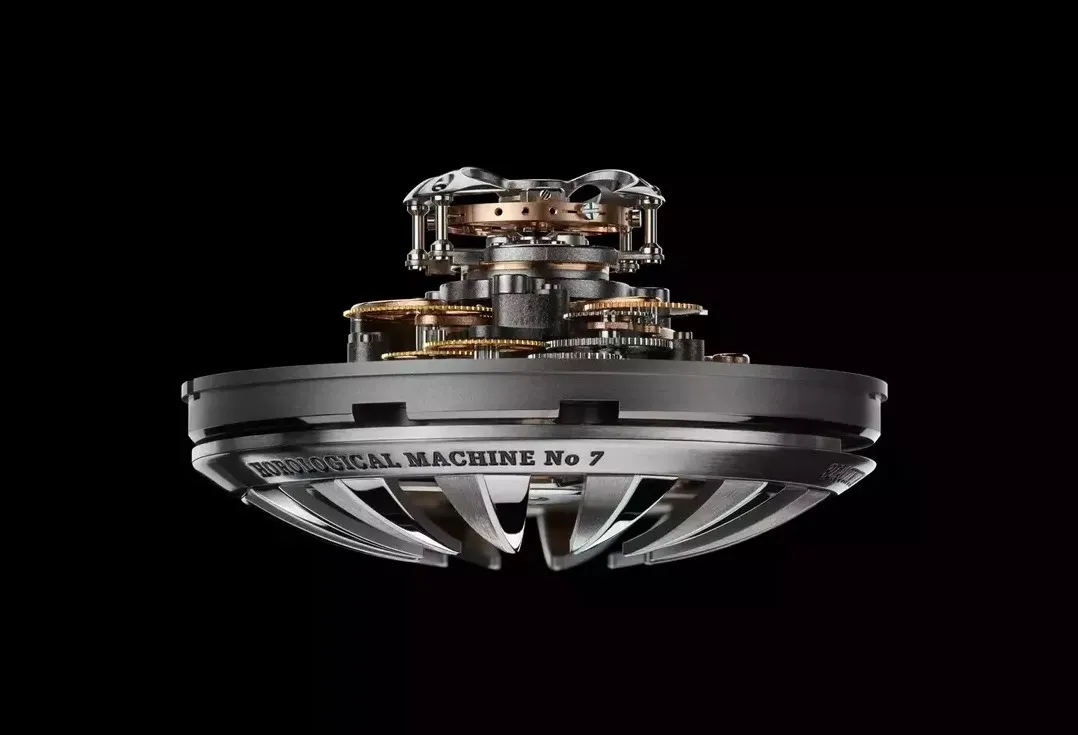
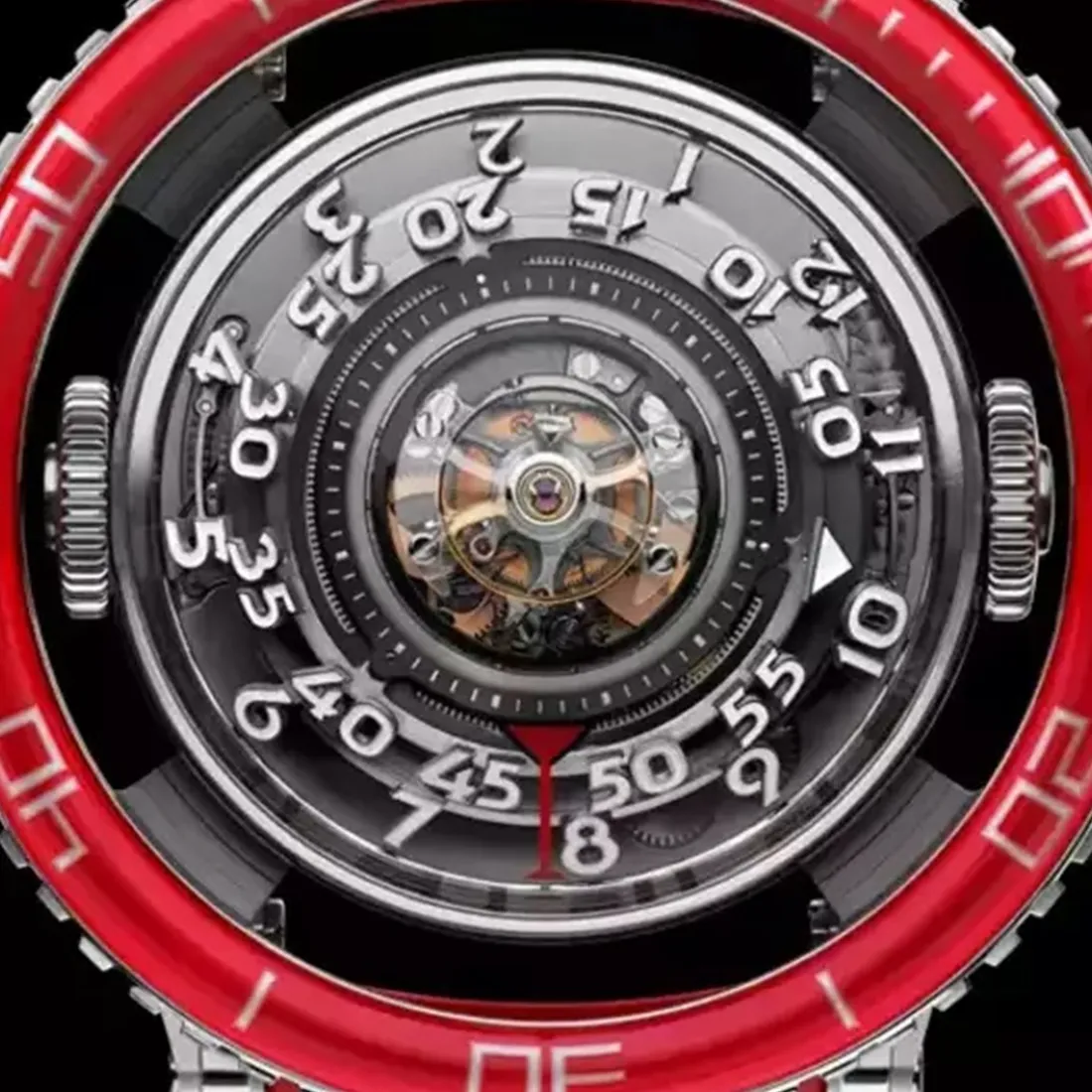
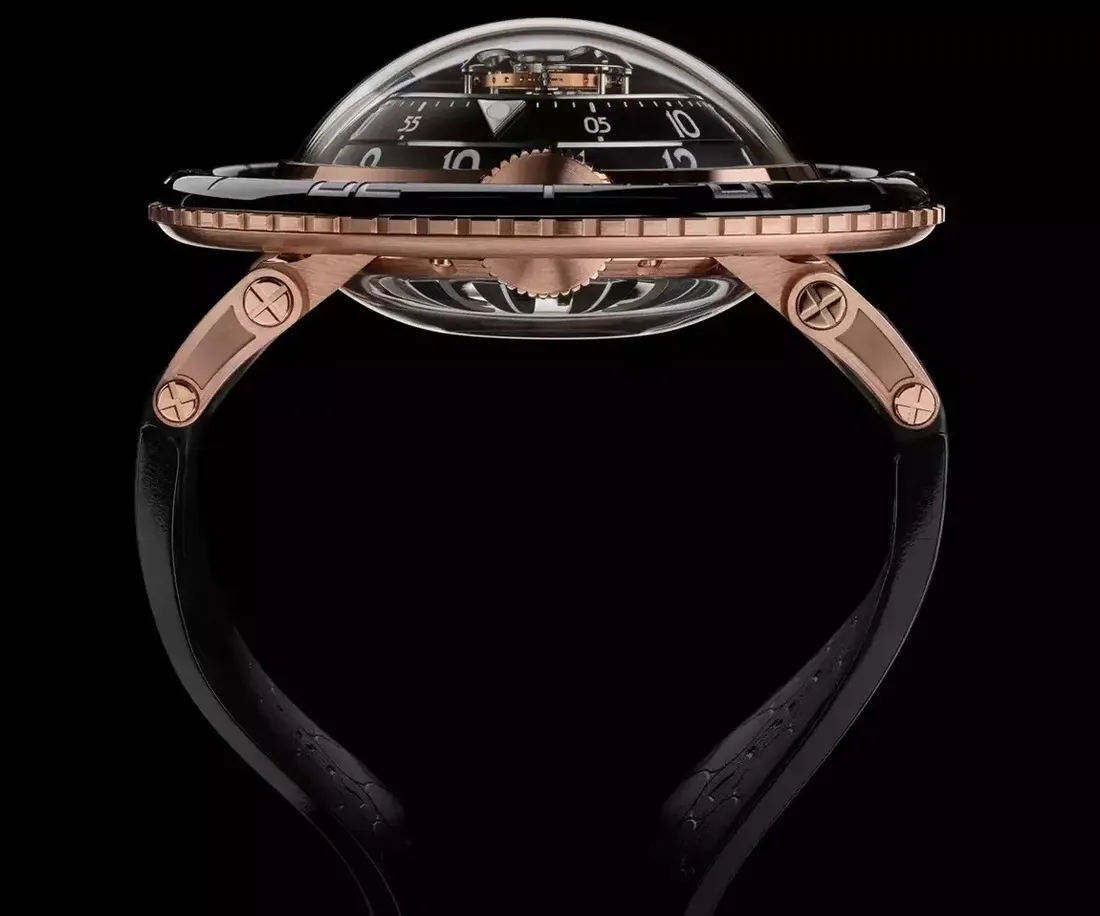
Three dimensional vertical architecture. The HM7 Aquapod rejects the traditional horizontal layout of a movement and is built vertically, like a radial jellyfish. From the winding rotor at the very bottom to the sixty second flying tourbillon at the very top, all its organs rotate concentrically around the same central axis, and the hour and minute indications radiate outwards from the centre in rings. The brand's own analogy is this: a jellyfish has no brain but a radially symmetric ring of neurons; the Aquapod likewise has radially symmetric rings carrying the hours and minutes. The numerals stand on two grade 5 titanium discs, and those discs turn on oversized ceramic bearings.
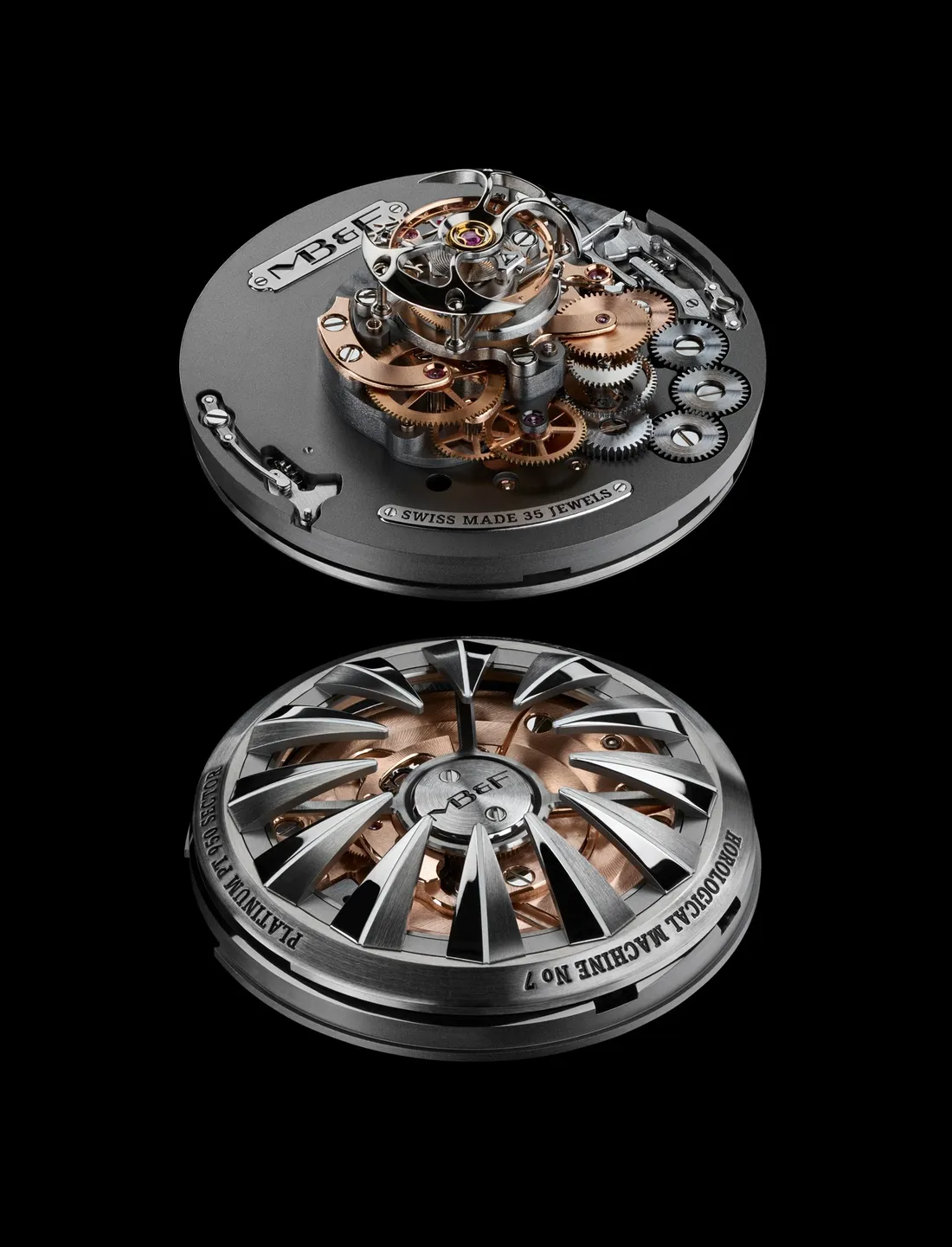
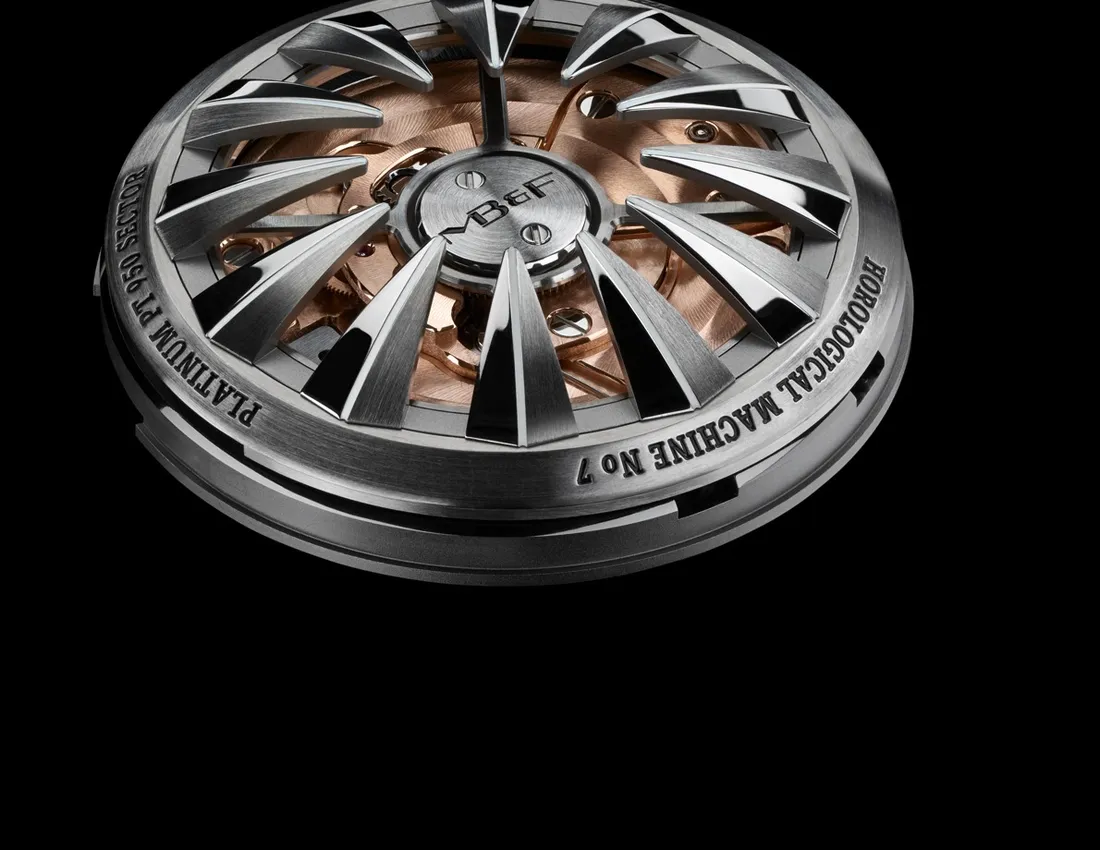
The jellyfish rotor. The automatic winding rotor is made of tentacles machined from a single block of titanium, and it carries a 950 platinum sector underneath; that is the part that gives the weight. The surfaces of the tentacles alternate between polished and satin brushed, and there are Super-LumiNova segments along them. So what glows in the dark is not only the dial but the organ that gathers the energy.
The floating bezel. There is a common error here that needs correcting: this ring is not a concave part fixed to the case. It rotates unidirectionally but stands apart from the case, floating as if in air. And it makes no claim to be a dive watch; in the brand's own words HM7 is not a diver's watch but a watch comfortably at home in the water. Water resistance is 50 metres. The ring on the red version is not ceramic but red sapphire crystal, its laser engraved numerals filled with luminous material and red lacquer; the titanium versions used blue ceramic and green sapphire.
Fluid ergonomics. The case is 53.8 millimetres across and 21.3 millimetres tall; a spherical construction with sapphire on every face. The articulated strap attachments hidden under the case let the watch wrap the wrist like a soft bodied sea creature in spite of that size. The case was made in three materials: grade 5 titanium, 18 carat 5N+ red gold and 950 platinum. The red version in front of us is platinum, made in twenty five pieces in 2019, and its case alone consists of 83 components.
The engine. 303 components in the titanium version, 391 in the platinum; thirty five jewels. Frequency two and a half cycles a second, that is eighteen thousand vibrations an hour. Power reserve seventy two hours. There are two crowns: the left one winds, the right one sets.
It is worth saying why this vertical construction is difficult, because the issue is not aesthetics. In a classical movement all the wheels lie between two plates in a single plane; both ends of every arbor sit on the same two surfaces, so alignment reduces to the accuracy of one plane. In a vertical structure every storey wants its own carrier, its own bridge and its own alignment. For the energy coming from the rotor at the bottom to reach the tourbillon at the very top it has to cross all the layers, and at every crossing a quantity of efficiency is lost. Then there is the height: in a body 21.3 millimetres tall, the balance at the topmost point is the part swinging at the end of the longest arm with every movement of the wrist. That is why the tourbillon's bridge here is made of sapphire, both so that it disappears and so that it adds no further mass at that height.
And its source: the idea for this watch comes not from a laboratory but from a childhood holiday. Maximilian Büsser's encounter with a jellyfish on family beach holidays planted the seed of a three dimensional watch powered by tentacles.
V. The Last Contemplation
The jellyfish biologist slowly turned the winding crown of the watch. The hour and minute discs slid under the sapphire dome in a circular rhythm.
format_quote"Mankind has always tried to measure time with rulers and squares. But HM7 has given time back to that fluid and circular form of the ocean."
Jellyfish Biologist
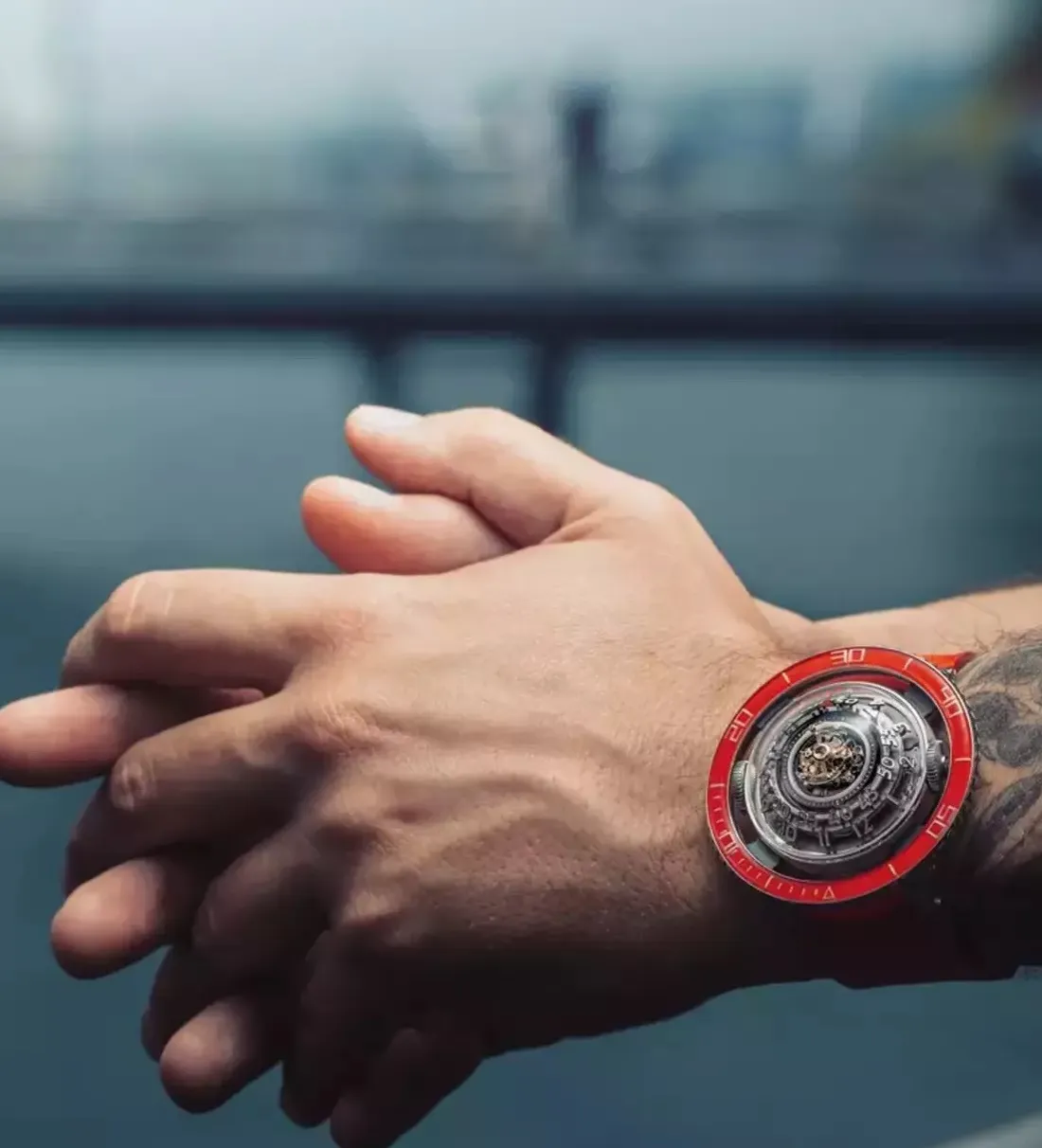
The humpback biologist put the watch on his wrist and looked into the deep blue.
format_quote"From those two lights in the dark chamber to the breath produced by phytoplankton; from the protective mercy of a twenty three tonne whale to the electrons returning from their trap levels, everything points to a single truth: the universe, from its smallest to its greatest, has been designed with tremendous reason, solidarity and beauty. And the HM7 Aquapod is the seal of this oceanic contemplation in titanium and platinum, worn on the wrist."
Humpback Whale Biologist