The lacquer tree that grows in the misty mountains of Japan, Toxicodendron vernicifluum by its scientific name, does not give up its essence easily. Gathered from cuts made in the trunk, this precious resin is one of the gifts of nature that asks the most patience of a human being. What is collected is raw; in the wrong hand it turns to poison, in the right one to a work that does not die.
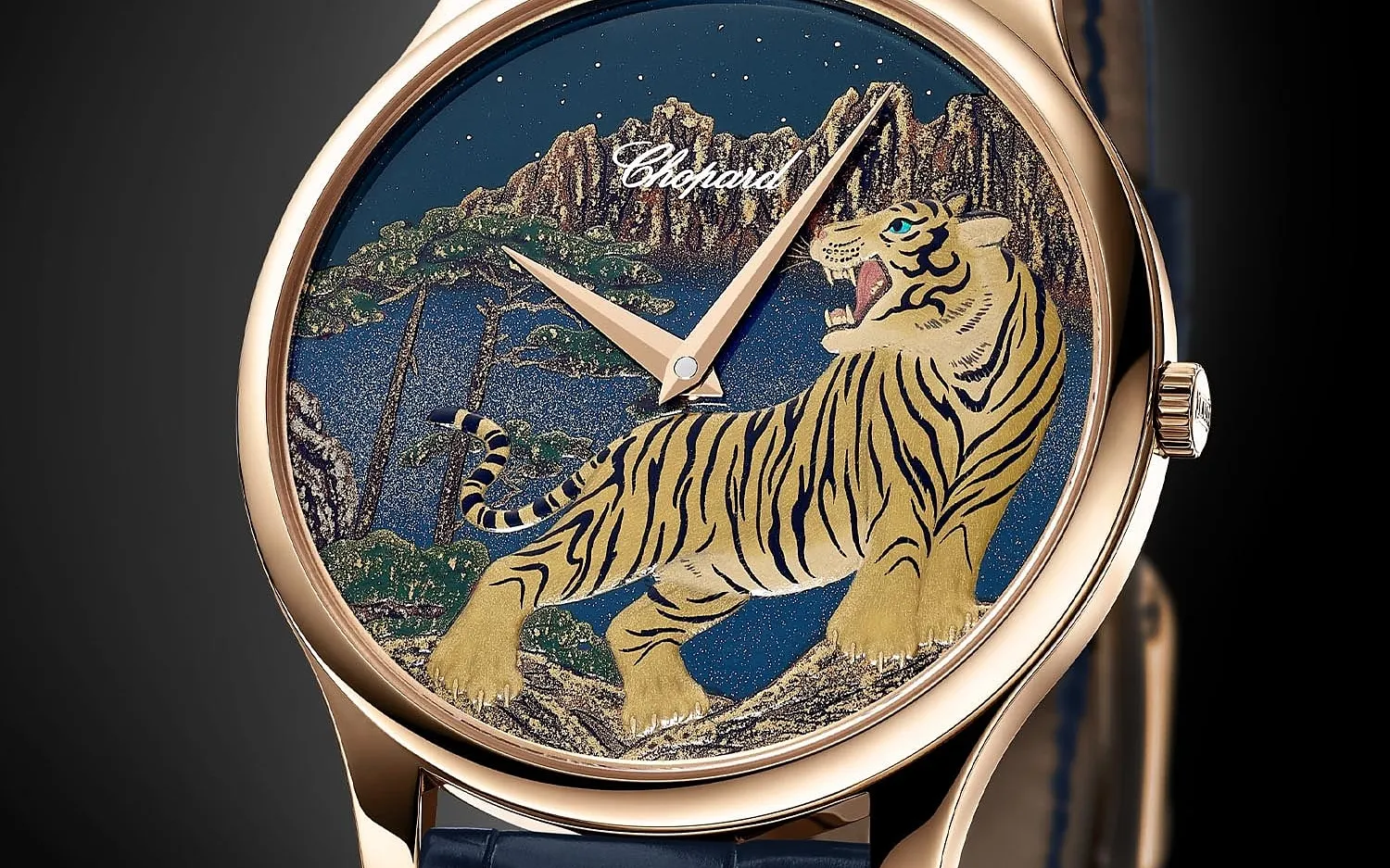
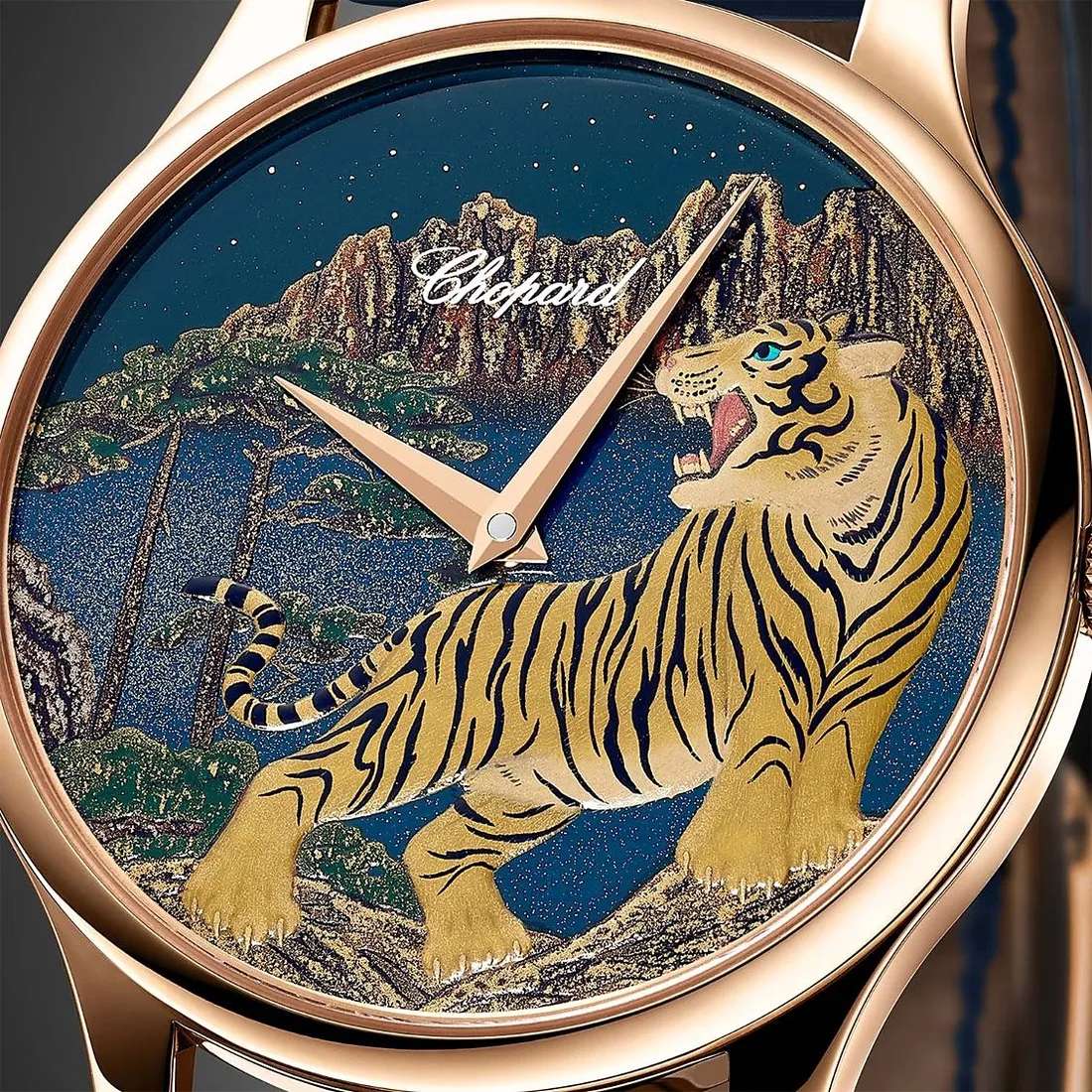
Chopard, one of the most elegant names in high watchmaking, brings the micro-engineering genius of Switzerland together here with the centuries-old craft tradition of the East. Each dial of the Chopard L.U.C XP Urushi Year of the Tiger is worked in the workshops of the century-old Yamada Heiando by the master lacquer artist Minori Koizumi, who gives no less than a hundred and sixty hours to it, and the watch is among the rarest examples of this ancient technique.
format_quote"What is collected is raw; in the wrong hand it turns to poison, in the right one to a work that does not die."
Hasan Bekmezci
What does a hundred and sixty hours of work amount to in a human life?
On a factory line, a hundred and sixty hours can produce thousands of dials. For Minori Koizumi, the same span is four full working weeks of brush strokes as fine as a hair, laid down hour after hour under a microscope with the breath held.
Think of the size of it this way. A sculptor spends weeks cutting into an enormous block of marble; Koizumi spends those same weeks on a disc the size of a coin, around thirty millimetres across. A painter putting colour on canvas sees the result within hours; the urushi master, having laid down a single layer, waits days for it to cure in a humid room, then abrades it for hours with charcoal, and only then moves to the next layer.
A hundred and sixty hours is what happens when, in a world ruled by speed and by mass production, the time spent on a single dial turns into art.
format_quote"A hundred and sixty hours is what happens when, in a world ruled by speed and mass production, the time spent on a single dial turns into art."
Hasan Bekmezci
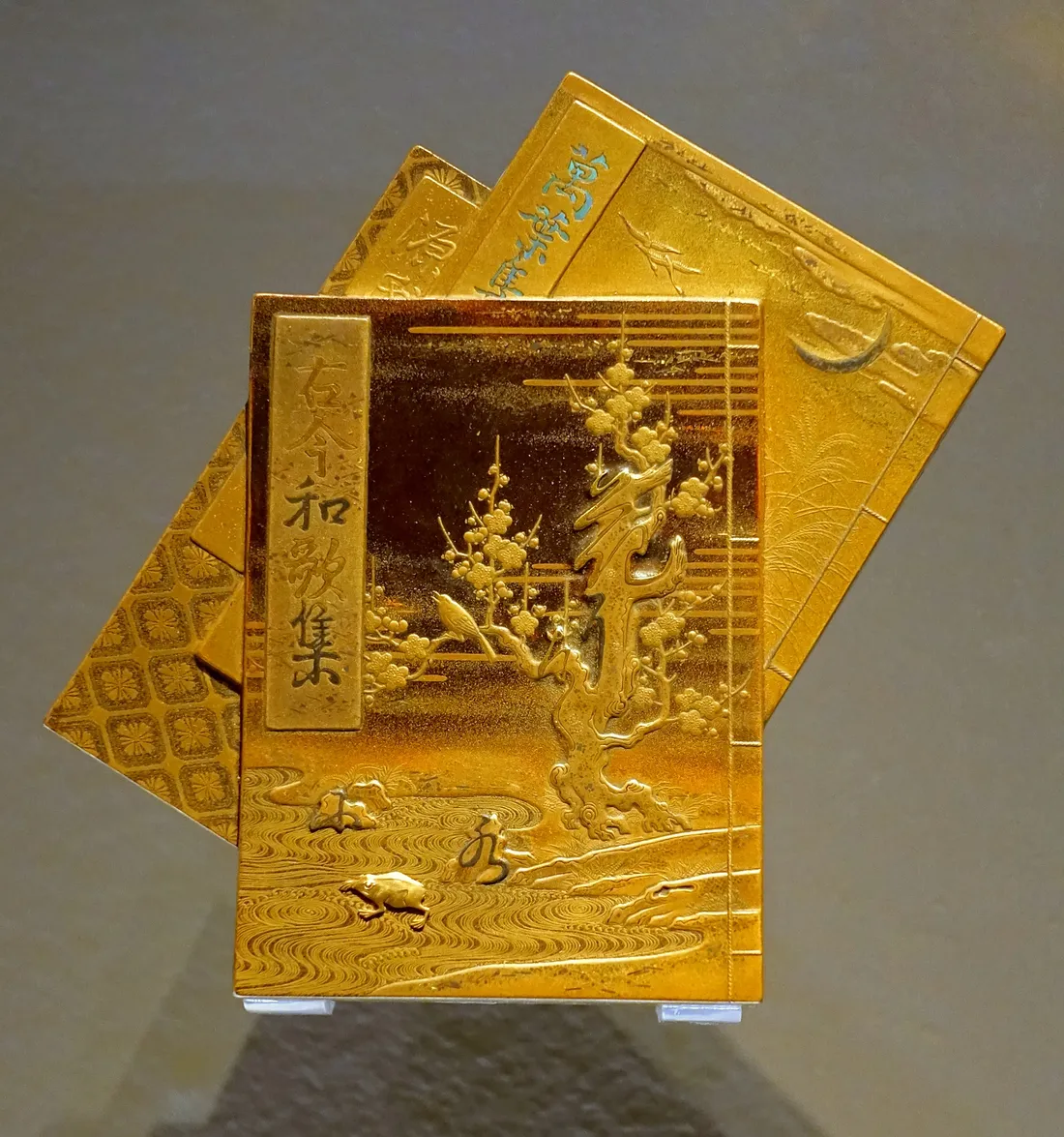
Urushi is the defensive sap a tree gives out to repair itself when it is wounded. Over a season running from June into October, fresh cuts are made in the trunk every few days and a few drops taken each time; what can be gathered from a tree over its whole life is on the order of two hundred grams. When the season ends the tree is usually cut down and left to grow again from the stump.
The resin does not behave like ordinary paint. It does not dry by losing its moisture to heat or dry air; on the contrary, it hardens in a dark, highly humid room by taking up the water vapour in the air. This is not mud drying and cracking; it is closer to a liquid steel locking together at the molecular level as it cools, into armour that will not break.
The master does not lay the resin onto the dial with a single stroke and move on. Like the layers of an onion, it goes on coat after coat, each a micron thick. After each coat it is left for days to cure in the humid room, then rubbed down by hand with wet abrasive or with special pieces of charcoal until it is smooth.
When you raise a tower you cannot pour the mortar and go straight to the floor above; you wait for it to set, you level it, and only then do you build the next storey. Urushi is like that. Dozens of layers ride one on top of another across the dial. The surface that results resists acid, alkali, salt and boiling water, and in damp darkness it lasts almost indefinitely. Lacquer from the Jomon period, some nine thousand years old, is found in waterlogged ground with its surface largely intact.
The most beguiling stage of all on this Chopard dial is maki-e, the sprinkled picture. Onto lacquer that is still wet, Koizumi scatters powders of pure gold and silver through brushes of sable hair and fine tubes of bamboo.
Imagine scattering gold dust through the air onto a wet canvas on a windy day. Wherever you touch the brush the gold sets; where you do not, it runs away. Under the microscope the master steers grains of gold as light as down, and builds the deep, three-dimensional, glittering texture of the tiger’s coat.
In the painting and the storytelling of the East the tiger is taken as the sign of strength and of courage, and it is drawn as a guard that keeps evil away. On a starlit winter night, rising alone in the shadow of the rocks and the old pines, the tiger has fixed its eyes on the dark.
In the scene that came from Minori Koizumi’s brush the tiger stands on the rocks and tears the silence of a night strewn with silver stars with its roar. Through maki-e, the fine glints of gold in its coat move and shine against the deep blue of the night sky. Its green eyes and its open mouth hold the raw, unbridled energy of the wild inside the dial.
This dial is not merely a drawing. It is a living scene in which the resin was laid and cured coat by coat, pure gold and silver were sifted between the coats, the whole was rubbed back with charcoal once it had hardened and polished again and again: patience turned into matter.

And what does this roaring tiger mean for nature? What was intended in setting it at the top of the food chain? What would collapse in that ecosystem without it?
Let us look at the answer through the most-told case. In Yellowstone the wolves had been wiped out entirely by nineteen twenty six. With the apex predator gone, the elk population exploded. The elk came down to the river banks without fear and ate the young shoots and the shrubs to the root. With the aspen and the willow gone, the beavers could find no wood for their dams; with the beavers gone the ponds dried, water birds and fish thinned out, and the river beds widened as the soil slid in.
When the wolves were brought back in nineteen ninety five, the elk stopped lingering in the open along the rivers, the banks greened, the beavers returned. An honest note belongs here: ecologists still argue over how much of that change came directly from the wolves and how much from drought, grizzly bears, hunting and other factors. But there is no quarrel about the main point, that in the absence of the apex predator the lower links of the chain give way one by one.
The tiger holds that same link in the forests of Asia. It limits deer and wild boar both in number and in behaviour; take the tiger out of a forest and the grazers multiply without check, consume the young saplings and the undergrowth to the root, and as the cover along the rivers disappears the soil runs and the water sources degrade. With no young trees coming on, birds, insects and small mammals lose their nests; the forest still stands, but it is hollow, a green desert. The tiger also takes the sick and the weak, which makes it harder for an epidemic to run through a herd.
The tiger itself is not an architect. It is a working part of a measure already set; what holds the forest up is not its will but the balance that stands because it is there. Order survives not by boundless freedom but by measure and balance.

Made in a series limited to eighty-eight, the watch completes its magnificent dial with engineering of the same restraint.
The case is 18 carat rose gold, thirty nine and a half millimetres across and only six point eight millimetres thick. That thinness, which belongs to the L.U.C XP line, gives it a proportion that is almost not there on the wrist. The warm tone of the rose gold comes from the same family as the deep blue of the night and the gold of the coat on the dial. It is water resistant to thirty metres.
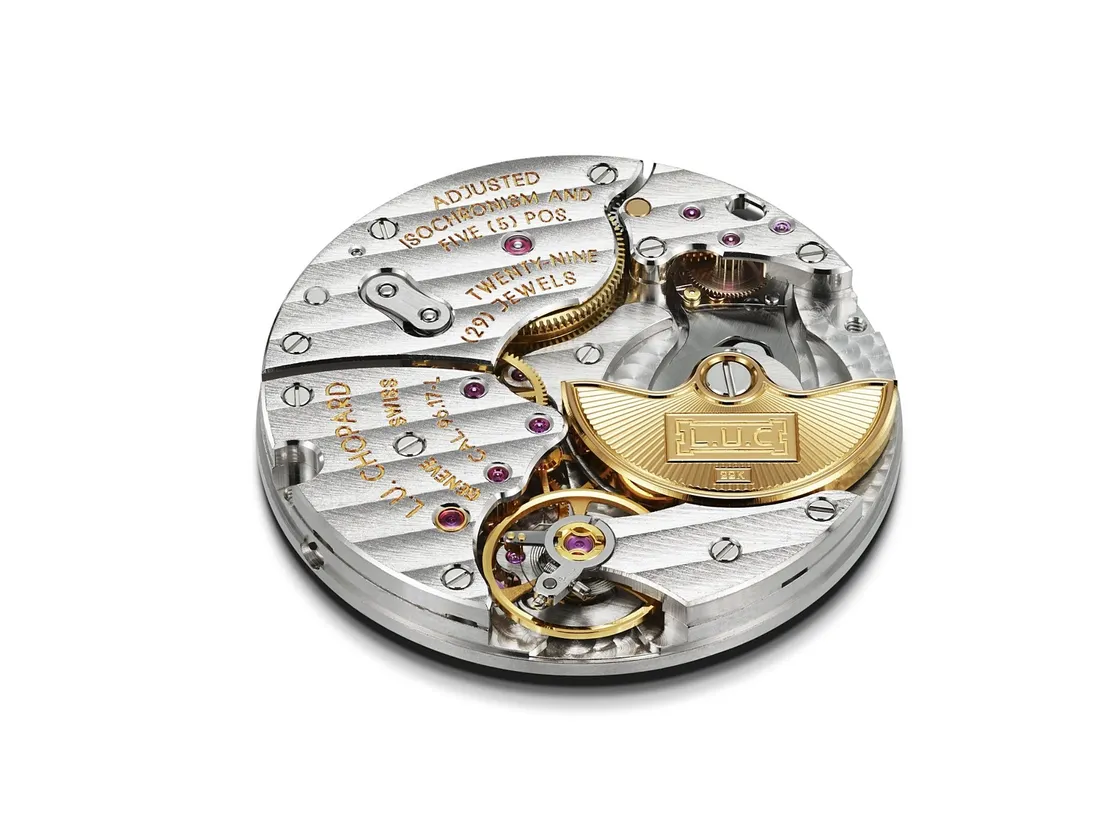
At the heart of the watch works the calibre L.U.C 96.17-L. Self-winding, it is three point three millimetres thick, carries twenty nine jewels, beats twenty eight thousand eight hundred times an hour and runs sixty five hours. The engraving on its bridges says the movement is adjusted for isochronism and for five positions.
Two solutions make that thinness possible. The first is the micro-rotor: the winding mass is not a layer sitting over the movement but a half-moon of 22 carat gold sunk into it. The second is what the house calls Twin: two barrels stacked one above the other, which extend the power and the evenness of the rate without adding thickness.

format_quote"Order survives not by boundless freedom but by measure and balance."
Hasan Bekmezci
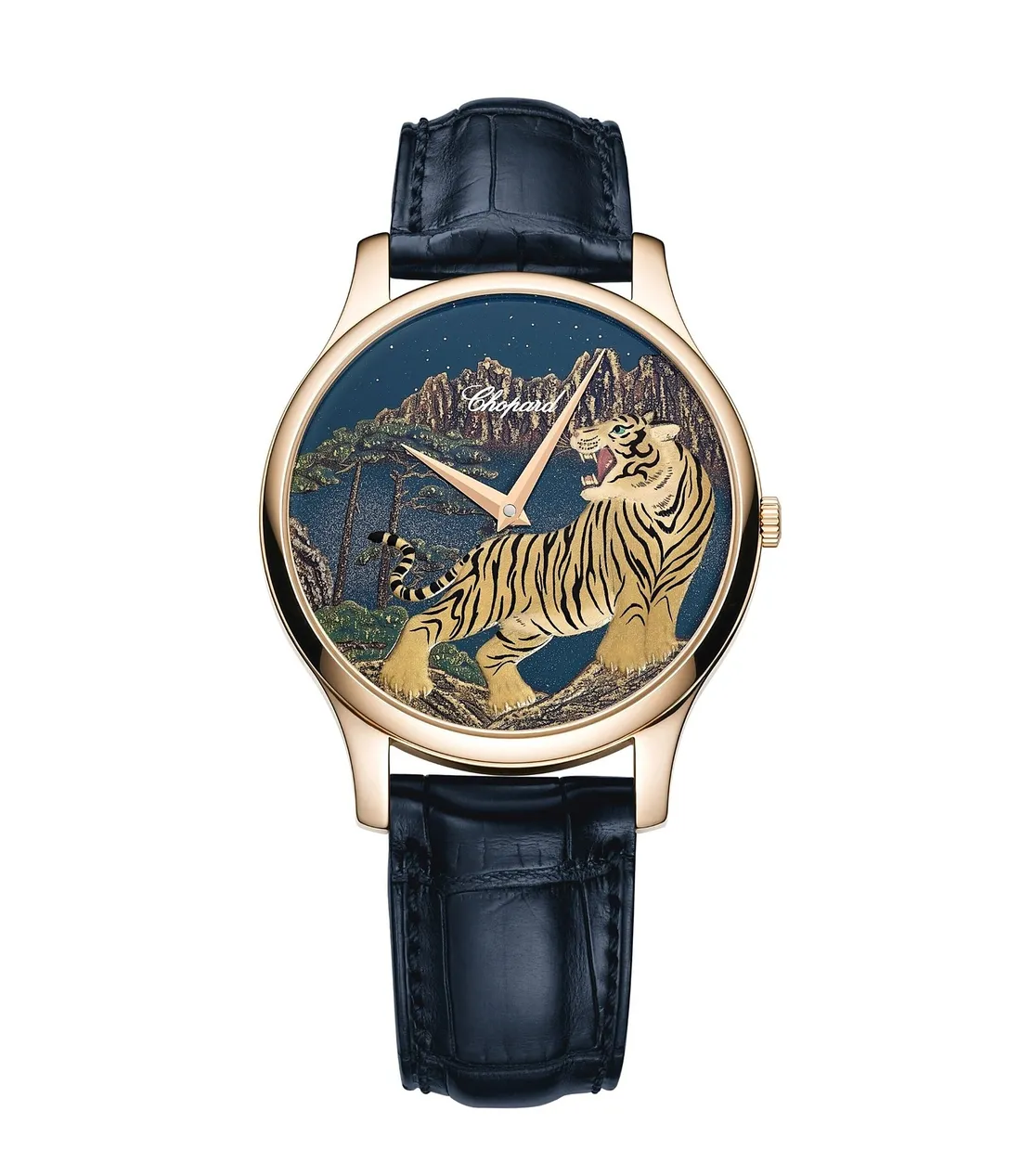
The Chopard L.U.C XP Urushi Year of the Tiger is not merely a watch that measures time; it is a breathtaking synthesis of East and West, where the traditional art of Japan meets Swiss high watchmaking and the measure of an ecosystem.
The hundred and sixty hours that came off Minori Koizumi’s brush let you carry on your wrist not only the passage of time, but the timeless spirit of a golden tiger that roars on a starlit night and keeps watch over the balance of a forest.
The watch, in its maker’s own description: Chopard, L.U.C XP Urushi Year of the Tiger