Humanity’s first clocks ran on water. The clepsydras used in Egypt three and a half thousand years ago measured elapsed time by letting water pass from one vessel into another. The Greek root of the word means water thief; the water is quietly stolen from the vessel, and the volume that has gone becomes the measure of the time that has gone.
There was a beauty in the method. In a water clock, time was not an abstract point indicated by a hand. It was a visible quantity of matter, a level that rose or fell. Time was not a number but a volume.
Then came the pendulum, then the balance wheel, and water was forgotten for centuries. Inside a watch movement a liquid is now nothing but an accident. It means a leak, it means rust, it means a repair.
format_quote"In a water clock, time was not a number. It was a volume you could see and measure by hand."
Hasan Bekmezci
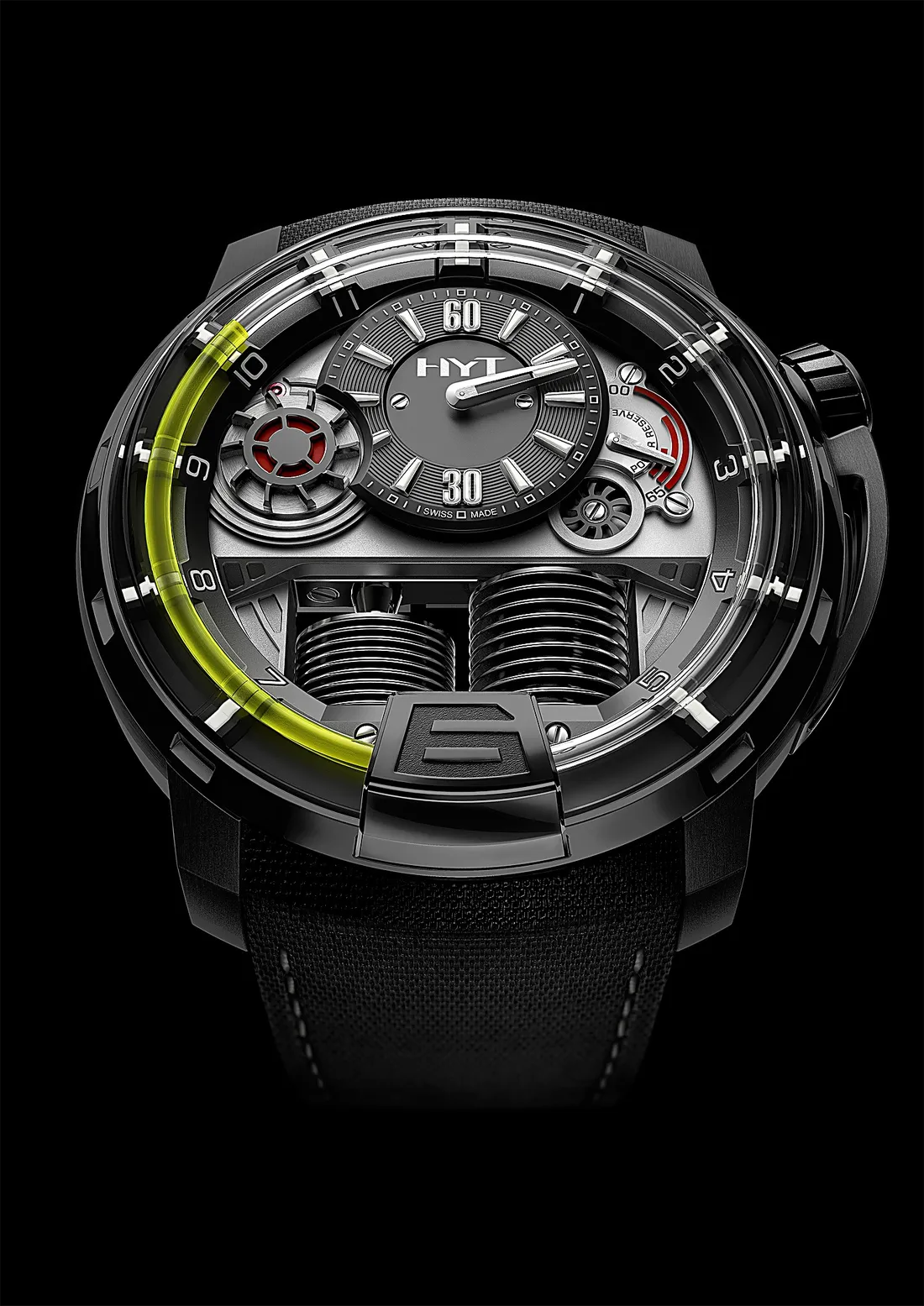
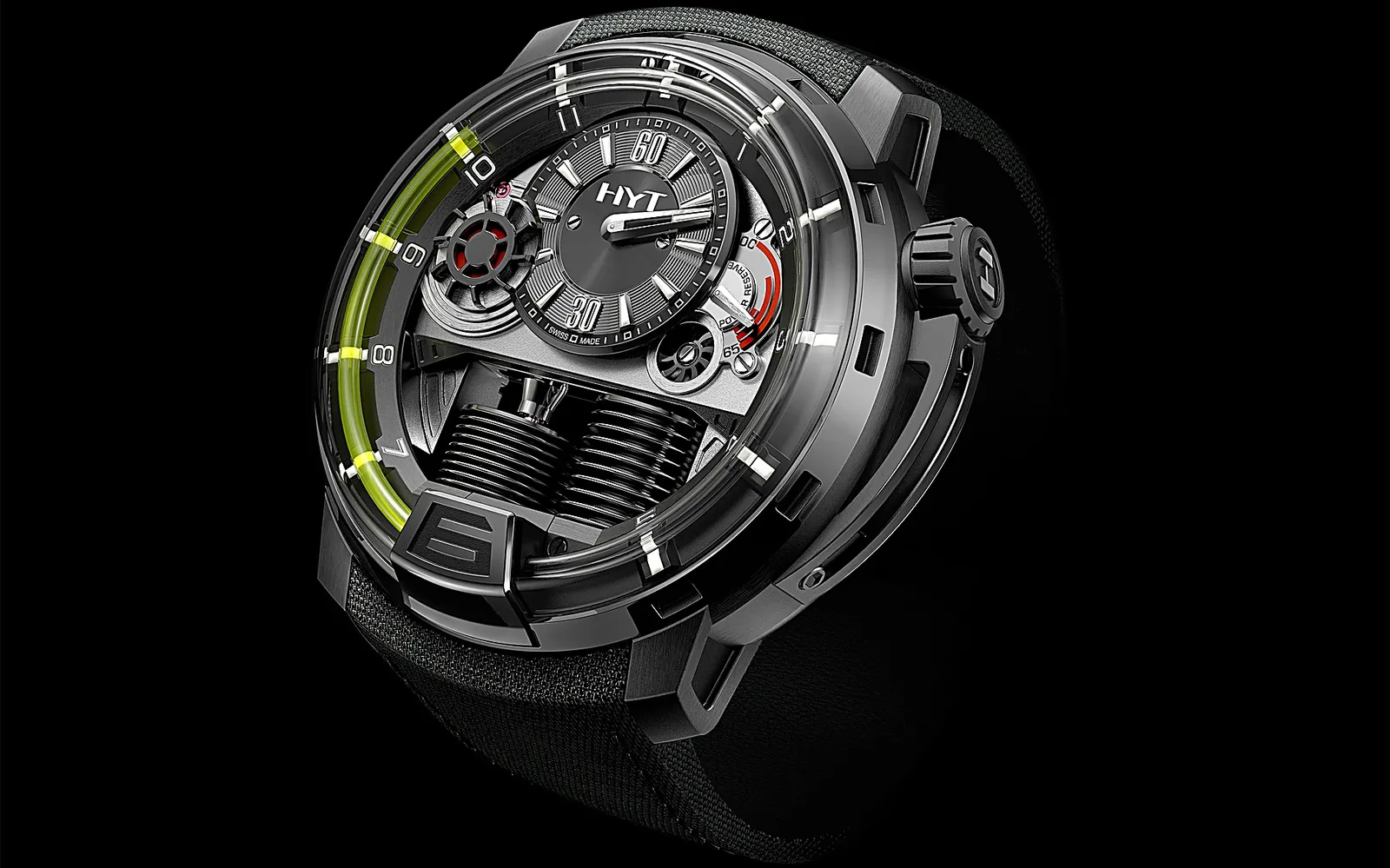
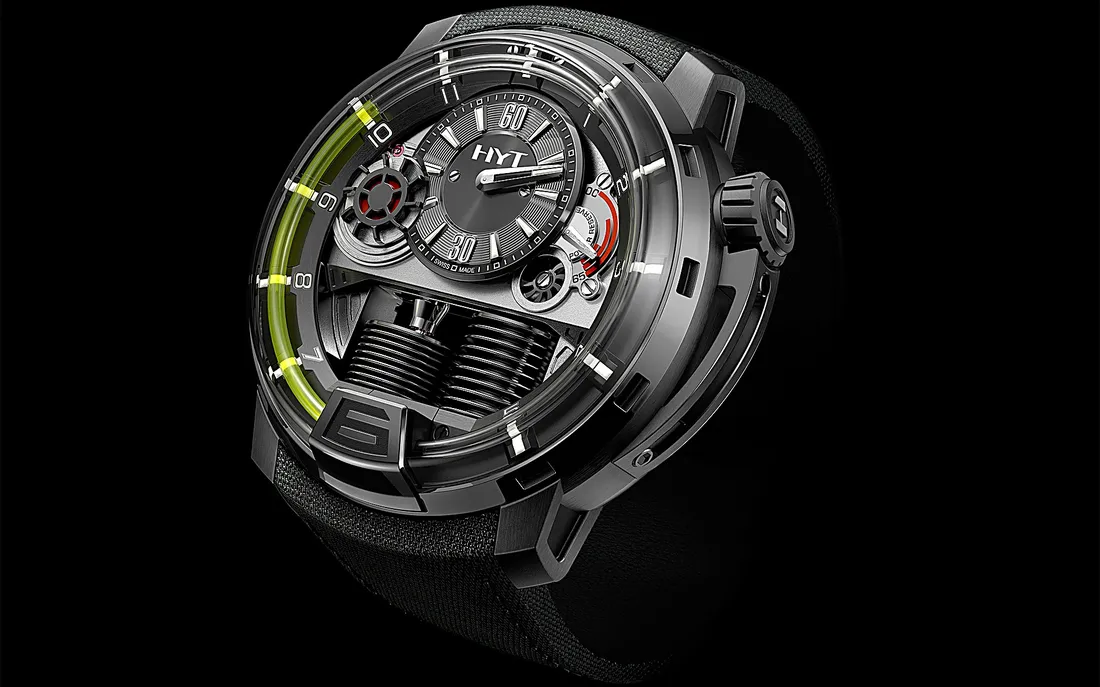
In 2012 a small team based in Neuchâtel called water back into the watch. HYT’s H1 was the first wristwatch to run on a patented fluidic module, and that year it won the Innovation Watch Prize at the Grand Prix d’Horlogerie de Genève.
A very fine glass capillary runs round the dial. Two fluids sit inside it, one coloured and one transparent. The coloured fluid stands for the recent past, the transparent one for what is still to come. Where they meet, at the exact instant of now, a curve forms.
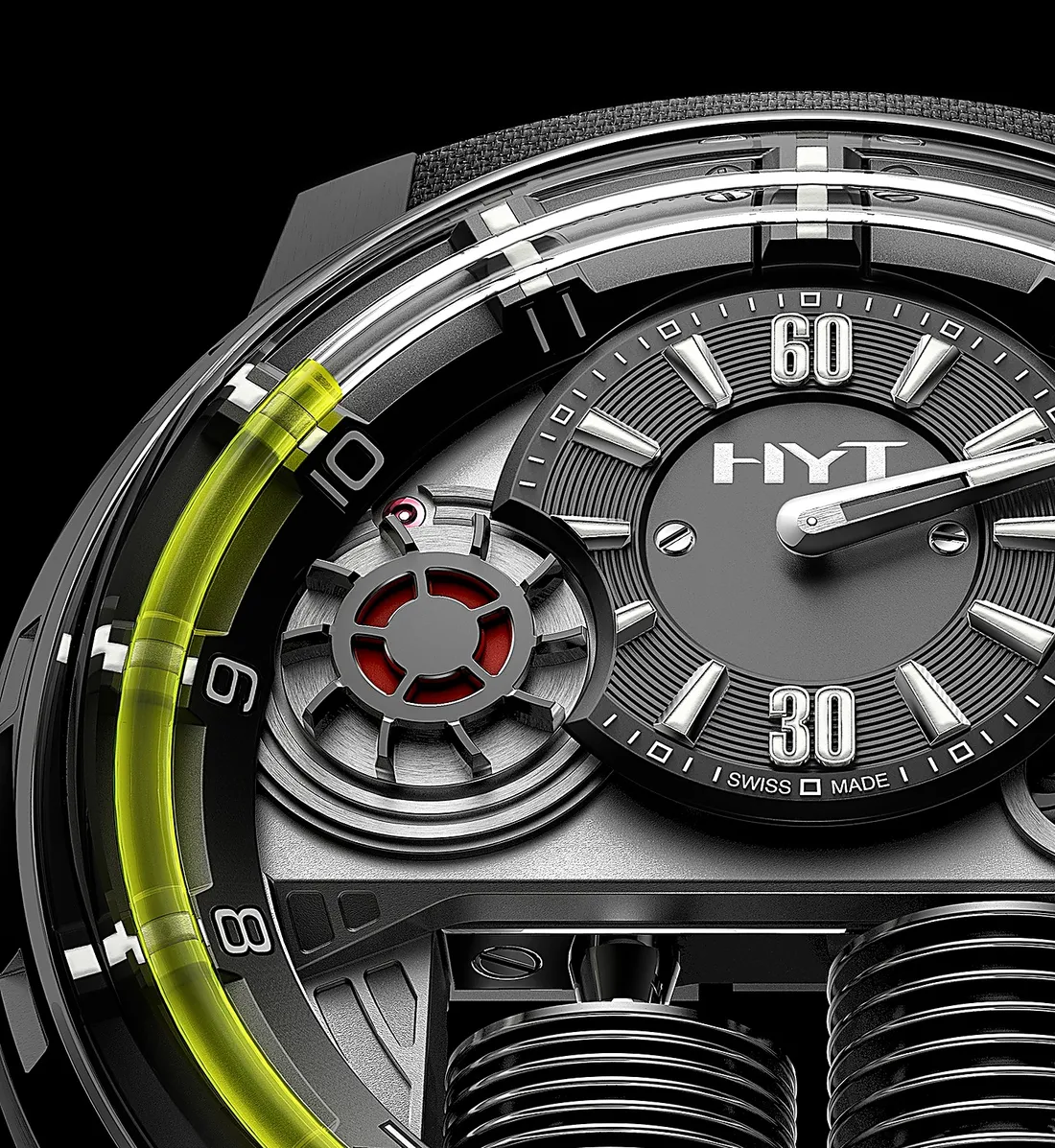
That curve is called a meniscus in physics, and it is the real pointer of this watch. The meniscus exists only because the two fluids refuse to mix. Like water and oil, two liquids that will not dissolve in one another keep a sharp surface between them when placed side by side. The shape of that surface is the outcome of a contest between the attraction of the liquid’s molecules for one another and their attraction to the glass wall. Where the glass pulls harder, the edges climb and the curve turns concave.
Something else happens in a tube this narrow. The weight of the liquid, which is to say the effect of gravity, becomes negligible beside surface tension. Capillarity wins. Turn the watch upside down or lay it on its side and the column stays where it is instead of running out. What holds the liquid is not the bottom of a vessel but its own surface tension.
format_quote"In a tube this narrow, what holds the liquid is not the bottom of the vessel. It is the liquid’s own surface tension."
Hasan Bekmezci
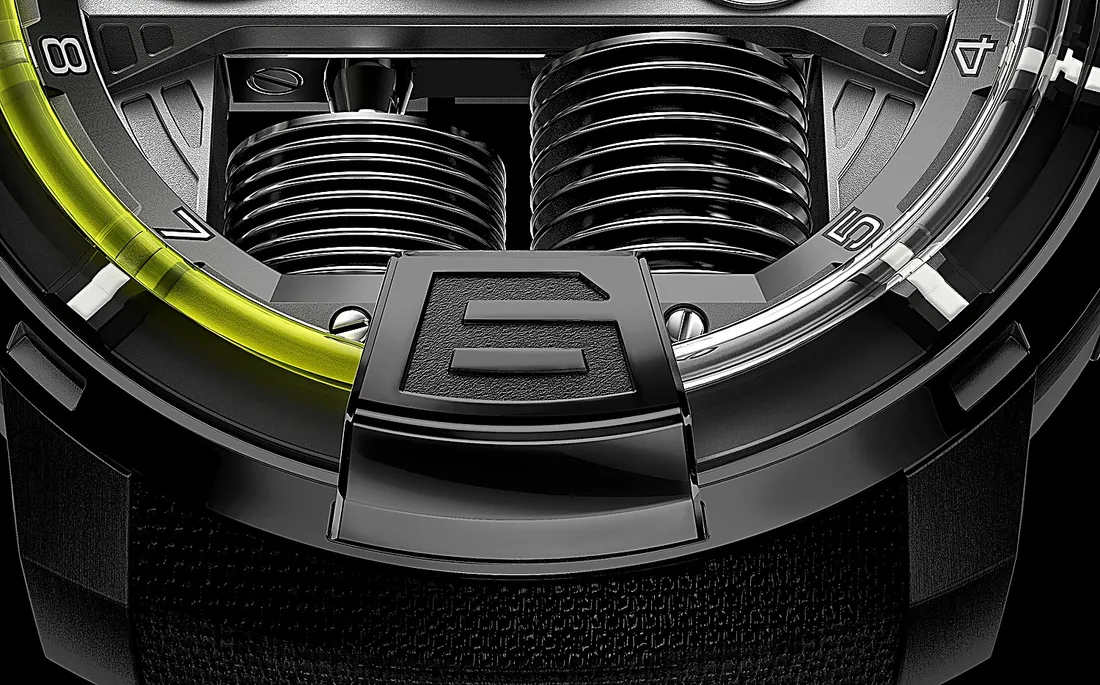
HYT describes the mechanism that drives the fluid on its own pages: the capillary is connected to two bellows whose walls are one quarter the thickness of a human hair, and which are nonetheless ten thousand times more watertight than a traditional diver’s watch. The bellows that flexes on one side pushes the fluid; the one that relaxes on the other receives it.
What works the bellows is a mechanical movement. The movement does not merely measure time; it also supplies the force that moves the liquid. At the end of a conventional going train sits a light hand. At the end of this one sits a column of fluid under pressure. In six hours the liquid travels the whole dial, then snaps back to the start and begins again.
Picture two people at the bench the first time the idea was raised: the engineer working on the fluid and the watchmaker answerable for reliability.
The watchmaker objects. Putting a liquid inside a watch is the one thing the whole trade has spent two centuries avoiding. Change the temperature and the fluid expands and the reading shifts. It will tell one hour in summer and another in winter.
The engineer has the answer ready. True, it expands. But how much it expands is a calculable quantity, and a calculable quantity can be compensated. Put a balancing element inside the module that changes volume with temperature, and it takes back whatever volume the fluid gains.
The watchmaker names the real worry. And in ten years? Metal tires, but it tires predictably. A liquid evaporates, bleeds colour, eats at the wall.
The engineer grants it, and adds this: which is why choosing the fluid took longer than designing the mechanism. The hard part was never moving the liquid. The hard part was finding a liquid that will still be the same liquid in a hundred years.
format_quote"The difficulty of putting fluid inside a watch is not flow but constancy. It has to be the same fluid a century from now."
Hasan Bekmezci
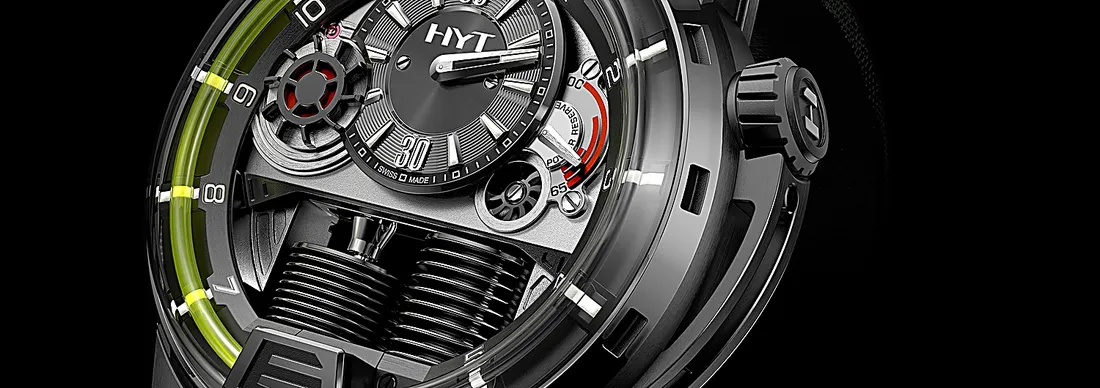
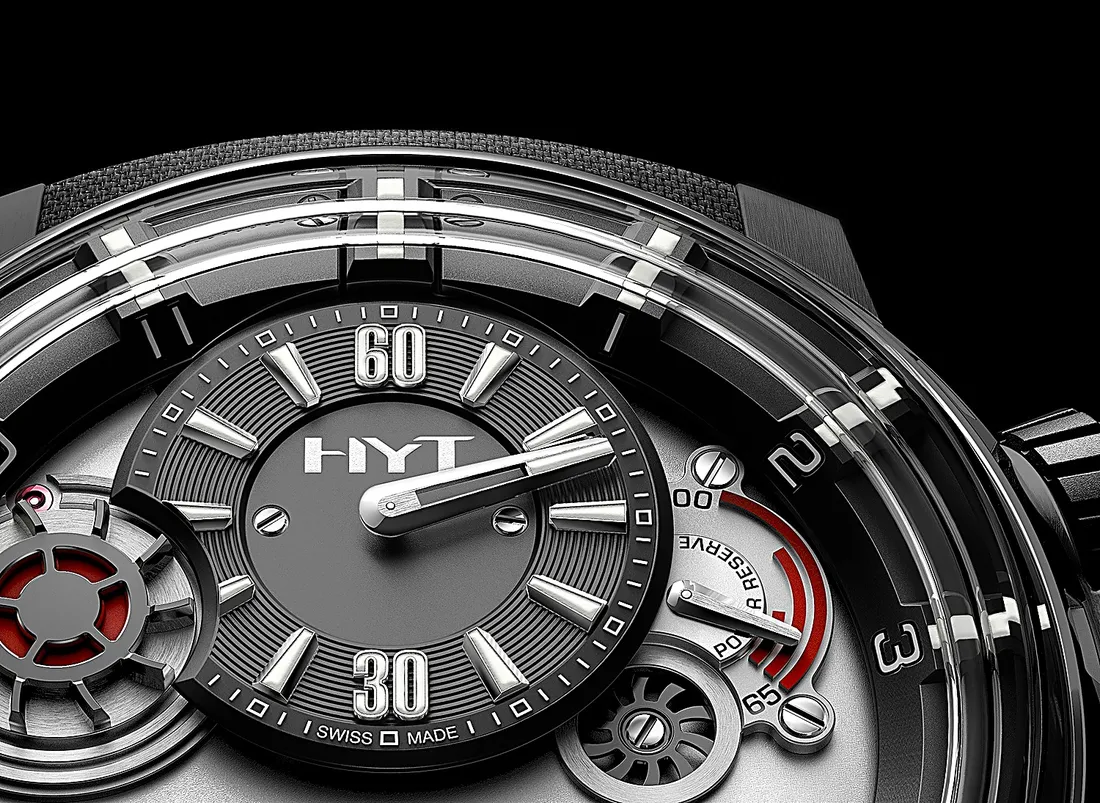
The top half of the dial stays conventional. Minutes come from the central hand, small seconds and power reserve from their own subdials. The hours live below, in the arc the fluid travels. Two separate languages of time therefore sit side by side on one dial: the abstract mark of a hand, and the concrete advance of matter.
HYT works out of Neuchâtel with a team of forty-three and traces its own history directly to the clepsydras of the Pharaohs. The claim is not decoration. The H1 really is the same idea three and a half thousand years later: to show time as a quantity of flowing substance.
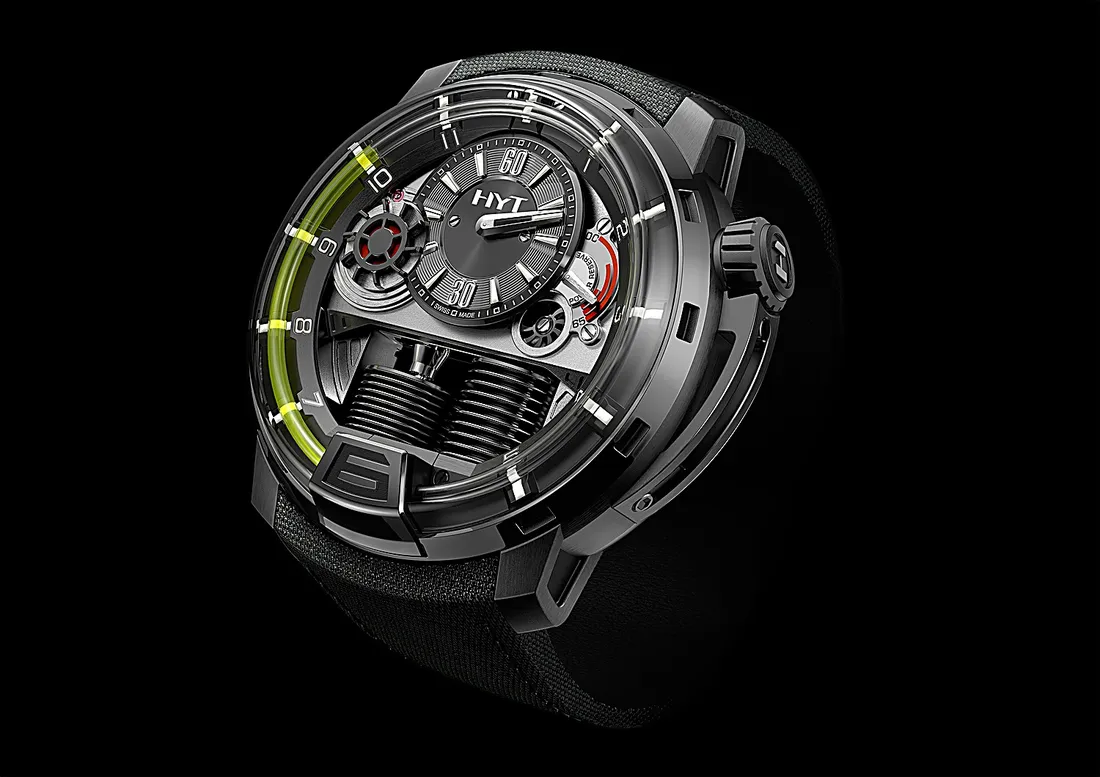
What this watch does to a person is make time visible again. A hand tells you the hour but never makes you feel the hour pass; it always looks as though it were standing still. Liquid fills. The colour that sat at the start of the dial in the morning has covered the whole arc by evening, and the area it covers is the exact measure of the day you have spent.
The point where the meniscus rests is a strange thing. It is neither past nor future. It is an infinitely thin surface with no thickness at all. The present is like that too: the moment you try to hold it, it has turned into the past. A person lives only on that curve, and the only thing in hand is the quantity of colour left behind.
The measure of the life given to us was not set by our own hand. We can only watch how much of it we have filled. This watch is worth something because it makes that watching easier.