

Two centuries ago Cannes was a fishing town, and it owes what it became to a quarantine.
In 1834 the English statesman Lord Brougham set out for Nice. He was stopped at the river Var by a cholera cordon and refused passage. He stayed in Cannes instead, took to the place, built himself a villa there and came back every winter. An entire English colony followed him. A prohibition founded a town.
The old core still sits on the Suquet hill: narrow lanes, a tower, the fishing harbour below. Along the water runs the Croisette, and halfway along the Croisette stands the building with the best-known flight of steps in the world.
The idea of the festival dates from 1939. The opening was set for the first of September that year. Germany entered Poland the same day and the festival closed before it began. The first full edition had to wait until 1946.
So the brightest festival of images in the world starts with an invitation cancelled on one of the darkest days in the record.
The two islands offshore join in the same contrast. On Saint-Honorat a monastery has stood since the beginning of the fifth century. On Sainte-Marguerite, between 1687 and 1698, a prisoner was held whose face nobody was permitted to see. A hall that projects faces to the whole world, and across the water a cell that hid one face for eleven years.
format_quote"A hall on the shore projects faces to the whole world. On the island facing it, a cell hid one face for eleven years."
Hasan Bekmezci
Here is the heart of it. Everything Cannes is rests on a single trick, and the trick is cinema itself.
There is no movement on a strip of film. What lies along it is a row of photographs, each very slightly unlike the last. Twenty-four of them fall on the screen every second. What reads the difference between them as motion is not the screen. It is the audience.
For a long time this was explained by saying the eye holds an image for a moment. The modern account is more interesting. In 1912 Max Wertheimer showed that when two lights are switched on and off with the right delay, a person genuinely sees a movement between them. What fills the gap is not the eye but the mind. The effect was called the phi phenomenon and it became one of the founding experiments of the psychology of perception.
Cinema, in other words, is an industry built on the mind’s habit of closing gaps.
The trick has limits, and the limits announce themselves comically.
A car wheel in a film sometimes appears to turn backwards. The reason is simple: if the wheel rotates slightly more or slightly less than one spoke-spacing between two frames, the mind takes the shortest reading available and sees the rotation running the other way. When the rate of sampling meets the rate of the event, the truth comes apart.
Then there is the screen itself. To change a frame the light must be cut, and to reduce flicker it is cut more than once per frame. The upshot is that for a large part of your time in the cinema the screen is dark. You spend as much of the film looking at darkness as at pictures. The only reason you do not notice is that your mind closes the intervals.
format_quote"You spend as much of a film looking at darkness as at pictures. You do not notice, because your mind closes the intervals."
Hasan Bekmezci
Cinema turns still frames into motion. There is an artistic movement that does the exact opposite, and it is called Optical Art.
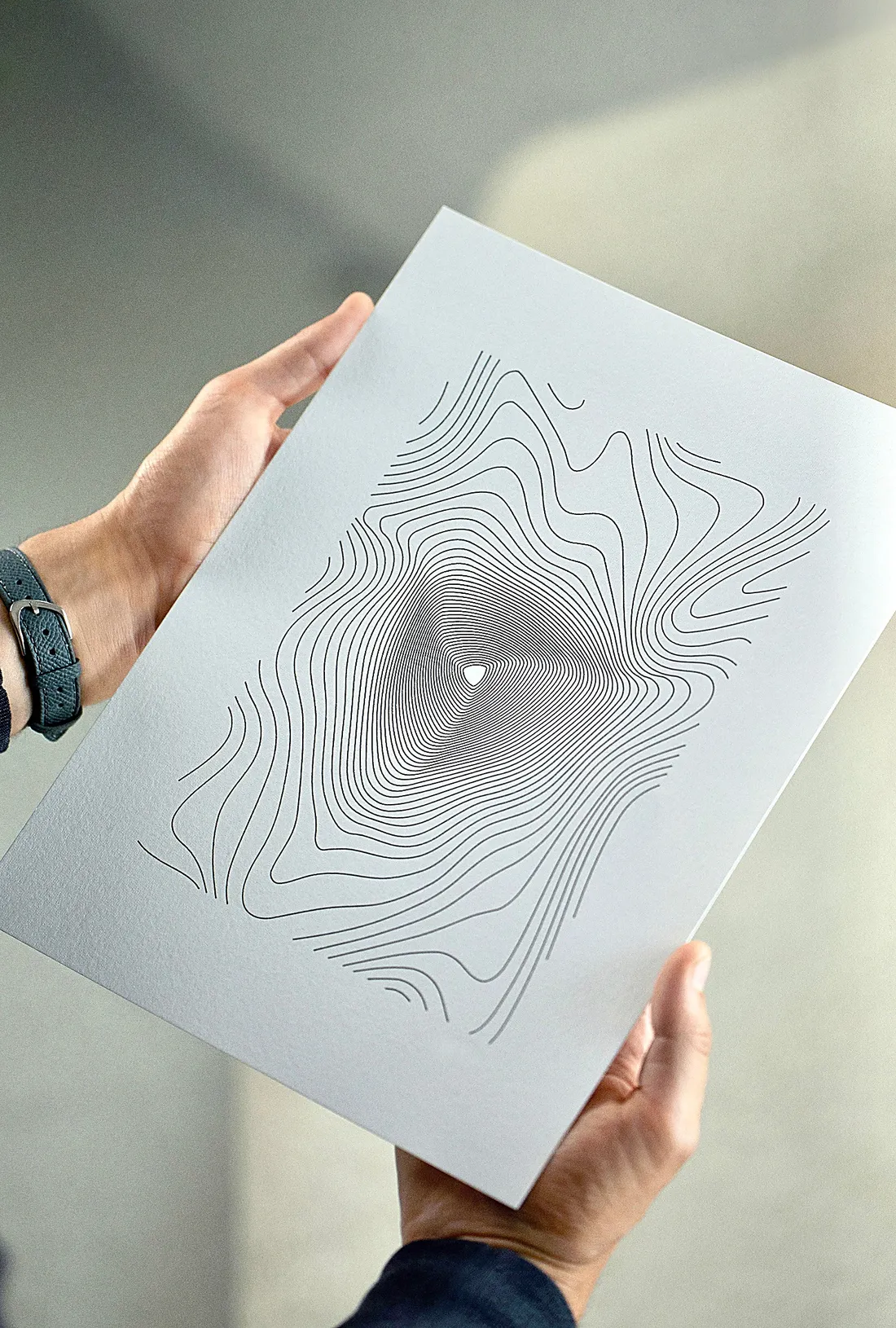
Optical Art works with a surface that does not move at all. It uses regular lines, repeated shapes and small offsets; as the eye scans the surface the lines interfere, and the result is a sense of vibration, swelling and flow. Nothing on the canvas moves. The movement is again inside the viewer.
In Cannes the screen produces motion by hiding frames. Optical Art reaches the same result while hiding nothing at all. Both exploit one weakness: the human eye does not report what it receives, it interprets it.
format_quote"Cinema makes motion by hiding frames. Optical Art reaches the same result while hiding nothing."
Hasan Bekmezci
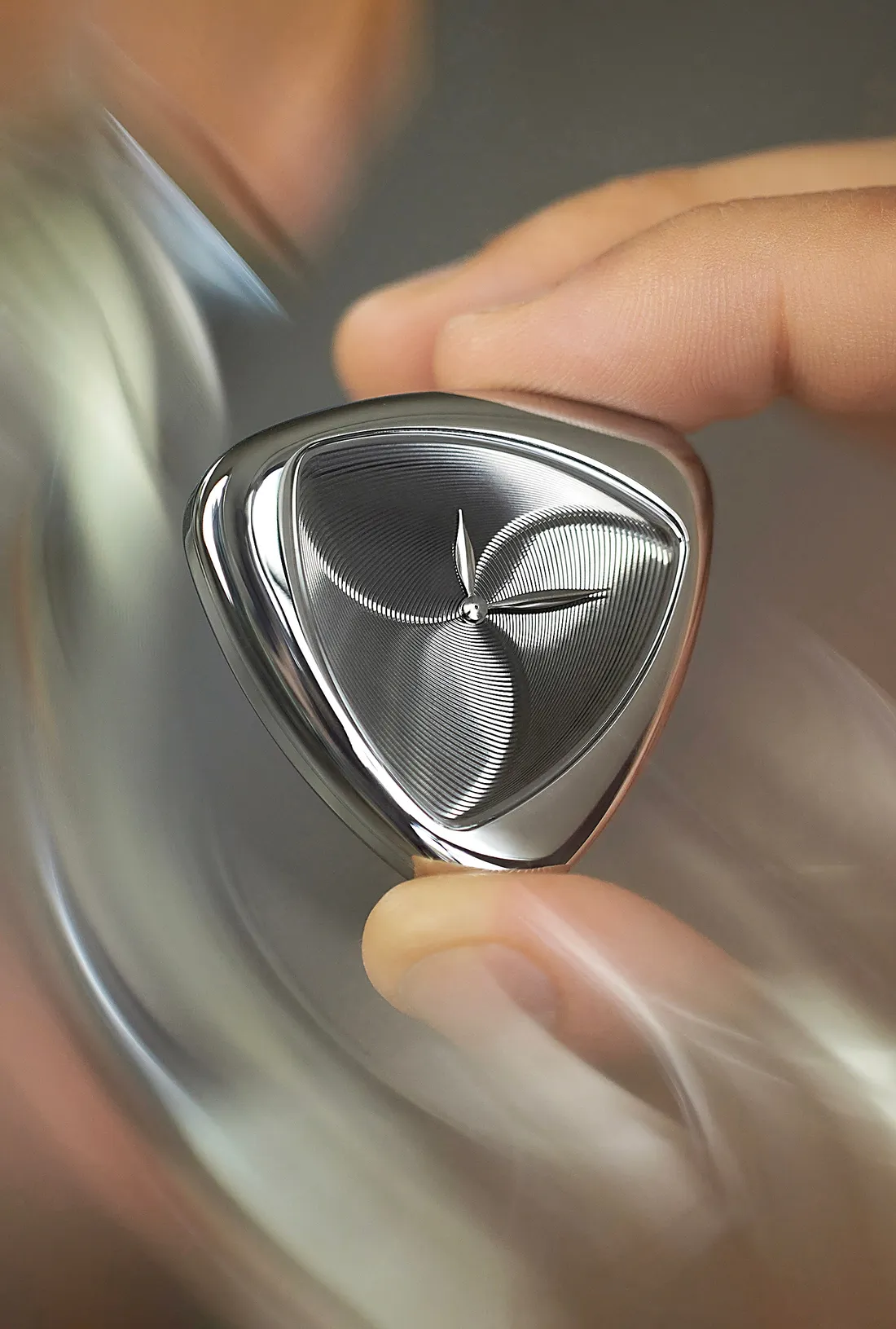
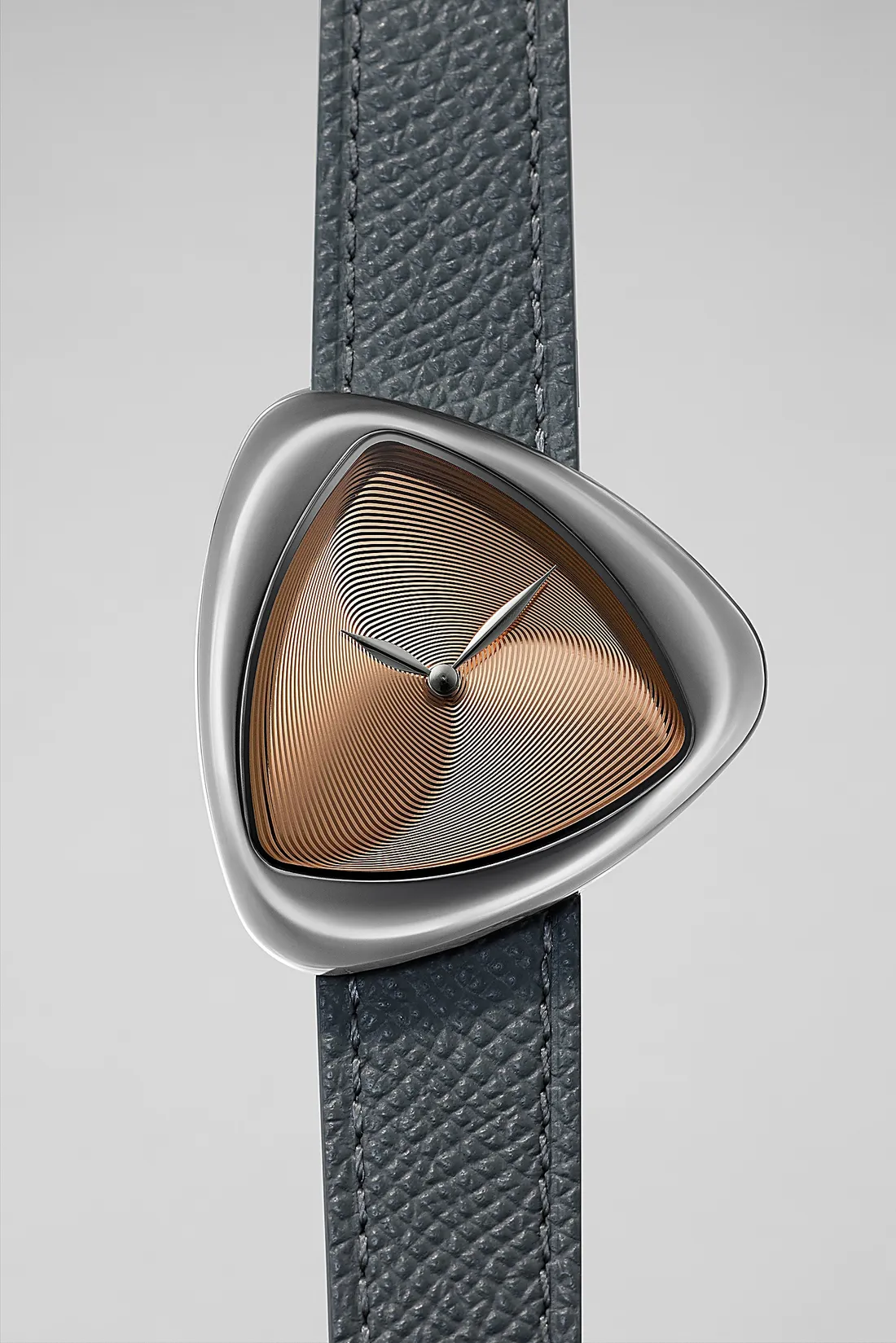
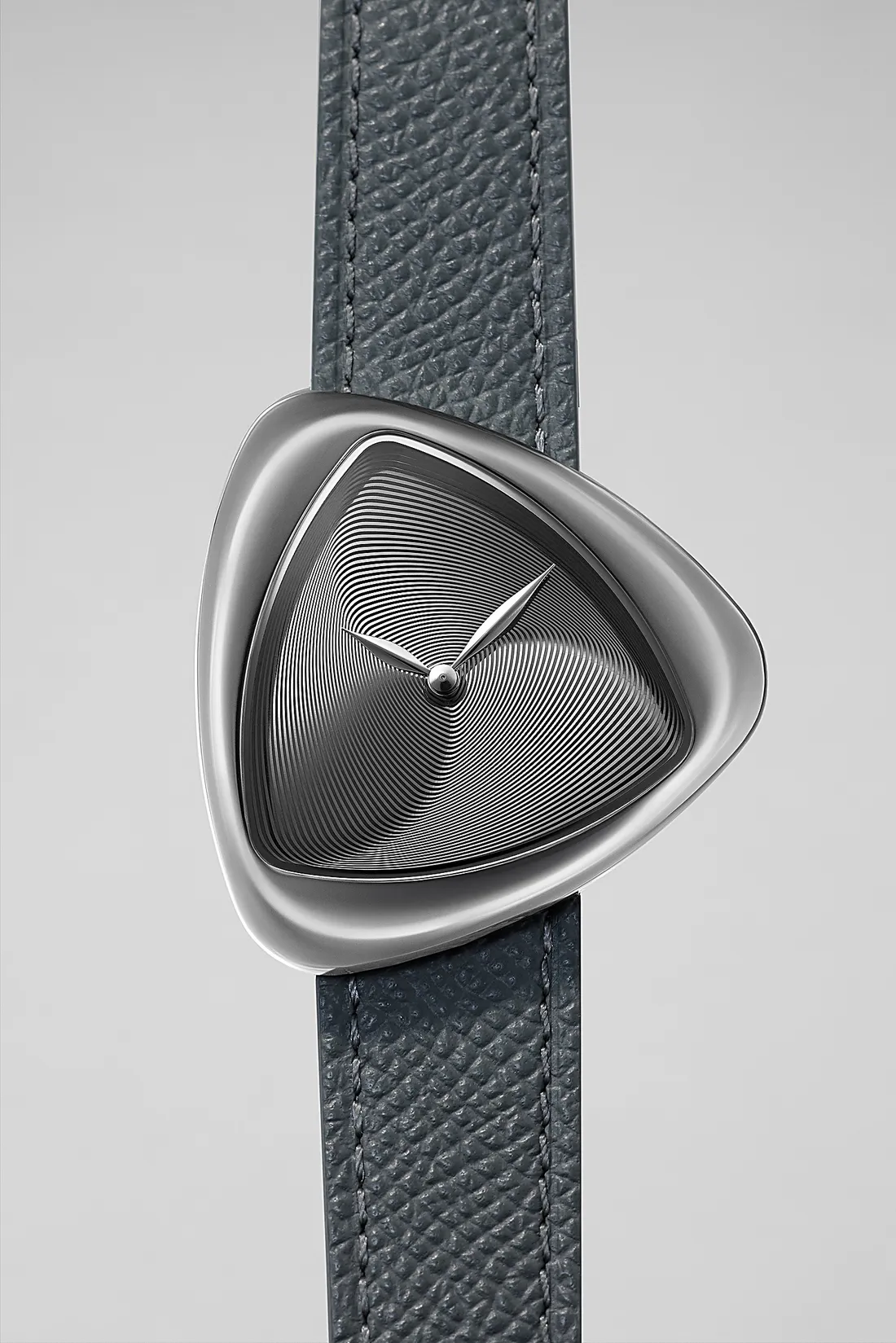
The Anoma A1 Optical, introduced in 2026, stands exactly on that spot.
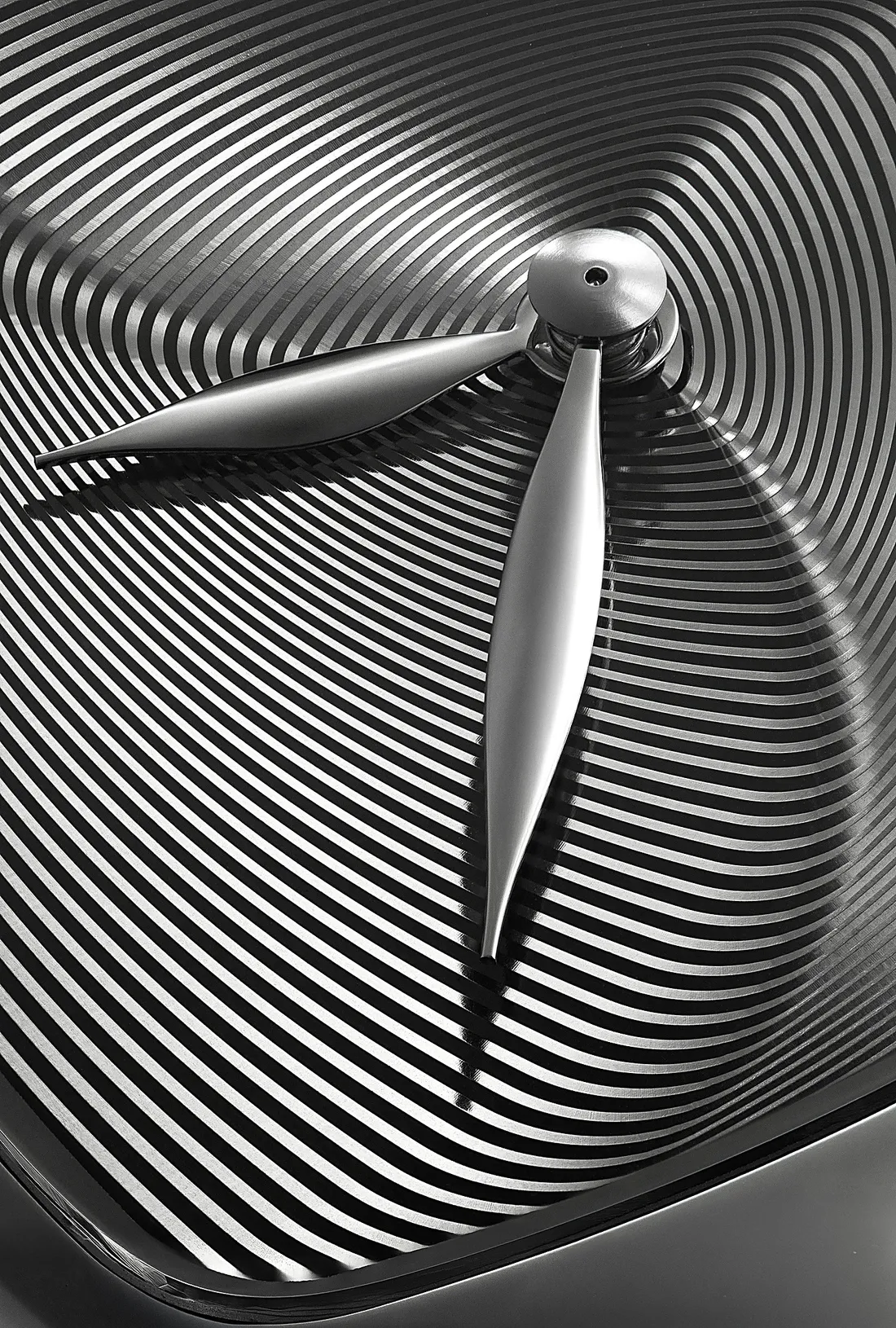
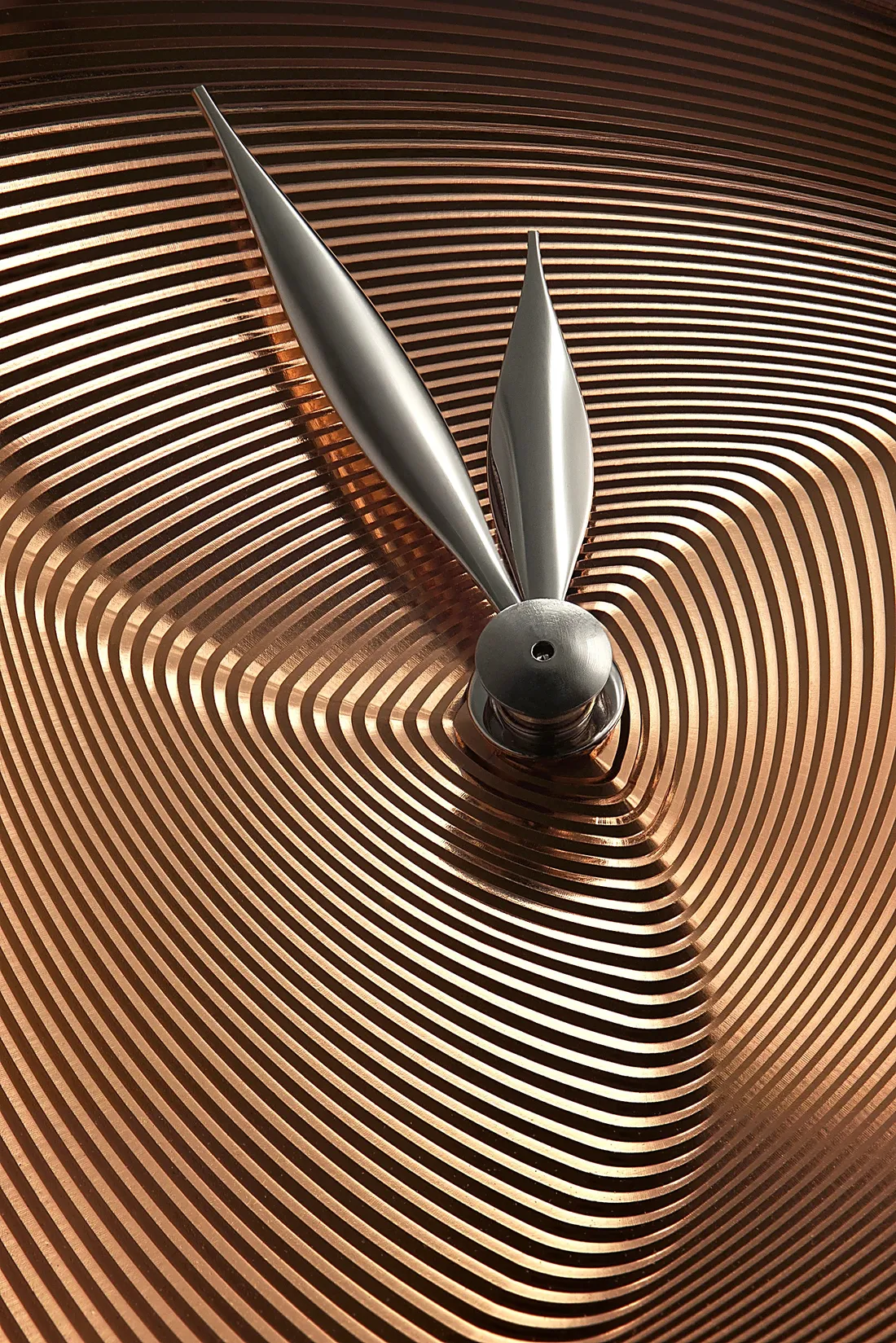
Its dial carries the method of Optical Art into metal. Fifty triangles are opened in the base by dragging a sharp tool across it, each one offset a little from the last. The surface is then sandblasted and hand-polished until it reflects as much as intended. Turn the wrist and the light slides between those lines, and the dial appears to ripple although no part of it has moved.
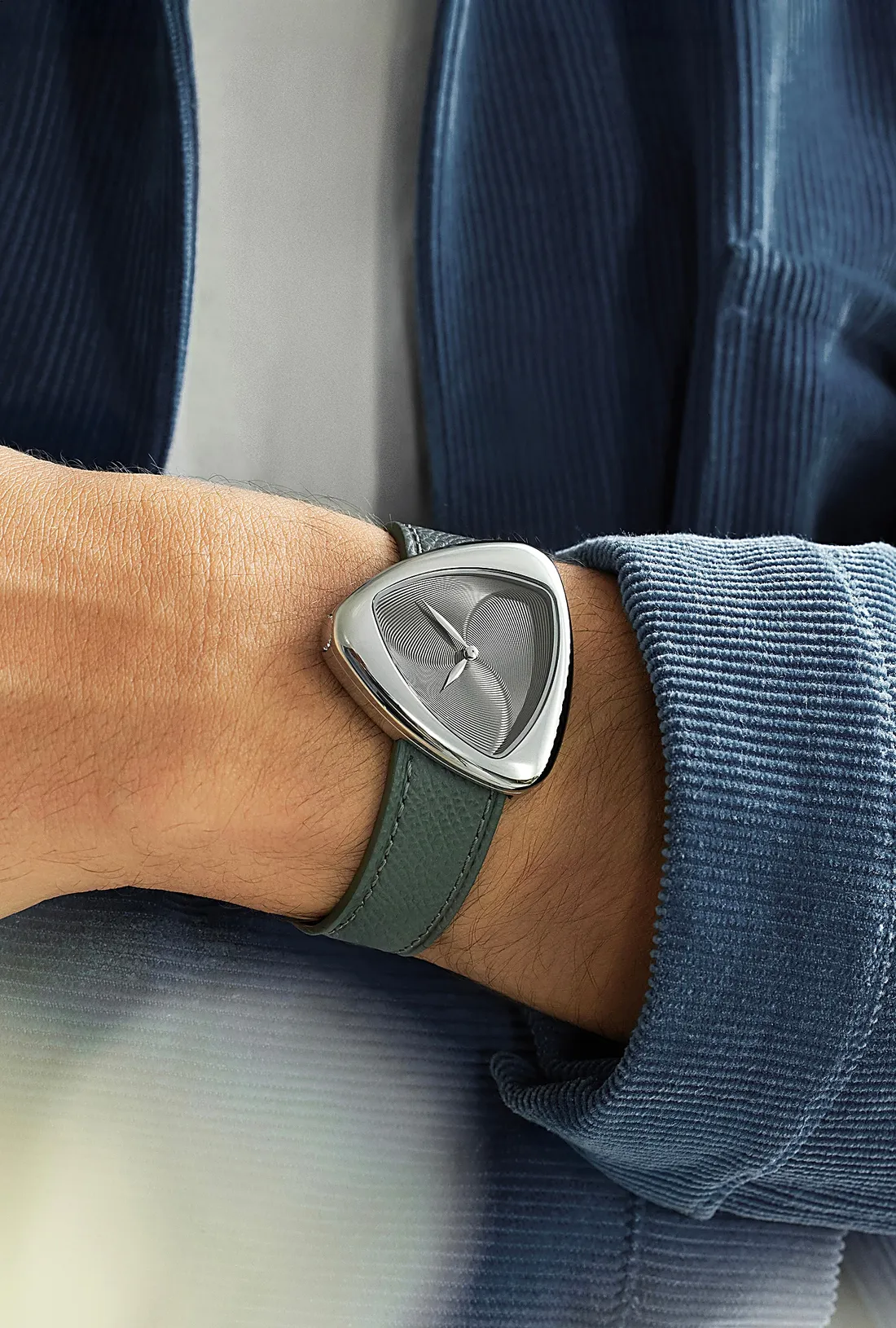
The case follows the same thought. Anoma says its shape came out of a free-form table made by Charlotte Perriand in the 1950s, out of the roundness of river stones, and out of the sculptural language of Constantin Brancusi. What emerged is a triangle with its corners softened, and it has no lugs: the strap enters the body directly.
Put a projectionist and the craftsman who cuts this dial side by side, and both would talk about the same gap.
The projectionist would say: my job is to make sure nobody notices an interval. I cut the light between frames, the film advances, I let the light through again. I do this dozens of times a second, and when I do it well nobody sees a thing. My task is to be invisible.
The craftsman would say: my job is the reverse. I open fifty lines that never move, and I leave the movement to the light. You hide the interval and I display it. But we are both relying on the same thing, which is the eye’s habit of filling gaps.
The figures run as follows. The case measures thirty-nine by thirty-nine millimetres and stands nine point four five millimetres tall, and because the lower three millimetres curve inward it wears thinner than that. With no lugs it sits like a thirty-seven millimetre watch. Inside runs the Swiss automatic Sellita SW100. The crystal is sapphire with an anti-reflective coating, water resistance is fifty metres, and the strap is grained Italian leather. The dial comes in copper or silver, and the price is two thousand six hundred and forty pounds.
The thought that follows makes a person a little humbler about his own perception.
The world we see is not a faithful copy of the light that reaches the eye. The mind is constantly completing, smoothing and closing, and it hands us an unbroken scene. Without that completion, life would be a heap of pictures that refused to stick together.
What is remarkable is that the completion is misleading and reliable at once. We do not misjudge a step on the stairs, we catch the hand held out to us, we notice the car coming. Our perception builds a correct world out of incomplete data. That agreement did not arrange itself. The rhythm outside and the rhythm inside have been tuned to each other, and the Creator covered, on our behalf, the gap the eye cannot catch.
All the light of Cannes shines on top of that covering. We do not see the darkness on the screen, we do not notice that the lines are standing still, and we take it that life is flowing. Perhaps the miracle is not the movement but our being able to see it.
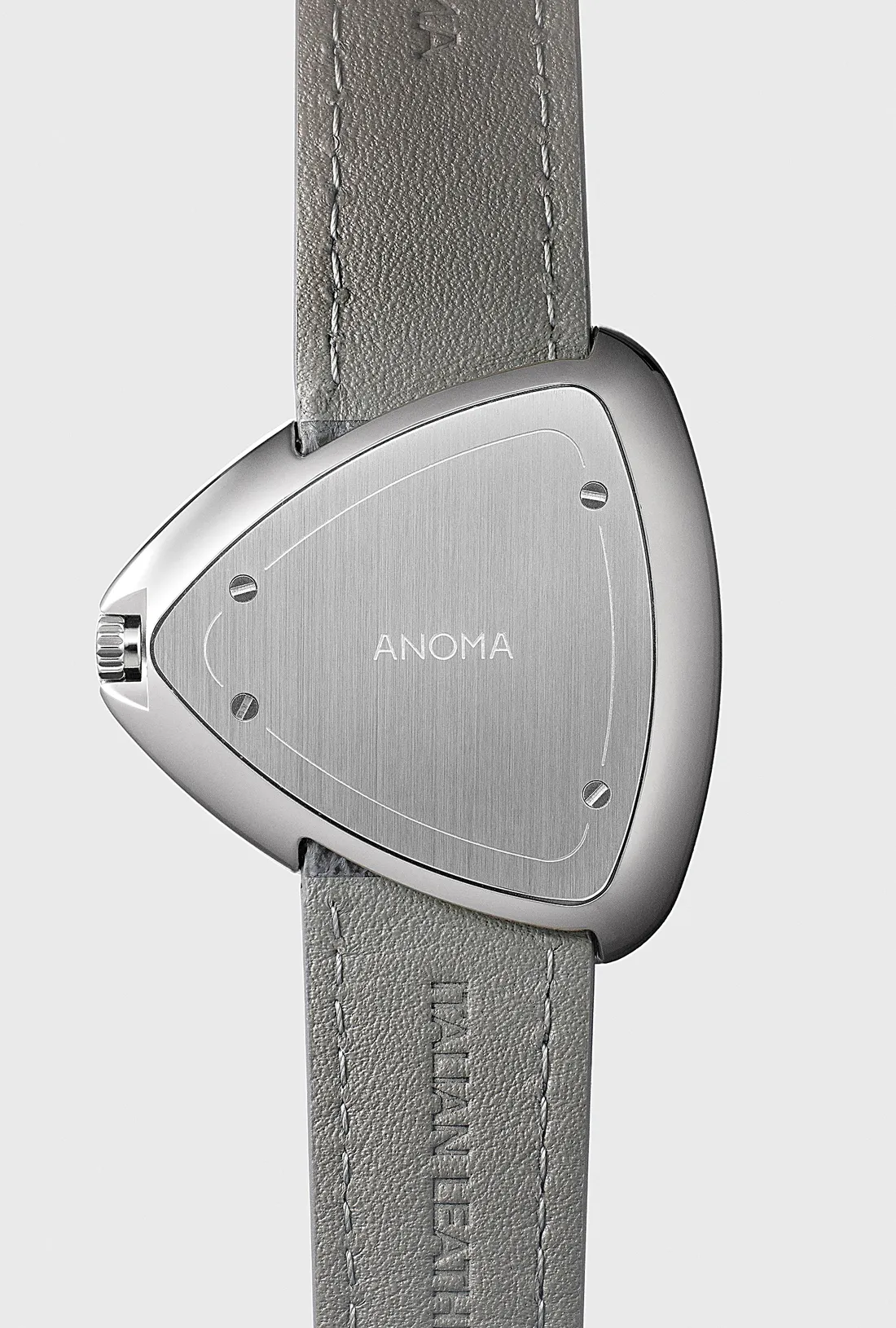
The watch on its maker’s own site: Anoma, A1 Optical