When a city finds the most elegant way of silencing its people, it also learns to call that thing freedom.
In eighteenth-century Venice the laughter that sank into the misty water of the lagoon was not the sound of freedom but of an intelligently constructed piece of social engineering. To keep a population crushed under rigid class divisions, heavy taxes and religious pressure from reaching its breaking point, the Venetian oligarchy had invented the perfect safety valve: Carnevale.
The word comes from the Latin carne vale, farewell to meat, and the ritual is a collective feast of leave-taking in which bodily appetites, and flesh itself, are consumed one last time without restraint before Lent. The Bauta mask everyone wore in those weeks was not, as people imagine, porcelain: it was a shield formed from layer upon layer of papier-mâché or from leather, painted white, its chin extended until it juts forward. That strange projection is not ornament but function; it lets you eat, drink and talk without taking the mask off, and it muffles the voice past recognition. The Republic even legislated the thing, writing down which season and which doorway allowed it. In a city where the state licenses anonymity, that anonymity is no longer a freedom but a public service.
Offered as a promise of equality, the armour was in truth a political anaesthetic numbing the moral compass of the crowd. The message given to people was that you may do whatever indecency you like, because your face cannot be seen; social anger and unrest were dissolved into rot and appetite. Sheltering behind that anonymous shell, people mistook pleasure, gambling and intrigue for becoming free.
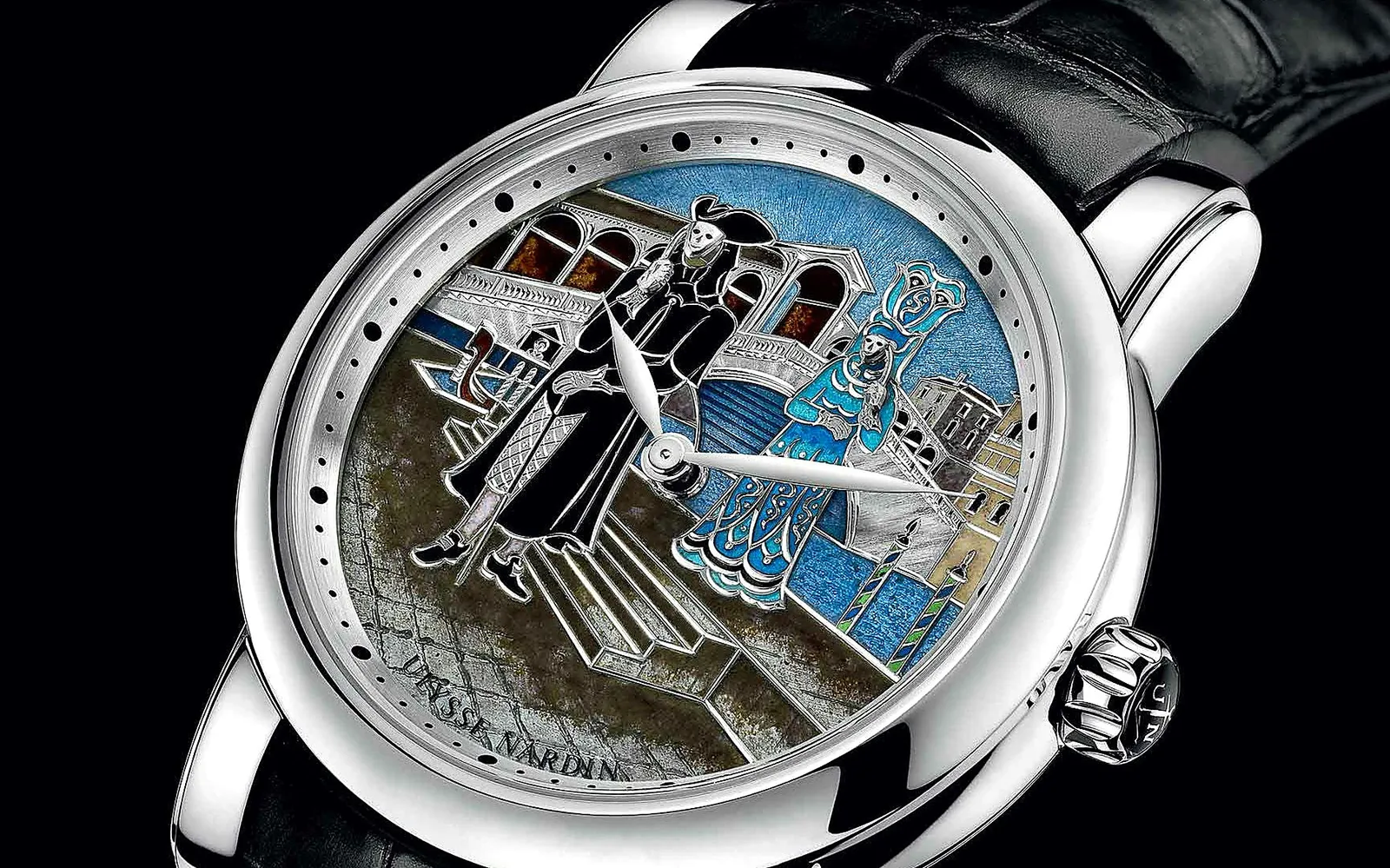
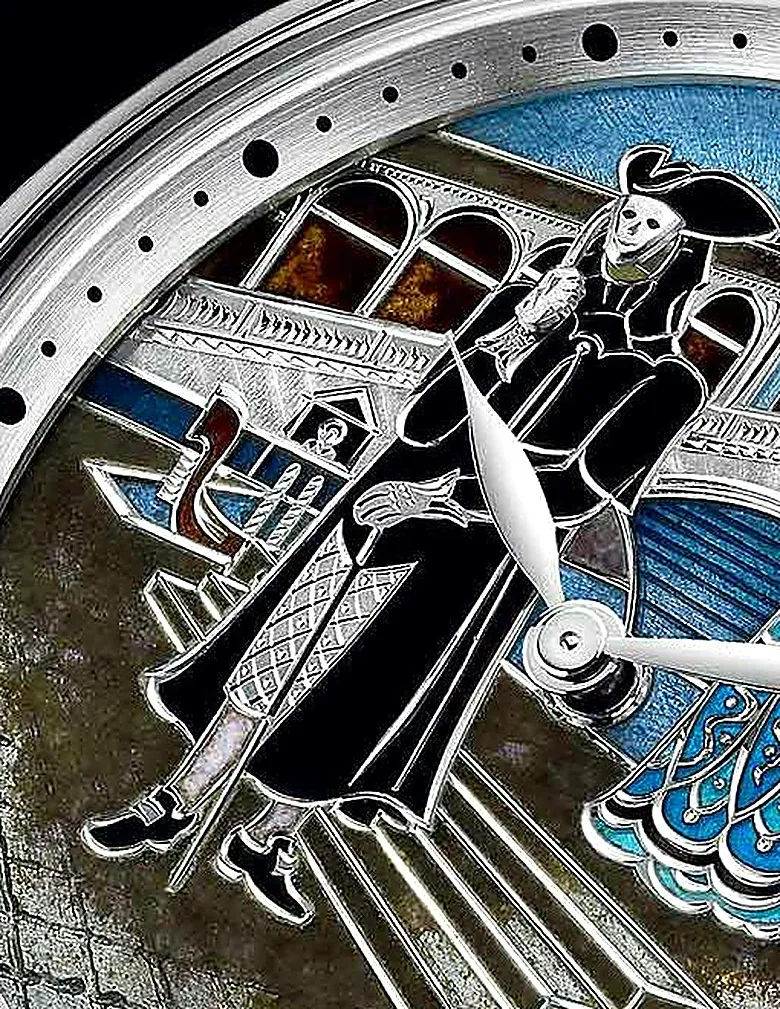
Where traditional high watchmaking tries to discipline time with numerals and hands, Ulysse Nardin carries this mass theatre, and with it the existential examination of a human being, onto a dial in the Classico Carnival of Venice Minute Repeater, made in eighteen pieces only.
The immortal observation Immanuel Kant left on the last pages of the Critique of Practical Reason in 1788 exposes the shallowness of the masks in the streets of Venice in a single sentence: two things fill the soul with an ever new and increasing admiration and awe, the more often and the more steadily one thinks about them, the starry sky above me and the moral law within me.
Kant’s starry sky here is no ordinary piece of poetic praise but an immense cosmic metaphor. The starry sky stands for the universal laws that exceed a human being, that run on a flawless mathematics and never falter. That endless vault you see when you lift your head reminds you that the universe is not a lawless drift or a fairground without limits, but the unshakeable order of an immense Orderer, of the real Lawgiver. The world is not an unregulated carnival ground in which appetites may be satisfied without consequence. Whatever those unshakeable laws of physics are in the sky, the moral law a person carries in his own soul is the same thing.
A man may put a mask on his face and escape the eye of society or of the law; but he can never deceive the cosmic order that covers the sky, nor the real lawgiver in his own conscience. A mask can manufacture a virtual anonymity, yet it is not enough to suspend the moral law of the universe. The face a mask hides is never the same thing as what it wants to hide.
format_quote"In a city where the state licenses anonymity, that anonymity is no longer a freedom but a public service."
Hasan Bekmezci
And this is exactly the most critical fracture point in philosophy and in the history of humanity. Two diametrically opposed understandings of human nature collide: the primitive one that mistakes the release of impulse for freedom, and the philosophy of virtue that takes the single measure of being human to be the bridling of appetite by will.
To go after one’s appetites and darker sides without control is no sign of truth or of strength; it is a man enslaved to his own primitive drives. The fundamental limit that separates a human being from other creatures, and that loads him with an existential courtesy, is precisely that inner braking mechanism. If a person can trample his moral boundaries merely because he has put on a mask or hidden his identity, that does not show he has been liberated; it shows how fragile his will is. Real character is what you choose to do in those anonymous moments when nobody sees you, judges you or punishes you.
That stance has its counterpart in the mechanical balance of horology. Wind the mainspring of a watch all the way and an immense raw force gathers inside it. Without an escapement and a balance wheel holding that force in check, limiting it to beats divided into small fractions of a second, the spring would let go at once, tear the wheels apart and destroy the whole system. Releasing raw energy brings ruin; bridling it brings out an order that flows, and the rhythm of time. That is exactly a person’s work in this world: to turn the raw force inside himself not into primitive destruction but, hammered on the anvil of the will, into a life of virtue.
Hiding behind masks to escape moral responsibility does not liberate a man. It only makes him the captive of his own weakness.
format_quote"What the escapement is to raw force in a watch, the will is to appetite in a man. Energy set free produces not time but ruin."
Hasan Bekmezci
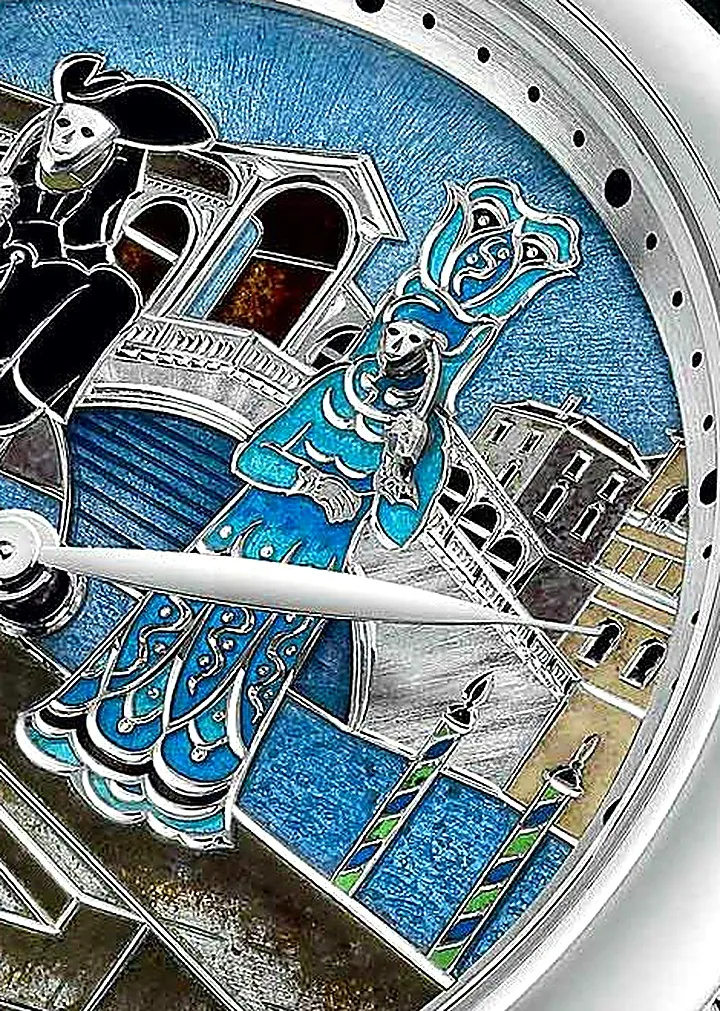
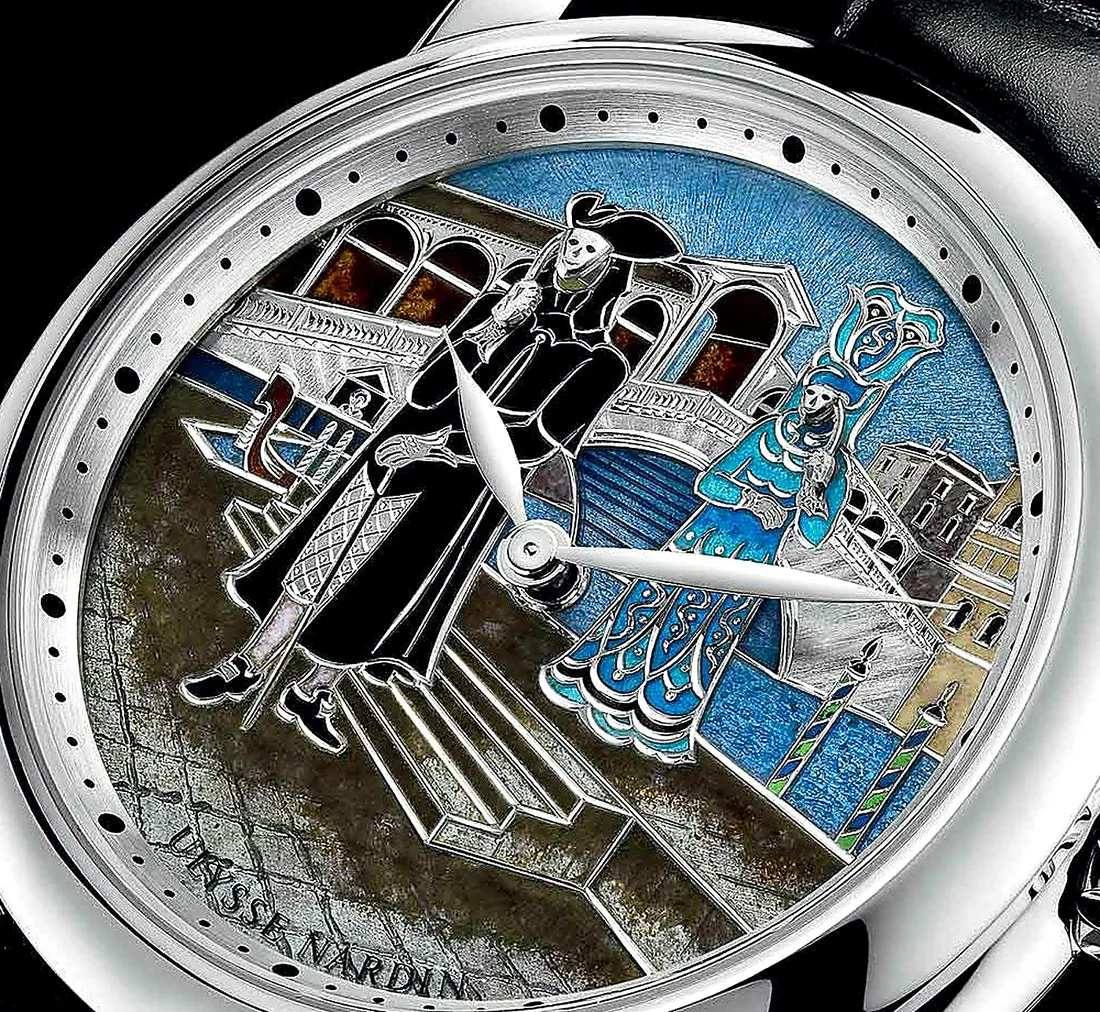
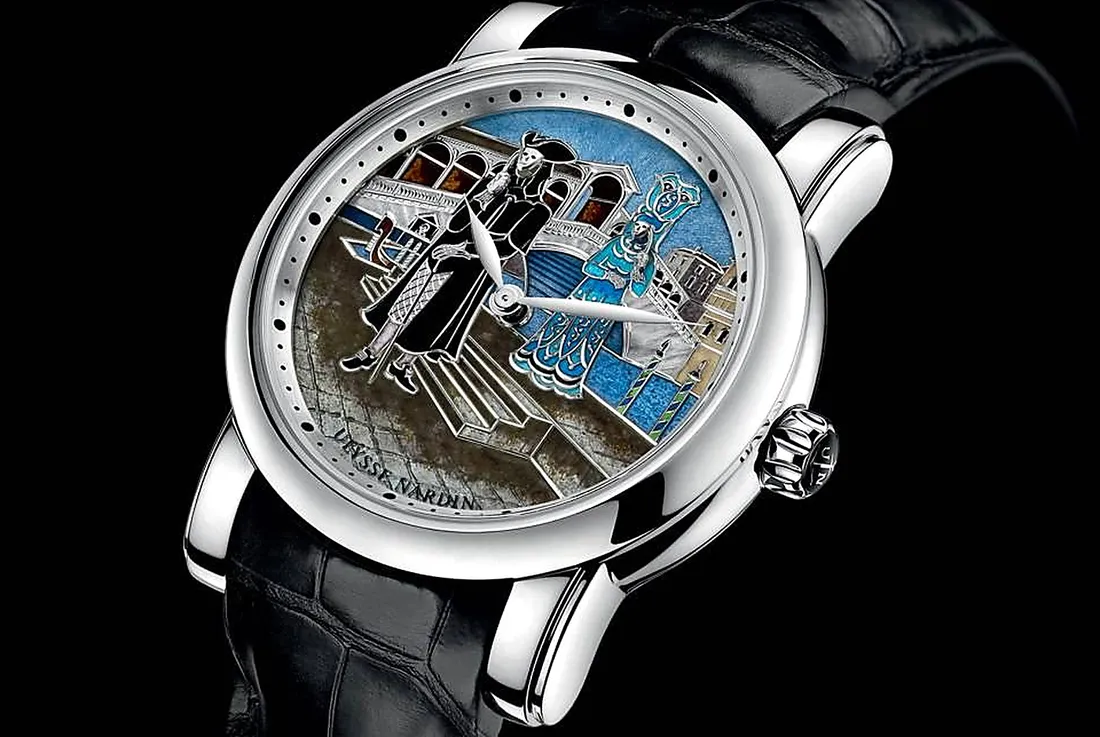
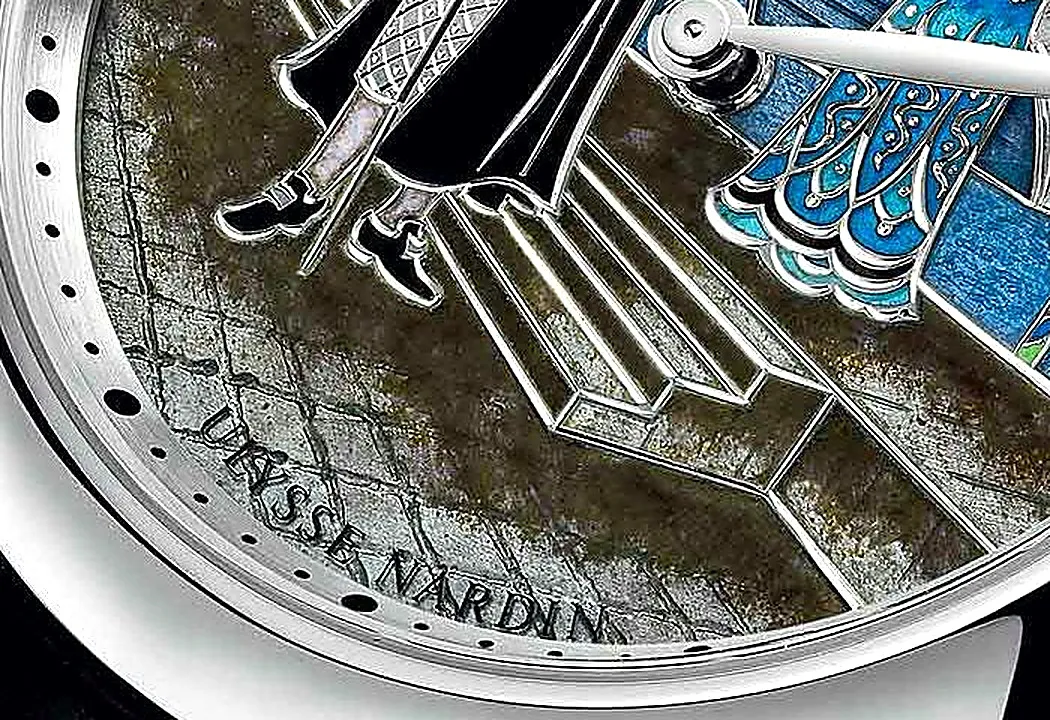
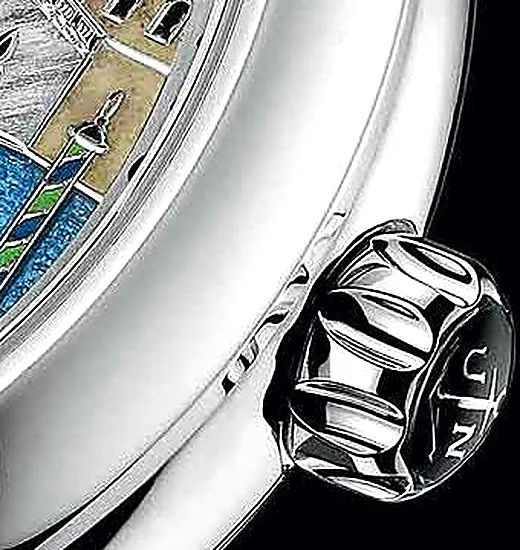
Ulysse Nardin stages this deep moral philosophy not as a still picture on a dial but as a living scene. Pull the slide on the left flank of the case to trigger the minute repeater and the calibre begins to say the hours, the quarters and the minutes in two different tones. While the hammers inside strike the gongs, the two figures at the centre of the dial lift the masks in their hands to their faces and lower them again. That movement, happening while time runs, stages the tragic wavering of a man sheltering behind a mask. The hardest work a mechanism can be given is not to measure time but to say something about what it measures.
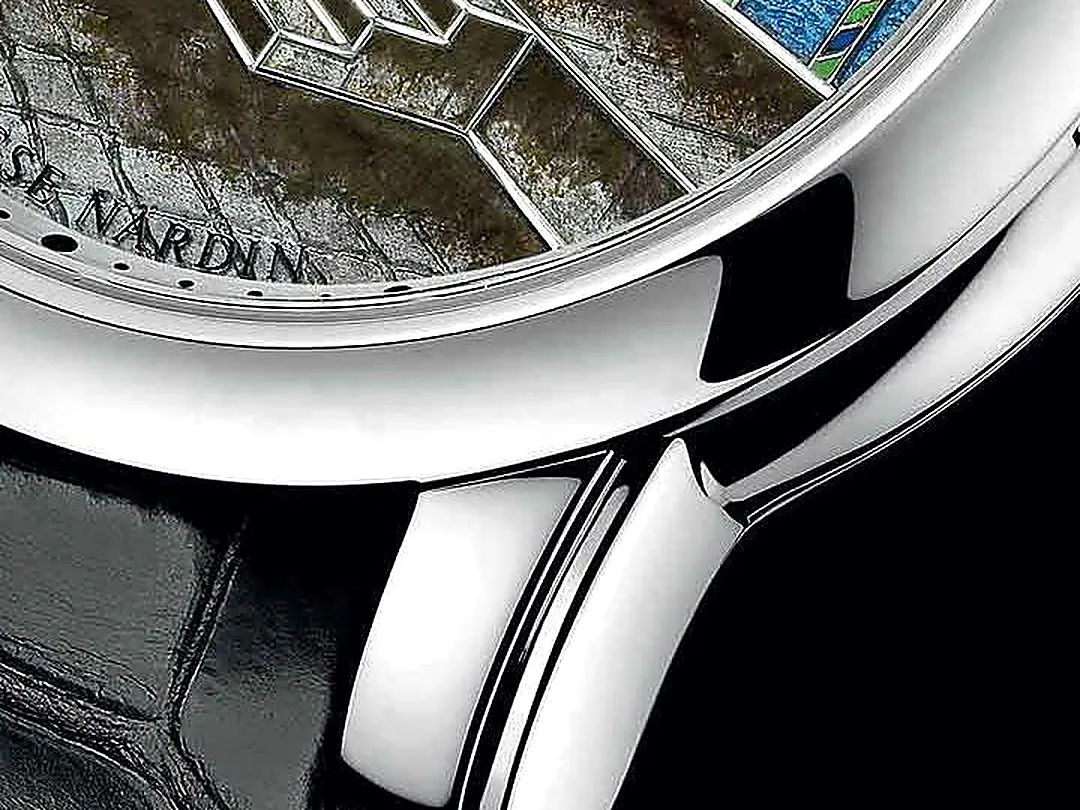
The Rialto Bridge and the Venetian canals rising behind the figures were made in champlevé enamel. This craft is the shared child of engraving and enamelling: the cells the pattern will occupy are cut and hollowed out of the body of the gold plate itself, those hollows are filled with powdered glass, and the whole thing is fired layer upon layer at around eight hundred degrees. Every colour asks for its own turn in the kiln, and every turn is a gamble that the layer beneath it will not crack. At the end the surface is stoned and polished, and the colour, instead of sitting on top like paint, is buried inside the metal. Ulysse Nardin does not buy this work in: Donzé Cadrans in Le Locle, taken into the house in 2011, is one of the very few ateliers still carrying traditional enamel, translucent enamel, cloisonné and champlevé by hand. For a brand to own its own enamel workshop is not a luxury but an insurance policy.
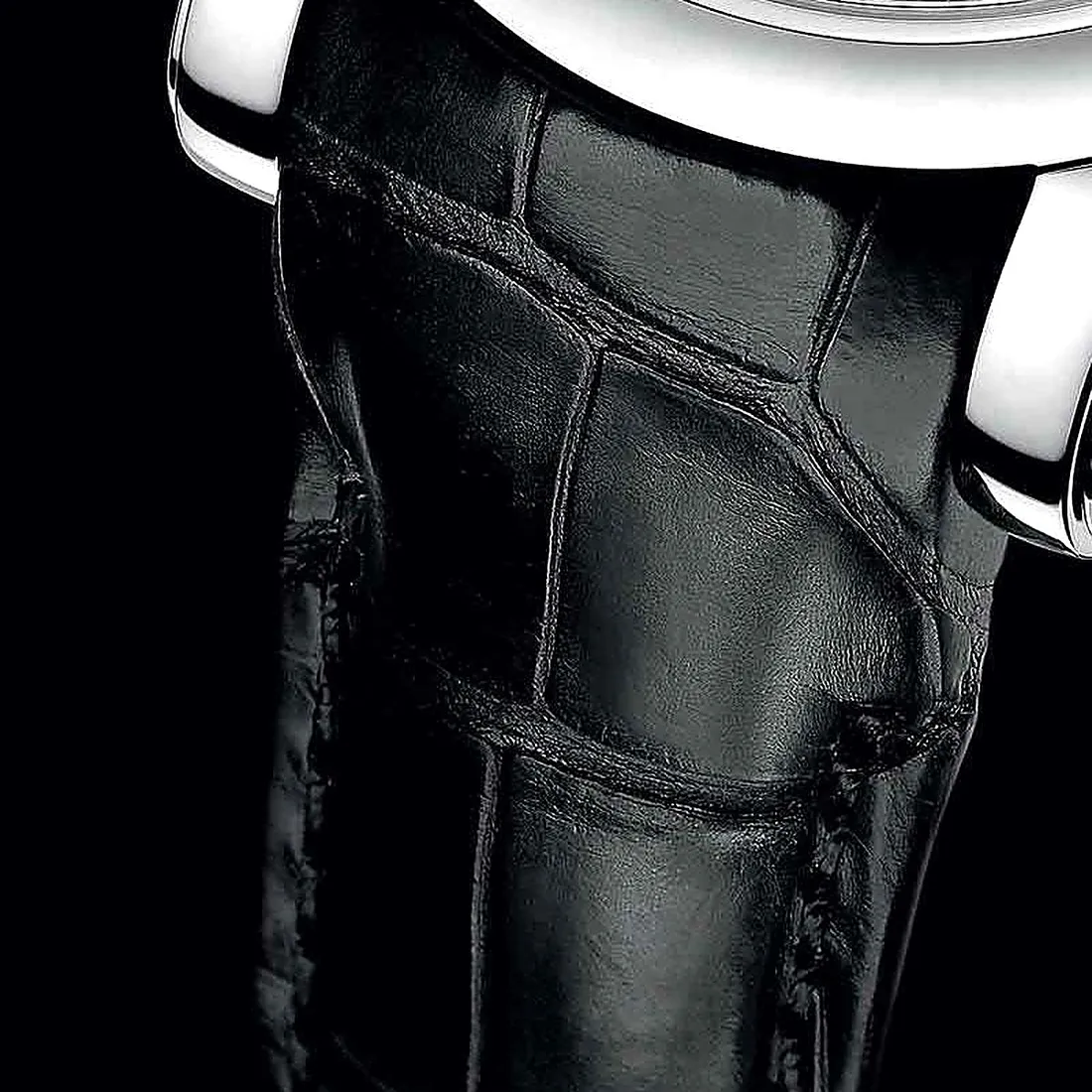
Calibre UN-71 is a hand-wound minute repeater, giving forty-eight hours from a full wind. The case is forty-two millimetres across and was offered in two metals: the platinum reference 719-63/VEN and the 18-carat rose gold reference 716-63/VEN. The strap is black alligator with a folding clasp. And the whole series is eighteen pieces. In a striking watch the metal of the case is not decoration but instrument; the sound grows inside that metal before it comes out.
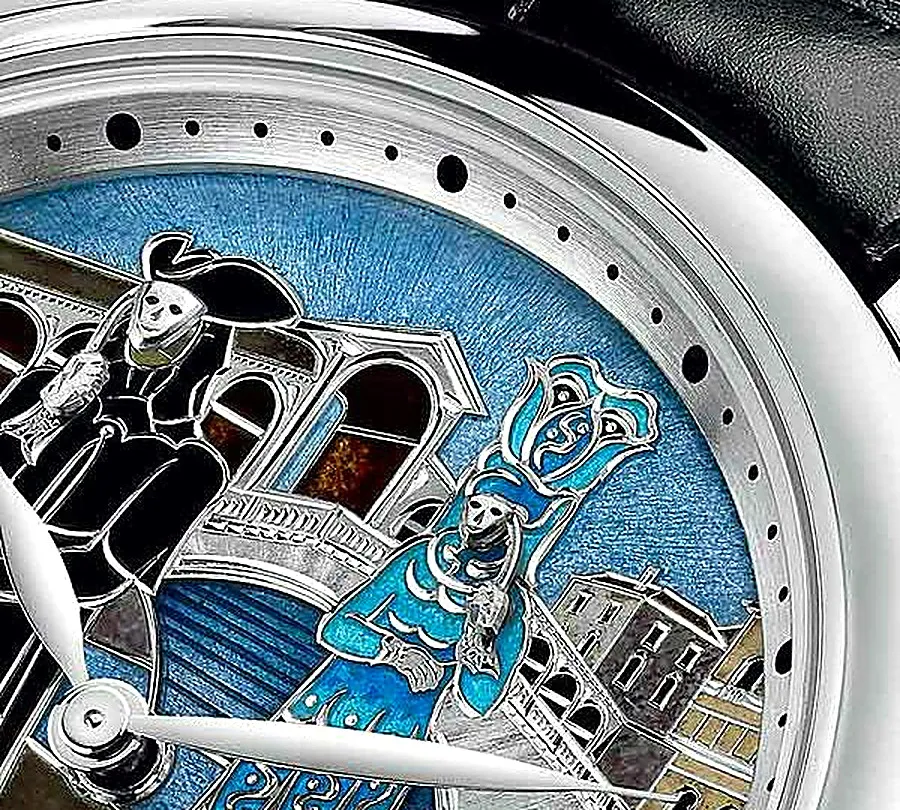
The Ulysse Nardin Classico Carnival of Venice is a forty-two millimetre mirror of conscience carried on your wrist.
While the social engineers of Venice handed the crowd a mask and drove them into dissipation, this watch whispers the opposite: when the bells have chimed and the theatre is over, the masks carry no authority at all. Just as the wheels inside the watch make time meaningful by bridling raw force with will, a person remains a person for as long as he can keep his own will, and that unshakeable inner law Kant pointed to, even in the anonymous moments when nobody is watching.
Time is the fairest judge of all: the one that brings down every mask on our faces and leaves us alone with our own naked truth.
format_quote"Time is the fairest judge of all, the one that brings down every mask on our faces, because no mask outlives the hand that put it on."
Hasan Bekmezci