Joseph Conrad published a novel in 1904 and called it Nostromo. In Italian the word means roughly our man; in the book it is the nickname of the dock foreman everyone in an invented South American republic trusts. The novel is not really about that man. It is about a cargo of silver, and about how people change as they handle it, how an honest character slowly rots.
Seventy-five years later a film-maker went looking for a name for a towing ship in deep space and took the title of that book. Everyone who saw the film remembers the ship. Most of them have never read Conrad.
And now the same name is being used a third time, for a table clock. A chain of references three links long, each one detached from the one before it. But the question at the head of that chain is still standing: what does a person’s relationship with an object do to the person?
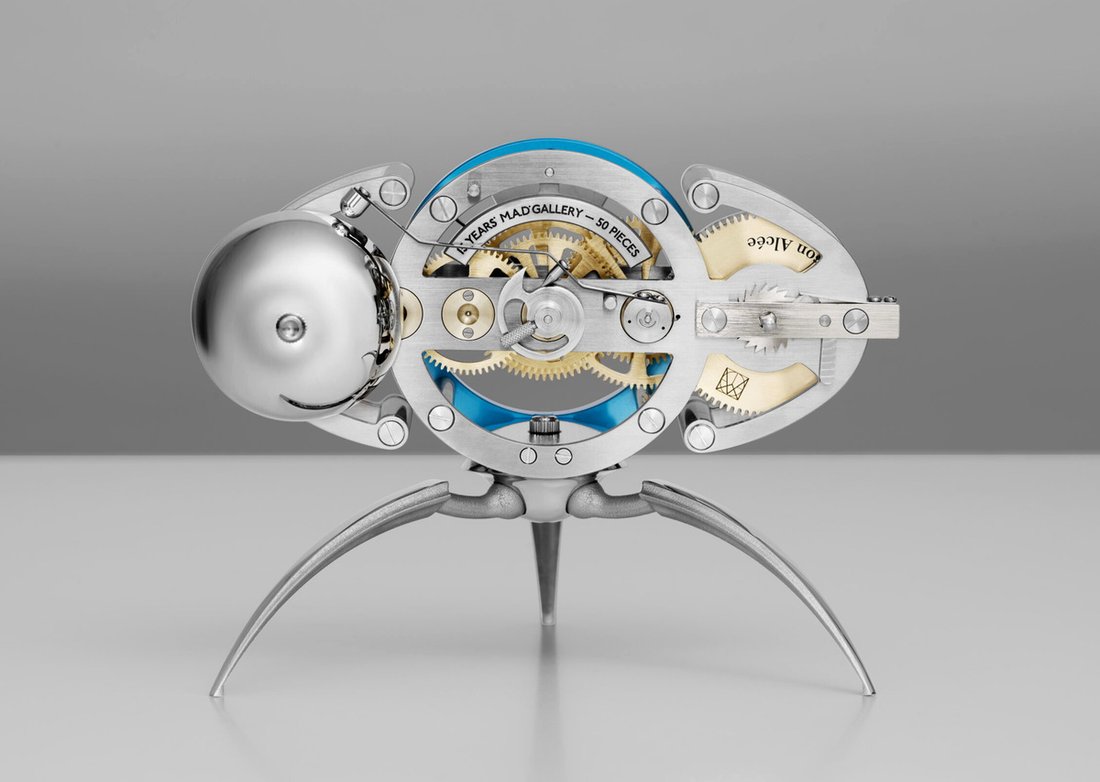
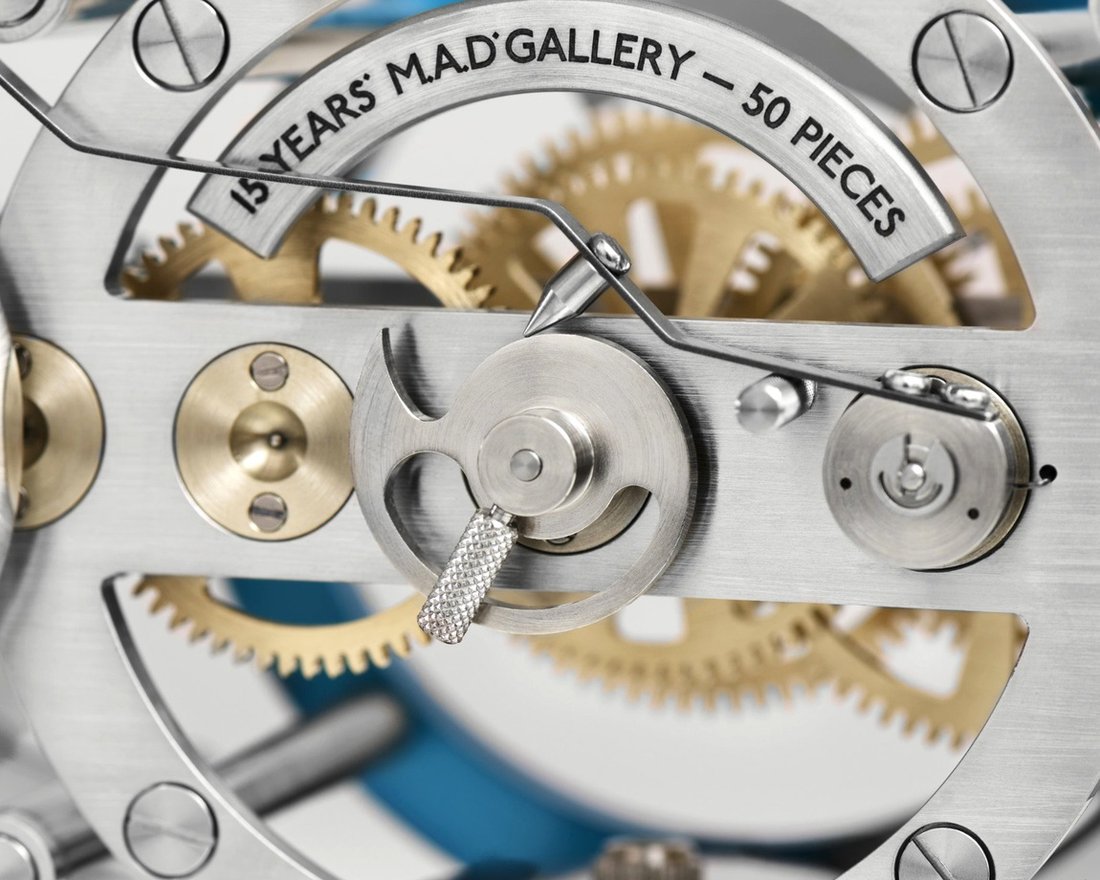
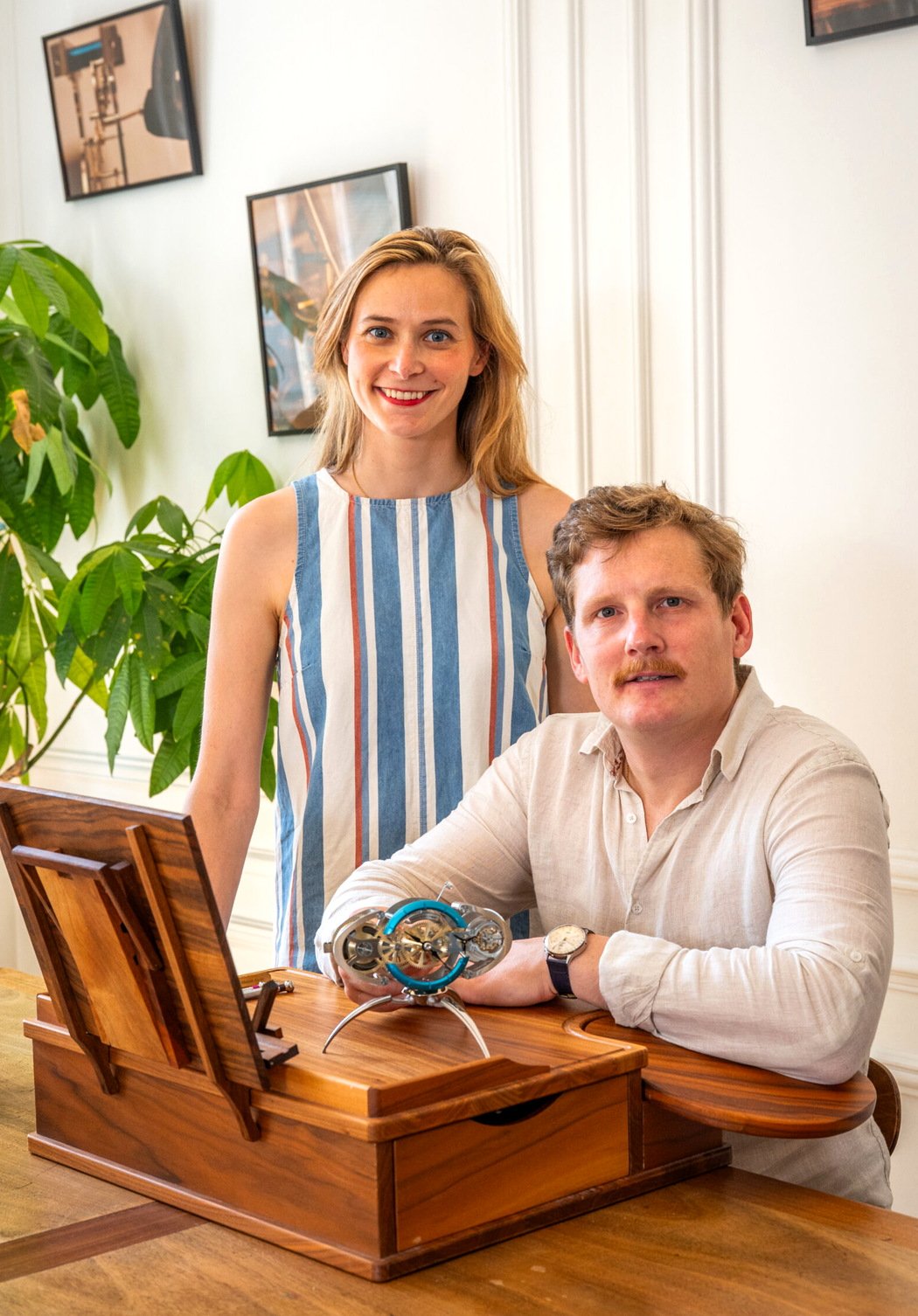
Nostromo is the work of two houses. Maison Alcée is a young French firm with a single preoccupation: table clocks that the buyer assembles. MB&F opened the M.A.D.Gallery in Geneva fifteen years ago, a room that moved watchmaking out of a retail vitrine and into an exhibition space, and this piece marks that anniversary in a run of fifty.
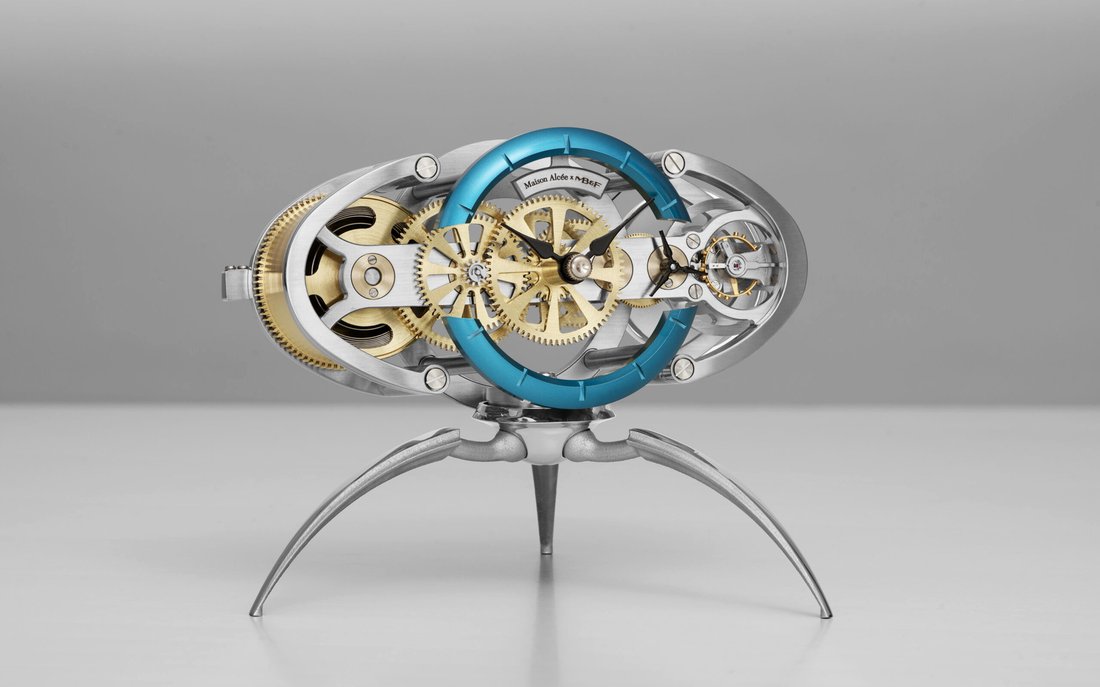
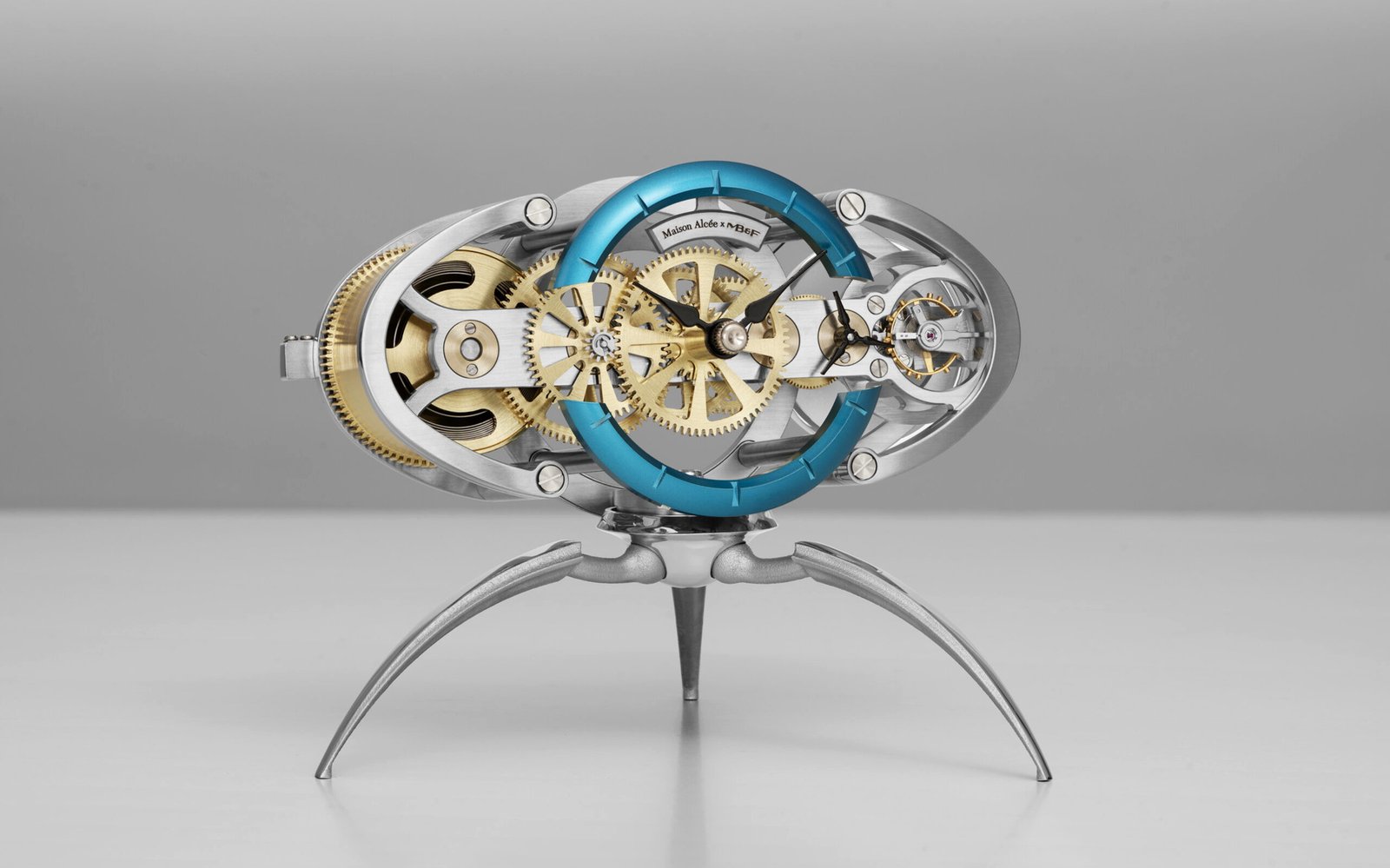
What came out of it sits where MB&F’s habits cross Alcée’s method. Alcée’s clocks are traditionally vertical; this body has been laid on its side and given three feet. Those feet, added by the designer Max Maertens, are organic, curved and pointed at the tip, and they turn the machine from a piece of furniture into something closer to a creature. The name borrowed from the film starts to make sense there.
The overall dimensions are one hundred and sixty millimetres by one hundred and twenty-three, a hundred and thirty-five deep, and seven hundred and sixty grams. A machine the weight of a book and the size of a dinner plate.
The real business begins when you open the case. Nostromo does not arrive running. Inside a walnut box are more than two hundred separate components, screwdrivers, tweezers, a pair of gloves and a book that walks through every stage. The build takes about ten hours.
That is an interesting engineering problem in its own right, and the easy-looking side of it is misleading. A watchmaker assembling in a factory seats parts with a touch built over years, and tolerances can be held to microns because there is a trained hand on the other side. You cannot hand the same tolerances to somebody sitting at a table at home. Holes have to be a little more forgiving, arbors a little longer, screws different enough not to be confused with one another. But that loosening has a limit: too much play and the clock will not run.
Which is why exactly one part arrives already assembled: the regulating organ. Setting up the pallet fork, escape wheel and pendulum group is not something an amateur learns in an evening. Alcée leaves everything else to you and keeps in its own hands only the small section that determines whether the clock keeps time.
format_quote"Modern luxury sells you the removal of labour. This box does the opposite. It hands the labour back."
Hasan Bekmezci
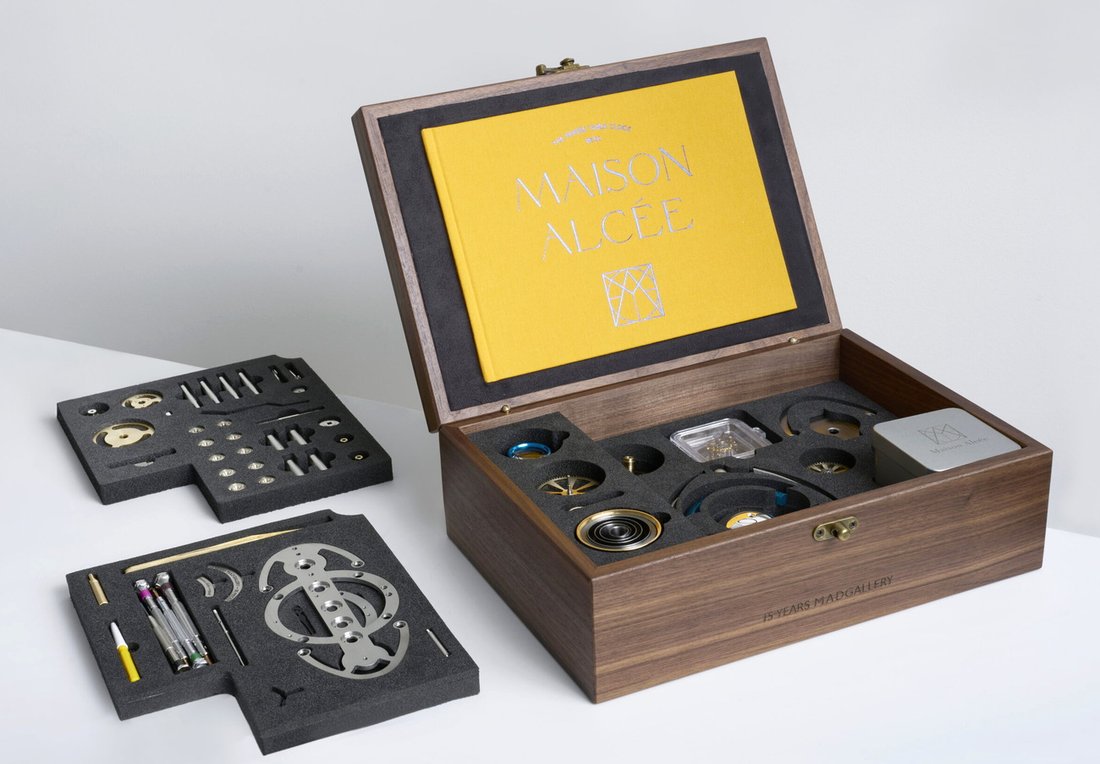
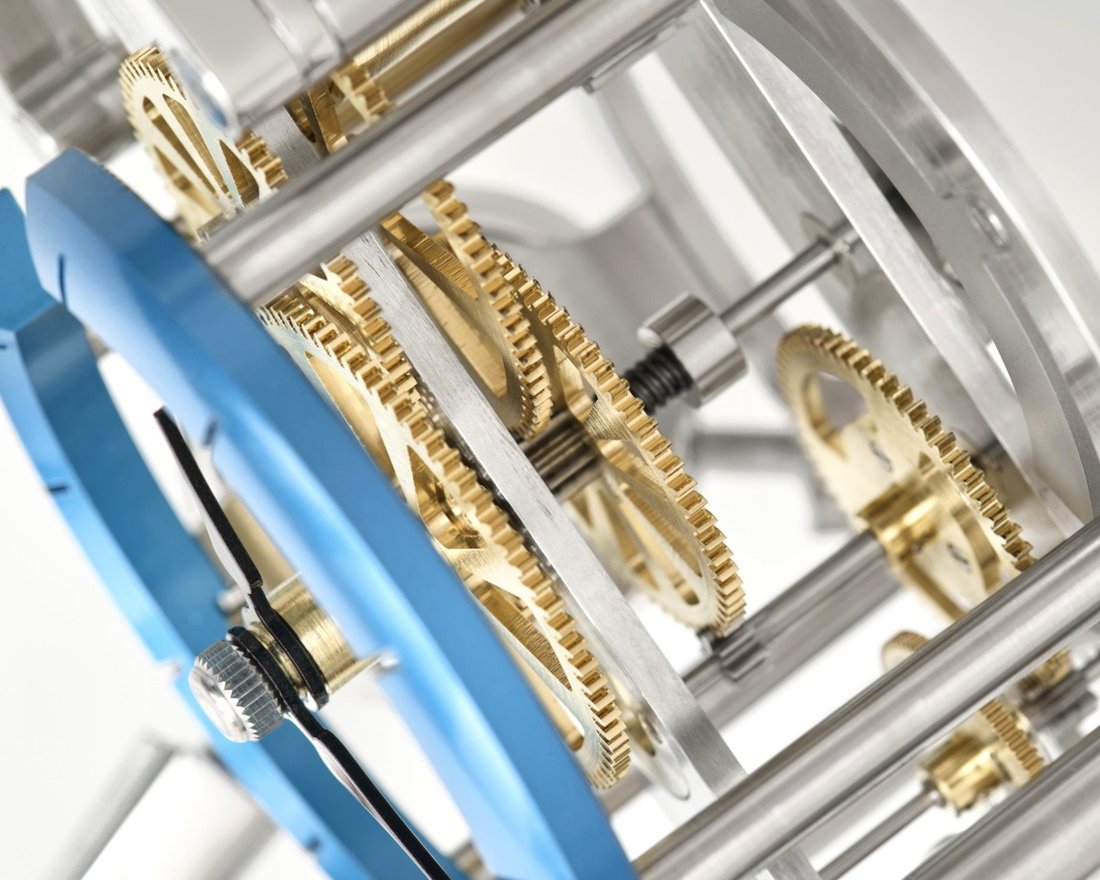
The choice of materials follows that amateur hand. The wheels are brass: easy to work, free of burrs and warm to look at. The baseplate is steel, because the structure carrying everything must not flex. The bushes the arbors turn in are German silver, and that alloy was chosen for its friction behaviour rather than its colour. Running against a steel arbor it does not seize, it does not shed wear dust, and it turns cleanly even when the oil film is thin. In a factory that difference is trivial. In the hands of somebody building their own clock it is not, because that person will over-oil or under-oil.
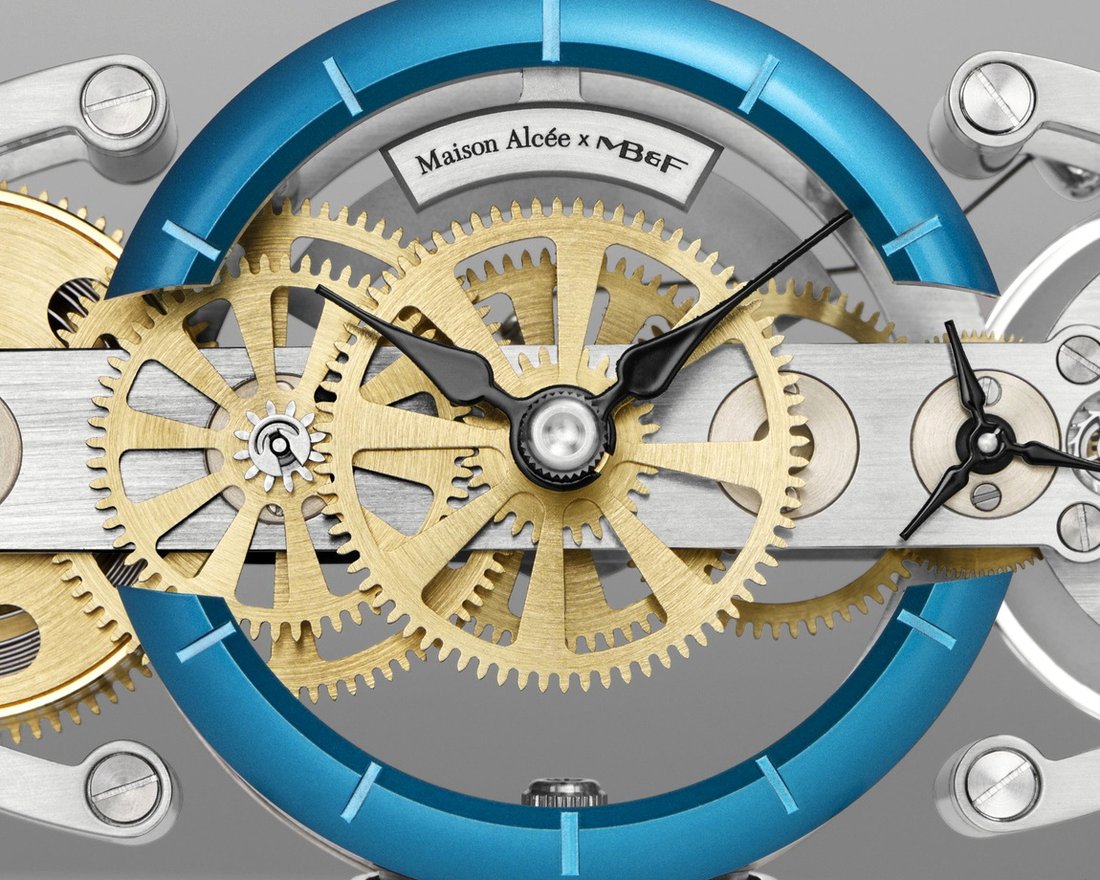
Assembled, the machine runs for fourteen days. The peacock blue ring at the centre carries the hours and minutes, read off by black hands. Seconds turn at three o’clock. And there is a chime on demand: pull a small lever and the clock strikes the hour.
That chime is technically unnecessary, since the dial is sitting right there. But here the unnecessary thing is a reward. After ten hours of work, the first answer the machine gives you is a sound.
Everyone knows that building something yourself changes your relationship with it, but the reason usually goes undescribed. Here is the reason: while building it you make mistakes. You put a screw in backwards, you seat a wheel out of sequence, you drop a part and spend half an hour looking for it on the carpet. What you hold at the end is not only a machine but a map of those mistakes. And a person looks differently at an object whose faults he personally knows.
A clock that leaves a factory is faultless, and that faultlessness is what makes it a stranger to you. A clock you assembled carries the same story you do.
format_quote"What you build yourself is also a map of the mistakes you made. A person looks differently at an object whose faults he knows."
Hasan Bekmezci
format_quote"For something to be cheaper, somebody has to work, and this time that somebody is you."
Hasan Bekmezci
Fifty were made, sold only through the galleries in Geneva and Dubai and the brand’s own spaces. The price sits well below what a mechanical object of this scale would normally cost, because you are absorbing part of the labour. That is the most honest sentence in the whole story: for something to be cheaper, somebody has to work, and this time that somebody is you.
In Conrad’s novel the silver changed everyone who touched it. Here what changes you is not the metal but the ten hours spent with it. When you close the box there will be a clock in front of you, but the thing you have actually acquired is knowing how a machine stands up.