
There is a truth far more violent than the vast gravity that holds up the most magnificent galaxies of the vault of the sky, and many times more powerful than the dazzling games of electromagnetism, that is, than the spellbinding electromagnetic web which gives the universe its colour, its light and its chemistry through positive and negative charges pulling and pushing at one another in an unbroken dance. That truth is hidden in the deepest refuge of matter, in the nucleus itself.
The meaning Mevlânâ pointed to with his inward wisdom looks here too: open the inner door of a single particle and you will witness the universes turning in it, the suns that never go out, and the whole majesty of the order.
And the most powerful seal of that order is the constant of the strong nuclear force, which seals into the heart of the nucleus those protons that positive charges push apart as though to destroy one another.
format_quote"The most powerful seal of that order is the strong nuclear force, which seals into the heart of the nucleus those protons that positive charges push apart as though to destroy one another."
Hasan Bekmezci
At the beginning of the twentieth century, when physicists looked into the heart of the atom, they suffered a great eclipse of reason. Positively charged protons, all carrying the same electric charge, were standing side by side. According to the laws of electromagnetism, like charges repel one another violently. By that absolute law in our hands, those protons ought to have blown one another apart at once and scattered into space, and the atoms ought to have vanished immediately. There had to be, then, an invisible iron fist holding them in the nucleus, billions of times more violent than gravity and than electromagnetism alike.
When the Japanese physicist Hideki Yukawa sat down at his desk in the early nineteen thirties to solve this riddle, he was running this ground-breaking physical intuition through his mind: in the electromagnetic force the interaction reaches out forever by way of photons; might there be an exchange in the nucleus too, and why does it act only inside the atom, over a microscopic distance, without spilling outside?
Yukawa made this stroke of genius by bringing quantum mechanics and the theory of relativity together, for the first time, at the nuclear scale. By Werner Heisenberg’s uncertainty principle, it was possible to borrow energy for an instant out of the emptiness of space or from within particles and produce a temporary little body, so long as the debt was repaid in a very short time. The span meant here lies entirely outside everyday measures: of the order of a hundred thousand million millionth of a second, which is the time a beam of light takes to cross an atomic nucleus.
Yukawa knew that the field of action of the nuclear force was very short, about one femtometre, that is a quadrillionth of a metre. He calculated mathematically that if this force died away over so short a distance, the carrying particle must certainly have mass. Range and mass were inversely bound: the heavier the carrier, the sooner the force ran out.
At his desk Yukawa predicted the mass of this mysterious particle at about two to three hundred times the electron, and first called it the heavy quantum; the name meson came later, from other hands. The particle caught in cosmic rays in 1937 was taken for his for a while, but it was the muon, and it would not cling to the nucleus at all. Yukawa’s real particle, the pion, was not found until 1947. Yukawa won the Nobel Prize by finding, like a prophecy, a particle not yet seen in any laboratory, by the mathematical order on paper alone, and opened the hardest balance of the universe to mankind.
format_quote"Yukawa found, by the mathematical order on paper alone, a particle not yet seen in any laboratory, and opened the hardest balance of the universe to mankind."
Hasan Bekmezci
By the calculations of physicists, the margin of precision in the constant that sets the strength of the strong nuclear force is of the order of a few per cent. That ratio is an extremely narrow range left open so that the chemistry kitchen of the universe might stay open. Had that ratio been played with, the palace of existence would have fallen as follows.
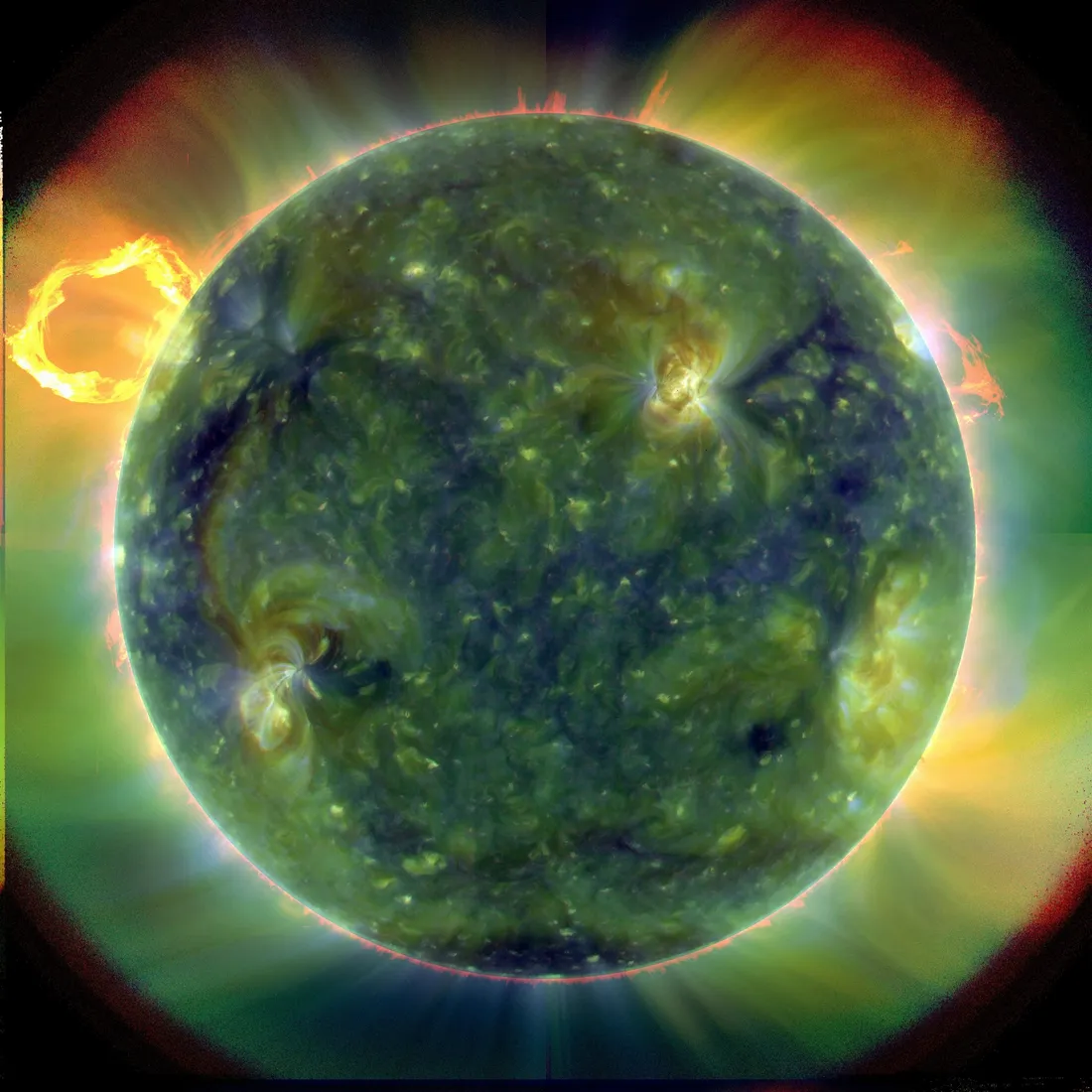
What would have happened if the constant had been a little stronger, why would there have been no water and no Sun? If the constant of the strong nuclear force had been created only two to four per cent stronger than its normal value, why would fusion have happened at once? The strong force would have become so mercilessly attractive that the electromagnetic barrier between the protons pushing one another apart would have counted for nothing at all. Why would no hydrogen have been left? In the first seconds of the universe, all the free protons in space, that is the hydrogen nuclei, would have stuck to one another at once and unstoppably, and fused. Not one free hydrogen atom would have been left in the universe. Why would the chemistry kitchen have closed? In a universe without hydrogen the water molecule could never have formed, because the hydrogen atoms that are the foundation of water would have been used up. In a universe where hydrogen is not to be found, stars such as the Sun could never have existed at all, the fuel tank would have stayed empty, and the earth would have been buried in an endless, extinguished darkness.
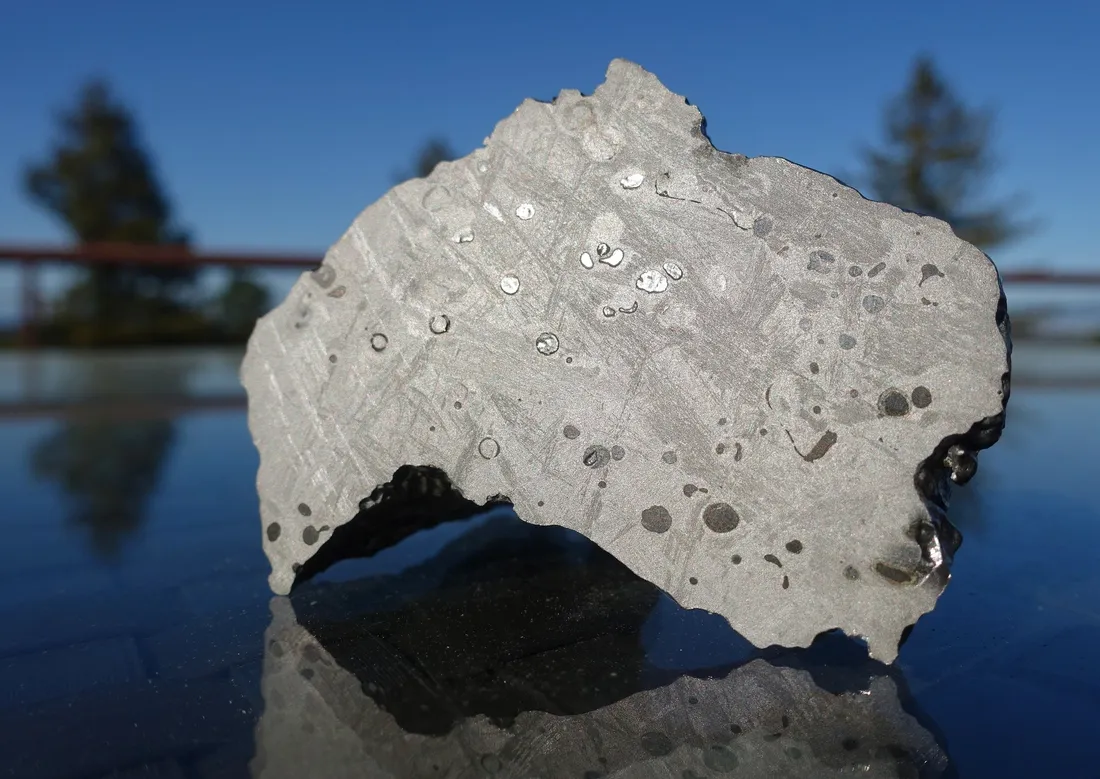
What would have happened if the constant had been a little weaker, why would the heavy elements have vanished? If the constant of the strong nuclear force had been created only one to two per cent weaker than its normal value, why would the nucleus have fallen apart? The electromagnetic repulsion between the protons, that is the pushing apart of positive charges, would at once have defeated the weakening resistance of the strong force. Nuclei could not have held together and would have been smashed to pieces instantly. Why would the periodic table have collapsed? Only pure hydrogen, made of a single proton, could have remained in the universe. No heavy element beyond hydrogen, such as carbon, oxygen, nitrogen, iron or gold, could have been synthesised. Why would the chemistry kitchen have closed? In a universe without a nucleus, where atoms cannot join and form molecules, DNA, the cell, protein and therefore life would have become impossible; the chemistry kitchen would have closed before it opened.
Let us use these six analogies to give this absolute force a concrete form in our minds. The ship’s hawser and the storm: it is like the steel hawsers that tie a vast ocean liner to its harbour. Had the hawser been a little thin, that is weak, it would have snapped at the first wave and the ship would have struck the rocks; had it been a little thick and taut, it would have torn the quay out by its roots and broken the ship apart. The strong force is the one hawser, of exactly the right thickness, that keeps that ship in harbour.
The locked arch bridge: it is like the keystone in those arched bridges where the stones hold in the air by pressing on one another. If the friction or the pull between the stones were weaker by a hair, the bridge would fall; if it were far stronger, the stones would crush one another into dust. The wall of magnets: try to bring two giant magnets of the same pole together, and the resistance and the push between them will set your hands trembling. The strong force is a divine vice that glues together magnets pushing one another apart that violently, and makes them almost a single mass of iron.
The warm hand of spring and the fire: it is the most delicate shield of protection, which keeps the order of the hearth by letting the fire under it neither blaze up and burn the house down nor go out entirely and freeze. The tightness of the teeth of watch wheels: the wheels of a watch must sit together at such a tightness that they neither turn free nor press on one another and break the teeth. The strong force is that flawless margin of tuning which locks the wheels of particles to one another.
The steel pillar in the mine: it is like the mine pillars that carry a hundred thousand tonnes of earth. If the strength of the pillars were short by even one per cent, the roof would fall; the strong force is itself that pillar which, at the scale of particles, holds up the roof of the palace of existence.
format_quote"The strong force is the one hawser, of exactly the right thickness, that keeps that ship in harbour."
Hasan Bekmezci
The strong nuclear force, that hardest and most unshakeable law of the universe, the undulating topography of the subatomic nucleus and the atomic dance that shines in the dark, are carried to the wrist by the Kollokium Projekt 02, a wonder of contemporary independent watchmaking. The young brand’s second model was born of an idea raised in its earliest brainstorming in 2020 and two years of work; the Variant C you see here is the third public interpretation of the series.
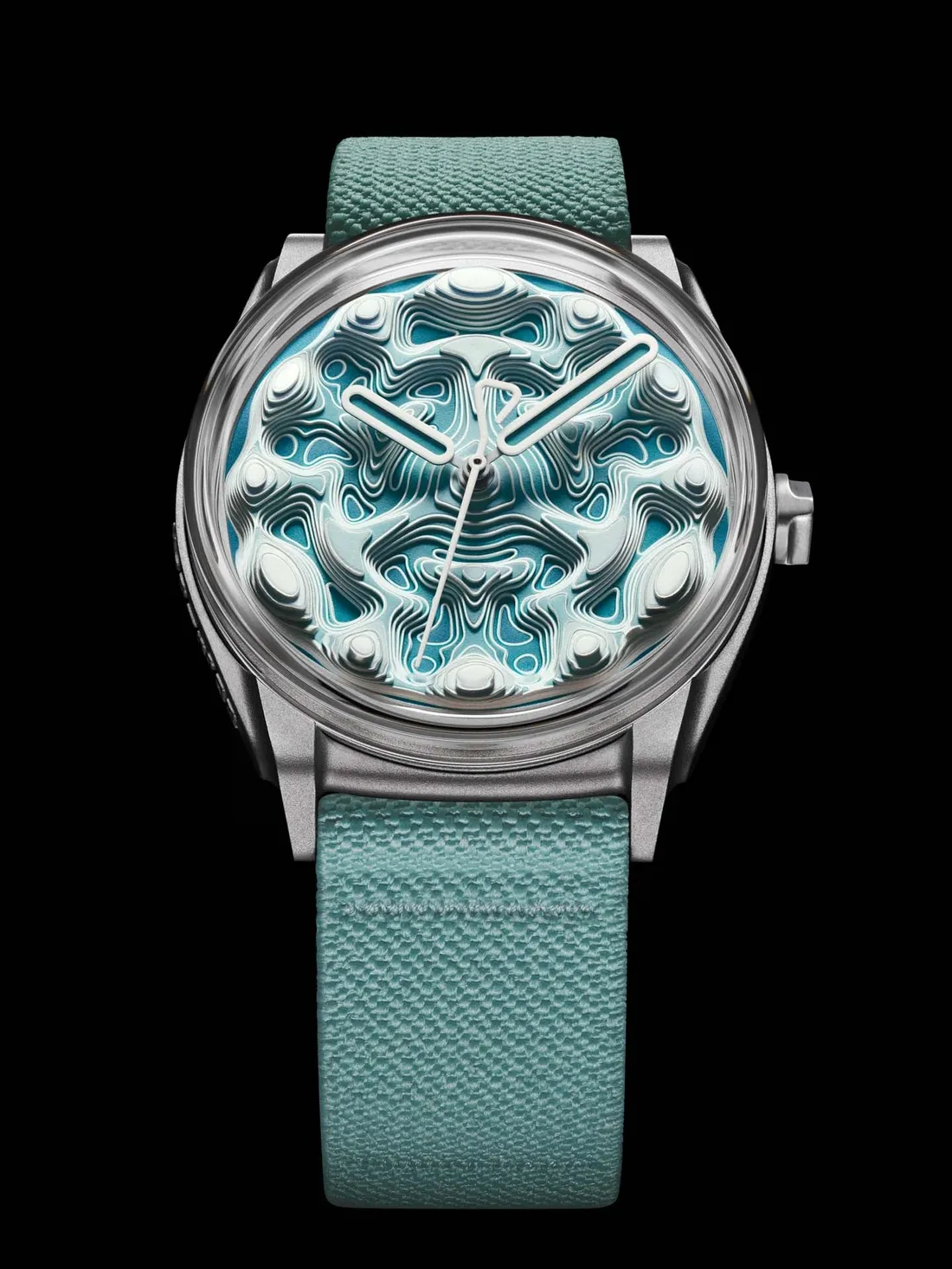
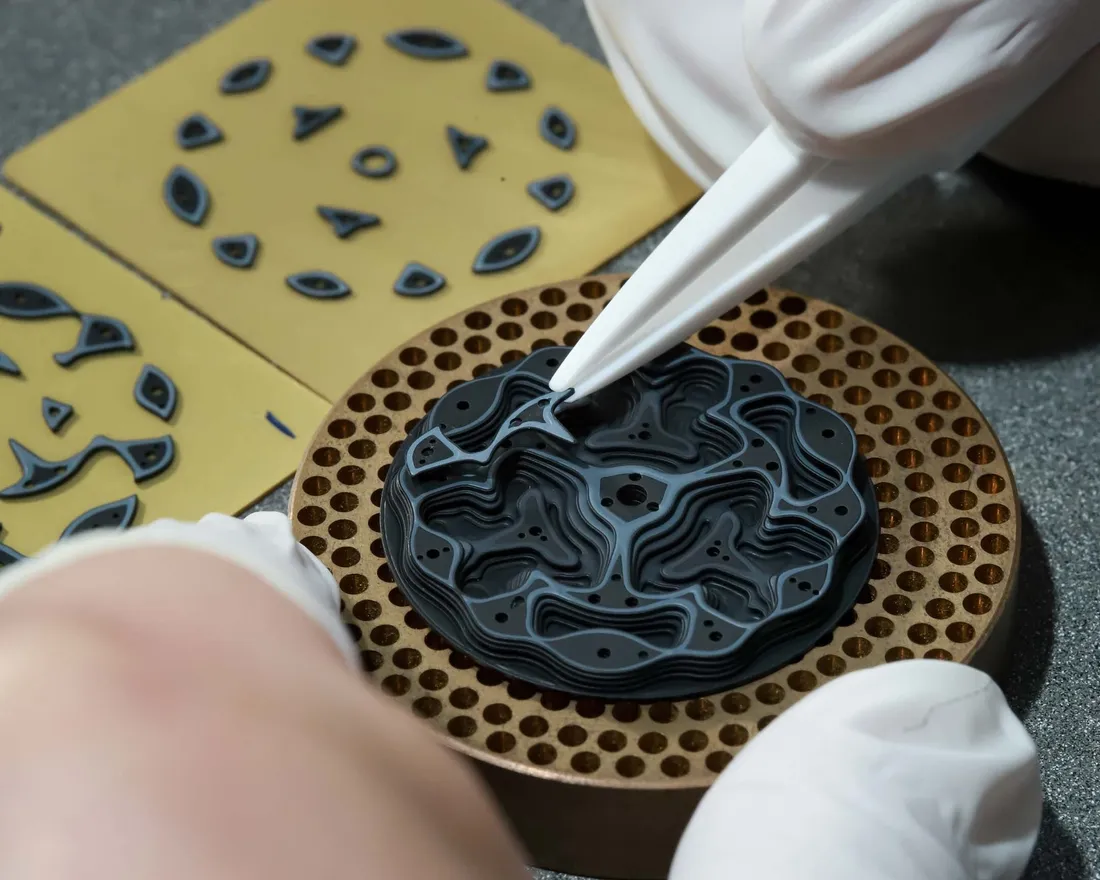
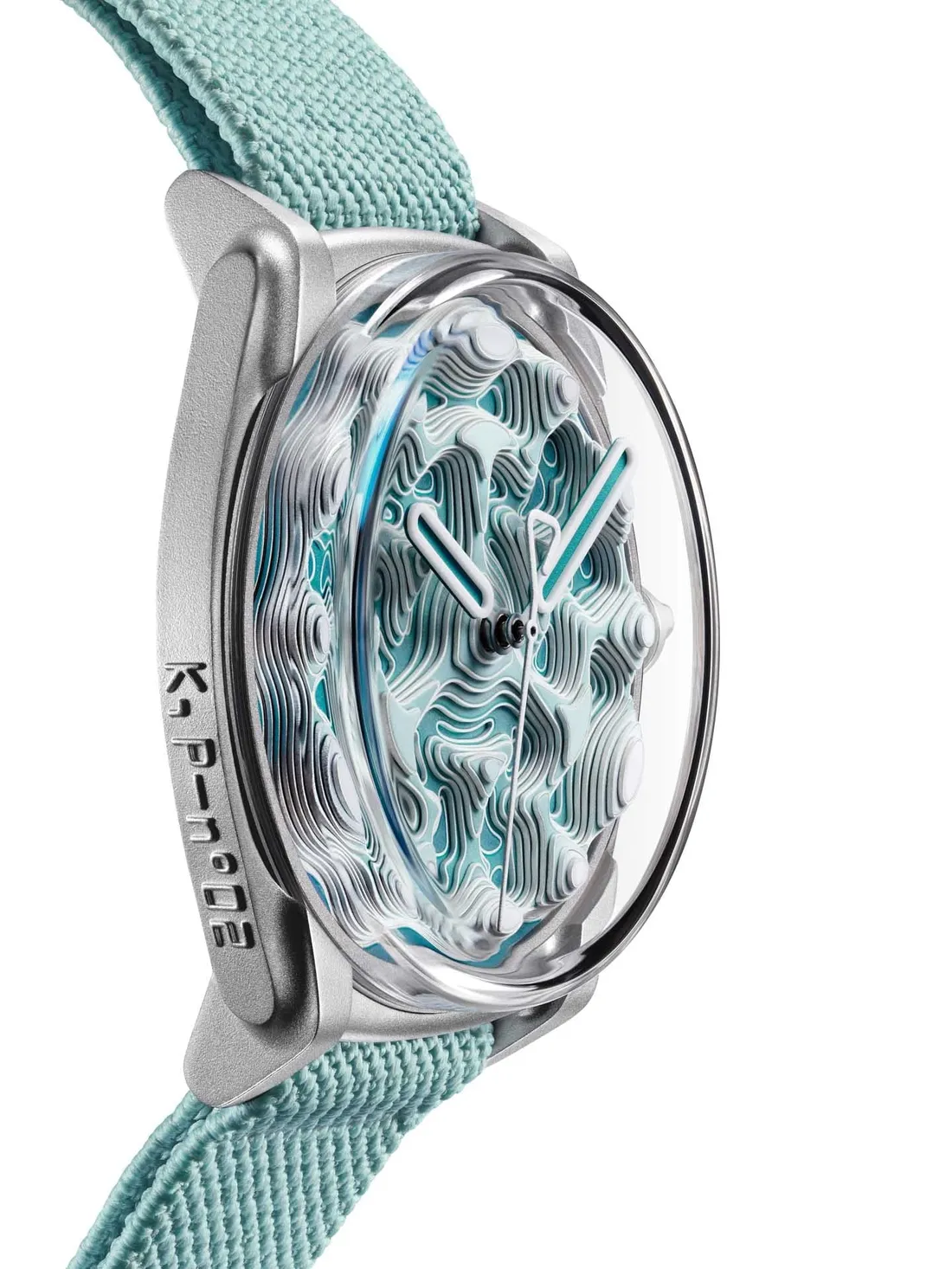
The Kollokium Projekt 02 abandons the traditional idea of a flat dial entirely and lays out the undulating, layered and crowded topography of the atomic nucleus. The workmanship behind this dial is filtered through these stages.
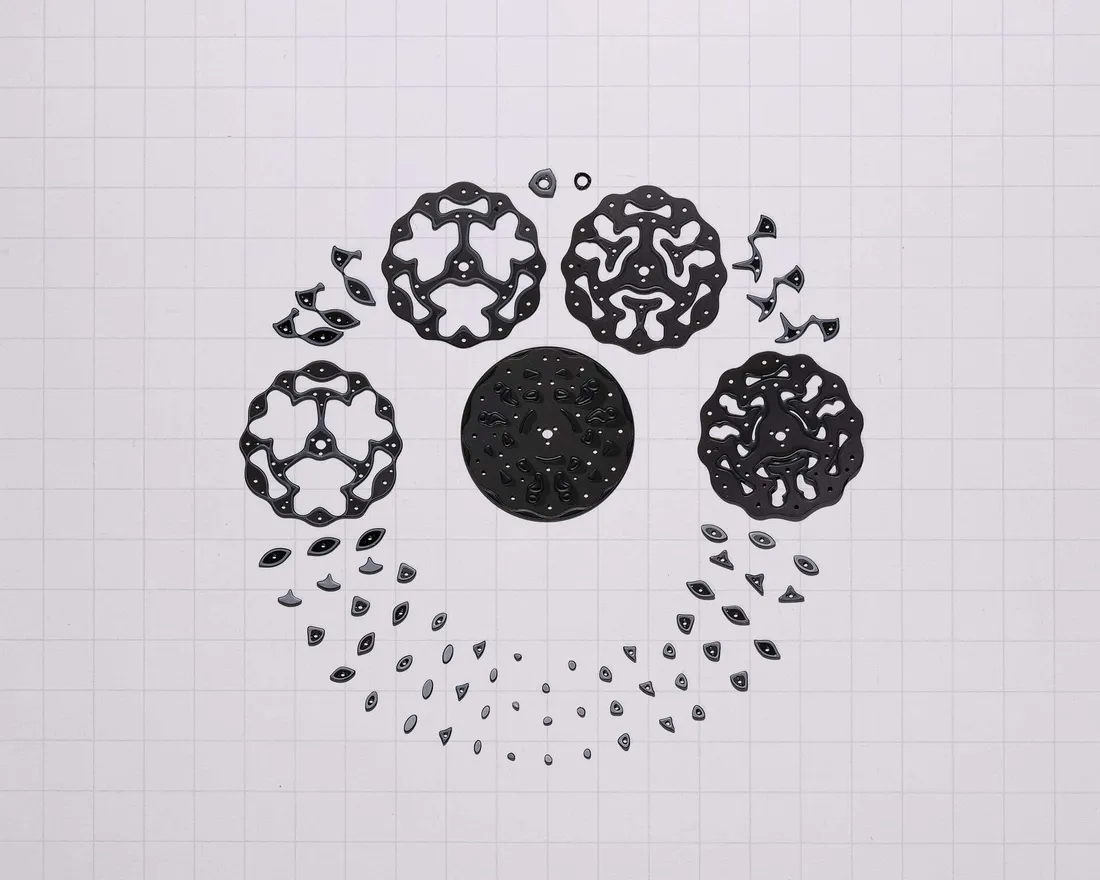
The dial is not made in one piece; on the contrary, it is born of sixty-seven separate plates stacked in nine layers. Each plate is set in place with its own support and peg; those undulating and organic contours spreading from the bottom to the peak are worked layer by layer and turned into a physical sculpture of subatomic quantum fluctuations.
The edges of the plates are sandblasted, their surfaces rhodium plated, and each of them is painted by hand, one at a time. The nine shades running from white to deep turquoise blue come not from one bath but from lacquer laid on plate by plate. In this way a flawless play of shadow and light is won between each layer; by day the dial shines like a striking industrial sculpture.
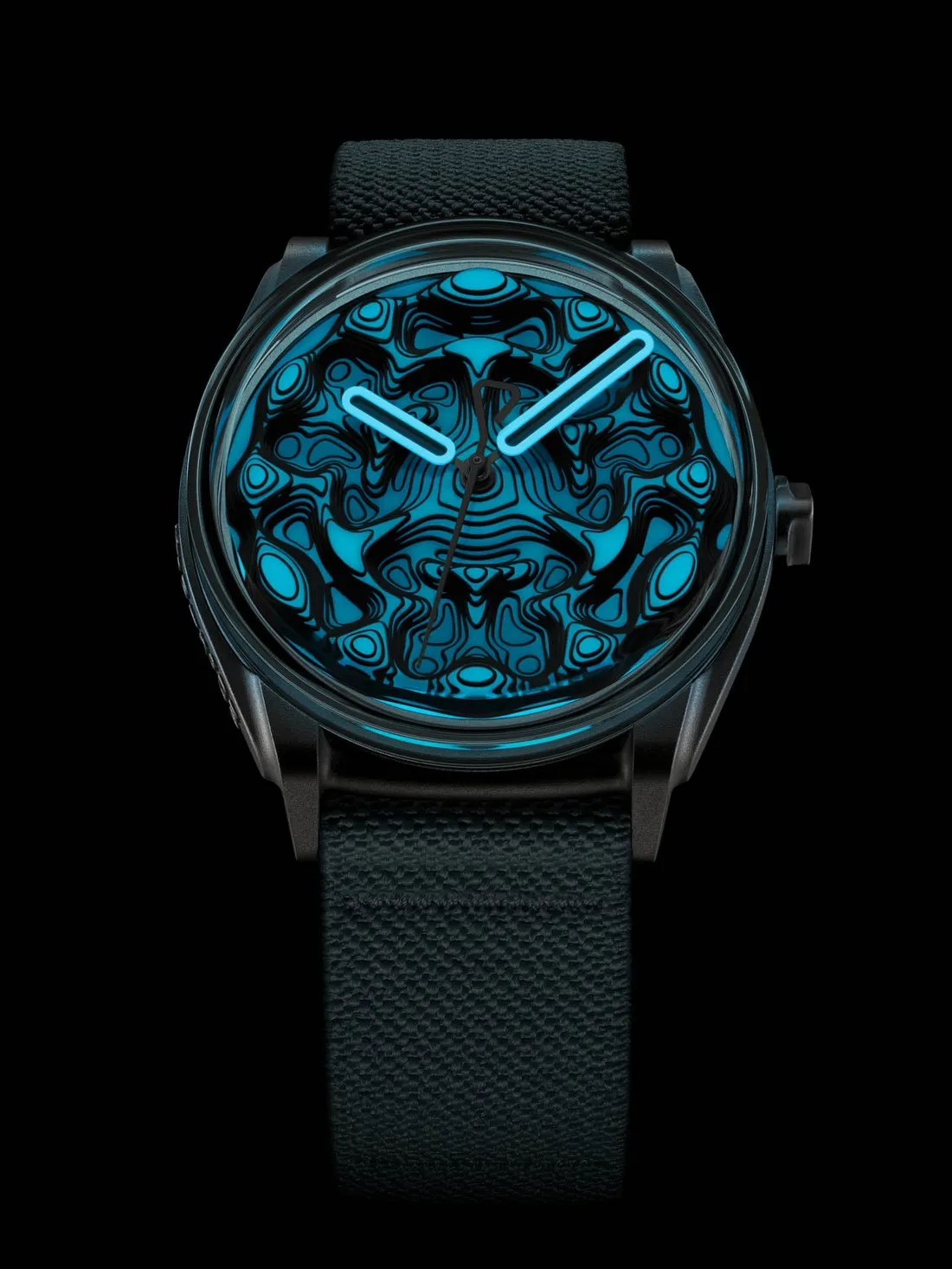
The high-performance Super-LumiNova applied with great care into the deep hollows and the lowest layers of this layered topography catches fire, the moment it is sunk in darkness, with a deep blue and vital light, just like that ocean of particles the strong force lights up. The white Lichtblock elements set into the turquoise hands burn with the same blue, while the seconds hand stays white.
The solid steel case gives concrete form on the wrist to that unshakeable discipline the strong nuclear force builds in the nucleus of the atom. The case is drawn in a single piece by die casting in 316L steel; 5.90 mm without the crystal, 12.40 mm with its domed sapphire, water resistant to fifty metres, with the crown shaped like a valve. While the automatic movement governs the flow of time with a millimetric precision, the hands glide over this cosmic topography and accompany the flow of existence. The movement is the G101 signed by La Joux-Perret, with twenty-four jewels, twenty-eight thousand eight hundred vibrations an hour and about sixty-eight hours of reserve.
One of them is the constant of the strong nuclear force, the most absolute law holding the nucleus of the atom of the universe together; the other is the topography of that nucleus and the glittering dance of particles, come to life upon the wrist.
One is the iron fist of the universe; the other is the mechanical masterpiece in which that fist has been worked with grace.
The watch, as its maker describes it: Kollokium, Projekt 02 Variant C