Every moment our eyes open, colour meets form, every object we touch takes on solidity and the universe whispers to us that it is here, we are in fact under the rule of one absolute law: the electromagnetic force. Escaping and spilling out of that dark refuge of the nucleus, holding the electrons in orbit, binding atoms into molecules, giving fire its colour and water its flow, this power is the one true director visible to the eye on the great stage of creation.
If gravity is a silent bond wrapped around the galaxies and the nuclear forces are the hidden iron fist of the nucleus, electromagnetism is the symphonic circle of the universe, its light and its chemistry. This immense manifestation of creation has given the palace of existence both order and beauty, through particles pushing and pulling at one another.

In the middle of the nineteenth century mankind took electricity and magnetism to be two separate and strange phenomena of nature. One of the first, and one might even say the first, to sense the hidden bond between a current passing through a wire and the deflection of a compass needle was the experimentalist Michael Faraday. Though he did not know the mathematics, Faraday felt nature with his fingertips, and with the notion of lines of force he cried out that space is woven with invisible nets.
But the genius who turned that intuition into an immortal universal law was the Scottish physicist James Clerk Maxwell. When Maxwell sat down at his desk he was weighing this immense question in his mind: might the electric current and the magnetic field be two faces of the same coin? And more important still, is the thing we call light in fact an electromagnetic oscillation with a wavelength?
Using that clear mathematical symmetry in his mind, Maxwell wrote four tremendous equations. They set out, in flawless agreement, how an electric field triggers a magnetic field and a magnetic field an electric one. The moment he solved them and saw that the speed of the wave he had found matched the speed of light exactly was one of the greatest moments of awe in the history of physics. Maxwell had sealed, in the language of equations, that the universe runs not on matter alone but on pure light and on electromagnetic waves.
format_quote"Maxwell had sealed, in the language of equations, that the universe runs not on matter alone but on pure light and on electromagnetic waves."
Hasan Bekmezci
There are exactly four fundamental forces holding the universe up. To understand the electromagnetic force properly, one must see clearly the boundaries that separate it from its three brothers.
What exactly is the electromagnetic force? It is the whole of the repulsions and attractions between particles that carry electric charge, that is, between positive and negative charges. Opposite charges attract one another, like charges repel. It is entirely this force that binds electrons to the nucleus in the subatomic world and that, in daily life, makes the table we touch resist our hand, makes light propagate and makes chemical bonds possible.
Its difference from the force of gravity is this: gravity only attracts objects that have mass, never repels them, and is the weakest force in the universe; but its reach is infinite, and it holds galaxies and planets in orbit. The electromagnetic force is many times stronger than gravity and can both push and pull.
Its difference from the strong nuclear force is this: the strong nuclear force, as its name says, is the strongest force in the universe; it acts only inside the nucleus of the atom, and glues the positive protons of like charge together so that they do not repel one another and scatter the nucleus. The electromagnetic force, on the other hand, reaches far beyond the nucleus and acts from the size of an atom to the scale of the universe.
Its difference from the weak nuclear force is this: the weak nuclear force too holds only over subatomic distances, that is inside the nucleus, and is responsible for radioactive decays and for the nuclear fusion processes that make the Sun burn. It does not produce chemistry and light over a wide field as the electromagnetic force does; it rather makes particles change their identity.
The constants that set the strength of the electromagnetic force and the interaction between electron and proton, that is the fine-structure constant of about one part in a hundred and thirty-seven, are the key settings that build the chemistry laboratory of the universe. If the strength of this force had been created even a hair’s breadth differently, the palace of existence would have collapsed as follows.
What would have happened if the electromagnetic force had been a little stronger? Why would electrons have crashed into the nucleus? The attraction between the positive charge of the nucleus and the negative charge of the electron would have grown so violent that electrons could not have stayed in orbit; they would have spiralled in and stuck to the heart of the nucleus. Why would chemistry have ended before it began? Atoms could not have shared electrons, and molecules, that is water, protein, DNA, could not have been built. Solid matter could not have existed, and the universe would have remained in a blind darkness deprived of chemical bonds.
What would have happened if the electromagnetic force had been a little weaker? Why would atoms have fallen apart? The bond between the nucleus and the electrons would have been so weak that at the slightest tremor of heat the electrons would have flown off from around the nucleus. Why would life have been impossible? Atoms could not have held on, matter could not have stayed together, and the universe would have remained a ghostly soup of particles that could be neither solid nor liquid nor gas, in which no bond could be formed.
format_quote"The universe would have remained a ghostly soup of particles in which no bond could be formed."
Hasan Bekmezci
Let us use these five analogies to give this invisible power a concrete form in our minds. The invisible spider’s web: it is like threads, strand upon strand, wrapping every corner of the universe and yet never seen by the eye; it is over this web that particles send word to one another, touch and bind. The violin string and resonance: just as when you strike one of two violin strings the other trembles at the same frequency, so electromagnetism builds an invisible bridge of frequency and resonance between the bodies of the universe.
The magnet and the iron filings: just as a magnet placed under a sheet of paper instantly draws the filings above it into a flawless geometric pattern, so electromagnetism is a divine ruler that sets matter in chaos into orderly forms. Sunlight and the spring of life: that very sunlight we see with our eyes, which warms our body and gives life to plants, is electromagnetic wave itself; it is pure energy flowing in the veins of the universe.
And the grip of the teeth of watch wheels: that mechanical tension in which wheels push and pull at one another and let time flow is, at the macroscopic scale, an exact copy of the electromagnetic balance in which electrons push and pull at one another and hold matter up.
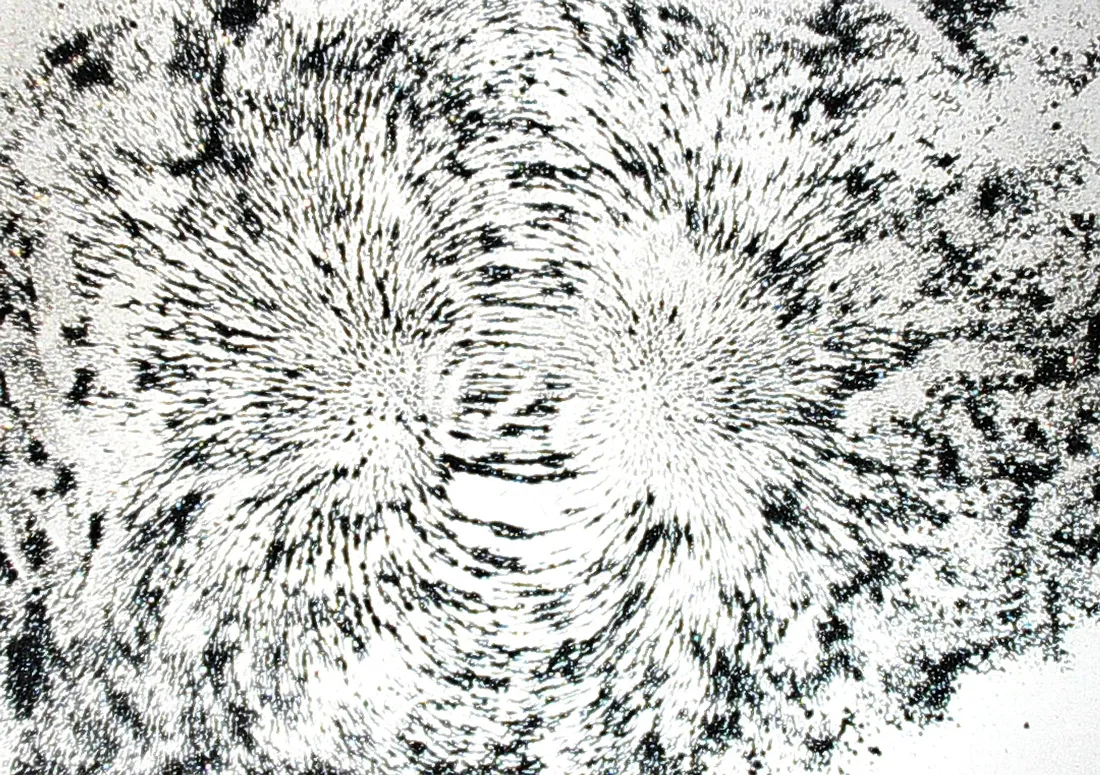
format_quote"That mechanical tension in which wheels push and pull at one another and let time flow is an exact copy of the electromagnetic balance in which electrons push and pull at one another and hold matter up."
Hasan Bekmezci
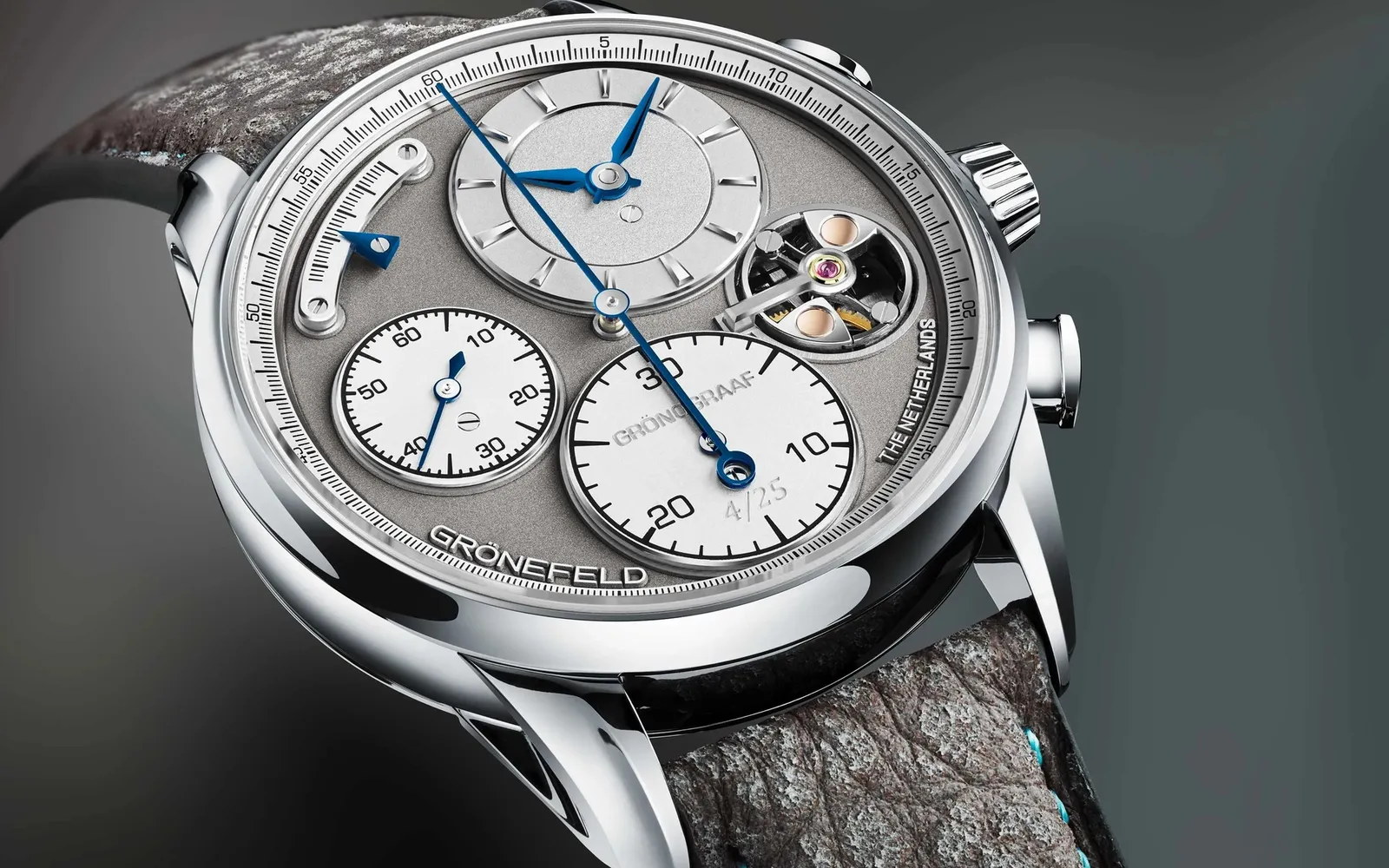
That flawless balance the universe builds with electromagnetic waves is the Grönefeld 1941 Grönograaf Tantalum, a masterpiece of independent watchmaking carried to the wrist in a case of tantalum, one of the heaviest and noblest metals of the craft. Unlike series-production chronographs with a cam mechanism, the 1941 Grönograaf has the classical structure of a column wheel and a lateral clutch, the combination identified with high watchmaking. It was made at Oldenzaal, in the east of the Netherlands, in a series of twenty-five pieces, at a hundred and sixty-five thousand euros.
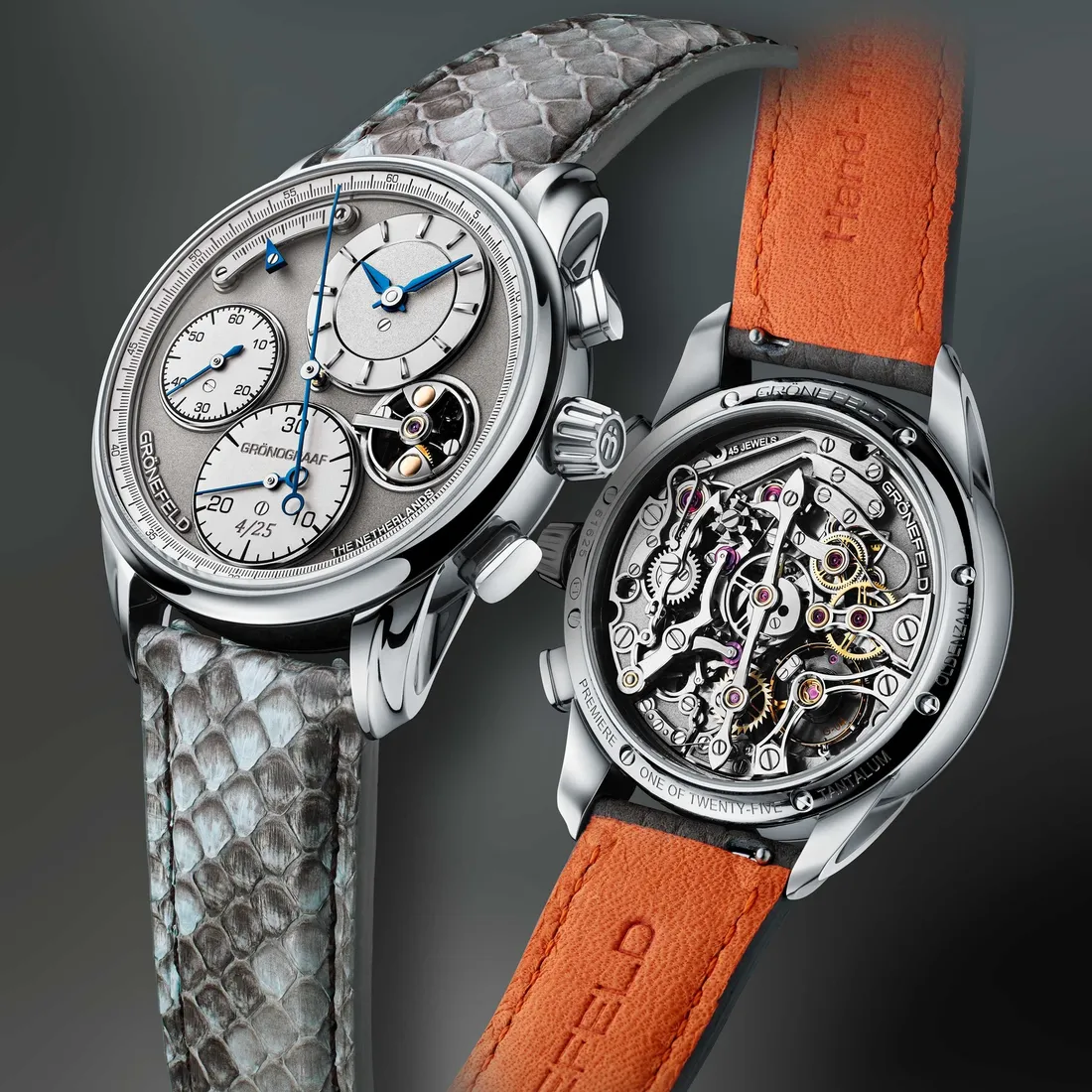
The Grönefeld 1941 Grönograaf comes to life in a case of tantalum, a rare metal that is extremely difficult to work, heavy, anti-corrosive and of a deep blue-grey tone. The stable structure and atomic arrangement of the element tantalum give the watch an armoured physical resistance and a universal calm, just as the electromagnetic force gives matter an unshakeable stability by holding electrons in orbit in the subatomic world. The maker describes the metal as more than twice as dense as steel, heavier than palladium and slightly lighter than gold; the case is forty millimetres across and eleven point three millimetres thick, and the crown too is tantalum.
Unlike series-production chronographs with a cam mechanism, the 1941 Grönograaf has the classical structure of a column wheel and a lateral clutch, the combination identified with high watchmaking. The G-04 calibre is a symphony of 408 parts and a wonderful example of watchmaking without compromise; just as Maxwell’s equations balance the invisible flow of electricity and magnetism into a universal symphony of four tremendous equations, so this mechanical elegance of 408 parts is a flawless reflection of the microcosm. The calibre is thirty-two millimetres across and six point one five millimetres thick, part of its forty-five jewels set in gold chatons, with a power reserve of forty-eight hours, or thirty with the chronograph running.
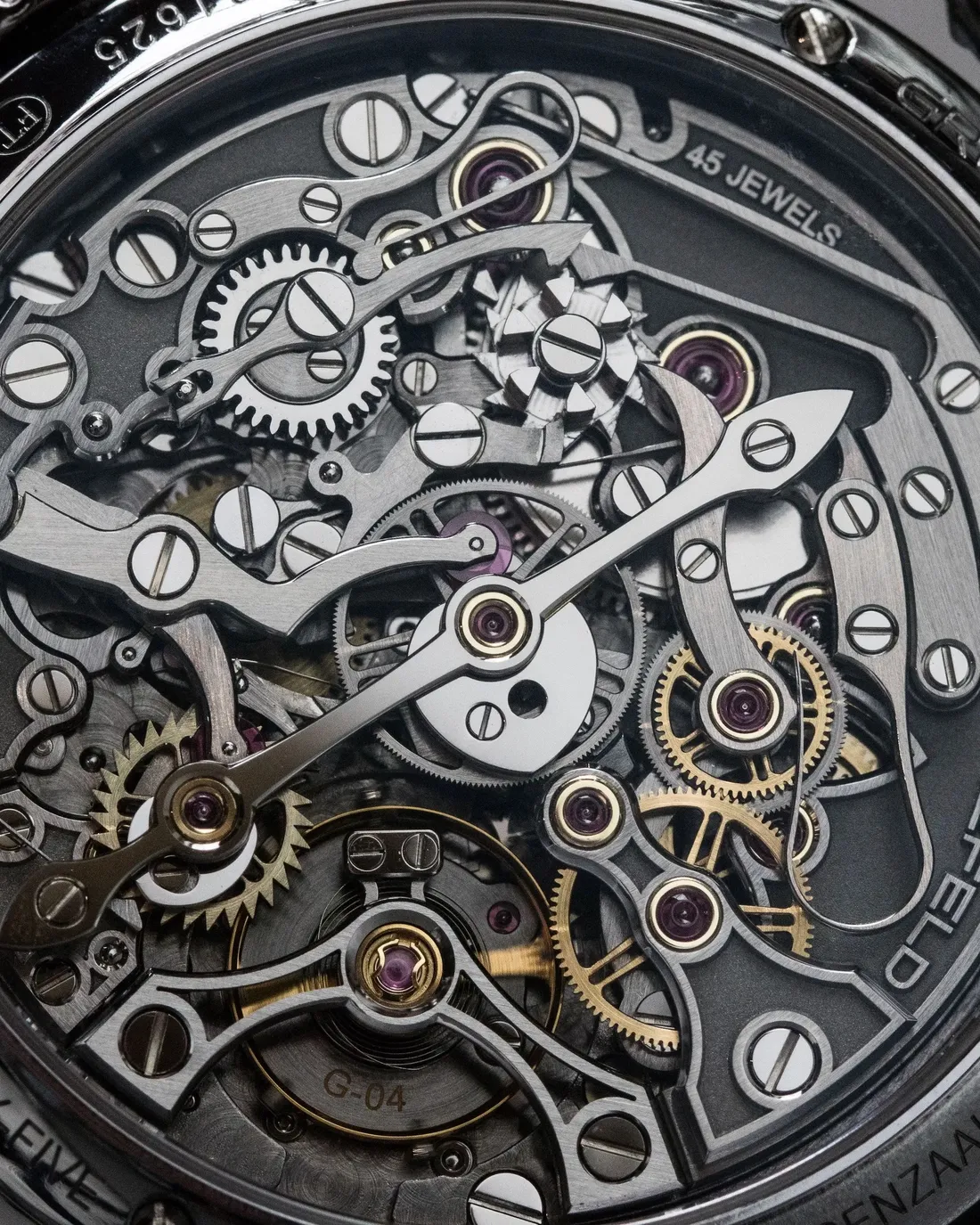
Bearing in mind that chronograph mechanisms are sometimes exposed to forces hard enough to scratch the hammers and bend the hands, the Horological Brothers designed a less aggressive system, the soft reset mechanism. A centrifugal governor, usually seen in minute repeaters, placed at four o’clock, slows the reset function and so treats the components more gently while at the same time putting on a captivating show. The governor carries two weights of solid gold. Just as wave control mechanisms damp sudden changes of current in electromagnetic fields, so this centrifugal governor takes the energy in hand and creates a sense of mechanical theatre and a flawless fluidity as the counter arms turn clockwise or anticlockwise over the heart-shaped cams. The thirty-minute counter at six o’clock clinches that flow with its instantaneous jumping minutes; the hand does not creep through the minute, it jumps to the next mark the instant the minute is full.

The ruby-jewelled hammers soften the blow on the return to zero. The mechanism needs no winding lever and holds a conical winding pinion and a winding wheel, giving a smooth winding action. Every detail is designed to increase refinement. The variable-inertia balance reduces the effect of position and offers superior rate stability; the wheel measures ten millimetres and carries four white gold timing screws, running at twenty-one thousand six hundred vibrations an hour. The Phillips terminal curve increases isochronism and lets the balance spring breathe more concentrically; just as the electromagnetic force, through the fine-structure constant, cut that precise frequency and violin-string resonance for the universe, so this isochronous balance spring dictates to time an absolute stability of wave and agreement of frequency.
While the main plate is decorated with spotting, the bridges are made of hand-polished stainless steel. Their centres, moreover, are worked by micro-blasting, their upper parts carry circular patterns and various relief engravings are set in them. The heart-shaped cams, the elongated chronograph bridge, the gold chatons and the screw heads are finished with black polishing, done in the traditional way with diamond paste on a tin plate. Consistent with the earlier Grönefeld watches, the workmanship is worthy of the term Haute Horlogerie. Indeed, everything is reassuringly of Grönefeld quality. The beams of light, themselves oscillations of electromagnetic wave, refract when they strike these black-polished surfaces and the hand-opened anglage; just as Maxwell discovered and sealed light as an electromagnetic wave, so this flawless finishing is a final optical feast where light and electromagnetism meet craft.

One of them is the constant of the electromagnetic force that holds the matter of the universe up and brings colour, light and chemistry into being; the other is the Grönefeld 1941 Grönograaf Tantalum, the masterpiece where this delicate balance meets craft, the resistance of the metal tantalum and a mechanical symphony of 408 parts.
One is the visible electromagnetic elegance of the universe; the other is the flawless mechanical echo of that elegance upon wheels.
The watch, as its maker describes it: Grönefeld, 1941 Grönograaf Tantalum