Antibes does not take its name from itself. In the fifth century before Christ, Greeks from Massalia, today’s Marseille, founded a trading post on this shore and called it Antipolis. The word means the city opposite. It was named that because it stands across the mouth of the Var from the settlement on the far side, the place we now call Nice.
For a city to take its name by reference to something else is not the usual thing. From its first day Antibes concedes that to say where it stands it needs another point.
Then Rome came, and the city became Roman of its own will. It was given a theatre, an amphitheatre, an agora, baths, aqueducts and triumphal arches. It grew into an emporium where ships put in carrying wine, oil and ceramics. That is the layer under your feet as you walk the old town today.
The walls of the city are a history of fear. In 1536 the Genoese admiral Andrea Doria sacked Antibes. King Henri II answered in 1550 by ordering the building of the Fort Carré, the star-shaped fortress that still looks down on Port Vauban. Vauban himself came in 1679 and again in 1682 and redrew the defences. The worst siege in the town’s history came in 1746, during the War of the Austrian Succession.
Why a star fort is shaped like a star bears directly on the subject of this piece. The foot of a straight wall cannot be seen from the top of that wall. An attacker who gets close enough passes out of the defender’s view and can work in comfort. The answer of fortification is to break the wall and push bastions outwards. The flank of each bastion is seen, and covered by fire, from the one beside it.
What results is a geometry that satisfies a single rule: no point shall go unwatched. No dead ground. The defence rests not on one viewpoint but on a net of viewpoints that see one another.
format_quote"A star fort obeys one rule: no point shall go unwatched. Defence comes not from one line of sight but from a net of sight lines that watch each other."
Hasan Bekmezci
Inside the walls, on the side that faces the sea, stands the Château Grimaldi. It takes its name from the brothers Marc and Luc Grimaldi, who received the Lordship of Antibes in 1385; Marc died in 1398 and Luc in 1409, and the lordship passed to five co-heirs. The building itself dates from the end of the fourteenth century and has been protected as a historic monument since 1928.
The city bought the castle in the nineteen twenties and it became the Grimaldi Museum, with Romuald Dor de la Souchère as its first curator. The museum still occupies the same ground today, between the covered market and the ramparts.
In the autumn of 1946 Dor de la Souchère offered one of the castle’s great rooms to a painter, as a studio. The painter’s reply went into the record: I am not only going to paint, I shall furnish the museum as well.
Pablo Picasso worked in that second-floor studio from 17 September to 10 November. When he left he took none of it with him. Twenty-three paintings and forty-four drawings stayed behind. The first Picasso room opened in 1947. On 27 December 1966 the castle formally became the Musée Picasso, and so the first museum in the world devoted to him. Jacqueline, his second wife, left further works to the collection after her death in 1986.
Picasso was born in Málaga in 1881 and died in 1973. He is remembered as the man who changed how the twentieth century saw, and the reason is what he and Georges Braque developed from 1907 onwards.
The honest way to explain Cubism is to explain what came before it. Renaissance perspective works by a rule: the picture is what one eye, at one point, saw in one instant. The canvas is likened to a window, and the viewer is nailed to a single place in front of it.
That rule carries a mathematical cost. Rendering a three-dimensional body on a two-dimensional surface is a projection, and every projection destroys information. Draw a cube from one place and you lose its far face; that it has a far face at all is told you by your knowledge, not by the picture.
Cubism refused to accept the loss. It saw the same object from several positions and gathered them all onto one plane. It gave up coherence and chose completeness instead. In the analytic phase, between 1909 and 1912, the object was taken apart; in the synthetic phase from 1912 it was rebuilt with collage, by admitting real paper and real surface into the painting.
format_quote"Every projection destroys information. Cubism refused to accept the loss, gave up coherence and chose completeness."
Hasan Bekmezci
What strikes you first in the room at Antibes is the strangeness of the material. La Joie de vivre, the best known work in the museum, was made in October and November of 1946, and not on canvas but on fibre cement. The paint is not oil paint either but an oil-resin paint. It measures one hundred and twenty by two hundred and fifty centimetres.
The reason is the war. In 1946 there was neither canvas nor artists’ paint to be had in Europe. Fibre cement is cement stiffened with fibre reinforcement, and it is a building board. Oil-resin paint is essentially boat and industrial paint; it dries hard and fast and does not behave like oil on linen. It gives an absorbent, matt surface into which colour settles rather than shines.
Those large surfaces in the museum are therefore the record of what a painter does when the materials of his trade have disappeared. He used what lay to hand: wall board and boat paint.
And what did he put on those boards? In La Joie de vivre the slender figure dancing at the centre is Françoise Gilot, his companion at the time. Beside her are a faun playing a double flute, a centaur holding a three-pronged spear and two small goats, with vines showing in the upper right corner.
The other works of that same autumn carry the same cast. The triptych of a satyr, a faun and a centaur with a trident, the centaur on a ship, and the pencil drawings he called the Suite Antipolis; in all of them the same figures bathe, recline and play beside the sea. There is also a man eating a sea urchin, Le Gobeur d’oursins.
There is a question that has to be asked honestly here, and it is the real question of this piece. A man who had rejected everything inherited in painting, who had pulled down the single viewpoint, who had brushed aside a rule that had stood for centuries, walks at sixty-five into a Mediterranean castle and draws the oldest, most used, most borrowed figures in Europe. Fauns, satyrs, centaurs. The same creatures were cut into sarcophagi two thousand years before.
If that is not an inconsistency, what is it?
The most honest answer available is this. Cubism was an instrument for taking apart. It was built to break an object into pieces, to see it from several sides and lay those sides over one another. It had no grammar for joy. When a man newly out of a war and an occupation wanted to paint happiness, he had no language of his own invention for it.
So he picked up what lay under his feet. The town he was in had been a Greek colony and was still called Antipolis; that is the name he gave his series of drawings. A ready, familiar, available heap of stories was there, and he bent down and took it.
format_quote"Renewing how you see is not the same as inventing something new to look at. He renewed the grammar and left the vocabulary second-hand."
Hasan Bekmezci
This should be said as a measure rather than as an accusation. Even at his most inventive a person has a limit: he can renew the form, but he cannot manufacture the source of his own joy. Reaching for a borrowed figure to say happiness is the sign of not having found where one’s own happiness comes from. The issue is not which figures were chosen. It is that choosing was necessary at all.
And there is this. The man on the second floor of that castle taught the world from how many angles an object can be seen at once. He could not find an angle from which to see himself, and he spent the greatest invention in his hands on decorating figures other people had carved long before.
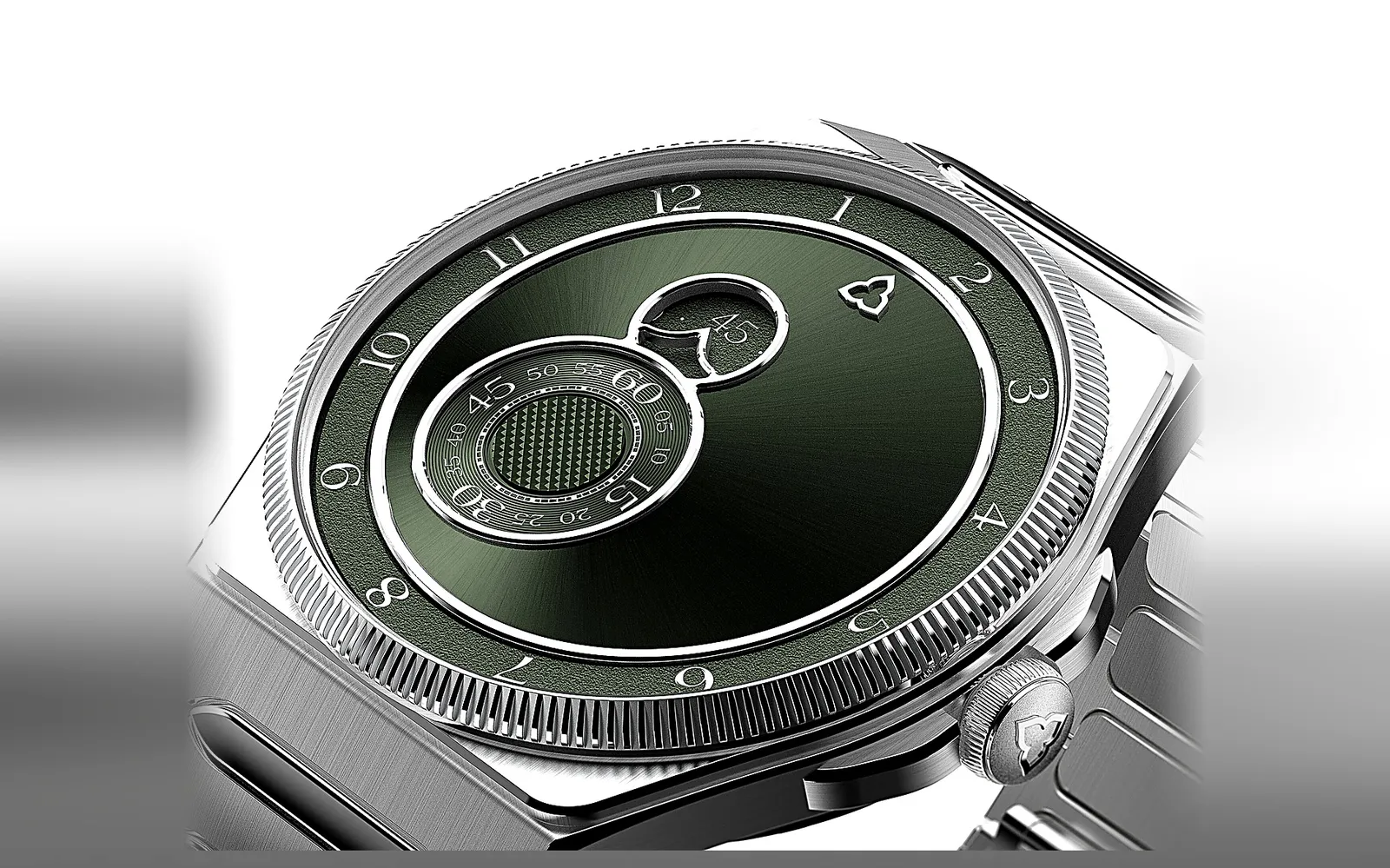
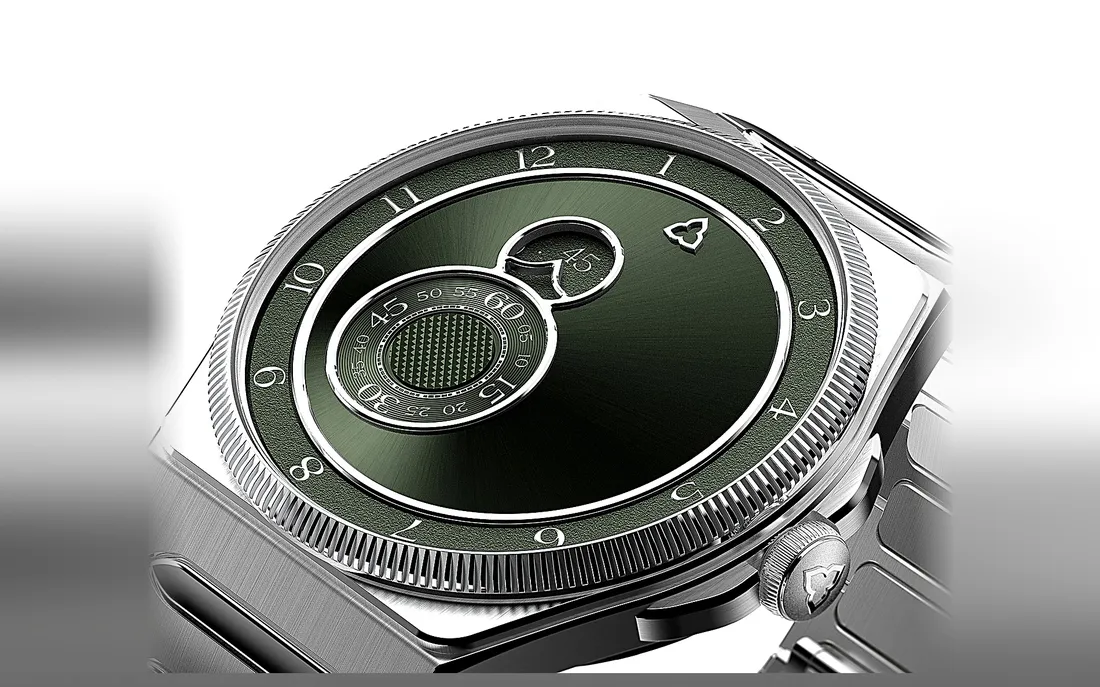
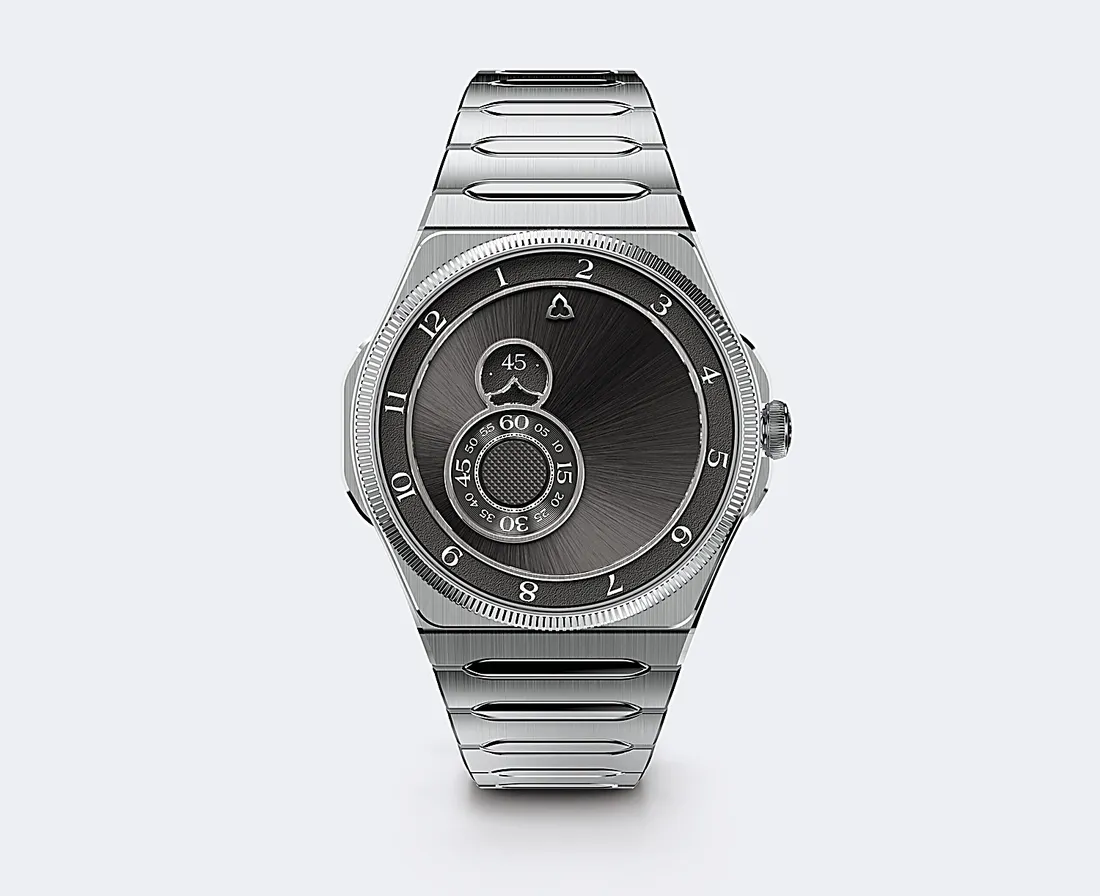
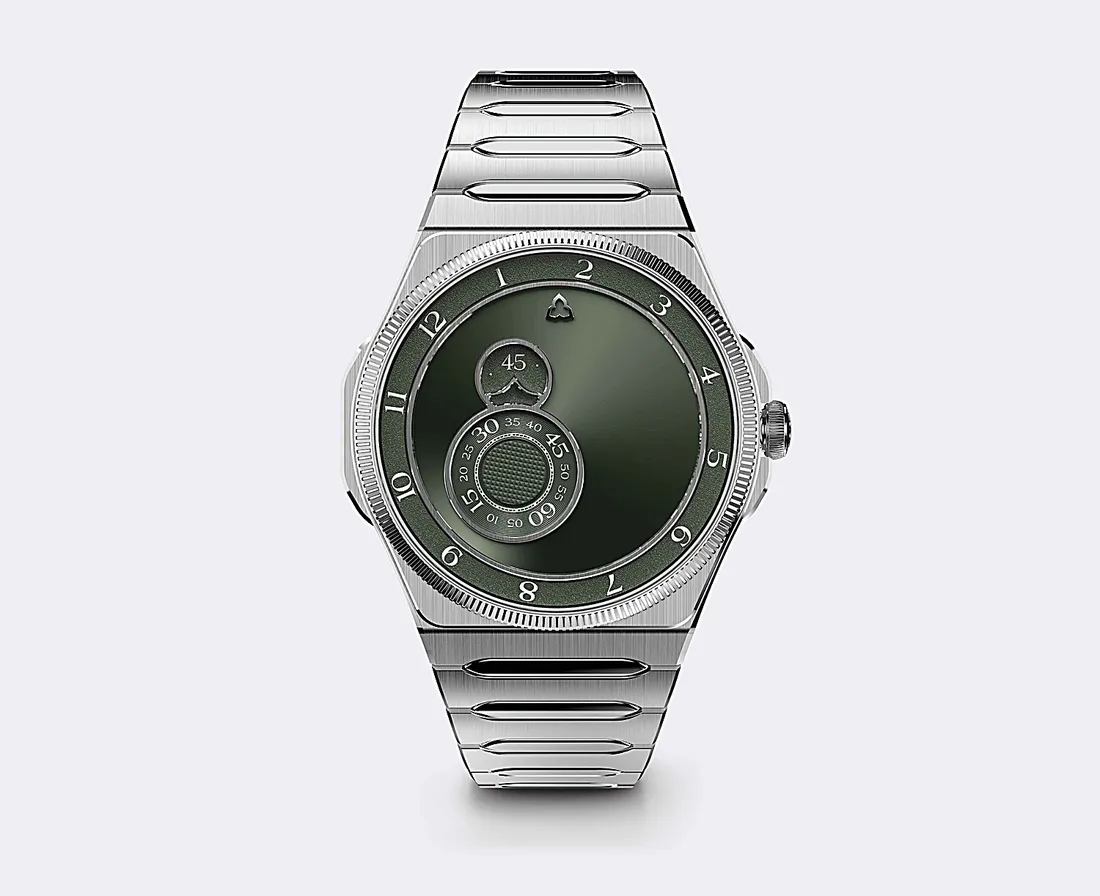
The watch in this piece is here because it carries exactly the same geometric objection. Trilobe is a French manufacture founded in Paris, and at Watches and Wonders in 2026 it presented a new collection called Trente-Deux. The maker’s own sentence runs: time has been passing through the hour and minute hands for seven centuries, and there is no need to look at hands any more.
At the centre of a dial there is an arbor, and hands reach outwards from it. To read the time is to read an angle measured from that one centre. Our eyes have been doing this for seven hundred years and we were never asked.
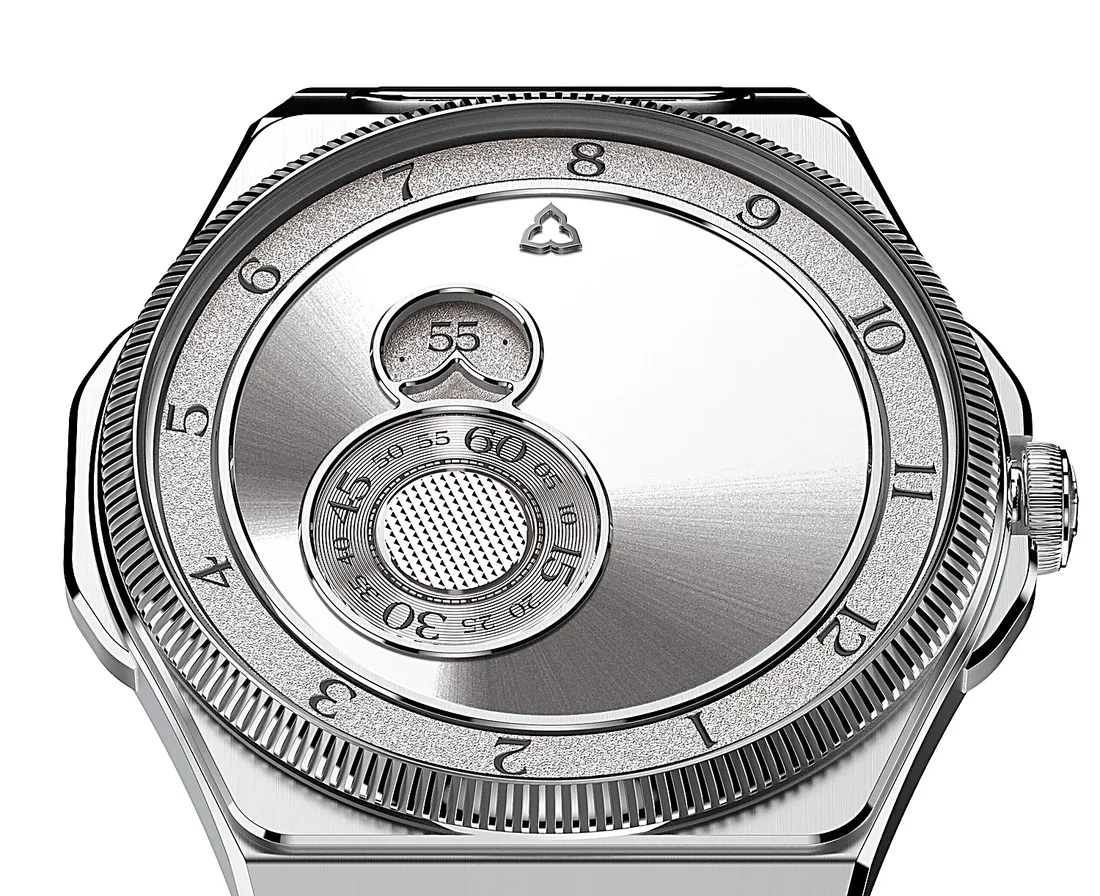
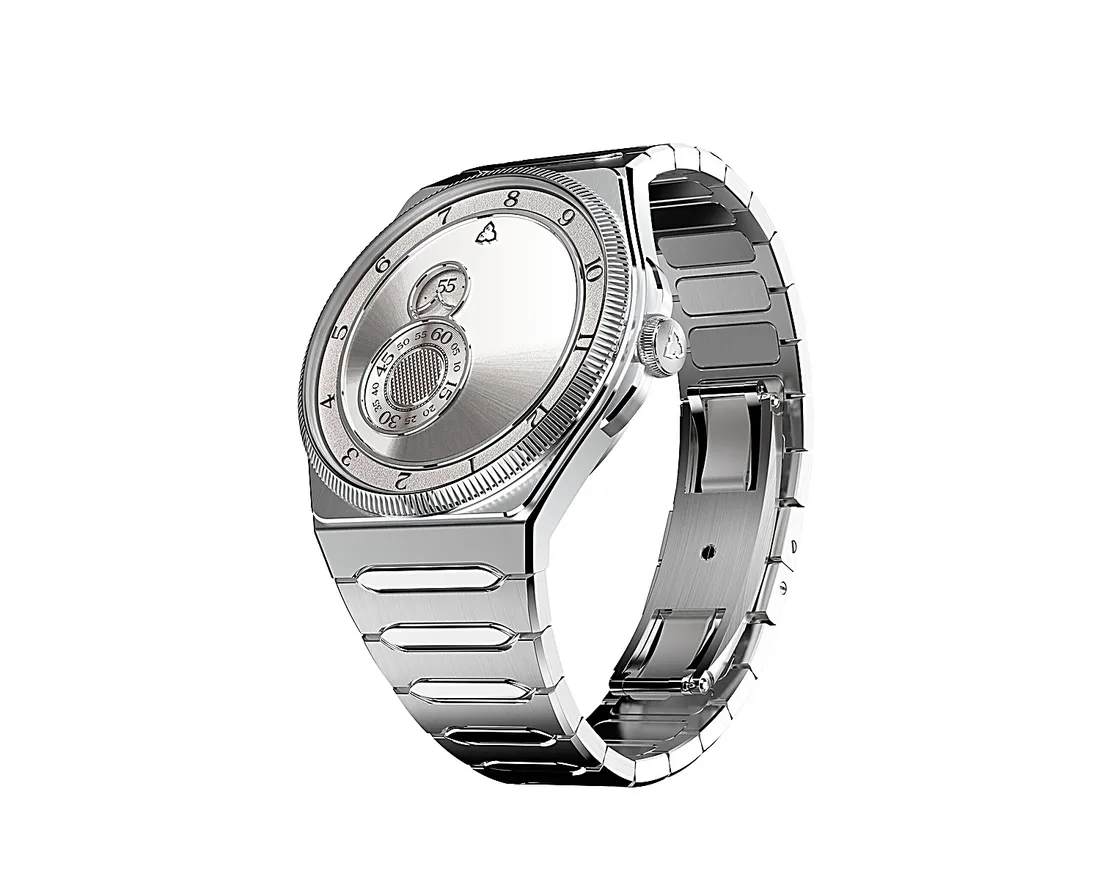
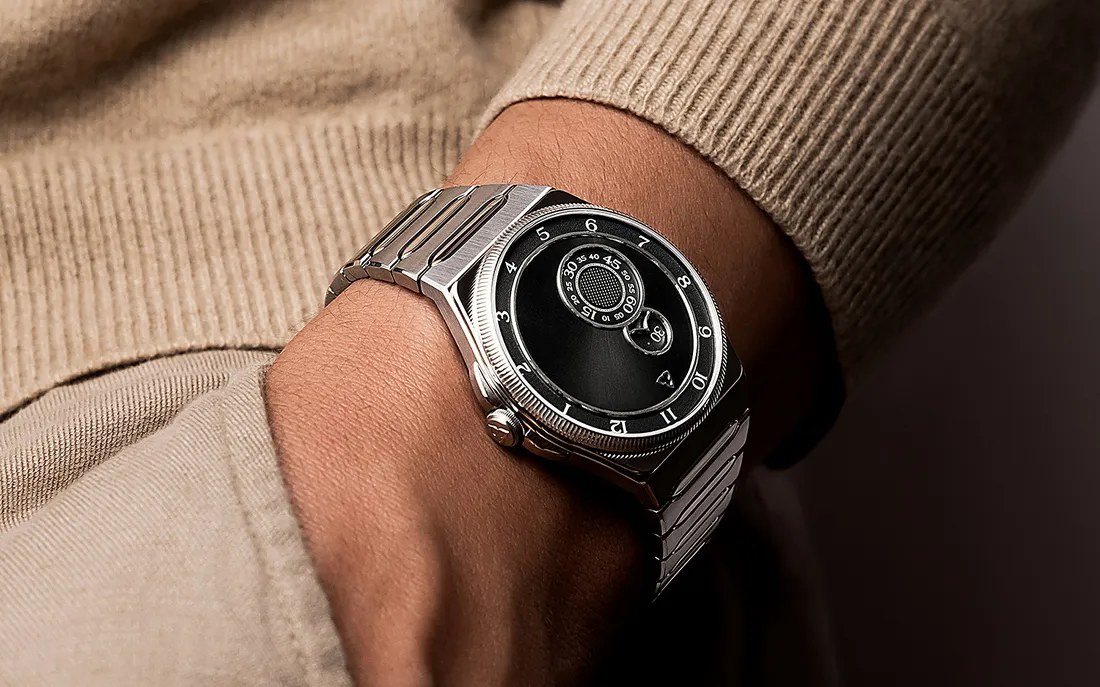
The Trente-Deux removes the centre. There are no hands. Hours, minutes and seconds are written on three separate turning rings, and all three lie on the same plane as the dial. The reading is taken in line with two small fixed triangles at the top edge. The point of reading has moved from the centre to the rim: the indication turns while the marker stands still. The arrangement is patented.
Picture two people at the bench arguing about this watch: the constructor who laid out the dial and the manager who has to put it in a window.
The manager makes the most concrete objection. A customer picks it up and cannot tell the time. That is the one thing a wristwatch has to do.
The constructor corrects the duration. He cannot tell the time for four seconds. On the fourth second he reads it, and after that he never has trouble again.
The manager presses. Four seconds is a long time in a shop.
The constructor grants it and names the real point. It is. But those four seconds are the product. If the reading were instant you would have a watch with an unusual dial and nothing more. In those four seconds a person notices that he has spent his whole life measuring an angle from a centre, and that nobody ever asked him whether he wanted to.
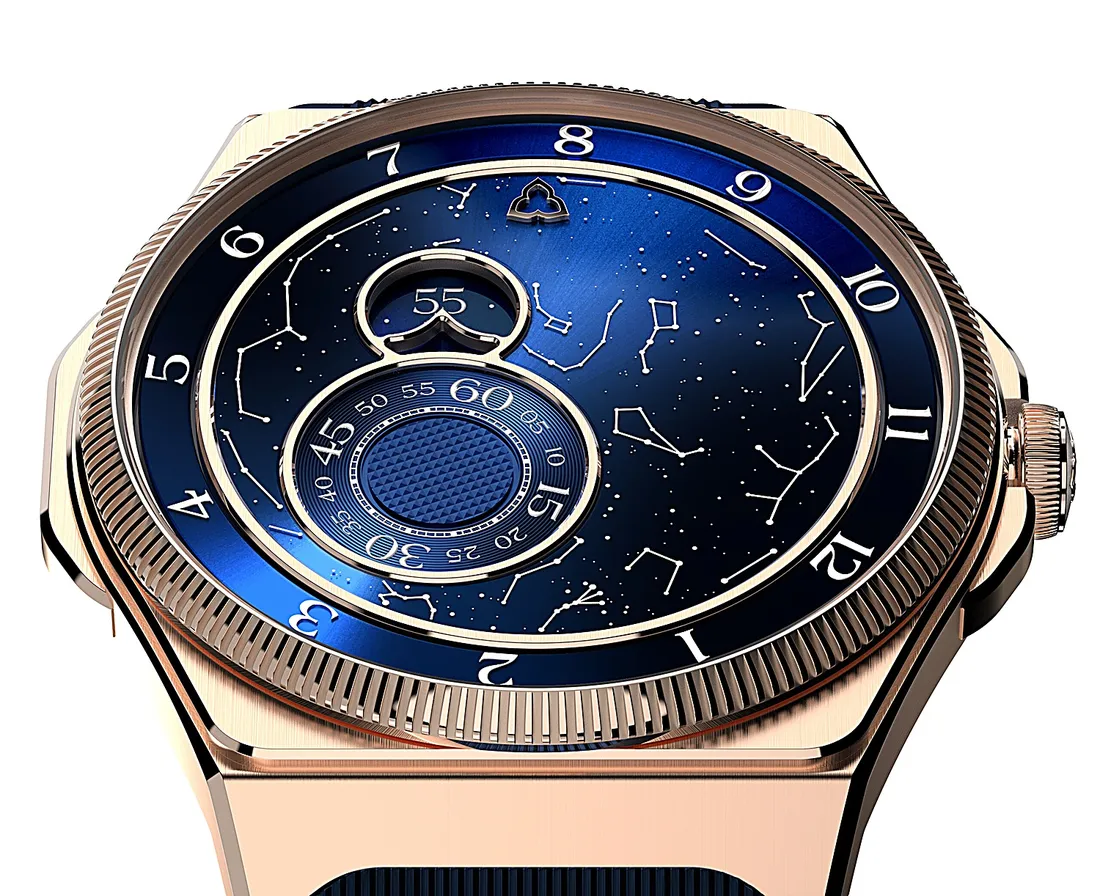
The figures run as follows. The Sunray Grey is reference 3201GS. The case is 316L steel, thirty-nine and a half millimetres across, ten point one five deep, and forty-six point one eight from lug to lug. It is built from seven separate components, with mirror-polished, satin-brushed and microblasted surfaces alternating, and a fluted bezel. Crystal and caseback are both sapphire with multi-layer anti-reflective coating. Water resistance is five bar, about fifty metres. The steel bracelet is integrated into the case.
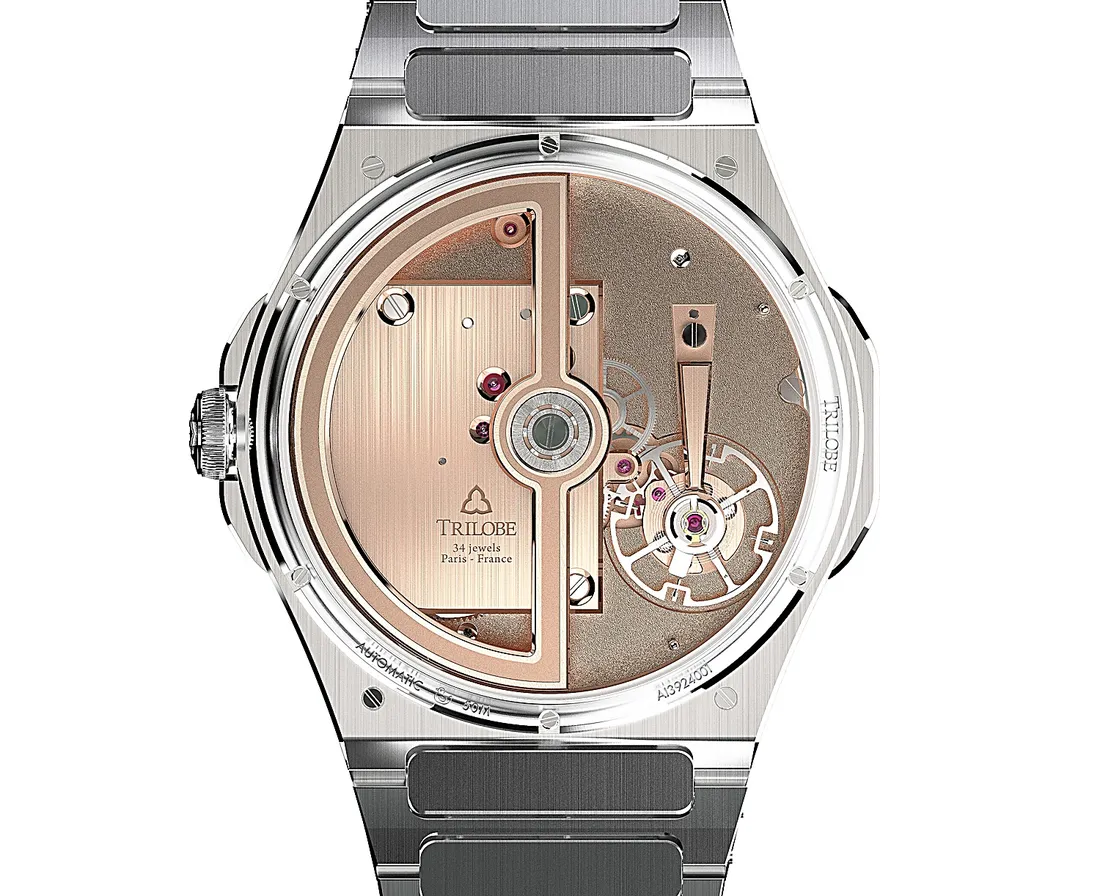
The X-Centric calibre inside is the manufacture’s own. It is automatic, with an oscillating weight, and carries two hundred and eighteen components and thirty-four functional jewels; it measures thirty-five point two millimetres across and seven deep. The power reserve is forty-two hours and the balance beats twenty-eight thousand eight hundred times an hour, four times a second.
The dial has a matte sunray finish, the hour and minute discs are grained, and the seconds wheel combines azurage with Clous de Paris guilloché. The steel model costs twenty-one thousand euros.
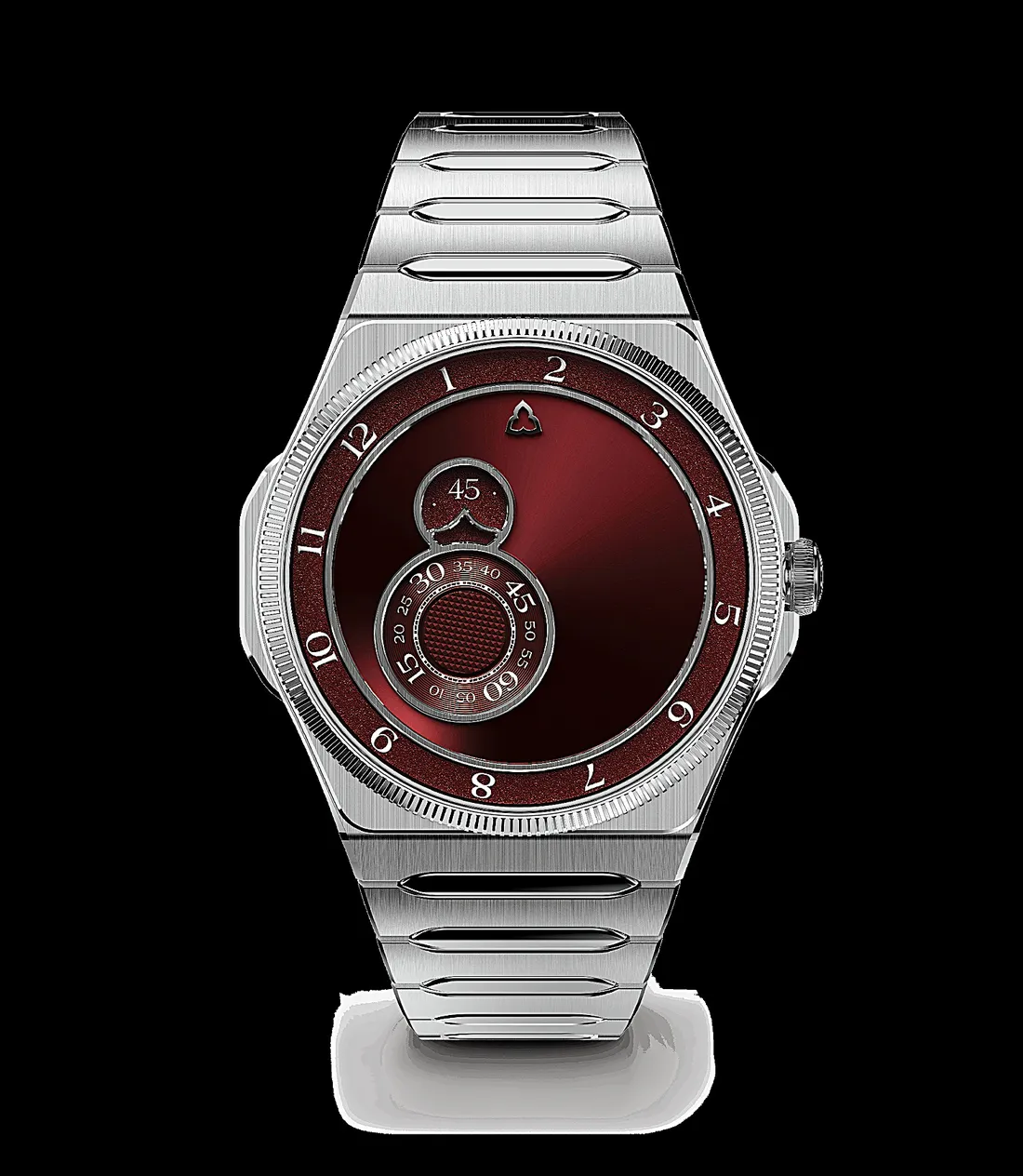
The four things in this piece all make the same sentence. Antipolis takes its name by reference to what faces it. The star fort is calculated so that no point goes unwatched. Cubism refuses to accept what one eye sees in one instant as enough. The Trente-Deux removes the privileged centre of the dial.
But there is something all four overlook. None of them escapes the fixed point entirely. The fort needs ground. A Cubist painting, however many angles it lays over one another, still rests in the end on a single plane. And that handless watch says nothing at all without the two small triangles at the rim; the rings turn and nobody reads anything.
You can remove the centre. You cannot remove the fixed point; you can only move it to the edge and agree on it. Nothing reads itself, and every reading wants a mark that does not move. Since the hand that set that mark there was not ours, what is left to us is to look from the right place.
The watch on its maker’s own site: Trilobe, Trente-Deux