Along the north side of Lucerne a wall runs above the town. The Musegg Wall is eight hundred and seventy metres long and is the longest surviving city wall in Switzerland. Nine towers stand along it, and one of them is called the Zytturm, the Time Tower.
Inside that tower stands the oldest clock in the city. It was built in 1535 by Hans Luterer and it is still running, one of the oldest working clocks in Europe.
This clock holds a privilege, and it has held it since the late Middle Ages: the right to strike the hour one minute before every other public clock in Lucerne. It is called the right of the first strike. In Lucerne, therefore, the hour is heard twice. The Zytturm strikes, and a minute later the rest of the city follows.
To understand why, you have to remember what time was in the Middle Ages.
In that age time had no measure arriving from outside. Every town kept its own hour and there was no agreement between towns. The answer to what time is it in a given town depended on which of that town’s clocks was believed.
In such an arrangement the clock that strikes first is the clock that sets the hour. The others come after it and confirm it. The right of the first strike is therefore not a technical adjustment but a granted authority. The minute in question is not a physical quantity. It is a rank.
format_quote"In the Middle Ages the clock that strikes first is the clock that sets the hour. That minute is not a physical quantity but a granted rank."
Hasan Bekmezci
The other emblems of the city can be read as fixed points too. The Jesuit Church on the riverbank was completed in 1677 and is reckoned the first large Baroque church in Switzerland; its twin onion domes still set the skyline.
A little above the town, cut into a rock face, lies a wounded lion. The Löwendenkmal was designed by Bertel Thorvaldsen, hewn between 1820 and 1821 by Lukas Ahorn and dedicated in 1821. It commemorates the Swiss Guards who died defending Louis XVI when the Tuileries was stormed on 10 August 1792. Mark Twain called it the most mournful and moving piece of stone in the world.
A city is, in a sense, the sum of the agreements reached about where to look. Tower, church and lion are all agreed points on which the gaze gathers. What the Zytturm does is one thing more: it gathers not only the gaze but the hour.
Local time worked perfectly well for as long as nobody moved quickly. If getting from one town to the next takes days, it troubles no one that their two noons differ by a few minutes.
The railway made that arrangement impossible. To write a timetable, every hour in it has to mean the same thing at every station. If each station keeps its own noon, no timetable can be written. Trains imposed a shared time on the countries they crossed.
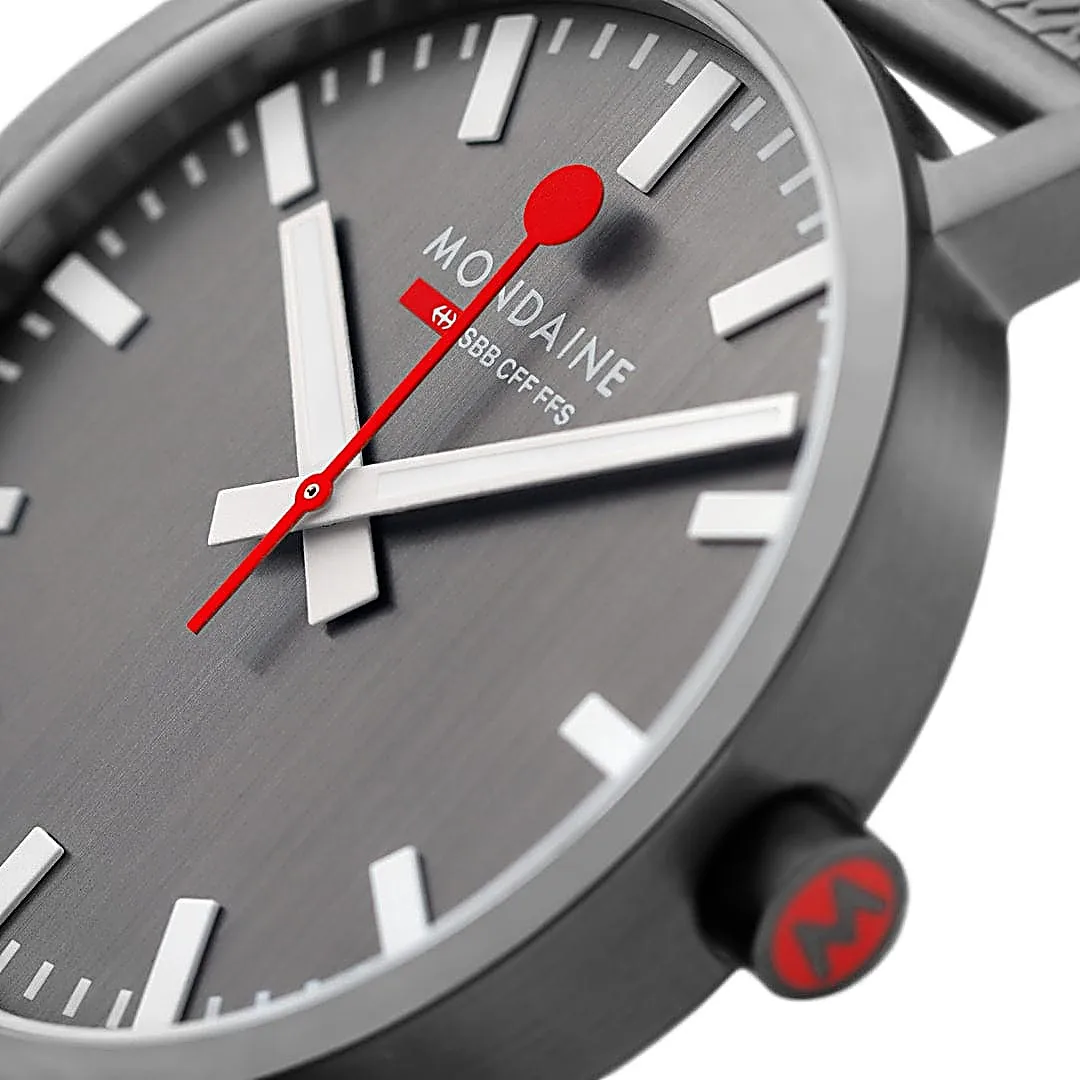
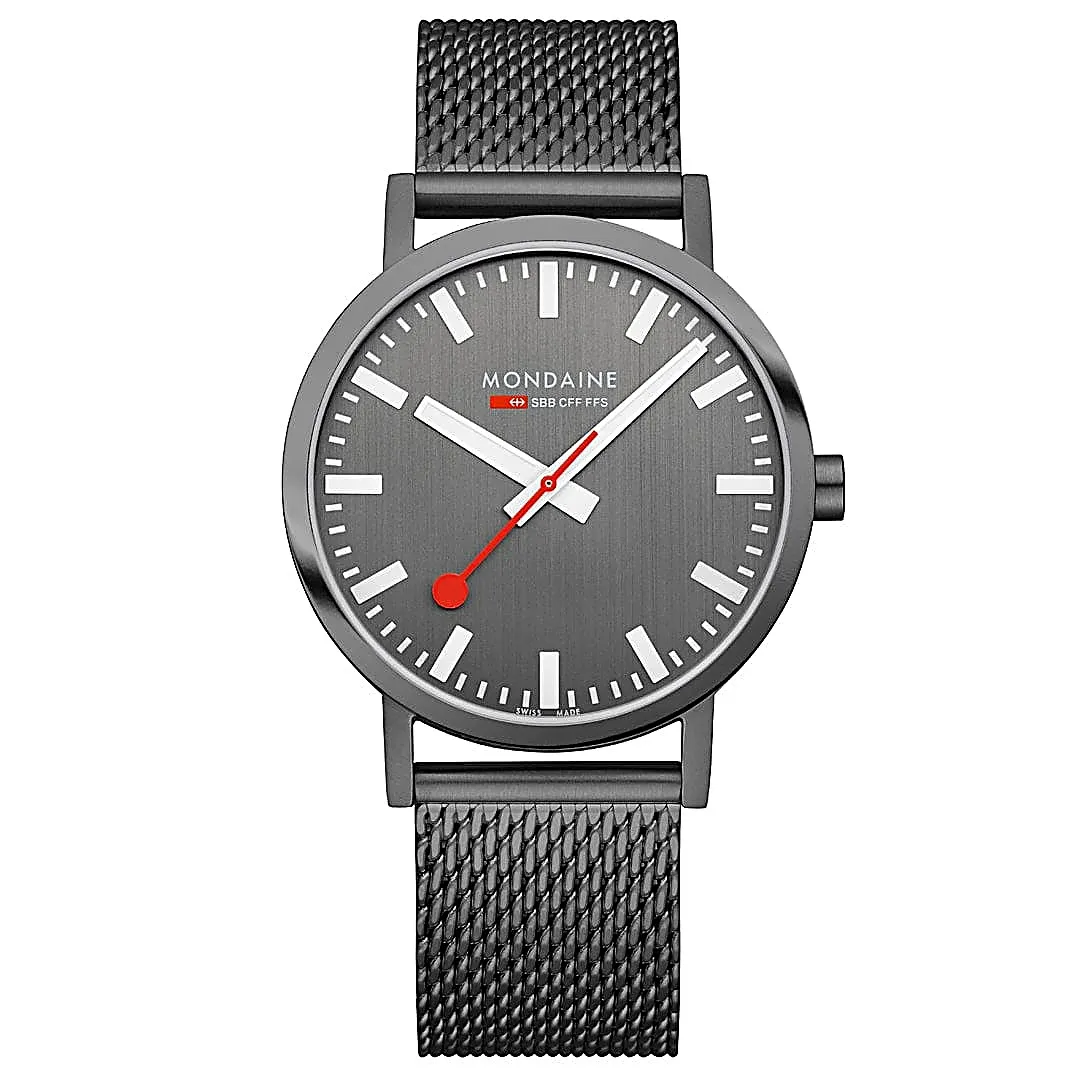
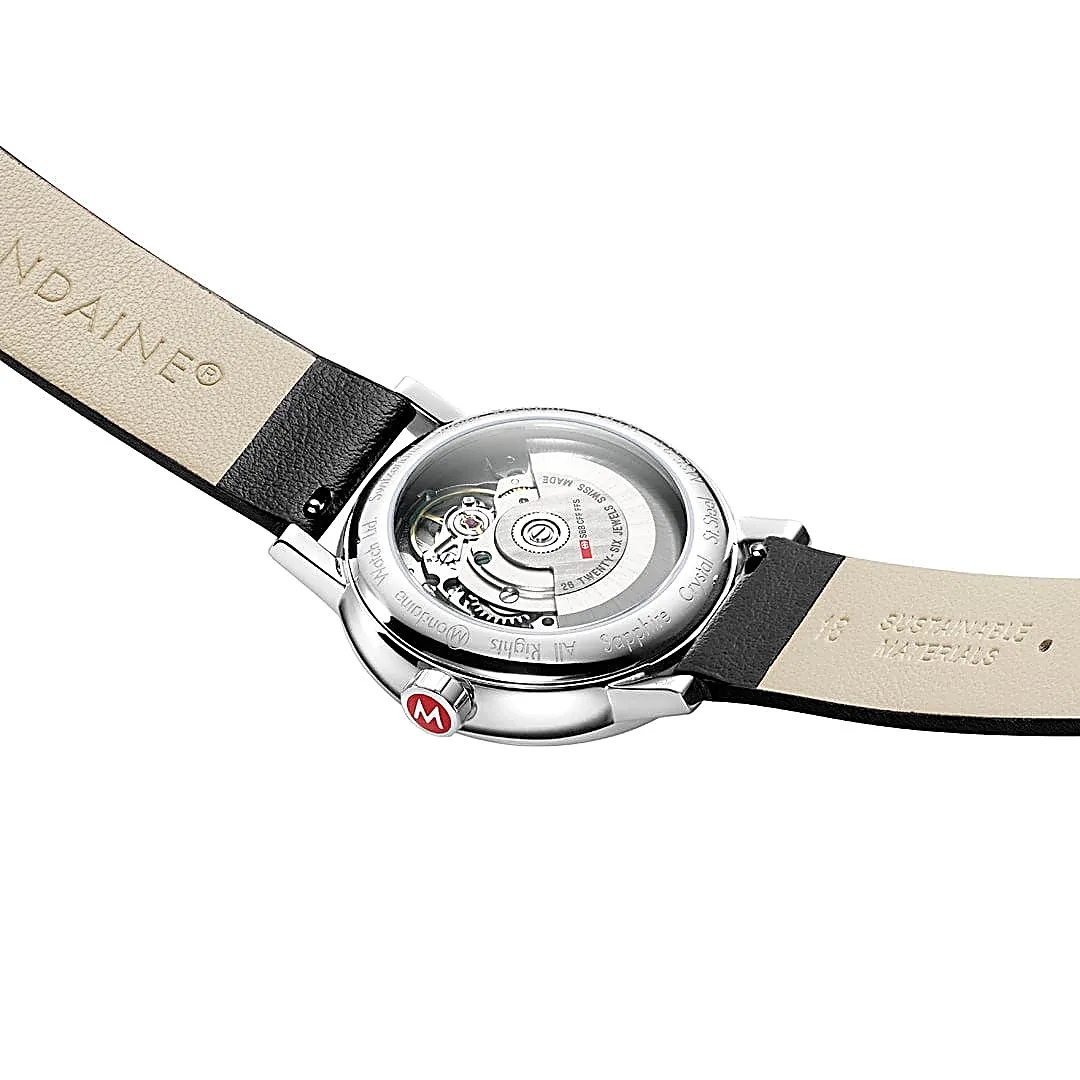
Switzerland answered the problem in 1944 through an engineer. Hans Hilfiker, of Zurich, designed the station clock for the Swiss Federal Railways. The dial was bare: no numerals, no ornament, only thick baton markers and two broad hands. In 1953 a red seconds hand was added, and the disc at its tip was taken from the paddle a railway guard raises to send a train away.
The genuinely elegant part is how that clock works.
Because the timetable uses only whole minutes, the station clocks did not need to know the seconds on their own. The whole network was tied into one system. The seconds hand of each clock sweeps the dial in about fifty-eight and a half seconds, reaches twelve, and stops there.
It stops, and it waits. What it waits for is an electric impulse sent once a minute by a central master clock over the telephone network. When the impulse arrives, every minute hand in the country steps forward at the same instant.
Hilfiker’s own reason for the pause was not technical but human: to bring calm in the last moment and to ease the punctual departure of the train.
format_quote"The tower clock was granted the right to go first. In the railway clock no clock is allowed to go first; they all wait for the same signal."
Hasan Bekmezci

Set the two arrangements side by side and the whole history of Switzerland’s relationship with time appears.
The Zytturm was granted the right to go first. In the railway clock no clock is permitted to. One is built on privilege, the other on the abolition of privilege. The same country built one, and four hundred years later built the other.
The physics lesson that follows demands honesty. Simultaneity is not free. To say that two distant clocks show the same moment, something has to travel between them, and whatever you send takes time to arrive.
At the same moment, therefore, is not a fact discovered in the world. It is an agreement that is constructed and maintained. In Switzerland the price of that agreement was a wire and an impulse sent once a minute.
Picture two people on the platform arguing about this clock: the engineer who designed it and the stationmaster responsible for the platform.
The stationmaster reports what he sees. Your clock stops for a second and a half every minute. A clock that stops is a broken clock.
The engineer corrects him. It is not stopped. It is waiting.
The stationmaster presses. The passenger cannot tell the two apart.
The engineer names the real point. He does not need to. This clock is not here to tell him what time it is; it is here to say the same thing as the clock in Basel. Left to run on alone it would be right about the second and wrong about the country.
The stationmaster asks one more thing. And why does it wait at twelve rather than anywhere else?
The engineer answers. Because the waiting has to be visible. The passenger sees the hand standing at the top and understands that the train leaves in seconds. The pause is not a fault. It is an announcement.
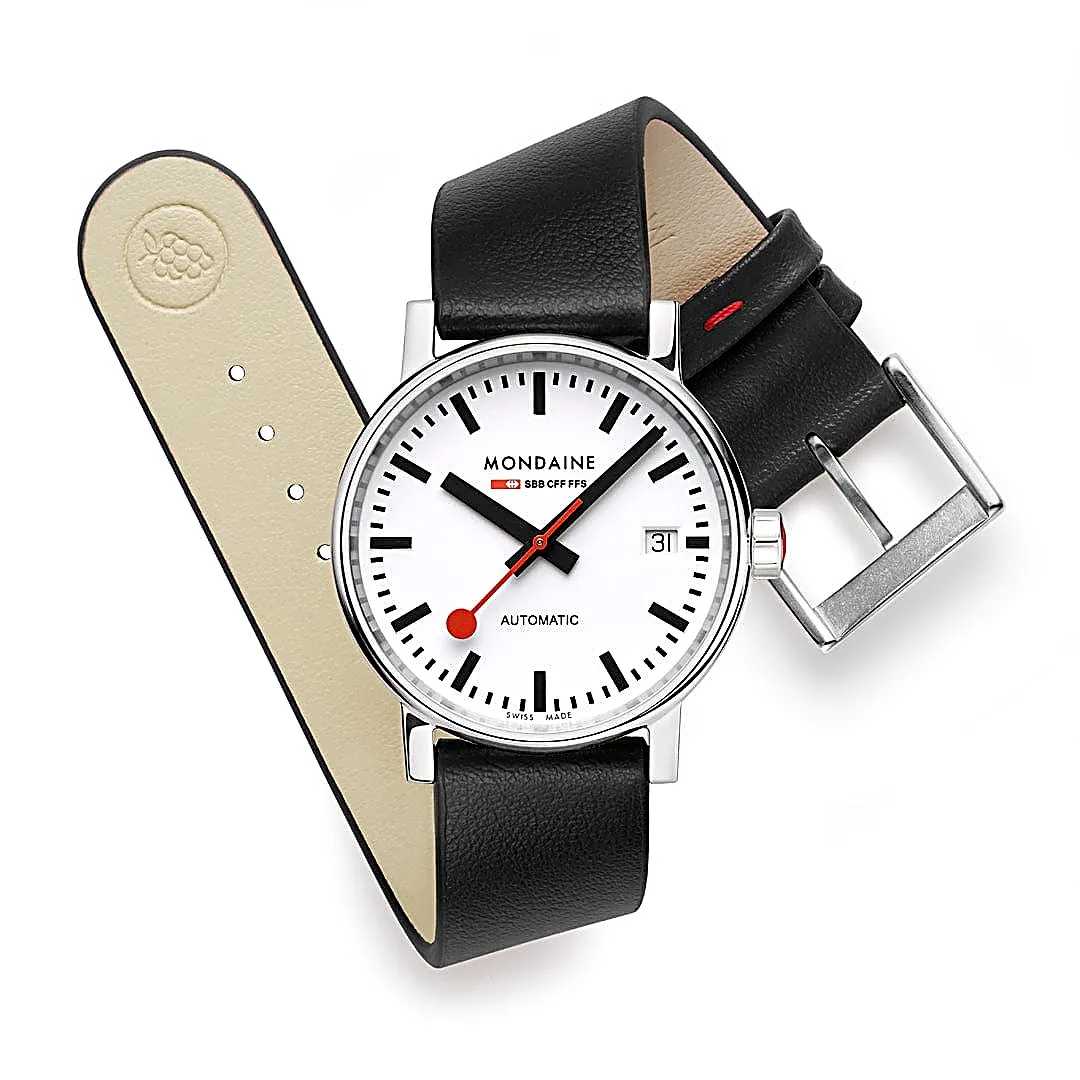
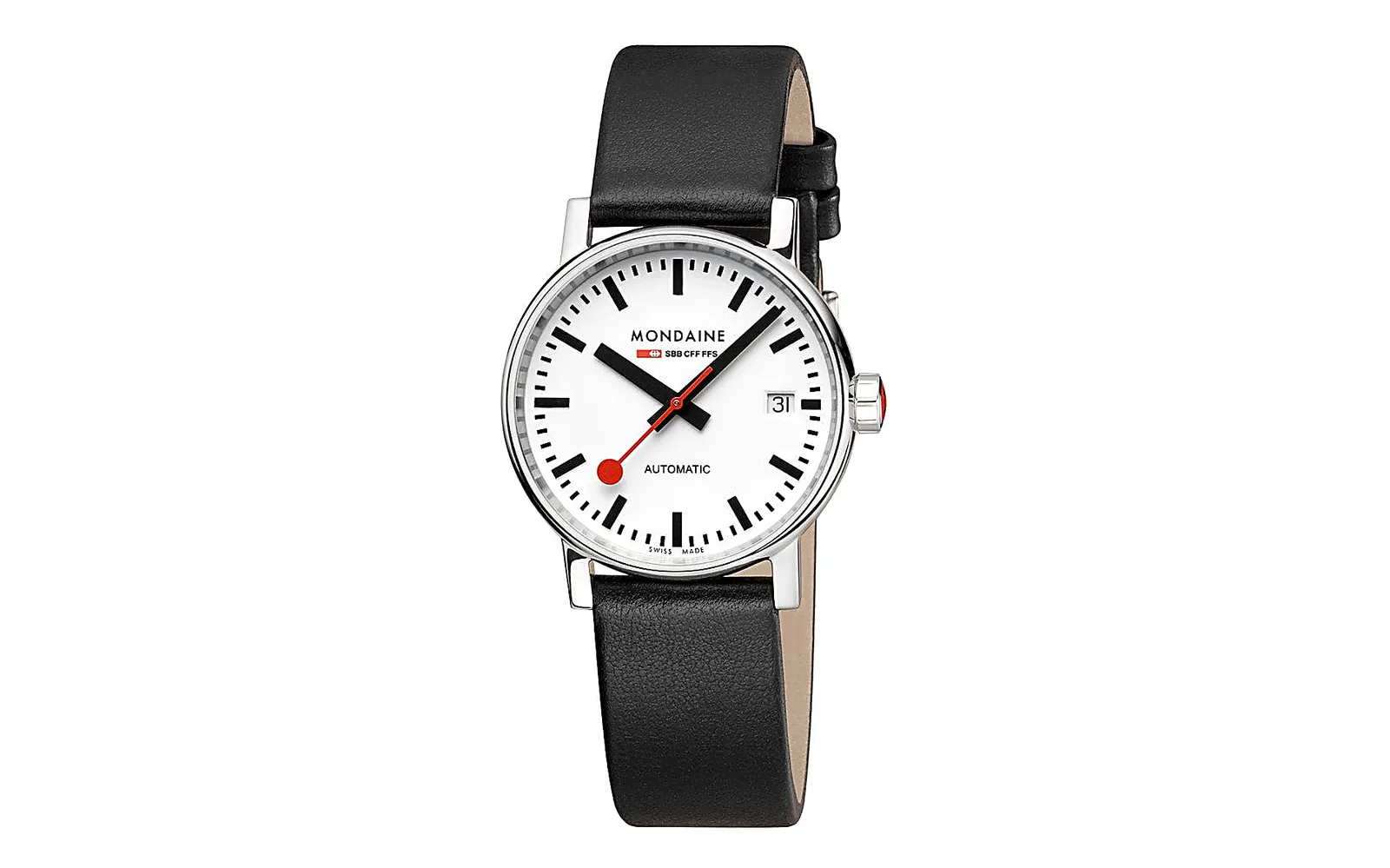
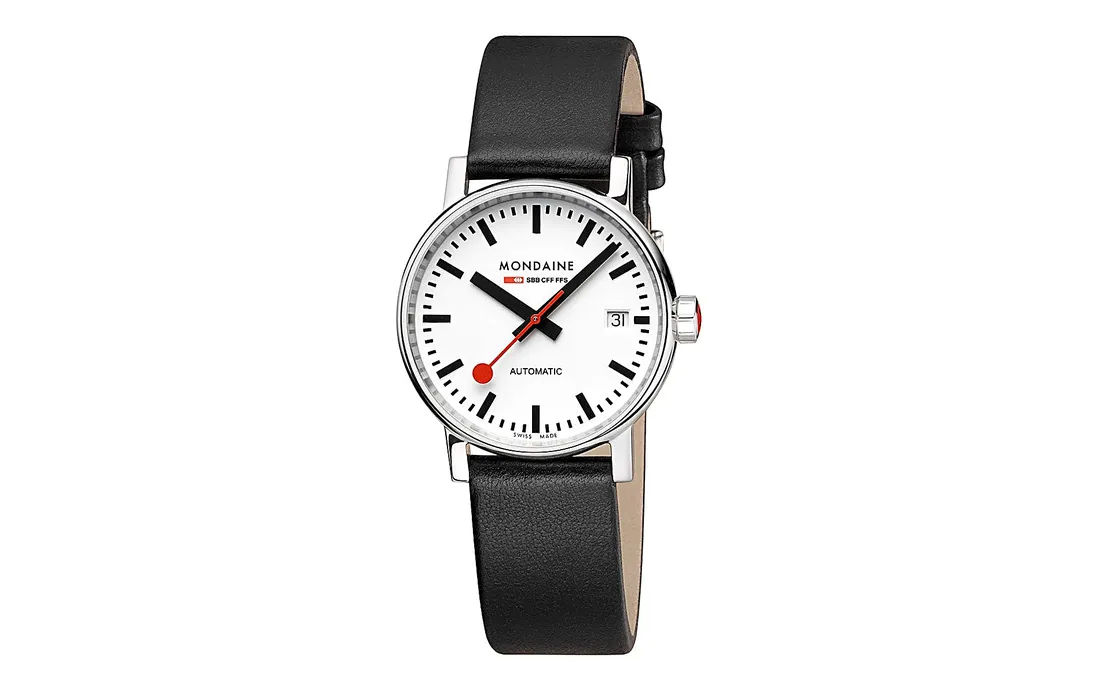
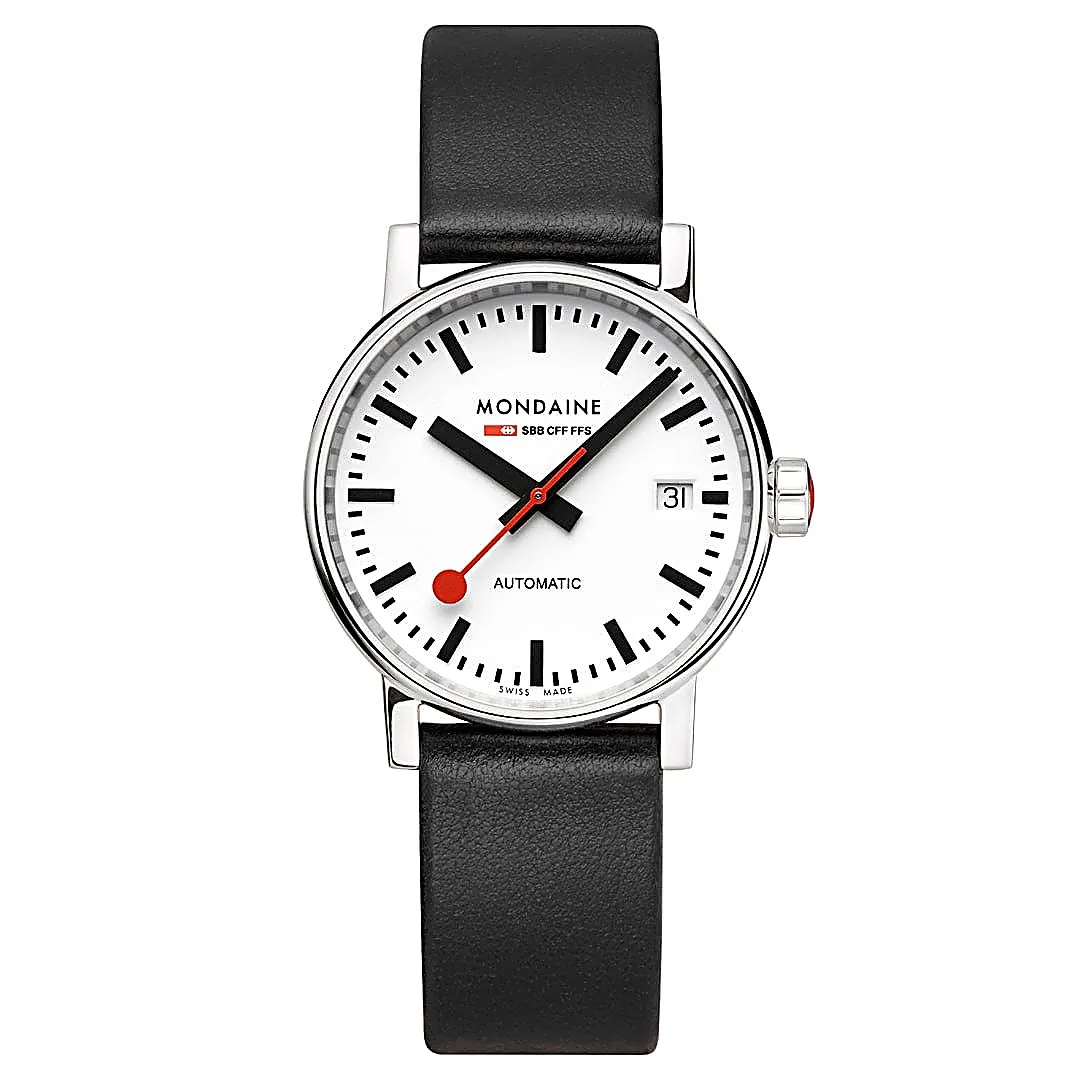
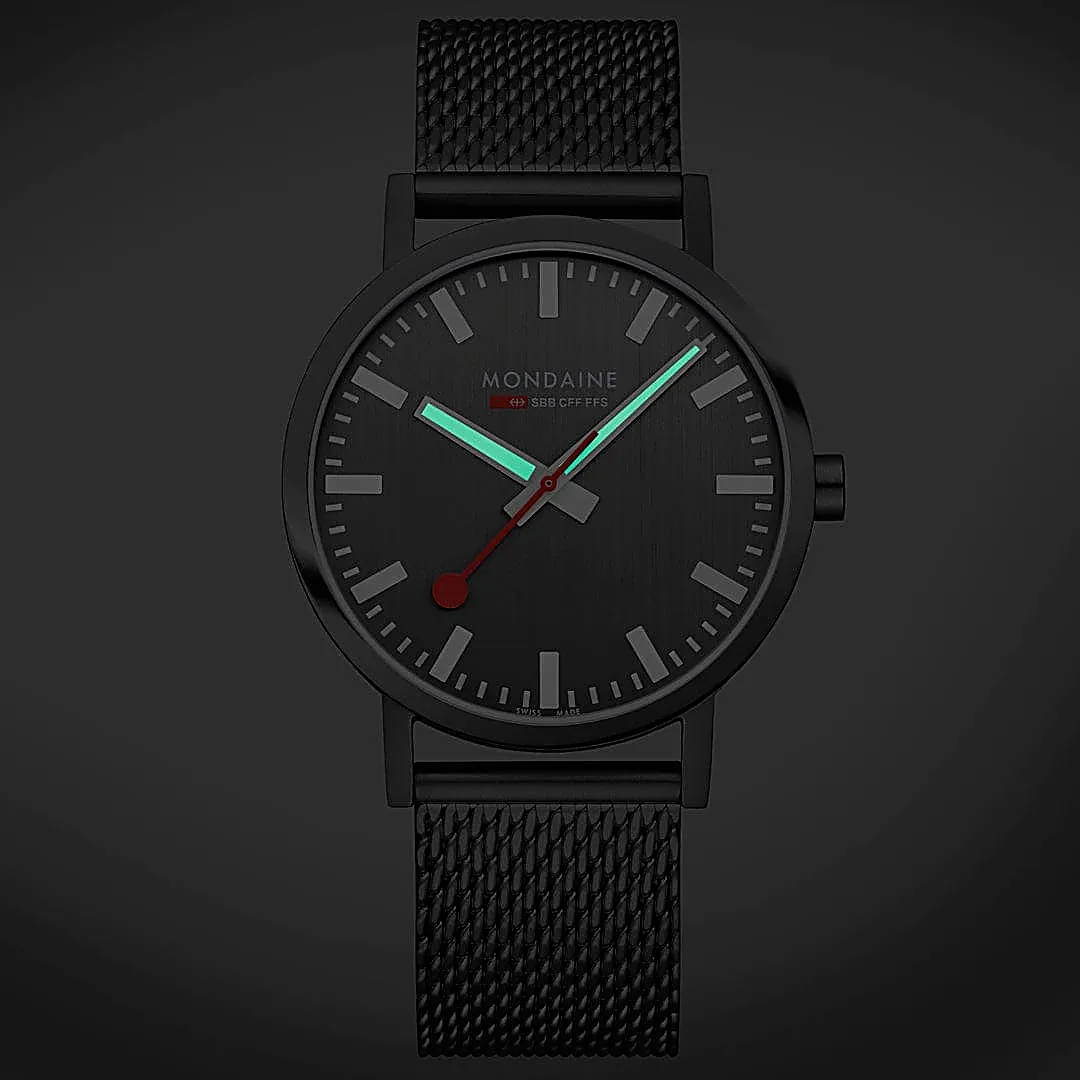
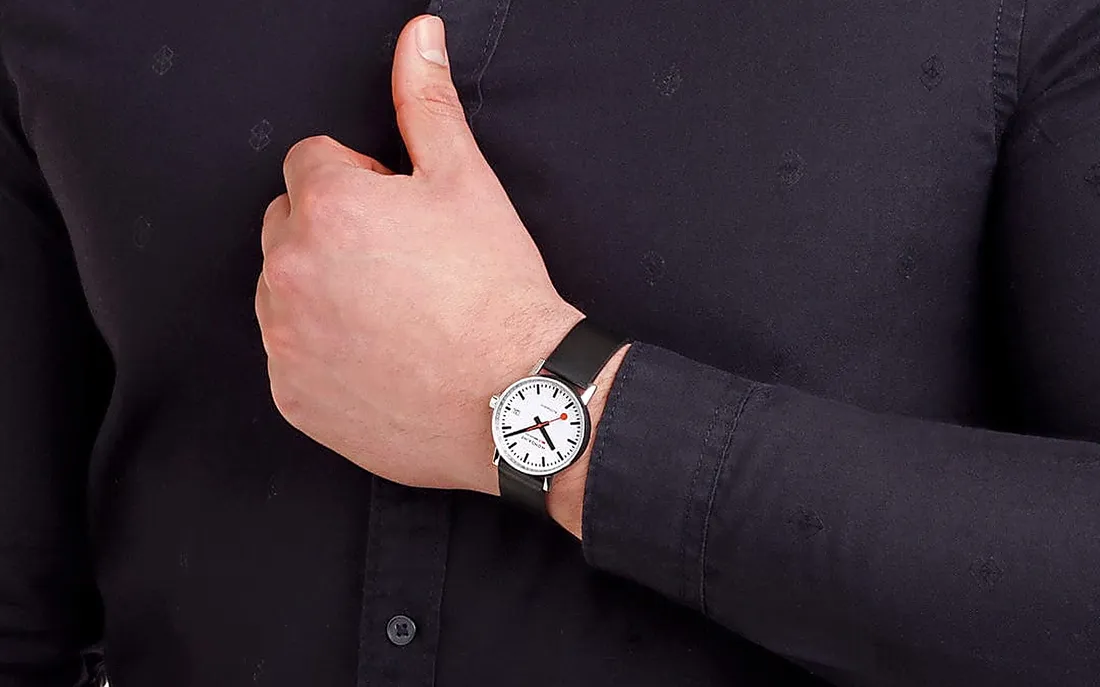
The licence to Hilfiker’s dial has been held by Mondaine since 1986. The EVO2 Automatic, released in 2026, is the mechanical reading of that dial.
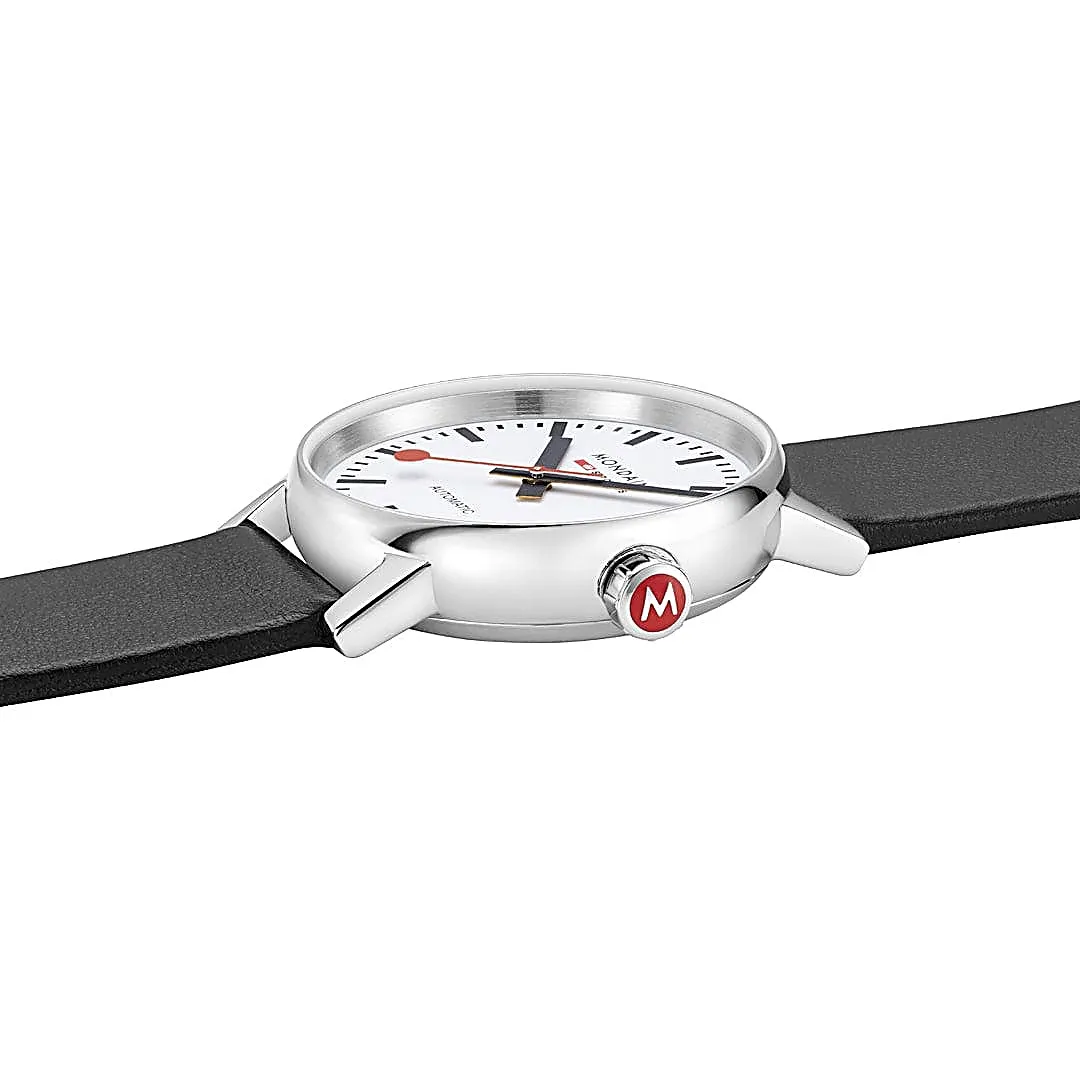
One distinction should be stated plainly here. The models that repeat the station clock’s pause at twelve on the wrist are separate and are called stop2go. The EVO2 Automatic does not make that pause. What it carries is the dial itself: Hilfiker’s drawing, the baton markers, and the seconds hand with the red disc at its tip.
The figures run as follows. The reference is MSE.35610.LBV. The case is 316L stainless steel, polished, thirty-five millimetres across. The caseback is transparent and shows the automatic movement at work. The crystal is sapphire and water resistance is fifty metres. Inside runs a Swiss-made Sellita SW 220-1 automatic calibre. The strap combines a plant-based material made from the grape marc left over by winemaking with recycled PET. It costs nine hundred and forty dollars.
format_quote"At the same moment is not a fact discovered in the world. It is an agreement that is constructed and maintained."
Hasan Bekmezci
Looking back, both clocks confess the same thing.
The clock in the Zytturm does not strike a minute early of its own accord; the right was granted to it. The station clock does not step the minute of its own accord either; an impulse is sent to it. One waits on a privilege, the other on a signal. Neither of them produces the hour. Both receive it.
No clock gives birth to the time. Every clock takes delivery of it.
And that master clock was set by somebody too, and whoever set it was looking at something else. Follow the chain far enough back and you leave the wire, and there is no longer an instrument left to adjust. What remains is that the measure was not ours to set, and that what is left to us is learning to wait for the right signal.
The watch on its maker’s own site: Mondaine, EVO2 Automatic