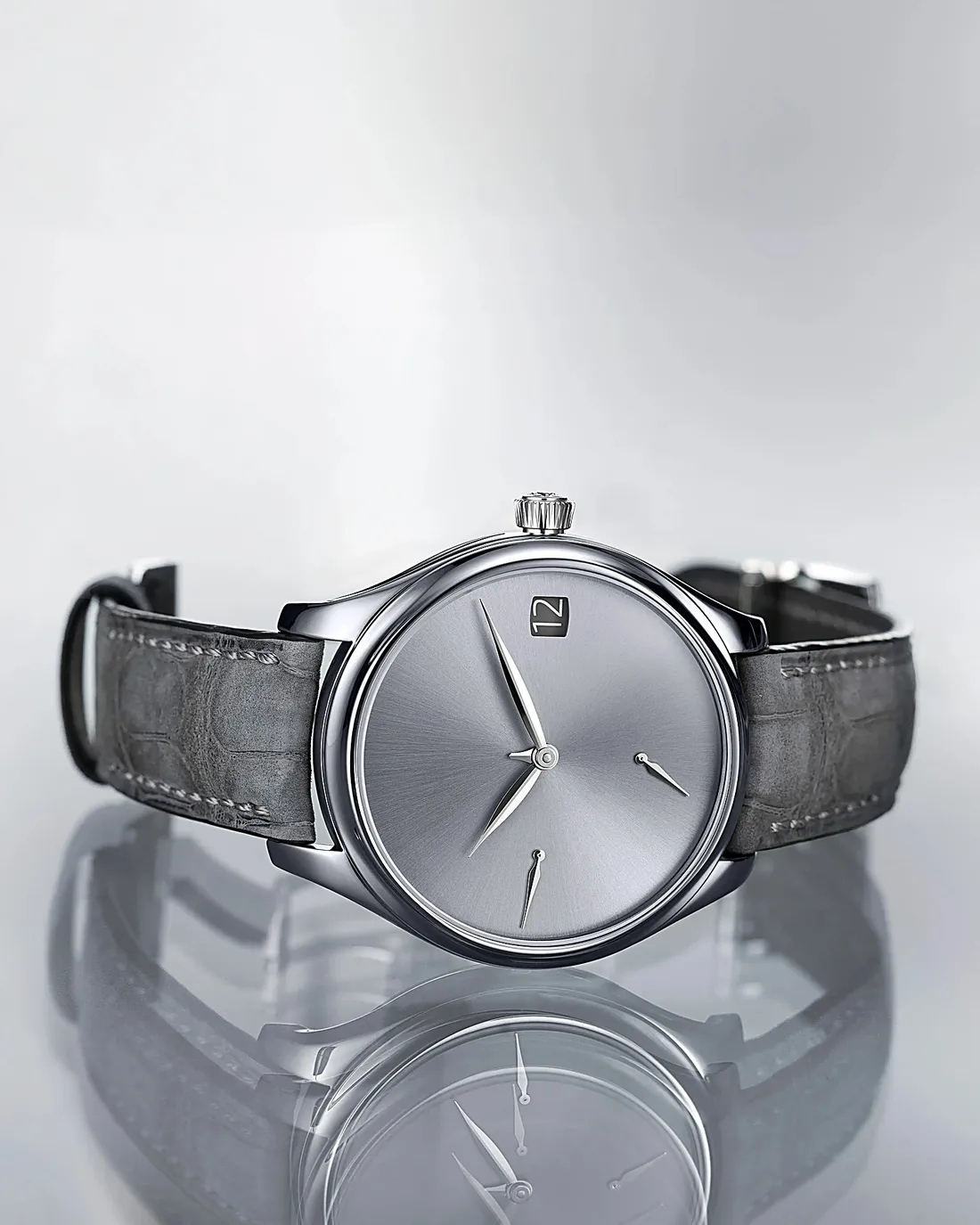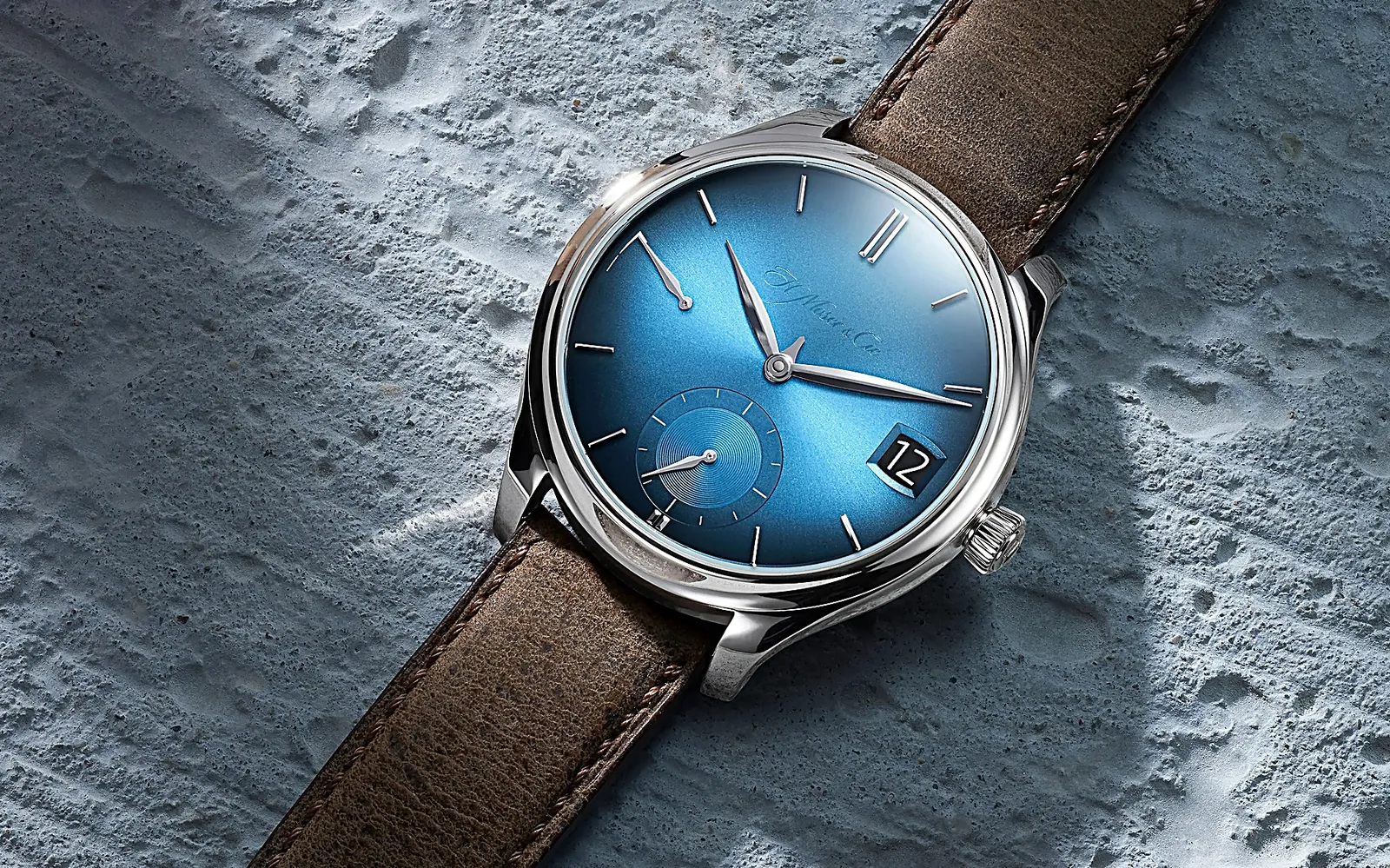

Buy a perpetual calendar and the booklet in the box will almost always carry the same warning. Do not touch the date, day or month correctors between eight in the evening and three in the morning. During those hours the change-over wheels of the calendar are locked into one another, and a pusher forcing them from outside can break a tooth, bend a lever and send the movement away for service.
The result is an odd situation. The most expensive complication in the catalogue is also the only piece that warns its owner not to touch it. People are therefore wary of letting a perpetual calendar stop, uneasy when setting it, and often prefer to carry it to a watchmaker. If you are afraid to use an instrument, the instrument is not really yours.
format_quote"The most expensive complication in the business is the only instrument that warns its owner not to touch it."
Hasan Bekmezci
H. Moser & Cie treated that warning as a design fault rather than a fate. The house’s perpetual calendar can be set at any hour of the day or night, forwards and backwards, with no risk to the movement. It sounds like a small convenience; in fact, making it possible meant changing where the calendar sits inside the watch.
Nearly every conventional perpetual calendar is a module. It is laid as a separate storey on top of a finished base movement. The module takes its motion from the movement but is not part of it. It has a train of its own, and that train runs one way: at each step a jumper spring drops the wheel into place and stops it returning. Turning a module backwards therefore means working directly against those jumpers. Force it and either a spring breaks or a tooth skips.
In Moser’s calibre HMC 800 the calendar is not a module. It is built into the movement itself, as part of its own train. In that arrangement the motion arriving from the crown turns the very wheels the watch turns anyway, so it can run forwards or backwards. The difference is not a matter of convenience but of architecture.
The second question is the change itself. When a calendar turns the date at midnight it takes one of two roads. In a dragging arrangement the disc slides across over several hours; look at eleven at night and the date sits between two numerals. In an instantaneous arrangement the disc falls into place within a fraction of a second.
The instantaneous change is the more elegant, and it is paid for in energy. The date disc has to move, at a month end the month wheel as well, and once in four years the leap-year wheel too, all in an instant. That energy is gathered in a spring over hours and released at once. Here is the danger: that sudden release can drop the mainspring’s torque for a moment, the balance can lose amplitude at midnight, and the watch can err that night. The work of a good calendar architecture is to isolate the jump from the running train.
Picture two people discussing this watch at the bench: the constructor placing the calendar inside the movement and the designer drawing the dial.
The designer states the problem. A perpetual calendar carries four readings: day, date, month and leap year. The classic answer is four apertures or three sub-dials. The dial then turns into an instrument panel and the whole claim to restraint collapses.
The constructor asks the obvious question. Which one can we drop?
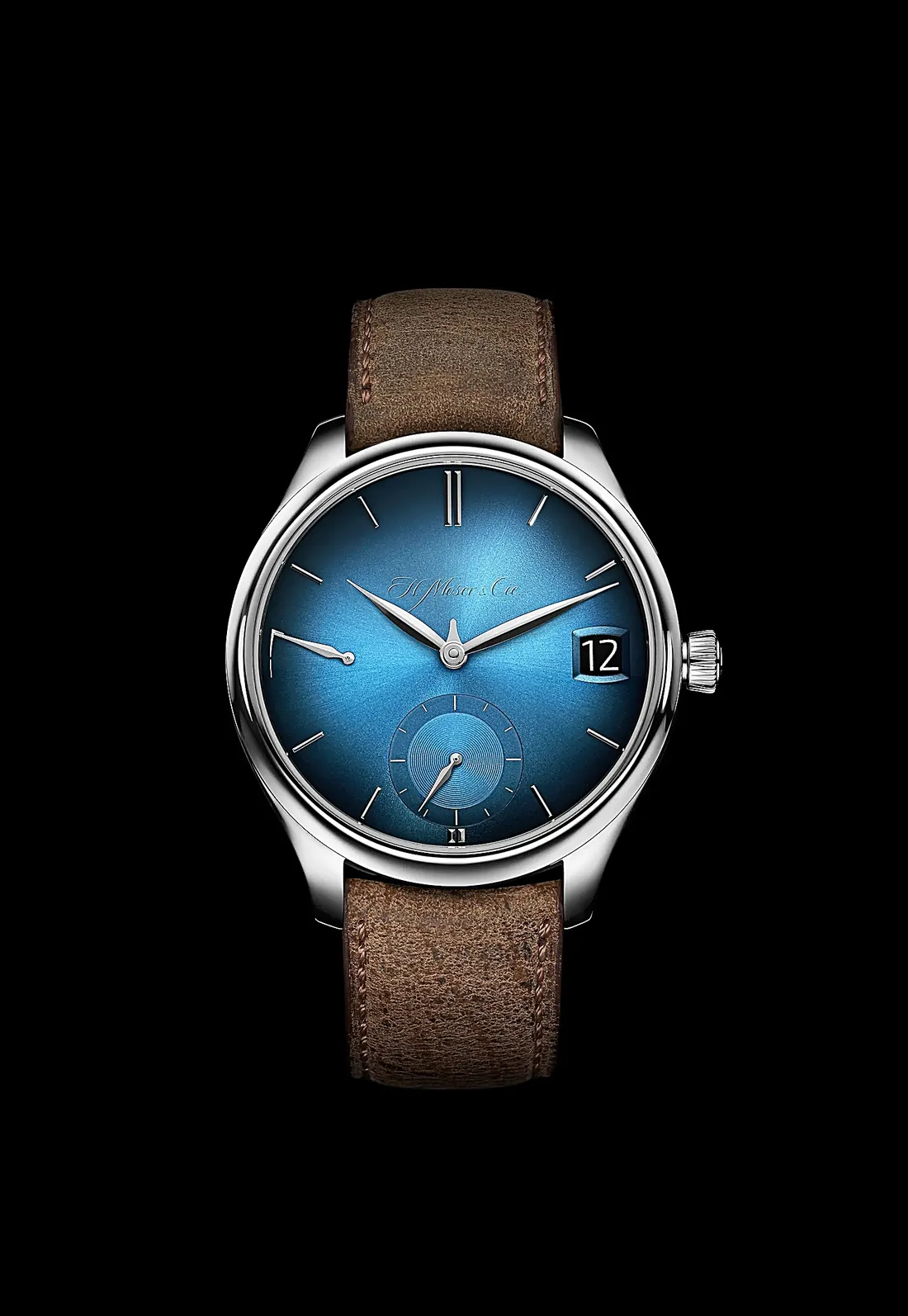
The designer’s answer is not about dropping. Let us drop none of them, but use something twice that is already there. The dial carries twelve indices, placed there to show the hours. Twelve indices mean twelve months. Put a very short hand at the centre; whichever index it points to is the month.
The constructor objects. Will people accept reading one marker in two meanings?
The designer concedes that on the first day they will not. But by the second week they will know without looking, because the month changes once a month. It is not information that needs constant reading. It is learned once, and then it becomes invisible.
format_quote"The cheapest indication is the one you did not add."
Hasan Bekmezci
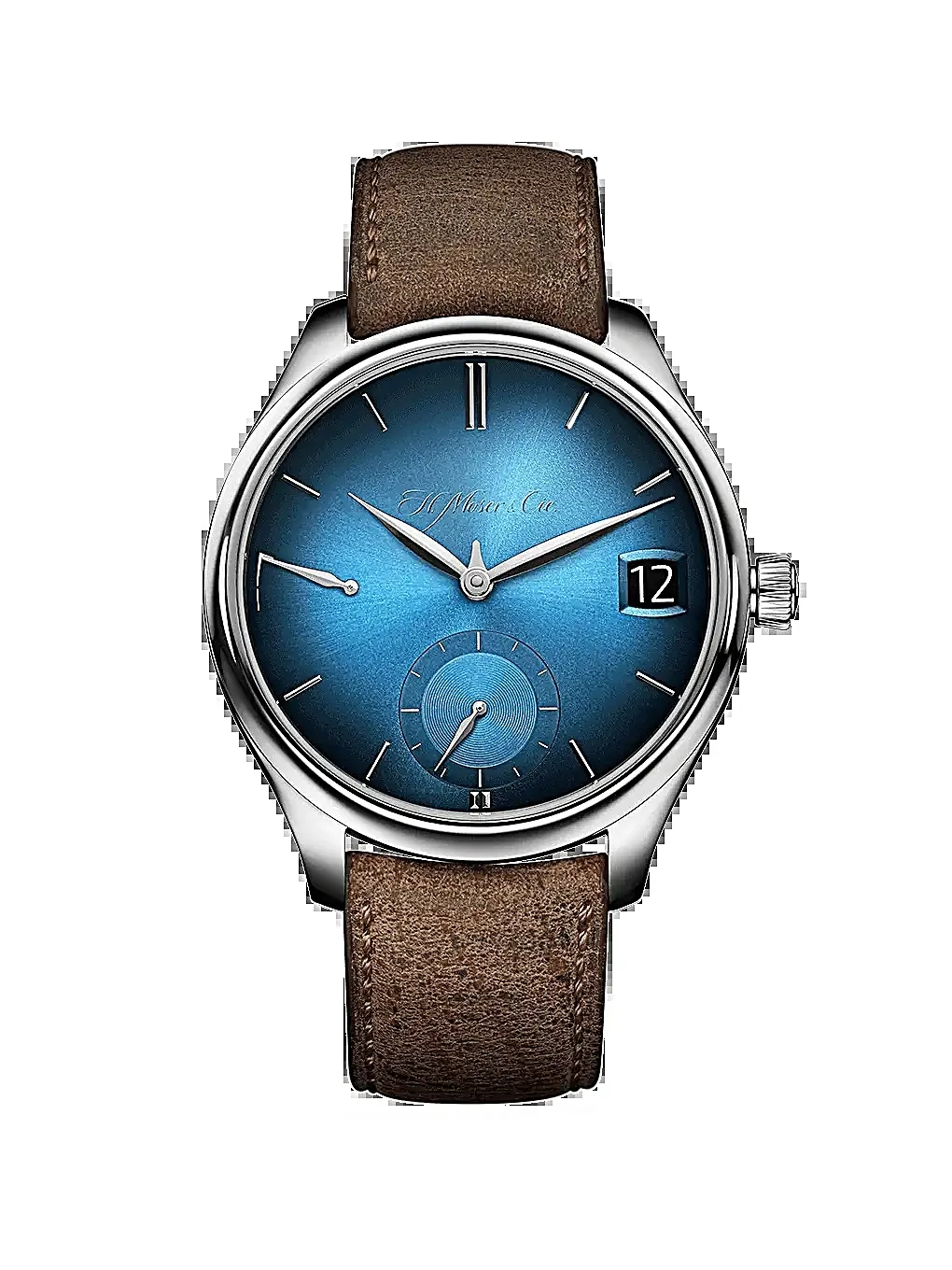
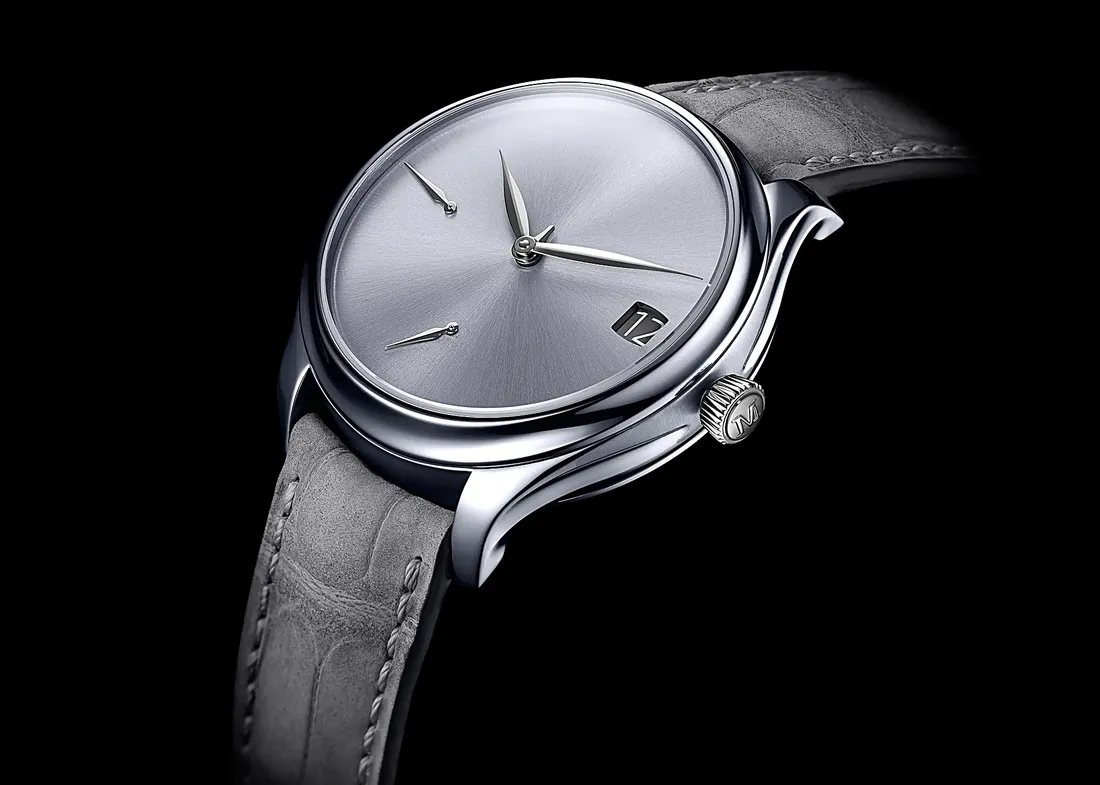
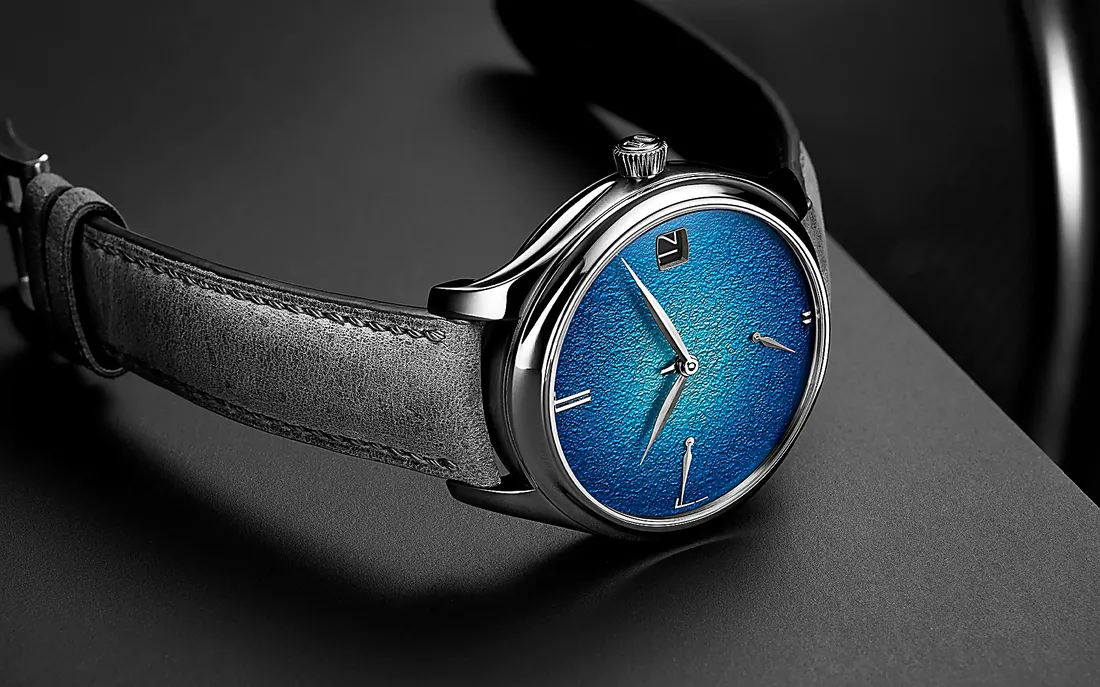
And indeed the dial today carries neither a month window nor a leap-year counter. The month is read from the index the short central hand points at. In terms of information density that is an elegant solution: one more reading is carried without a single new marking added to the surface. The house describes this approach in its own words as a less is more philosophy, and chooses not even to put its logo on the dial.
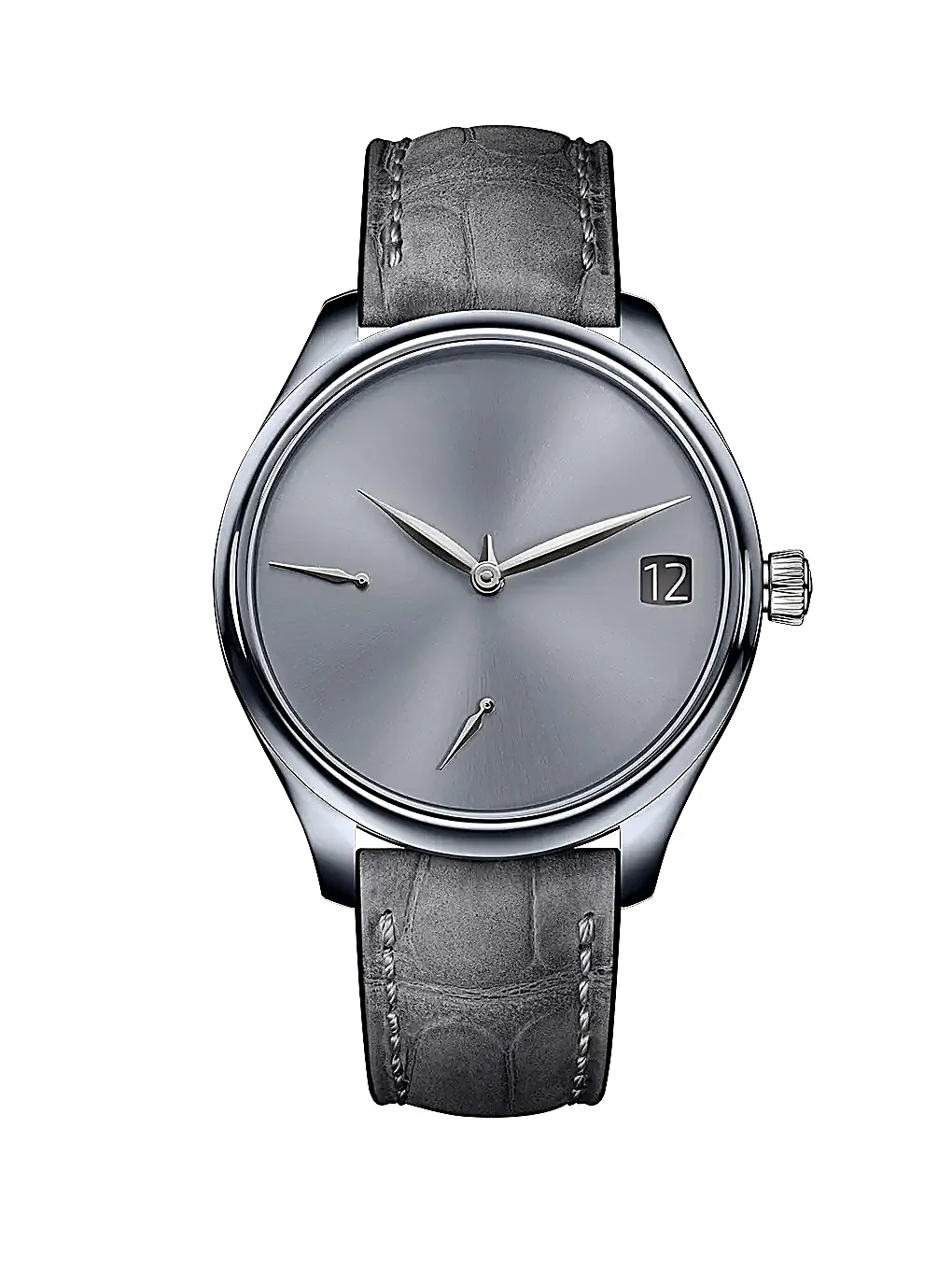
The dial is a piece of work in itself. The surface, called fumé, takes more than two hundred steps to produce. A sunburst pattern opens outwards from the centre, and the tone begins light in the middle and deepens towards the rim. That gradient is not sprayed on but built up in layers, which is why no dial is ever an exact copy of another.
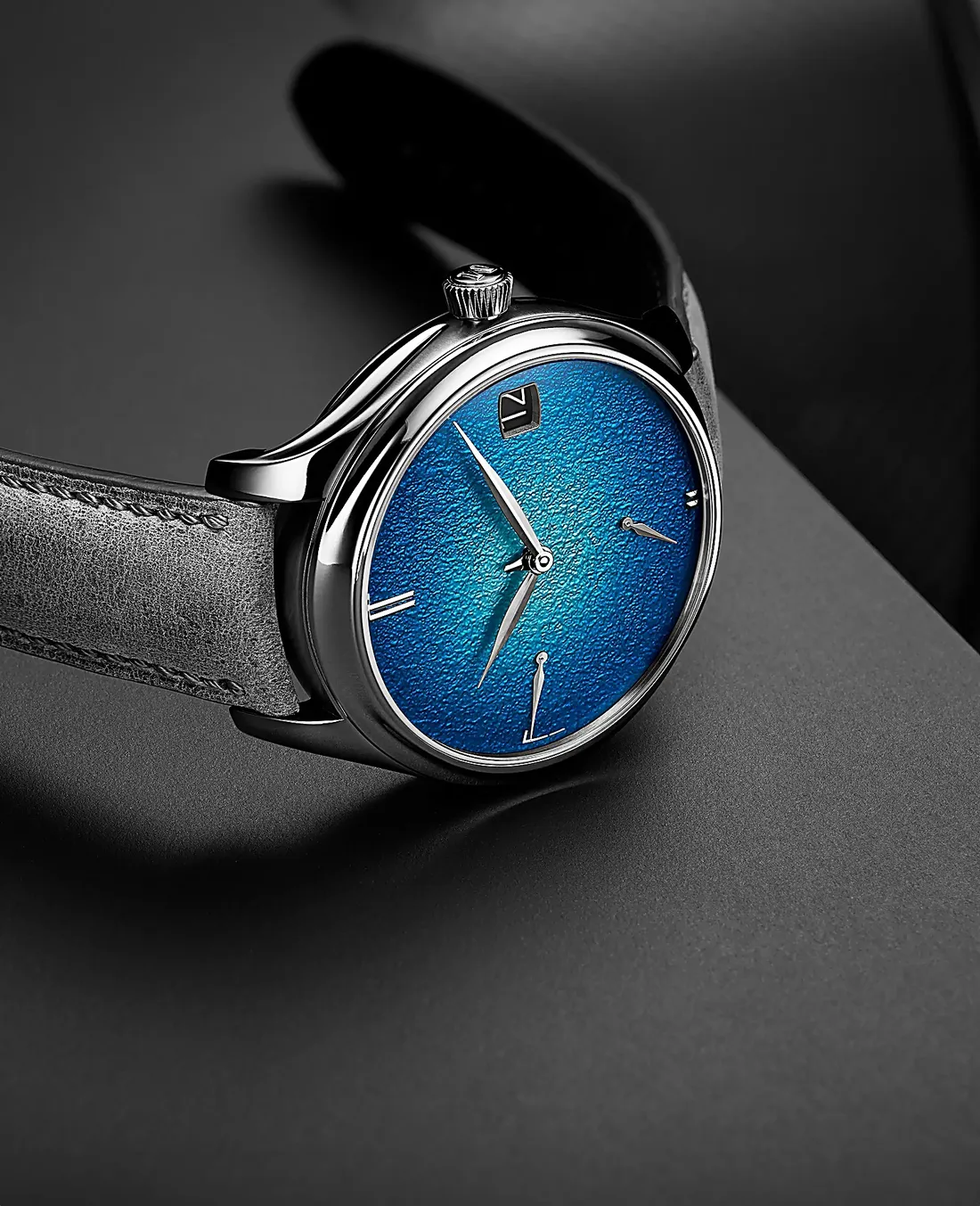
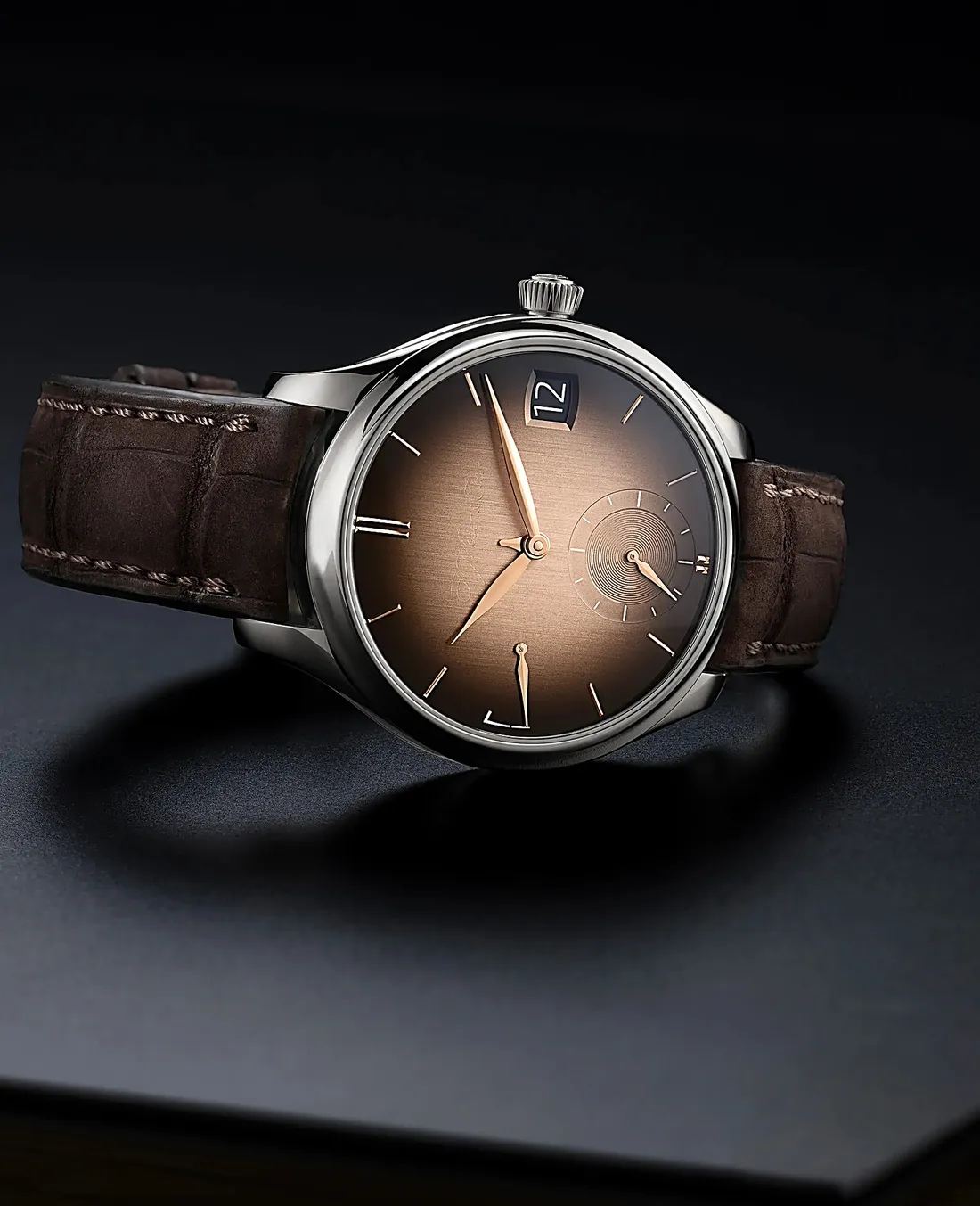
The movement is called the HMC 800 and it is wound by hand. The power reserve is one hundred and sixty-eight hours, a full seven days. That figure is not a boast but a direct consequence of the calendar. A perpetual calendar consumes a little energy every day, and at each month end that consumption rises sharply. It is why the power reserve of most modular calendars stays short. Seven days means there is energy left over after the calendar has been carried.
The case is forty-two millimetres across and made of white gold. Water resistance is three atmospheres and the strap is kudu. The price is fifty-four thousand Swiss francs before tax.
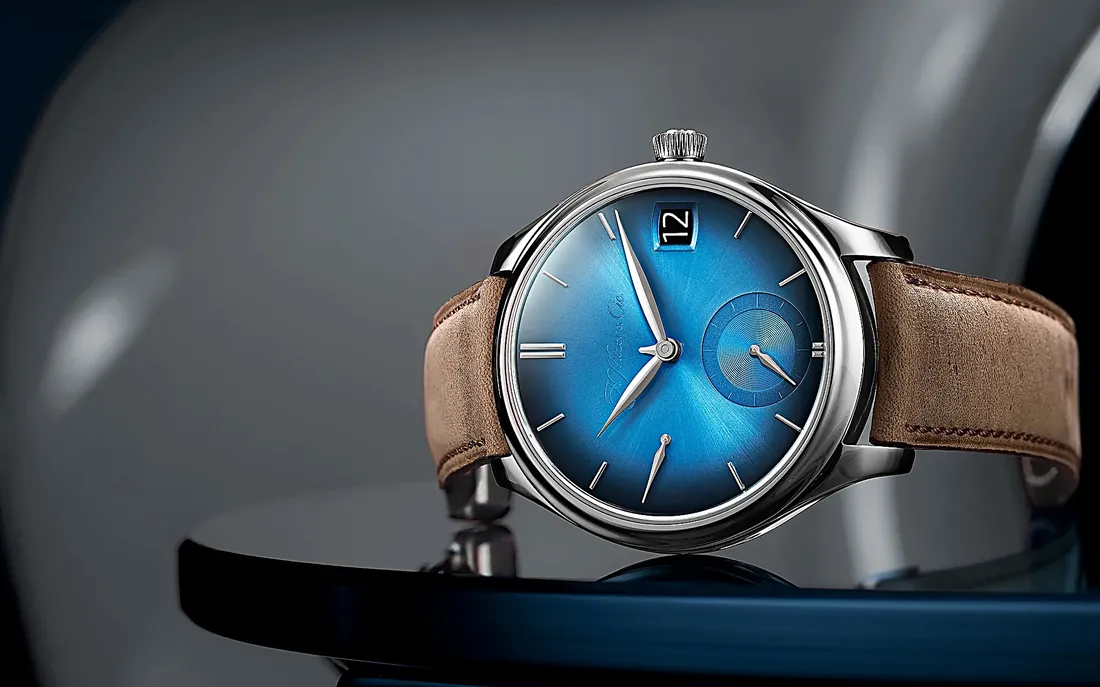
The house has a long relationship with this complication. The humble beginnings of H. Moser & Cie reach back to the 1820s, and the perpetual calendar has long counted as its signature work. At the 2011 Grand Prix d’Horlogerie de Genève, the brand’s Moser Perpetual Golden Edition was pre-selected in the Complicated Watch category. Zenith took the category that year, but the idea Moser brought stayed, and it is still built to the same logic today.
Thinking about what a perpetual calendar actually does takes you somewhere strange. This mechanism writes a four-year table into metal. The length of forty-eight months is recorded as differences of depth around the edge of a cam. The watch reads that table and gives the right answer at every month end. In your hand, in other words, is an instrument that remembers on your behalf.
Human memory does not work that way. We forget, we confuse things, we work out afresh every year how many days February holds. A perpetual calendar takes that job on and asks for nothing in return. The only thing it asks is to be wound.
format_quote"A calendar remembers on your behalf. Its courtesy is that it does not punish you when you are wrong."
Hasan Bekmezci
What Moser added is valuable exactly here. Making an instrument that remembers is hard; making one that remembers and forgives is harder. This calendar does not tell you not to touch it. If it occurs to you at midnight to wind the date back, you can. If you left it on the wrong month, you correct it. The mechanism does not punish you.
Of all the quantities we measure, the calendar is the most human. The second comes from physics, the day from the turning of the Earth, the year from an orbit. The month was taken from the phases of the moon and then trimmed, stretched and given an extra day in one place to suit the way people run their affairs. A calendar, then, is a settlement between a measure the sky provides and the way we prefer to count, and like every settlement it is uneven. To cut that unevenness into the edge of a forty-eight month cam and wear it on the wrist is one of the most elegant answers we have found to our own disorder.