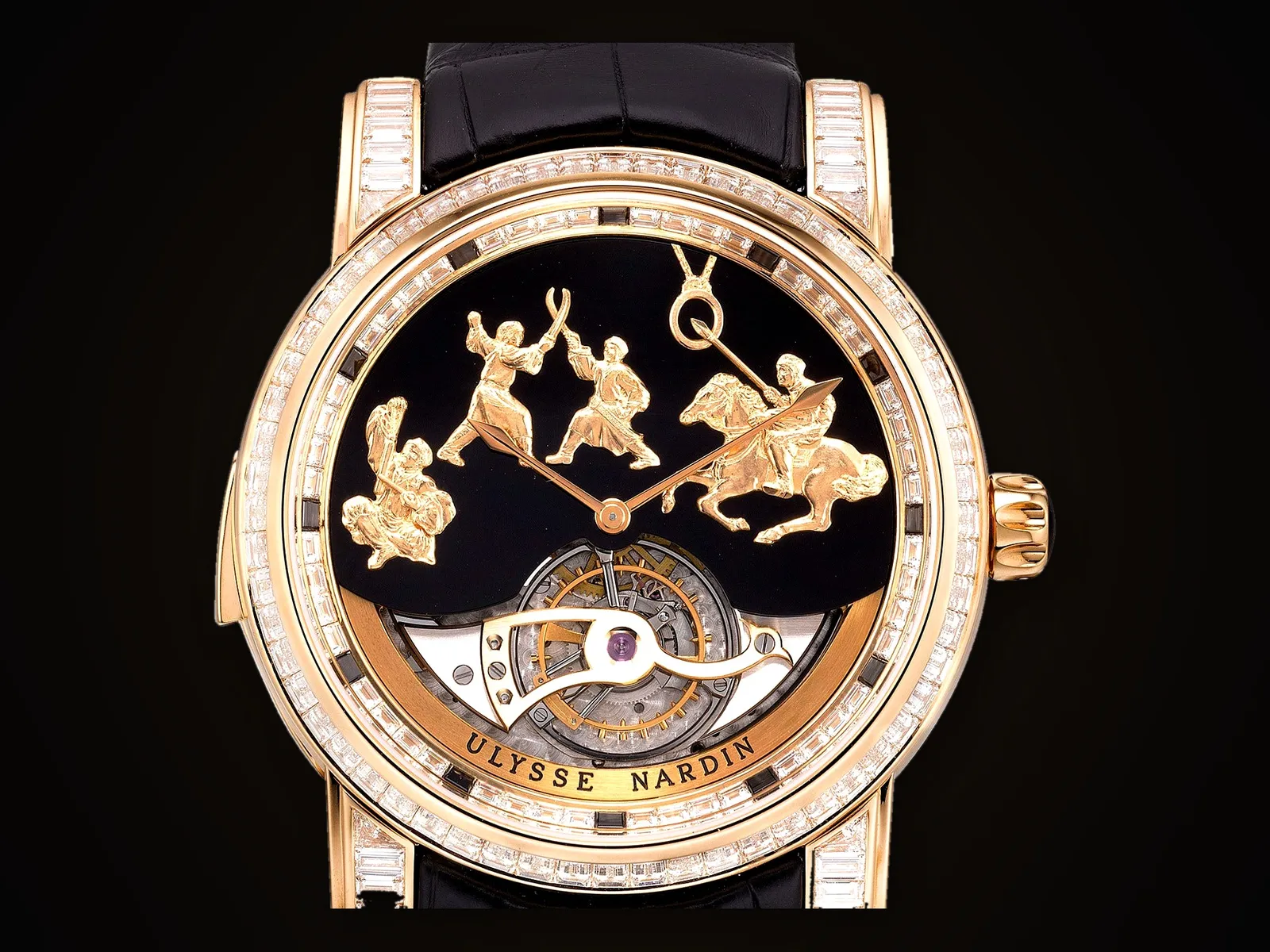
In the dim, dignified air of the auction room, leaving behind the melody of peace that had filtered out of Alexander’s swords, the grandfather and Leo took a few more steps between the velvet-covered display tables. Leo’s eye caught another rare object two vitrines away, with a pitch-black ground and a pink gold case.
Leo tugged excitedly at his grandfather’s hand:
“Grandfather, look! There is another watch here with gold men swinging swords and spears, just like the one before. Is this Alexander too?”
The grandfather smiled, adjusted his magnifying spectacles and stepped up to the vitrine. After looking at the line reading "Lot 44" in the catalogue, he turned to his grandson:
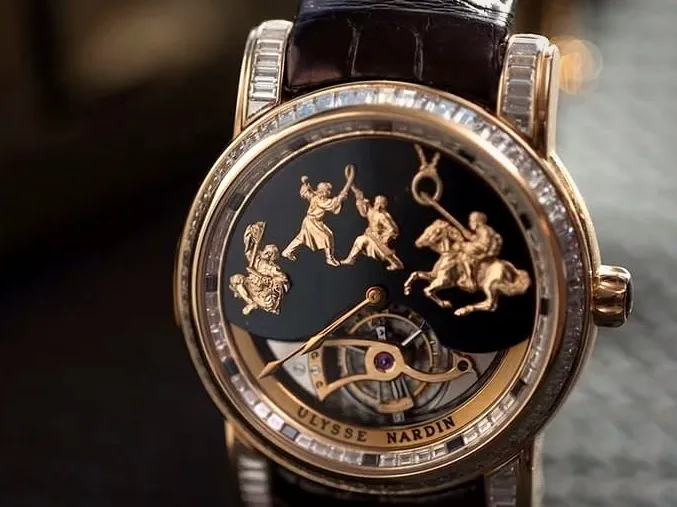
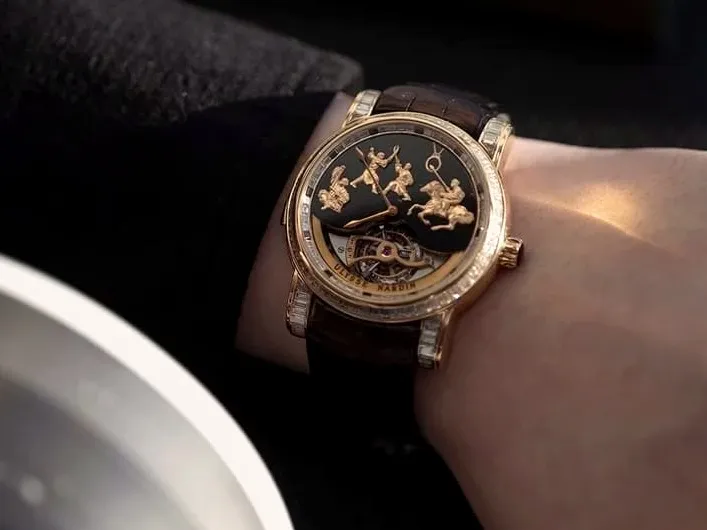
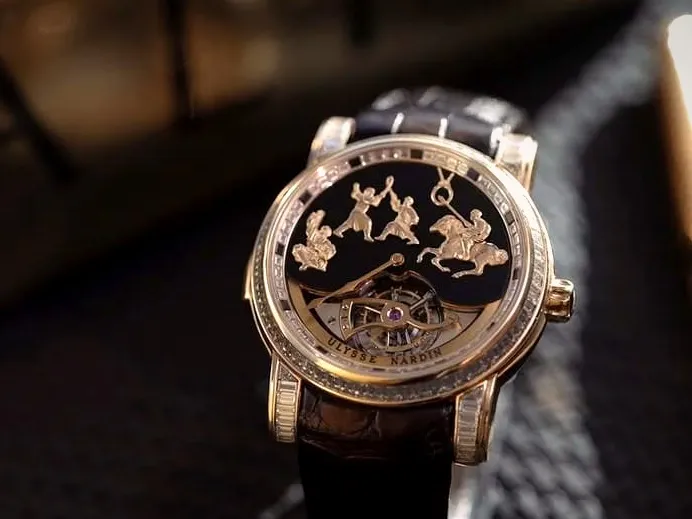
“No, Leo, the figures on this dial are not Macedonians. They are Genghis Khan and his Mongol horsemen, who came out of the steppe in the 13th century and changed the course of world history. This watch is the Ulysse Nardin Genghis Khan.”
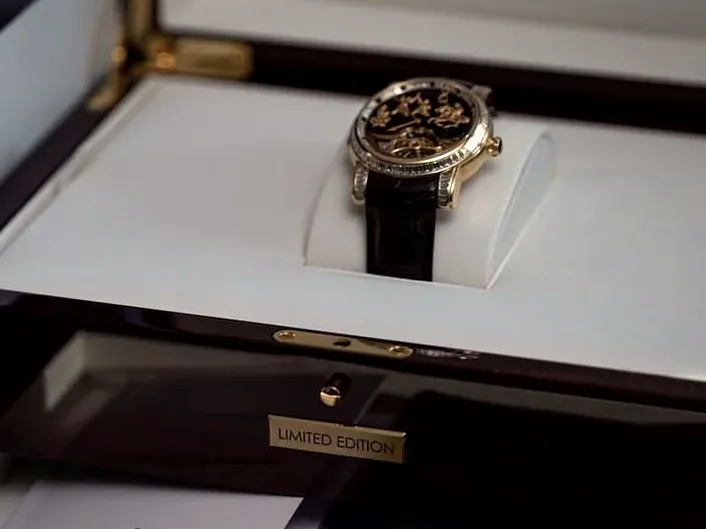
“How many are there, grandfather?”
“Thirty. Only thirty. The case is forty-two millimetres; the pink gold one is reference 786-88 and the platinum one 789-80. But the number is not what makes this watch, Leo. In the history of watchmaking this is the piece that first brought a carillon, a Westminster minute repeater, a tourbillon and automaton figures together inside one single wristwatch. So what stands in front of us is not a variant, it is a starting point.”
“And what is the ground of the dial?”
“Onyx. Real stone, not paint. A single piece of black onyx is cut, thinned and polished, and the gold figures are seated onto it one by one. Onyx swallows light, which is why the gold men look as though they are coming out of the dark. And there is this too: stone is brittle, it resents heat and force. To make a dial out of stone is to surrender your patience to the terms of the material.”
Leo frowned as he looked at the gold automata swinging their swords on the dial:
“And who was Genghis Khan, grandfather? Did he also try to conquer the world with a sword? Why would anyone want to carry warriors like these on his arm as a work of art worth millions?”
With the help of the auction attendant, the grandfather had the minute repeater slide on the left side of the watch gently pulled. In that instant a harmony of four different notes, crystal clear, rose from the depths of the case. As the Westminster carillon rang, the Mongol figures on the dial, hand-worked in 18 carat gold, began to swing their swords and spears with a rhythmic grace.
“Four notes, you said?”
“Four. An ordinary minute repeater carries two gongs: a low one for the hours and a high one for the minutes. Here there are four steel gongs tuned to four separate notes, mi, do, re and sol. Those four notes are also the reason the tower in London says a different sentence on every quarter. So the watch does not tell you the time, Leo. It plays you the time.”
“And the figures? Do they all do the same thing?”
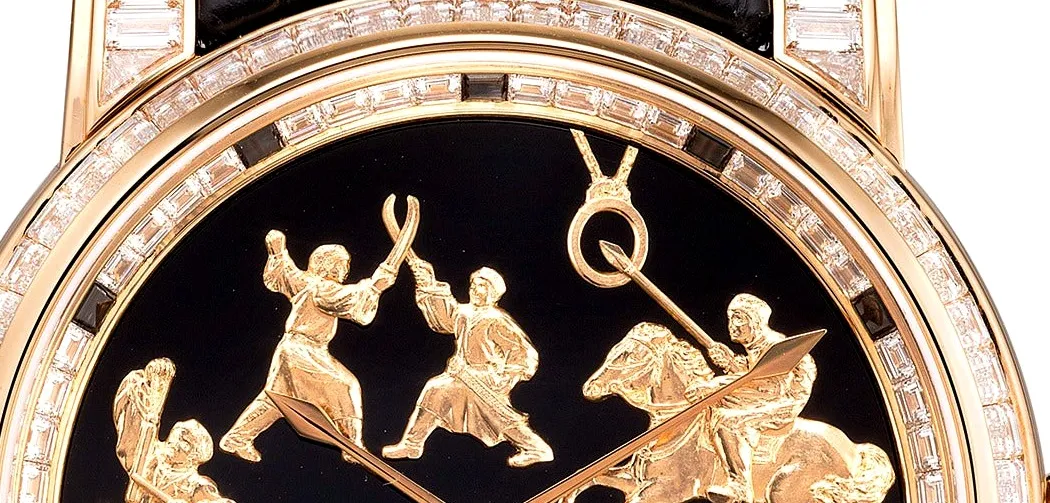
“Watch closely. There are four figures and each has a different job. The two in the middle set on one another with curved swords. The horseman on the right, riding at a gallop, is trying to catch that small ring hanging in the air on the tip of his lance; that is a genuine test of steppe horsemanship, taking a ring with a lance at full gallop. And the one on the left, the quietest of them, is seated on the ground with his instrument in his hands, playing. Now think about it, Leo: on the same dial three men are fighting while the fourth is making music. The maker did not put that there by accident.”
format_quote"This watch was not designed to praise war, but to show that merciless civil war inside humanity and inside a single soul. The figure you call Genghis Khan is the mirror of mankind."
Hasan Bekmezci
“Look, Leo,” said the grandfather, speaking through the silvery melody. “This watch was not designed to praise war, but to show that merciless civil war inside humanity and inside a single soul. The figure you call Genghis Khan is the mirror of mankind. Think of the world of the 13th century. On one side Samarkand and Nishapur left in dust and smoke, millions put to the sword, civilisations burned. The vile, savage, destructive face of war. War brings nobody a real victory, Leo; it is a blind monster gnawing at the shared memory and the future of mankind.”
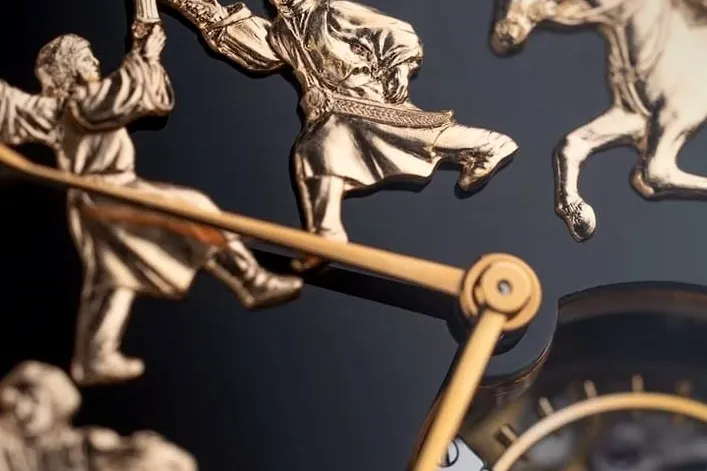
As Leo listened, he was locked onto the tourbillon cage turning on its own axis at six o’clock in an unbroken rhythm. The grandfather went on:
“But look at the other face of that vast empire Genghis Khan built, in that same 13th century world: an order that declared freedom of religion through the Yassa code, that guaranteed the Christian, the Muslim, the Buddhist and the shamanist could live side by side freely, that took merit rather than lineage or nobility as its basis. A global integration that secured the Silk Road and tied East to West through the Yam postal network. Which means that within a human being the most terrible destruction and the most advanced order stand side by side.”
“And what exactly does that cage do, grandfather?”
“It makes one full turn every minute. When the watch stands upright on a table, gravity always pulls the balance wheel from the same direction and the watch drifts. When the cage turns, that pull is spread in every direction; the error is not eliminated, it is averaged out. Notice that there is a shaped gold bridge above it; the cage is not suspended in the air, it is carried beneath that bridge. And it sits in an aperture cut into the onyx, which means they cut the stone to leave you a glimpse of the mechanism.”
format_quote"We split the atom, we sent telescopes into the depths of space, we worked miracles in micromechanics. But look back at our world: for as long as that dark greed inside a person is not held down, missiles take the place the swords held in the 13th century. The wretchedness of war never changes."
Hasan Bekmezci
The grandfather pointed with his finger at the pitch-black ground of the watch:
“We live in the 21st century today, Leo. We split the atom, we sent telescopes into the depths of space, we worked miracles in micromechanics. But look back at our world: for as long as that dark greed inside a person is not held down, missiles take the place the swords held in the 13th century. The wretchedness of war never changes. That dark hatred inside a person is ready at any moment to spill destruction outward.”
“And what about goodness, grandfather? Where is goodness in this watch?” asked Leo.
“Goodness is in the melody of the watch and in the balance of that tourbillon,” said the grandfather tenderly. “When Ulysse Nardin made this watch, it locked war inside a miniature automaton movement on the dial. Which is to say: let swords and wars remain only in art, in a museum and on the dial of a watch, as an aesthetic memory. In the real world what must reign is tolerance. Tolerance is different colours and different faiths turning in harmony without breaking one another, exactly like the wheels inside this watch. If one of them stops, the mechanism locks.”
format_quote"Let swords and wars remain only in art, in a museum and on the dial of a watch, as an aesthetic memory. Tolerance is different colours and different faiths turning in harmony without breaking one another, exactly like the wheels inside this watch. If one of them stops, the mechanism locks."
Hasan Bekmezci
The grandfather took his grandson by the shoulder:
“Two forces fight inside every person, Leo: one is that greedy darkness which wants to tear down and to crush; the other is the light which wants to build with justice, to understand and to forgive. Both were present in the person of Genghis Khan. But this watch whispers the final truth to us: like a tourbillon that averages out the scattered pull of gravity by turning on its own axis, the only thing that will balance the hatred inside a person is tolerance and love. The greatest conquest a person can make is not of the cities outside but of that dark greed within. Goodness has to prevail, because goodness is balance, and evil is the breaking of the mechanism.”
“And all of this is in a single movement, grandfather?”
“In a single movement. It is called UN-78, it is hand-wound and it has thirty-six jewels. Fully wound it runs for seventy hours. Think about this: into a space a little larger than a thumbnail they have fitted a four-gong chiming arrangement, a set of automata that moves four figures independently, and a cage that turns once a minute. Even if you never touch it for three days, whenever you ask, those men will raise their swords again.”
format_quote"Like a tourbillon that averages out the scattered pull of gravity by turning on its own axis, the only thing that will balance the hatred inside a person is tolerance and love. The greatest conquest a person can make is not of the cities outside but of that dark greed within. Goodness has to prevail, because goodness is balance, and evil is the breaking of the mechanism."
Hasan Bekmezci
When the Westminster melody struck its last note and fell quiet, the gold warriors on the dial stopped too. All that remained behind was a bright tourbillon at six o’clock, turning without pause, defying gravity. Holding his grandfather’s hand more tightly, Leo began to walk towards the next vitrine.
The Craft and the Technical Detail
Mongol warrior automata: four figures carved by hand in 18 carat gold on a black onyx ground, moving in time with the chimes when the minute repeater is engaged. The division of labour runs like this: the two in the middle duel with curved swords, the horseman on the right tries to catch the ring hanging in the air with his lance at a gallop, and the figure on the left sits on the ground playing his instrument.
Westminster carillon minute repeater: instead of the standard two gongs it uses four steel gongs tuned to four separate notes and four micro hammers. The notes are mi, do, re and sol, and the quarters are announced through different arrangements of those four. The case also works as a resonator, which is why the platinum copy sounds more muted than the gold one.
Tourbillon: at six o’clock, inside an aperture cut into the onyx dial and beneath a shaped gold bridge, making one full turn a minute. It does not eliminate the positional errors gravity causes; it spreads them in every direction and averages them out.
Black onyx dial: the ground is neither paint nor coating but real onyx, cut from a single piece, thinned and polished. Because it swallows the light, the gold figures appear to be stepping out of the dark.
Calibre UN-78: hand-wound, 36 jewels. It drives the automata, the four-gong Westminster arrangement and the tourbillon regulator from a single centre; fully wound it runs for around 70 hours.
Reference and edition: 786-88 in pink gold, 789-80 in platinum. The case is 42 mm. Thirty were made. This is the model that first brought a carillon, a Westminster minute repeater, a tourbillon and jaquemart automata together in one wristwatch.