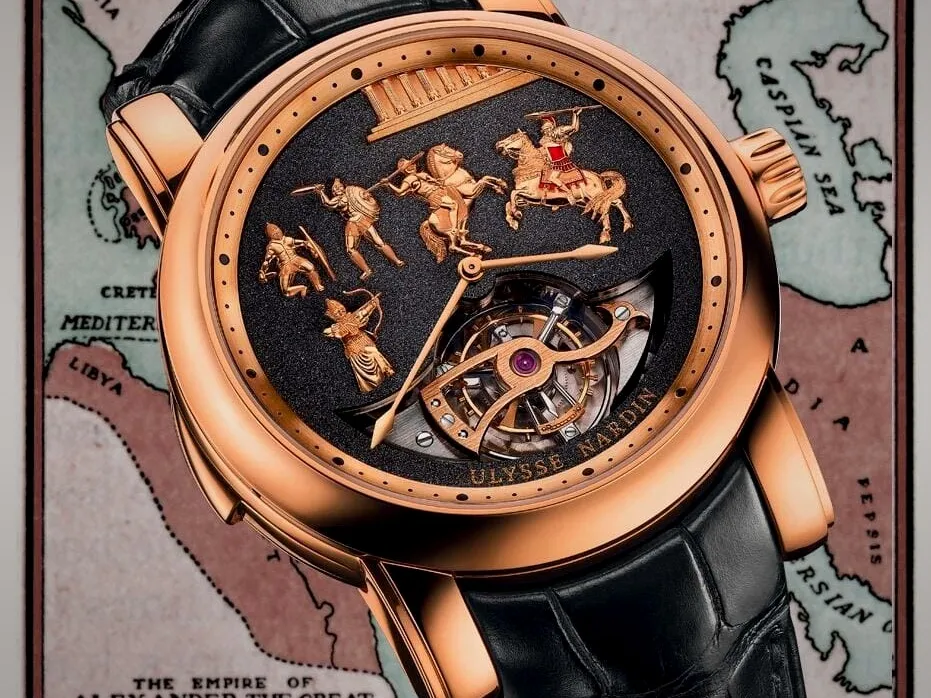
In the high-ceilinged, imposing air of the historic auction room in Geneva, the light falling from the crystal chandeliers landed on the velvet-covered display tables. In the middle of those excited whispers just before the bidding began, the old watch collector and his grandson Leo stood before a private glass vitrine, studying a rare piece marked in the catalogue as "Lot 42".
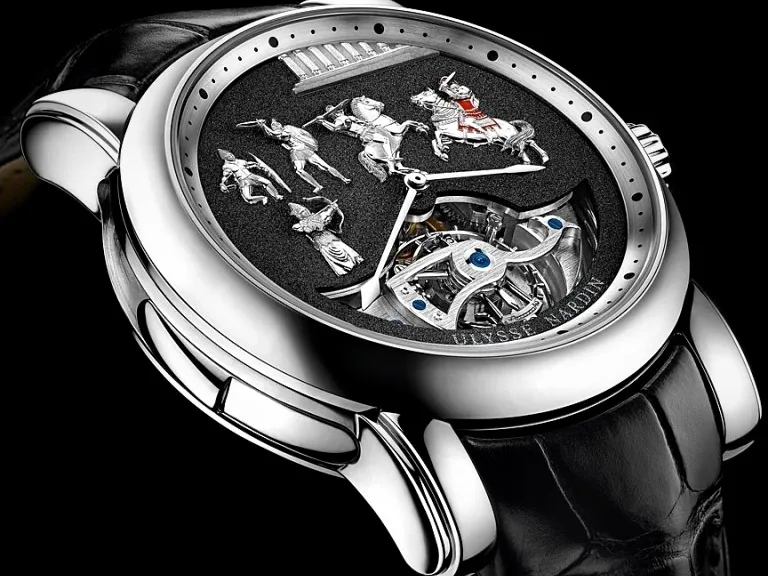
With its 18 carat rose gold case and its charcoal-black diamond dial, this watch was the Ulysse Nardin Alexander the Great Minute Repeater Tourbillon.
Fixing his eyes on the miniature gold figures on the dial, Leo tugged at the sleeve of his grandfather’s jacket:
“Grandfather. Look, these gold men on the dial are acting out a battle scene with swords and spears. Why would a work of art this enchanting, worth a fortune, have a bloody battle engraved into it?”
The grandfather smiled, adjusted his magnifying spectacles and laid a hand on his grandson’s shoulder:
“Because Leo, the art of high watchmaking does not only measure time; it engraves the deepest wisdom held inside time onto our minds. Let me give you an example, Leo. The scene on this dial calls to mind the two great rulers who faced one another on the plain of Gaugamela in 331 BC: Alexander of Macedon and Darius III of Persia. Both stood at the head of their own armies, leading the greatest imperial battle in history. Both had sworn an oath for their homeland, their glory and their power. But when that battle began, the desire for glory and victory gave way to a merciless destruction. The greatest temples, libraries and centres of civilisation of the ancient world turned to ash under those sword strokes, in that dust and smoke.”
“And what is the ground of this dial, grandfather? Onyx?”
“Everybody assumes so, but it is not. This ground is laboratory-grown diamond. Millions of tiny diamond crystals are grown so that they fuse into a single continuous surface; what comes out is a charcoal-black layer that looks as fragile as sand and is in fact made of the hardest material we know. It swallows the light, which is why the gold figures look as though they are stepping out of the dark. This is not a stone cut and polished; it is a surface patiently grown.”
“How many were made?”
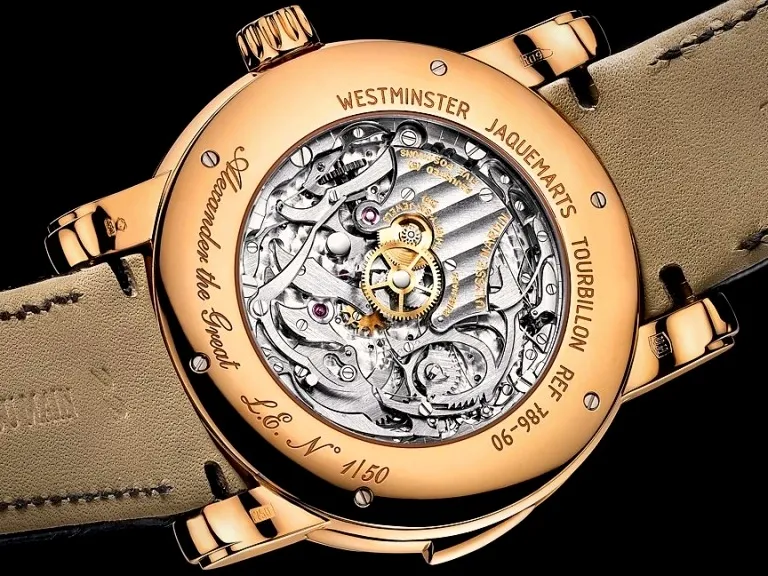
“One hundred in the world. Fifty in rose gold, fifty in white gold. The case is forty-four millimetres, the reference is 786-90, and each piece carries its own number engraved on the back. Water resistance is thirty metres; but nobody takes this watch into the sea, Leo. The tighter you seal the case of a striking watch, the more you smother its voice.”
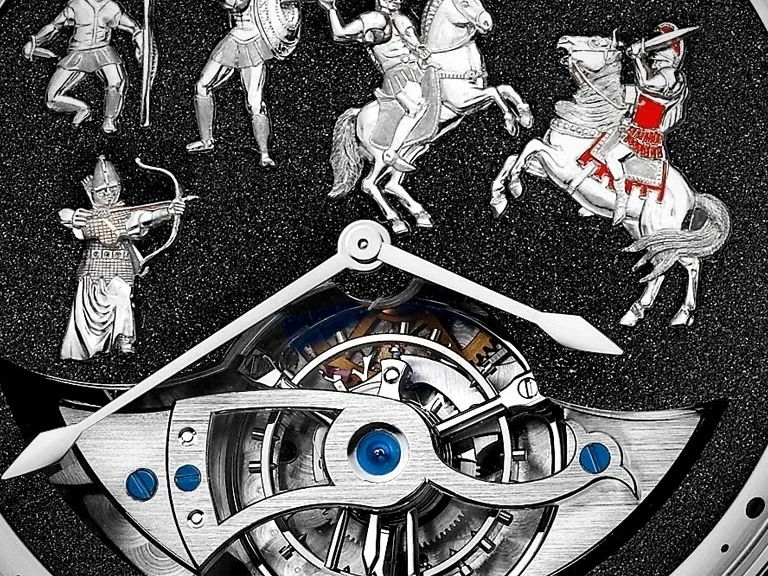
At the old collector’s request, the auction attendant gently pulled the slide on the left flank of the case. In that instant a miraculous silvery melody rose through the room. The four micro hammers inside the watch began to strike the circular steel gongs, playing the Westminster carillon. As the sound rose, the five warrior figures on the dial, hand-worked in 18 carat gold, began to make their moves in time with the chimes: the spear-bearing horseman reared his mount, the soldier swinging his sword lunged forward, the archer drew his bow.
“Grandfather, do they all move at the same time?”
“Here is the finest part of the work. Each figure has its own duty. The soldier swinging his sword moves while the hours and the quarters are struck; he is the only one that stirs on the hour. The spear-bearing horseman and the archer act only on the quarters. The one in red armour moves both on the quarters and on the minutes; he is also the only one that stirs while the minutes are counted. And one of them never moves at all, weapon in hand, standing ready. So even without hearing the sound you can read the time off the dial; you need only watch which man is moving.”
“And why four bells?”
“Because Westminster is a melody, not a single stroke. An ordinary minute repeater has two gongs: a low one for the hours and a high one for the minutes. Here there are four steel gongs tuned to four separate notes, mi, do, re and sol. The hours are struck on sol and the minutes on mi; the quarters are built from different arrangements of those four notes, just as the tower in London says a different sentence on every quarter. So this watch does not tell you the time, Leo. It plays you the time.”
format_quote"War is a blind mechanism that has run out of control. Once it begins, the wheels start to turn and it locks humanity inside that dark greed within itself."
Hasan Bekmezci
Leo was locked onto the dial in enchanted astonishment. The grandfather went on speaking through the silvery tones:
“Listen. As the mechanism runs, those gold men swing their swords at one another without mercy. Master watchmakers remind us of this: war is a blind mechanism that has run out of control. Once it begins, the wheels start to turn and it locks humanity inside that dark greed within itself. Just like Alexander and Darius in the example I gave you; behind that terrible destruction, every leader caught in the middle of a war comes to feel the same thing. The greatest victory is not the annihilation of the enemy; it is being able to return the swords to their scabbards and build peace. Because without peace, neither the land you have won nor the time you have left carries any meaning.”
Leo pointed with his finger at the gold temple relief on the black ground:
“And what about that gold temple relief at the back, grandfather?”
“That temple is the symbol of peace and of civilisation, Leo. Civilisations are built in those calm ages when peace holds. When the swords of war are drawn, temples and works of art that stood for centuries are gone within a few hours. By locking war inside this dial, Ulysse Nardin cries out to humanity: the clash of swords is beautiful only so long as it stays on the dial of a watch, as the graceful movement of gold automata. If the swords are drawn in the real world, time stops and life goes out!”
format_quote"Civilisations are built in those calm ages when peace holds. When the swords of war are drawn, temples and works of art that stood for centuries are gone within a few hours. The clash of swords is beautiful only so long as it stays on the dial of a watch, as the graceful movement of gold automata."
Hasan Bekmezci
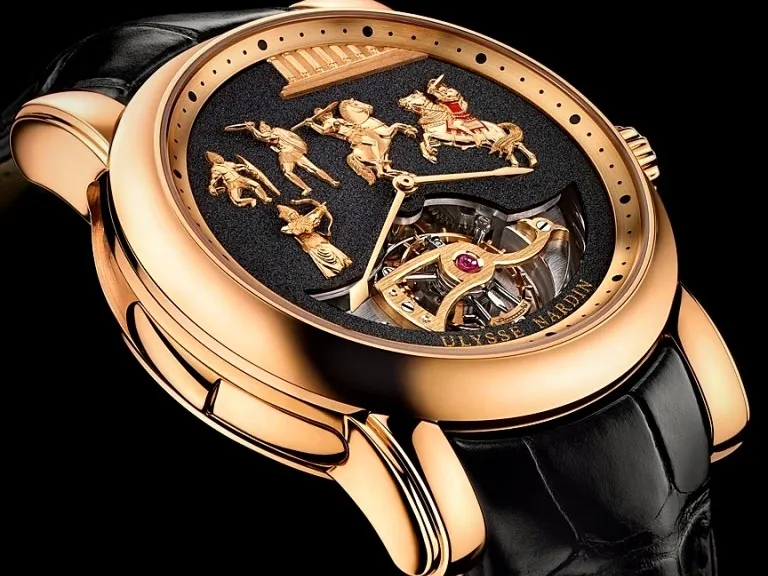
The grandfather pointed with his finger at the tourbillon cage turning at six o’clock in its unbroken, elegant rhythm:
“And look. Just beneath the warriors there is this tourbillon, turning without ever stopping. The cage makes one full turn every minute. When the watch stands upright on a table, gravity always pulls the balance wheel from the same direction and the watch drifts; when the cage turns, that drift is spread in every direction, so the error is not eliminated, it is averaged out. Peace is exactly like that, Leo. It is the one balance that neutralises the ambition, the resentment and the anger of leaders. If the balance of peace is broken, humanity loses its way, just as a watch with a broken tourbillon loses track of the hour.”
“And all of this is inside a single movement?”
“Inside a single movement. It is called UN-78. Hand-wound, thirty-six jewels, twenty-seven point six millimetres across and eight and a half millimetres tall. Which means that into a space a little larger than your thumbnail they have fitted a four-gong chiming arrangement, a set of automata that moves five separate figures independently, and a cage that turns once a minute. Wound fully, it runs for seventy hours. Think about that: without you touching it once for three days, those men will raise their swords again on every quarter of every hour.”
format_quote"The cage turns once a minute, and it does not eliminate the error gravity causes, it spreads it in every direction and averages it out. Peace is exactly like that, Leo. It is the one balance that neutralises the ambition, the resentment and the anger of leaders."
Hasan Bekmezci
When the silvery Westminster melody struck its last note and fell quiet in the auction room, the gold warriors on the dial stopped too. As the bidding opened with the sound of the hammer, little Leo squeezed his grandfather’s hand, feeling in his heart that deep wisdom of peace and balance that lies behind the swords on the dial, and arrived at an enchanted station of wonder.
The Craft and the Technical Detail
The jaquemart automaton work: when the minute repeater is engaged, five warrior and horseman figures hand-carved in 18 carat gold make their sword and spear strokes in time with the music. The division of labour is fixed: the swordsman moves on the hours and the quarters, the spear-bearing horseman and the archer only on the quarters, the figure in red armour on the quarters and the minutes; the fifth stands ready with his weapon in hand.
Westminster carillon minute repeater: instead of the standard two gongs it uses four steel gongs tuned to four separate notes, struck by four hammers. The notes are mi, do, re and sol; hours sound on sol, minutes on mi, and the quarters are announced by three different sentences built from that sequence.
Tourbillon: at six o’clock, inside an aperture cut into the dial and beneath a shaped bridge, making one full turn a minute. It does not eliminate the positional errors gravity causes; it spreads them in every direction and averages them out.
Laboratory-grown diamond dial: the dial ground is not onyx or any other stone. It is a charcoal-black, single-piece and extremely durable diamond surface, obtained by growing millions of small diamond crystals until they fuse together. The Greek temple and the architectural reliefs on it are worked by hand in 18 carat gold.
Calibre UN-78: hand-wound, 36 jewels, 27.60 mm across and 8.50 mm tall. It drives the automata, the four-gong Westminster arrangement and the tourbillon regulator from a single centre; fully wound it runs for around 70 hours.
Reference and edition: 786-90 in rose gold, 780-90 in white gold. The case is 44 mm, water resistant to 30 metres. One hundred were made worldwide, fifty in rose gold and fifty in white.
A Note from the Editor
On this dial the swords are gilded and harmless. Where they are drawn a temple stands, right beside the battle, as though the maker were telling us we have to see the two at the same time.
We are living through days when the war drums are being beaten again, when one more place on the map goes dark every morning. Whether the sword stays on the dial depends on whether it stays in its scabbard in real life. Tearing a temple down takes a few hours; putting another in its place takes centuries.
So in defiance of every place where war goes on, building bridges of peace wherever we can build them is a duty that belongs to all of us. Time carries meaning only where there is peace; the rest is merely counted seconds.
Go in peace.