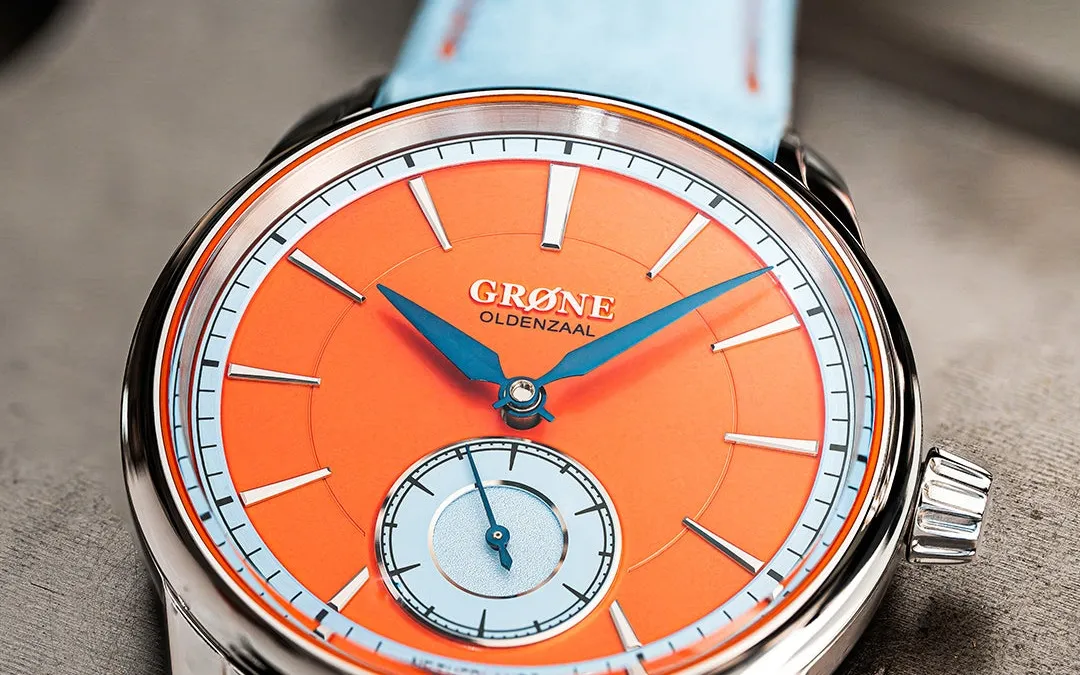
The Netherlands is not only polders, windmills and canals; it is a country where colour, light and shadow turn into an absolute aesthetic at the tip of a brush, and craft does the same between a set of wheels. On one side stands the genius of the Dutch Golden Age, Rembrandt van Rijn, who kneaded light and darkness on the canvas with his own hands; on the other stand the Grönefeld brothers, the Horological Brothers, who came out of the town of Oldenzaal in the east of the country to break the habits of classical watchmaking. Grøne Oldenzaal is the far more attainable second brand that Bart and Tim Grönefeld set up beside the workshop that carries their own name.
Before we bring these two worlds of genius together, let us listen to five of the most famous masterpieces of Rembrandt, one of the greatest masters in the history of art, in the silent and deep dialogue they hold among themselves. Then let us set out how the philosophy of light, colour and brushstroke in those paintings strikes a flawless parallel with the Grøne Oldenzaal Horologium and the vivid orange of its dial.
Imagine it is midnight in a dark studio or an empty gallery. Five of Rembrandt’s most famous masterpieces cross the edges of their canvases and begin to whisper to one another.
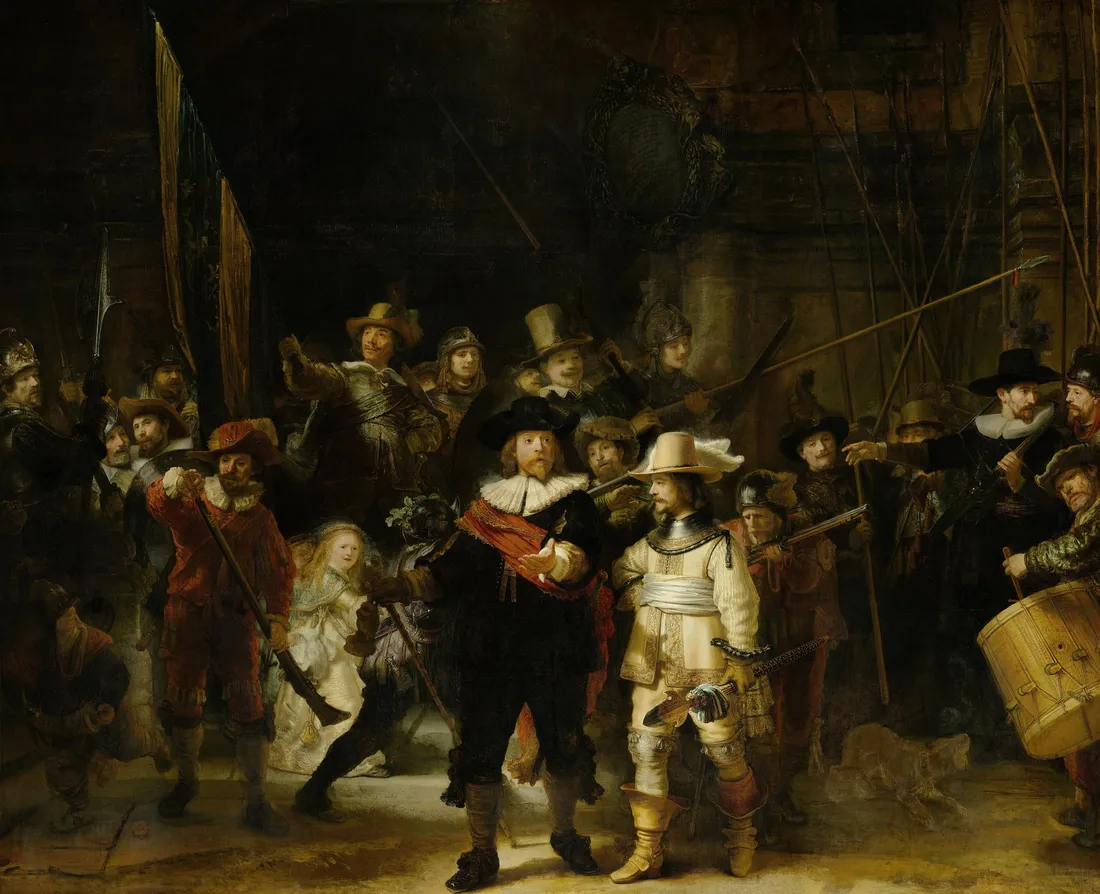
“I am the voice of movement, of the crowd, of the dramatic instant,” says The Night Watch. “I refused the monotony of daylight; I made the militia immortal with a shaft of light leaping out of the dark, with the clatter of muskets and with human will standing shoulder to shoulder. I am the collective soul itself.”
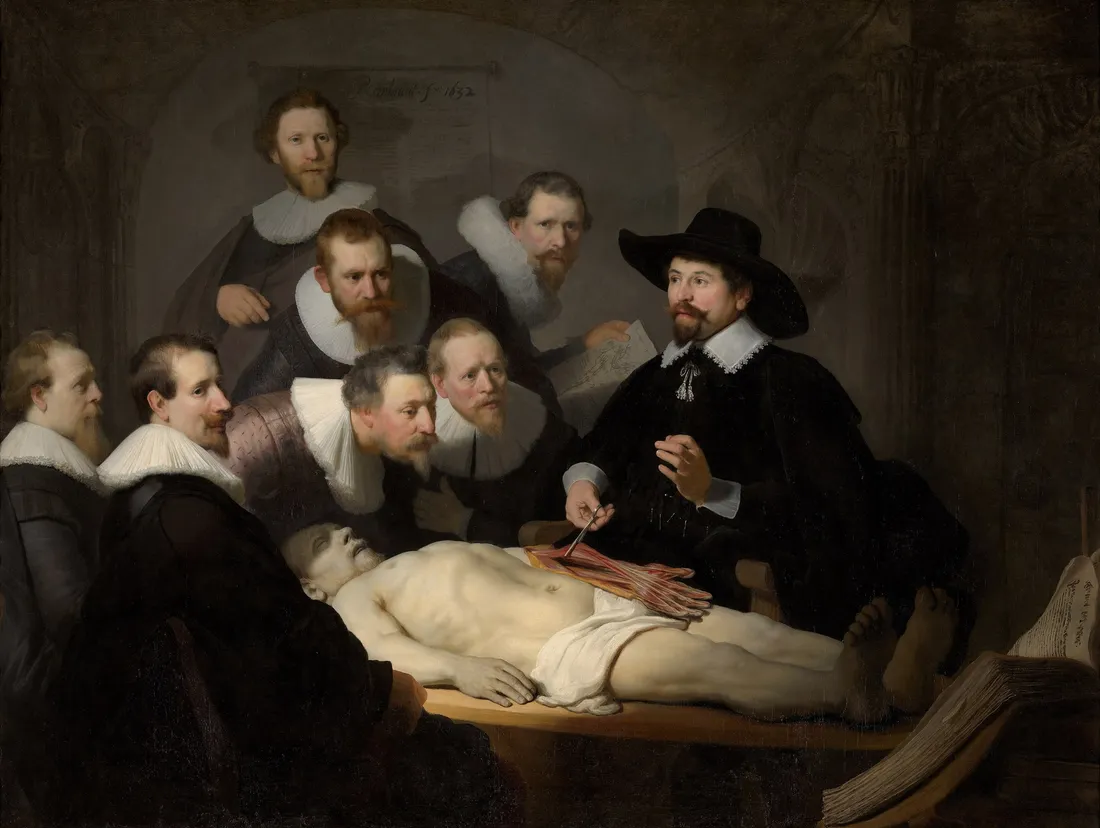
“You are the noise of crowds; I am the sharp silence of knowledge and of the secret inside the human body,” whispers The Anatomy Lesson of Dr Tulp. “People are gathered around me and I am looking at the cold but illuminating scalpel of science. I am that first intellectual curiosity, laying bare the mechanical architecture of nature and of the body.”
“And I am that wild wave where fear and faith collide,” roars The Storm on the Sea of Galilee. “I painted the human boats left helpless before the crushing force of nature, the despair between those deep blues and those waves. Yet even in that darkness I kept the light of an unshakeable faith.” The only seascape Rembrandt is known to have painted, it was stolen from the Isabella Stewart Gardner Museum in Boston in 1990 and is still missing; an empty frame hangs in its place.
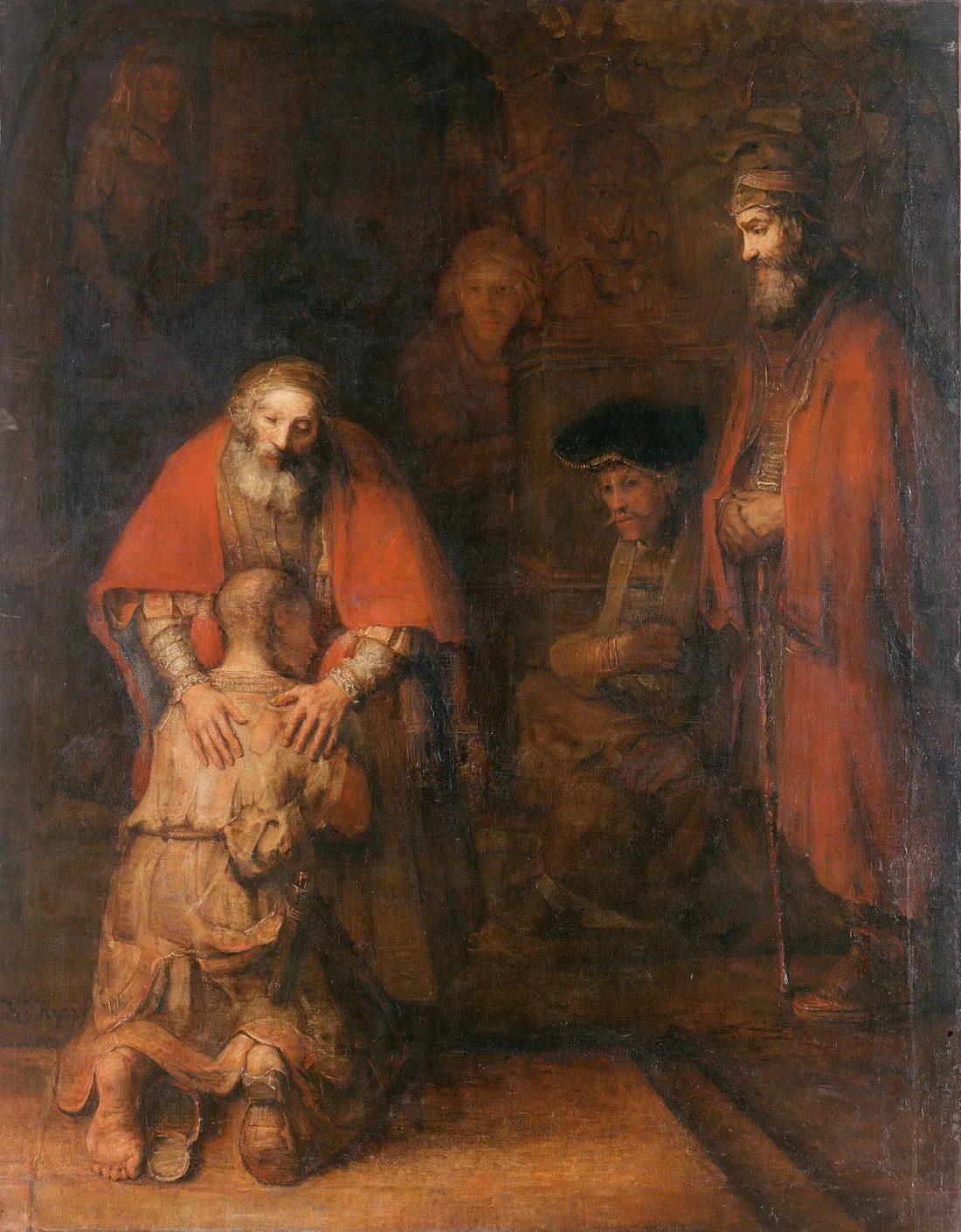
“When the storms and the crowds are over, the only thing left is mercy and forgiveness,” says the work of the old Rembrandt’s maturity, The Return of the Prodigal Son. “The warm earth and ochre tones on the son who takes refuge in his father’s tender hands in his rags are the divine light itself, the light that forgives even the darkest sin.”
“And I am that melancholy, boundless geography of nature,” the master’s stormy landscapes say to close. “I am the silence that embraces the transience of man in this world and the raw colour of the soil.”
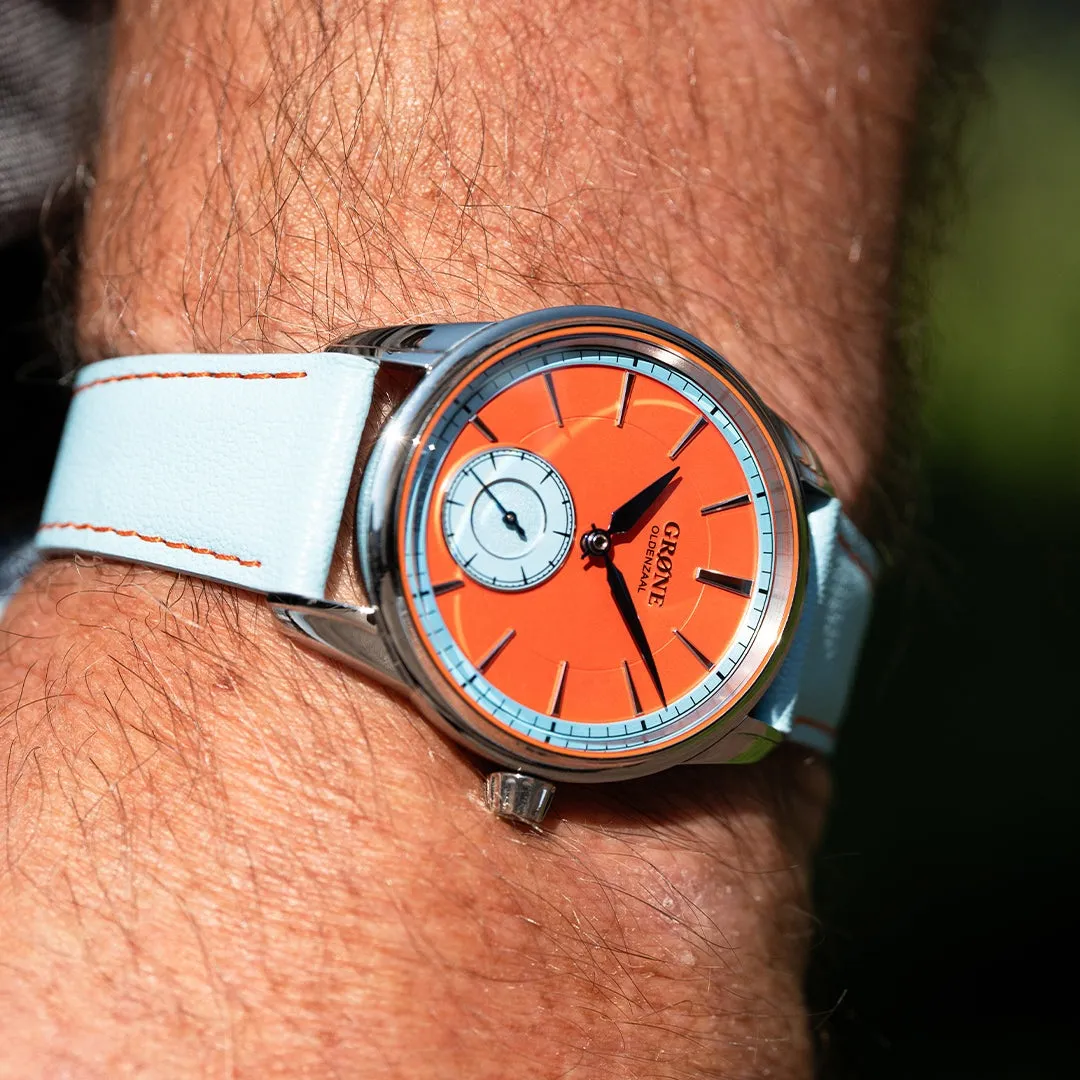
The chiaroscuro that Rembrandt practised in his paintings, the sharp contrast of light and shadow, matches exactly the philosophy the Grönefeld brothers brought to watchmaking. Just as Rembrandt pulls human faces out of pitch darkness in gold and orange-tinged ochre, so Grøne Oldenzaal has pulled this watch out of the grey monotony of classical watchmaking with a dazzling orange dial.
On one side Rembrandt’s chiaroscuro and his warm ochres, which is to say human genius shining out of the dark; on the other the dial of the Grøne Oldenzaal and its vivid orange, which is to say the historic Dutch spirit of “Oranje” and a bold aesthetic; and between the two, blued hands and the mechanical summit of hand craft.
format_quote"Just as Rembrandt pulls human faces out of pitch darkness, so Grøne Oldenzaal has pulled this watch out of the grey monotony of classical watchmaking with a dazzling orange dial."
Hasan Bekmezci
Orange, the national colour of the Netherlands, comes from the House of Orange, which began the country’s struggle for independence; the house in turn takes its name from the principality of Orange in southern France, inherited by William the Silent. The warm veins of light in Rembrandt’s paintings and the vivid orange that covers the dial of this watch are children of the same soil: the coloured expression of a national character that does not bow, that is exuberant, inventive and will not fit inside traditional moulds.
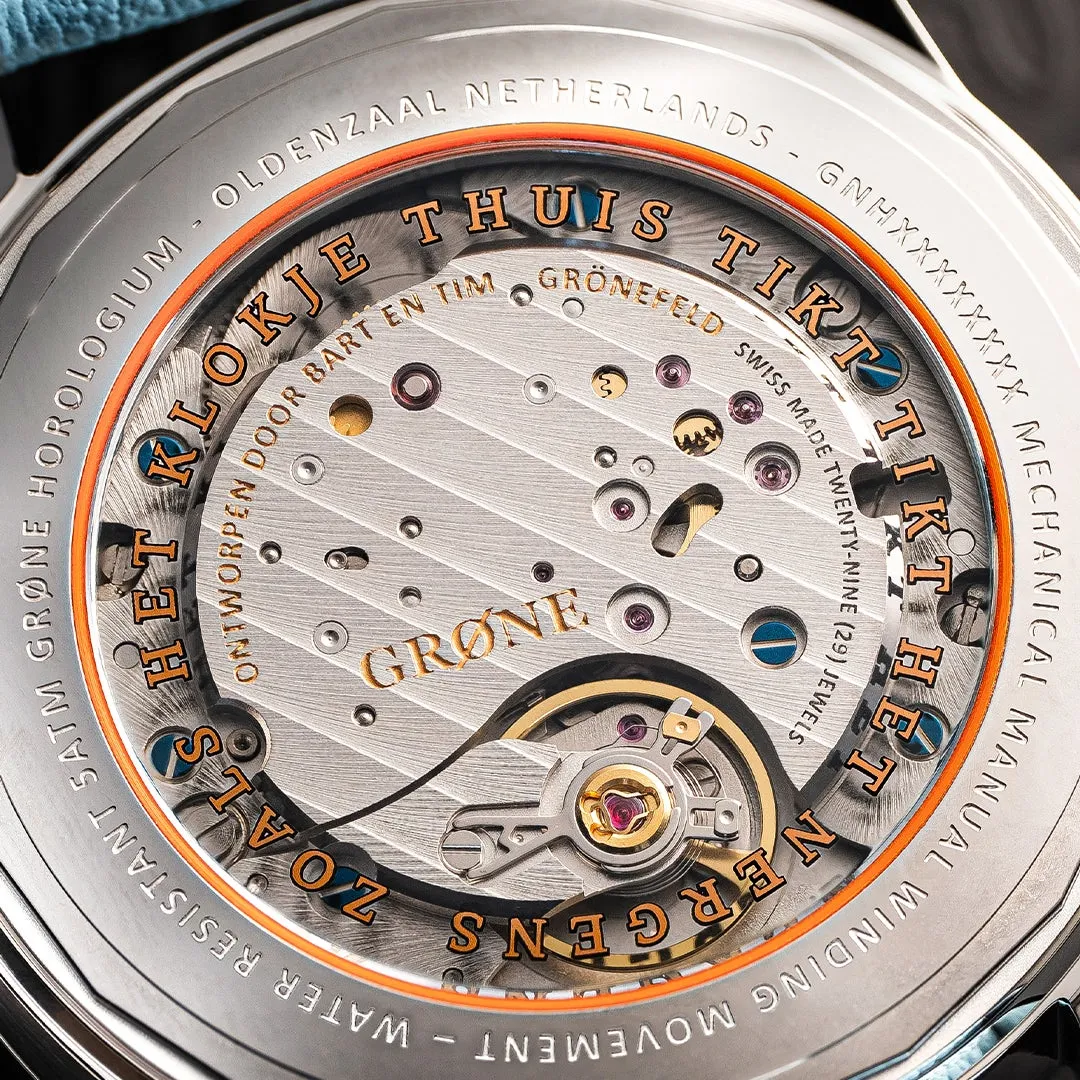
The keen observation and anatomical curiosity in the Tulp painting match the architecture of the hand-finished, hand-wound La Joux-Perret movement that the Grönefeld brothers show for the first time in a three-hand watch, through an exhibition sapphire caseback. Nothing is concealed; Côtes de Genève, sunburst snailing, sandblasted surfaces, heat-blued screws, mirror polish and bevelled edges lie open like the muscle and vessel structure in the picture. That the gasket around the movement is orange is the maker’s own joke.
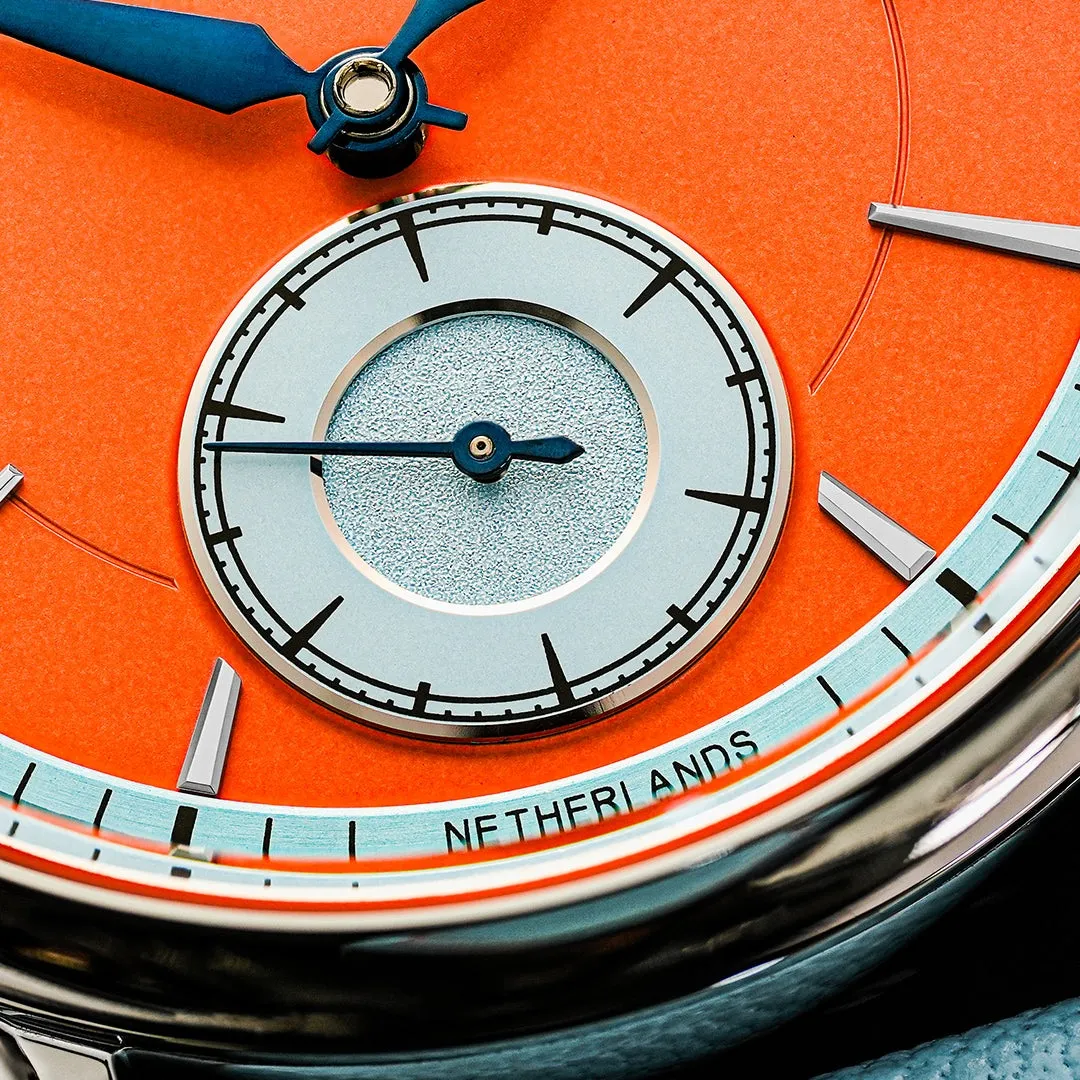
Rembrandt creates depth on the canvas by colliding darkness with light. The Grøne Oldenzaal, for its part, sets an elegant baby blue minute ring and a baby blue small-seconds plateau on an enormous orange ground, with deep blue hands over them, and offers a full feast of optical contrast. This is a visual dance between the cold blue of the North Sea and the warm earthen geography of the Netherlands.
format_quote"This is a visual dance between the cold blue of the North Sea and the warm earthen geography of the Netherlands."
Hasan Bekmezci
Let us seal this watch by pairing it one by one with the five great Rembrandt masterpieces that spoke above, and by looking at what lies beneath it.
Just as The Night Watch gathers a crowded militia company into a single dynamic scene, so every instrument on the dial of this watch, the indexes and the stepped detail of the small-seconds plateau, lays out that collective and assertive stance at a single glance.
The scientific seriousness and honesty of the painting match exactly the 39 mm stainless steel case of the Horologium, 10 mm thick. In the design of the case a vertically satin-brushed caseband, which makes the profile look slimmer, forms a flawless contrast with the polished bezel and back. The downward-curving ergonomic lugs have been reshaped to sit perfectly on every kind of wrist; this is the third generation of the Grøne case.
The dramatic tension of the orange and the deep tones in the middle of the storm comes to life in the radical, habit-breaking stance of that bold orange dial. It is a noble resistance held up against the storm of standard watchmaking.
The warm, embracing palette of ochre and orange light in The Return of the Prodigal Son, the light that stands for a father’s tenderness, is the spiritual origin of this watch’s dial colour; it is an intimate warmth that makes a person feel at home.
The flat but sky-swallowing geographical simplicity of the Netherlands takes shape in the pure engineering behind the watch. Water resistant to 50 metres, this hand-wound movement strengthens the bond made with the watch in daily use. And in the “Something Quirky” version a subtle Dutch proverb is printed on the inside of the sapphire crystal: “Zoals het klokje thuis tikt, tikt het nergens”, home sweet home. The brothers’ other version, “Something Classic”, leaves the crystal entirely bare. Both are limited to 188 pieces and cost 2,390 euros excluding VAT.
format_quote"It is a noble resistance held up against the storm of standard watchmaking."
Hasan Bekmezci
One of them is Rembrandt, the Dutch genius who strained light out of darkness with his brush; the other is the Grøne Oldenzaal Horologium, which carves the orange spirit of that country, a 39 mm steel case and the mechanical genius of La Joux-Perret into a set of wheels. One is the immortal art of the canvas, the other the immortal art of the wrist.
The watch in its maker’s own words: GRØNE Oldenzaal, Horologium