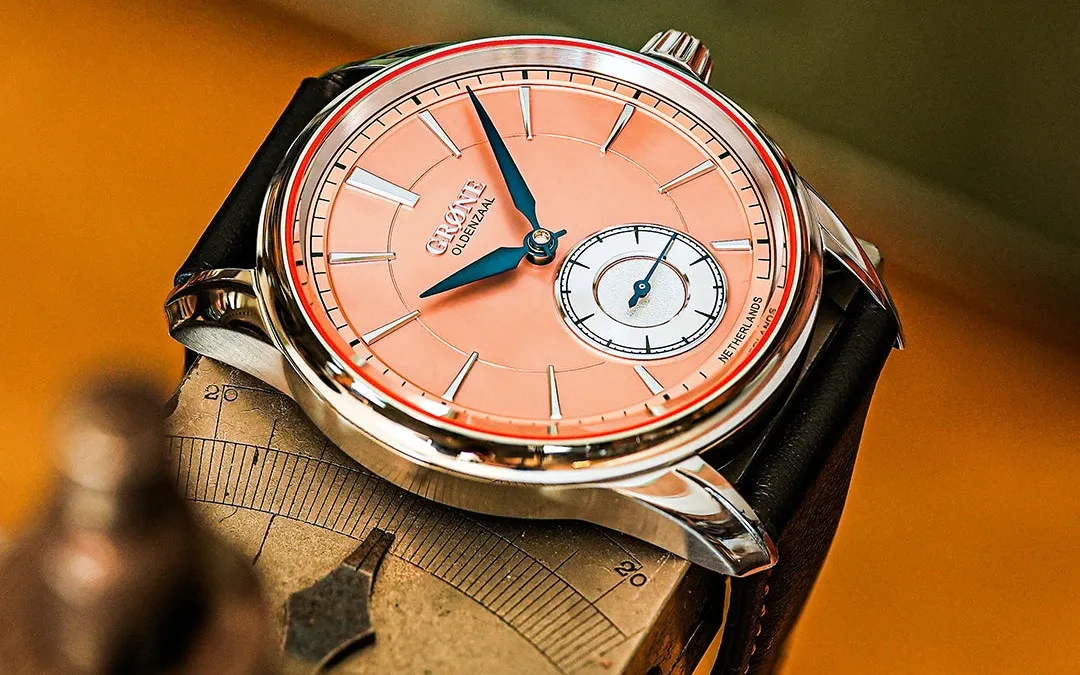
The spirit of the Netherlands cannot be measured by geographical borders or by dykes alone; the real geography is built in those miraculous games of shadow on the canvas, in the quiet domestic moments that come to life at the tip of a brush, and in those silent workshops where objects meet craft. On one side stands the genius of the Dutch Golden Age, Johannes Vermeer, who froze the calm window light of a house and its peace on canvas like marble; on the other stand the Grönefeld brothers, the Horological Brothers, who came out of the town of Oldenzaal in the east of the country to break the habits of classical watchmaking. Grøne Oldenzaal is the attainable second brand that Bart and Tim Grönefeld set up beside the workshop carrying their own name.
Before we bring these two worlds of genius together, let us listen to five of the most famous masterpieces of Johannes Vermeer, one of the greatest masters of Dutch painting, in the silent and deep dialogue they hold among themselves. Then let us set out how the calm light, the geometric balance and the harmony of colour in those paintings strike a flawless parallel with the Grøne Oldenzaal Horologium, with the noble salmon of its dial and the orange-edged track that rings it.
Imagine the moment time stops in a quiet, sunlit room in Delft. Five of Vermeer’s most famous masterpieces cross the edges of their canvases and begin to whisper to one another.
“I am the absolute power of a gaze and of simplicity,” says the Girl with a Pearl Earring. “In that second when I turn slightly over my shoulder and look at the viewer against a dark ground, I made a whole soul immortal with the glint of a single pearl. I am the purest, the most human echo of the brush.”
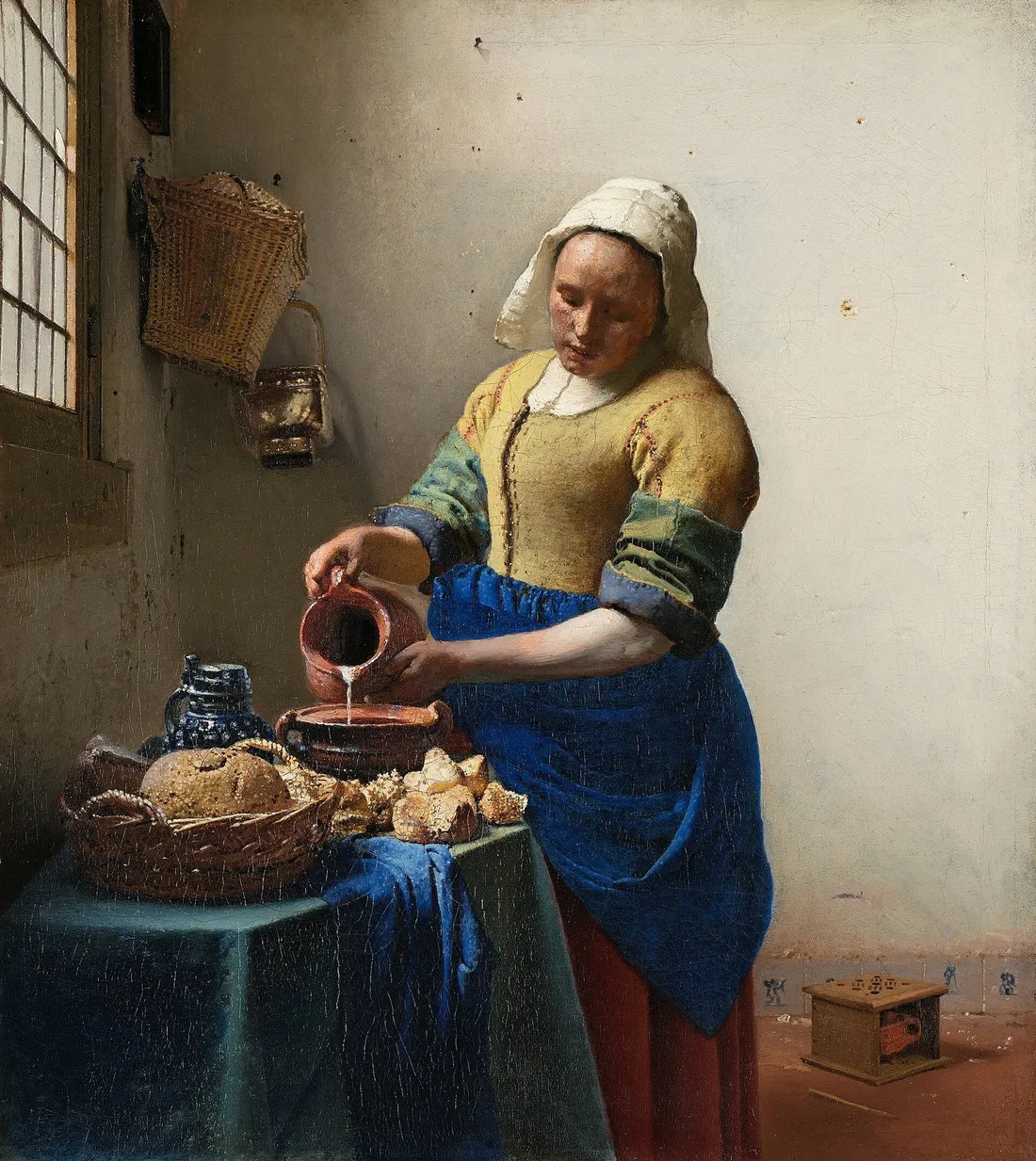
“You are the mystery of the palace; I am the serene holiness of ordinary labour and of the soil,” whispers The Milkmaid. “I painted, patiently, the white flow of the milk running out of the jug and every grain of dust in the morning sun striking the kitchen. I am the divine order inside the daily routine.”
“And I am the silent waiting of letters and of distant worlds,” calls the woman in blue. “Reading the letter in that soft light filtering through the window, without letting any of the storms inside me show, I dissolved into the stillness of the maps and the room.”
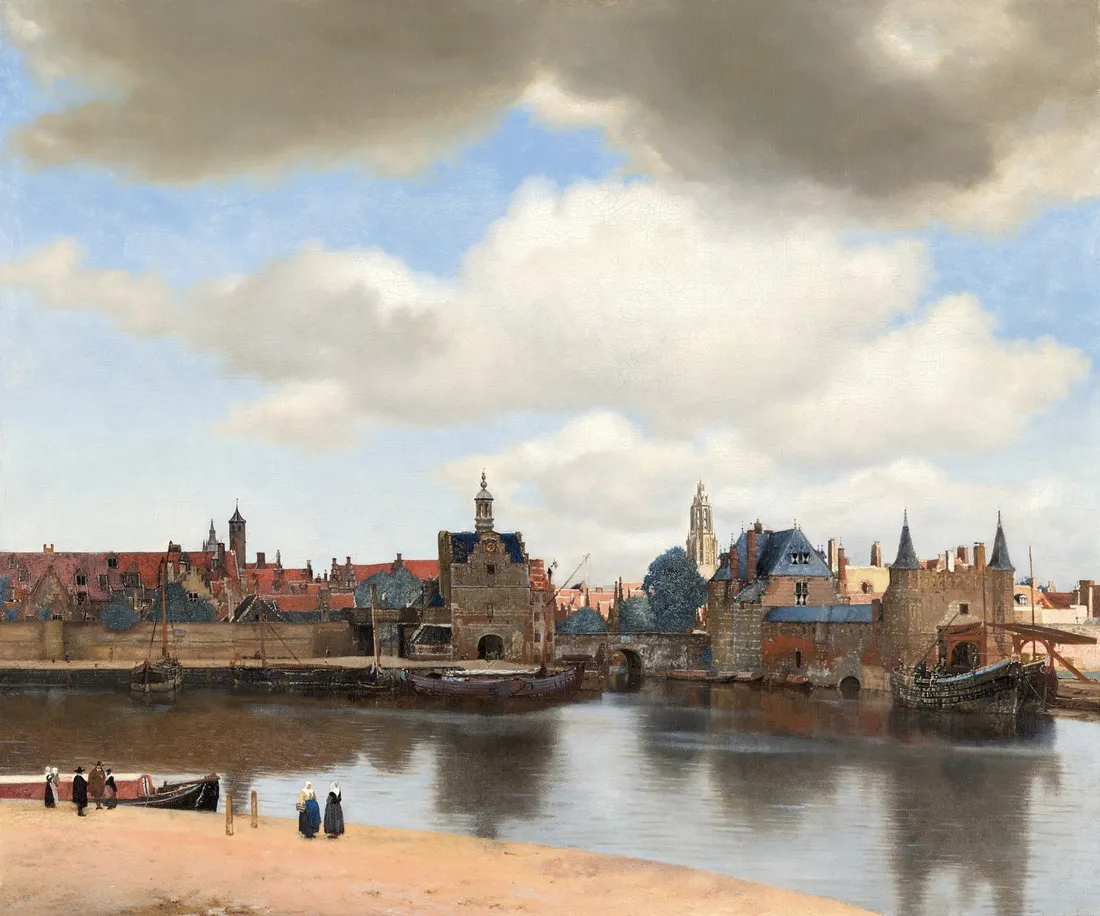
“When the walls of the room ran out, I began the trial of a whole city by water and by cloud,” says Vermeer’s enormous city picture, the View of Delft. “I recorded how the bricks on the bank of the canal shone under that northern sun leaking between the clouds. I am urban peace itself.”
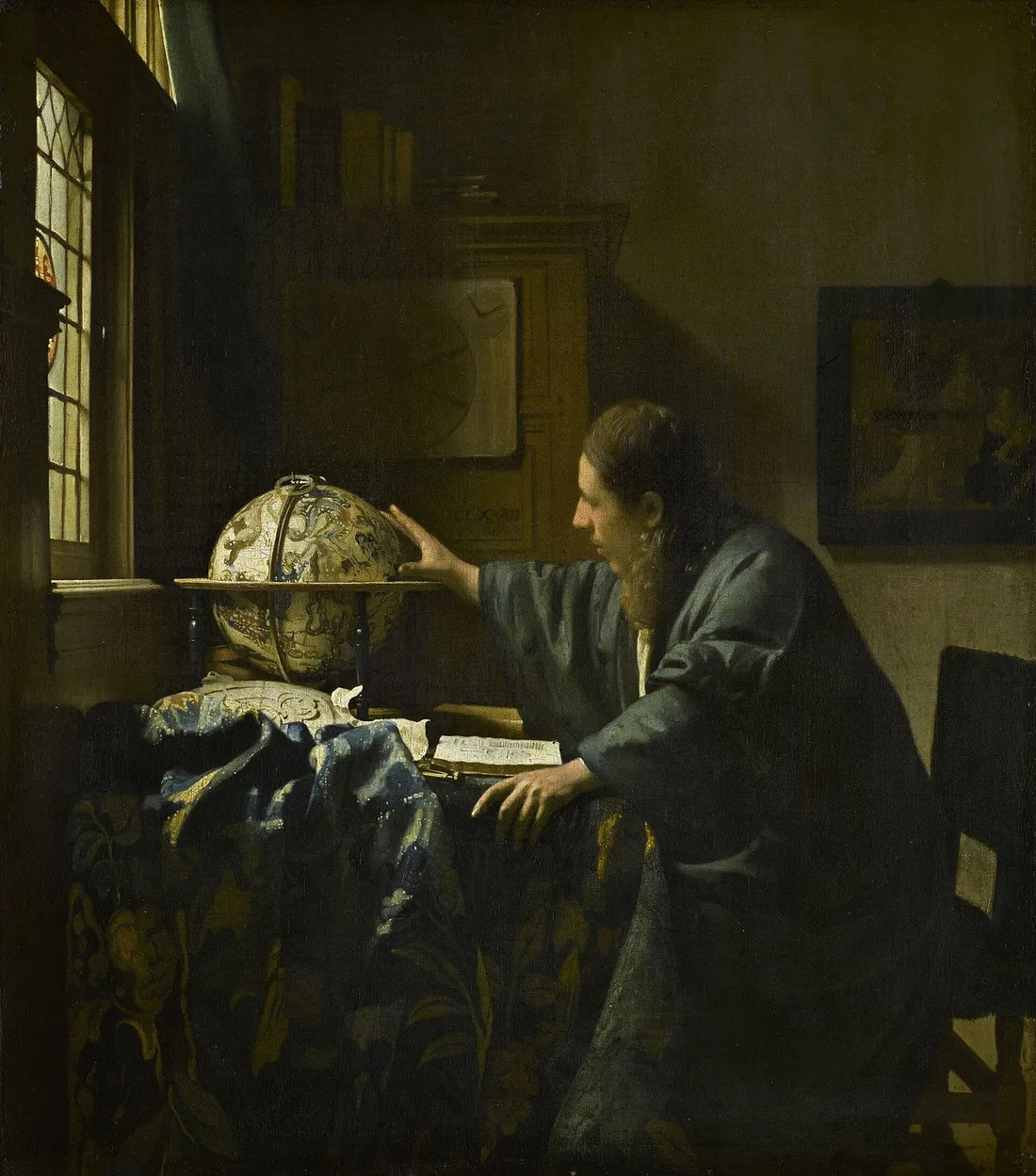
“And I am the mind that fits the infinity of the sky into a room with globes and star charts,” murmurs The Astronomer. “I am that calculated geometry in the way light filters out of space and lands on the table; I am the sign of knowledge and of the passion to understand time.”
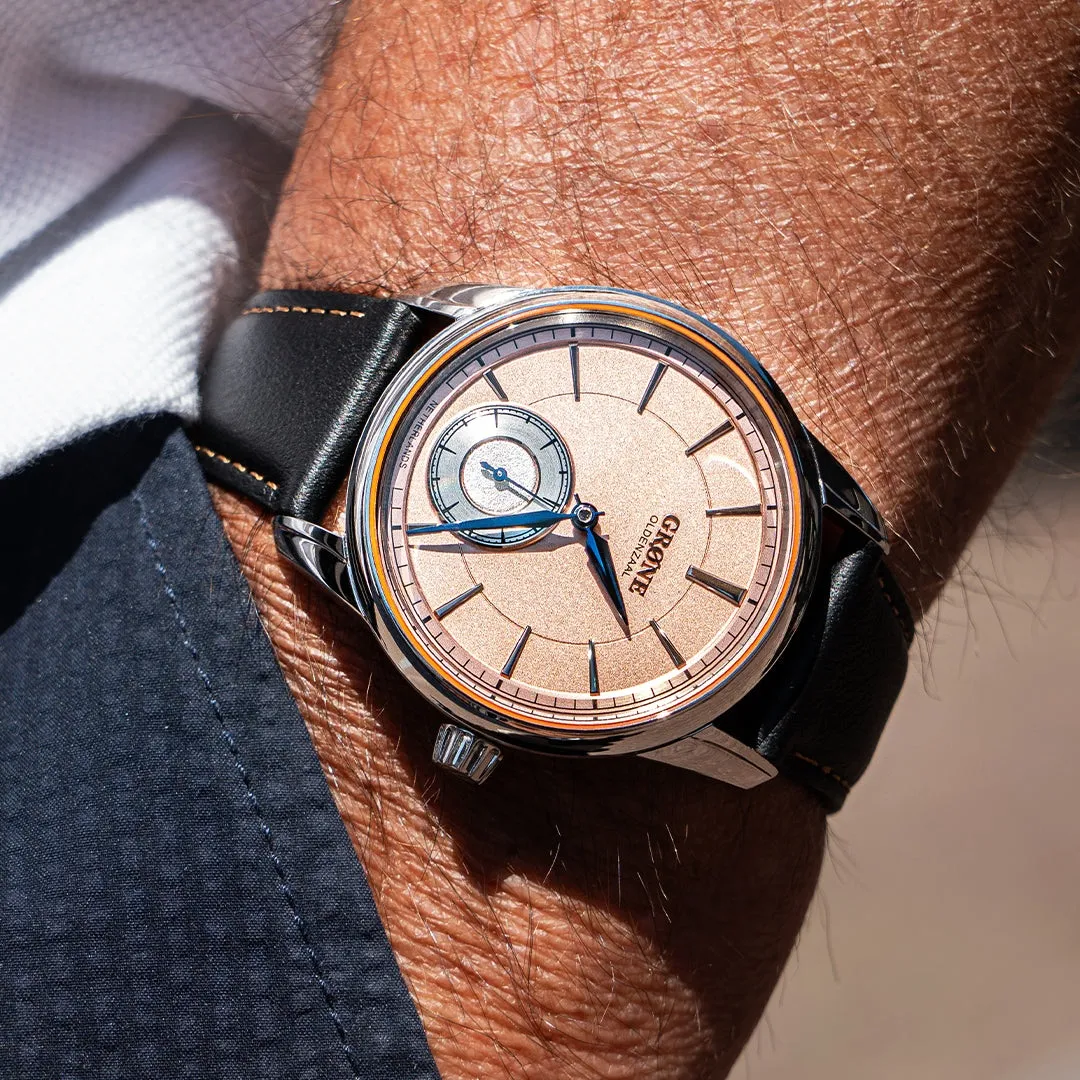
The window-edge light Vermeer practised in his paintings, that soft natural illumination filtering in from the left, and his flawless balance of colour match exactly the philosophy the Grönefeld brothers brought to watchmaking. Just as Vermeer turned ordinary moments in the rooms of Delft into the atmosphere of a cathedral with yellows, blues and ochres, so Grøne Oldenzaal has created the same calm and aristocratic atmosphere in horology, in this model, with a salmon dial and blue hands.
On one side Vermeer’s light from the left-hand window and his soft palette, which is to say the stillness of quiet rooms and of the daily routine; on the other the dial of the Grøne Oldenzaal and its balance of salmon and blue; and between the two, a steel case and the transparency of the La Joux-Perret movement.
format_quote"Just as Vermeer turned ordinary moments in the rooms of Delft into the atmosphere of a cathedral, so Grøne Oldenzaal has created the same calm atmosphere in horology."
Hasan Bekmezci
Those warm wall tones in Vermeer’s paintings, the soft gradations of the linen garments and the ochre glints daylight leaves on objects, come to life on the salmon ground of this dial. Against noisy luxury, this colour is a silent statement of a deep-rooted history of art and of refined taste.
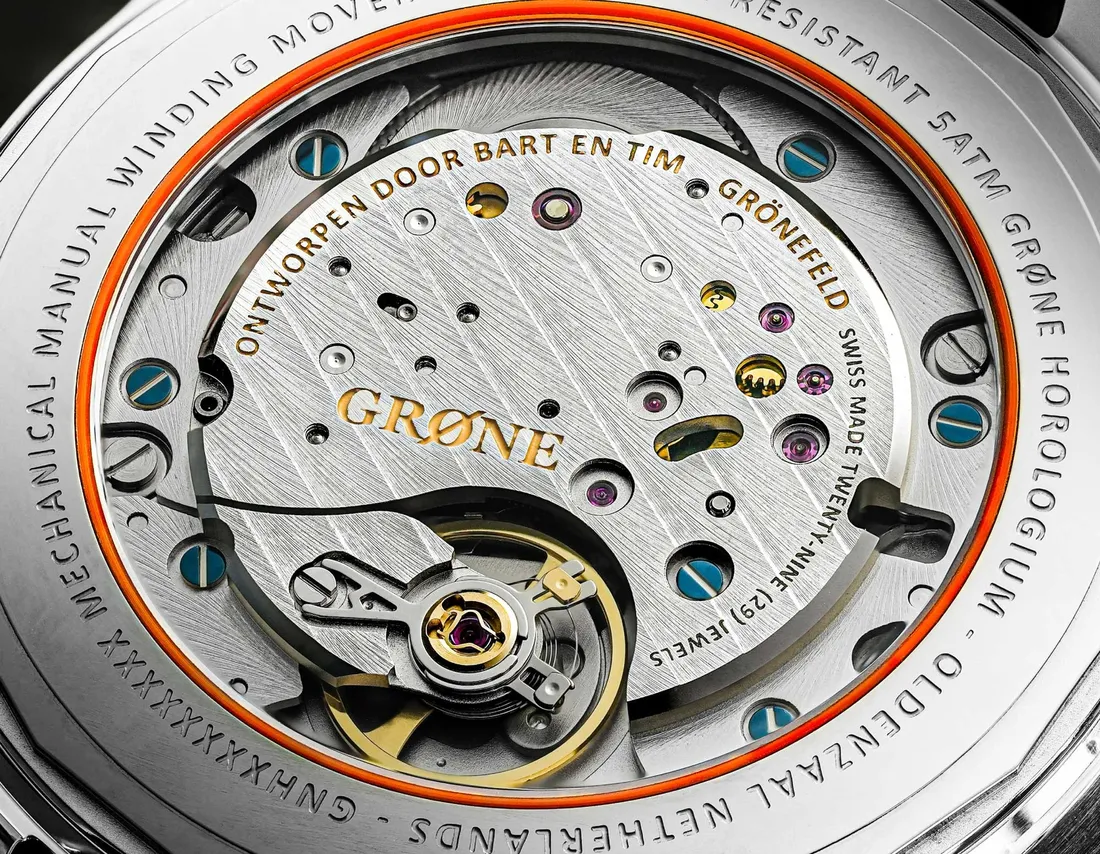
The scientific measurement and the cartographic detail of The Astronomer match the architecture of the hand-finished, hand-wound La Joux-Perret movement the Grönefeld brothers display in the Horologium. Nothing is concealed; Côtes de Genève, sunburst snailing, sandblasted surfaces, heat-blued screws and bevelled edges are mechanical star charts in their own right, like the astrolabe and the globes in the painting. This is the model in which the brothers used a display back on a three-hand watch for the first time.
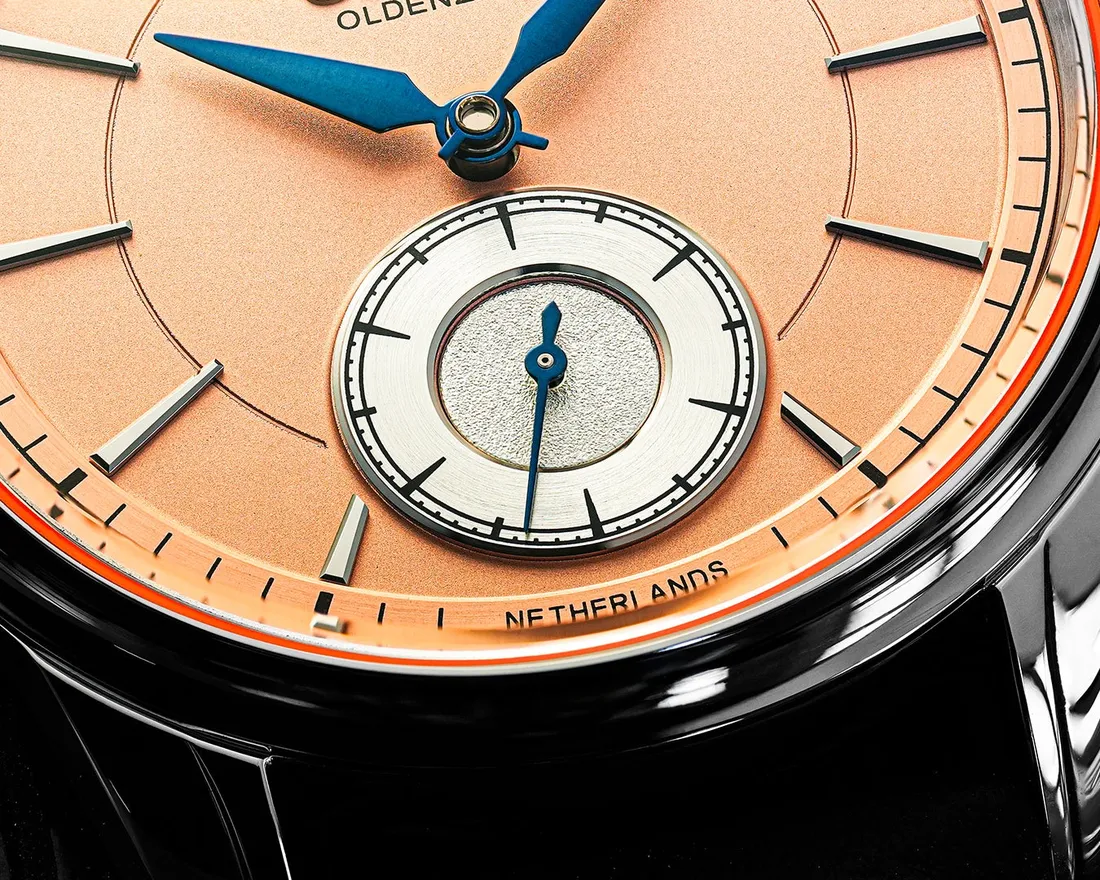
Vermeer built an unmatched visual balance in his pictures by using yellow and blue together. The Grøne Oldenzaal carries that legendary harmony of colour onto the wrist with the deep flame-blued hands and the small-seconds hand it sets on a warm salmon ground. The hours, the minutes and the small seconds are all three in flame-blued steel.
format_quote"Against noisy luxury, this colour is a silent statement of a deep-rooted history of art and of refined taste."
Hasan Bekmezci
Let us seal this watch by pairing it one by one with the five great Vermeer masterpieces that spoke above, and by looking at what lies beneath it.
Just as the Girl with a Pearl Earring is a timeless portrait that spellbinds the viewer with a single glance, so the elegant salmon texture of this dial and its flawless proportions offer an aesthetic that never tires the eye and defies time.
The honest, solid, functional spirit of craft in The Milkmaid matches exactly the 39 mm stainless steel case of the Horologium, 10 mm thick. In the design of the case a vertically satin-brushed caseband, which makes the profile look slimmer, strikes a flawless balance with the polished bezel and back. The downward-curving ergonomic lugs are shaped to sit perfectly on every kind of wrist; this is the third generation of the Grøne case.
The deep inner peace and stillness of the Woman Reading a Letter echoes in the quiet tick of the small-seconds subdial and in the travel of the flame-blued hands. It is a refuge that gives its owner the chance to stop and live the moment in the rush of life.
The urban perspective and architectural balance of the View of Delft match the symmetry in the placement of the indexes and the flawless geometry of the railway minute track. Every detail is calculated like a piece of architecture; the shape of the raised small-seconds plateau was first used on the brand’s Moment Meter.
The precision Vermeer put into his astronomer’s room takes form in the pure engineering behind the watch. Water resistant to 50 metres, this hand-wound movement builds a mental bond between collector and watch through the ritual of winding it every morning. And in the “Something Quirky” version a subtle Dutch proverb is printed on the inside of the sapphire crystal: “Zoals het klokje thuis tikt, tikt het nergens”, home sweet home. The “Something Classic” here leaves its crystal entirely bare, so that the architecture of the movement is interrupted by no writing at all. Both versions are limited to 188 pieces and cost 2,390 euros excluding VAT.
format_quote"It is a refuge that gives its owner the chance to stop and live the moment in the rush of life."
Hasan Bekmezci
One of them is Johannes Vermeer, the Dutch genius who froze with his brush the natural window light falling into a room; the other is the Grøne Oldenzaal Horologium, which carves the calm elegance of that country, a 39 mm steel case, a salmon dial and the mechanical genius of La Joux-Perret into a set of wheels. One is the immortal art of the canvas, the other the immortal art of the wrist.
The watch in its maker’s own words: GRØNE Oldenzaal, Horologium