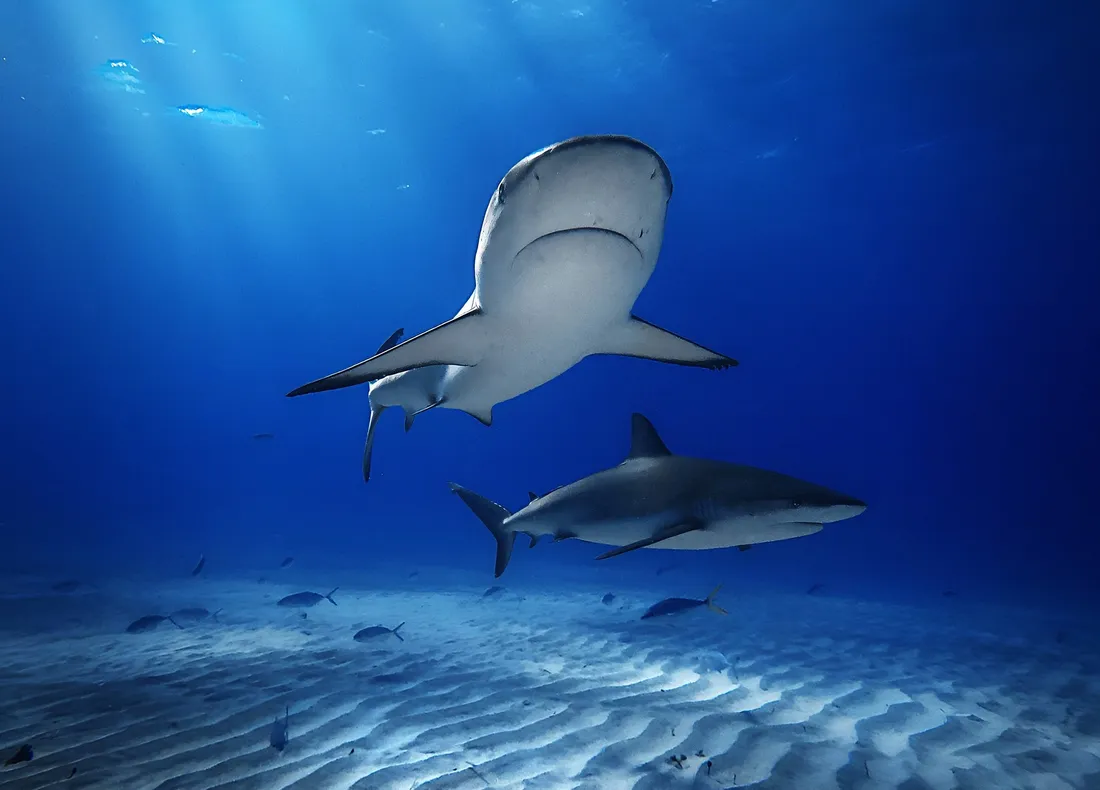
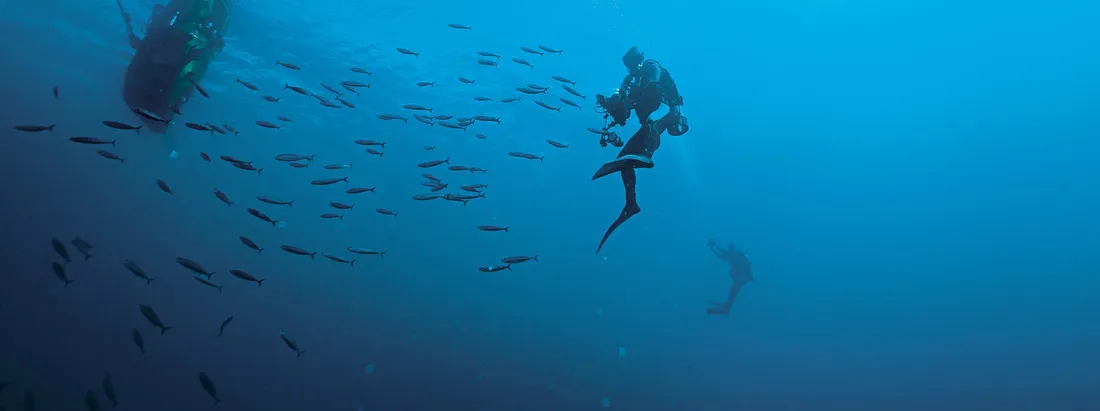
In the turquoise waters of the Bahamas, the relationship the Italian born marine biologist and diver Cristina Zenato built with sharks was the breaking point of an ancient prejudice between humanity and nature. The shark that approached her with a rusted fishing hook lodged in its mouth was a silent cry coming from the depths of the sea. At that moment, from which most people would flee in paralysing fear, Zenato overcame instinctive fear, reached her hand in between those sharp teeth and removed the hook.
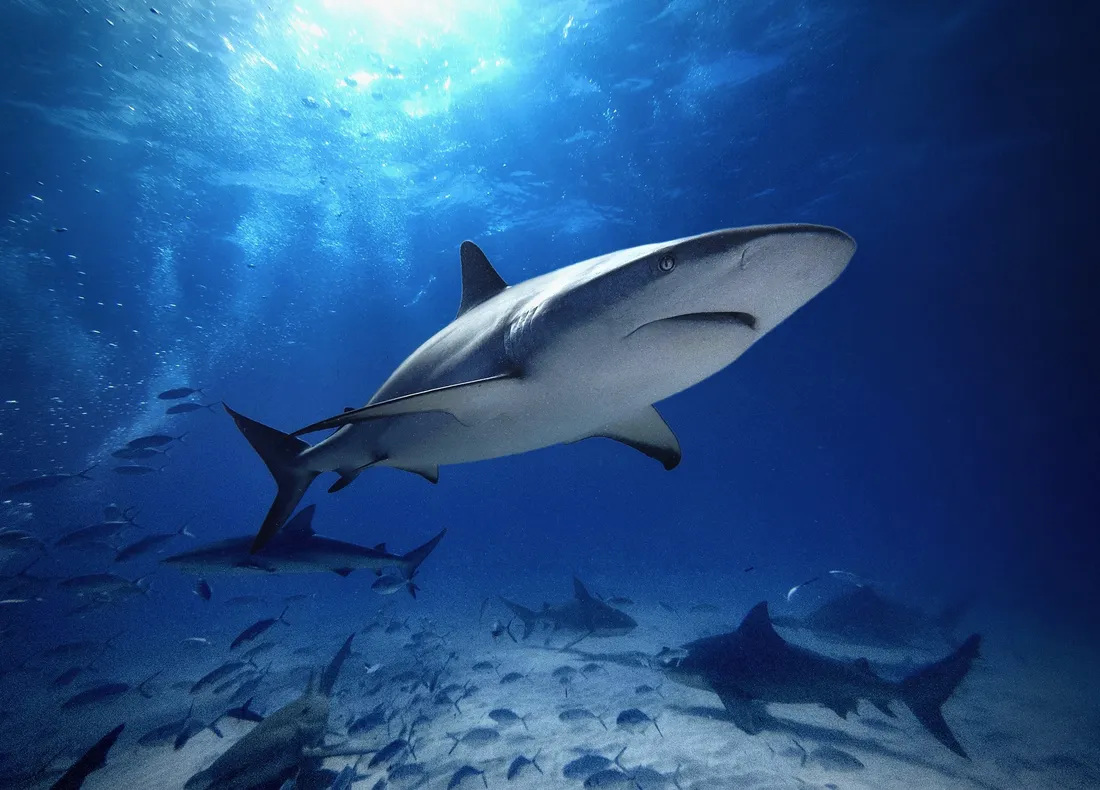
The chronology needs to be set correctly. Zenato was born in 1971; she first came to the Bahamas in 1994 and decided to stay. She began her dive instructor training and her work with sharks in 1995. All of that work, now more than twenty five years of it, has taken place at the same spot on the south shore of Grand Bahama island. And the group at that spot is not made of tiger sharks: it is a community of about twenty Caribbean reef sharks together with five or six nurse sharks.[1]
The individuals have names, because Zenato knows them one by one: Hook, Crook, Stumpy, Scrunchy, Black Spot and Foggy Eye. Naming an animal is not a sentimental gesture but a method of scientific record; it is the only way to track which hook was taken out of which individual in which year.
The more than three hundred hooks removed over twenty five years became so many concrete records of patience, of trust and of devotion to a purpose triumphing over fear. This extraordinary work is not merely a friendship between a sea creature and a human being. It is a universal analogy with deep counterparts in the philosophy of existence, in the structure of the human mind and in the engineering of high watchmaking.
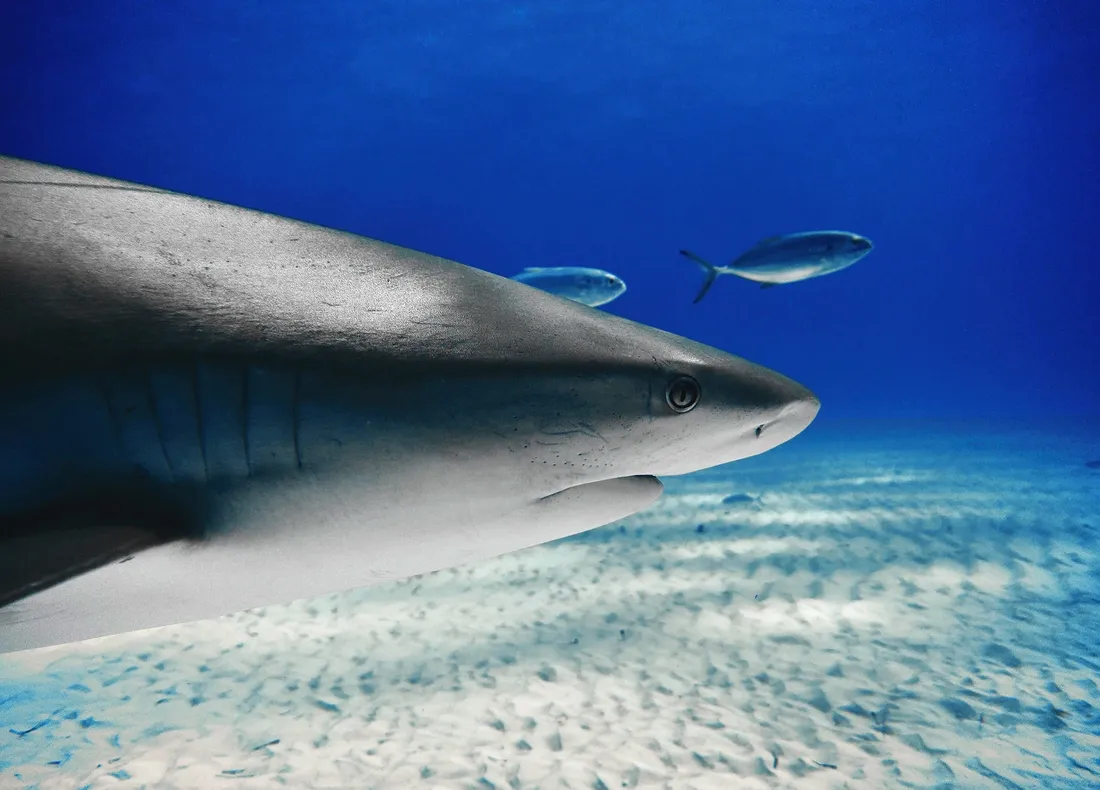
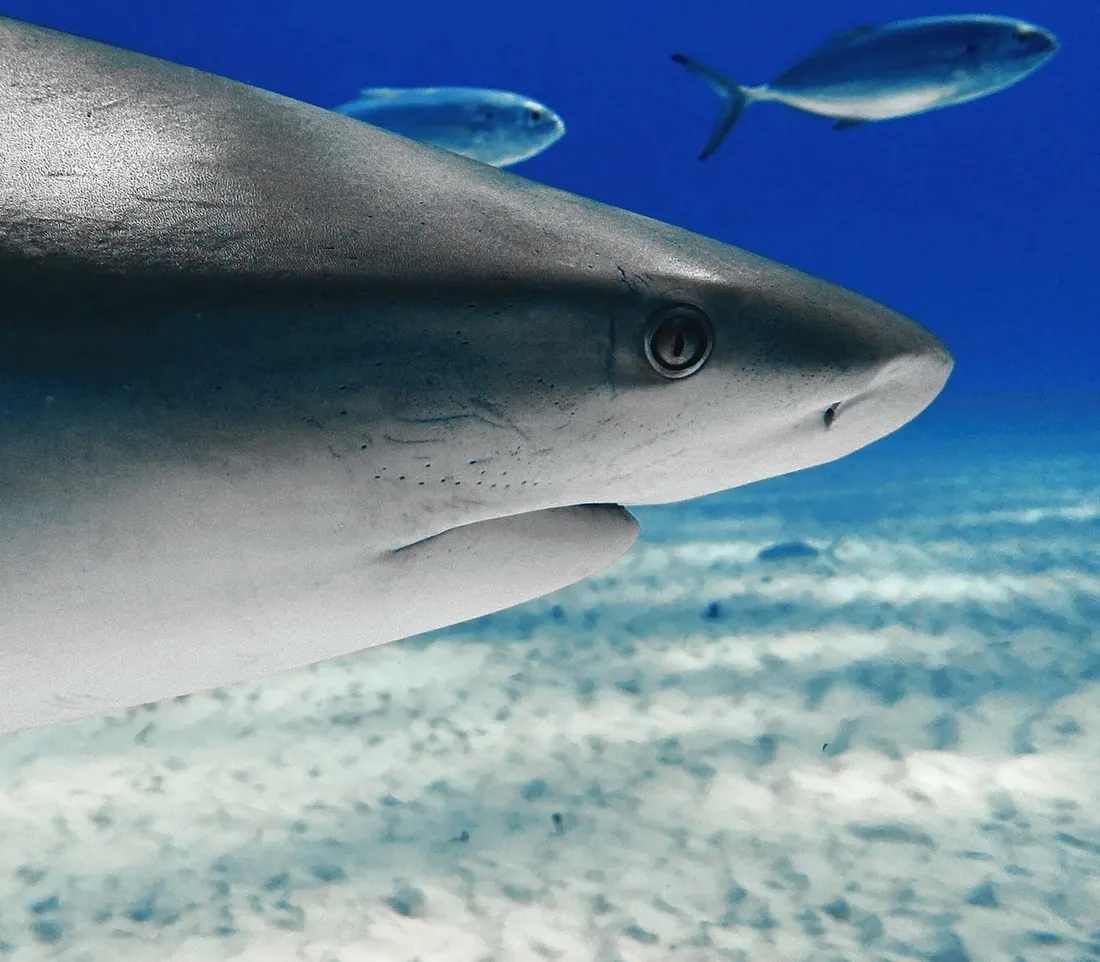
It is worth saying why the hook matters so much, because the issue is not an aesthetic discomfort. A steel hook left lodged in a shark's jaw irritates the tissue continuously, opens infection and, worst of all, prevents feeding. When the hook catches at the corner of the mouth the animal cannot close its jaw fully; and a predator that cannot close its jaw fully cannot hunt. Which is to say a hook is a slow sentence of starvation.
The source of these hooks is not obscure either: longline gear and recreational fishing. When the fisherman cuts the line the hook stays in the animal and begins to rust.
I. The Hooks in the Mind and the Transformation of Inner Fear
The human mind, just as it has developed collective prejudices against the sharks swimming in the darkness of the ocean, also nurses fears against its own inner world.
Rusted hooks, that is mental knots. The hooks lodged in the mouths of sharks represent the traumas, the prejudices and the unresolved mental fixations a person gathers over a lifetime. The resemblance here is not superficial: both come from outside, both become embedded in the tissue over time, and neither comes out on its own.
Fear submitting to a purpose. Zenato putting her hand in between those teeth is the courage of a person facing their own shadow. When fear serves a higher purpose it ceases to be a paralysing obstacle; it turns into an intuitive knowledge.
format_quote"When fear serves a higher purpose it ceases to be a paralysing obstacle; it turns into an intuitive knowledge."
A misunderstanding about how that courage works needs correcting. What Zenato does is not to tame an animal but to observe its behaviour long enough to learn to read when it is calm and when it is tense. Sharks have a state called tonic immobility: a particular touch and position put the animal temporarily into a calm, relaxed condition. This is not hypnosis but a natural response of the nervous system, and it is used in scientific work to examine sharks.
So that hand is not reaching out in blind courage. It reaches out on top of nearly thirty years of observation, of knowing individuals and of reading an animal's body language. Courage here is not the opposite of knowledge but its consequence.
II. Resistance and Understanding in High Horology: the Rolex Deepsea Analogy
The world of watchmaking, just like the depths of the ocean, has to withstand an immense external pressure. The extreme divers' watches that watch lovers keep away from, calling them hard, heavy and coarse, are in fact like the creatures of the mechanical world that carry those invisible hooks.
But the two watches have to be separated first, because most texts merge them into one sentence and draw a false picture. There are two distinct models in this Rolex family and their technical data differ.
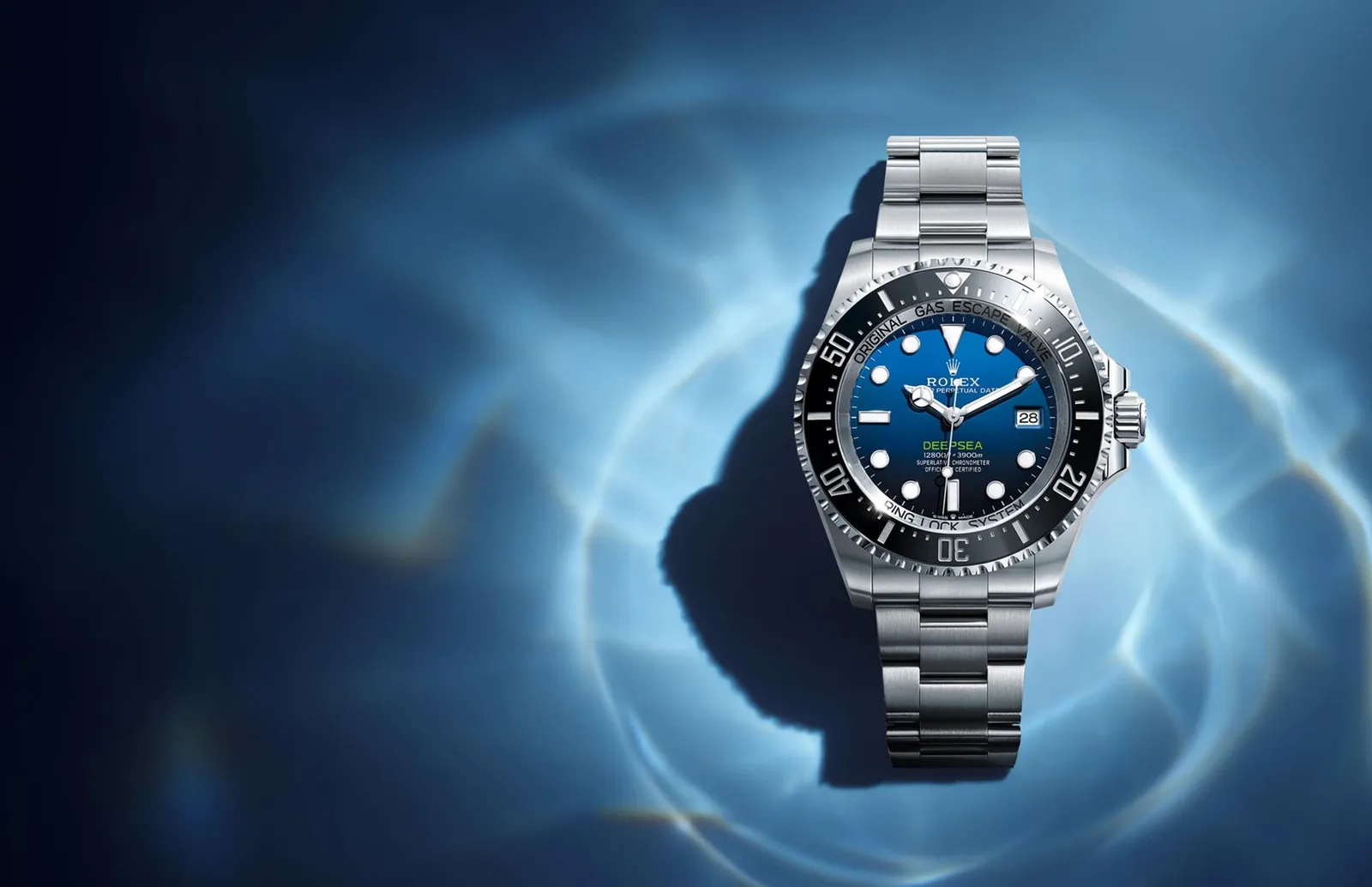
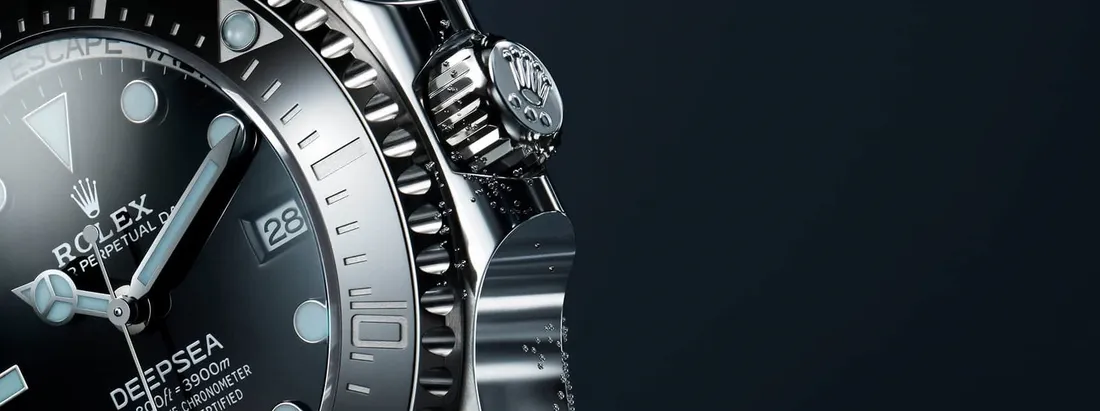
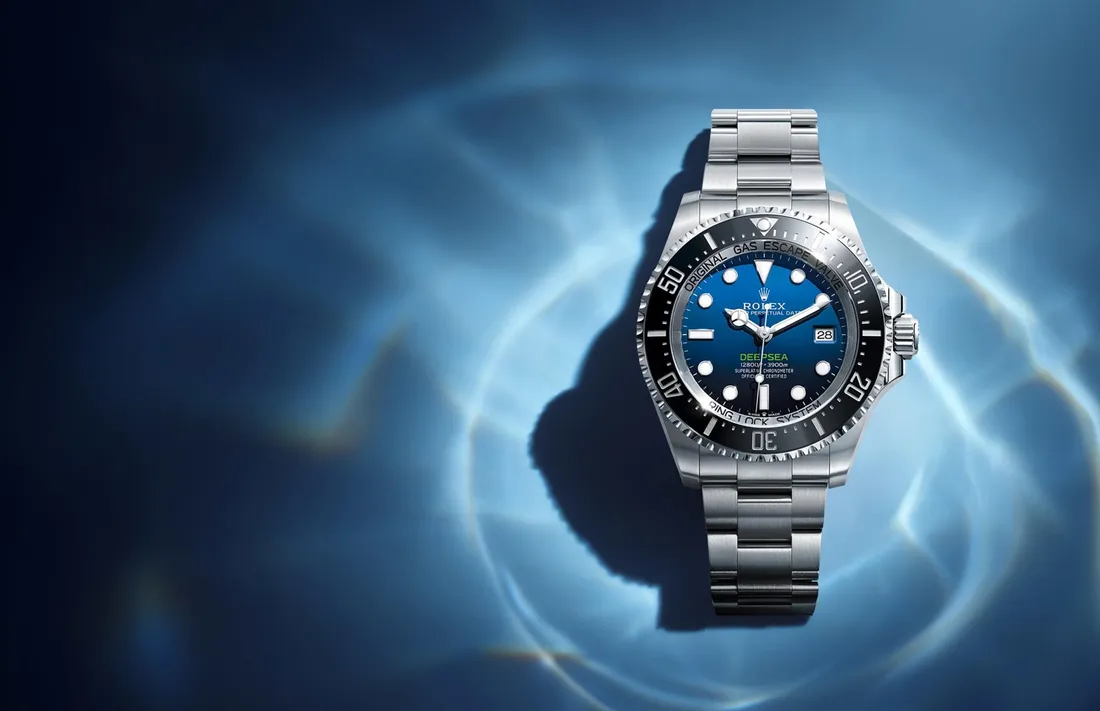
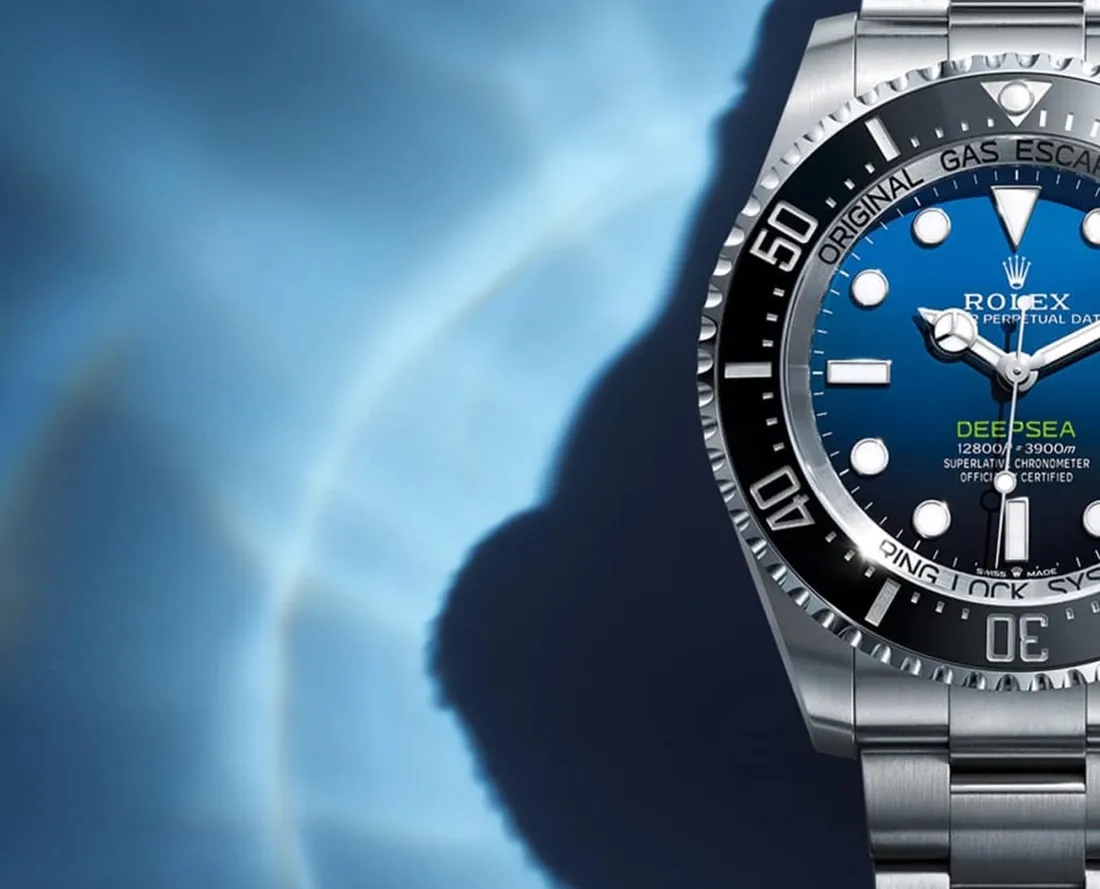
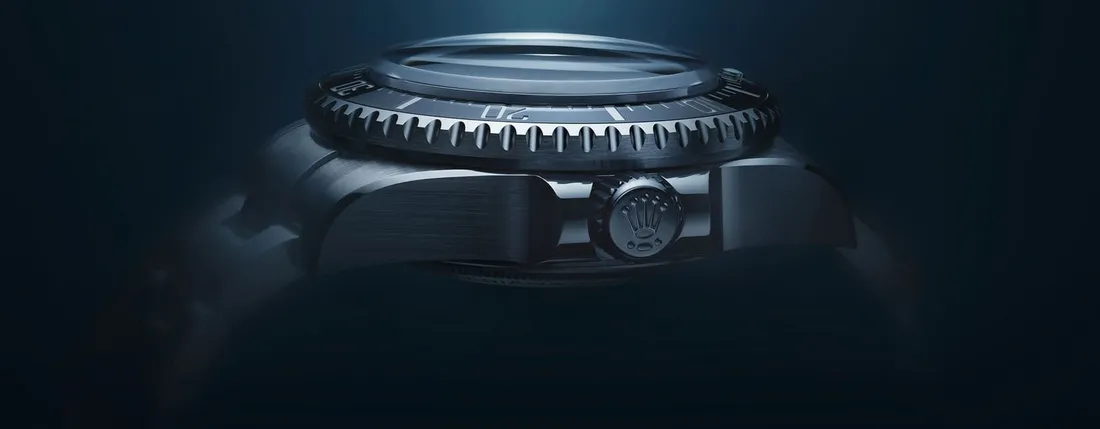
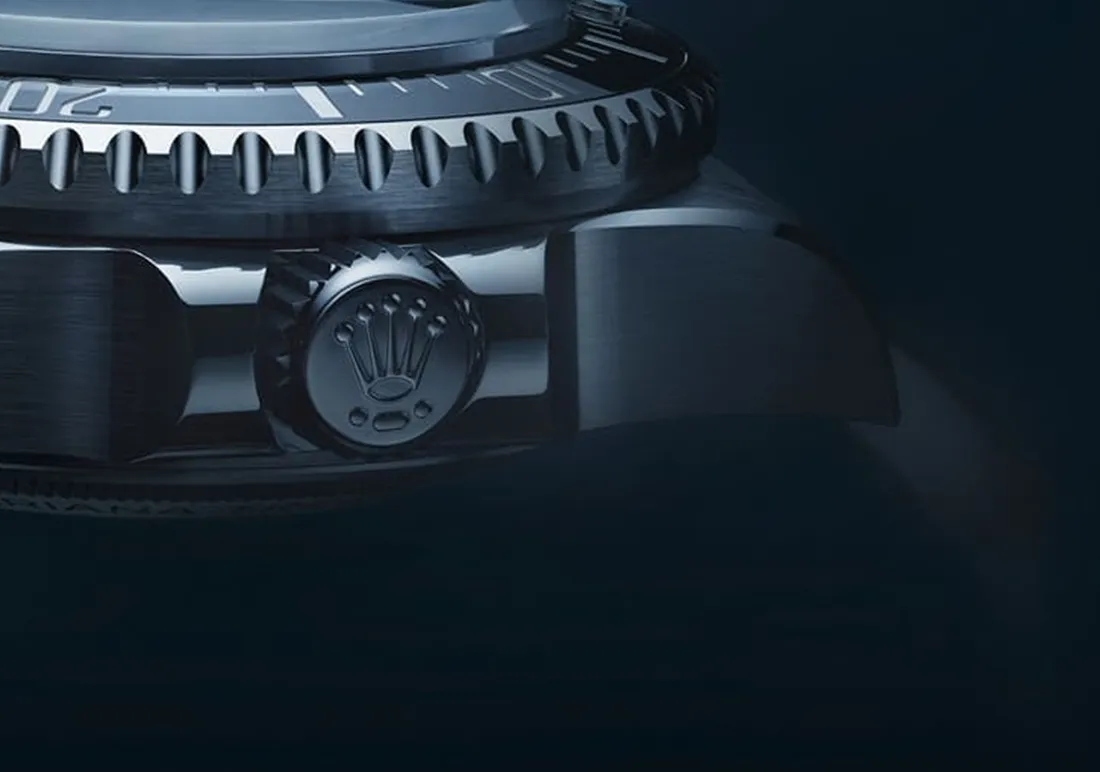
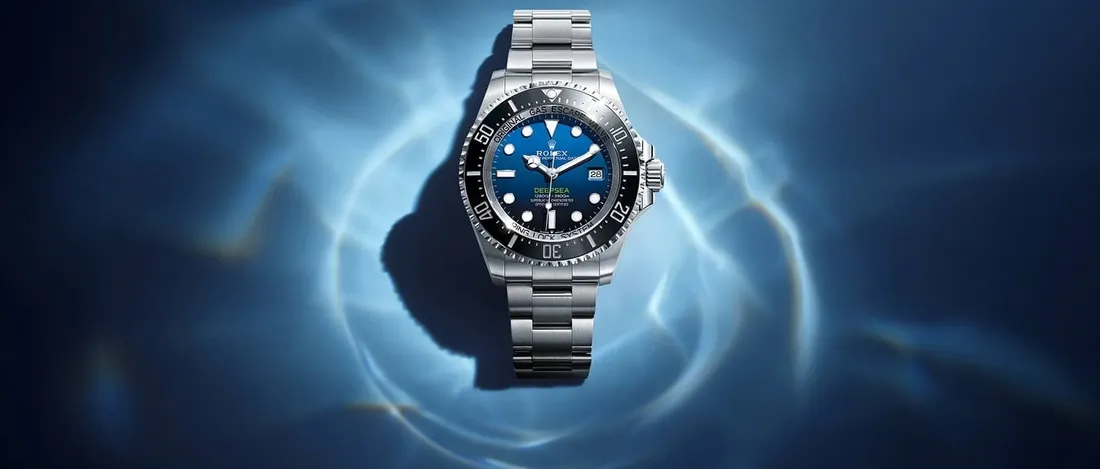
Rolex Deepsea, reference 136660: Oyster case, forty four millimetres, material Oystersteel. This is not a titanium case; Oystersteel belongs to the 904L stainless family used in the aerospace and chemical industries. Its domed sapphire crystal is five and a half millimetres thick. Three thousand nine hundred metres of water resistance, a helium escape valve, calibre 3235, a precision of minus two plus two seconds a day, approximately seventy hours of power reserve. The bezel is black Cerachrom ceramic with its numerals coated in platinum by PVD. The bracelet is an Oyster with an Oysterlock safety clasp and the Glidelock extension system.[2]
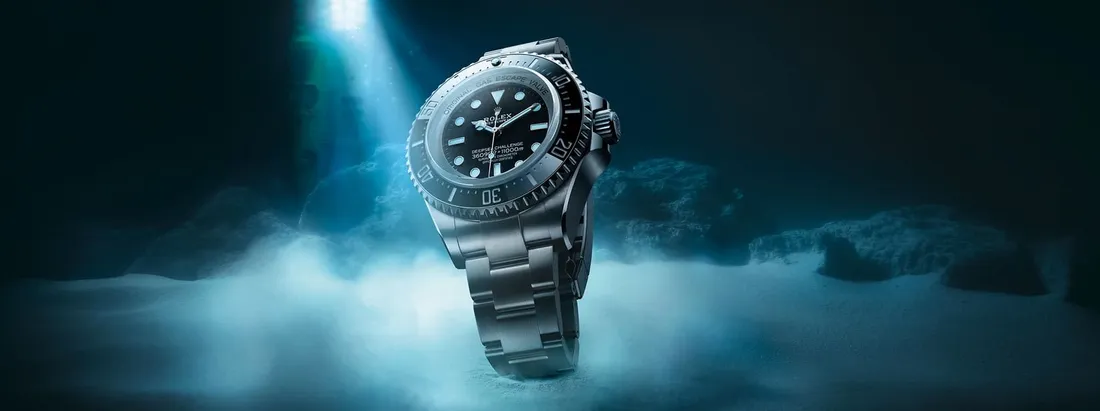
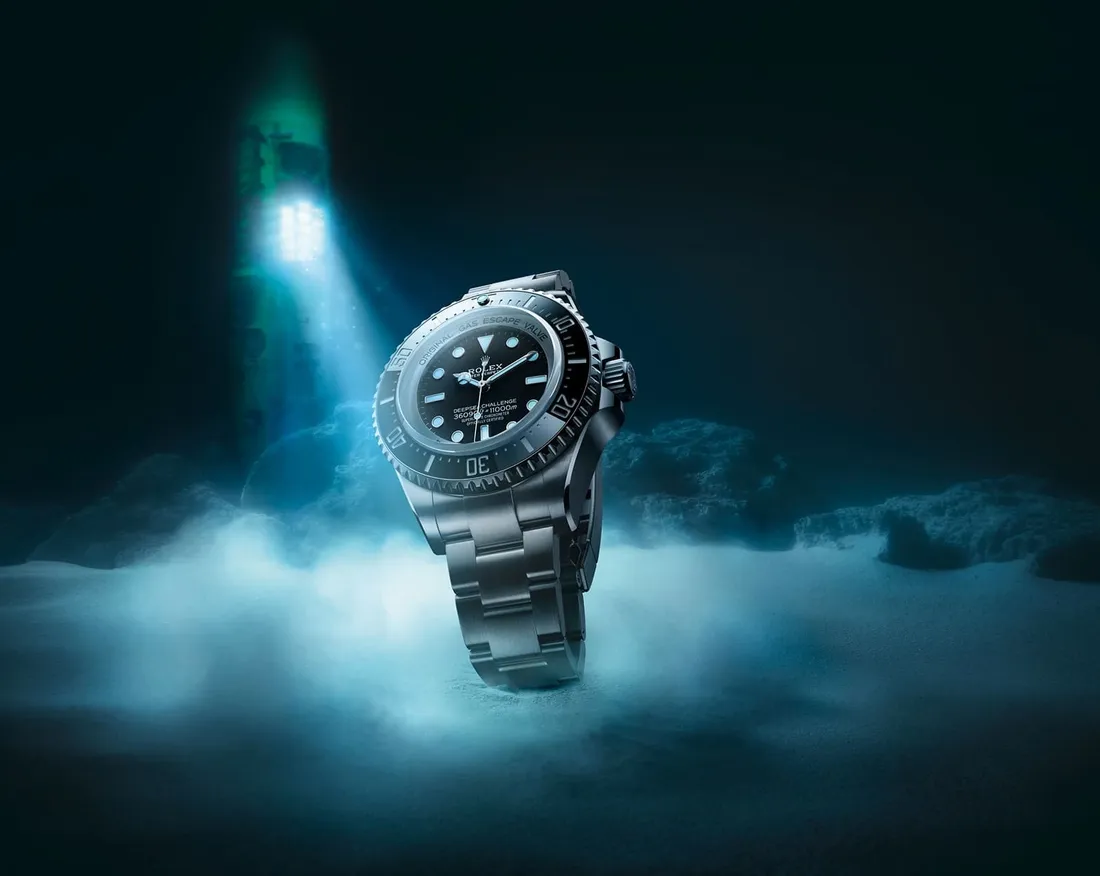
Deepsea Challenge, reference 126067: Oyster case, fifty millimetres, material RLX titanium, that is a grade 5 titanium alloy. Its sapphire crystal is nine and a half millimetres. Eleven thousand metres of water resistance, calibre 3230, seventy hours of power reserve. Its bracelet is also RLX titanium and carries both the Glidelock and the Fliplock extension systems together; it can be worn over a diving suit seven millimetres thick.[3]
Which is to say a five and a half millimetre sapphire crystal and a titanium body are not features of the same watch. One is steel and forty four millimetres, the other titanium and fifty.
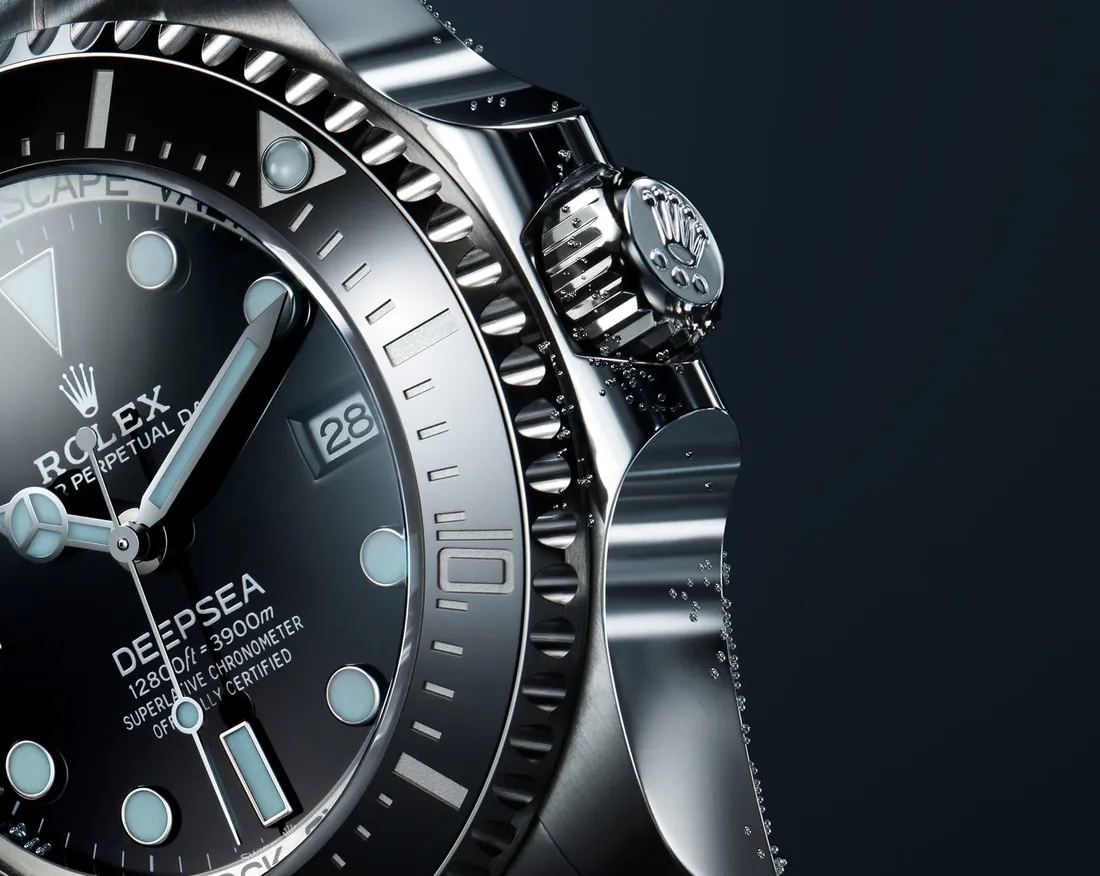
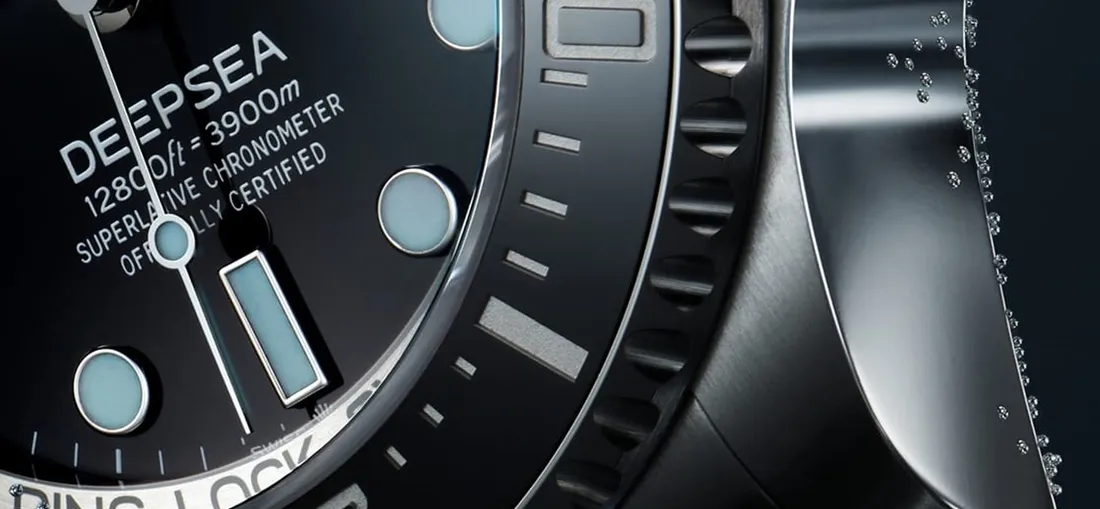
Calm under pressure, that is the Ringlock System. Resisting the pressure of the ocean depths, Ringlock turns the destructive effect outside into a sealing force in the movement's own favour. The logic of the system rests on three parts: a load bearing ring of nitrogen alloyed steel set inside the case, the thick domed sapphire crystal that sits on top of it, and the case back screwed in from below. As pressure rises, the crystal and the case back press more firmly on that ring; which is to say the pushing force of the water compresses the seal rather than straining it. The structure carrying the load uses the load itself as its lock.
To that is added a helium escape valve. In saturation diving a diver breathes a helium mixture; the helium atom is so small that it seeps in through the gaskets. On the way up, as the outside pressure falls, the helium trapped inside the case pushes the crystal from within and can lift it out. The valve is one way: gas leaves, water cannot enter. Which is to say the watch survives only because it has learned to release the pressure that accumulates inside it.
format_quote"Just as Cristina turns the threatening presence of a shark into a dialogue of friendship, so the Deepsea turns destructive pressure into a shield of protection."
The phrase thousands of tonnes that circulates about the size of that pressure also needs correcting, because the true number is impressive enough already. In seawater every ten metres adds about one atmosphere. At eleven thousand metres that means roughly one thousand one hundred kilograms on every square centimetre. The exposed area of the Deepsea Challenge's sapphire crystal is around seven square centimetres; so the total force bearing on the crystal is of the order of eight tonnes. At the Rolex Deepsea's three thousand nine hundred metres it is about three hundred and ninety kilograms per square centimetre, and around two and a half tonnes across the whole crystal. Not thousands of tonnes but a few tonnes; yet those few tonnes bear on a surface the size of a palm.
Being understood instead of being feared. Seen from outside, with its enormous sapphire crystal and heavy body, the Deepsea looks like a coarse mass of metal; only on descending into its details is it understood as a work of engineering. Like approaching a predator with a hook in its mouth, carrying a machine this extreme on the wrist also requires understanding the limits of watchmaking.
Rolex itself accepted that question of weight as a problem. The experimental watch that accompanied James Cameron's dive was made of 904L steel and, although insensitive to pressure, was too heavy in terms of wearability. That is exactly why the production Deepsea Challenge is made of RLX titanium: it is thirty per cent lighter than that experimental piece.
III. The Ecosystem of the Planet and of the Mind
The most striking point in Zenato's work is that the same individuals began, over the years, to approach her of their own accord. That is not communication but learning: sharks can distinguish individual people and repeated situations, and can hold an experience in memory. Which is to say that trust was built not on a supernatural frequency but on harmless contact repeated over years. An animal ceasing to classify a human being as a threat is evidence about that animal's capacity to learn.
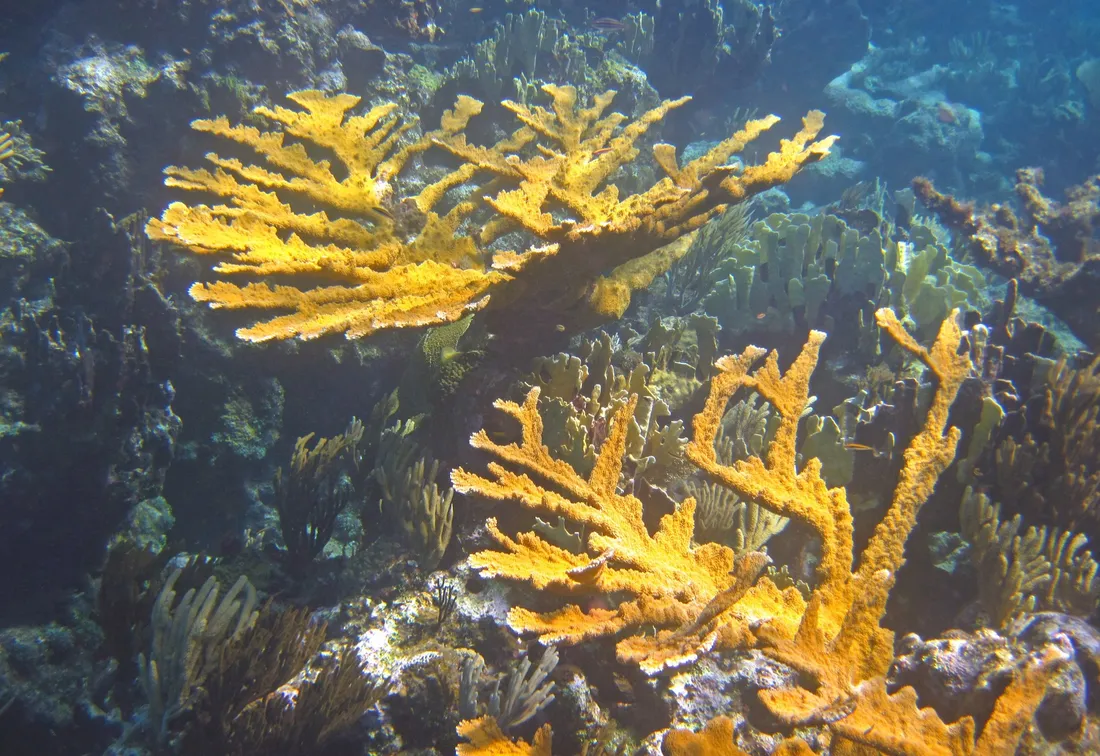
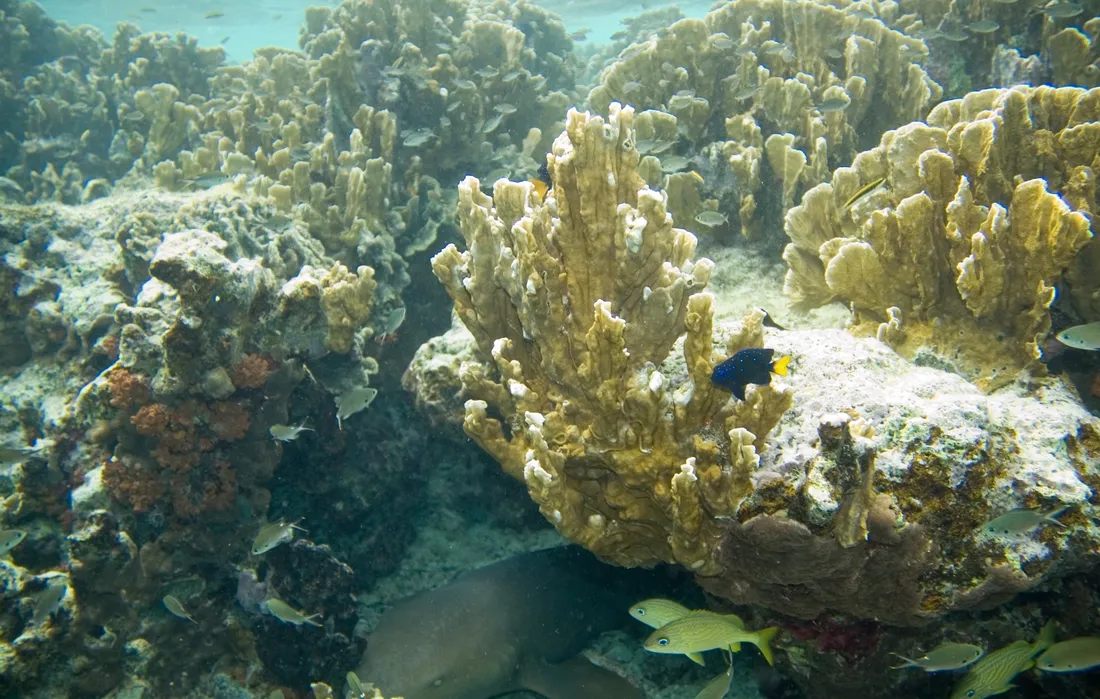
Macro balance. To save a shark is to protect the food chain of the ocean. Reef sharks stand on an upper step of the chain and keep the numbers of mid sized predatory fish in balance; when they are withdrawn the herbivorous fish decline, and when the herbivores decline algae smother the coral. Which is to say the loss of one predator is the first link of a chain that reaches as far as the death of a reef.
And the most concrete output of that work was not a feeling but a law. Zenato was one of those who drove the campaign that resulted in the Bahamas being declared a shark sanctuary in 2011; that legislation banned commercial shark fishing across roughly six hundred and thirty thousand square kilometres of the country's waters.[4] She was inducted into the Women Divers Hall of Fame the same year. Today she is the founder of the non-profit People of the Water and also a cave diving instructor; she worked on the remapping of the underwater cave systems of Lucayan National Park.[1]
Micro balance. Removing a single hook, that is a single deviation, from our mind or from a mechanism restores the fluidity of the whole system. In a movement the counterpart of that is this: if the arbor of a wheel has one micron too much play in its bearing, the error accumulates with every oscillation. That is why at the heart of the Deepsea there is a paramagnetic blue Parachrom hairspring and Paraflex shock absorbers; both are the mechanical equivalent of pulling out a hook, that is of eliminating a single influence that disturbs the flow of a system.
format_quote"The effort high horology masters make to neutralise friction at the micro level in a mechanism is no different from Zenato patiently pulling out three hundred hooks one by one."
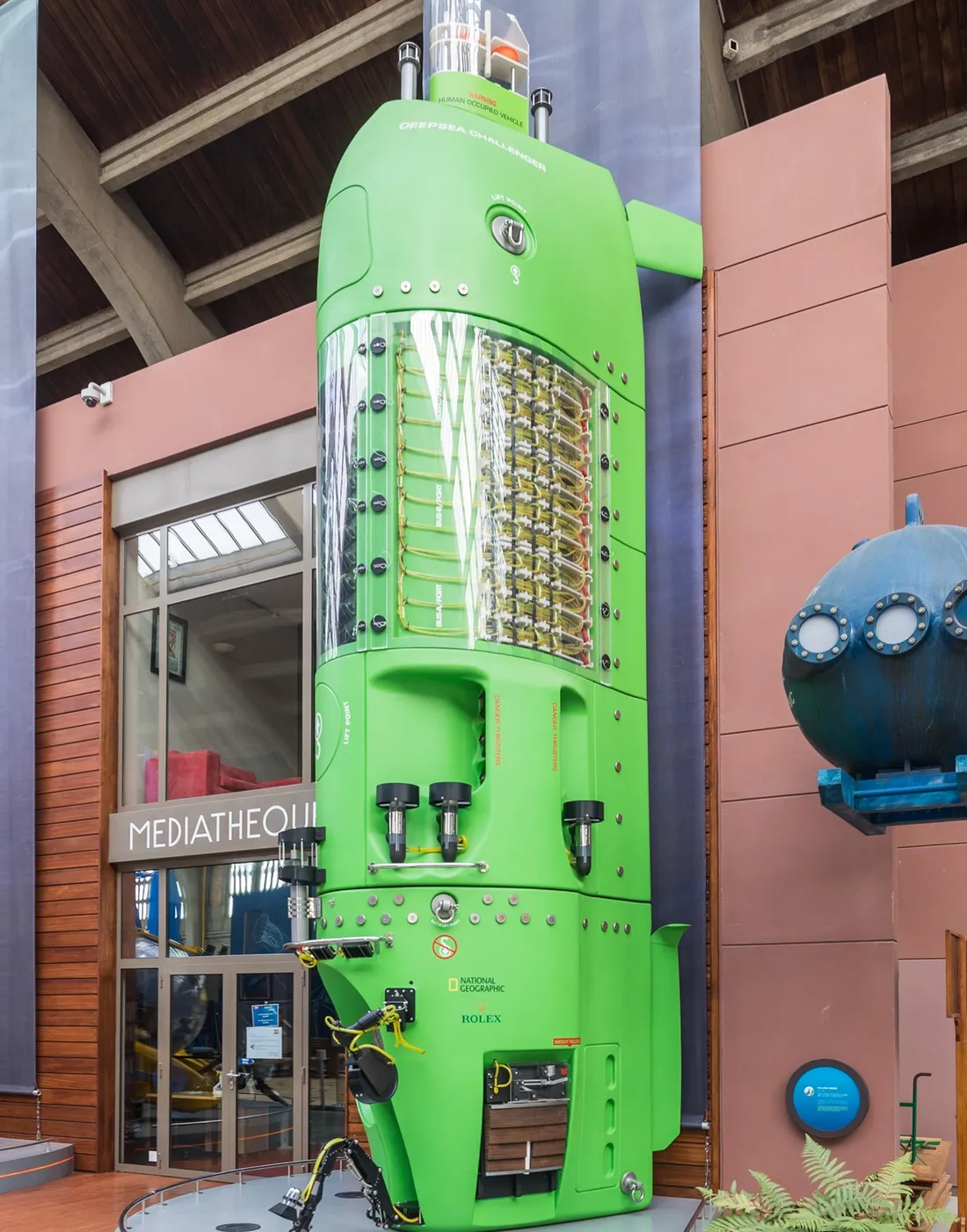
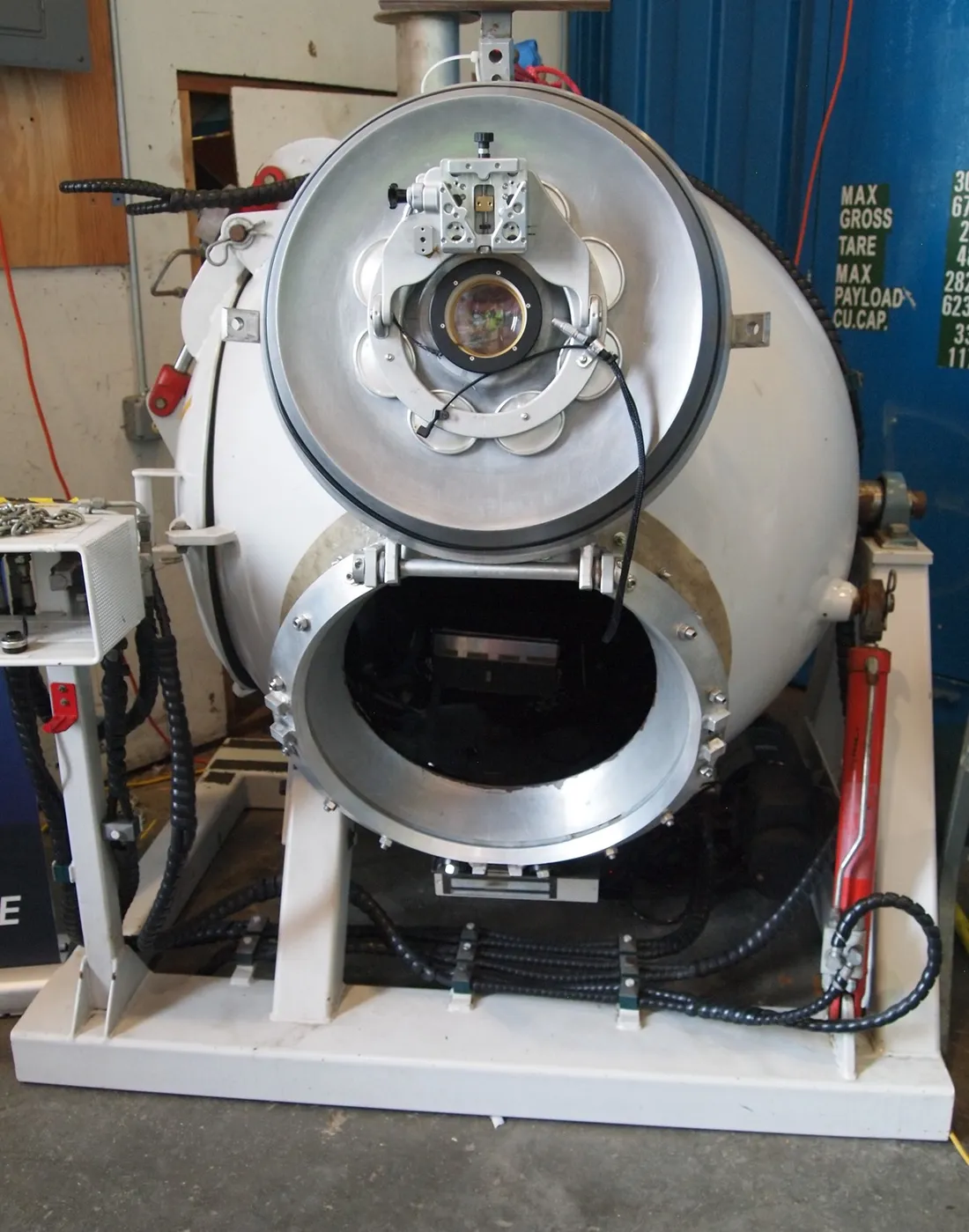
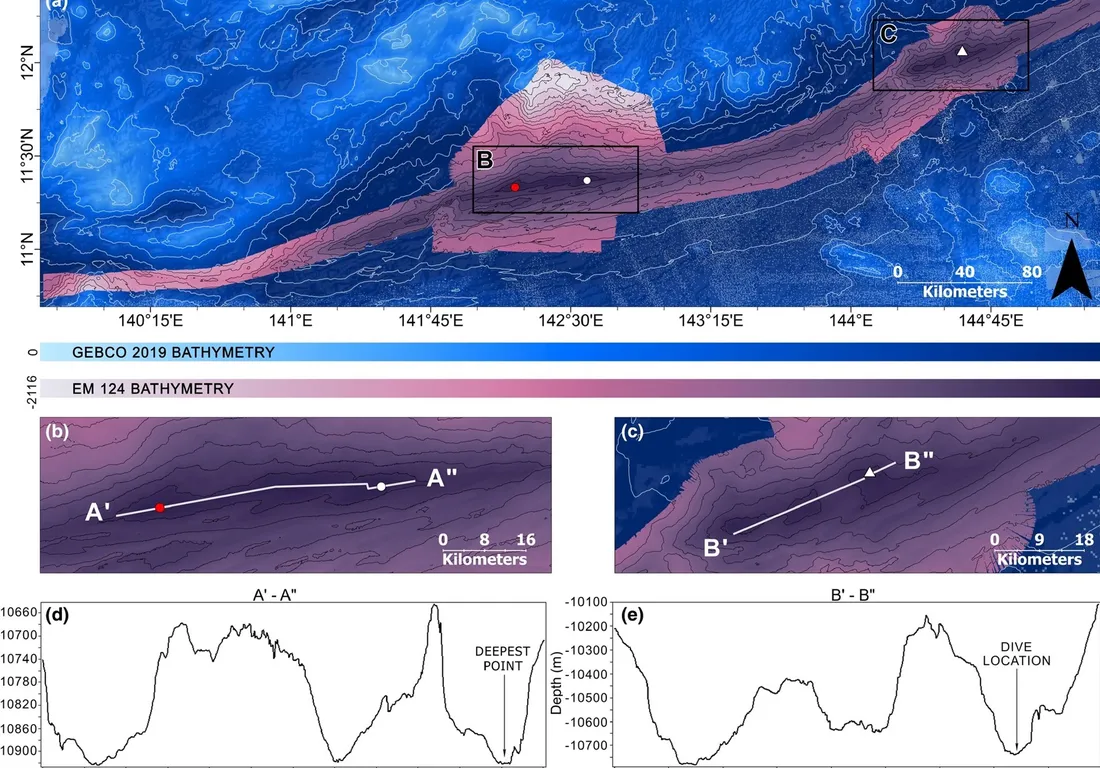
The history of this family is a record of the same patience. In 1960 the bathyscaphe Trieste descended into the Challenger Deep with Jacques Piccard and Don Walsh; an experimental Rolex attached to its hull, the Deep Sea Special, came back intact from ten thousand nine hundred and sixteen metres. On 26 March 2012 James Cameron descended alone into the same trench with the Deepsea Challenger and reached ten thousand nine hundred and eight metres; the experimental Rolex Deepsea Challenge fixed to the submersible's manipulator arm again came up still running. The fifty millimetre titanium watch sold in shops today is those two experiments turned into series production.[5]
Conclusion
Fear is a primitive response to the unknown; but when it is kneaded with understanding, patience and empathy it gives way to a deep respect. By removing the hooks from the mouths of the most feared creatures of the ocean, Cristina Zenato paid part of humanity's debt to nature, and turned that work into the law of a country.
Both the balance at the heart of a Rolex Deepsea working unshaken in the depths of the ocean, and that compassionate hand a person extends in spite of their fears, whisper the same truth. In both the method is the same: not to ignore the pressure but to understand the direction it comes from and to build the structure accordingly. Ringlock stands not by pushing pressure away but by leaning on it. And Zenato reached out her hand not by suppressing fear but by knowing it.
format_quote"To discover the beauties hidden in the depths of life, one must first pull the hooks of fear out of one's own mind."
Sources and Notes
[1] For Cristina Zenato's biography, the species involved and her working site on Grand Bahama, her own official site and public biographical records. The group consists of about twenty Caribbean reef sharks and five or six nurse sharks; not tiger sharks.
[2] Rolex Deepsea, reference 136660: official Rolex technical data. Oyster 44 mm, Oystersteel, 5.5 mm domed sapphire, 3,900 m, calibre 3235, approximately 70 hours.
[3] Deepsea Challenge, reference 126067: official Rolex technical data. Oyster 50 mm, RLX titanium, 9.5 mm domed sapphire, 11,000 m, calibre 3230, Ringlock architecture with a nitrogen alloyed steel ring.
[4] The declaration of the Bahamas as a shark sanctuary in 2011 and the prohibition of commercial shark fishing; the protected area covers roughly 630,000 square kilometres of the country's waters.
[5] The 1960 Trieste dive and the Rolex Deep Sea Special; the Deepsea Challenger dive of 26 March 2012 and the experimental Rolex Deepsea Challenge. The figure of the production model being thirty per cent lighter than the experimental piece is Rolex's own statement.
[6] The pressure calculation: in seawater every 10 metres adds about 1 atmosphere. At 11,000 metres roughly 1,100 kilograms fall on each square centimetre, at 3,900 metres about 390; multiplied by the exposed area of the crystal the total force comes out of the order of eight and two and a half tonnes respectively.