On the last afternoon of September, two people sat in the control room of a gamma irradiation laboratory: the cell geneticist Dr Julian Vance and the molecular reconstruction specialist Dr Kaan Vural. Beyond the thick lead wall, in the cell itself, a dose had been delivered that would kill a person in seconds. No one goes in there. The only thing in there was a bacterial culture in a glass dish.
By the old genetic doctrine we should be watching an absolute biological death, said Dr Vance, pointing at the shattered genome map on the screen. A high dose breaks DNA in hundreds of places. A severed strand is like a text with no copy anywhere. Life ends when the threads part.
We treated destruction as an ending and fragmentation as annihilation, said Dr Vural. Deinococcus radiodurans undoes that arithmetic. It takes a dose around five thousand grays with no loss of viability at all, roughly a thousand times what would kill a person. Even at fifteen thousand grays a substantial part of the culture is still standing.
The organism’s secret lies not only in the speed of its repair but in its ability to protect whatever will do the repairing. Inside the cell there is an antioxidant shield built around manganese, and that shield does the decisive work: while the free radicals thrown off by the radiation tear the DNA apart, it keeps the repair proteins intact. The bacterium, in other words, does not try to save its DNA. It saves the crew that will reassemble it. The genome is going to shatter regardless; what matters is that the hands which will gather it in the morning come through unharmed.
Then enzymes such as RecA and PprA take over. Hundreds of DNA fragments are read against sister copies and rejoined in the correct order within a few hours. Two comparisons are enough to grasp it. Picture a mirror that has fallen and broken into thousands of pieces reassembling itself without leaving a single line of crack. Or an enormous encyclopaedia cut up with scissors into separate words and rebound from the beginning without one word out of place.
For this organism, being broken is not a cause of death. It is a threshold of renewal.
format_quote"The bacterium does not try to save its DNA. It saves the crew that will rebuild it."
Hasan Bekmezci
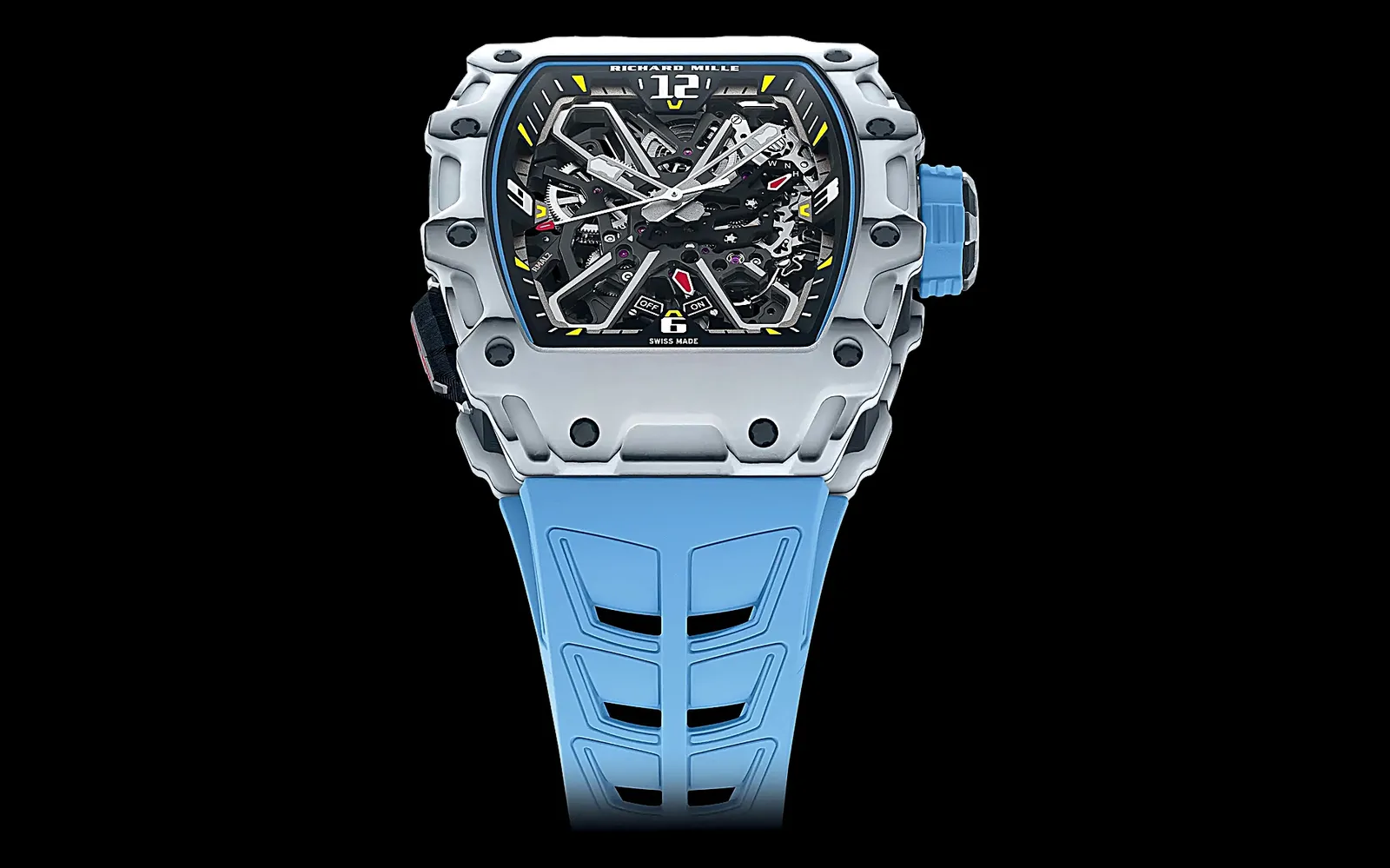
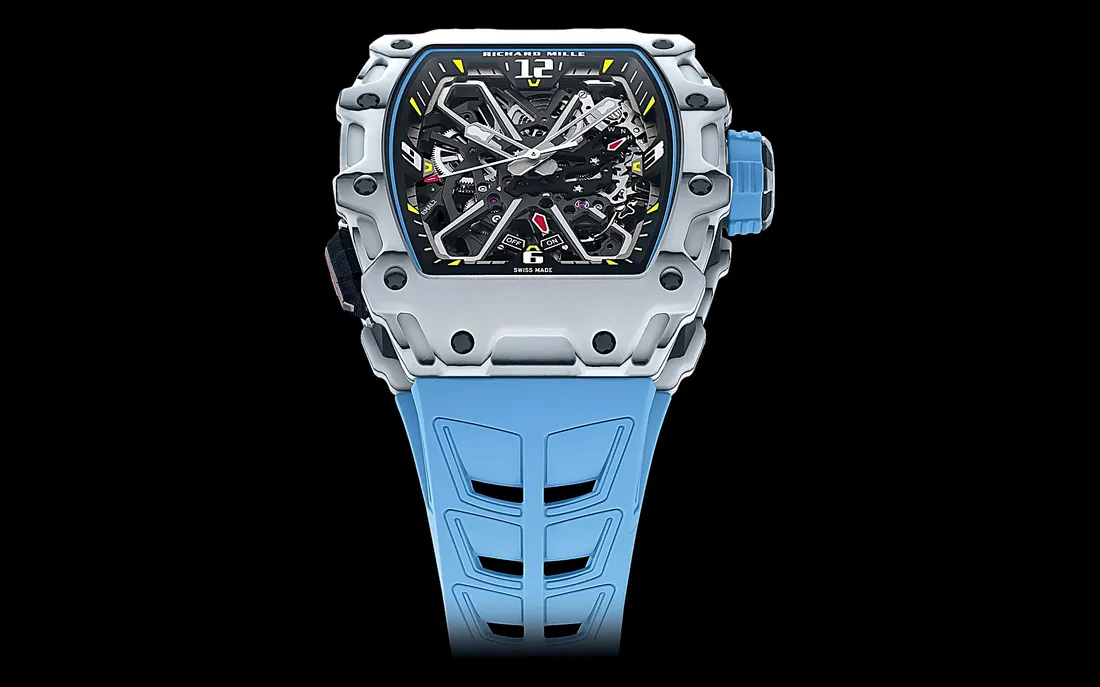
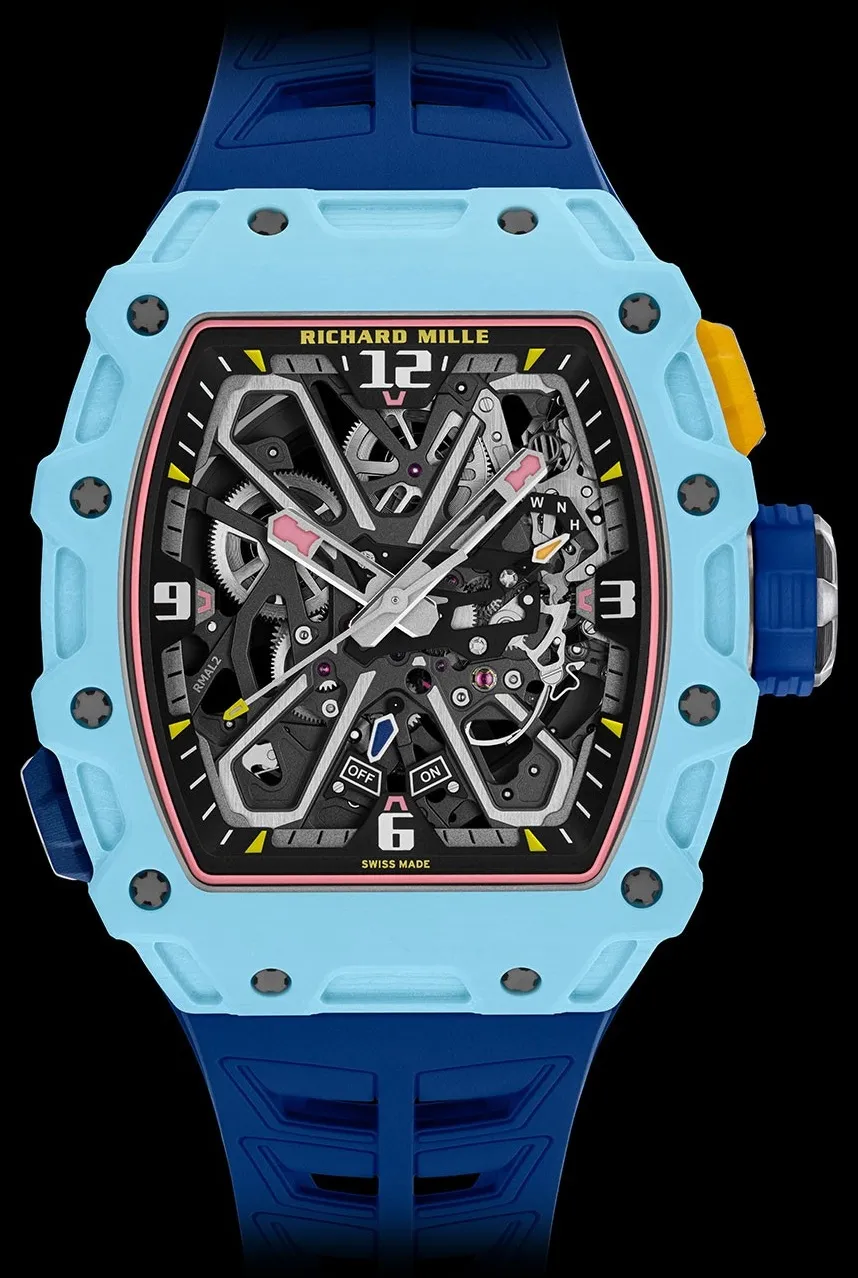
In watchmaking, shock stands in for radiation. The instant a tennis racket meets the ball, the masses on the wrist take hundreds of g of acceleration, and that blow travels towards the most delicate parts of a mechanism. Richard Mille’s RM 035 family is built around exactly this problem, and the RM 35-03 Automatic Rafael Nadal is the fourth watch in the line. What came out of three years of development is a watch that lets its owner alter its internal geometry on demand.
The movement is called RMAL2. It is skeletonised, self winding, and holds about fifty five hours. Baseplate and bridges are machined from grade 5 titanium treated with black PVD and electroplasma, which gives the assembly both rigidity and the surface flatness a gear train requires.
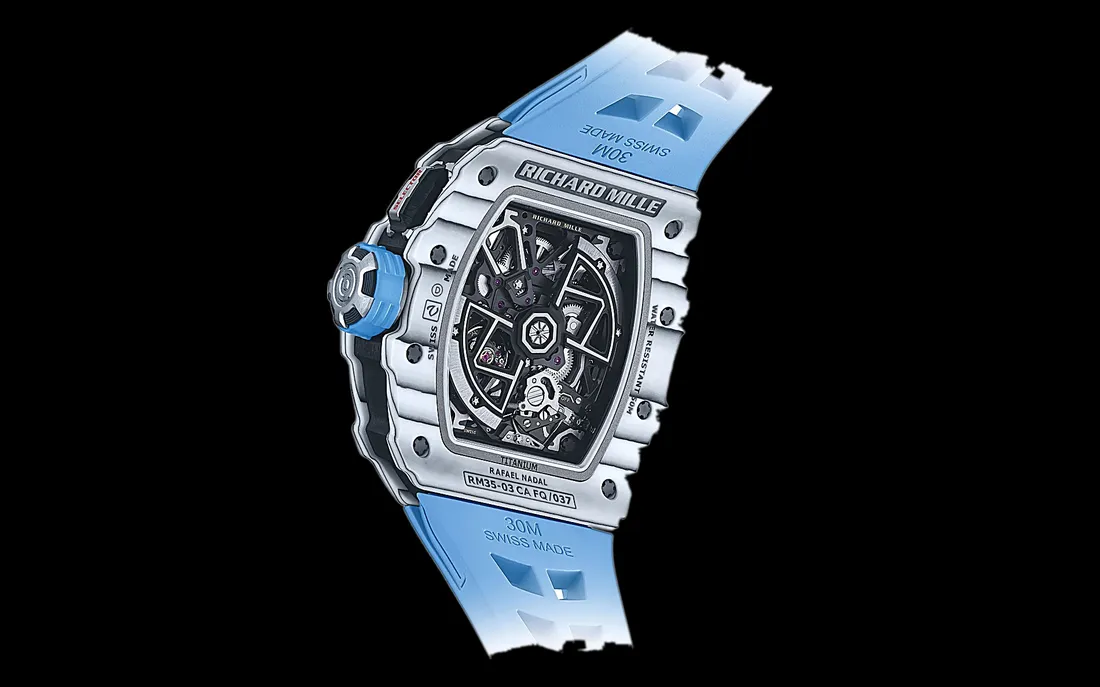
The real invention is in the rotor. The patented arrangement called the butterfly rotor consists of an arm in grade 5 titanium and a metal weight segment, turning in one direction on ceramic ball bearings. In its normal position the two weights displace the centre of gravity outwards and generate the torque that winds the barrel. Press the pusher at 7 o’clock and a gear train dedicated to the rotor deploys the two weights to one hundred and eighty degrees, facing one another. The centre of gravity returns to the middle, the rotor comes into balance, and its winding power falls to nothing.
One point wants correcting here. The arrangement does not lock the movement and does not stop the watch. What it does is finer than that: during a high impact sport it prevents the rotor from spinning wildly and overwinding the barrel. A small indicator at 6 o’clock tells you which position the rotor is in.
format_quote"Sport mode does not stop the watch. It only switches off its appetite."
Hasan Bekmezci
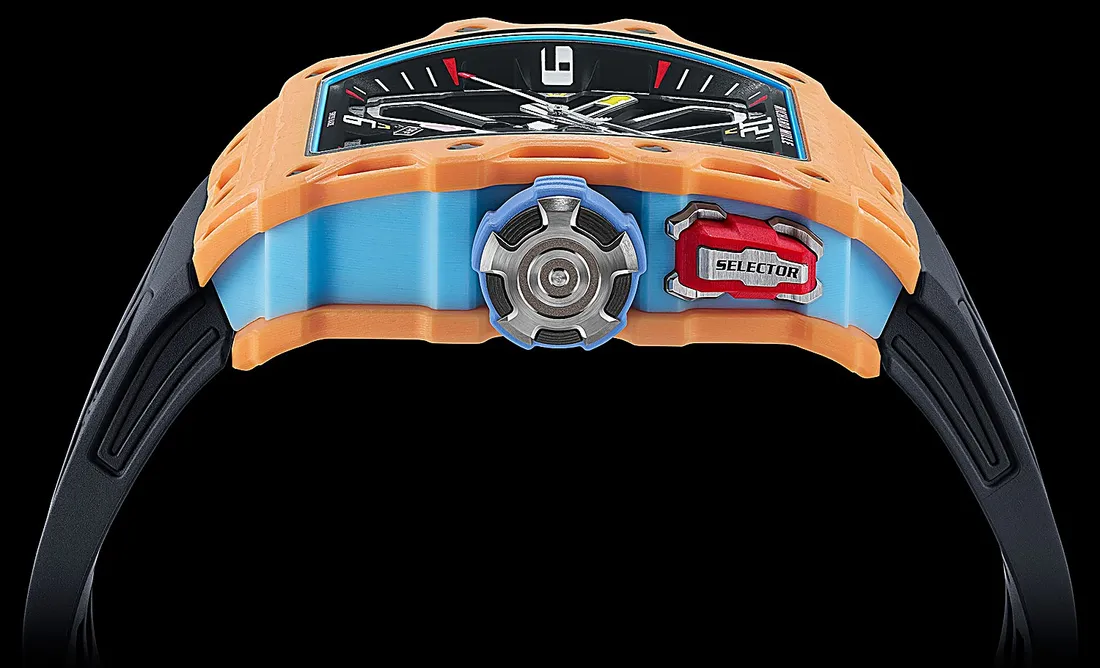
The second device is the function selector. A push button at 2 o’clock shifts, much like a car’s gear lever, between winding, neutral and hand setting, and a small hand at 2 o’clock displays the position chosen. Loads pressing directly on the crown are therefore absorbed before they reach the barrel and the wheels.
On the oscillating side there is a free sprung balance with variable inertia. The regulator index is gone altogether; adjustment is made by turning four small weights set on the balance itself. The Glucydur balance runs at four beats a second, twenty eight thousand eight hundred an hour, on an elinvar balance spring. An index free balance loses less of its rate when it takes a knock, which here is not a luxury but the answer to the racket.
The case is machined from two composites, Carbon TPT and Quartz TPT. Both are built from layers of parallel filaments no thicker than forty five microns, impregnated with resin and stacked with each layer rotated forty five degrees against the last. Cured at a hundred and twenty degrees under six bar, the block is then cut on a machine tool. Carbon TPT comes from carbon fibre and Quartz TPT from silica thread, and the wavy veining on the surface appears where cutting exposes the layers.
This composite is not armour and has nothing to do with radiation. Its work is to spread an impact between the layers so that no crack can start at a single point. Water resistance is fifty metres, sealed by two nitrile O rings, and the case is assembled with twenty spline screws in grade 5 titanium.
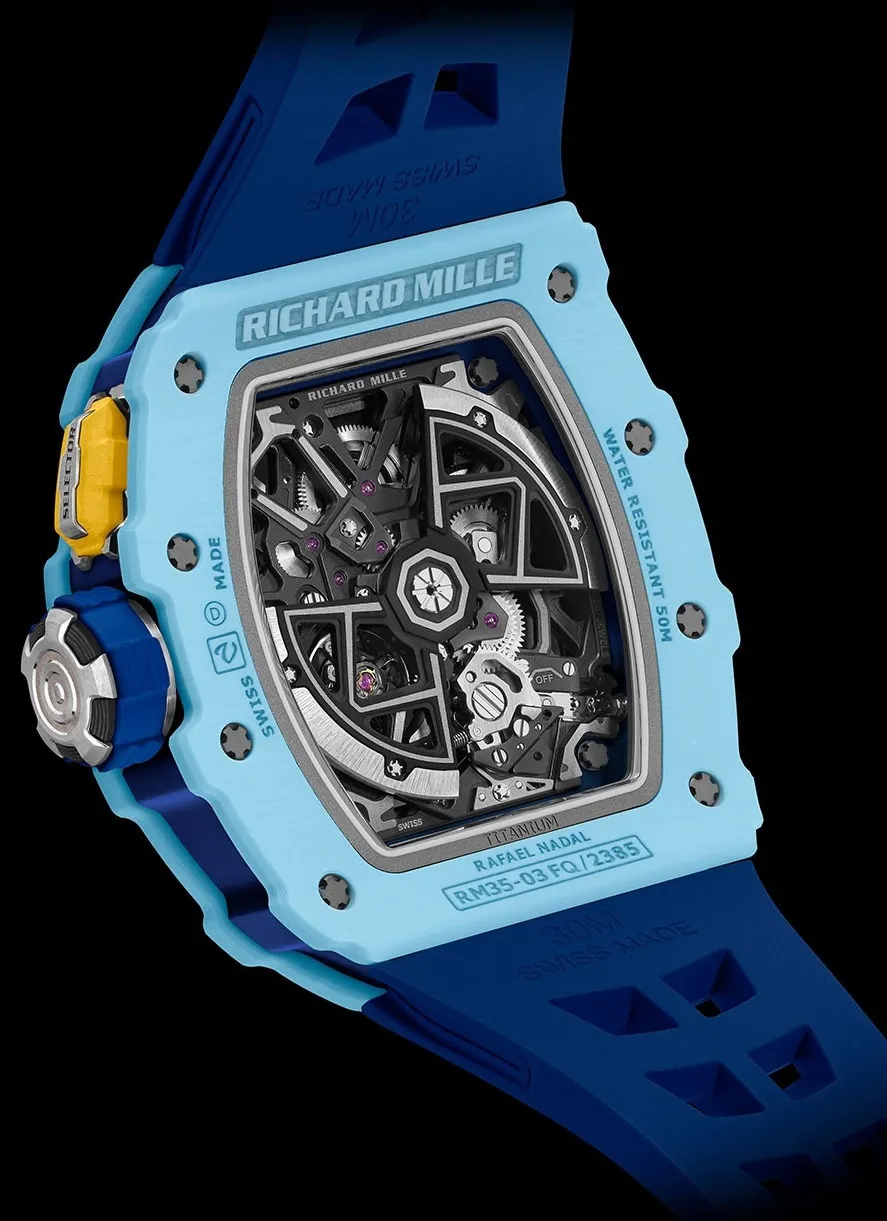
Someone pressing the button and watching the wings of the rotor open may well think of the bacterium behind the lead wall. The resemblance is the viewer’s reading, not a claim made by the manufacturer. But the same idea is at work in both places: the way to meet destruction is not to grow harder but to be able to change shape. The bacterium does not turn itself to stone against the radiation. It accepts that it will break, and arranges in advance the order by which it will be gathered up again.
That arranging in advance is worth pausing on. For a cell to calculate far enough ahead, before it is broken at all, to protect the crew that will repair it, is not something that falls into place by itself. An engineer needed three years to carry the same logic to a wrist, and he had a working example in front of him already. Nothing is being invented here. Something already set down is being read.
format_quote"The way to meet destruction is not to grow harder, but to arrange in advance how you will be gathered up."
Hasan Bekmezci
The RM 35-03 reduces the old tension between precision and endurance to a single button. Watching the butterfly rotor change its shape, you begin to think that physical destruction is not a final ending, and that the Creator can give matter the capacity to recover itself even under the highest stress.
The watch on its maker’s own site: Richard Mille, RM 35-03 Automatic Rafael Nadal