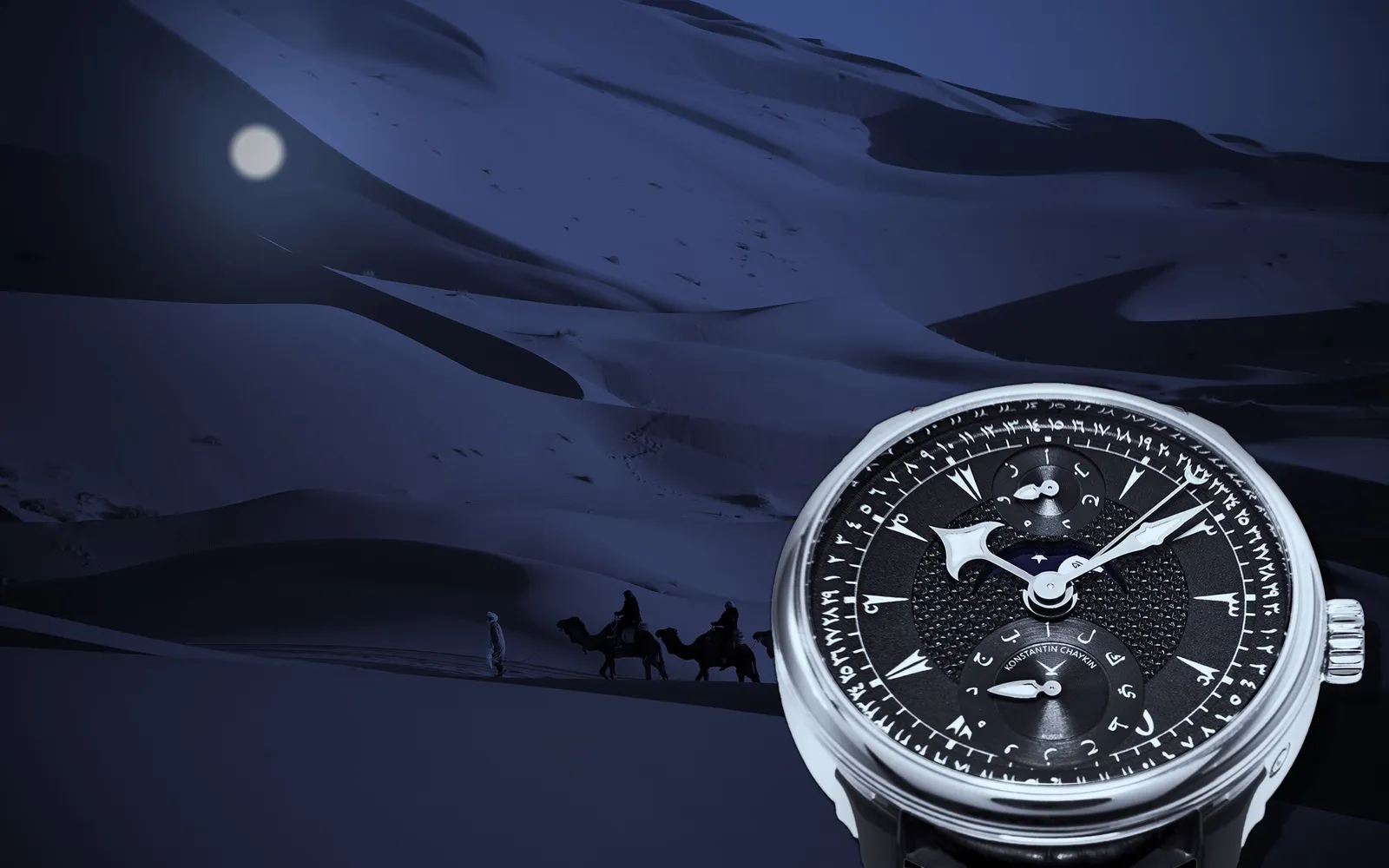
"The suffocating darkness that came down over Mecca was the very portrait of ambition and arrogance turning to tyranny between the stone walls of Dar an-Nadwa. In that grim assembly the chiefs of the Quraysh gathered and chose from every clan one young man ready to kill, in order to carry out the murder of the Prophet Muhammad. But the wife of one of the men in that assembly could not carry such a bloody plan in her heart, and she had word of it brought secretly to the Prophet Muhammad.
When permission to depart was granted, the first brilliant move was made. Despite the cold breath of death and everything it risked, the Prophet Muhammad laid Ali down in his own bed, under his green cloak. While the killers surrounded the house, he walked out in perfect calm.
At the fiercest heat of the day there was a knock at my door. When I saw that blessed face with its covering drawn across it, and when he said, God has given me permission to depart, Abu Bakr, I could not hold back my tears. Companionship on the road, Messenger of God, I asked. Yes, companionship on the road, he said. In that moment we began to weave the most flawless strategy in history.
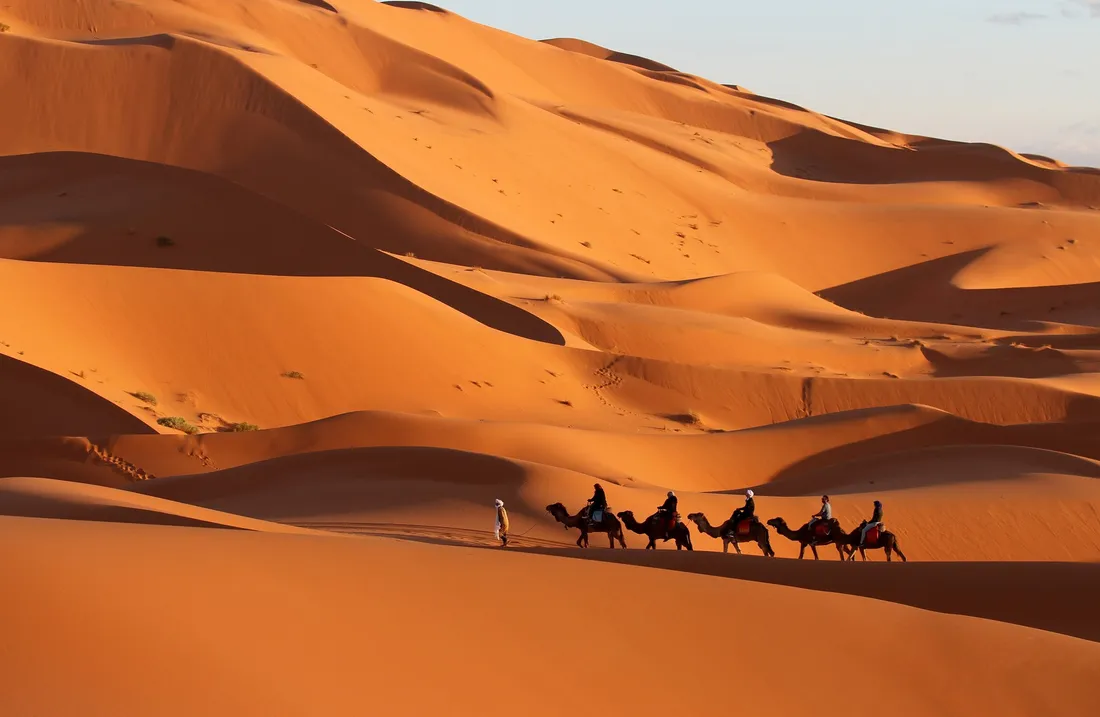
We did not take the familiar northern road to Medina; we turned in the exact opposite direction, south, towards the steep mountain of Thawr. The first thing a mind hunting a fugitive does is look in the direction he has to go; we knew that direction would be watched, so we walked the other way. My daughter Asma climbed those sheer rocks every night at the risk of her life to carry us food. Amir ibn Fuhayra drove his flock of sheep over Asma’s footprints and wiped every trace from the sand; he closed the trail and brought us fresh milk at the same time.

When the killers understood they had been deceived, they sent forward Kurz ibn Alqama, the most legendary tracker in the desert. Reading the least depression in the sand, Kurz came all the way to the mouth of the cave. But that night a spider had spun its thin web across the entrance and a dove had built a nest there. The tracks end here, said Kurz, but if anyone had gone inside this web would be broken, and he turned the party back. What stopped an empire was not a sword; it was a thread of silk.
When the footsteps of the trackers outside struck the rock directly above us, my ribcage was being beaten like an anvil. It was not a human fear. It was the dread that harm might come to the sacred trust carrying the fate of mankind on its shoulders. And at that very moment the Prophet Muhammad turned to me and whispered the consolation that has never aged: do not grieve, God is with us.

At the end of three days Abdullah ibn Urayqit came with the camels, a man not yet a Muslim but the greatest genius of desert navigation alive. Urayqit made a nonsense of the main roads where bounty hunters like Suraqa ibn Malik lay in ambush, and brought the party down to the Tihama coastal strip along the Red Sea. Across that unmapped and salt-crusted angle he hid them in the shade by day, read nothing but the angle of the moon and the stars by night, and delivered the party to Medina by a miraculous route."
In the dim light of the living room, sketches of Mecca and Thawr, desert routes and manuscript pages with the ink barely dry lay scattered across the table. His wife, a philosopher, had just finished reading the vast logistics of the Hijra and this historical testimony given in the voice of Abu Bakr, and her eyes were wet as she put the notebook down.
"Wow," she said, taking a long breath. "From that creeping darkness in Dar an-Nadwa to Ali lying down in the bed, from Asma’s courage to Amir’s genius with the sheep erasing the trail, to Urayqit’s navigation along the Tihama coast, you have made a reader live all of it. You have shown that the Hijra was not only a miracle but an enormous piece of planning at the very summit of human reason and faith. But what are this watch drawing and these photographs doing on the table?"
The writer smiled and handed her the technical drawings from the table.
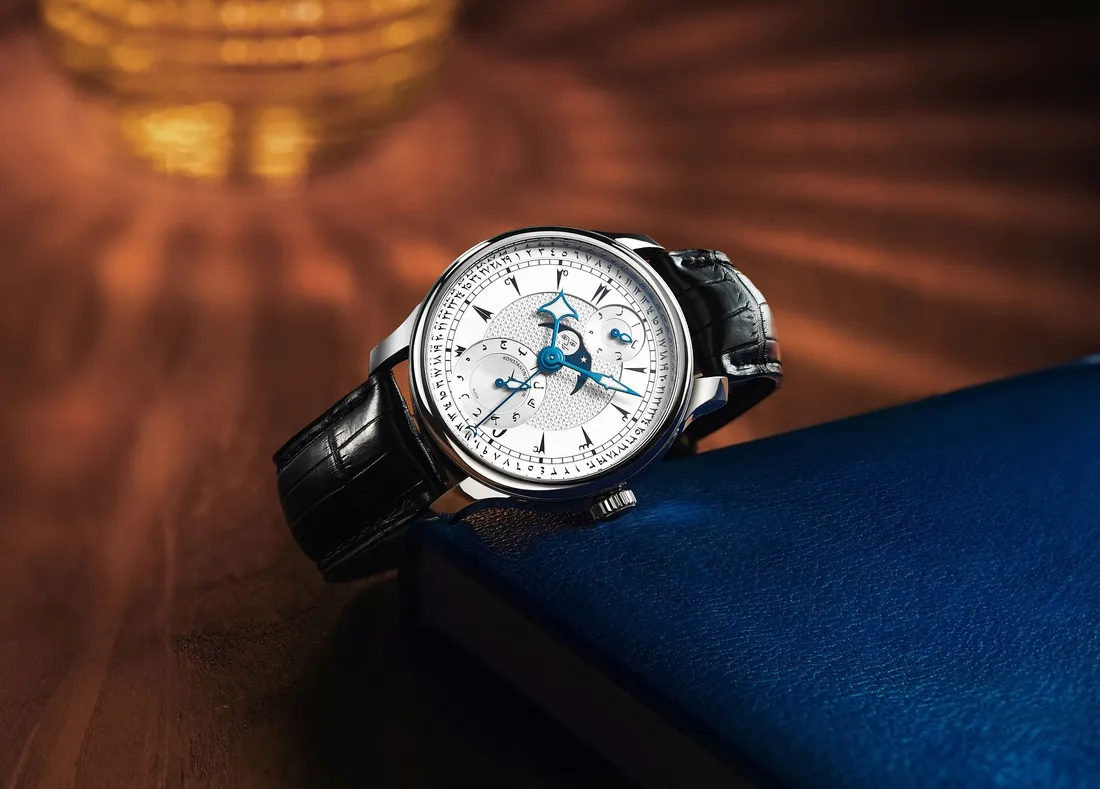
"These drawings belong to the Hijra, designed by the Russian independent watchmaker Konstantin Chaykin. Taking his inspiration from the power of the Hijra to cut human history in two, Chaykin has signed a piece of pure haute horlogerie."
She brought the drawings up close to her eye.
"My God... Look at these hairline lines all over the dial. How is that done?"
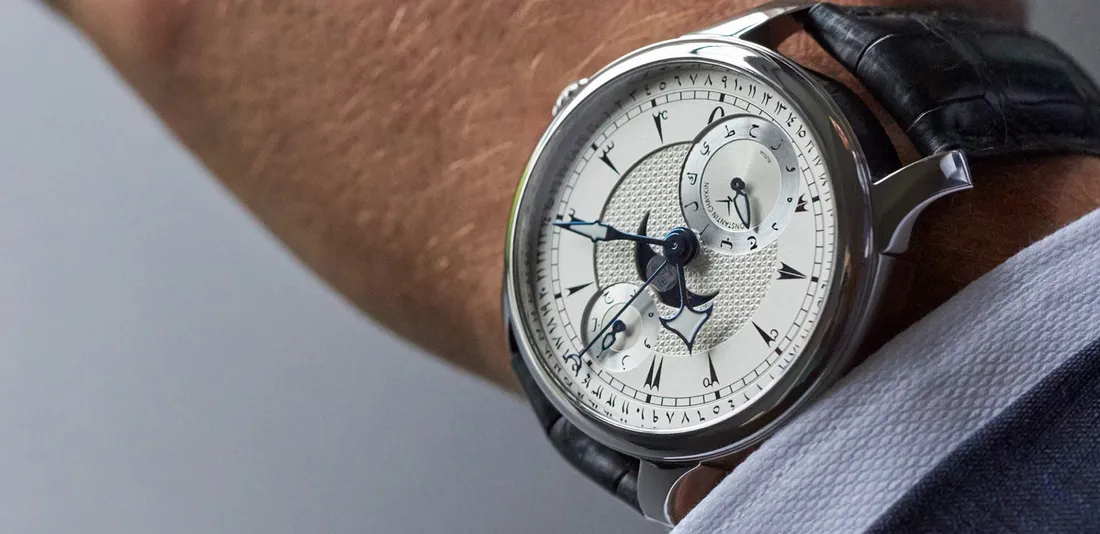
"What you see there is a circular guilloché pattern cut by hand into a silver plate on a machine called a rose engine," said the writer. "The machine is two hundred years old; no electricity, no motor. The craftsman turns a handle, the plate rotates, a fixed cutter comes down on the surface and opens a groove one third the thickness of a human hair. If the cutter slips once, the plate goes in the bin; it is the only decorative technique that accepts no patching. Those fine lines running through one another are the artistic answer, on the dial, to that miraculous spider’s web at the cave of Thawr, the web that stopped Kurz ibn Alqama and protected the history of mankind."
"And the hands? I have never seen a blue like that."
"That blue is not paint. The steel hand is heated in a tray and a transparent oxide film grows on its surface. As the film thickens it bends light differently: first straw yellow, then purple, and at around two hundred and ninety degrees that glacial royal blue. Exactly the physics of the colours on a soap bubble. Take it out of the heat one second late and it turns grey and you start again. These hands stand for the cold night air and the sky of the desert through which Abdullah ibn Urayqit steered the party. Chaykin also shaped the hour hand as the dome of a mosque and the minute hand as a minaret."
She fixed her attention, with a philosopher’s care, on the large aperture in the upper half of the dial.
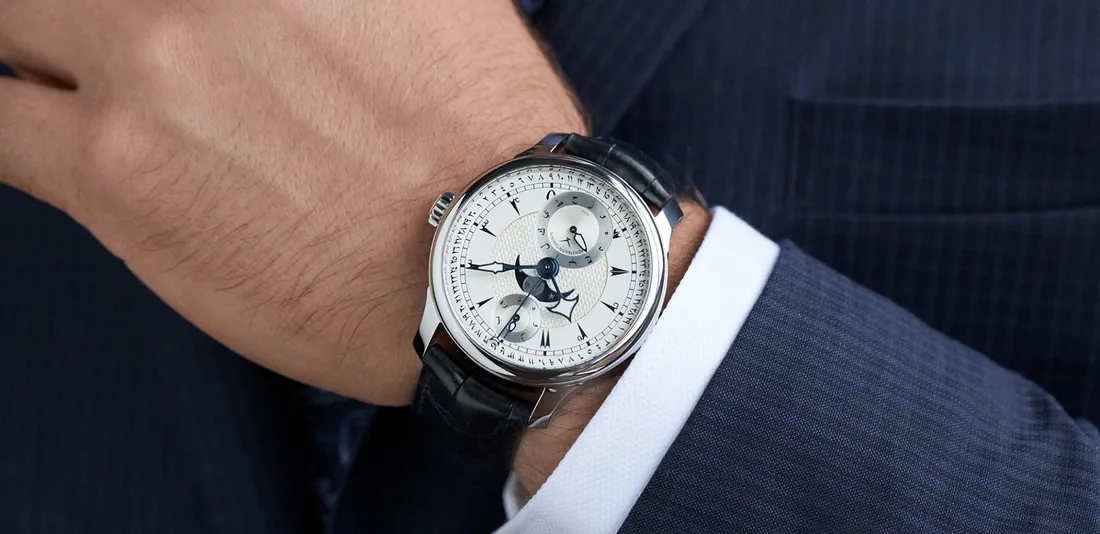
"And this enormous moon?"
"With that moonphase Chaykin has caught the witness that stood in the sky on that sacred night," the writer went on. "Because in the fate of everyone who migrates there is always a moonlight. And beyond that, the watch carries a fully independent mechanical Hijri calendar module that reckons the lunar year of three hundred and fifty-four days, eleven days shorter than the solar one. That is far harder than it sounds. In the Gregorian calendar the length of a month is fixed and can be counted off on the teeth of a wheel; in the Hijri calendar the month is tied to the crescent itself. For a mechanism to count such a thing it has to be built from the ground up on a different arithmetic."
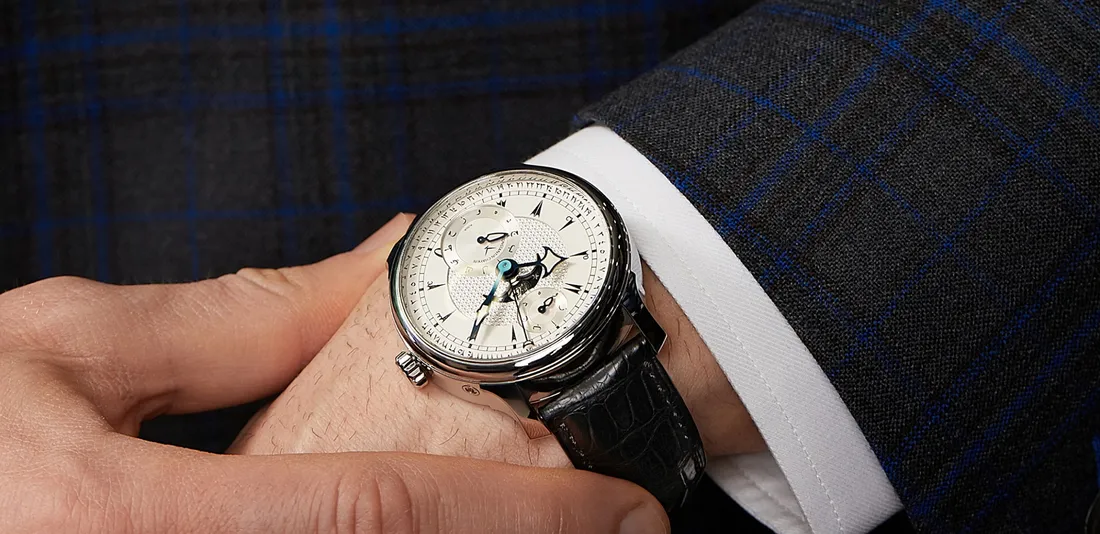
"And is that what the long hand at the edge is for?"
"It carries a crescent at its tip and it sweeps not one Hijri month but two, completing its full turn in a little over sixty days. The two small dials between twelve and six give the day of the week and the name of the month. To glance at a watch and know which Hijri day you are standing in means holding that knowledge without a paper calendar. Which is exactly what Urayqit was doing: he had no map, he had the angle of the sky."
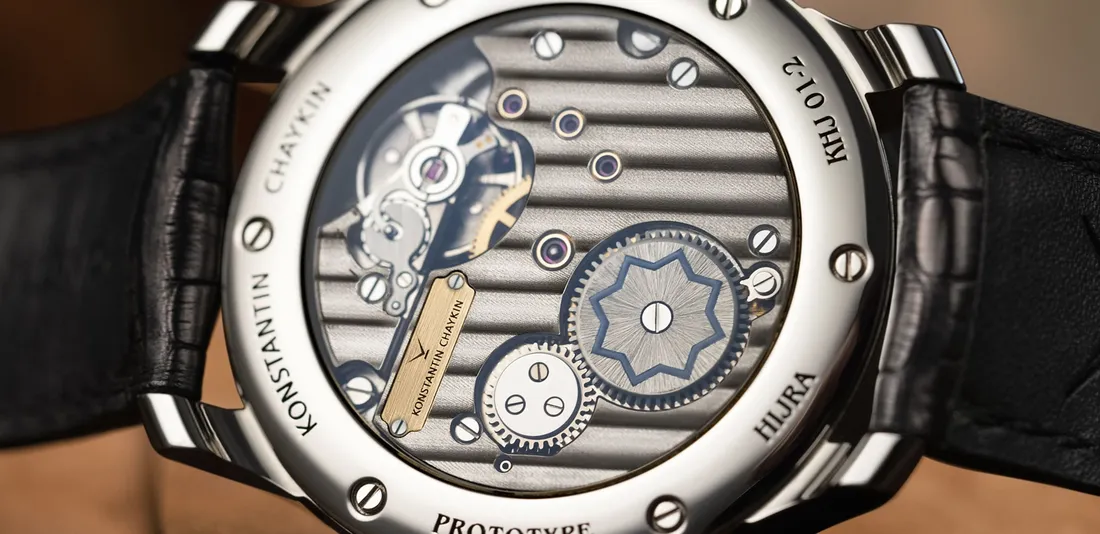
"And the back of the case, and the detail inside the movement?"
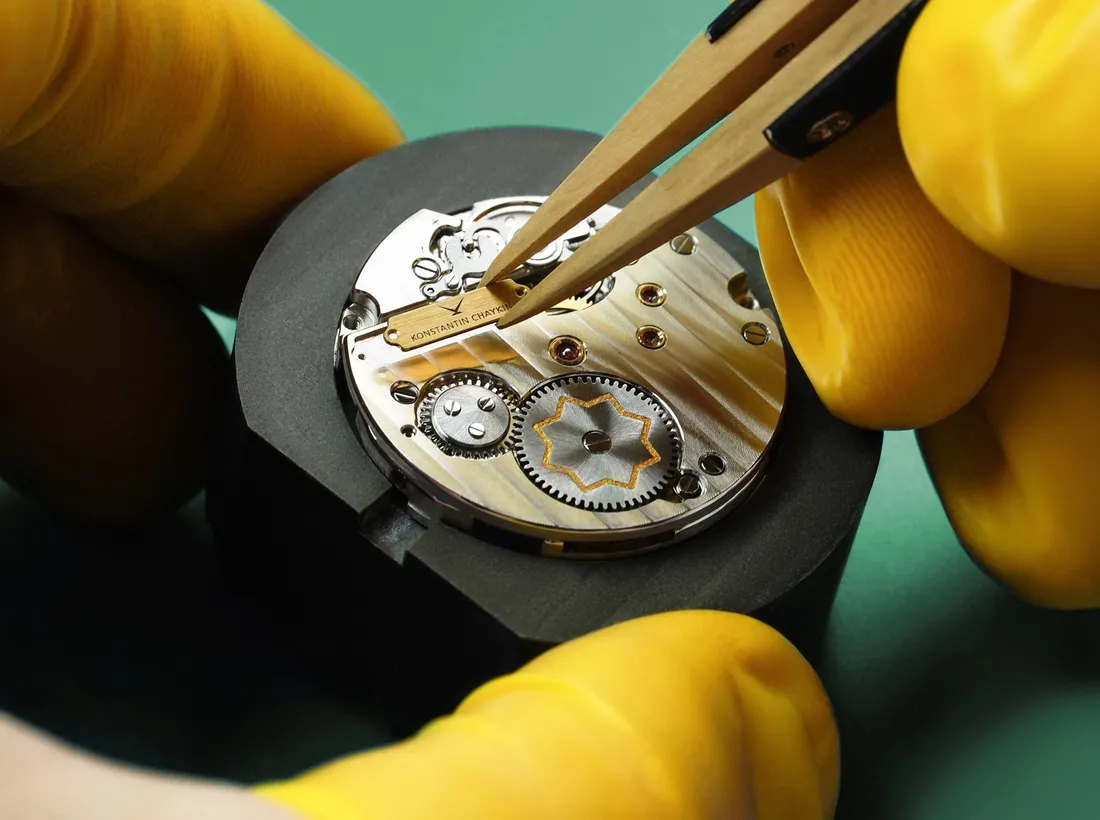
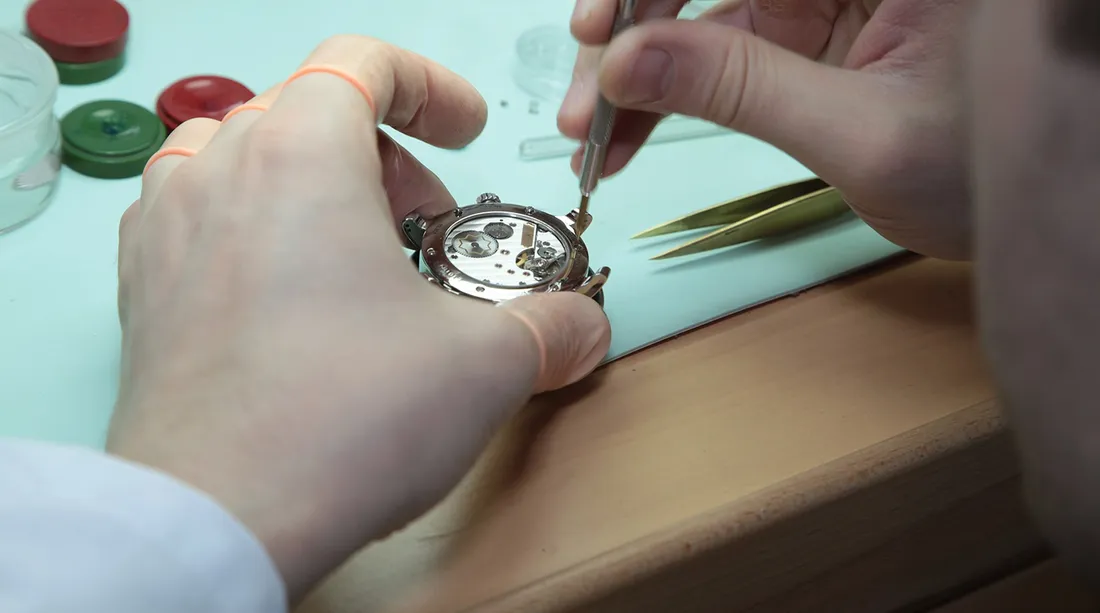
"Through the sapphire in the back of the forty-two millimetre polished stainless steel case you see the calibre K.01-2M. Twenty-one thousand six hundred vibrations an hour, three a second; a forty-eight hour power reserve; entirely hand wound. Its bridges are bevelled one by one by hand and brought to a mirror. The circular graining on the mainplate and the Geneva stripes on the bridges recall, in a micromechanical language, the strategy the Prophet Muhammad had calculated to the millimetre. And the eight-pointed star engraved on the ratchet wheel is this piece’s elegant signature."
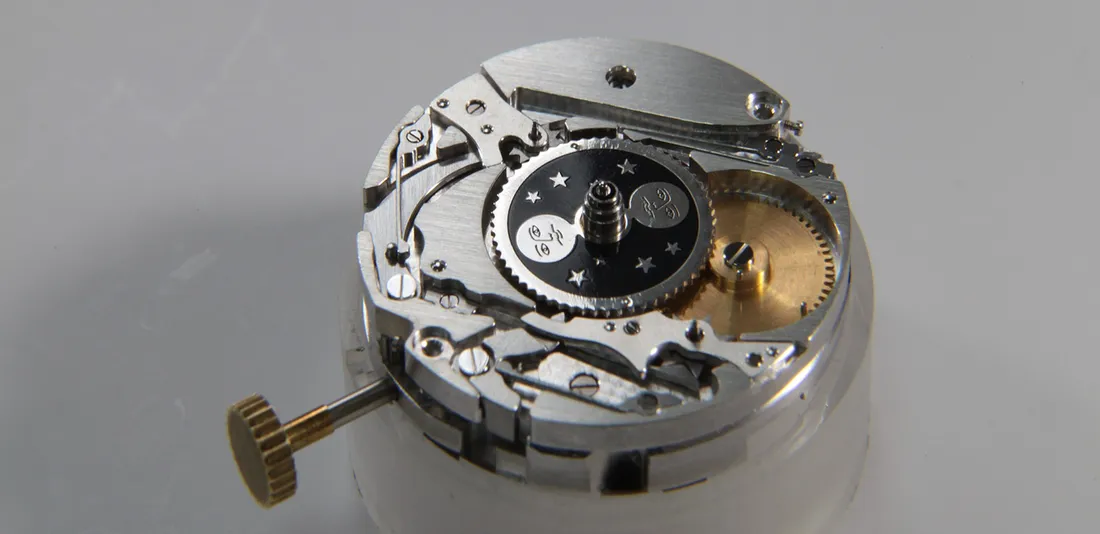
"How many parts?"
"A hundred and ninety-one parts and twenty-one jewels. Its daily tolerance is plus or minus fifteen seconds, which is about seven and a half minutes over a month. It is water resistant to thirty metres, which is not a diving permit but permission to be caught in the rain. And there is a regulating device Chaykin developed himself, known in the workshop as the Pac-Man: a small part that alters the working length of the hairspring in extremely fine steps and takes its name from looking like a circle with its mouth open. Setting the rate of a wristwatch is like tuning the string of a guitar; the Pac-Man is the most delicate version of that tuning peg."
"How many people make it?"
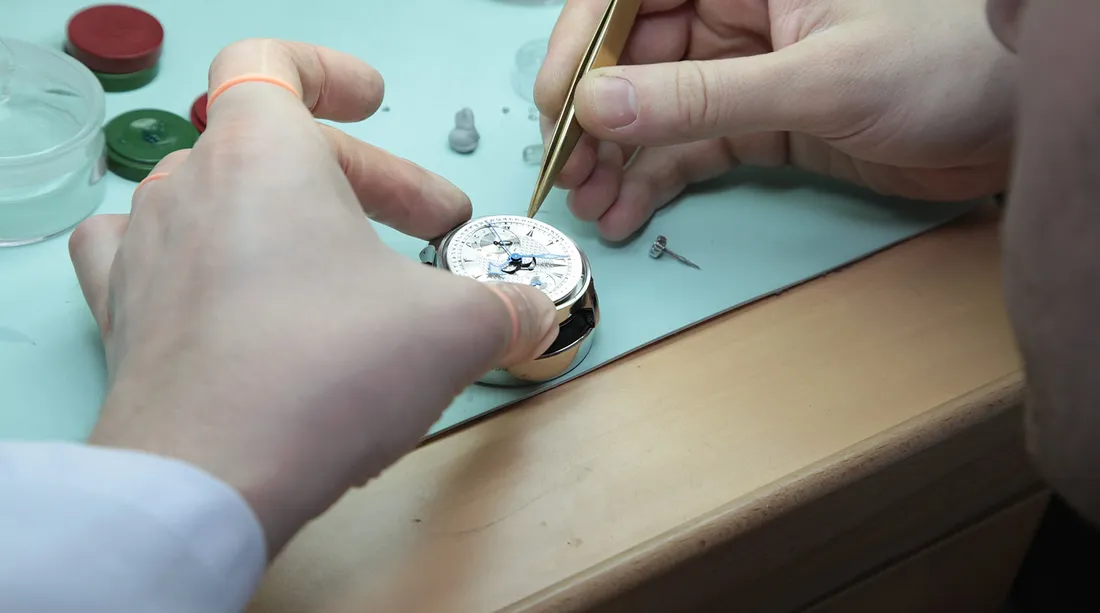
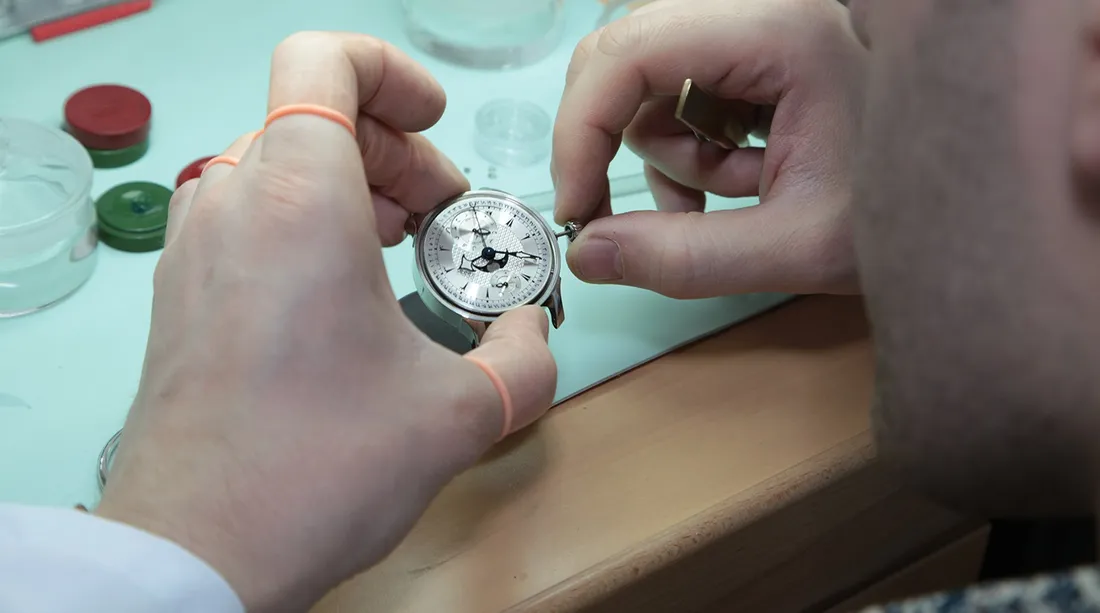
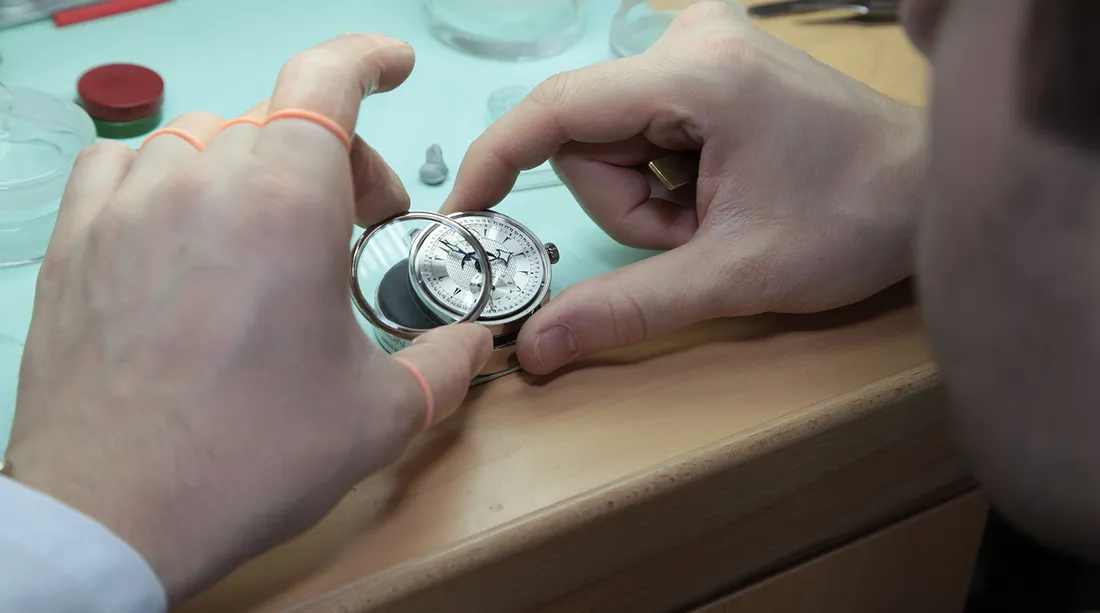
"His own workshop in Moscow. And the whole point of the watch is this: at this scale no mistake can be taken back. Tighten a screw a quarter turn too far and the bridge bends; a bent bridge puts the wheel centres out of line, and the moment they are out of line the watch stops. While the dial is being set even the touch of a fingernail leaves a mark, and that dial can never be used again, because guilloché is not painted and accepts no retouching. If your hand slips a millimetre while fitting a hand, there is a scratch across the dial and weeks of work go in the bin."
"So there is no margin."
"There is no margin. Nor was there at the mouth of the cave. Had one thread broken, the story would have ended differently."
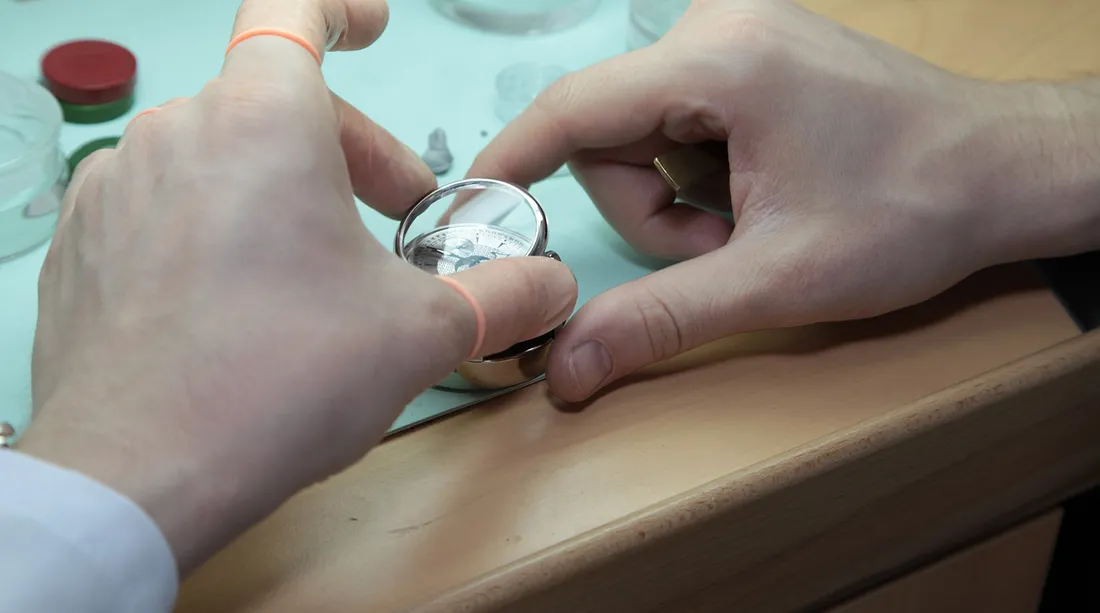
Smiling, she laid the manuscript notes and the photographs of the watch side by side.
"So the sacred journey that Abu Bakr and the Prophet Muhammad began at Thawr, and that Urayqit guided along the coastal roads, has turned today into a timeless mechanical art among Chaykin’s wheels, his silver guilloché dial and his blued hands."
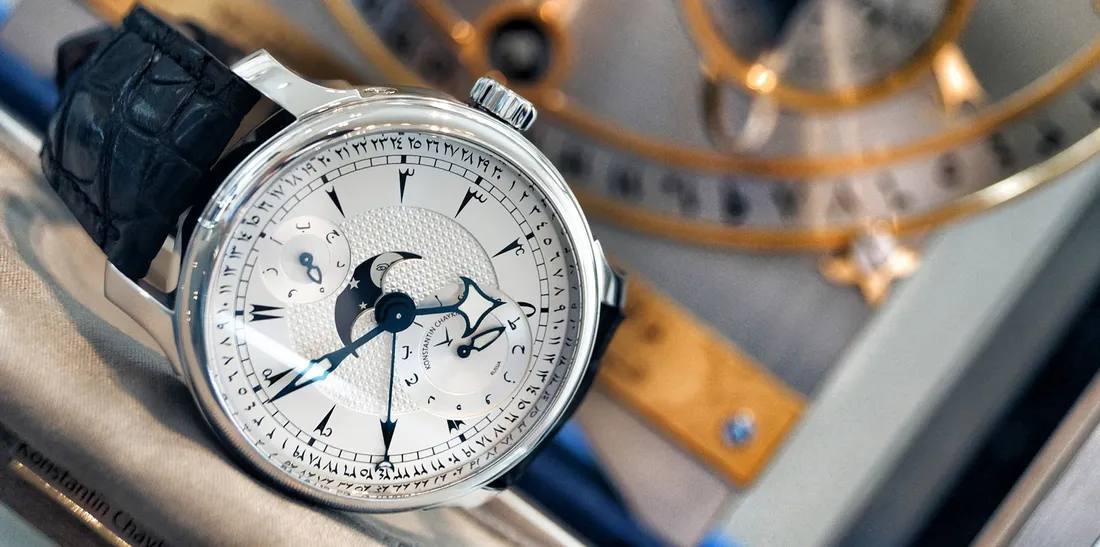
"Exactly so," said the writer. "One of them a turning point that changed the fate of history and of souls; the other the deepest bow the mechanical world has offered to that turning point. One erased the tracks in the sand, the other engraved those tracks into silver."
format_quote"In the fate of everyone who migrates there is always a moonlight."
format_quote"What stopped an empire was not a sword; it was a thread of silk."
Hasan Bekmezci