Two Filters in a Photographic Studio
In a small photographic studio in Copenhagen, two polarising filters lay side by side on the bench. The optical physicist Dr. Iris Lund picked one up, laid it over the other and turned it slowly: the light dimmed, dimmed further, and at a certain angle was cut off completely.
"The same trick every time," said the photographer Theo Marsden. "Two pieces of glass, both transparent, and black when you put them together."
"Not a trick, a selection," said Iris. "The first filter passes only the part of the light that oscillates in one direction. Turn the second one ninety degrees and there is nothing left to pass."
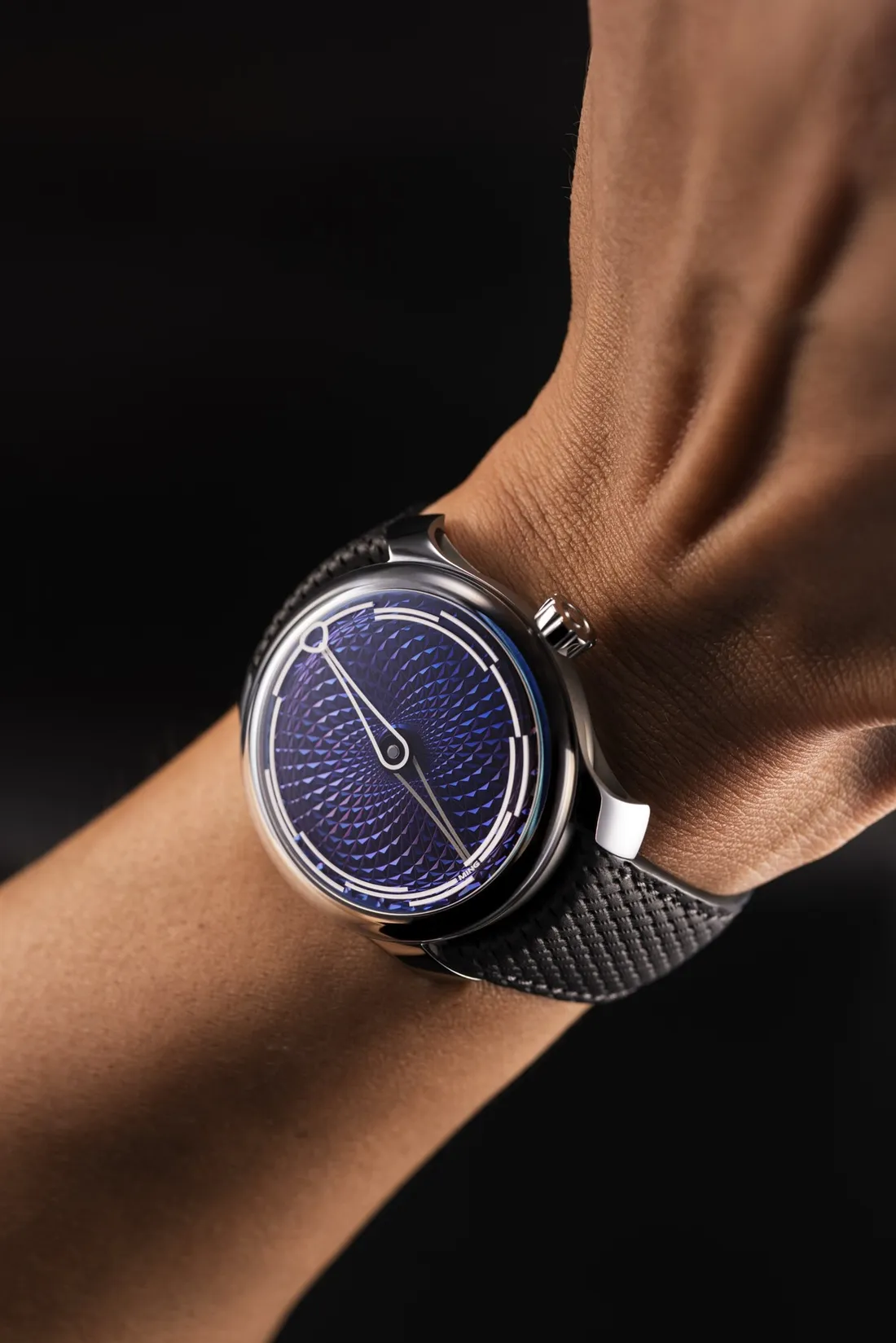
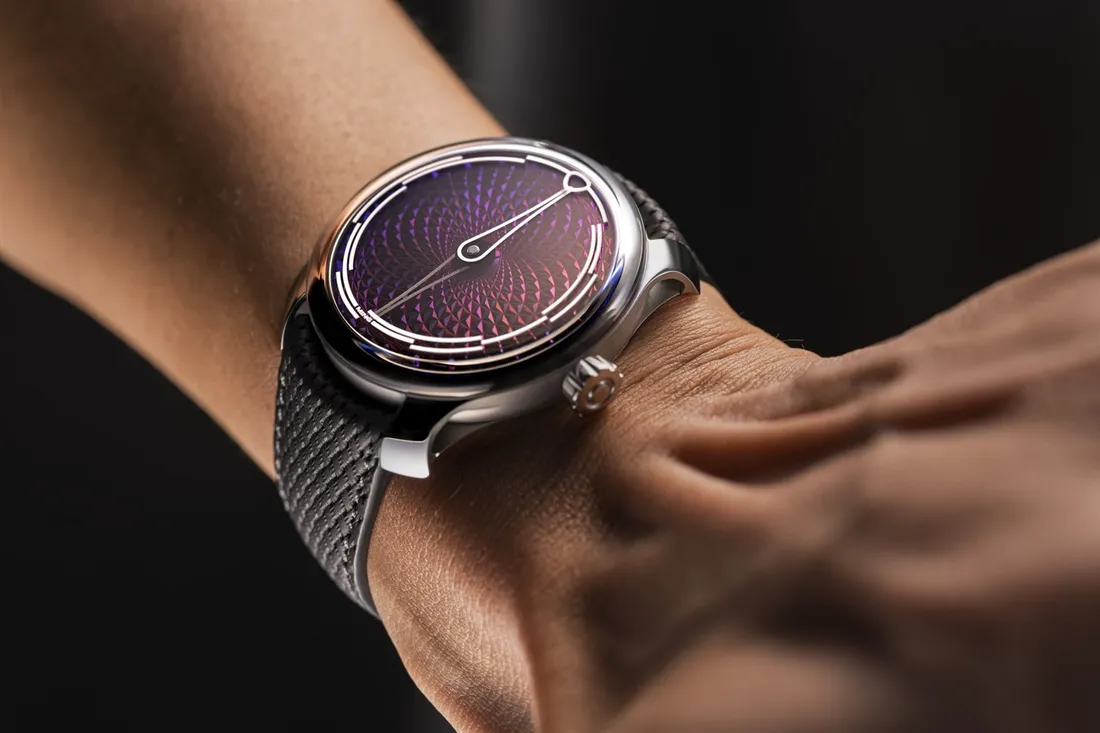
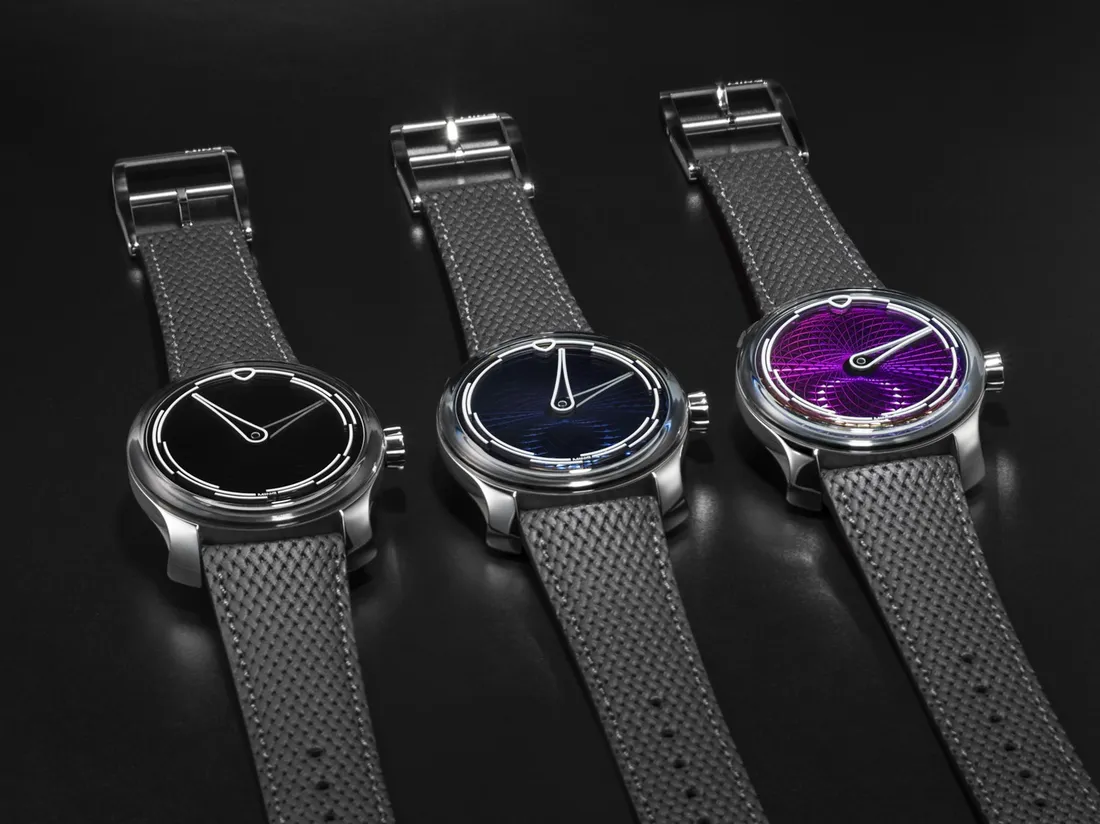
Theo held out his arm: "Then explain this. The dial of this watch changes colour depending on where you look from, and the hands sometimes disappear."
Iris looked at the watch and straightened up: "What is this?"
"The MING 29.06 Peepshow," said Theo.
Why the Dial Changes Colour
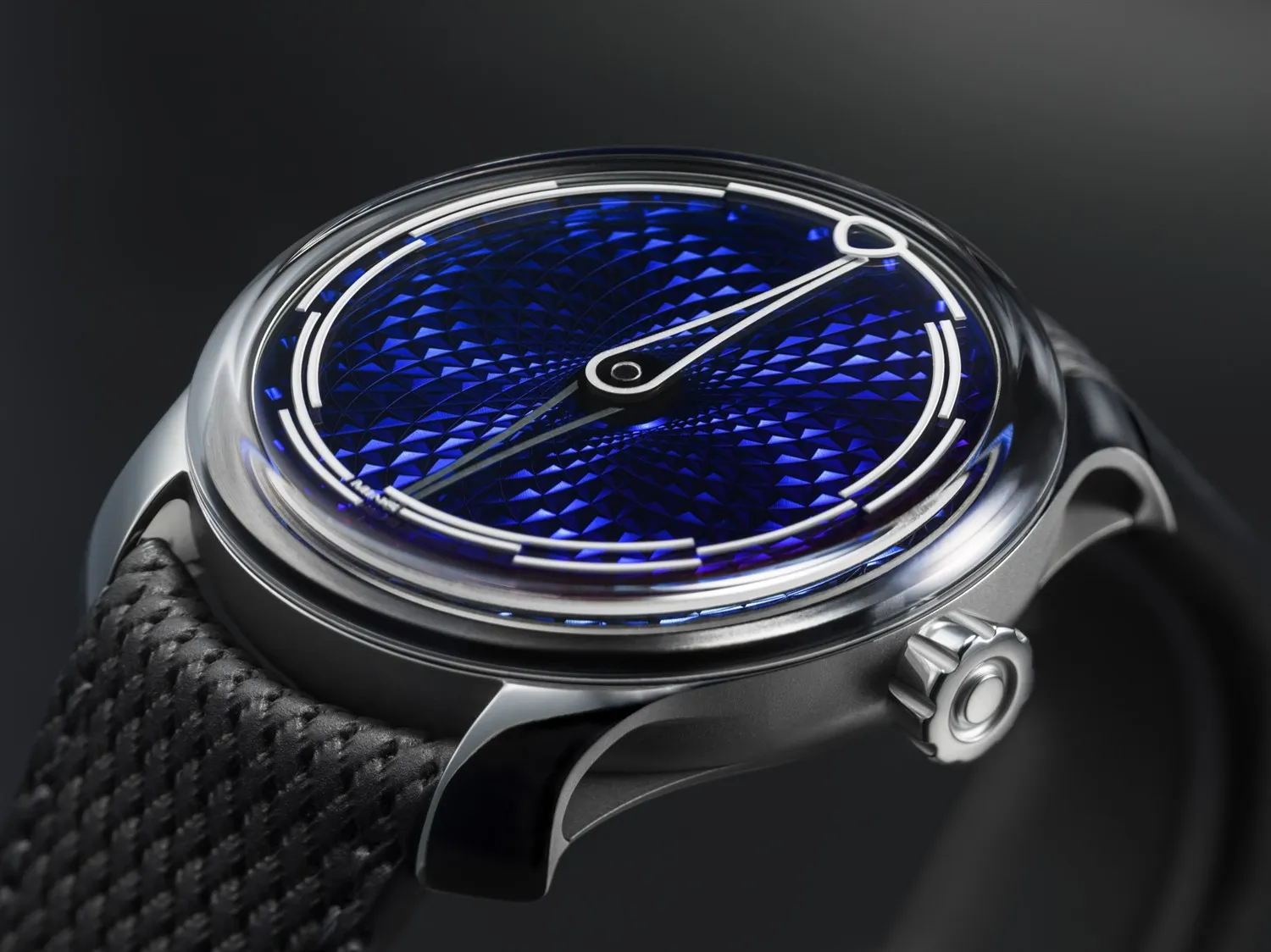
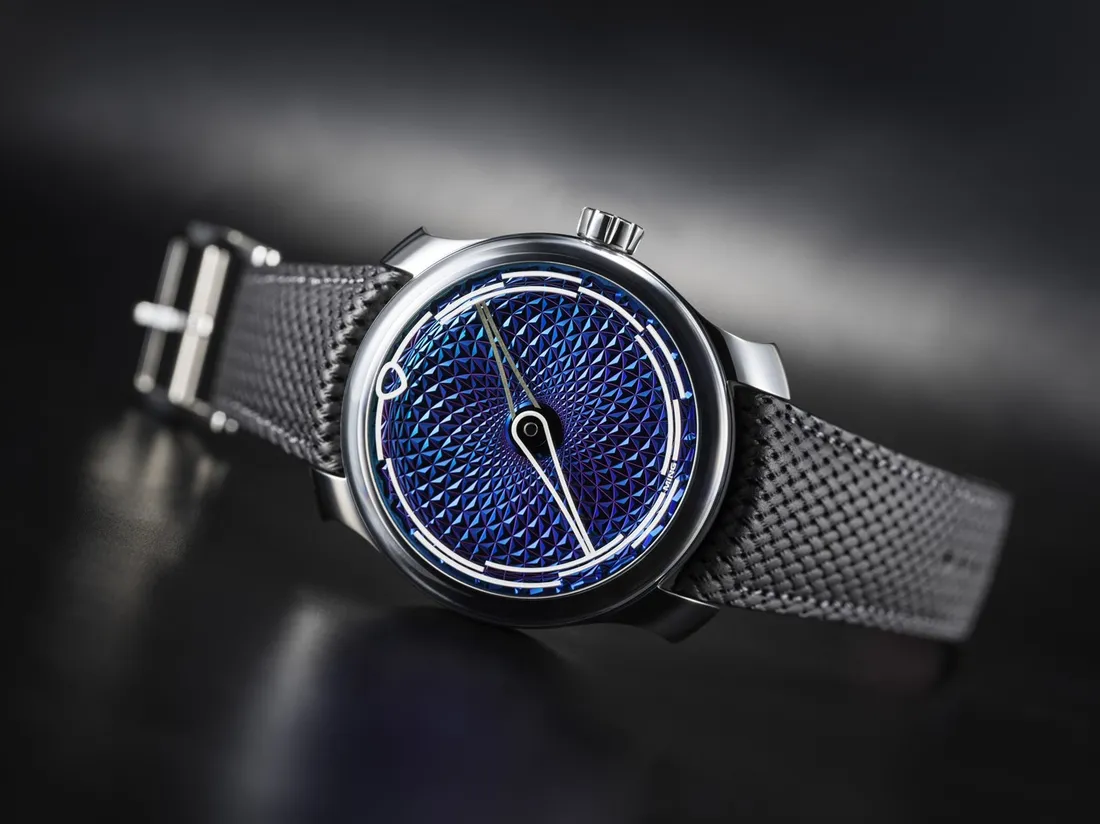
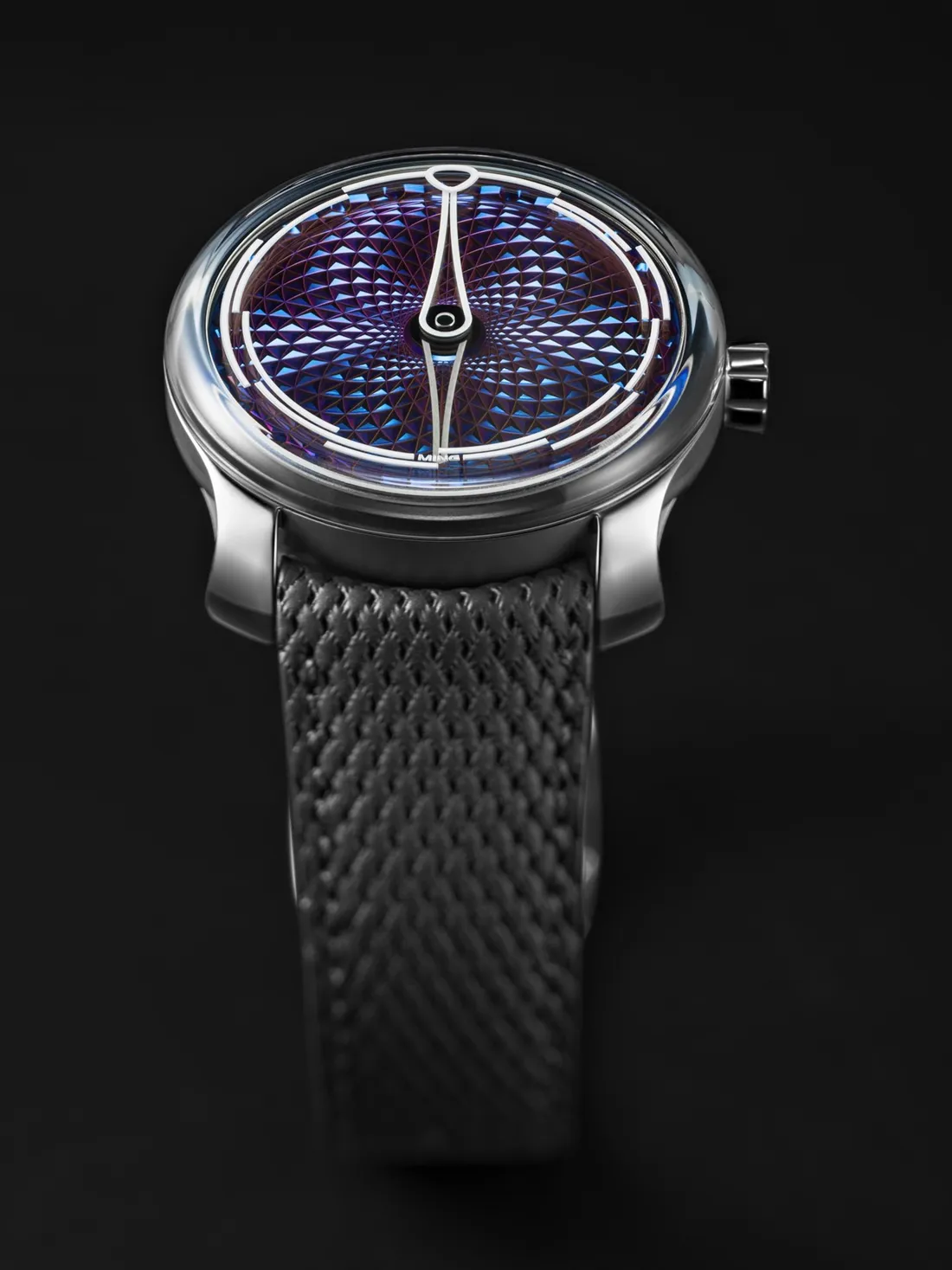
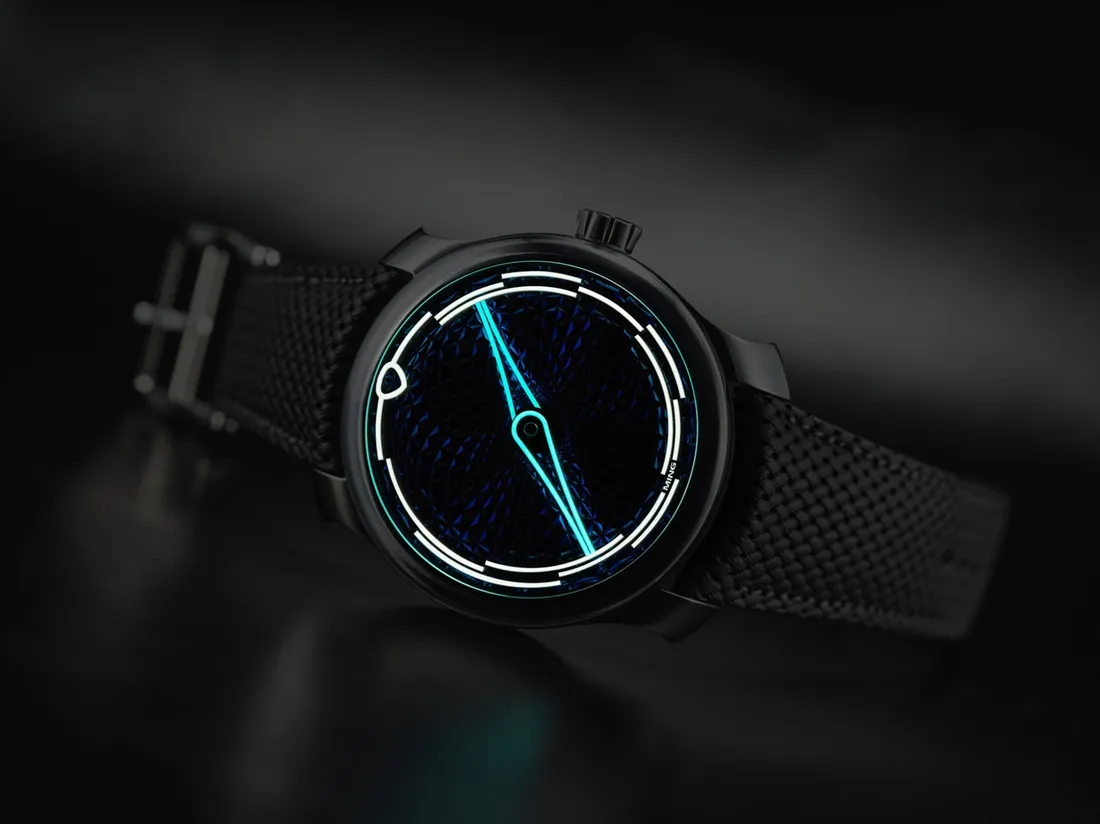
"Two separate things work together," said Theo. "The first is the dial itself: a CNC machined guilloché metal dial with a multiphasic coating on it. That coating returns light at different wavelengths depending on the angle it arrives at; which is why the blue sometimes turns violet and the violet sometimes turns almost black."
"Thin film interference," said Iris. "The same family as a soap bubble. And the hands?"
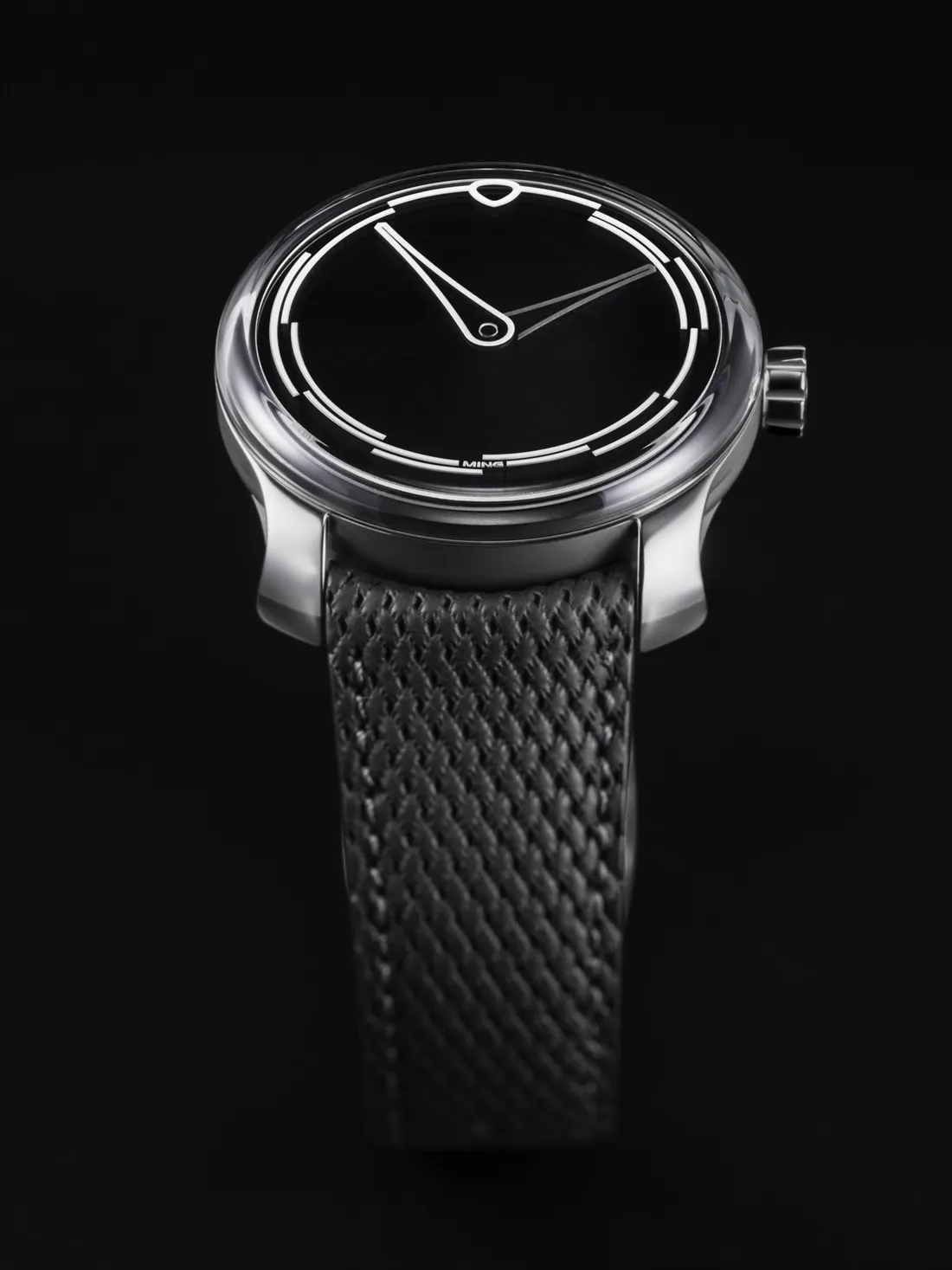
"That is the second thing. They are not hands as we know them; they are polarised discs made of sapphire. So what turns over the dial is not a stick but a small cousin of the filter on your bench. As the disc turns, which light it passes at which angle changes, and the hand becomes bright, then faint, then invisible."
Iris was quiet for a while: "So a watchmaker has used the polarisation of light to make you read the time. That is not painting a dial; it is turning a dial into an optical instrument."
"It works in the dark too," Theo added. "There is Super-LumiNova on the discs."
format_quote"A watchmaker has used the polarisation of light to make you read the time. That is not painting a dial; it is turning a dial into an optical instrument."
Dr. Iris Lund, optical physicist
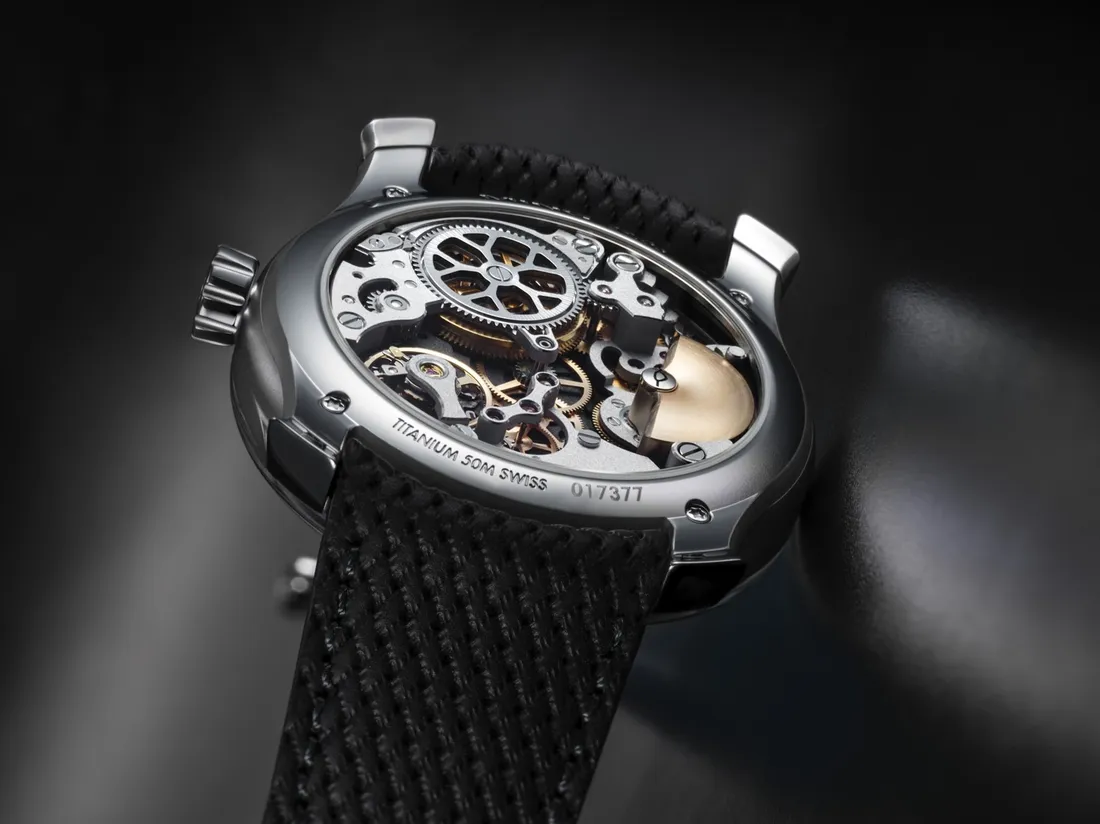
A Titanium Case and a Micro-Rotor
Iris took the watch in her hand: "It is light."
"Grade 5 titanium," said Theo. "Forty millimetres across, eleven point eight high. There is no bezel; a deep box sapphire crystal sits directly on the case, and the back is domed sapphire too. The lugs are the brand's signature, thin blades springing off the body. Water resistant to fifty metres."
"What is inside?"
"The ASE 200.M1 calibre made for MING by Schwarz-Etienne. Automatic, but the rotor does not cover the front: a micro-rotor in tungsten. Twenty nine jewels, a skeletonised barrel, adjusted in five positions and about eighty six hours of power reserve."
"Fifty pieces are being made," he added. "Twenty two thousand francs excluding taxes, with deliveries from this summer."
Iris put the watch down and smiled: "I am taking this into my lecture tomorrow. It is the shortest way to explain polarisation."