The Darkness at the Nautilus Window
In the depths of the ocean, in those bottomless waters where sunlight has long since died and given way first to a majestic blue and then to an ink-black darkness, the legendary submarine Nautilus glided in silence. Captain Nemo stood before the great observation window of his salon, gazing upon a world untouched by human hand: forests of coral, shoals of phosphorescent fish, the ghosts of sunken ships.
Then the water went utterly black. A vast shadow, a giant squid whose arms were as long as a ship's mast, pressed down upon the glass. The crew rushed onto the deck with axes; one of the men vanished in an instant among those terrible arms. This was the most unforgettable scene of Twenty Thousand Leagues Under the Sea, which Jules Verne wrote in 1870.
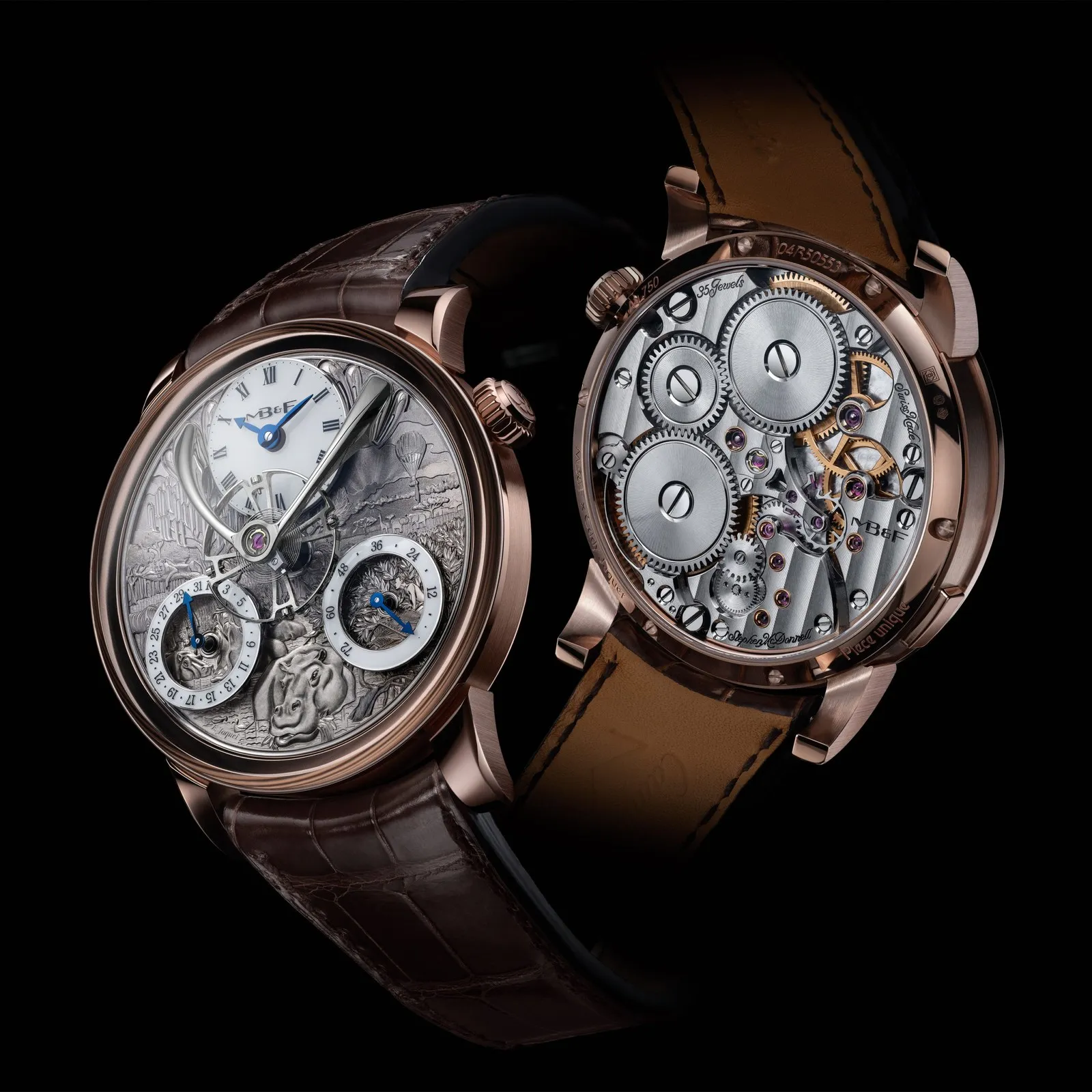
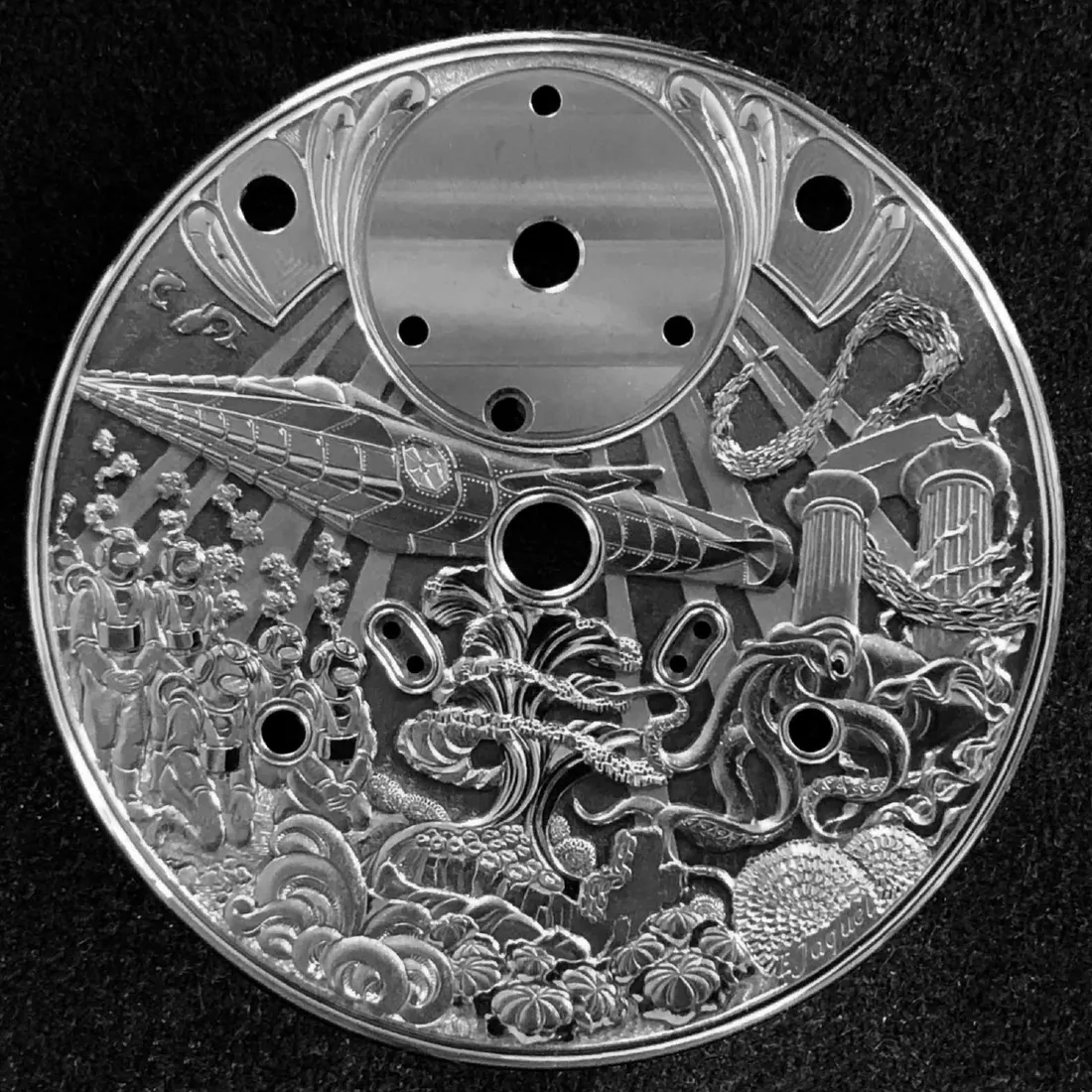
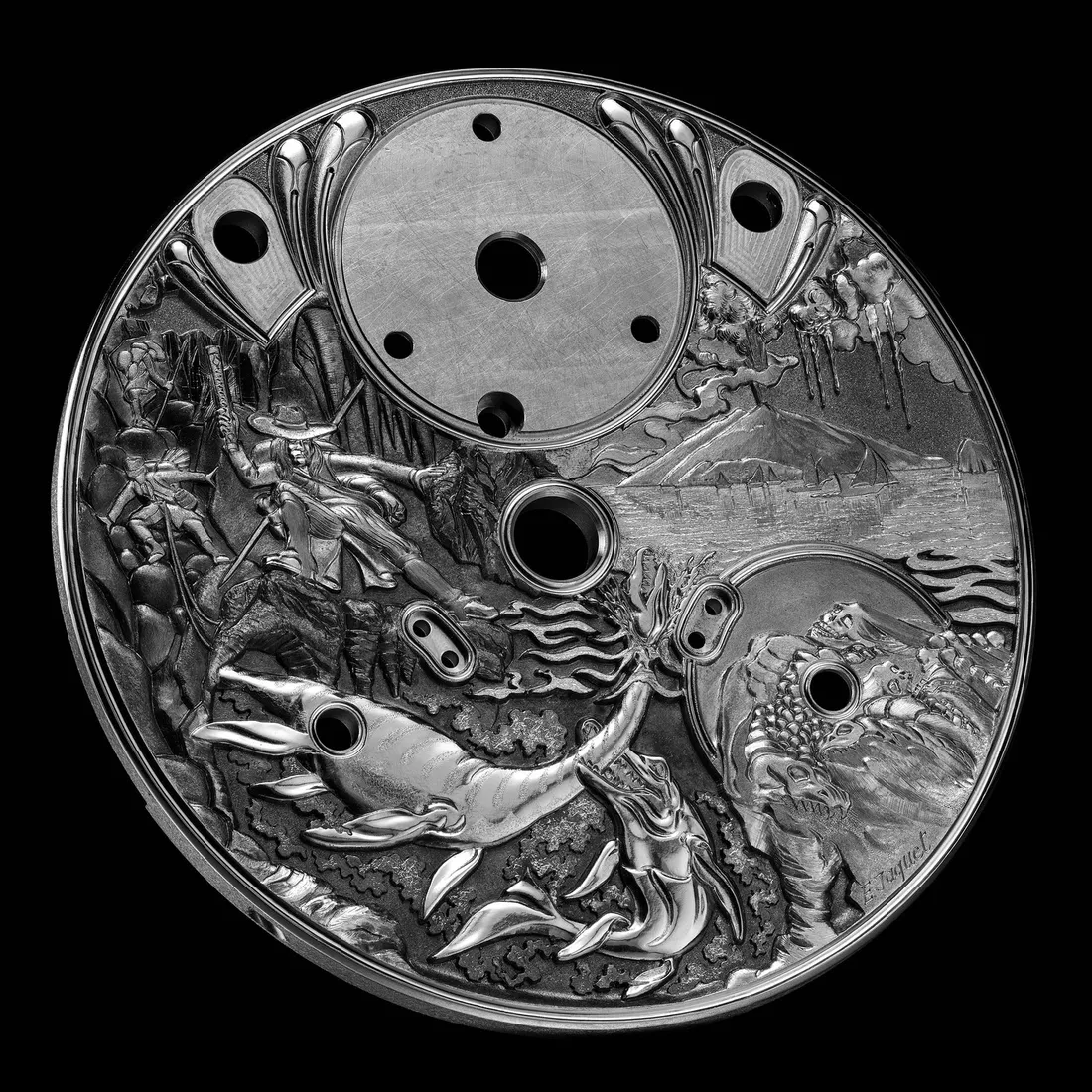
But wait. We are not reading this scene to you from the yellowed page of a book. This forest, this submarine, this giant squid, all of it has been carved by hand, one stroke at a time, into a plate of white gold no larger than a coin. And that plate rests directly upon the movement of a wristwatch. Meet the extraordinary work born of the meeting between MB&F and the maître-graveur, the master engraver, Eddy Jaquet.
Had It Been Founded 150 Years Ago
MB&F, Maximilian Büsser & Friends, is one of the most unconventional and creative workshops in the world of watchmaking; in its own words it makes not watches but time machines. Yet the brand's Legacy Machine collection looks less to the future than to the past. Founder Maximilian Büsser puts it this way: the Legacy Machine is, in truth, the watch I would have created had MB&F been founded a hundred and fifty years ago.
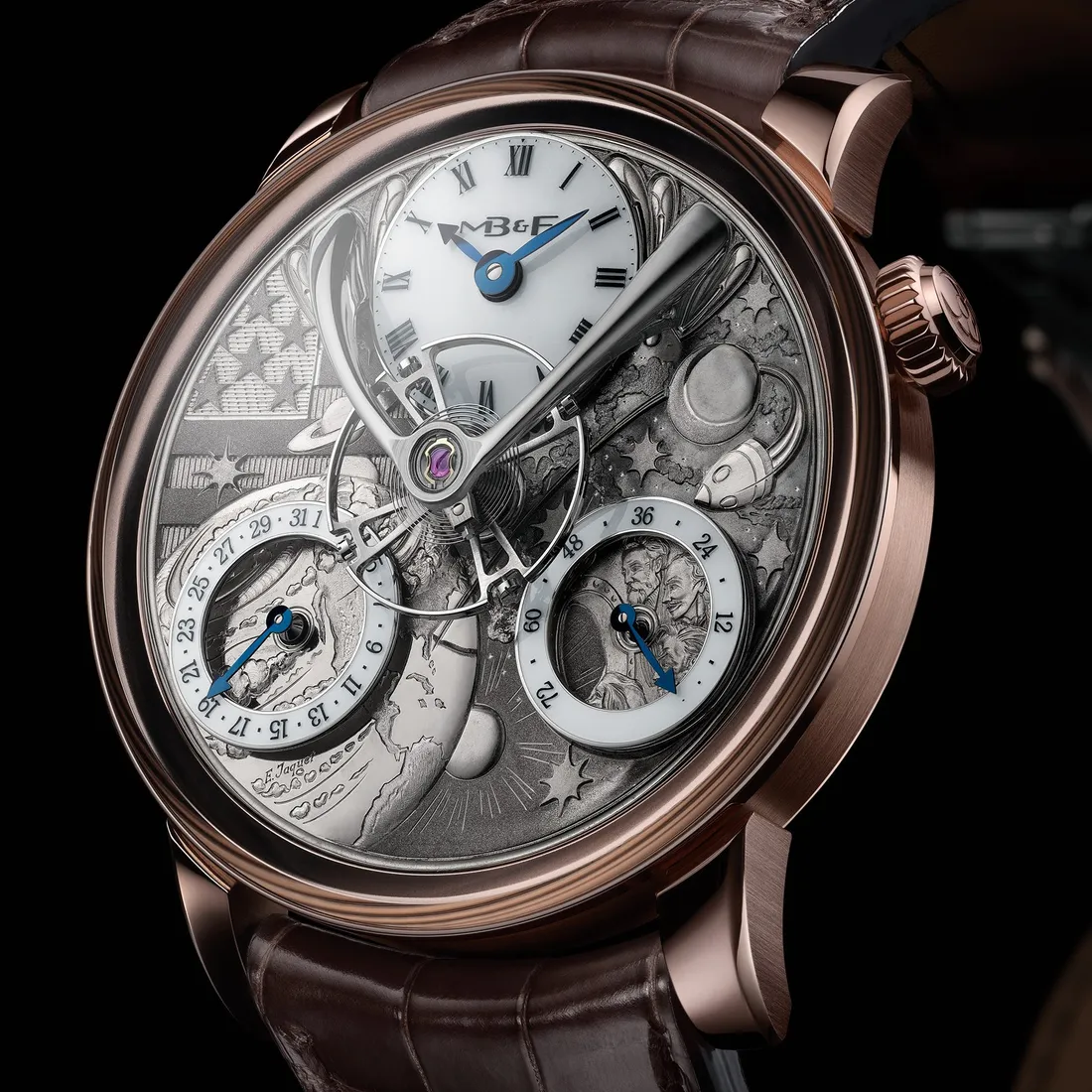
One day, brainstorming around the table, a theme came to Büsser at once, for by his own admission he is deeply in love with science fiction. No choice could have been more natural than Jules Verne, the prolific nineteenth-century French author regarded as the father of science fiction. So was born the Performance Art series, in which MB&F for the first time placed a traditional artisan at the very centre of the stage: eight unique pieces, each devoted to a novel by Jules Verne. Eight Pièces Uniques.
Playing Für Elise on a Stradivarius
In fact, Eddy Jaquet had been working for MB&F for years. That elegant flowing signature script that runs across the movement of every Legacy Machine came from his hand. But for Büsser this was next to nothing beside the master's true gift. It is here that he makes his famous comparison:
“We've worked with Eddy for years, but getting Eddy Jaquet to engrave names on movements is like playing Für Elise on a Stradivarius violin; you couldn't imagine a more modest use of such an amazing gift.”
Why does he say this? Because a Stradivarius is a priceless instrument built for concertos in the most masterly of hands; to use it merely for a simple exercise is to put that genius in chains. And so MB&F unbound Jaquet's chains and gave him an entire canvas. Because it offered the widest possible surface for the scenes to be engraved, the model with the most open, most spacious plate in the Legacy Machine family was chosen: the LM Split Escapement.
The Master from Boudry and the Unseen Techniques
So what made these hands so exceptional? Eddy Jaquet was born and raised in the small town of Boudry, in the canton of Neuchâtel, one of the cradles of Swiss watchmaking. Between 1981 and 1986 he trained as a mixed engraver at the School of Applied Arts in La Chaux-de-Fonds, learning the whole art of engraving precious metals, steels and alloys.
Perhaps the most formative years of his career were spent from 1990 to 1994 at the Huguenin medal workshop in Le Locle. There he engraved the steel dies used to strike medals, coins, coats of arms and insignia. To engrave the die for a coin is the hardest school of relief art, for you must build a world beneath the millimetre in reversed, negative depth. In those same years he also took up traditional grand feu, or great-fire, enamelling. In 1994 he became fully independent; his passion for theatre, history, painting and classical music has been an inexhaustible source of inspiration. Today the summits of independent watchmaking, names such as Parmigiani, Voutilainen and Christophe Claret, seek out his burin; and since 2007 he has presided over the panel of experts for Switzerland's federal engraving diploma examinations.
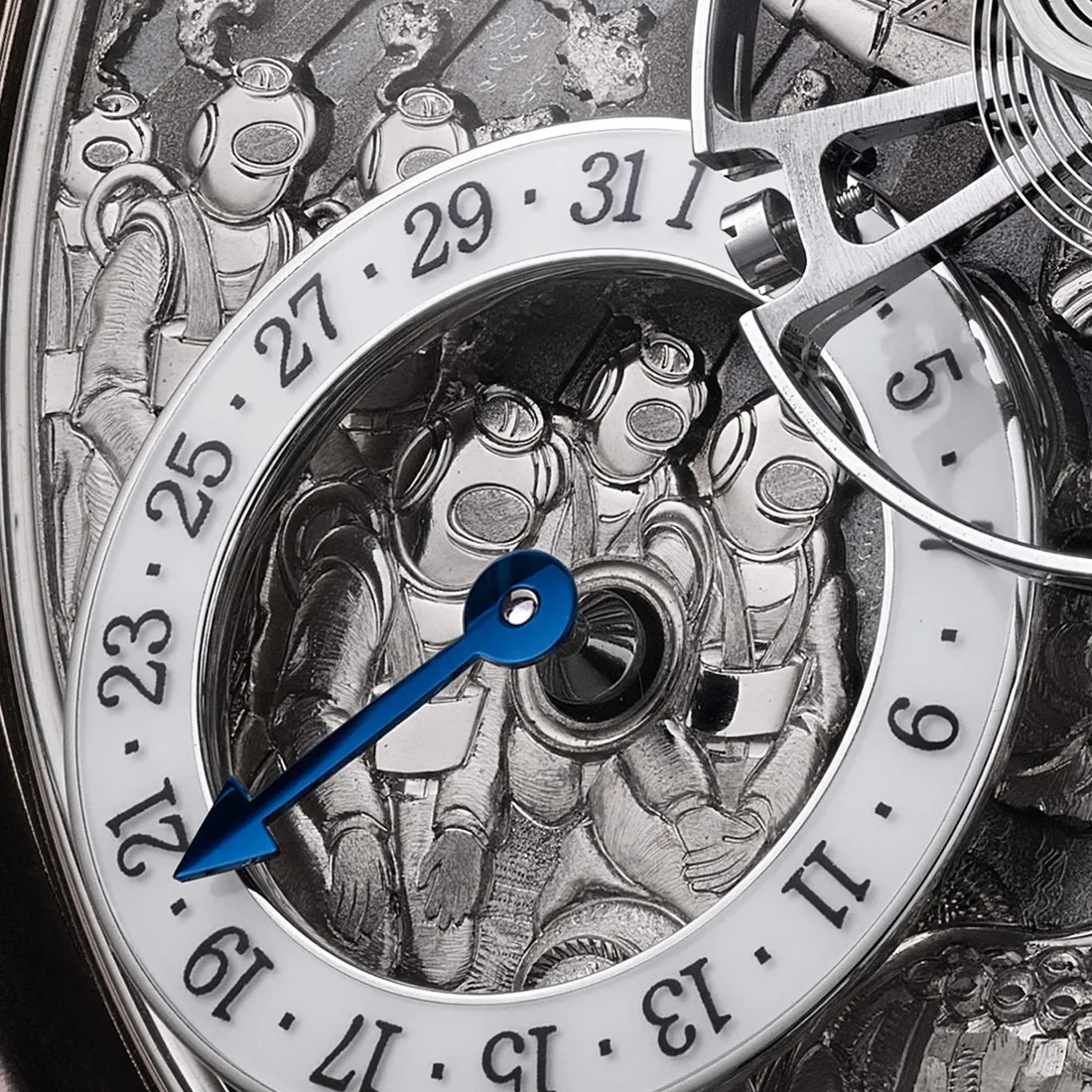
How does he work? For each piece, Jaquet first reads, or re-reads, the Jules Verne novel in question, studying the original engravings of the first editions and even the films. He then draws his own original sketches onto a full-scale template of the plate, sometimes weaving several scenes into a single plate like a tapestry of storytelling. Then, pushing the steel graver known as the burin with the palm of his hand, he begins to carve the white gold under a microscope. He raises his figures by cutting away the background; this is bas-relief, or low relief. Depth and perspective are born of the angle and depth of the cut changing by a thousandth of a millimetre. And here lies the true secret: to create the shadows, Jaquet applies a dark rhodium alloy by hand to certain areas, adjusting the tone of each detail to suit the scene. Thus, upon the silvery gold, light and shade appear as though you were looking at an old engraved print.
Zero Margin for Error and the Invisible Escapement
And here is the most terrifying part of the work. Jaquet engraves not a blank sheet of copper, but the finished, functioning white gold mainplate of the watch, into which hundreds of hours of labour have already gone. There is no undo. A single slipping burin, a single trembling hand, can turn that piece of gold, over which the watchmakers laboured for weeks, into scrap in an instant. When you write a novel you may erase a sentence and set it down again; when you engrave a novel into gold, every line is drawn for the first and the last time.
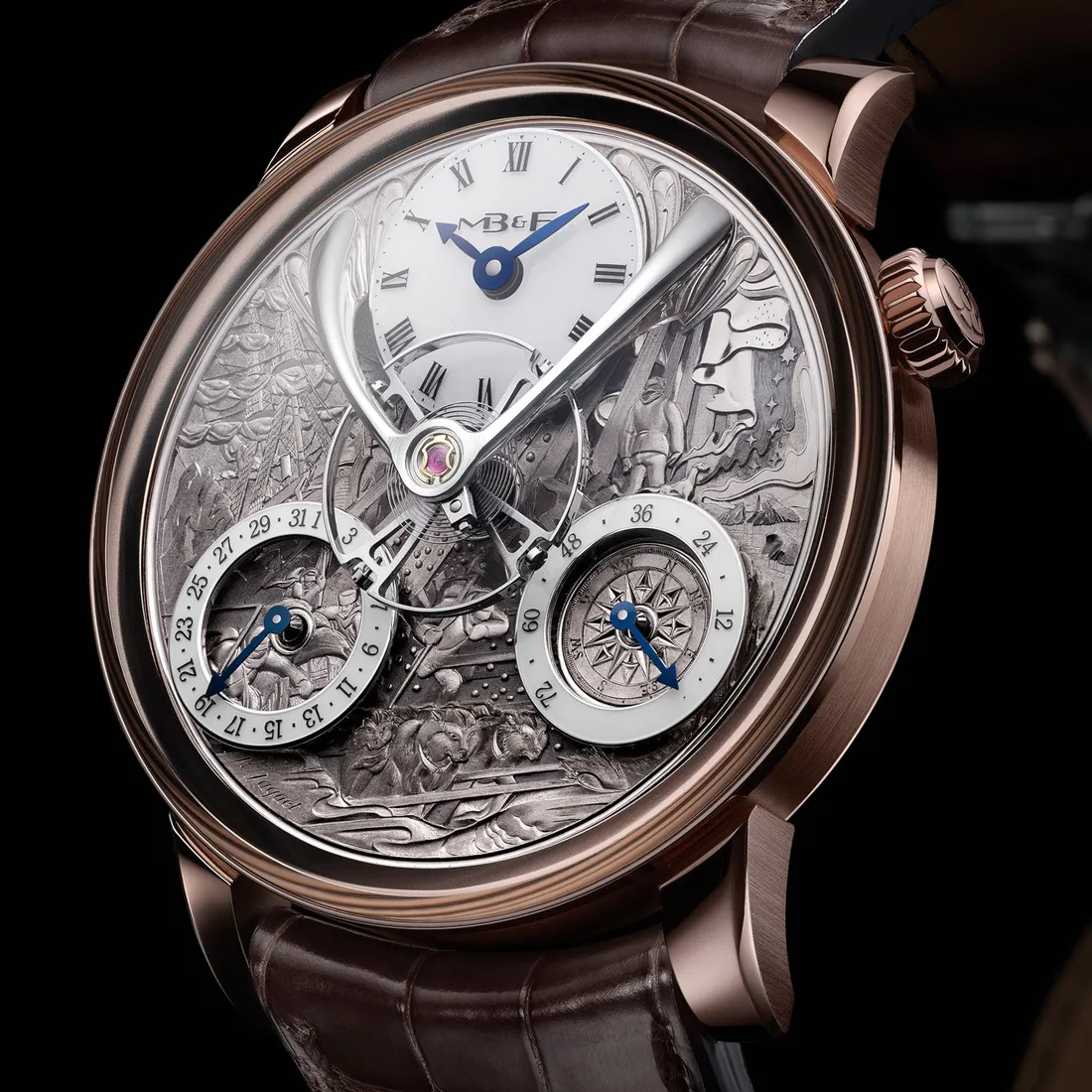
The machine upon which these epics are inscribed is no less extraordinary than the engraving. The great magic of the LM Split Escapement is that large balance wheel suspended in the air above the dial; it seems to oscillate of its own accord, as if there were no visible source of energy. Its secret is hidden in the name split escapement: the anchor and escape wheel that regulate the balance are placed on the very opposite side of the movement, out of sight. Two separate faces beat as a single heart.
This heart of celestial slowness beats only eighteen thousand times an hour, at a calm rhythm of 2.5 hertz. Twin barrels give it a full seventy-two hours of power reserve; two hundred and ninety-six components and thirty-five jewels work in harmony within a forty-four-and-a-half millimetre case of 5N+ red gold. The architect of the movement is the master watchmaker Stephen McDonnell, the man who gives the Legacy Machines their soul.
Eight Novels, Eight Fates
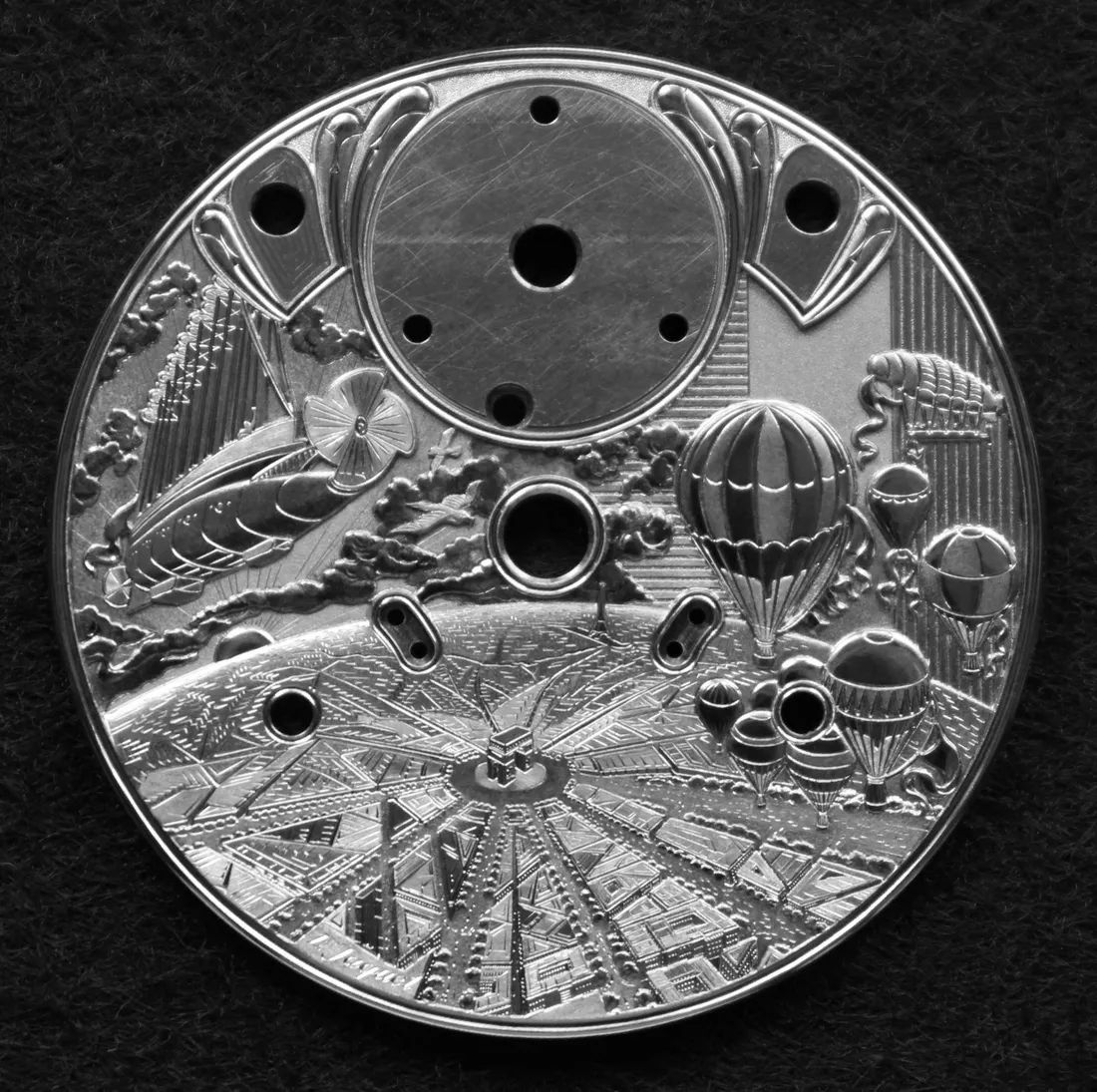
And over nearly three years, Jaquet carved eight different worlds of Verne onto this machine, each one single and unique. The voyage began in 2019 with Five Weeks in a Balloon: a balloon gliding over the skies of Africa and the wild savannah stretching beneath it. Then came From the Earth to the Moon, that audacious projectile fired into space from the mouth of a cannon. In Michael Strogoff, an epic of honour and betrayal upon the snowbound steppes of Siberia; in Journey to the Centre of the Earth, an expedition descending from the heart of a volcano to the prehistoric seas of the underworld.
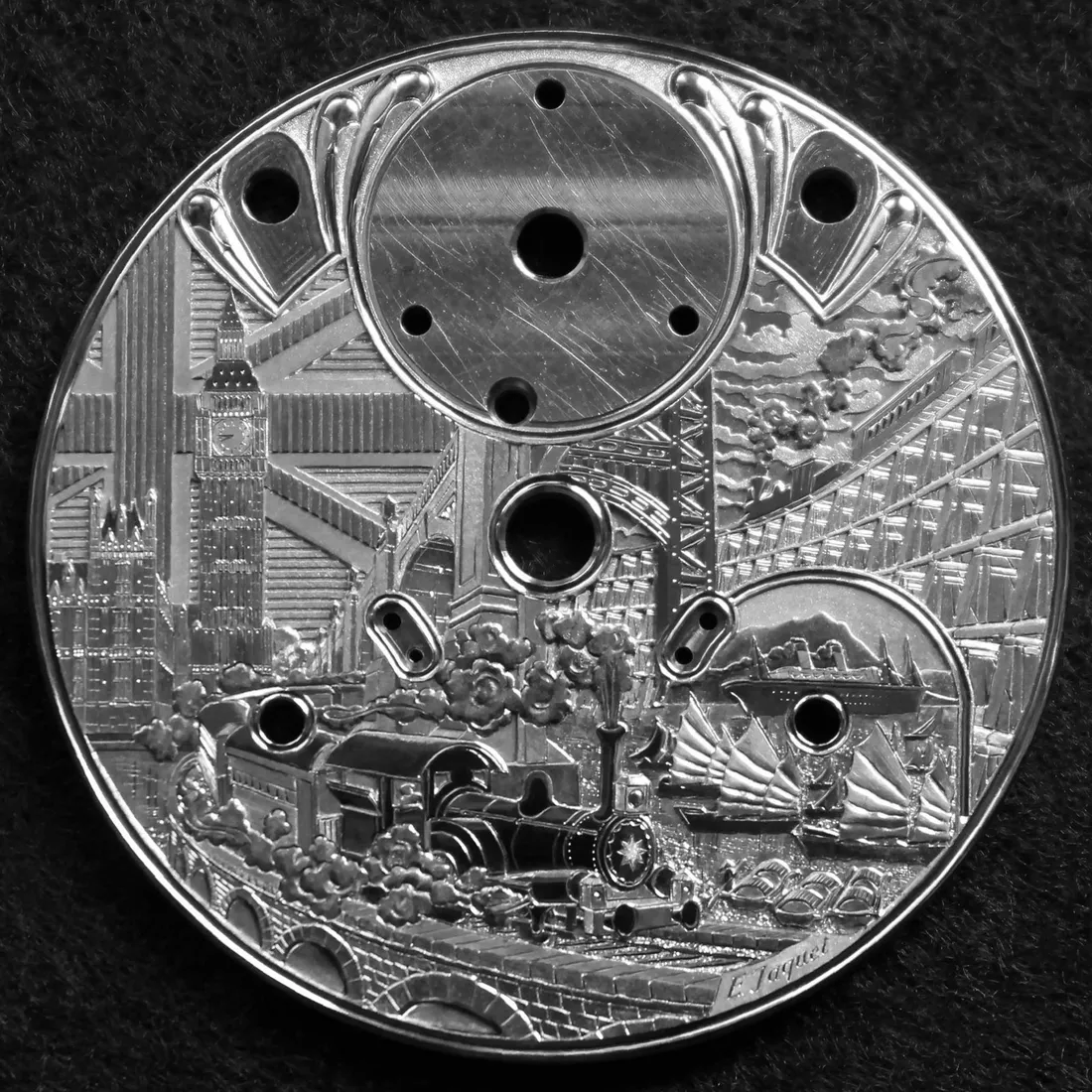
In Robur the Conqueror there was that vast flying machine, the Albatros, gliding above Paris, aviation dreamed up before it was ever born. Then came the best-loved work of all, Twenty Thousand Leagues Under the Sea. And the series was crowned by two summits: Around the World in Eighty Days, with its viaducts, its trains and that mad wager to circle the globe, won the Applied Arts category at the 2021 Grand Prix d'Horlogerie de Genève, the GPHG. Closing the series, The Adventures of Captain Hatteras was the little-known, melancholy epic of a captain burning with the passion to be the first to reach the North Pole, in the icy silence of the polar night.
A Library that Fits on the Wrist
MB&F x Eddy Jaquet is more than a watch. It is a novel you fasten to your wrist; it is the still-beating heart, within the gold, of that childlike and magnificent dream the nineteenth century dreamed of the future. Each of these eight pieces, where literature, the art of drawing and micromechanics melt into a single point, is a portable little library belonging to a single person.
Captain Nemo, gazing at that dark ocean behind his window, believed that time had stopped. Perhaps he was right: by carving those endless adventures into gold, the burin of Eddy Jaquet truly stopped time. And now that time goes on beating, calm and noble, upon a wrist.