On a September morning, shortly before sunrise, the water was going out of the mangrove forest at the southern tip of Florida. The sea had come in among the roots during the night and was now retreating, leaving salt stains, mussel shells and broken branches on the mud. The air was heavy and smelled of sulphur. The roots came out of the water in arches and held the trunk a metre above the ground.
A researcher standing knee-deep in the mud pulled a single leaf from a low branch and touched it to the tip of her tongue. The leaf was salty. Then she pulled another leaf from the branch beside it; that one was yellow, thick, and its surface was covered with a fine crust. She tasted that too. The second was far saltier than the first.
The difference between them carries the whole secret of this forest. The tree is piling the salt into one part of its own body, and writing that part off.
For plants, salt water is a poison. Under osmotic pressure a plant cell placed in salt water loses its water to the outside, shrivels and dies. That is the rule of biology.
And yet the red mangrove, Rhizophora mangle, which lives in the tidal zone where the ocean meets the land, stands directly in sea water and does not dry out. The cell membranes of its roots build a filter so fine that water passes inward while very nearly all of the salt stays outside. The tree runs a reverse osmosis plant in its own roots.
So what happens to the salt that does get through? The tree does not let it into the sap and spread it through the whole body. It pumps the salt it has collected into a few leaves. Those leaves turn yellow, thicken, their surfaces become covered with salt crystals, and in the end they take leave of the branch and fall into the water. The tree lives on fresh water in the middle of the ocean by sacrificing a piece of its own body.
format_quote"The tree pumps the salt into a few leaves and writes those leaves off. It lives on fresh water in the middle of the ocean by sacrificing a piece of its own body."
Hasan Bekmezci
What decides where this tree can live is not the soil but the latitude.
Mangroves grow roughly between twenty-five degrees north and twenty-five degrees south. The line is drawn by the temperature of the sea in winter; once the water drops below a certain threshold, the mangrove cannot hold that shore. The map of this forest therefore depends on the angle at which the sun strikes that coast through the year.
A mangrove forest thus stands on two separate boundaries at once. One is horizontal: the line where the tide advances and retreats twice a day, where the land ends and the sea begins. The other belongs to the sky: the edge of the liveable band, drawn by the angle at which the sun meets that latitude.
There is a boundary under the sea as well, and a very different agreement is in force there.
On coral reefs the cleaner shrimp, Lysmata amboinensis, stand on particular rocks and wait, waving their antennae. That waving is an advertisement, and it means: I am not food, I am a service.
A moray eel approaches. The moray is strong enough to swallow that shrimp in a single movement. Instead it opens its mouth as wide as it will go and simply waits. The shrimp goes in, works its way among the teeth, collects dead tissue and parasites, and then comes out. The moray closes its mouth and leaves.
For those few minutes predation has been suspended. The moray did not come because it was hungry, and the shrimp was not afraid. Both parties left the strongest instinct of their own nature at the threshold, for a shared benefit.
format_quote"The moray opens its mouth and the shrimp walks in. For those few minutes predation is suspended; both leave their strongest instinct at the threshold."
Hasan Bekmezci
What these two events share is that both of them happen exactly on a boundary. The mangrove stands on the line between salt water and fresh; the shrimp stands on the line between predator and prey. Both know very precisely where that line is, and it is exactly this knowledge that keeps them alive.
A human being’s relationship with boundaries goes through measurement. And there is one boundary in the sky that moves every day, that everybody sees and nobody knows the exact position of: the line where day parts from night.
The hour of that line is not fixed. On the same day the sun rises at one hour in Istanbul and at another in Singapore. Even in the same city it shifts a little every day, because the time of sunrise depends on three things: your latitude, your longitude and the day of the year. Computing that mechanically has been one of the problems watchmaking has attempted least often.
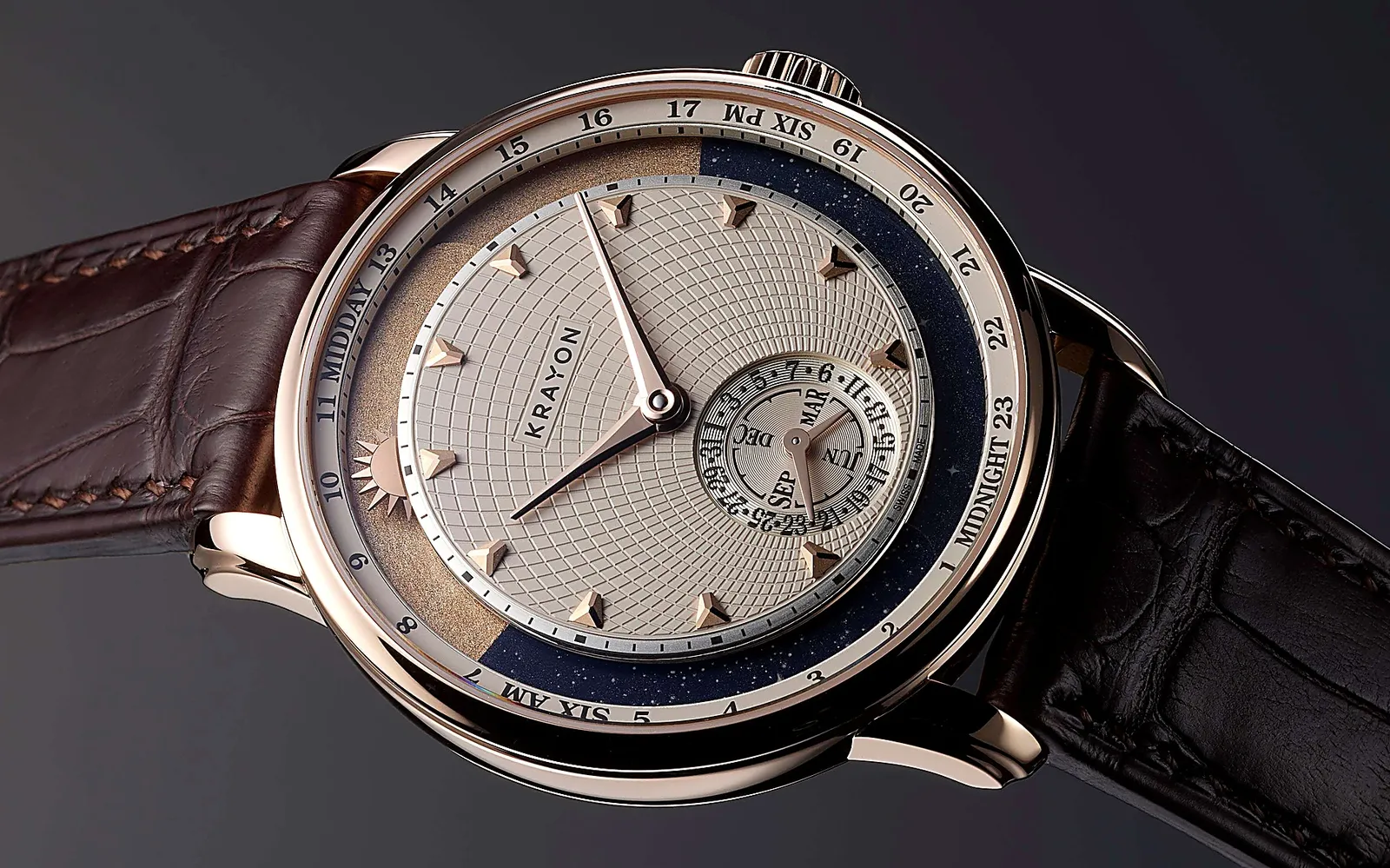
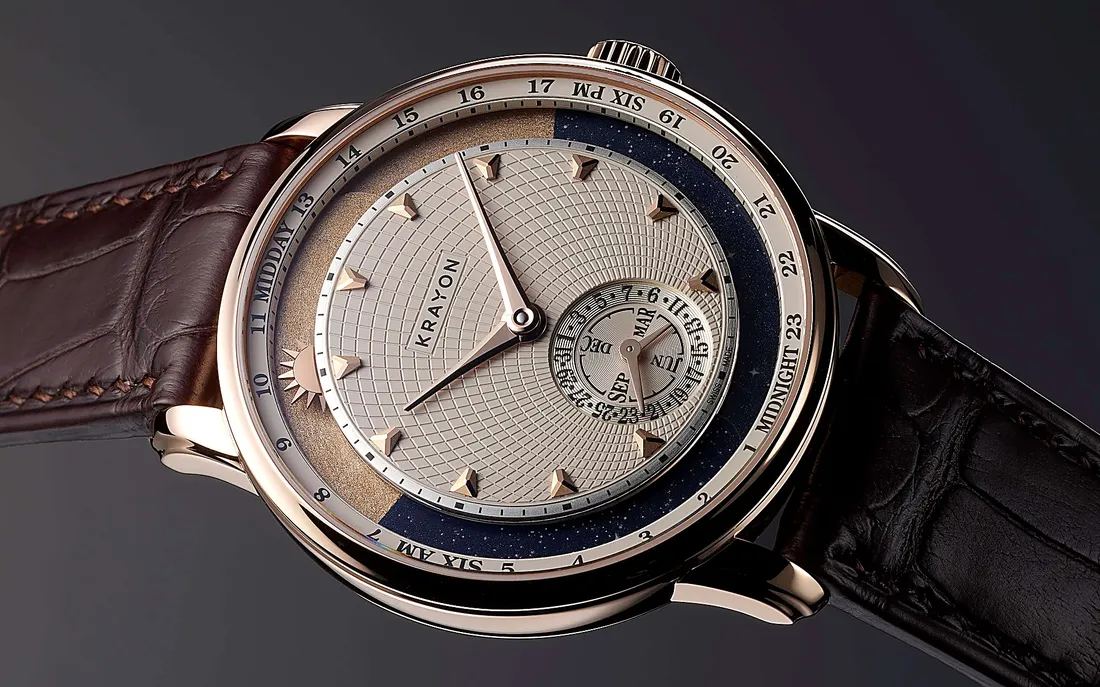
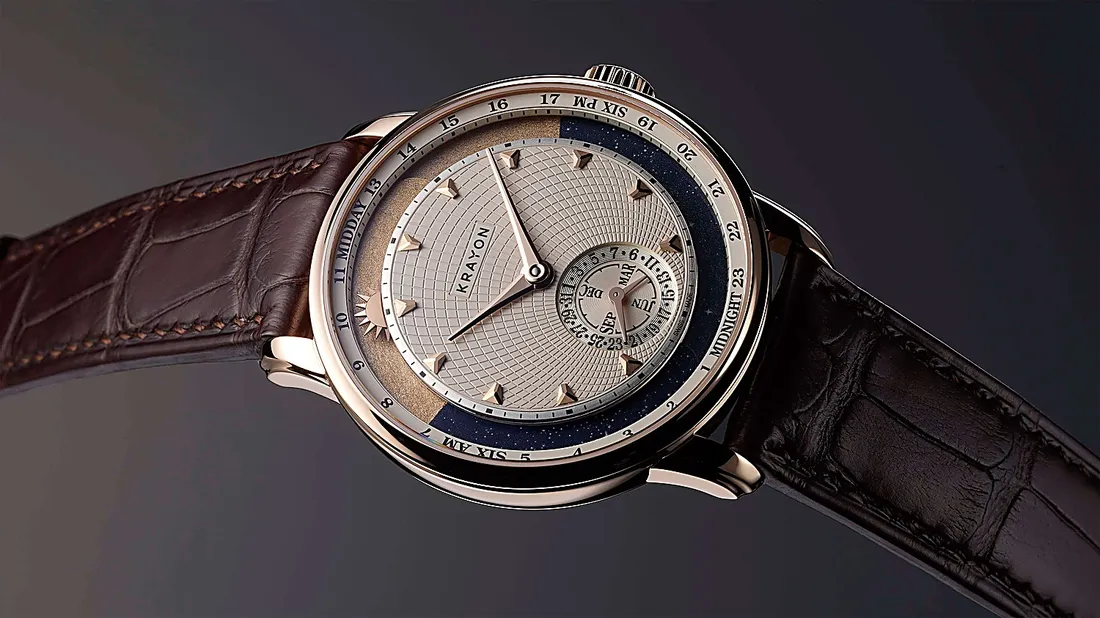
Krayon, established in Neuchâtel, put this problem inside a wristwatch, and what came out is called Anywhere.
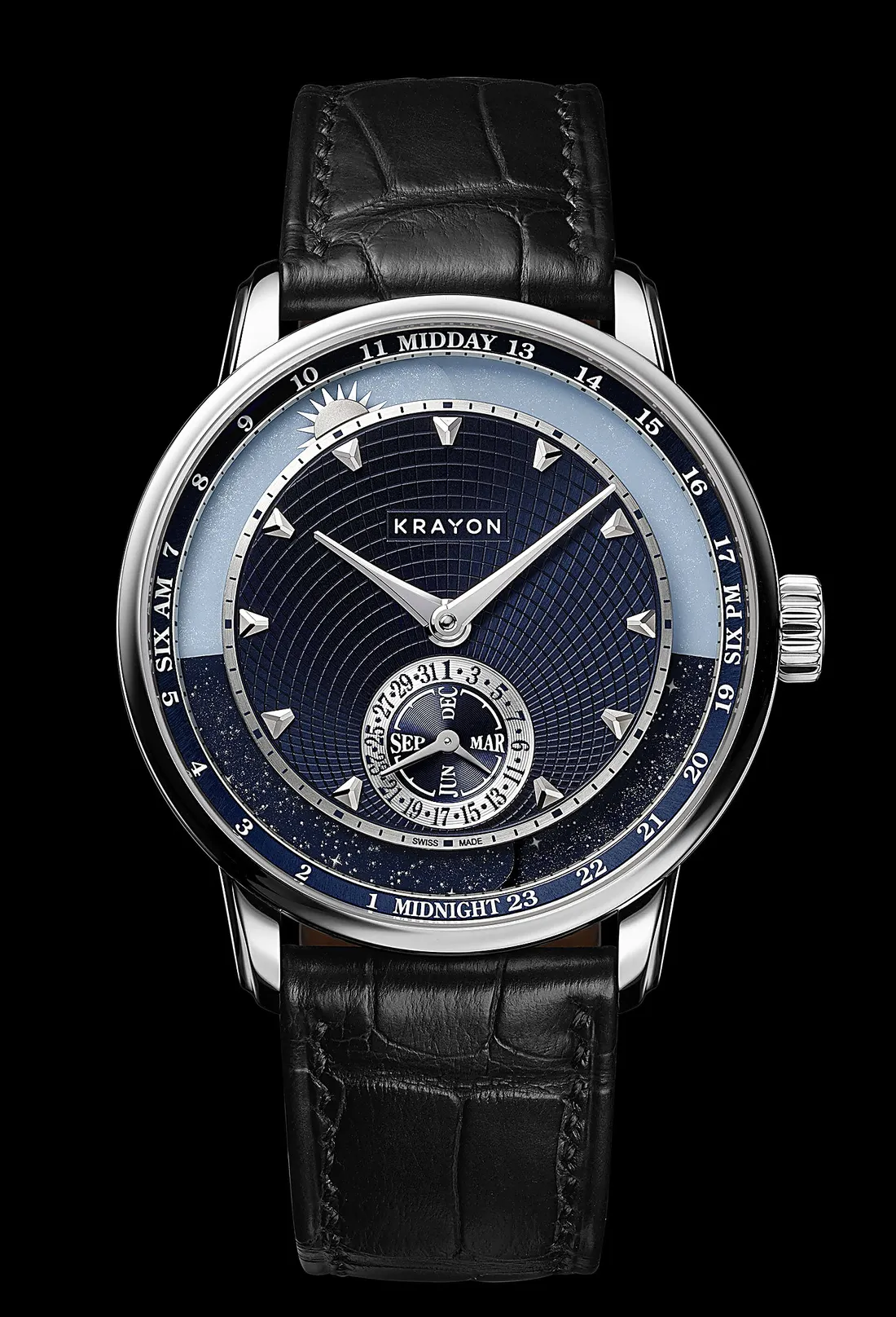
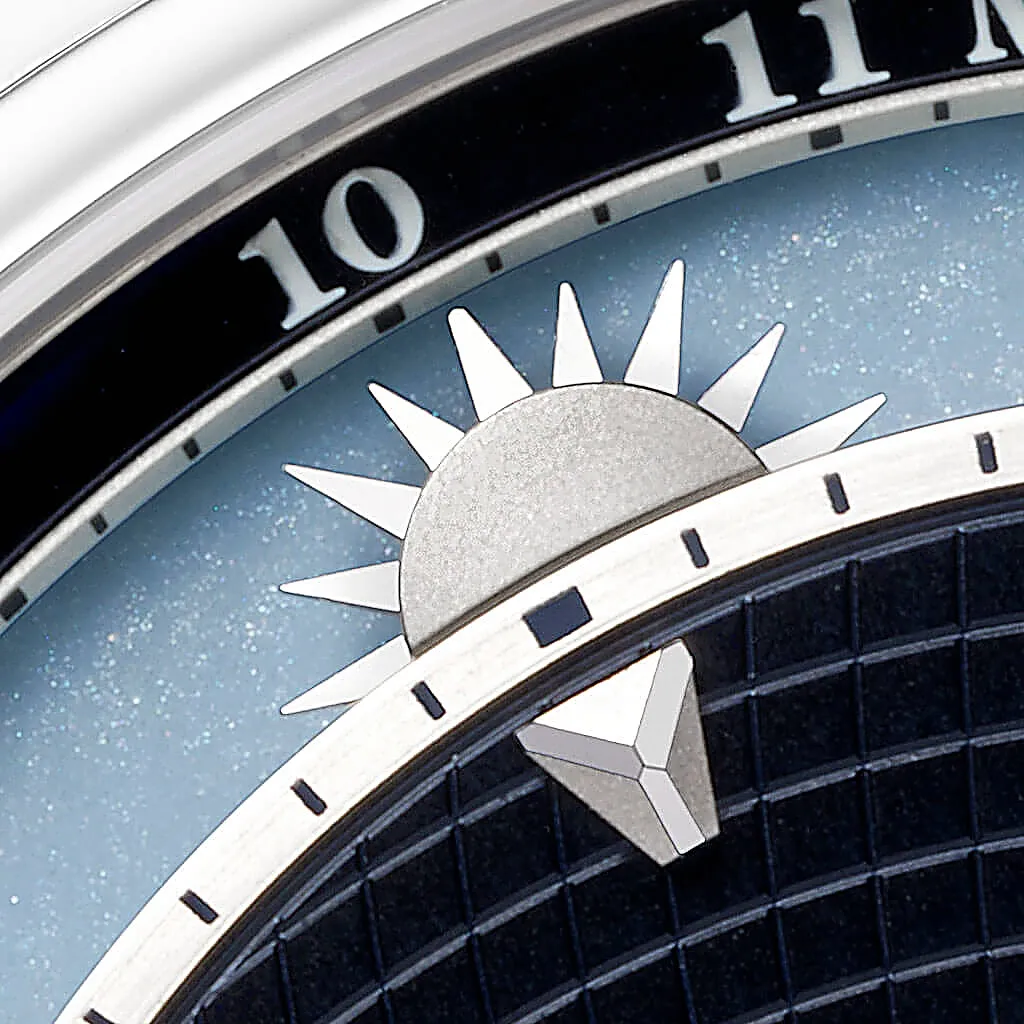
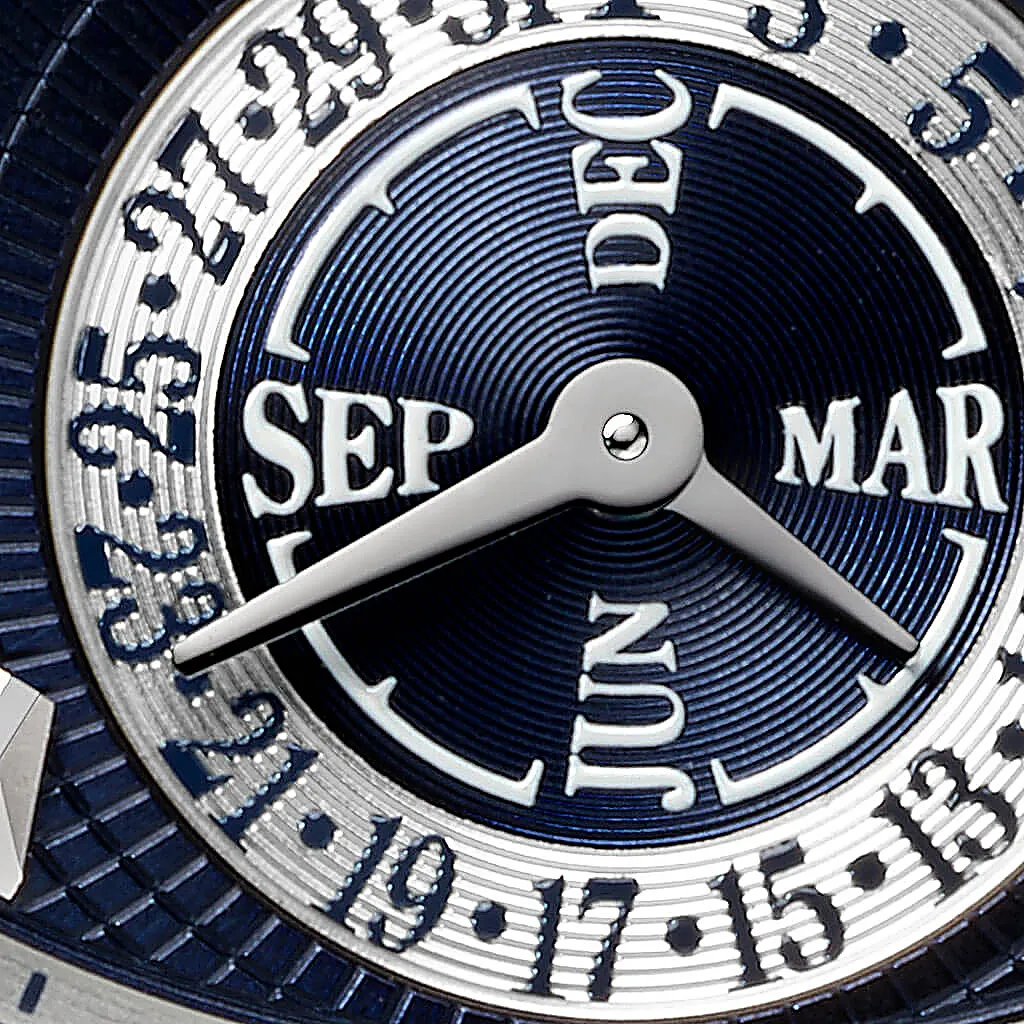
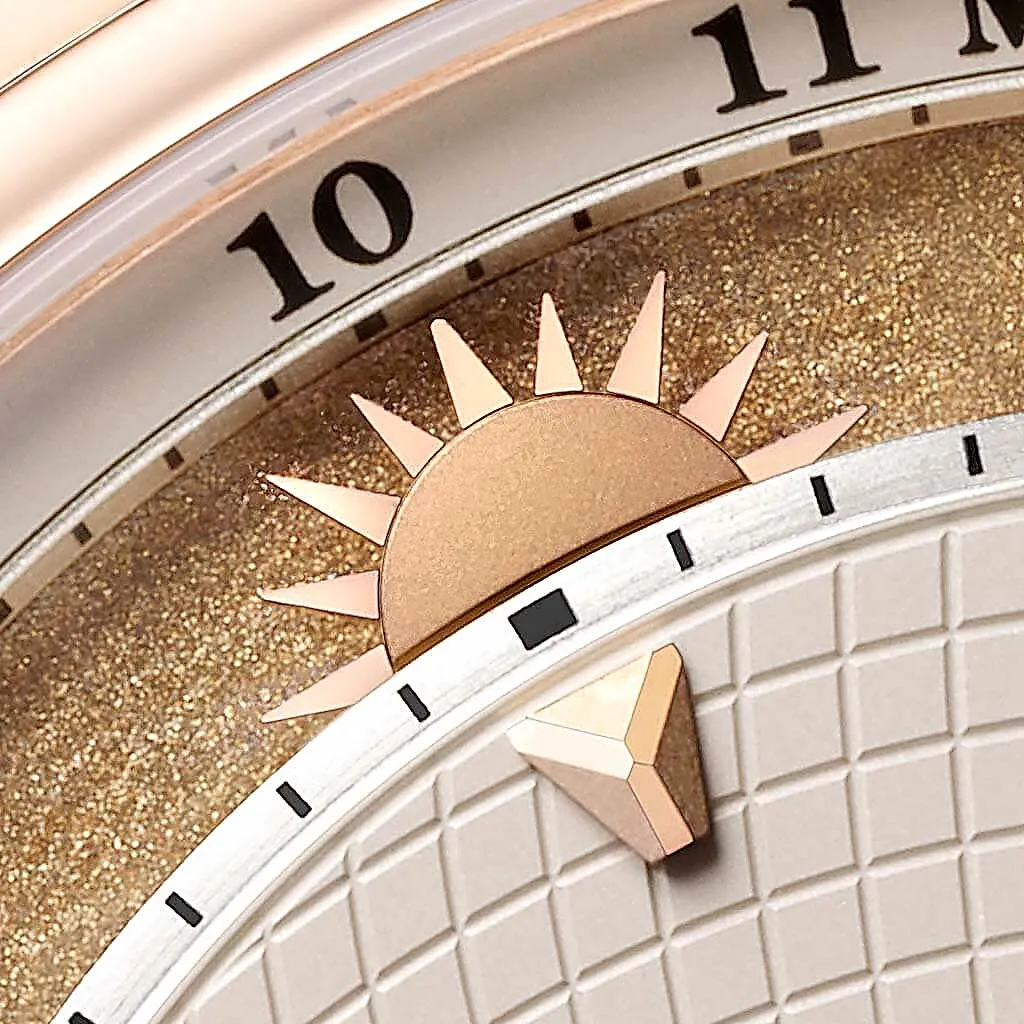
The outer ring of the dial shows twenty-four hours, marked MIDDAY at thirteen and MIDNIGHT at twenty-three. The ring inside it is divided in two. One part is the colour of gold and stands for the day; the other is deep blue and starred, and stands for the night. Where the two meet sits a small sun.
Here is the point: the boundary between those two parts is not fixed. The day sector widens and narrows through the year, and the figure the boundary falls on against the outer ring is the hour of sunrise and sunset on that day, in that place. In summer the gold section lengthens; in winter it shortens. The dial shows you the light calendar of the place you live in.
And this indication is set to your place. Screws inside the case take the latitude, the longitude and the time zone, each graduation corresponding to fifteen minutes. The watch can therefore be set not for one city but for any point on Earth. In the house’s own description, this is a programmable astronomical computer.
format_quote"Sunrise is not an event but a boundary. And an approximate boundary is not a boundary at all."
Hasan Bekmezci

Sit a mangrove ecologist at one table with the watchmaker who built this calibre and both would use the same word.
The ecologist would say this: the entire forest I work in stands on a threshold. Go twenty centimetres higher and the tree runs out of water; go twenty centimetres lower and the roots drown. This forest lives by centimetres, and it spent millions of years finding that threshold.
The watchmaker would say this: my work is also to find where a threshold lies. Sunrise is not an event but a boundary; it is the instant the disc of the sun touches the horizon, and that instant is a function of the latitude and longitude you are standing on. I have to give it with gearing not approximately but exactly, because an approximate boundary is not a boundary at all.
As for the figures, the case is made of white gold, measures thirty-nine millimetres across and stands nine and a half millimetres tall. Water resistance is thirty metres. The dial is blue and silver, the strap black alligator, and the buckle and pin white gold. Inside runs calibre C030: thirty-five point four zero millimetres across, five millimetres thick, fifty-five jewels, four hundred and thirty-two components. It beats three times a second and gives seventy-two hours of reserve. Beside the hours, minutes and date it shows sunrise and sunset. This complication won Krayon the Innovation Prize at the GPHG.

The thought that follows fits the forest and the watch equally well.
Life gathers at boundaries rather than at centres. The middle of the sea is empty and the interior of a continent is dry; the place where living things are densest is the strip where the two touch. Mangrove forests are among the most productive ecosystems on Earth, and a large share of all fish spend their infancy among those roots. In the same way, the heaviest traffic on a reef is around the cleaning station.
But living on a boundary requires knowing where that boundary is. The mangrove knows where the salt must stop. The shrimp knows when the mouth is safe. A human being makes an instrument in order to know, because his senses do not tell him the hour of sunrise.
And none of these boundaries were set by us. The salinity of the water, the angle of the sun, the rhythm of the tide and that silent truce between two creatures were all there before we arrived. The Creator brought into being both the boundary and the creature able to live on it. The watch on a wrist only does this: it reads where a line that was already drawn falls today.
The watch on its maker’s own site: Krayon, Anywhere