
A late afternoon in the middle of November. The wind has blown from the same quarter for days and a thin covering has gathered on the pavement; this is what the leaves still on the branch last week look like today. A reader who remembers the autumn pages of Ahmet Hamdi Tanpınar knows that this covering is not merely a fall of leaves: autumn is the name of that stillness in which things put on their own truth, and of the deepest reckoning of time.
When the autumn winds blow and the veils turn yellow, a private story begins to be written in nature. To read the hidden order behind that flow is to see the falling of a leaf not as a loss but as the closing of an account.
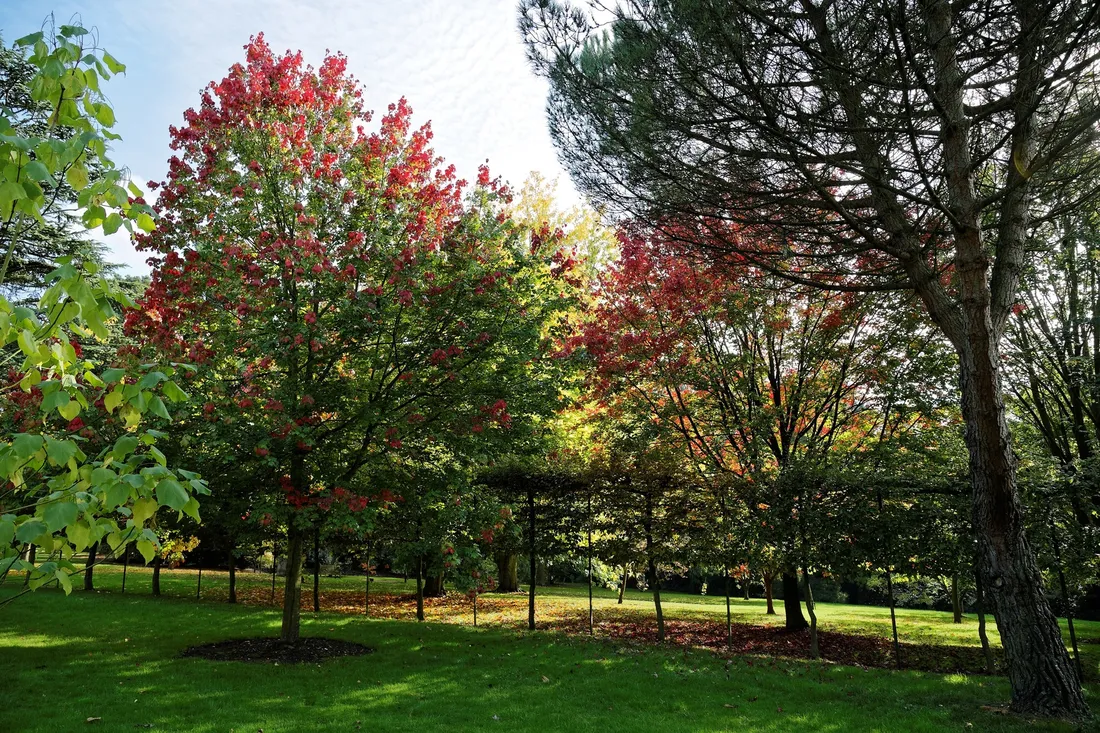
When autumn knocks at the door and the days shorten and the air cools outside, that invisible headquarters inside the tree sets a delicate process of metabolic adaptation in motion. The encouraging hormones that grew branch and twig with such enthusiasm all summer, the auxins and the cytokinins, withdraw slowly from the stage. These hormones take no conscious decision; they are molecular signals built to answer the data arriving from the environment with a flawless sensitivity. The moment the sun withdraws, those signals of growth give way to the senior regulators that arrest and prepare for winter: abscisic acid and ethylene gas.
And exactly at that threshold, abscisic acid sends a molecular signal to the most private cellar of the cell, to the centre of the nucleus. The instant it arrives, the protease, RNase and chlorophyllase enzymes, so many microscopic cleaning squads inside the cell, become active. These enzymes break down the chlorophyll molecules that gave the leaf its living green and imprisoned the sun, along with the proteins and the strands of RNA, atom by atom and with the care of master joiners.
When the green covering lifts, the hidden yellows and reds beneath the leaf come into the open; yet this is no process of waste, but on the contrary a mechanism of metabolic recycling and thrift. Before the leaf falls, every molecule of that broken-down nourishment is passed through the tunnels in the leaf stalk and stored safely in the parenchyma cells of the tree’s roots and trunk. That flawless principle of thrift, in which no resource is squandered, has worked by the same mechanism for billions of years; because when spring comes those stored materials will be used again in building.
format_quote"This is no process of waste, but a mechanism of metabolic recycling and thrift."
Hasan Bekmezci
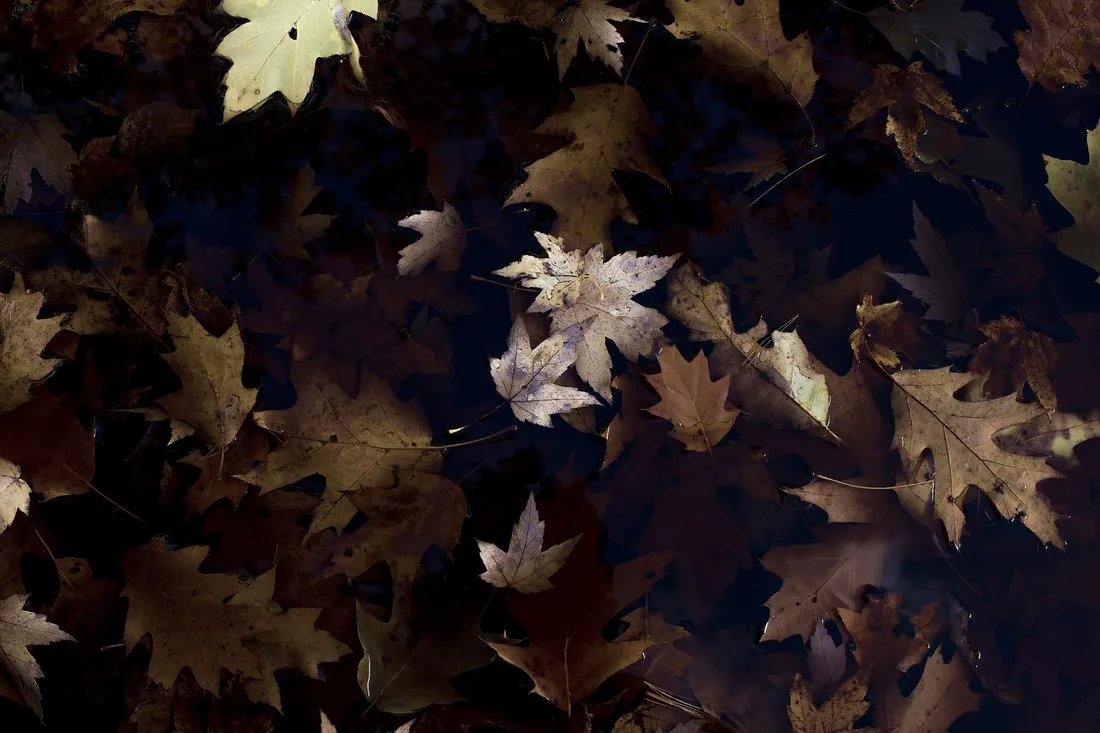
Once the transfer of nourishment is over, the hormones build that special line of separation in the leaf stalk called the abscission layer. In the cells there, cellulase and pectinase enzymes are produced. These enzymes untie, stitch by stitch, the strong layer of cement that binds the cells to one another. The separation runs from the outside inwards; at the very last, only the thin woody tubes that carry water remain at the centre. Since those are lifeless and fragile, a light breath of wind or a drop of rain breaks them, and the leaf glides to the ground.
As the fallen leaf mixes into the soil, the wound left on the trunk of the tree is immediately plastered over and sealed with a special tissue called callus. That tissue is like a protective shield preventing the tree from losing water; it guards the plant skilfully from the hard cold of winter and from any pathogen that might come from outside. This flawless biological architecture lays bare how delicate a balance and how rational an order every process in the universe runs by.
The real miracle that brought into being the lifetime a leaf spends on its branch, and this flawless cycle it leaves behind, is hidden in the great laboratories inside the cell, within the private borders of the chloroplast. The pigment chlorophyll catches the photons arriving from the sun and, by exciting the electrons within it, strikes the first spark that starts the chain; it is like the lead singer who stands in the very front row of a concert ground, takes the whole of that vast light show on the chest and passes all its energy to the stage. Without it neither sound nor joy begins, and the dark rules absolutely.
The water molecules arriving from the roots are split inside the chloroplast by the energy of the sun. As that splitting gives electrons to the system, pure oxygen is released outside so that the atmosphere may breathe. Water is like a devoted dam that sacrifices its own existence so that the wheels of a great factory may turn, offering its raw material to the last drop and breathing life all around it; its undoing becomes the breath of the world outside.
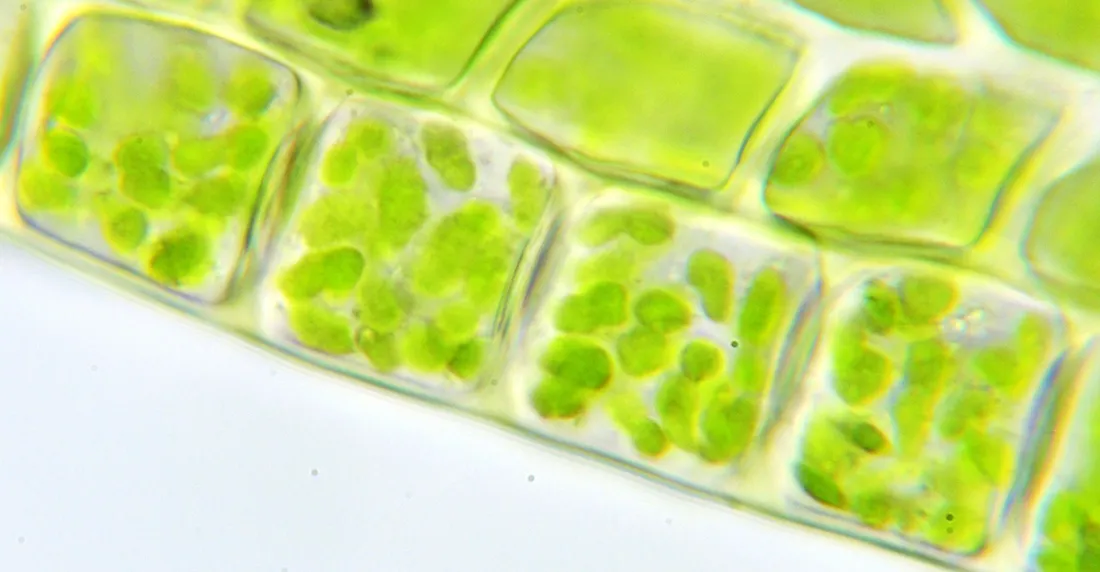
The high-energy electrons torn loose from chlorophyll are passed along a chain of proteins from hand to hand, in a flawless order and without the least loss. That electron transport system is a succession of burning torches handed along in a dark tunnel: the energy never falls to the ground for an instant, and is carried to its destination unwasted. The NADP molecules that take on the electrons and the hydrogen set free at the end of the chain are molecular couriers bound for the dark and productive laboratory of the Calvin cycle; like the most faithful of delivery lorries, packing the precious raw material coming off the production line and carrying it to the bench where it will be worked.
ATP synthase, meanwhile, converts the flowing force of protons into a mechanical energy and produces the universal packets of energy the cell spends in all its activity; it is the central mint that keeps the economy of a country standing. Every banknote it issues is the only valid currency that lets the workers labour and the machines turn in the cell’s factory. In the last link, the Calvin cycle takes the invisible carbon dioxide gas from the atmosphere and, combining it with that energy, turns it into solid matter, into the glucose that feeds the plant: a skilled craftsman’s workshop taking an invisible air and turning it on the bench into a concrete and sweet weave.
format_quote"The energy never falls to the ground for an instant, and is carried to its destination unwasted."
Hasan Bekmezci
And so that dazzling alchemy of photosynthesis taking place inside the chloroplast, the finely calculated biological grace of the abscission layer, the autumn melancholy that echoes in Tanpınar’s pages and the flawless law written into a leaf turn, in the hands of Sartory Billard, one of the aesthetic summits of independent watchmaking, into a work of art carried on your wrist. Armand Billard first imagined this dial in a sketch: deep reds at the edge, golds growing brighter towards the middle, and an arrangement of leaves that spirals inward.

That depth is an illusion, and the real skill lies exactly there. The dial is only eight tenths of a millimetre thick. Armand’s drawing was first turned into a three-dimensional mould, the dial was lightly embossed with that mould, and then shadows were painted beneath each leaf. This joint work of relief and shadow brings a carpet of leaves piled one upon another into being on a plate the thickness of a card. There are, in other words, no real layers stacked on that dial; given two clues, the eye builds the layers for itself.

format_quote"That silent and noble bearing in the fall of a leaf from its branch."
Hasan Bekmezci
The case is forty millimetres across and eleven millimetres tall, made of 316L steel. The hands are alpha-shaped and there is not a single index on the dial; you read the hour from among the leaves. Inside works the La Joux-Perret calibre G100, automatic, running sixty-eight hours once wound. The case back is engraved Autumn 2024 Edition, SB04, and a serial number. Delivered on a brown leather strap, the watch cost two thousand nine hundred euros, and the series closed with the end of the autumn of 2024.

When we look at this watch of Sartory Billard’s, what we see is not simply an object of luxury where metal and paint have met. The miraculous photosynthetic language of the chloroplast that imprisons light, the universal biological law a leaf whispers to nature as it falls from the branch, Tanpınar’s eternal melancholy and the absolute order that encircles the universe are all the voice of the same single truth.
A leaf gives back everything it carried before it falls, and closes its own wound with its own hand. The dial on your wrist freezes that farewell: the red that ends at the edge turns back to gold towards the middle. The deep knowledge written into the fall of a leaf and the eternal cycle engraved into the heart of steel are two halves of the same sentence.

The watch in the words of its maker: Sartory Billard, SB04 Autumn 2024