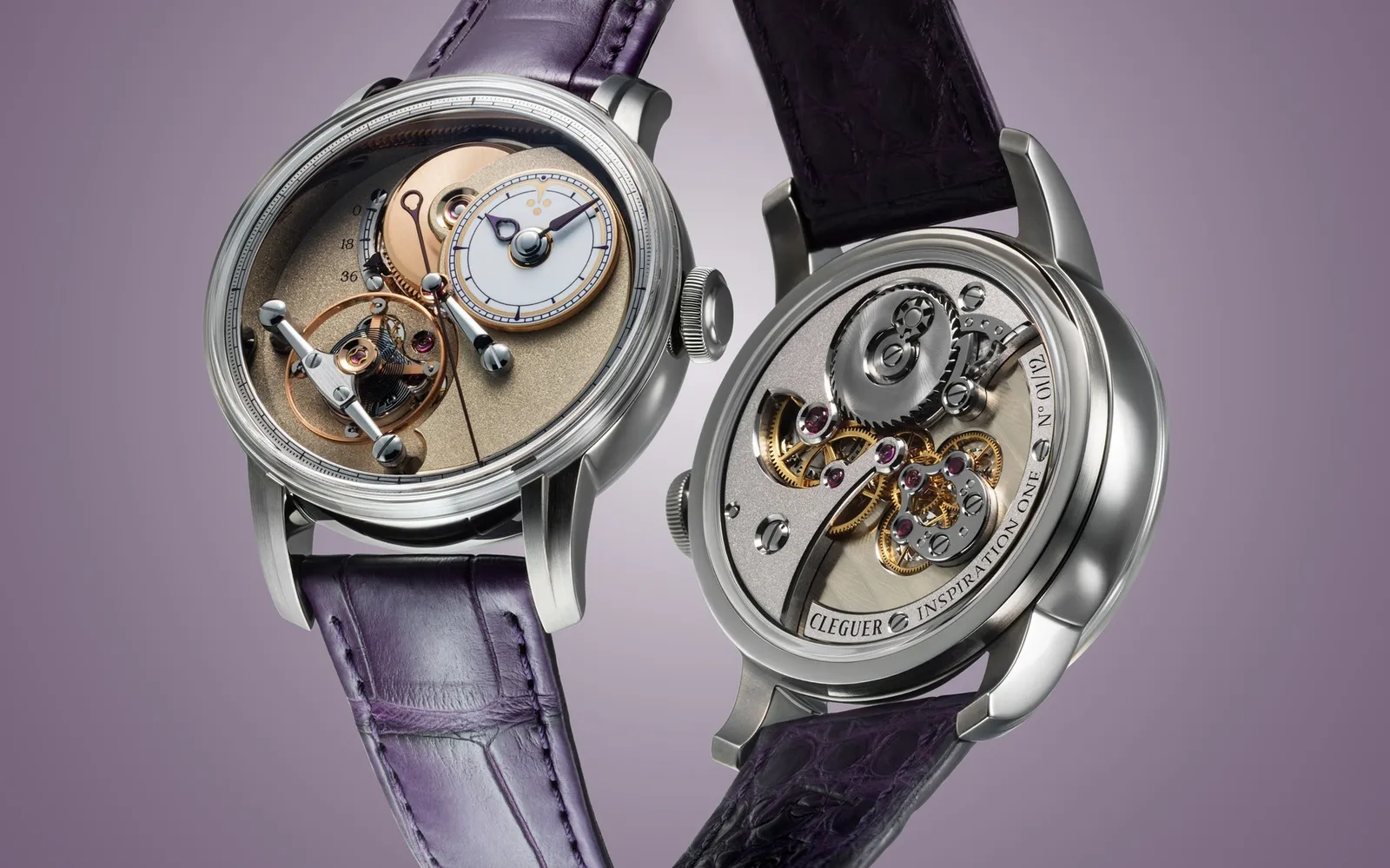
When we look into the private ateliers of independent watchmaking, far from the sterile noise of the great groups, existing entirely on the breath and the patience of one master, what we see is not merely the marriage of steel and gold. Those pieces of metal ticking beneath the sapphire crystal like so many cold struggles for life are a divine symphony carrying the most flawless laws of the universe into a microcosm.
The Cleguer Horology Inspiration One, which took the great prize in the Complication Watch category at the GPHG ceremony of 2026 and which came into being through a long journey of the mind by Mathieu Cleguer, is the purest proof of that cosmic order in its asymmetric architecture, which breaks every habit of symmetry. Let us slip inside through the back of this case and look again, with a full heart, at the great truth hidden in every wheel and in every law of physics.
When you turn the crown between your fingers to wind the watch, the barrel, with its grained surface spreading like sunlight, is tensioned; the small steel click above it and its spring close like the gate of a fortress with a tick, and make any return impossible.
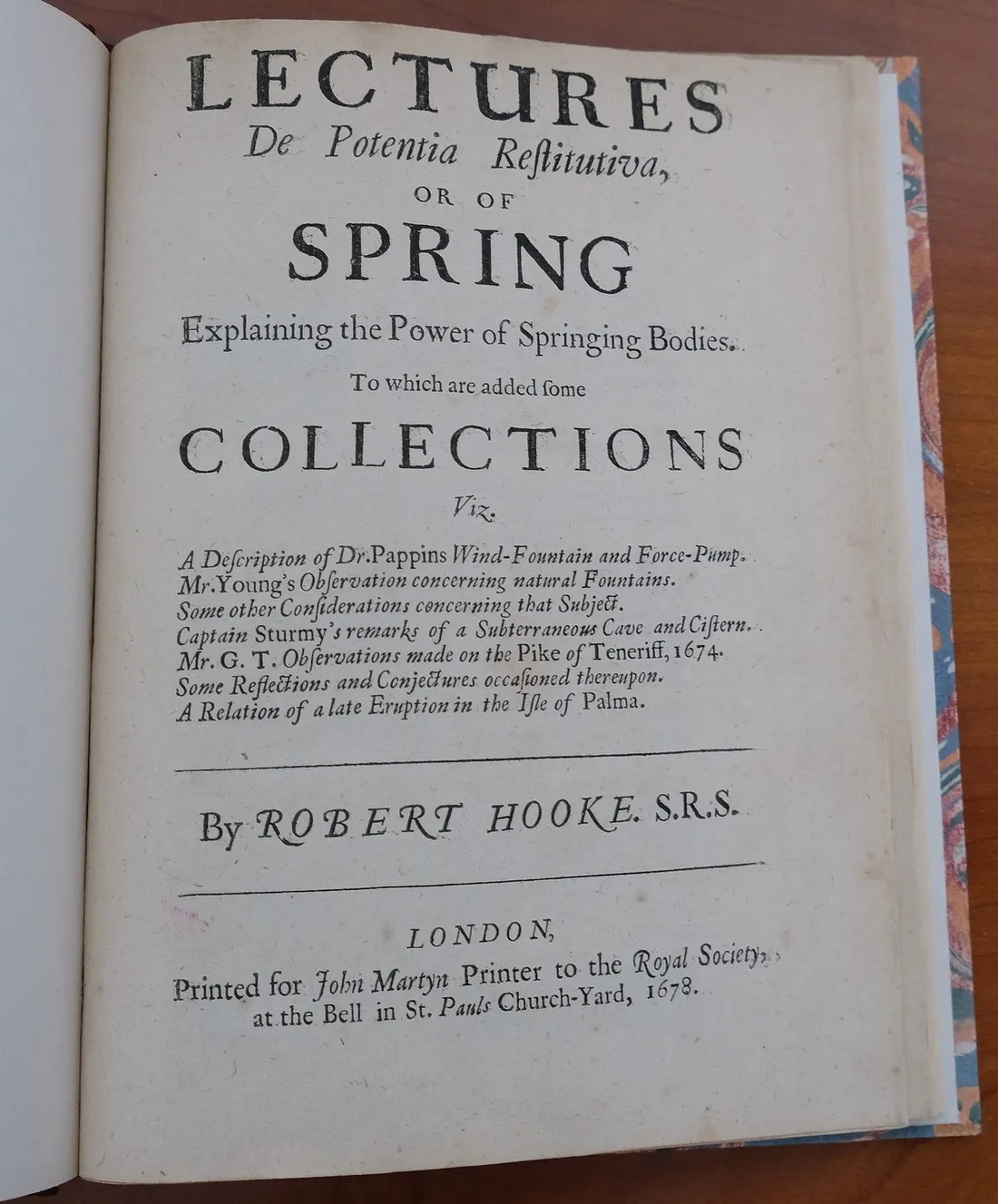
What meets us here is Hooke’s law, which whispers that every compressed spring holds a revolt inside it: elastic bodies under tension exert an irresistible force to return to their former state. As the mainspring bends under the pressure of your finger it becomes a mountain of potential energy, waiting for the moment it will be free. Robert Hooke measured that truth in a tract printed in 1678, by coiling a wire around a cylinder and hanging weights from its end; that is, he only discovered it in a laboratory.
But who granted a lifeless strip of metal the faculty of holding energy in its memory while it is stretched? The Creator, who coded the desire of a compressed metal to return to its former shape with such perfection, whispers to us at every winding the most concrete microscopic example of a human being steering his destiny with his will, of strength patiently stored, and of order.
format_quote"As the mainspring bends under the pressure of your finger it becomes a mountain of potential energy, waiting for the moment it will be free."
Hasan Bekmezci
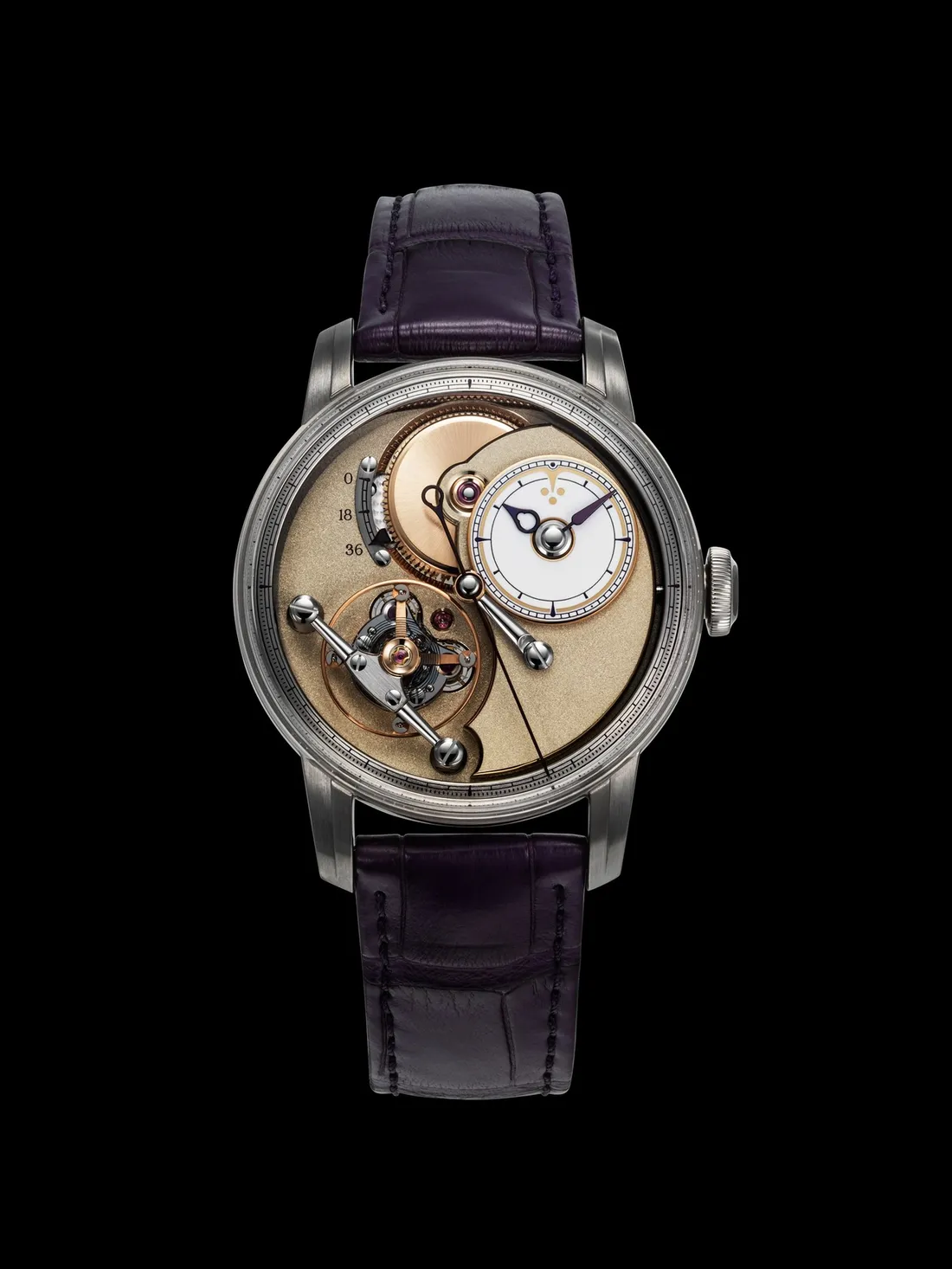
That passing effort produced by the muscle of your finger is compressed into the steel heart of the mainspring and evolves into mechanical potential energy. Across the mainplate, which spreads to the dial side in an elegant champagne tone and a grained, frosted texture, it turns step by step and with great grace into kinetic energy along that train of golden wheels, and brings the seconds to life. Plate and bridges alike are made of nickel silver; part of the surface is plated in champagne, part in rhodium, and that is what divides the dial into two separate tones.
The law of the conservation of energy cries out to us the most basic secret of the universe: nothing ceases to exist, no force is lost, only its form changes. The potential inside the mainspring turns into motion, and motion into time. Why is energy never lost? Whose is the will that established this flawless passage from one form to another without loss? The mortal muscular energy in a human finger becoming a long motion in a strip of metal is the mirror, in a microcosm, of the divine economy of energy in the universe. In a universe where nothing is wasted, human labour is never lost either.
format_quote"In a universe where nothing is wasted, human labour is never lost either."
Hasan Bekmezci
The most radical novelty of the Inspiration One is the Innate escapement, the architecture to which the brand has given its own name, reinterpreting Breguet’s legendary philosophy of the natural escapement with modern independent engineering. At the lower left, lying open beneath a black polished bridge, the oversized balance wheel of twelve point nine millimetres performs a flawless synchronised dance with the twin escape wheels.
The natural escapement has had a known fault for two hundred years: once it stops, it cannot start itself again. Mathieu Cleguer solved that fault with an idea borrowed from the escapement of the nineteenth-century American watchmaker Charles Fasoldt. He kept the double wheel of the natural escapement, but delivered the impulse tangentially through a single central lever; the locking and impulse pallets now sit on that same lever. The result is an escapement that both starts itself and takes the friction out of the impulse. The balance oscillates eighteen thousand times an hour and its moment of inertia is fifty milligram square centimetres; a wheel of that size is otherwise seen only in marine chronometers.
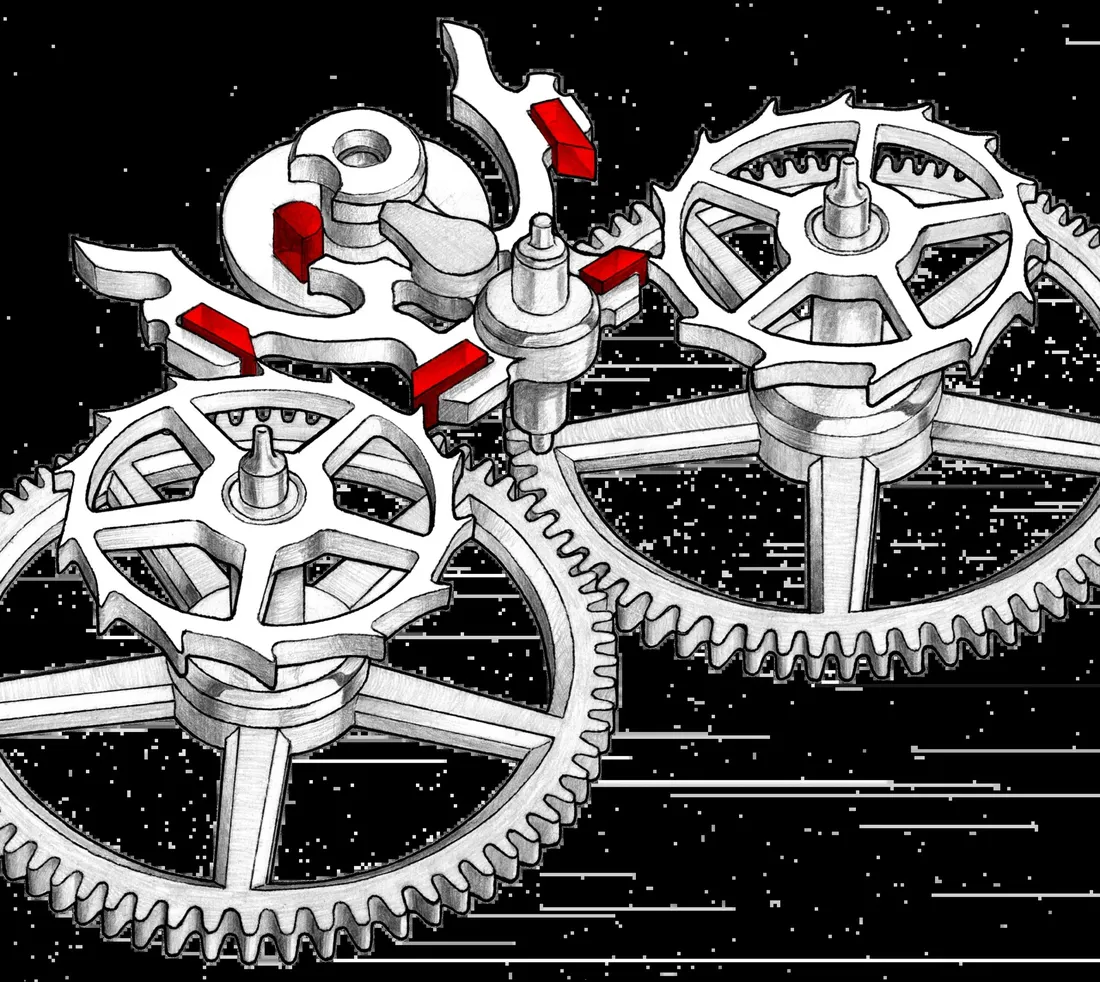
Matter tends to keep the state it is in; yet instead of limitless resistance it finds its rhythm in a harmonious submission. The balance wheel falls neither to that rigid inertia nor to the captivity of the spring; it holds a flawless balance between the two. Who laid down the law of inertia in matter? Why must everything with mass either continue in its motion or resist? Without that delicate balance there would be no seconds, and no galaxy could hold its orbit. Every tick of the balance is the cosmic breath the Creator blew into this universe.
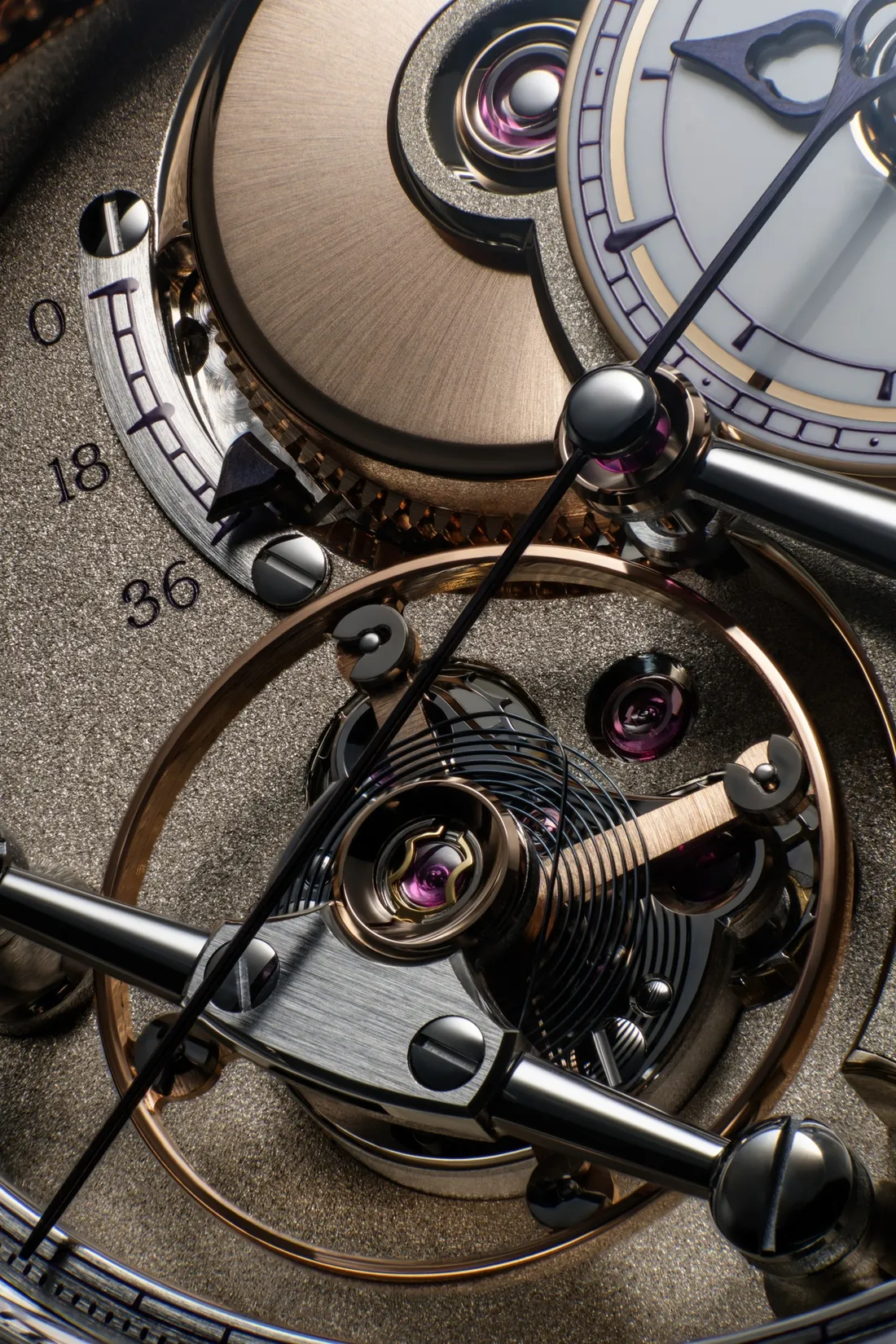
format_quote"Every tick of the balance is the cosmic breath the Creator blew into this universe."
Hasan Bekmezci
The field on which the time is read has been drawn not to the traditional centre but to a fired white champlevé Grand Feu enamel subdial, shifted to the right. The choice of that place is not a caprice: the master put the subdial there so it would stay legible even from under a shirt cuff. The enamel is there purely for contrast. While the blued steel hands cry the hour with a quiet authority, the elongated central seconds hand enlarges the void that lies beneath it.
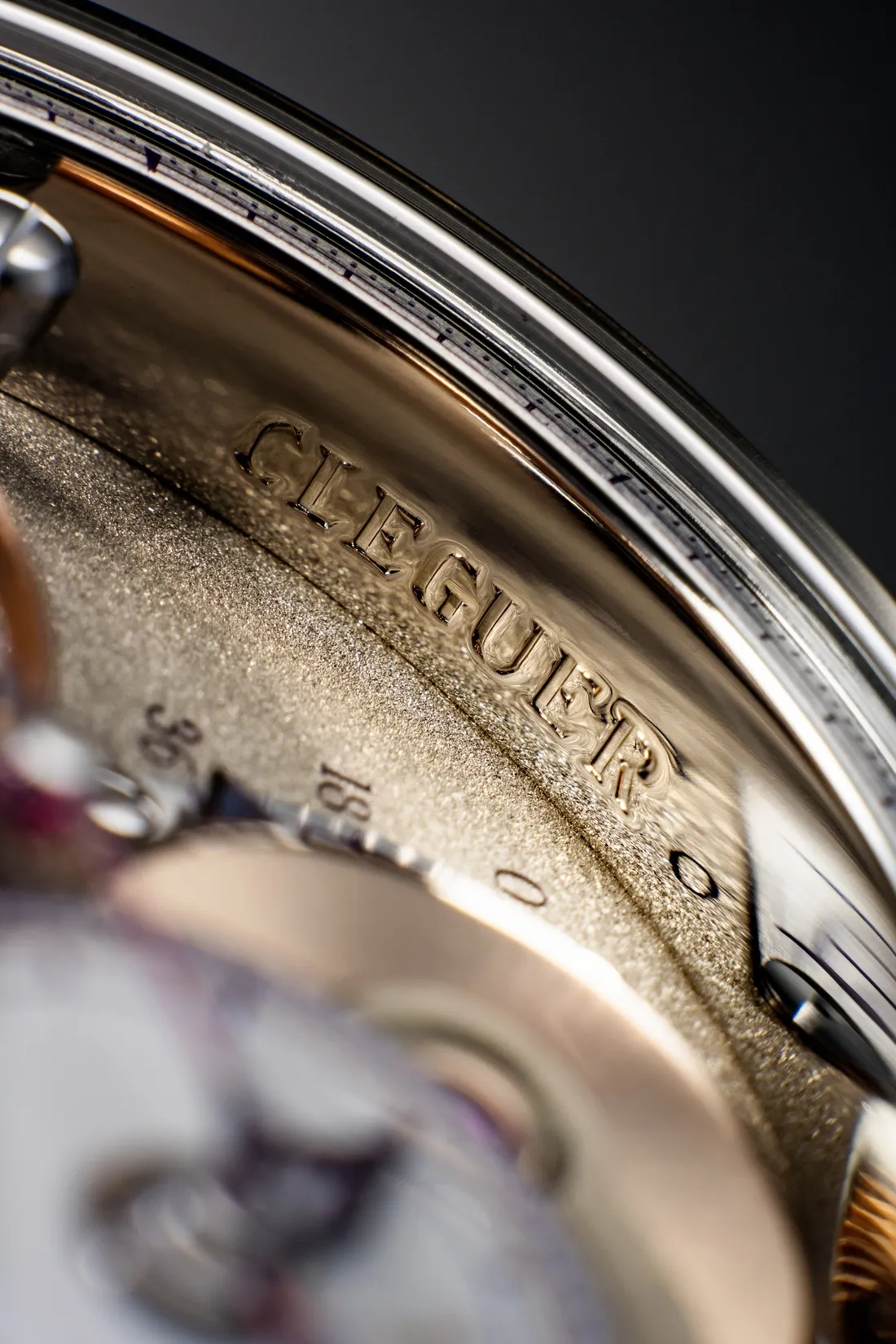
There is no writing on the dial. The brand name is engraved only on the inner flank of the case, and the Breton root of Mathieu Cleguer is exactly there: not in a motif, but in his surname. Strength gives life only when it is bounded and distributed in a right order. The thirty-one ruby jewels set in gold chatons and the flawless bevelling are so many artistic drops of mercy shown against the hardness of the metal.
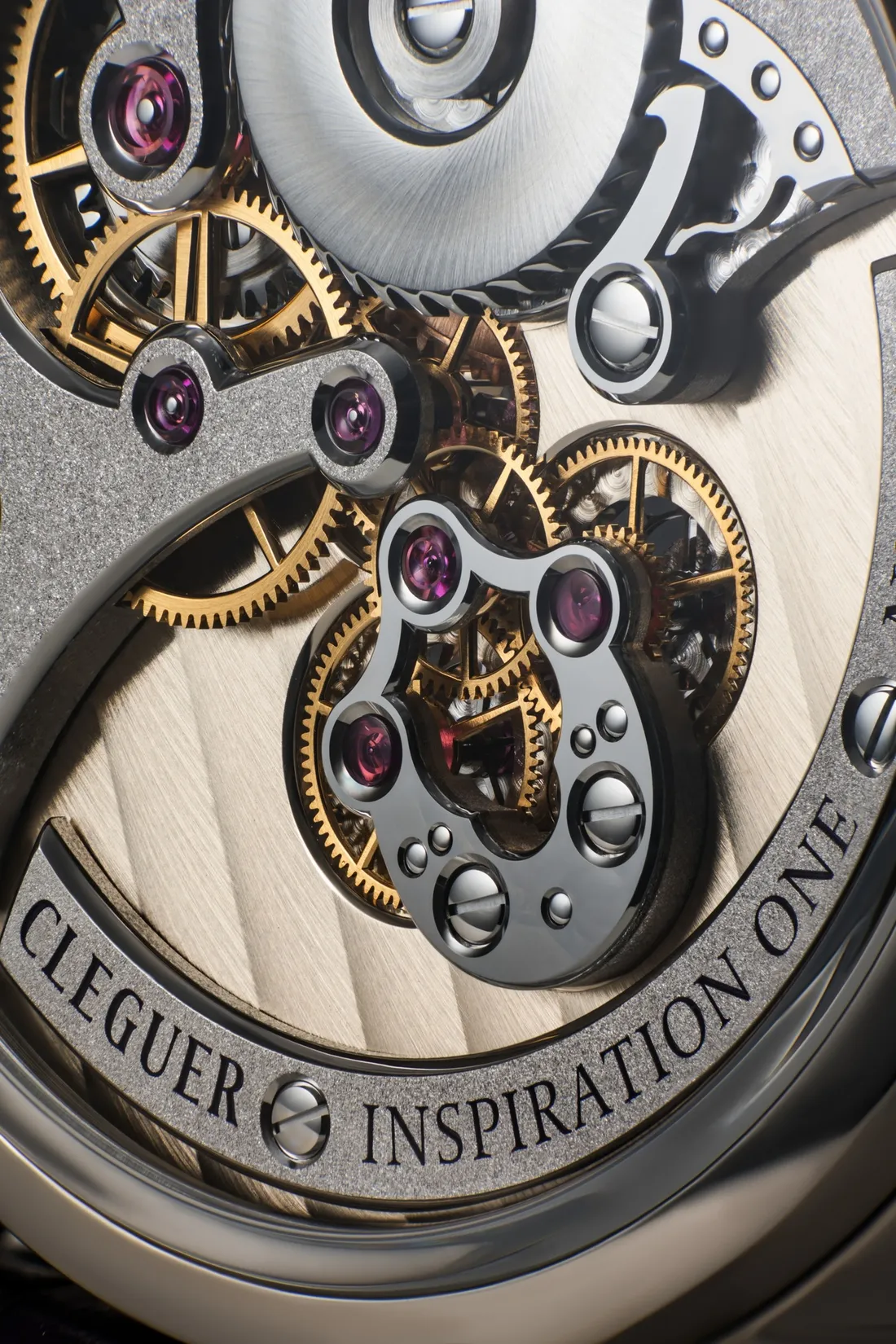
On the case back there is an entirely different scene. Above the ratchet click sits a Maltese Cross stopwork, something hardly ever seen in modern watchmaking. That arrangement limits the power reserve to thirty-six hours, and its reason for limiting is not meanness but the opposite. When the mainspring runs neither fully wound nor fully spent, the torque it delivers to the wheels stays within the narrowest band; the watch, in other words, runs with the same strength at every moment. In the master’s own words this is his favourite part of all: that oversized click which seems to be connected to nothing.
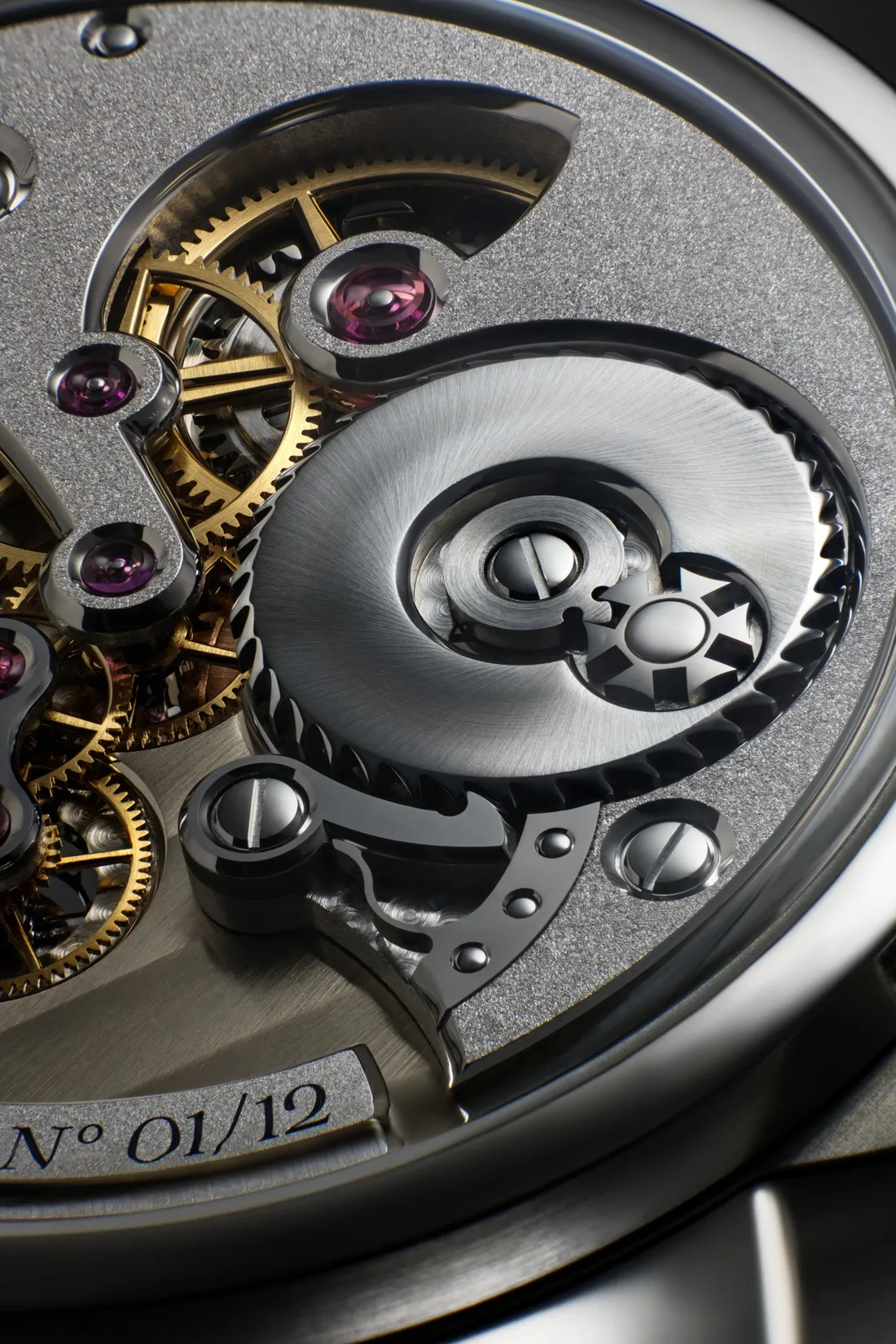
When you look at the Cleguer Horology Inspiration One, what you see is not simply a victory of independent watchmaking. With its asymmetric architecture, the natural escapement that bears its own name and its finishing at the summit of handwork, this piece pushes the limits of human intellect; yet the laws of physics those parts obey are divine decrees written directly into the codes of this universe by the Creator. Eighty will be made in all, divided across five case metals and released in batches of twelve; twenty movements will become unique pieces. The first twelve, the Souscription, were cased in titanium and sold out before a single one was delivered.
With the intellect and the will the Creator has granted him, a human being discovers these laws, gives shape to metal and makes time a crown upon his wrist. Every time you look at that transparent case on your arm and at that mechanical arena displayed in all its nakedness on the front, what you actually see is the reflection of a whole universe in a microcosm, the silent dance of energy, and that flawless order made manifest in every wheel. Time flows away; but what makes it meaningful is this divine mathematics behind it.
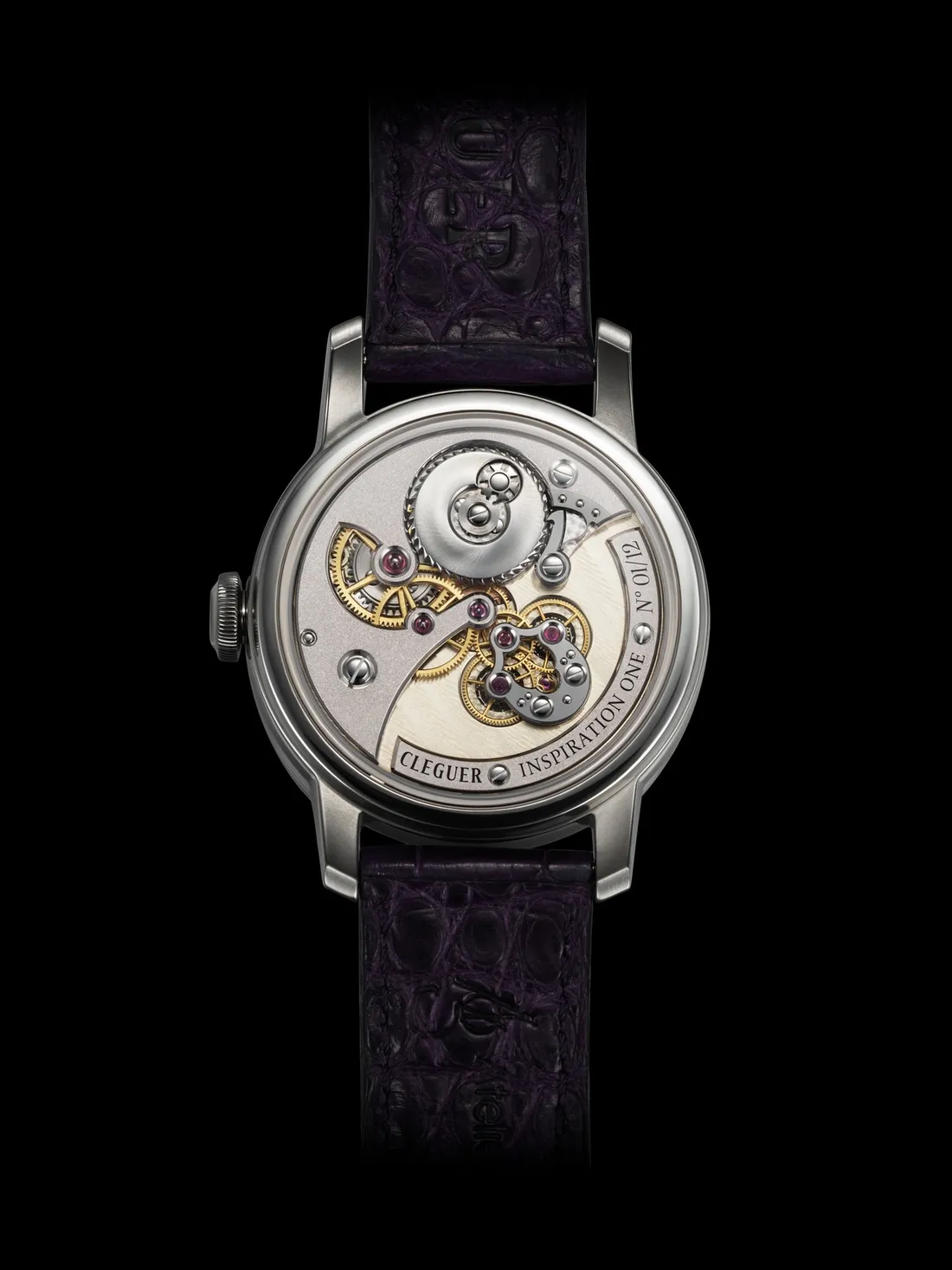
The watch in the words of its maker: Cleguer Horology, Inspiration One