"In the deserts of the Nejd, when you lie back on the cold sand at night and turn your head towards infinity, the dimensions of time and space change. In that pitch darkness no human hand has touched, the Milky Way pours over you like a river of light, and you fix your eyes on a single star whose light is only now arriving from millions of light years away. And in that instant, in the crushing silence of the desert, an entire history settles over your mind:
What magnificent civilisations came to these lands with noise and left in silence. What great sages, what noble prophets walked over these red sands. Did the people who brought the whisper of truth to this ancient geography ever look at this one star I am staring at now? At what angle did they take in that single drop of light, and with what sorrow, what melancholy, what helplessness in their hearts? What did they think as they looked, and what did they whisper to the Creator in the loneliness of the night?
It is then that you grasp it: all those proud cities, vast armies and arrogant structures raised by man are no more than the blink of an eye beneath this eternal ceiling of sky. True elegance does not lie in building and piling things up; it lies in scraping away, one by one, every superfluous noise in your soul, in your music and in your mind, until the truth stands there uncovered."
In the dim light of the living room, desert photographs, drawings and manuscript pages with the ink barely dry were spread across the table. The composer, just back from scoring a film in the deserts of the Nejd, had folded himself into an armchair with a mug of coffee. His wife, a philosopher, closed the notebook on the table and raised her head with a deep admiration in her eyes.
"Wow," she said, taking a long breath. "That opening... I can see a man lying under the night sky, questioning his own existence beneath all that infinity. In that week in the desert you did not only write music; you peeled away, layer by layer, the useless arrogance that sits on civilisation, on history, on the human soul. That is a remarkable depth. But there is something in the sketches that follow that I cannot make out..."
The composer smiled.
"What is that?"
"In among the visual notes you have written the Lacrimosa from Mozart’s Requiem. You say the sound of the wind over the dunes reminded you of that dark, tragic and yet perfectly balanced structure in the Lacrimosa. What do you mean by that? Is the Lacrimosa not a lament for the dead, the word itself meaning full of tears in Latin? In the middle of the desert, how did you reconcile that tragic grief with balance?"
"The Lacrimosa is the last eight bars Mozart managed to put on paper," the composer said, taking a sip of his coffee. "When the pen fell from his hand the work stopped in the middle of a sentence, and after his death his pupil Süssmayr finished the rest. Those eight bars are a hairline of grief drawn exactly where human breath comes to a stop. It is a slow twelve eight, counted like breathing, and that two note descent in the strings is a sigh itself. There is no loud grief in the desert either. Between the 45 °C that scorches you by day and the freezing cold that falls at night there is an enormous equilibrium. The low frequency drone the wind makes as it crosses the dunes does not crush you; on the contrary, like Mozart’s shifts between major and minor, it holds you upright. The desert does not shout. Like the Lacrimosa, it whispers."
"And Bach?" she went on. "In the note from the third day you write mathematical order in the Goldberg Variations. What does the wild heat of the desert have to do with Bach’s rule bound mathematics?"
"When the temperature falls below zero at night in the desert, everything contracts at the molecular level," the composer said. "The only thing you can do to stay standing is to throw away every unnecessary volume. When Bach pushed mathematics to its limits in the Goldberg Variations, he was in fact deciphering that same rule of minimalism. All thirty variations stand on the same bass line, and every third one is a canon whose interval opens by one more degree; the work is really thirty different skins over a single skeleton. Without a mathematical simplicity, music cannot survive a freezing desert night either."
She pulled one of the photographs out of the pile.
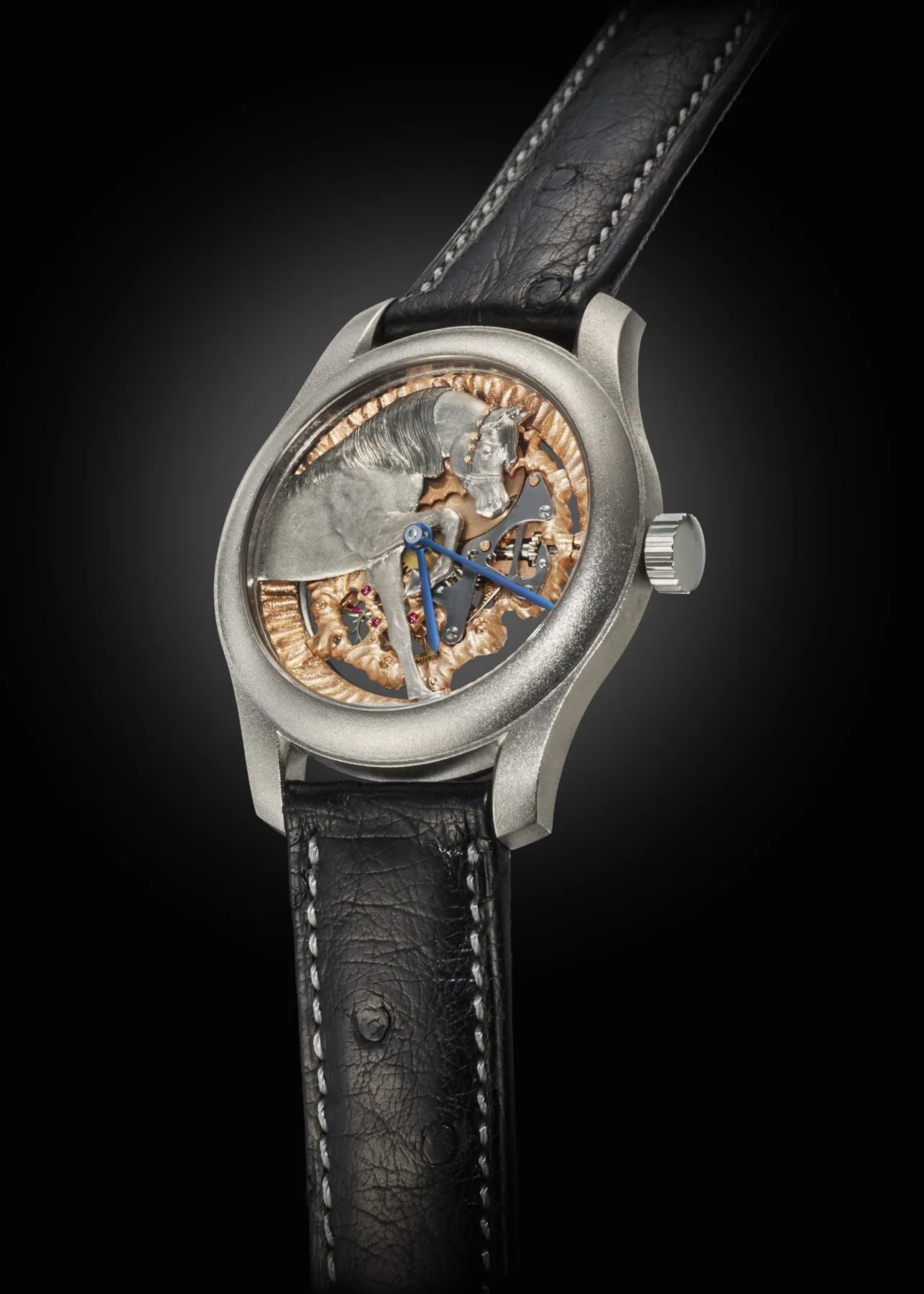
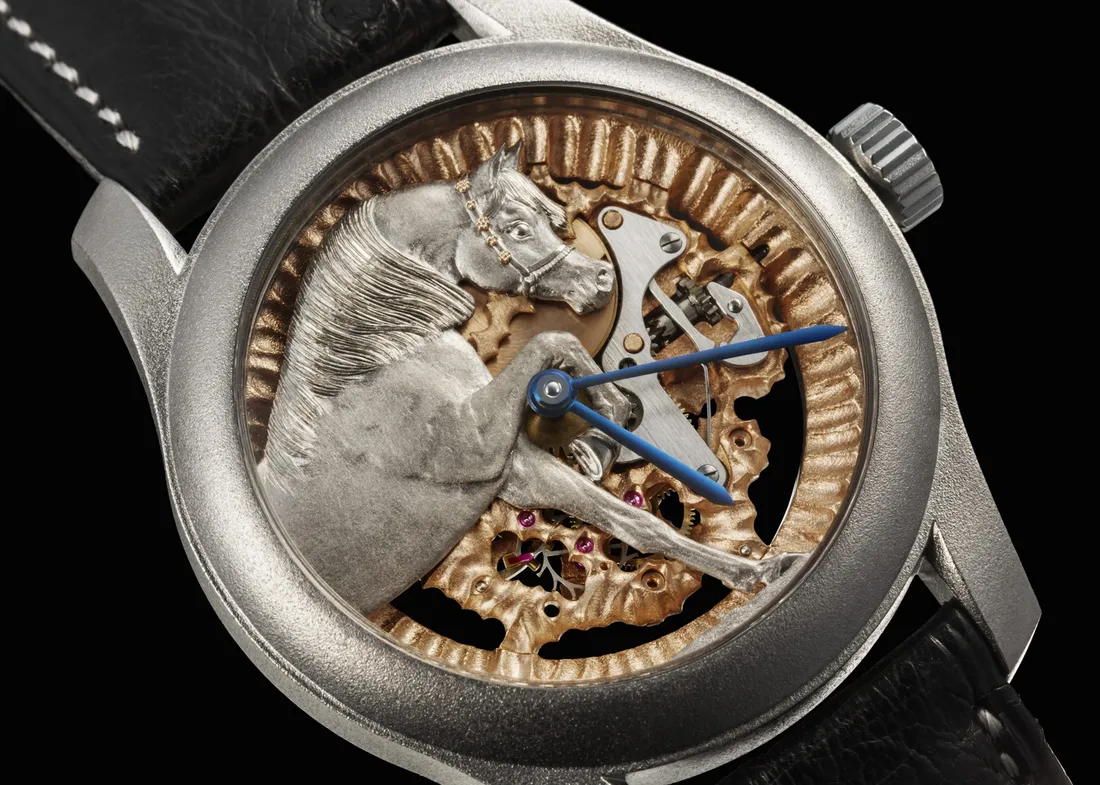
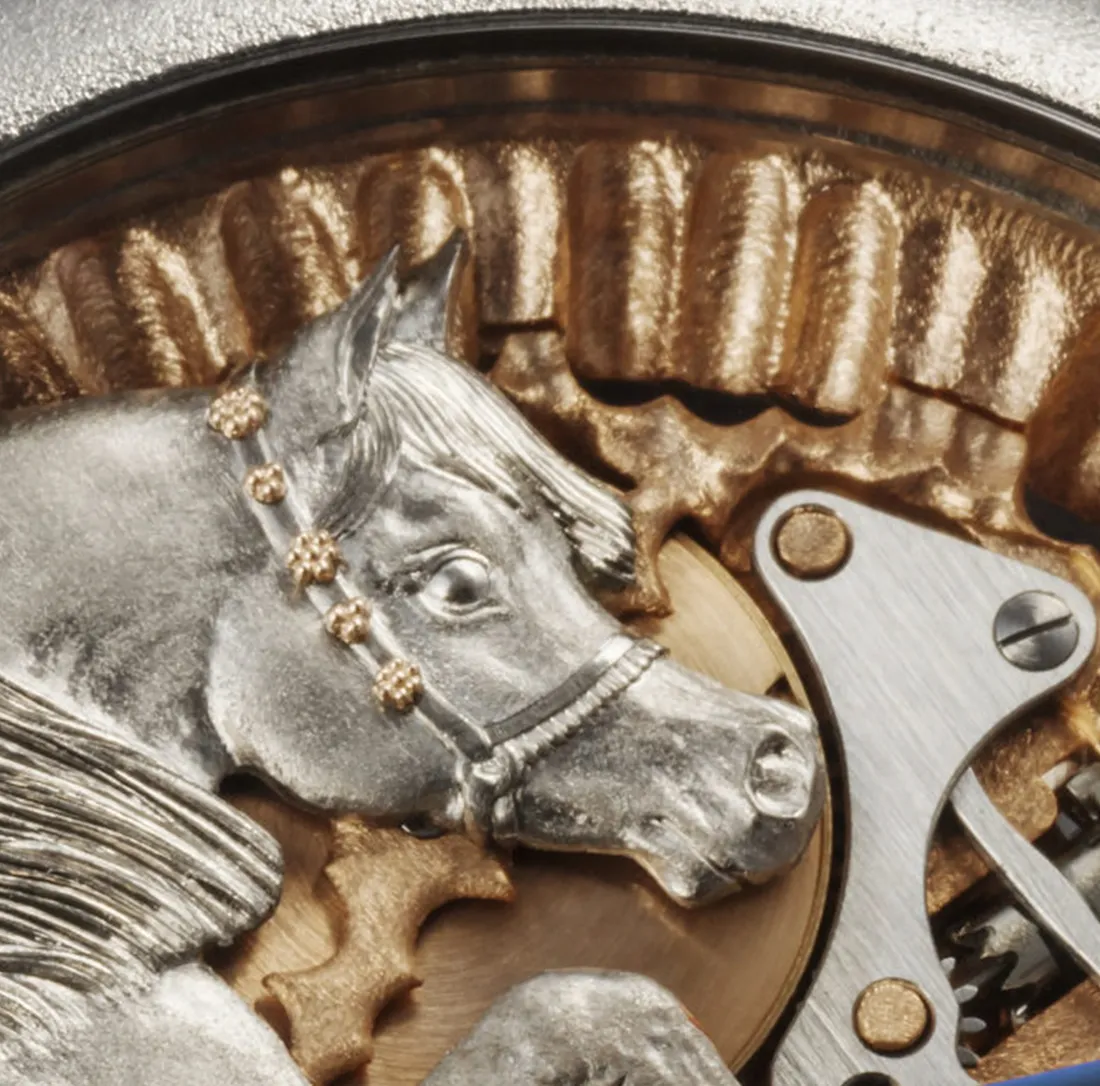
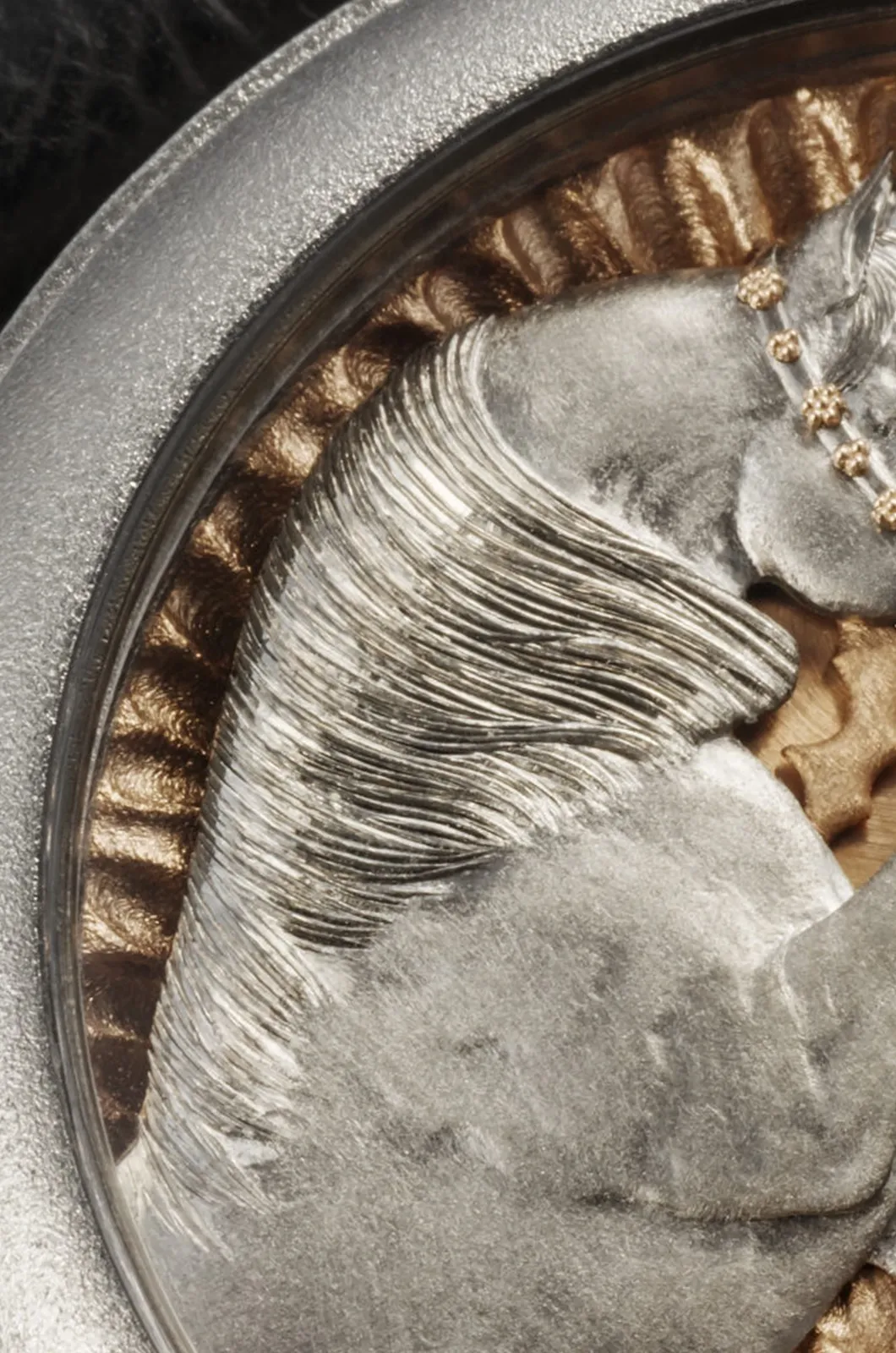
"And this?" she said, holding it up to the light. "My God... What an elegant thing this is! A rearing horse carved out of white gold. It is like a piece of sculpture with everything inside it hollowed away. I want one too. Where in the middle of the desert did you find this?"
The composer laughed and leaned back.
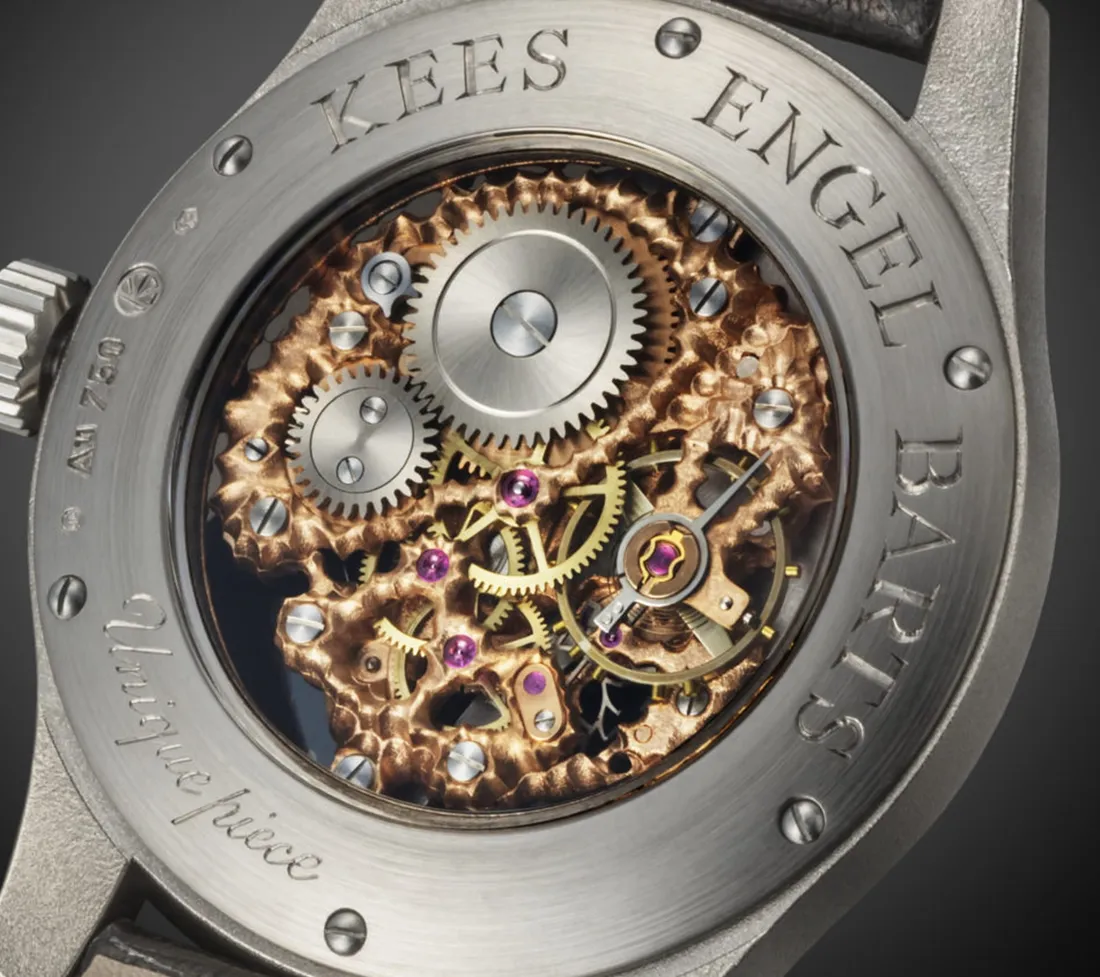
"On the fourth night, by the fire, I met an anatomist studying the bone structure of the animals in the region. I saw this on his wrist. It is a unique piece from the hands of the Geneva master Kees Engelbarts."
"And how is it made? Tell me the details."
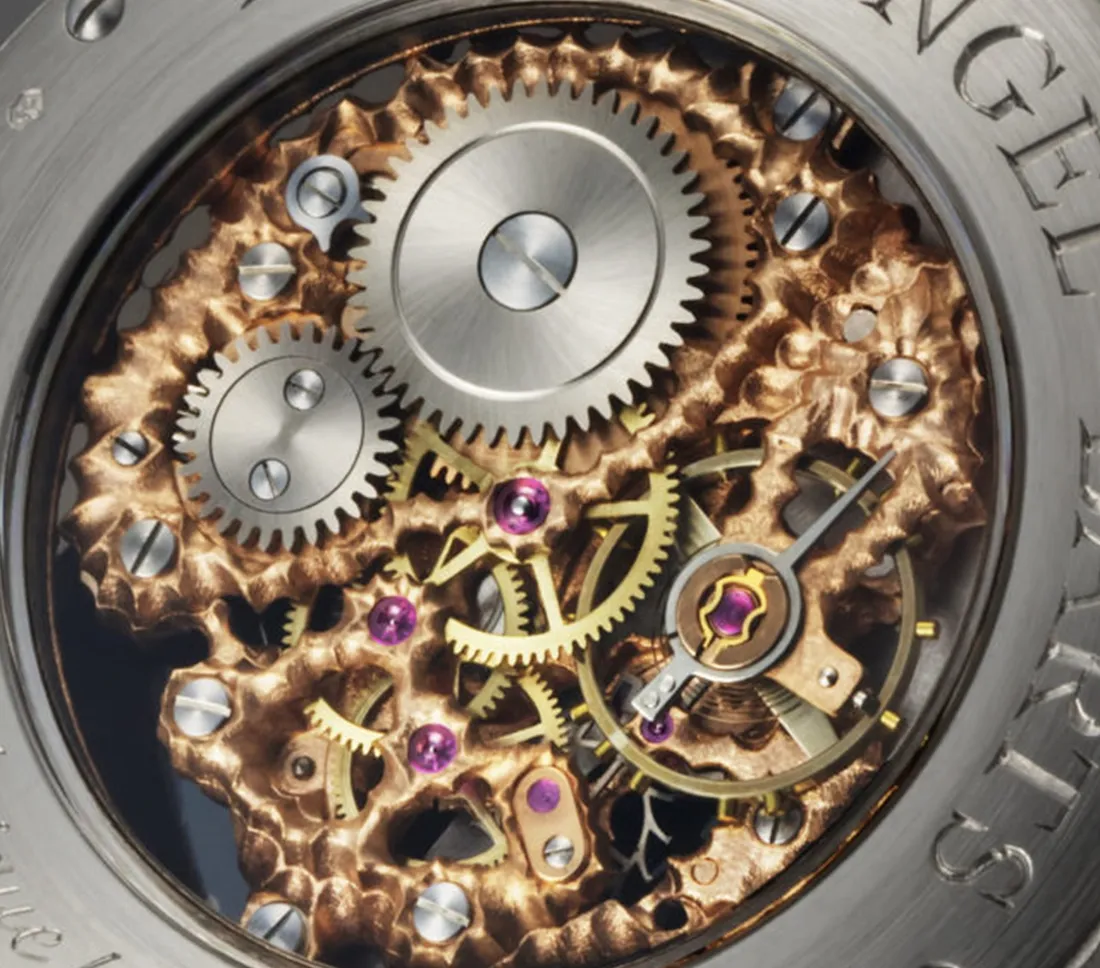
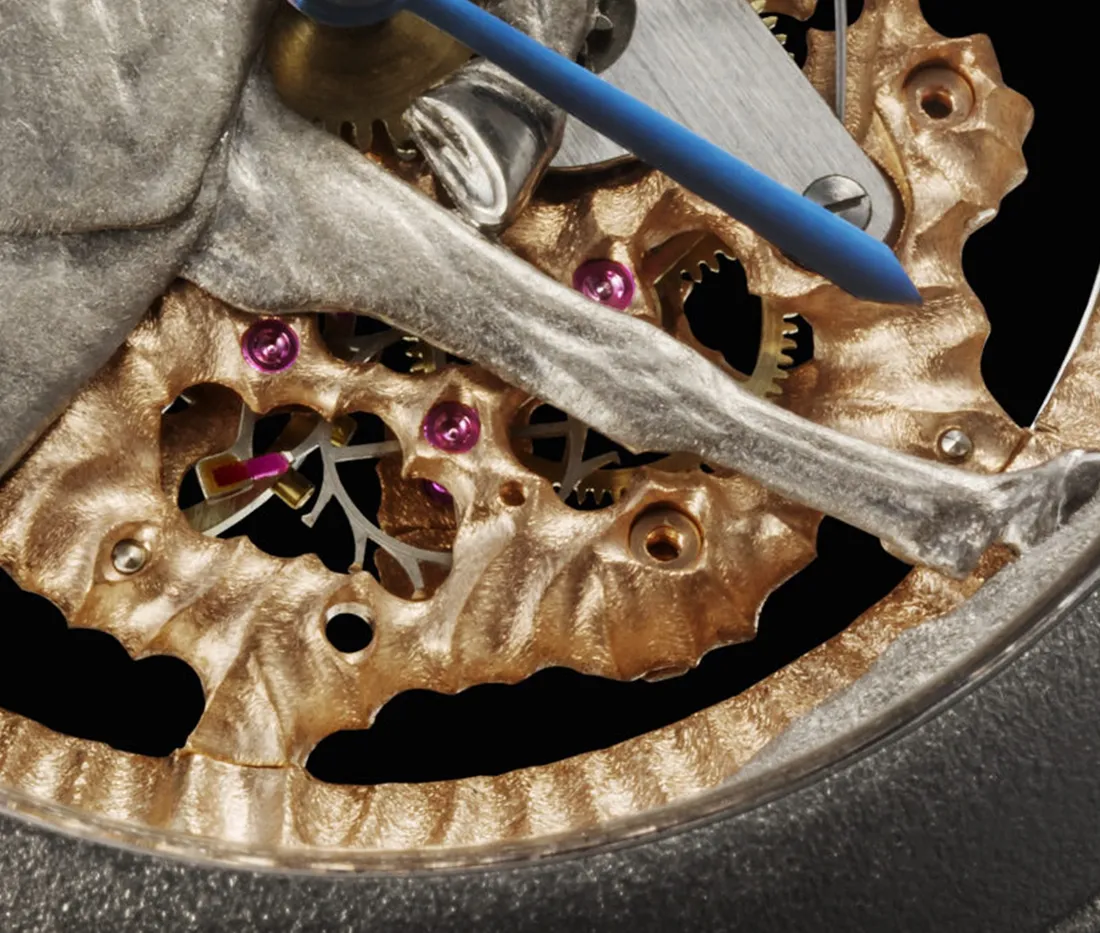
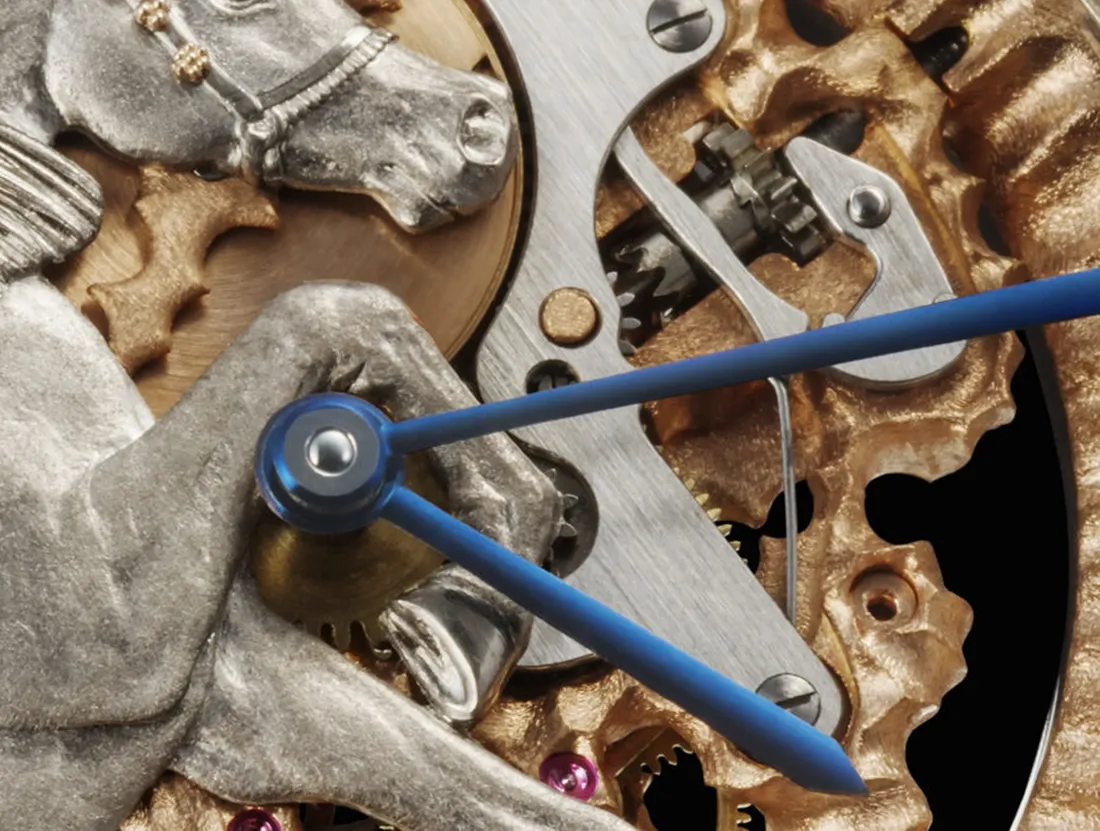
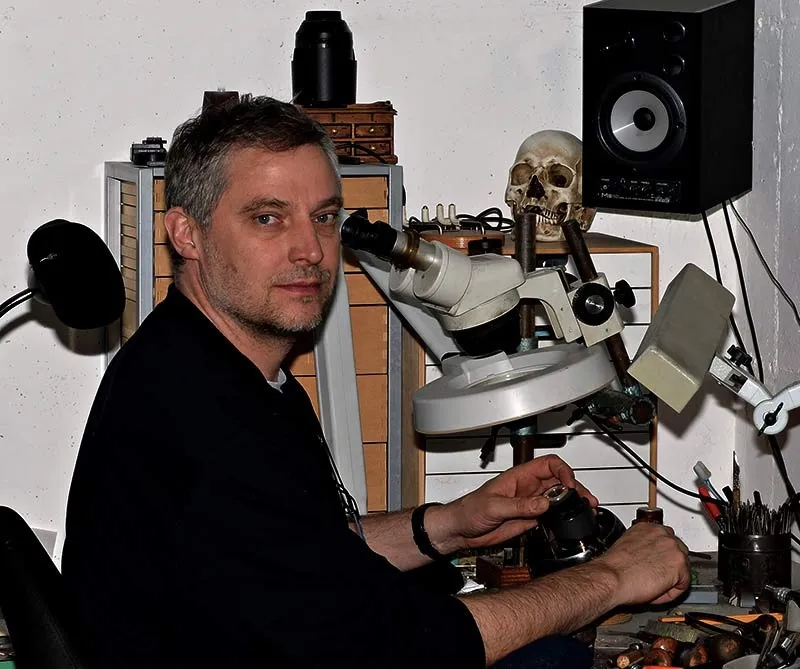
"There is nothing modern or complicated inside it; a nostalgic, historic Peseux 330 calibre is running in there. It beats eighteen thousand times an hour. That is exactly five slow, dignified steps a second, like the rhythmic gait of a desert horse. A slow balance rubs less, its oil lasts longer, its parts wear later. The master took a piercing saw to those heavy plates of traditional watchmaking and cut them away one by one. He scraped off every gram of the movement that was not carrying a load."
She brought the photograph right up to her eye.
"And the horse itself? Even in a photograph it catches the light beautifully."
"The horse is cut in solid white gold with micro gravers, as a three dimensional relief. Its mane thrown by the wind, the muscles of its neck, all shaped by hand under the microscope. The pink gold ground behind the horse has been turned into the rolling dunes of the Nejd with hammer blows. Even the cut edges of the metal are bevelled at forty five degrees and brought to a mirror with wooden sticks and diamond paste."
She studied the photograph with a philosopher’s attention.
"And what did the anatomist say about all this?"
"He told me this. Years ago, in the Rub al Khali, that vast unbroken sea of sand in Saudi Arabia, he came across an old Bedouin. The Bedouin stroked the head of his purebred and said: this order, this boldness and this architecture cannot be a variation of chance."
She sat up sharply.
"Do you realise you have just touched the most famous design argument in all of philosophy? The watchmaker analogy William Paley set out in his Natural Theology of 1802. Paley says: if your foot strikes a stone as you cross a field, you may suppose it has always lain there. But if you find a complicated watch on the ground, then even if it does not run you are obliged to admit it had an intelligent designer. The sentence a Bedouin formed looking at the anatomy of a horse in the middle of the desert and Paley’s teleological argument are exactly the same idea of telos, of purpose."
The composer smiled.
"Exactly. Kees Engelbarts hollowed out the heavy metals inside the watch and left behind the dignified tick of a Peseux 330 at eighteen thousand beats. The Creator carved away every excess in the Arabian horse and left behind the most perfect creature of the desert. And I hollowed out all the noise in the music and left behind the symphony. Art, philosophy and mechanism all end up obeying the same simplicity."
format_quote"The desert does not shout. Like the Lacrimosa, it whispers."
format_quote"True elegance does not lie in building and piling things up; it lies in scraping away, one by one, every superfluous noise in your soul, in your music and in your mind."
Hasan Bekmezci