
Time is a fine grain of sand slipping through the hollow of our hand; we have neither the strength to hold it nor the power to halt its flow for a single moment. Since the first day of its existence humanity has tried to measure time with the brass wheels of a tower clock, with the falling particles of an hourglass, or with the leaves of a calendar. Yet time lies far beyond these elegant mechanisms and small scales we have built; it is a colourless, spaceless and bottomless ocean breaking endlessly on a shore. And we are mortal travellers standing at the edge of that ocean, trying to measure those immense waves with the tiny watches in our hands.
It is precisely for this reason that, in the deepest springs of Eastern and Western mysticism, an alchemy of time was devised to make time comprehensible to the human mind. The legendary image told so that we might imagine the vast, engulfing mass of time and eternity presses against the walls of our mind like this.
Imagine that there is not one world like this one but a full thousand of them. And each of those thousand worlds is filled, fold upon fold, to the brim with grains of wheat. There is a bird: jet black of wing, solitary and outside time. Once every thousand years this bird descends to that sea of wheat across the thousand worlds, takes a single grain of wheat on the tip of its beak and flies off into the depths of space.
When the bird, coming once every thousand years, has consumed one by one and finished the billions of grains that fill those thousand worlds, that vast span, beyond the reach of imagination, is not even as much as the blink of an eye beside eternity. For eternity, that vast stretch of time is merely a moment.

format_quote"Even when the bird has consumed those thousand worlds one grain at a time, the span that has passed is no more than a moment beside eternity."
Hasan Bekmezci
In this deep eddy of time the human mind is lost. Every thousand years that grows on the wing of that labouring bird throws in our face how short a single breath the human life is. The past is now a shadow and the future a dream not yet born. The only reality left to us lies on that narrow threshold between two moments, in that hairbreadth instant.

Faced with this terrifying magnitude of eternity, mankind has not drawn back in helplessness. Mind, craft and beauty have come together and turned eternity into a jewel we can carry on the wrist. The Latin decennium, a period of ten years, is the most mature circular movement in a craftsman’s life.
In celebrating their house’s ten-year journey of craft, the brothers Bart and Tim Grönefeld have laid exactly this existential contradiction on the table. The two set up their atelier in 1998 in the Dutch town of Oldenzaal, and the first watch to carry the family name came in 2008, which is why the tenth year falls where it does. The 1941 Decennium Tourbillon brings the solitary bird that eats one grain of wheat every thousand years face to face, under the same dial, with the ten accumulated years of a human craft.
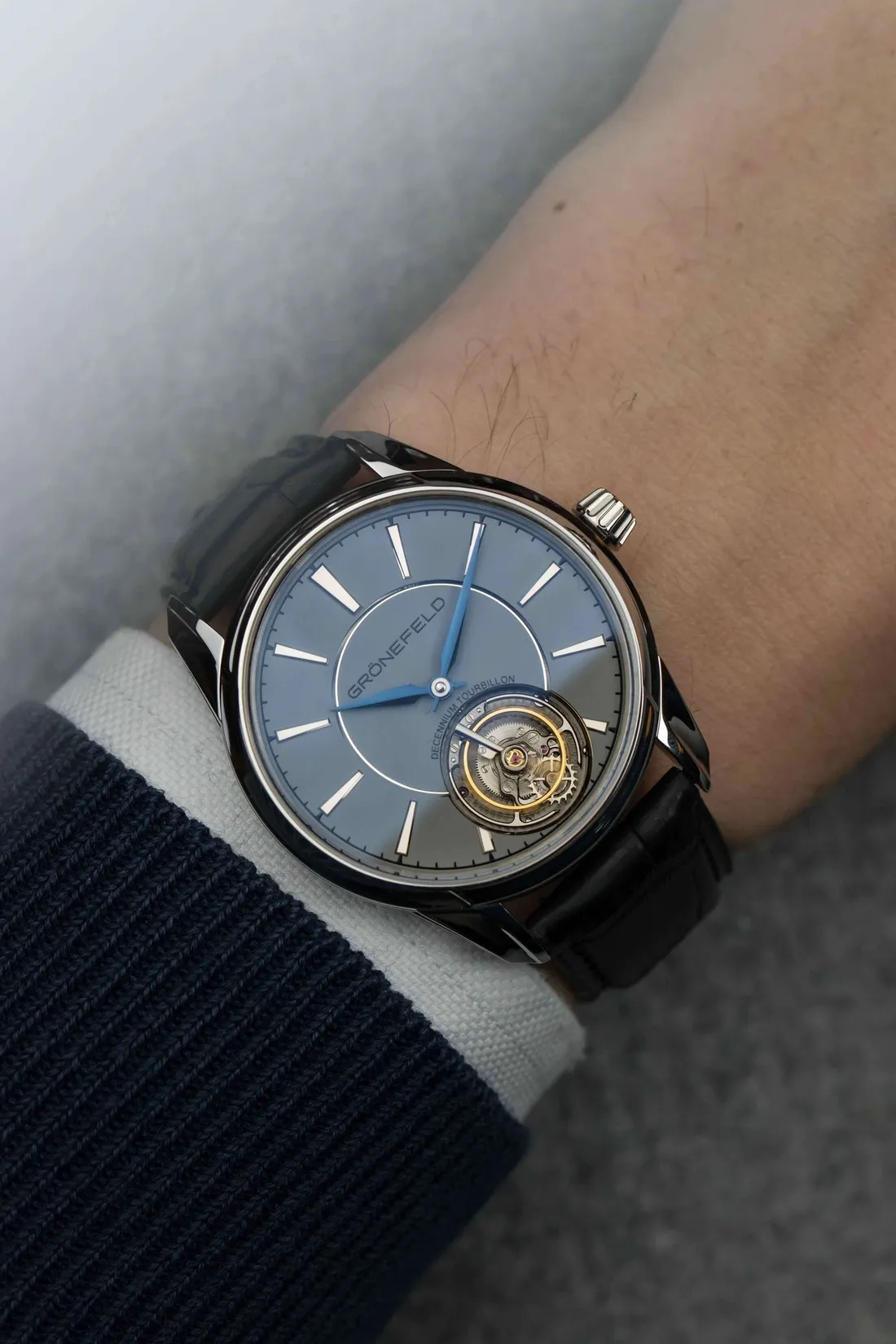
The architecture of the watch reads in three layers. Outermost is the heavy, elegant and incorruptible material armour of eternity: a Pt950 platinum case of thirty-nine and a half millimetres, and within it a dial of solid 925 silver. Beneath that, at six o’clock, the flying tourbillon turns as the cage of time and of eternity. And at the bottom stands the place where human motion becomes an endless mechanical cycle: an automatic movement with a 22-carat red gold rotor.
format_quote"The most mature circular movement in a craftsman’s life is ten years; the bird’s is a thousand. The two meet under the same dial."
Hasan Bekmezci
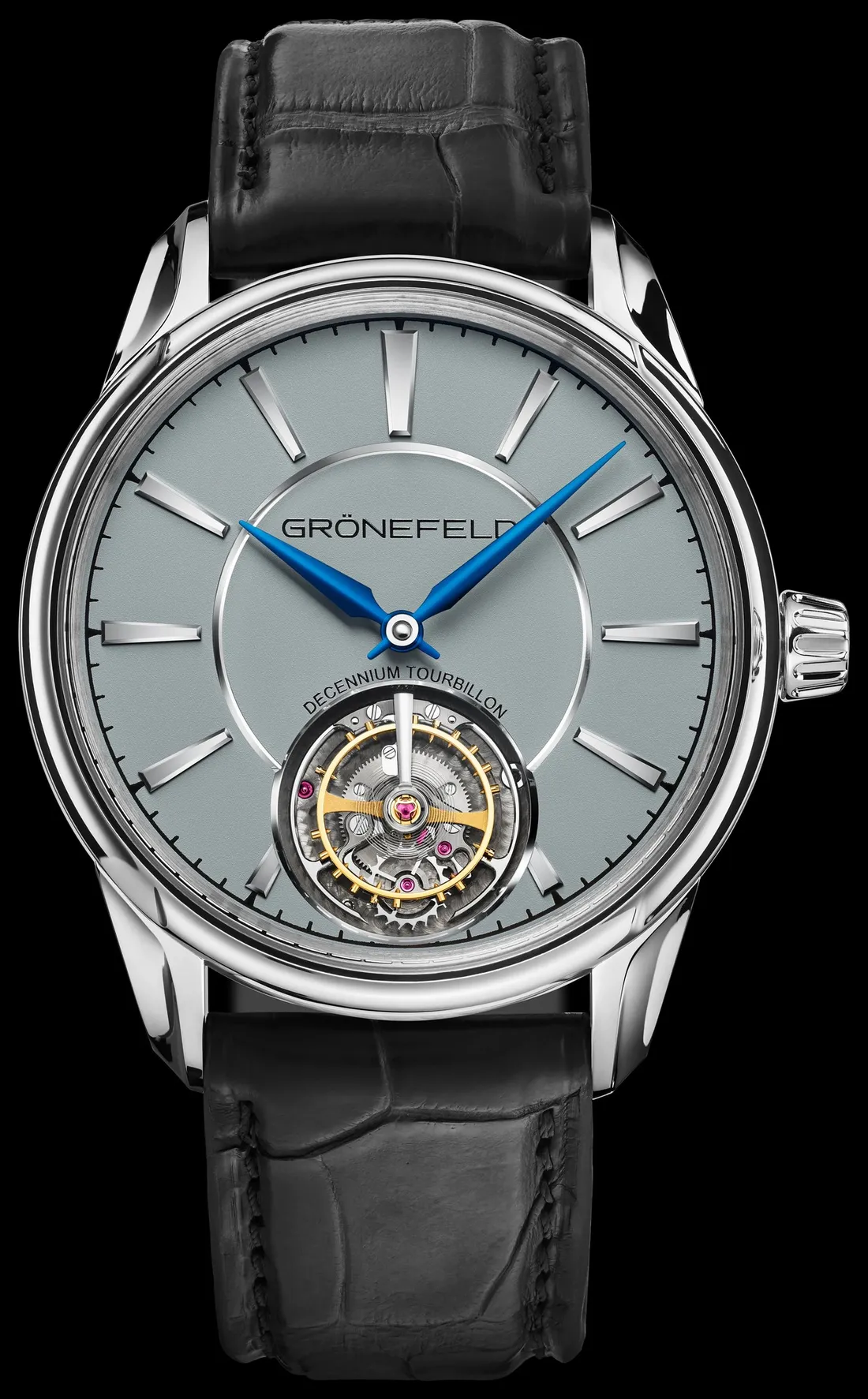
The idea of eternity hidden in the wingbeats of that legendary bird has been melted, like an artistic text, into every single component of the Grönefeld 1941 Decennium Tourbillon.
At the very heart of the movement lie the escape wheel that gives time its micro rhythm and the ruby claws of the lever. That pair of sharp, beak-like claws on the lever catches the teeth of the turning escape wheel at every oscillation as a beak would, releases them, and catches them again. That unbroken tick of the movement is the mechanical echo of the solitary bird of the legend coming down to earth once every thousand years and pecking up a single grain of wheat on the tip of its beak. Every tick keeps the rhythm on our wrist like one grain subtracted from eternity. This heart beats twenty-one thousand six hundred times an hour.
format_quote"Every tick keeps the rhythm on our wrist like one grain subtracted from eternity."
Hasan Bekmezci
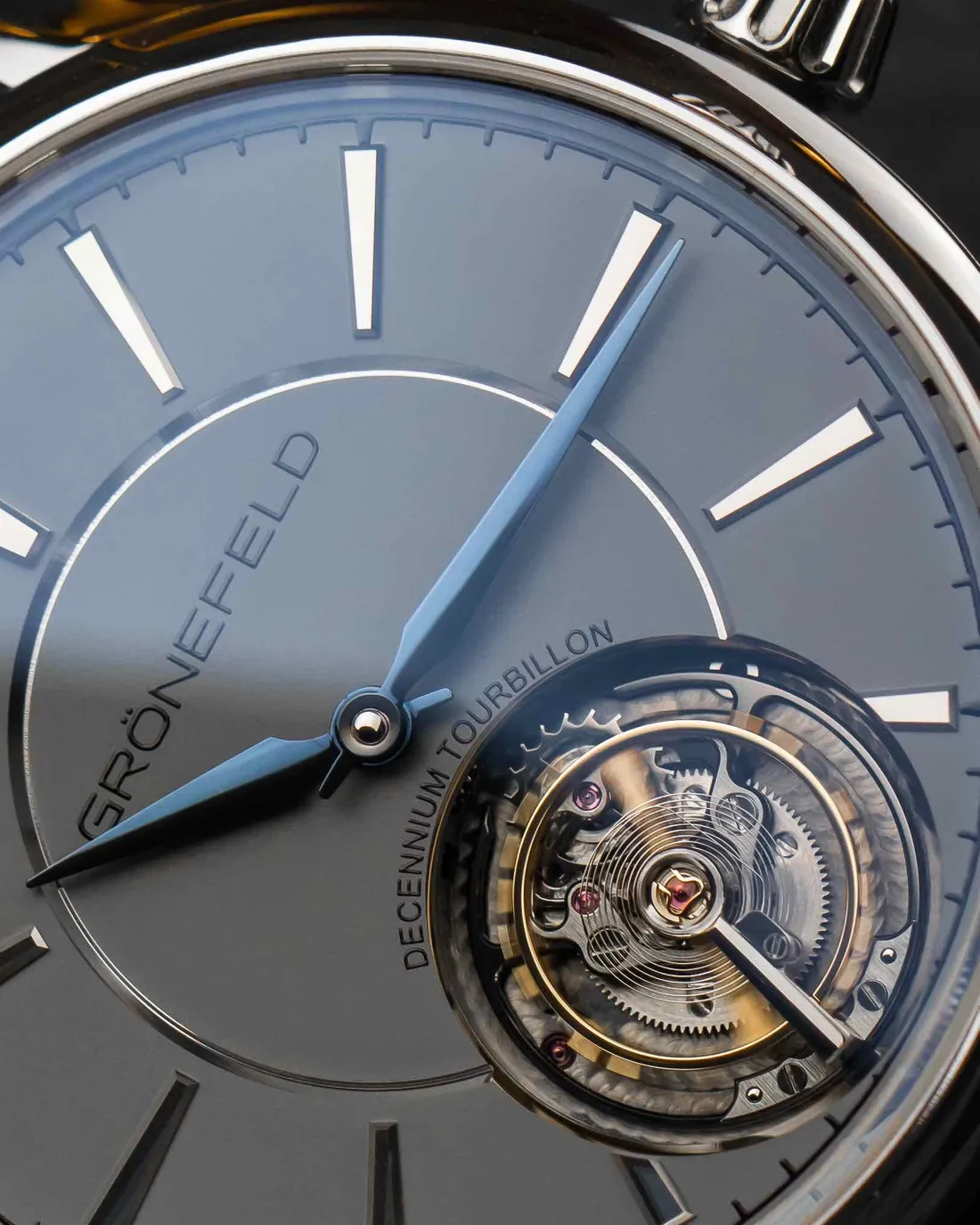
The tourbillon cage placed at six o’clock draws the eye with its flying construction, held by no bridge from above. That is exactly what leaves the cage free: there is nothing over it holding it, and so the balance wheel and the escapement stand before the eye without anything in the way. Made of stainless steel, this cage carries the balance through every position once a minute, so that the differences in rate which gravity causes in different attitudes are averaged out against one another. Like that bird gliding down to earth once every thousand years for a grain of wheat, the tourbillon cage performs its own circular and rhythmic dance of time about itself.
Against the destroying power of time the watch is wrapped in a platinum case, one of the heaviest and least corruptible metals in nature: thirty-nine and a half millimetres across, ten and a half millimetres slim, one hundred and eighteen grams. The case is carved with a specially shaped cutter, which is how the concave recesses and convex surfaces arise, and between every milling stage the case is polished again so that the contours are not lost. The dial, worked in a matte grey on solid 925 silver, reflects the grave stillness of that infinite cosmic void which swallows the sea of wheat.
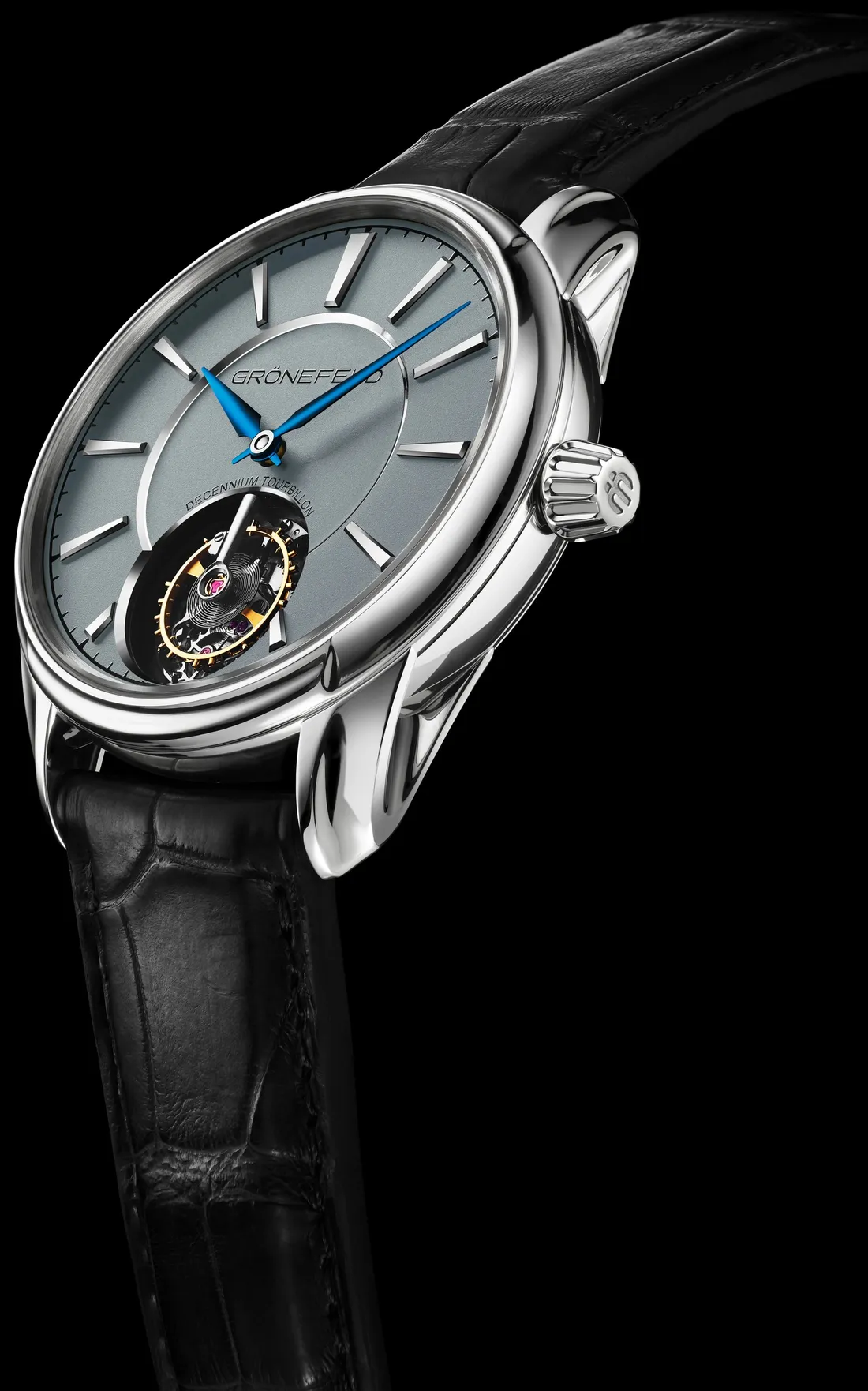
The hands, blued by fire, record every tick of time on the grey dial like so many lines of a poem. The monobloc rotor of 22-carat red gold on the back, wound by the wrist movement of its owner, converts the energy of mortal man into a mechanical eternity. That rotor is finished by hand from end to end and turns on a ceramic ball bearing, which is why it does not wear and asks for no lubrication.
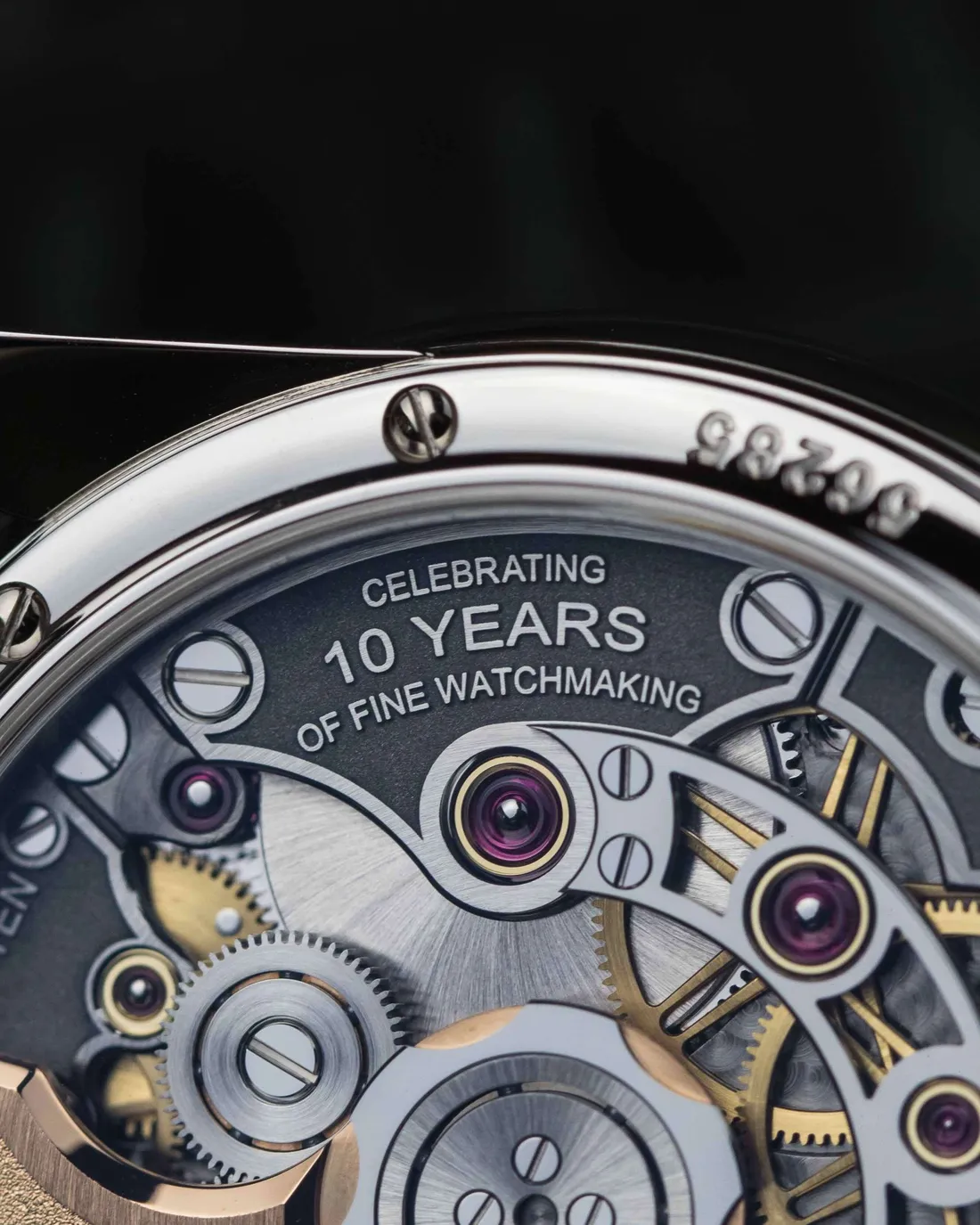
The upper edge of the rotor is not straight. It traces a curve that follows the bell-shaped facades of Dutch canal houses, and that same facade is the shape of the steel bridges behind it. The edges of the bridges are bevelled by hand, their centres blasted, and relief lettering is cut into them. Some of the jewels sit in solid gold settings, the screw heads are polished to a mirror, and their rims and slots are chamfered. The movement is called the G-07; it is built from two hundred and fifty-nine parts, carries thirty jewels and runs fifty-six hours.
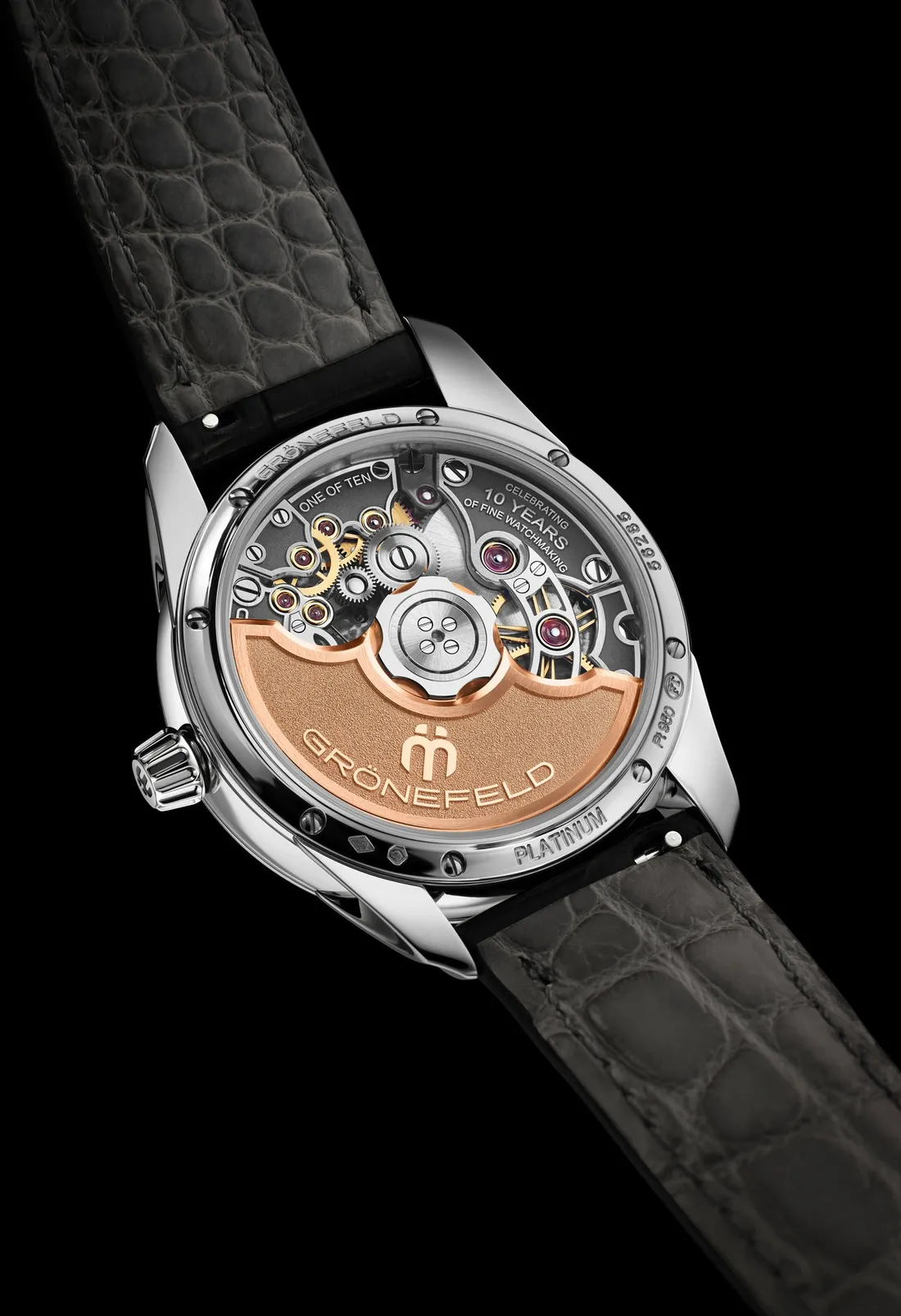
In contrast to the boundlessness of eternity, only ten examples of this model have been made. Each watch is a rare time capsule of the first ten-year cycle the house has left behind it. That number is written on the watch as well: beside the line cut in relief into the bridge, Celebrating 10 Years of Fine Watchmaking, the words One of Ten stand on the case back. The price is one hundred and forty-five thousand euros excluding taxes.
The name given to the case, 1941, is read from here too. That is the year the two brothers’ father was born. So this watch, standing in the shadow of a bird that reduces a thousand worlds by one grain every thousand years, takes its name from a single year of a single man.
One is that eddy of eternity beyond the limits of our mind, not to be measured even by the exhaustion, one grain each thousand years, of the wheat that fills thousands of worlds; the other is the Grönefeld 1941 Decennium Tourbillon, which fits that vast eternity into a platinum case of thirty-nine and a half millimetres, into the pecking of the wheel by the lever jewels like a beak, and into the circular turning of a flying tourbillon.
Let that solitary bird go on descending once every thousand years to take a single grain of wheat on the tip of its beak; this masterpiece on the wrist will go on drawing a single drop out of that vast ocean of eternity with every tick the lever catches like a beak, and go on making it immortal on our wrist every second.
The watch on its maker’s own page: Grönefeld, 1941 Decennium Tourbillon