The universe expands by an invisible tension the Creator has embroidered into the fabric of space and time. The unseen hands pulling that fabric outward are sealed with the mysterious constant that lies in the breast of the vacuum.
Time is the silent reflection of eternity upon a set of wheels; independent watchmaking is the pure philosophy that makes that eternity concrete in the hands of a craftsman.
At the start of the twentieth century, when Albert Einstein had finished his general theory of relativity and put the gravitational equations of the universe on the table, he met an enormous crisis. His equations whispered that the universe could not stay static, could not stay at rest: because of gravity it had either to collapse into itself or to expand and fly apart.
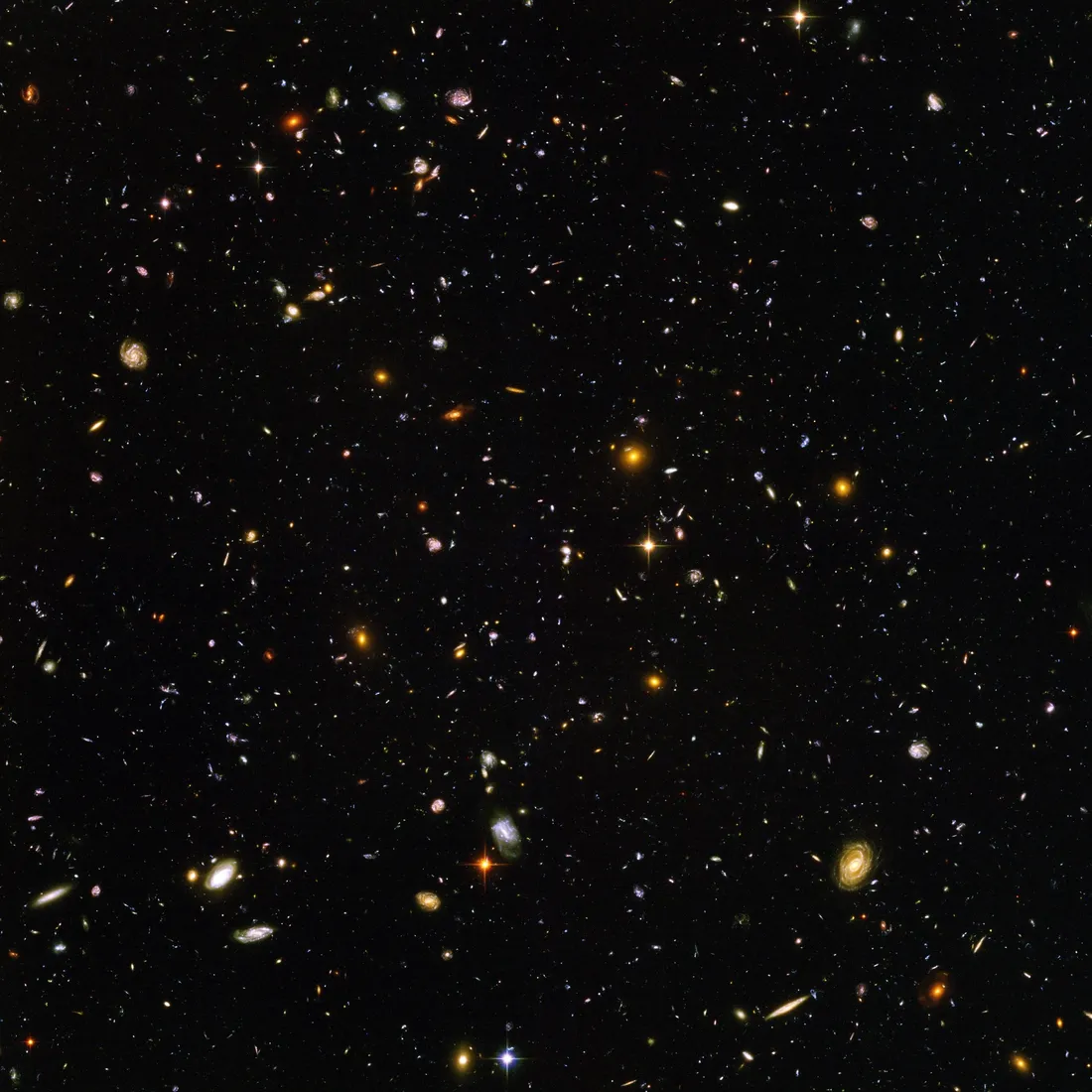
Matter attracts matter through gravity. If every star and every galaxy in the universe pulls on every other, then over billions of years that pull should have squeezed the universe slowly inward and collapsed it to an enormous point. Or, if the violence of the first explosion was too great, everything should have scattered away for ever. Yet the science of the day, and Einstein with it, believed the universe had stood still and unchanging from all eternity.
The physicist knew that the two sides of the equation had to come out equal. Looking at his own original equation, Einstein saw that the left side did not equal the right, which is to say that the equation blew up in a static universe. It was mathematically possible to add a constant coefficient that would not break the symmetry of the equation. Einstein did not do it on a whim; he used that mathematical opening to add a balancing term, written with the Greek letter lambda, and that term was the cosmological constant. The year was 1917, two years after he had finished relativity.
This term produced, against the inward pull of gravity, an invisible anti-gravitational force pushing the fabric of space outward, a pressure of the vacuum. Inward pull and outward push cancelled each other, and the universe stood still, just as Einstein had imagined it.
But in 1929 Edwin Hubble, with his enormous telescope, discovered that the galaxies were rushing away from us, which is to say that the universe was already expanding. Had Einstein not forced that artificial constant into his equations, he would have predicted from his desk that the universe cannot be static but must be expanding, and would have announced the greatest discovery in human history in advance, from an equation. Instead he had tinkered with the equation to hold the universe still by force. He never forgave himself for it, and he is reported to have called that intervention, in his later years, the biggest blunder of his life; the single source for the phrase is George Gamow’s memoir, and it appears in nothing Einstein himself wrote.
format_quote"Instead he had tinkered with the equation to hold the universe still by force."
Hasan Bekmezci
In the 1920s, at the Mount Wilson Observatory in California, Edwin Hubble was analysing the light of the galaxies with the most powerful telescope of the age, the hundred-inch Hooker. How had he managed it?
There is a rule well known in physics, the Doppler effect: the siren of a police car rises in pitch as it comes towards us and falls as it goes away. Exactly the same thing happens with light. If a galaxy is rushing away from us, the light waves coming from it are stretched and shift towards the red end of the spectrum.
After proving that the spiral nebulae in the sky were in fact separate galaxies outside our own Milky Way, Hubble caught a tremendous detail in the spectrum of the light coming from them: almost all of the distant galaxies were shifted to the red. And the further away a galaxy was, the more its light was shifted. This was the first observational revolution to prove that the universe is not at rest, that the galaxies are rushing apart from one another, that the whole of it is expanding. The same result had been reached on paper two years earlier, in 1927, by the Belgian priest and physicist Georges Lemaître; but his paper stayed buried in a small journal, written in French.
Hubble had found that the universe was expanding, yet for a long time scientists reasoned as follows: since the universe opened with the Big Bang, gravity must be slowing that expansion down; the universe must be braking with time.
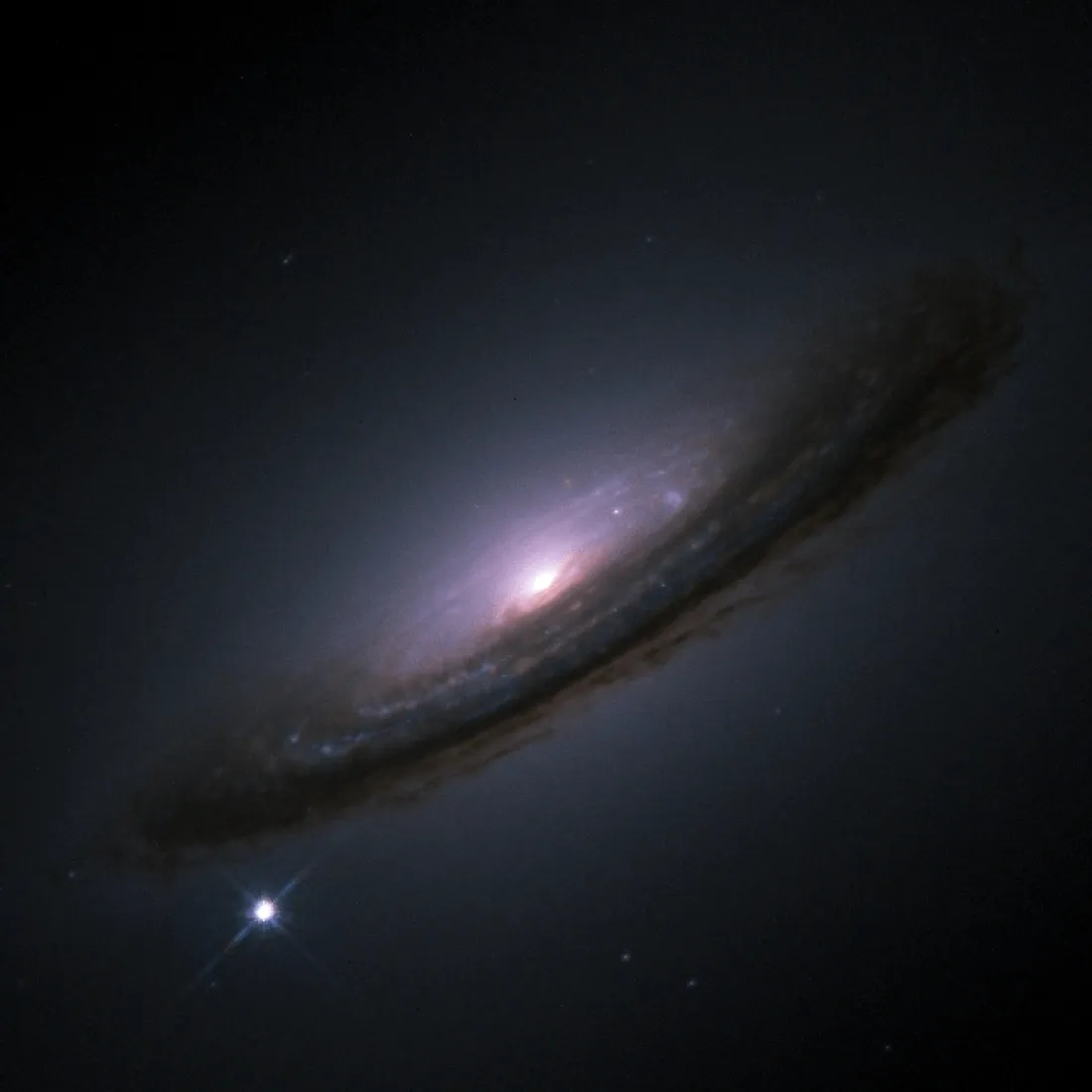
But in 1998 Saul Perlmutter, Brian Schmidt and Adam Riess examined the Type Ia supernovae in the deepest reaches of space, the standard exploding stars, and had an unbelievable shock. Those distant explosions were far fainter and far more distant than expected. The universe was not slowing down; it was opening faster than at any period in its history. The lambda Einstein had thrown away had come back as dark energy, which fills sixty-eight per cent of the universe. The three physicists took the 2011 Nobel Prize in Physics for the discovery.
The most perfect and most intuitive way to picture dark energy is the analogy of the yeast and the dough. Imagine an enormous bread dough prepared in your kitchen. Imagine throwing countless raisins into it; let those raisins stand for the galaxies of the universe.
The raisins pull faintly on one another through gravity, but into that dough such a magical yeast has been folded, which is to say dark energy, that when you put the dough in the oven the yeast begins to rise.
The raisins run nowhere, they do not move of their own accord; but because the dough itself, which is to say the emptiness of space, is rising, the raisins rush away from one another. And as the dough grows, the yeast inside it grows too, and the rate of rising increases. That active yeast worked into the dough of space is the secret of the universe changing gear and expanding fast for the last 5 billion years.
format_quote"The raisins run nowhere, they do not move of their own accord; but because the dough itself is rising, the raisins rush away from one another."
Hasan Bekmezci
The cosmological constant is the most delicate and most knife-edge setting among the twenty-six constants of the universe. Physicists measure its value at about ten to the minus fifty-two per square metre.
To see the horrifying precision of that number, set the measured value beside what theory says. When quantum field theory works out the vacuum energy empty space should carry, it returns a number larger than what we see in the sky by a factor of ten to the hundred and twentieth; a hundred and twenty digits after the point. The universe stands at the very bottom of that chasm, on that much of a remainder. Had the ratio been different by even a billionth of a trillionth, the universe would either have collapsed into itself in the blink of an eye or scattered into space before atoms could so much as join. This is the sharpest mathematical proof that the universe has been designed.
format_quote"This is the sharpest mathematical proof that the universe has been designed."
Hasan Bekmezci
What then is the intent in this coefficient of tension the Creator has set into the fabric of space? Let us look through four analogies.
You are standing on an enormous trampoline. If its springs were too slack the trampoline would sag in the middle and everyone on it would roll to the centre and crush one another; the universe would have collapsed into itself as soon as it was born. If the springs were tighter than they should be, the sheet would snap and tear and nobody could stand on it; atoms would have been torn away and scattered into space before galaxies and stars could form. Lambda is the tension setting that keeps the trampoline at exactly a liveable springiness.
A child is blowing up a balloon. If the breath is too weak the balloon shrinks and gravity wins. If the child blows wildly all at once the balloon bursts on the instant. Lambda is the divine breath that inflates the balloon without bursting it, at a steady rate that lets stars and planets be kneaded into shape.
You are weaving a carpet. Pull the threads too tight against one another and the carpet puckers and gathers. Leave them too slack and the loops scatter and no pattern forms. Lambda is the weaving rule that holds the loops in the fabric of space and time at exactly the right tension.
You are driving down a steep hill, which is gravity. Lambda is the millimetric balance between the brake that keeps the car from accelerating into a wall and the accelerator that keeps it from stopping dead on the flat.
format_quote"Lambda is the divine breath that inflates the balloon without bursting it, at a steady rate that lets stars and planets be kneaded into shape."
Hasan Bekmezci
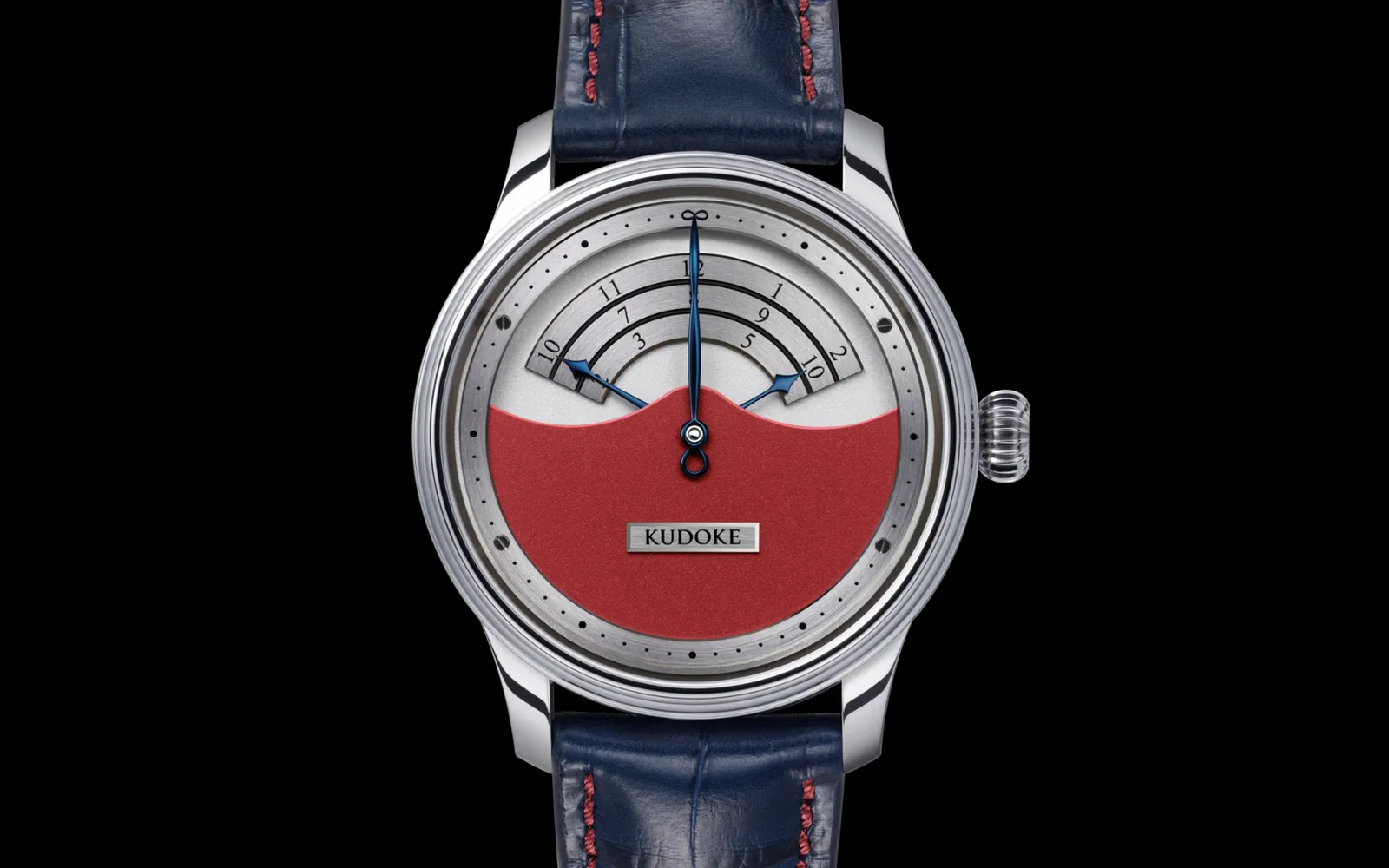
Taking its inspiration from this tension in space and time, from the acceleration of the expansion and from the coloured layers of the cosmos, we look closely, in all its fine detail, at the masterpiece that came out of the hands of Stefan Kudoke, the elegant genius of independent German watchmaking: the Kudoke 3 Raspberry. A two-part dial in raspberry tones, blue hands marked with the infinity sign and a German calibre finished by hand, all of it inside a thirty-nine millimetre steel case.
The Kudoke 3 Raspberry has an architecture bold enough to level the traditional, tedious moulds of the watch dial. That mesmerising deep raspberry covering the lower half of the dial carries straight onto the wrist the colour of the red nebulae hidden in the darkness of the universe, of the nurseries where stars are born, of the clouds of cosmic gas. This colour is no ordinary paint; it deepens with the angle of the light and offers a matt, velvet elegance. Its upper boundary is not a straight line but a gentle wave.
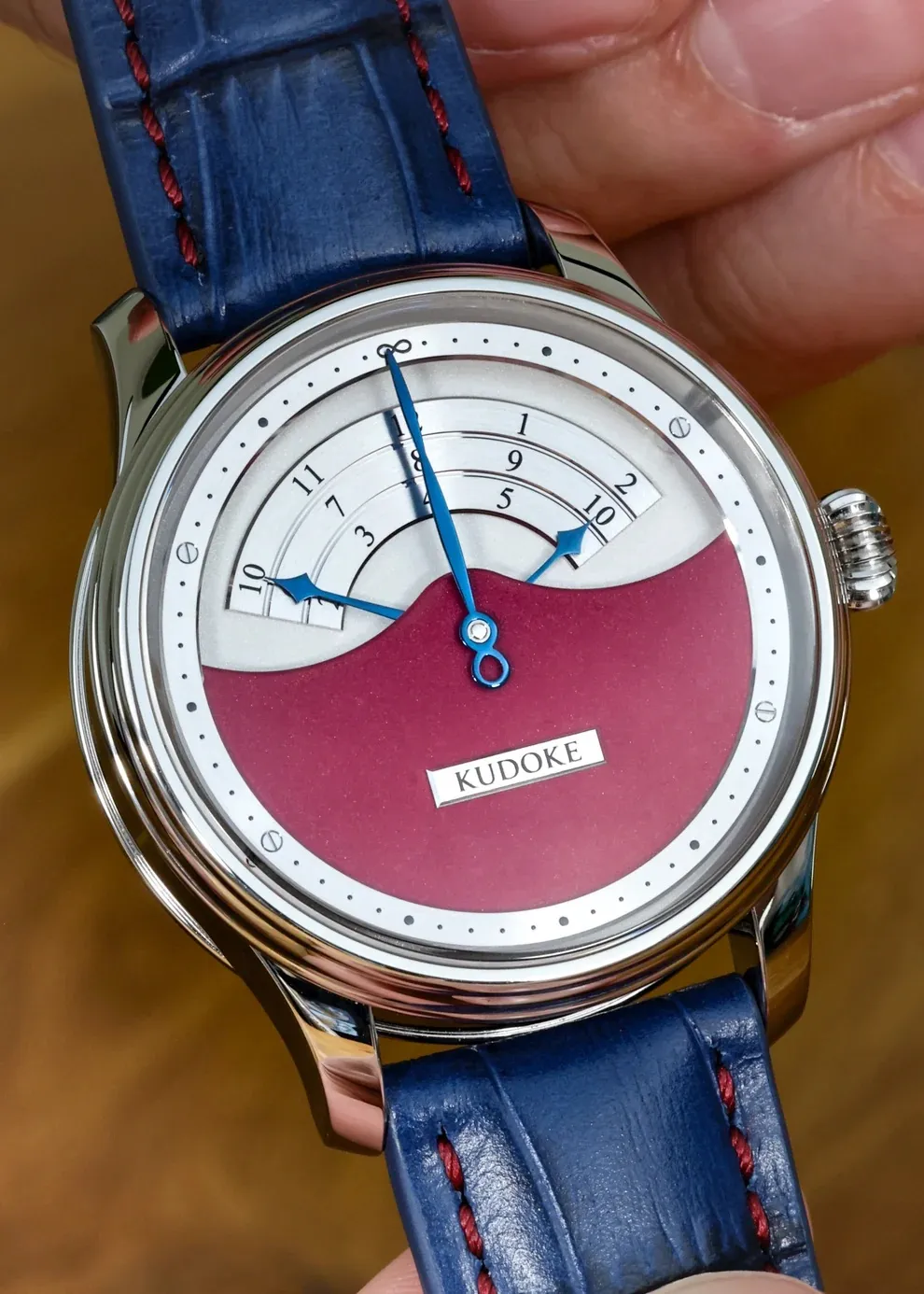
The sectioned silver rhodium ground above it and the fine minute track stand for that flawless, rational mathematical grid of the universe, which is to say the order of nature founded on number. The four screws that fix the plate to the dial beneath it are at the same time the ten, twenty, forty and fifty markers of the minute ring. Separating the hour and minute indications in this way is a flawless projection of the layered structure of the cosmos onto a dial.
Stefan Kudoke’s signature infinity sign is the philosophical centre of this model. Unlike the conventional arrangement of hour and minute hands, time in the Kudoke 3 flows through a combination of sectioned discs and a particular hand: the hand that shows the hours has three arms of three different lengths, and those arms travel between the two dials. The infinity symbol, placed with great skill on the hands and on the minute ring, whispers that time is not a linear prison but flows in an endless cycle along with the expansion of the universe; on the ring that sign has taken the place of the sixty outright.
The blued steel hands floating over the dial build an immense contrast with the raspberry ground and turn legibility into an artistic feast.


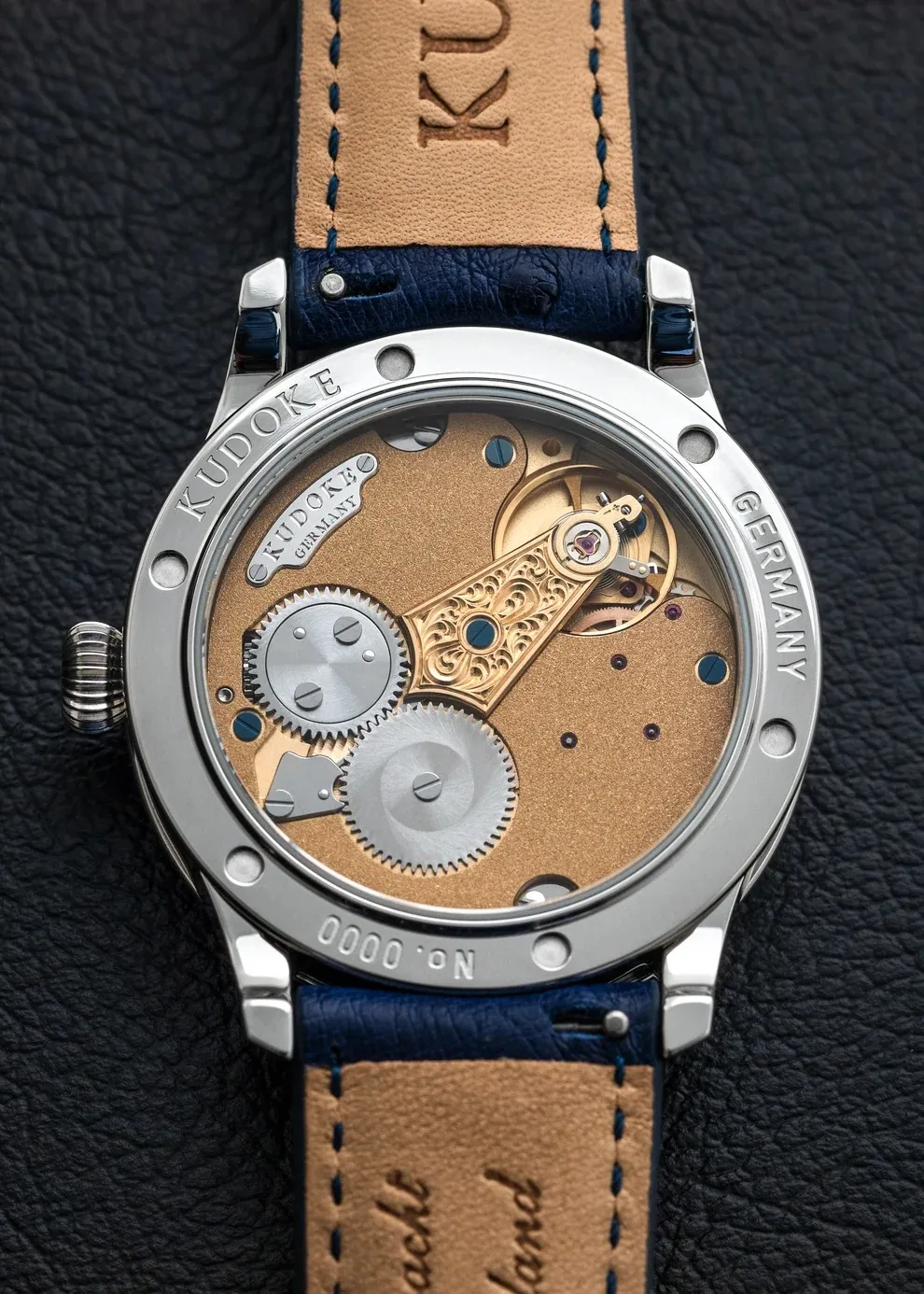
What makes this watch a true masterpiece is the mechanical universe that meets you when you turn the case over. At the heart of the watch lies a special hand-wound calibre, the brand’s own Kaliber 1, worked and decorated entirely by hand in Stefan Kudoke’s workshop in the traditions of Glashütte, the cradle of German watchmaking. The balance cock rising above the frosted gilt main plate is engraved one stroke at a time by hand; skeletonising, and relief engraving across the whole surface, are options ordered separately.
The bridges over the mechanism are carved by hand with the craftsman’s gravers to a hundredth of a millimetre. Every screw head is polished, every bridge edge bevelled. The calibre is thirty millimetres across and 4.3 millimetres thick, carries eighteen jewels, runs for forty-six hours and beats twenty-eight thousand eight hundred half-oscillations an hour.
Just as the millimetric precision of the universal constants holds the universe up, so every wheel and every spring inside this mechanism stands for the absolute flawlessness of horology. The case is steel, thirty-nine millimetres across and 10.3 millimetres high, sapphire on both sides; the crown is an onion. The raspberry dial was made for the brand’s first appearance at WatchTime New York in 2026, and it is not a limited series but a permanent member of the collection; it starts at nine thousand five hundred and eighty-four euros before VAT.

The cosmological constant that Albert Einstein added to his equations and then renounced, and that turned out in 1998, through exploding supernovae, to settle the fate of the universe, is the divine coefficient of tension in the fabric of space and time. The Kudoke 3 Raspberry, for its part, is a mechanical work of art that freezes on its dial the colours of that expanding universe, its nebulae in raspberry tones and its philosophy of infinity.
One is the cosmic seal the Creator hid in the expanding fabric of the universe; the other is the genius of independent watchmaking that raises that order into a monument on the wrist, with raspberry tones, infinity symbols and Glashütte bridges worked by hand.
The watch in its maker’s own words: KUDOKE, the KUDOKE 3