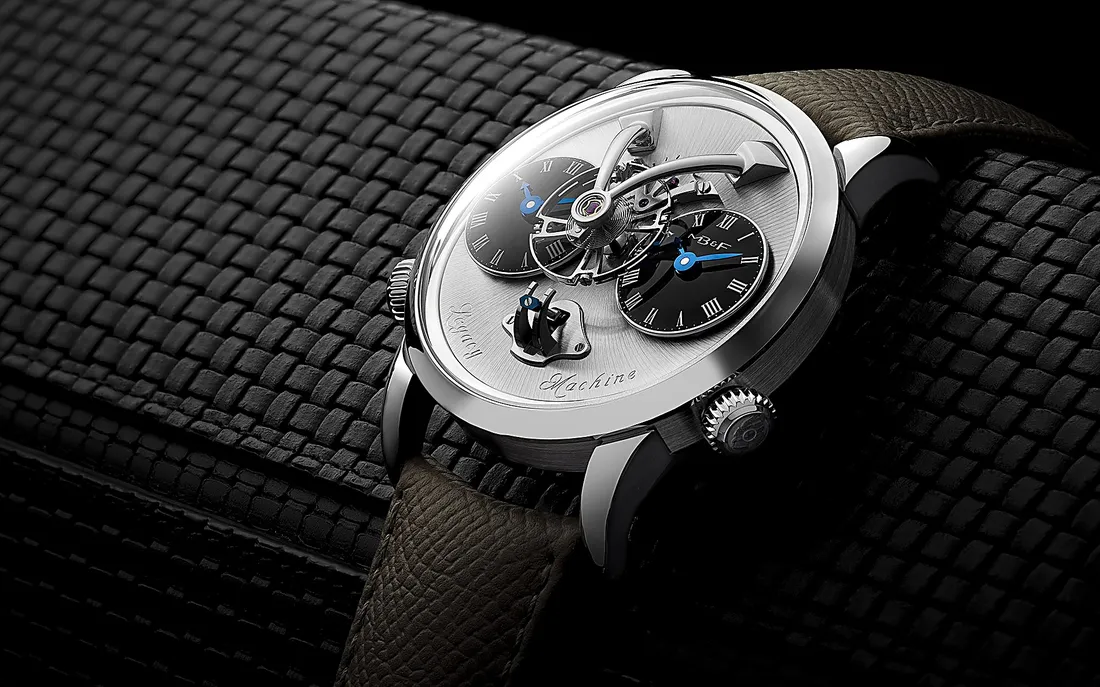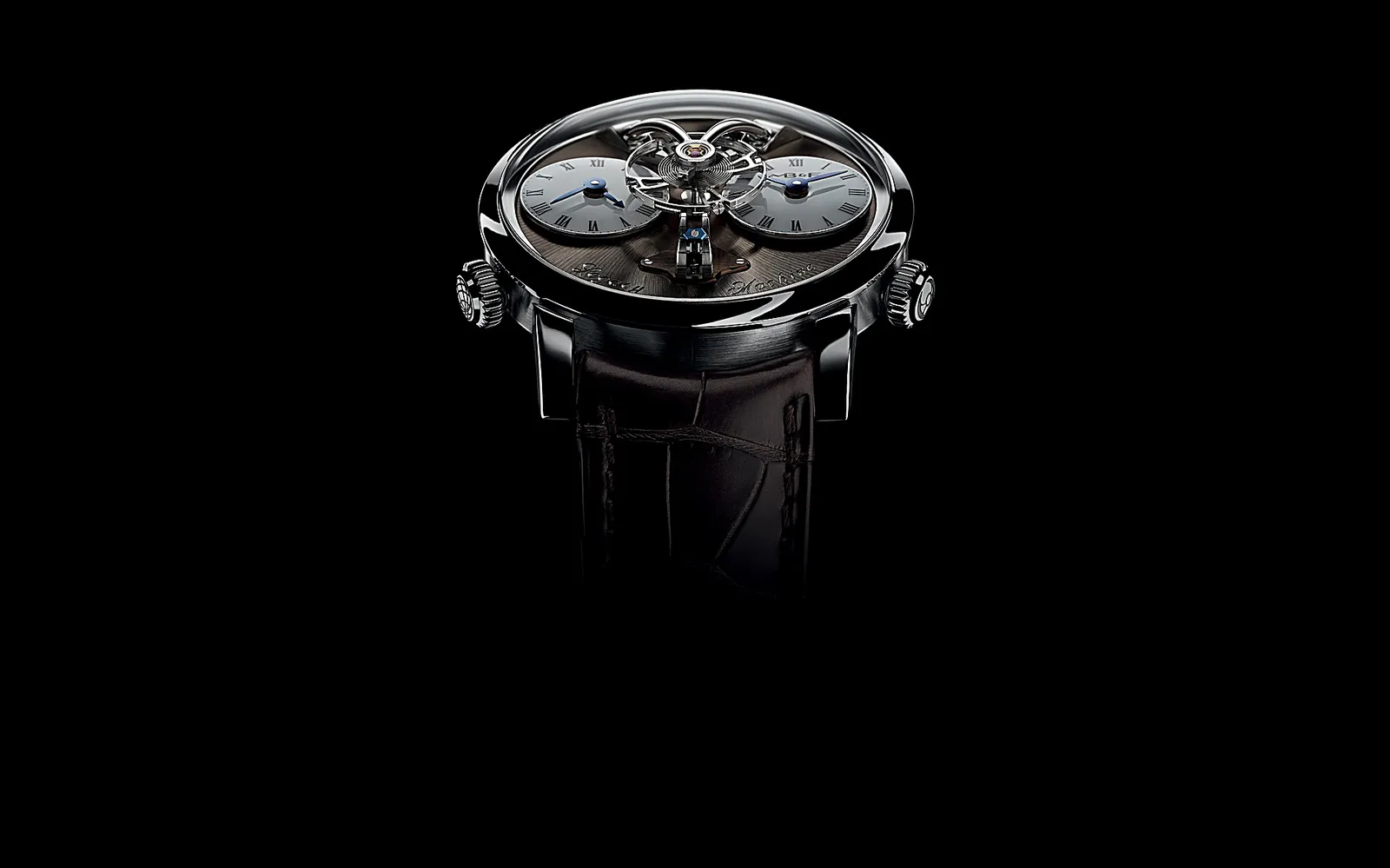
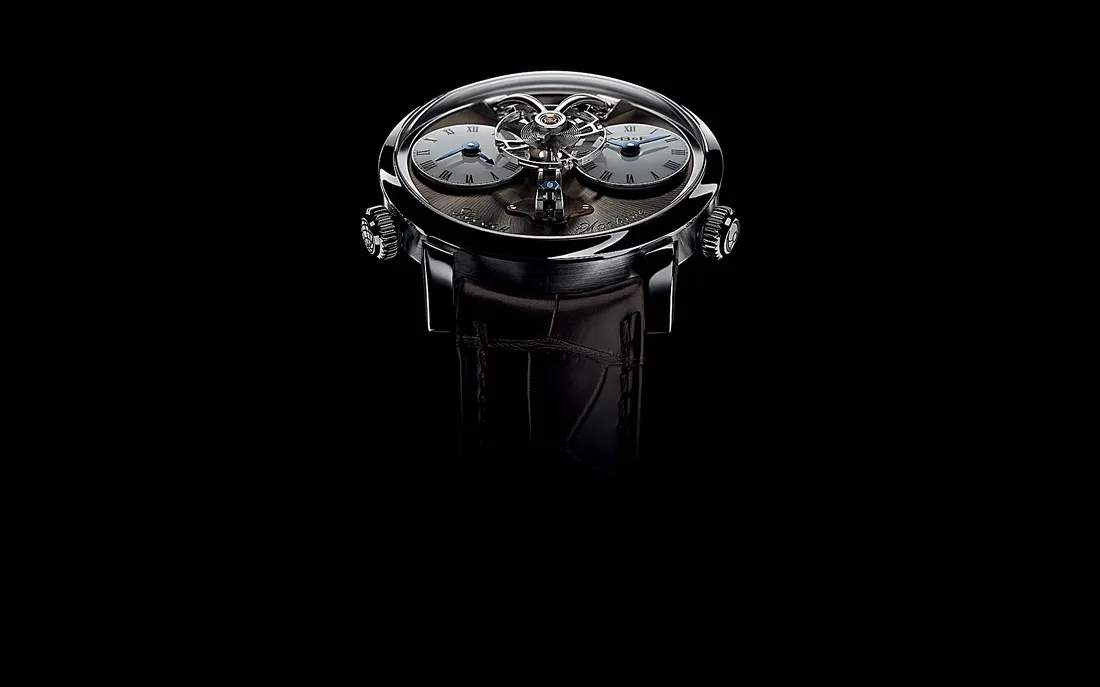
Maximilian Büsser was born in 1967. The house he founded made watches that looked forward, closer to spacecraft than to clocks, and every one of them was built on the best of traditional watchmaking. One day he asked himself a question: what kind of watch would I have made if I had been born a hundred years earlier, in 1867?
The question sounds childlike. The answer is not. To give one, you first have to separate how much of your taste belongs to you and how much belongs to the century you happened to be born into. The Legacy Machine N°1 is the result of that separation.
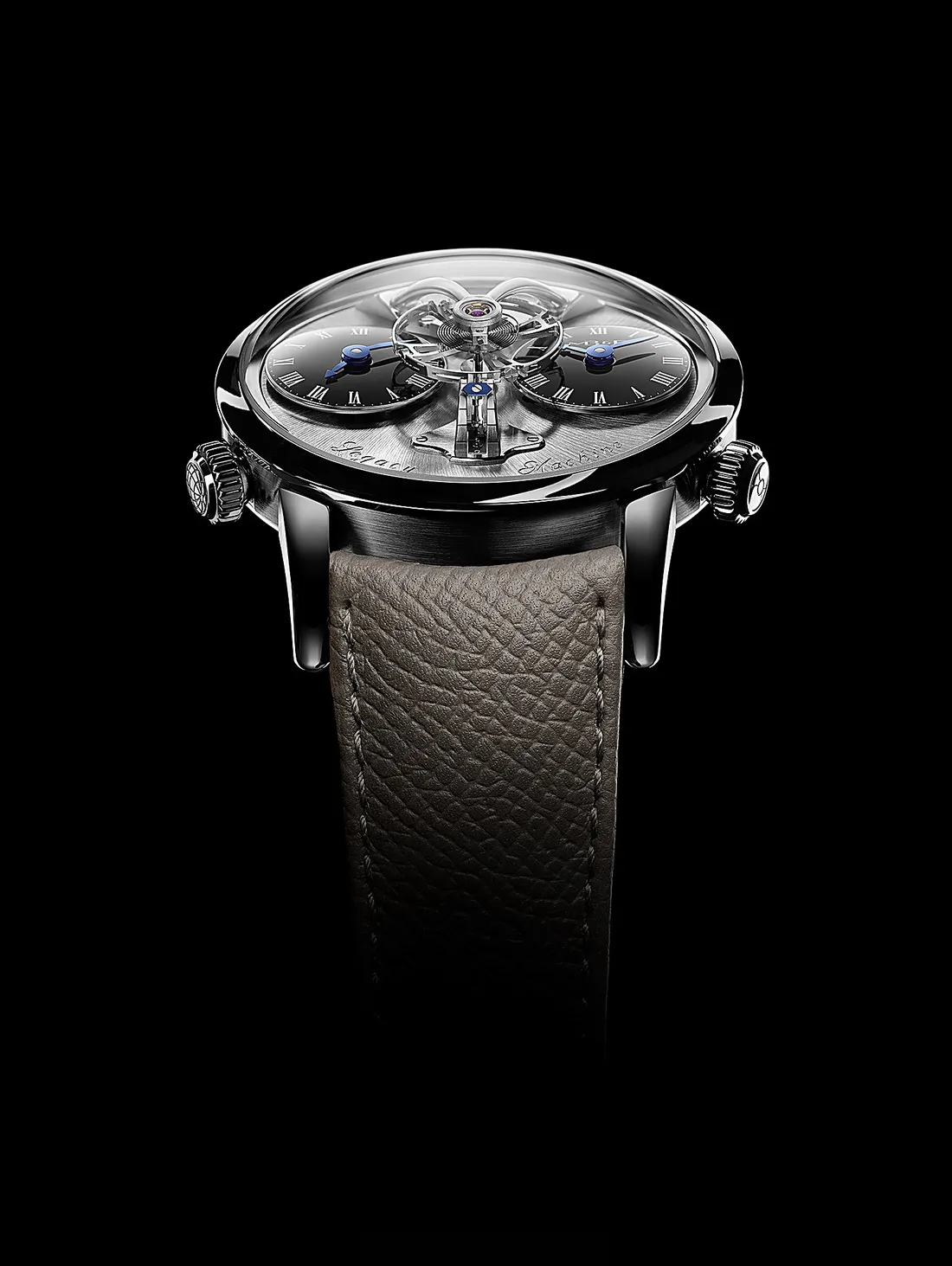
Every habit of the nineteenth century is present in the watch that emerged. A large, sedately oscillating balance, domed dials, a historical bridge design, classical hand finishing. But one thing has been moved, and the whole watch turns on that single act.
In any mechanical watch the balance wheel and its spring are the most important parts; they decide whether the watch runs true. And in any mechanical watch that part sits at the back, inside the case, out of sight. Büsser took it out of there and hung it in the air, not merely above the movement but above the dials as well.
format_quote"The heart of a watch has sat at the back for three hundred years. This one brought it to the front and put it where it would be looked at."
Hasan Bekmezci
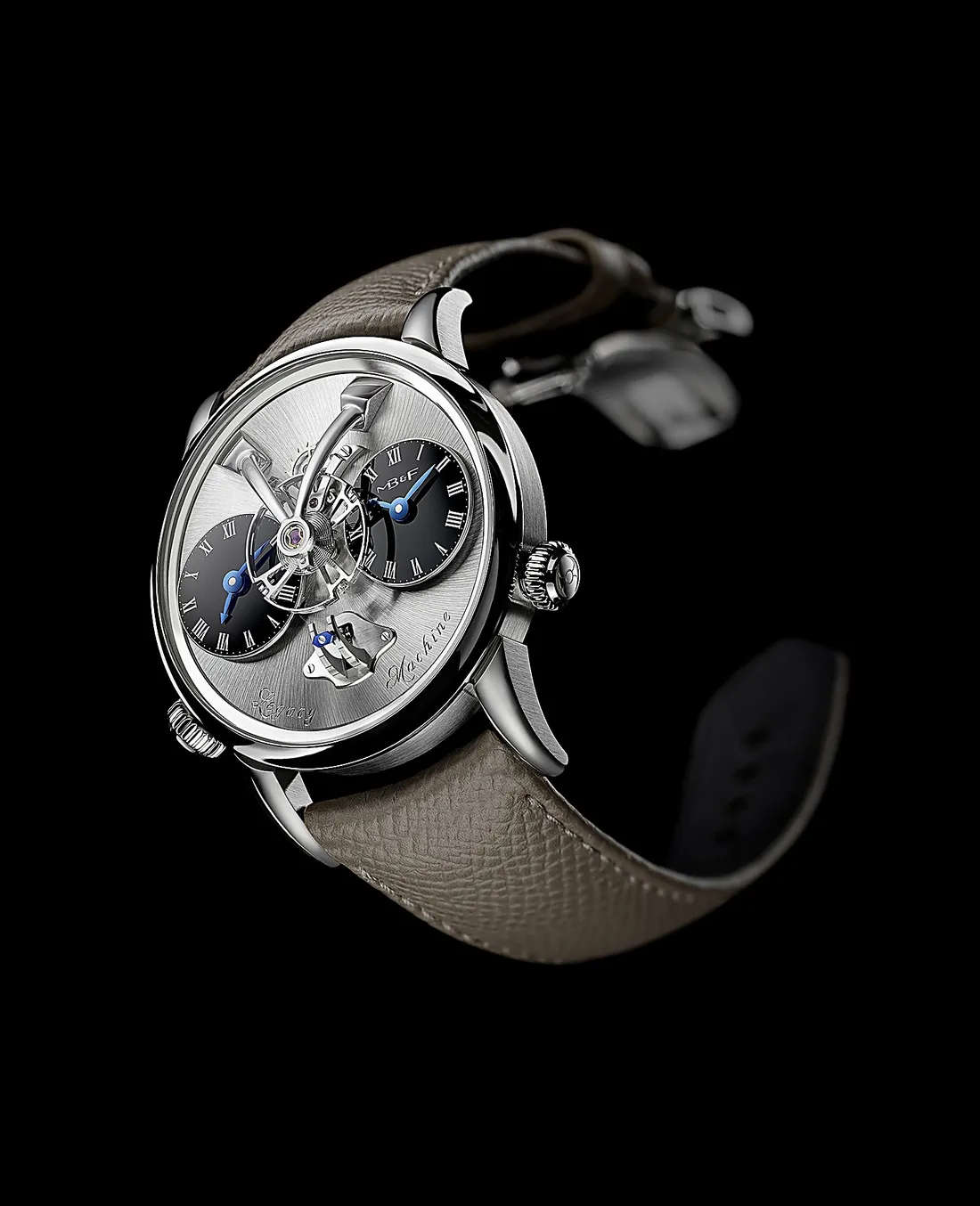
The move is far harder than it looks. In a normal watch the balance sits between the mainplate and a bridge; the two bearings are very close together and both are anchored in the same thick block of metal. Keeping the two ends of the balance staff on the same axis is easy because of that closeness.
Lift the balance and the guarantee disappears. The bridge carrying the upper bearing now sits at the end of an arch rising above the dials. However elegant that arch looks, if it flexes even slightly under a knock, or merely with a change in temperature, the two bearings leave the same axis. Once the axis shifts, the staff begins to rub, amplitude falls and the watch stops. The price of the design, in other words, is that the arch has to be both slender and as rigid as stone.
The balance itself is unusual too. It is fourteen millimetres across, an enormous figure for a wristwatch. There are regulating screws on its rim, and the balance spring carries a Breguet overcoil and a mobile stud holder. It runs at 18,000 vibrations an hour, which is two and a half complete oscillations a second. That slowness was chosen deliberately; Büsser’s starting point was his long fascination with large, slow-beating balance wheels. A slow balance is touched less often, wears less, and above all can be watched. A wheel breathing two and a half times a second can be followed by the eye; a wheel oscillating four times a second reads as a blur.
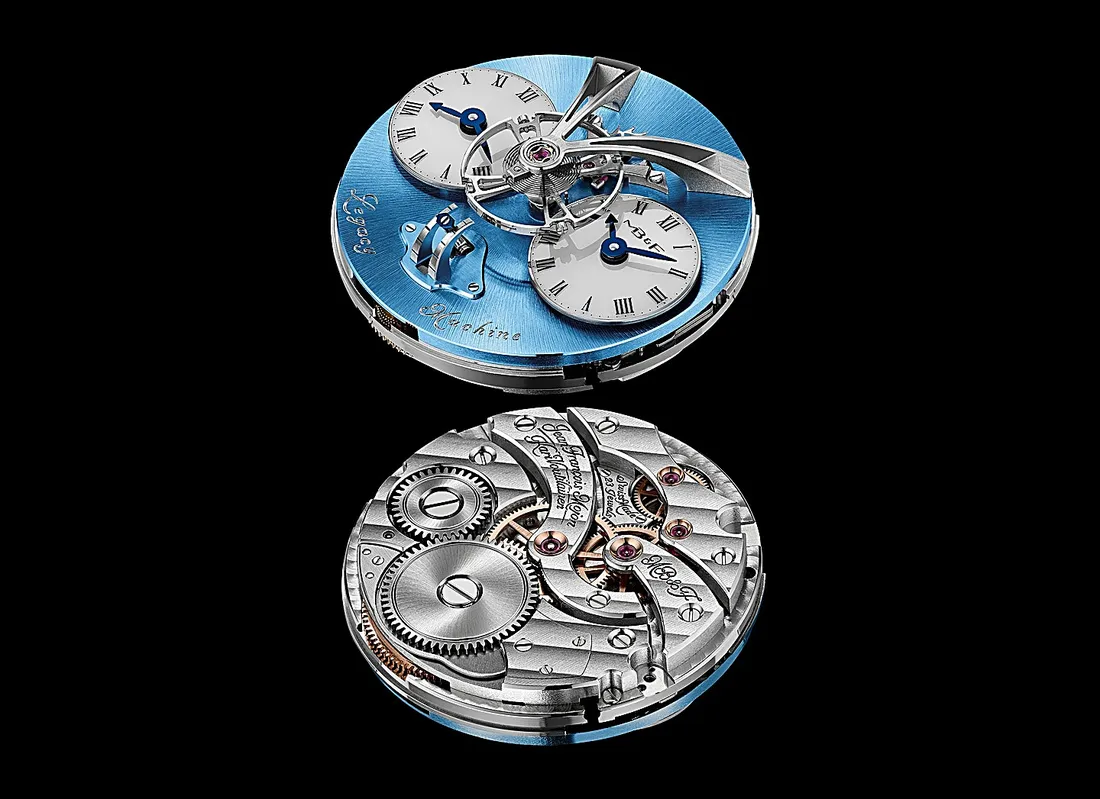
There are two separate times on the dial, and both can be set completely independently. The hours and the minutes of each dial are brought to whatever time you like through their own crown. So far this looks like two watches in one case. It is not.
The difference is this. Put two separate movements in one case and you have two separate balances, and two balances never run at exactly the same rate. Two time zones you set together today will be several seconds apart within a month. On the Legacy Machine N°1 the rate of both dials is governed by the same regulator. Once set, the two times never drift relative to one another; both are tied to the same heart.
format_quote"Two movements mean two rates. Two dials tied to a single heart mean one rate and two answers."
Hasan Bekmezci
There is another innovation beneath the dial. The power reserve indicator works in a vertical plane, and in the brand’s words it is the first vertical power reserve indicator in a wristwatch. What drives it is an unusually flat differential running on ceramic bearings.
A differential is a gear arrangement that takes two motions and returns their sum or their difference. It is the same part that lets the two wheels of a car turn at different speeds. In a power reserve indicator its job is this: it takes the winding motion on one side and the emptying of the mainspring on the other, and reports the difference to the hand. Wind the watch and the hand climbs; let it run and the hand falls. Because this mechanism could be built so flat, the indicator could be moved into a vertical plane.
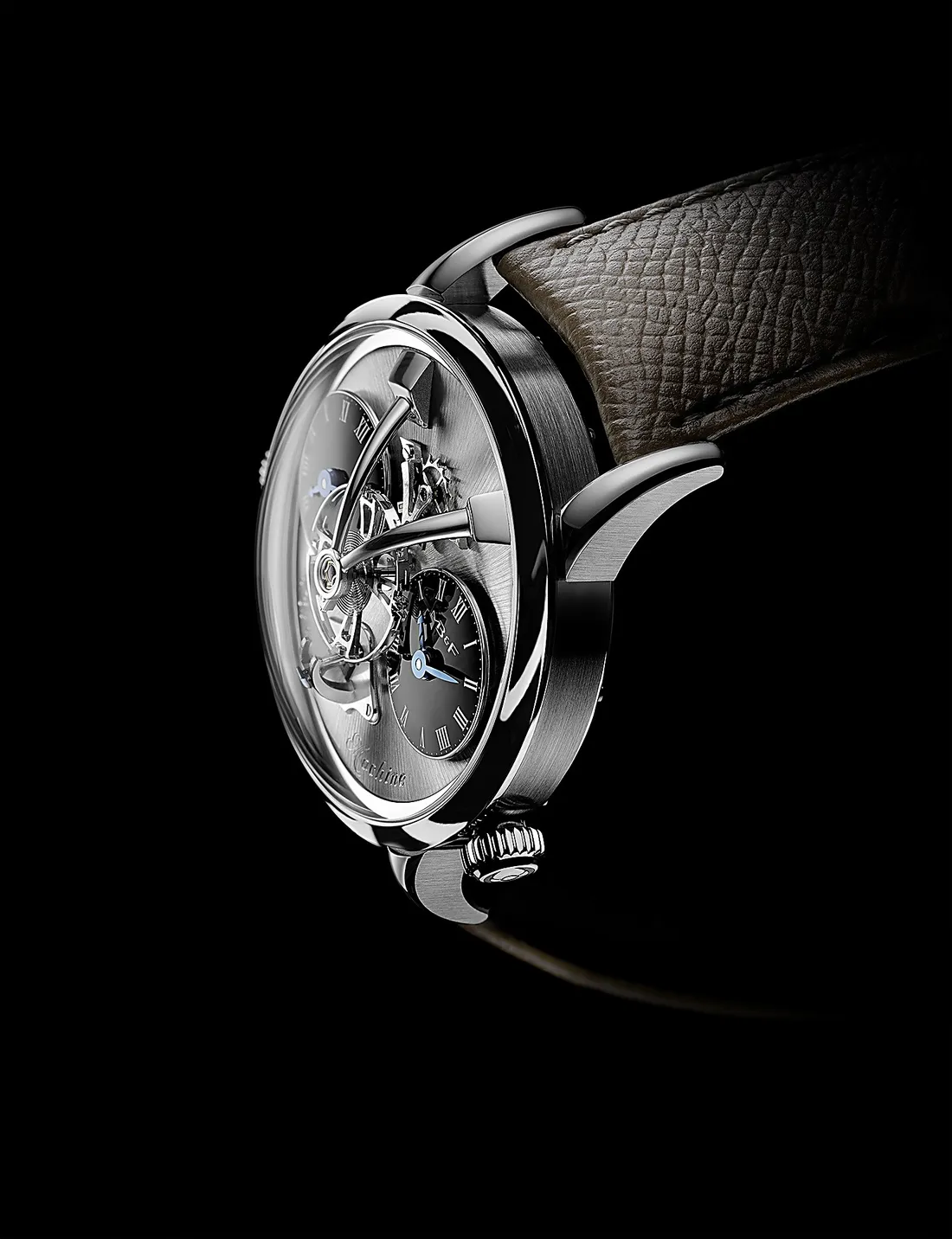
The dials are a piece of work in themselves. The two white dials are gently domed and their surfaces are finished with a process called laque tendue. Many layers of lacquer are applied one on another and each layer is heated; the heat forces the layers to stretch across the surface, and a translucent, deep lustre results. The dials are fixed from below by a special mounting, so no screw is visible on the surface. The numerals are Roman and the hands are blued gold.
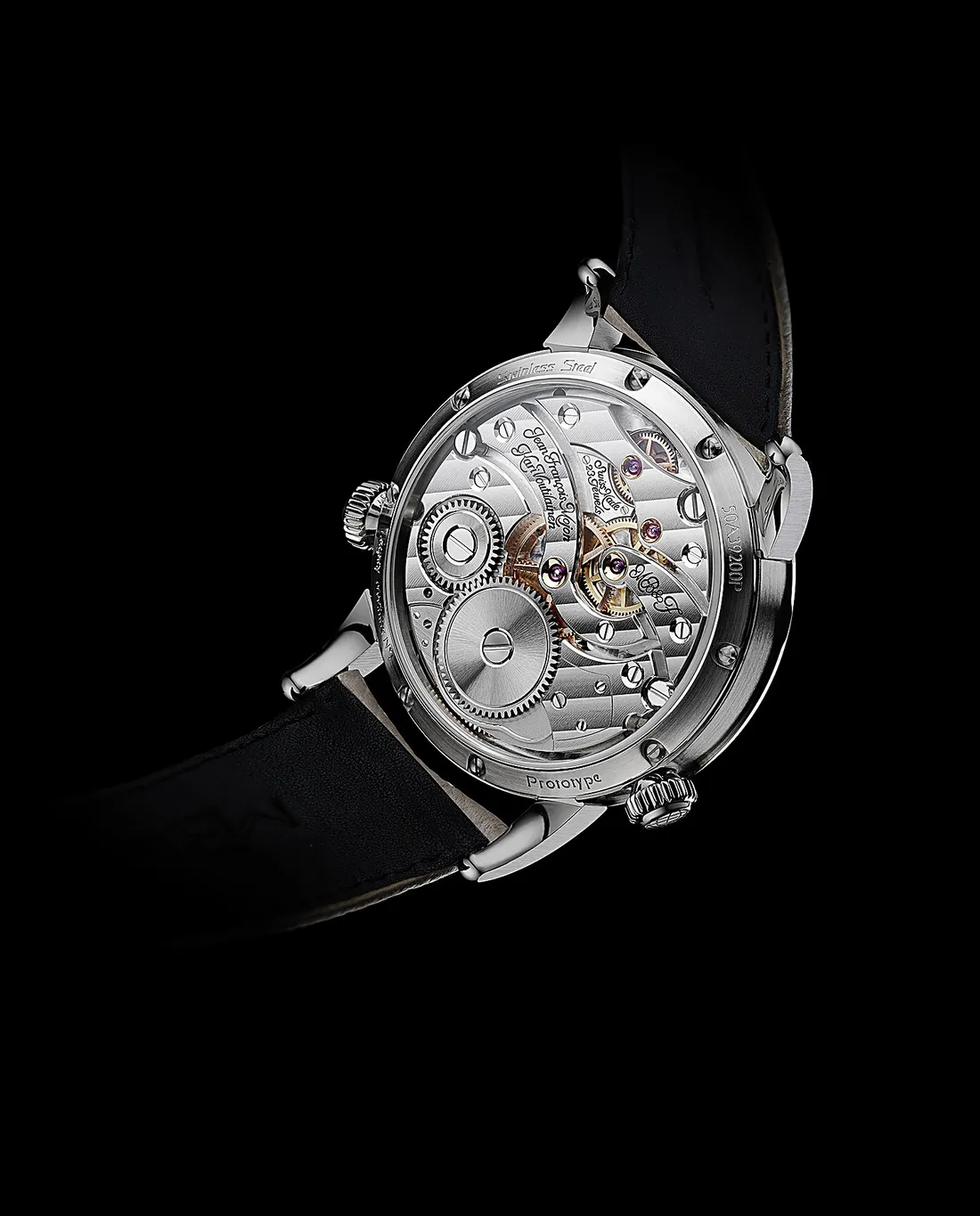
The movement was developed for MB&F by Jean-François Mojon. Kari Voutilainen took responsibility for the historical accuracy of its style and finishing. That second task was no easier than the first: an unconventional architecture had to be finished in the visual language nineteenth-century watchmaking actually used.
format_quote"Finishing a new architecture in an old language is far harder than imitating the old."
Hasan Bekmezci
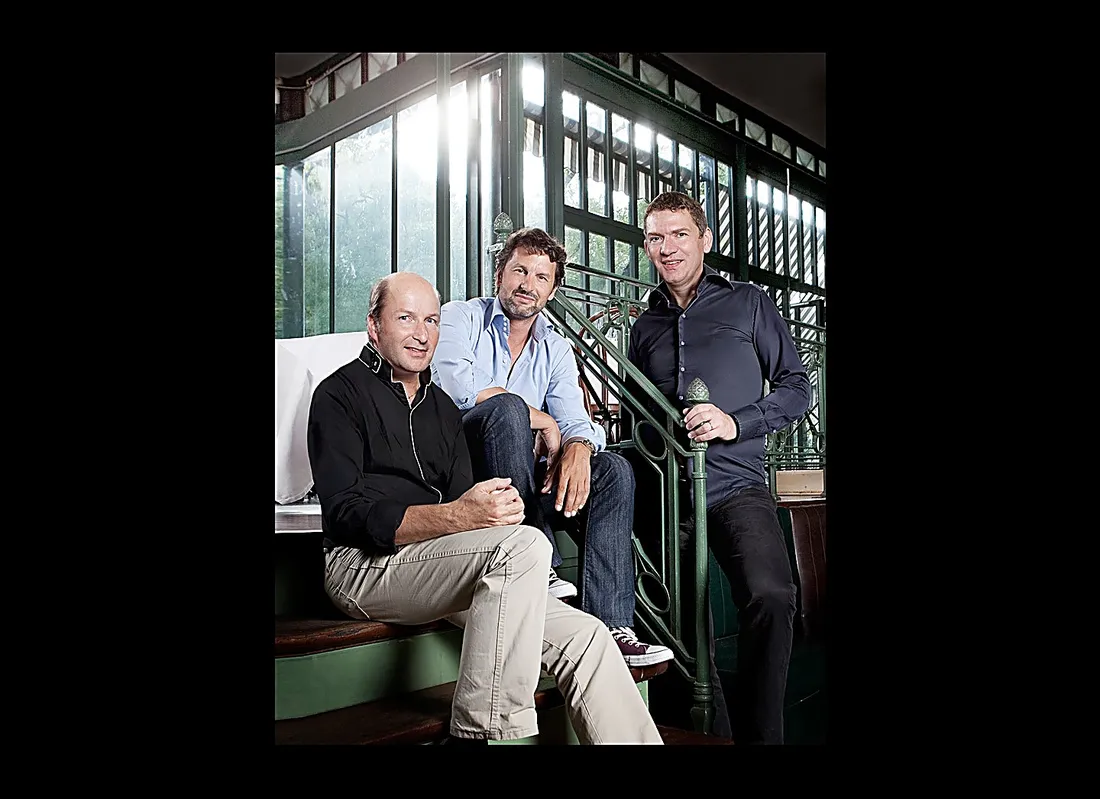
The figures run as follows. The case is white gold, forty-four millimetres across and sixteen deep. Water resistance is thirty metres. The movement is wound by hand and runs for forty-five hours. The functions are hours, minutes, power reserve indicator and dual time. It was presented in 2011, carries the reference 01.WL.W, and cost 85,000 Swiss francs before tax.
At the 2012 Grand Prix d’Horlogerie de Genève this watch took two prizes at once. The jury gave it the Men’s Watch Prize, and the public vote gave it the Public Prize. It is rare for a watch to convince both the specialists and the ordinary onlooker at the same time; usually one side finds it too technical and the other too theatrical.
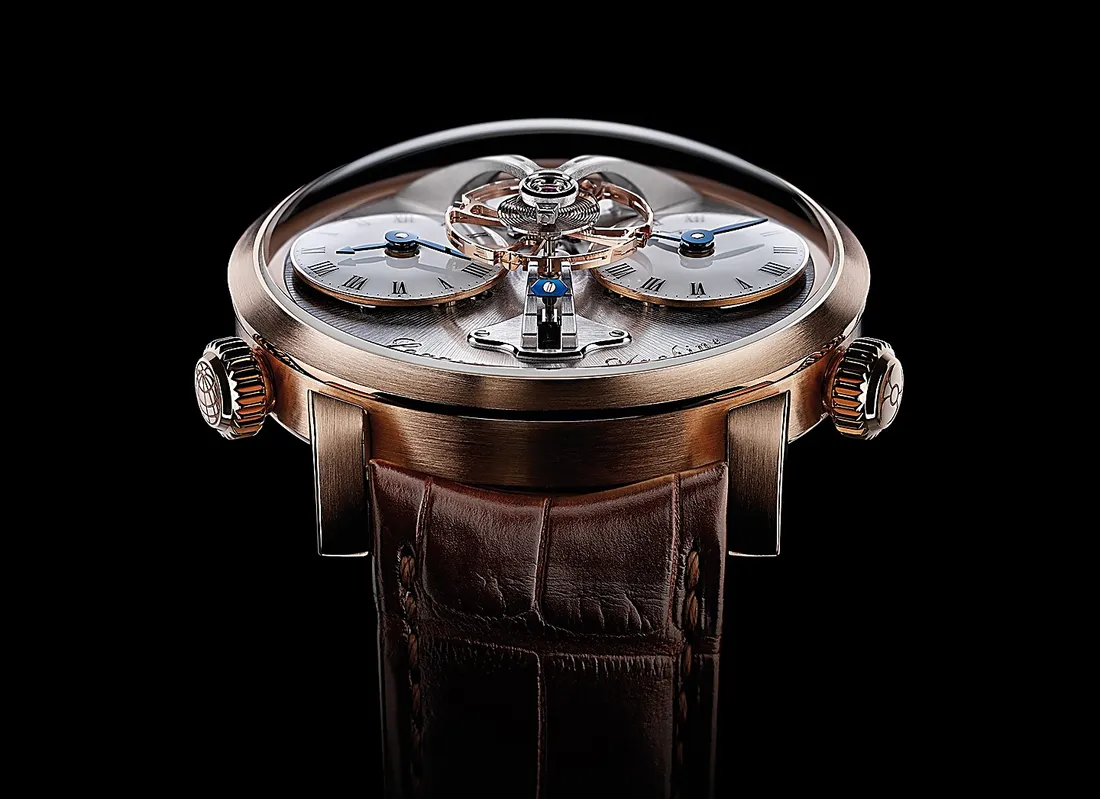
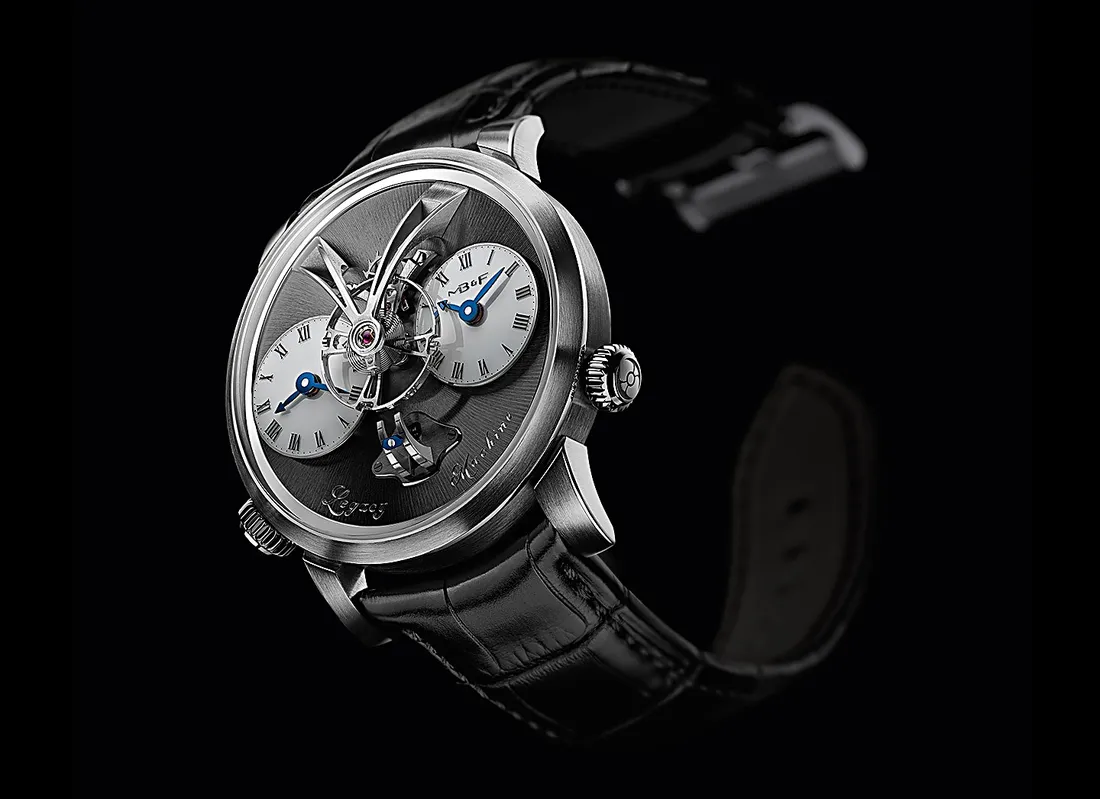
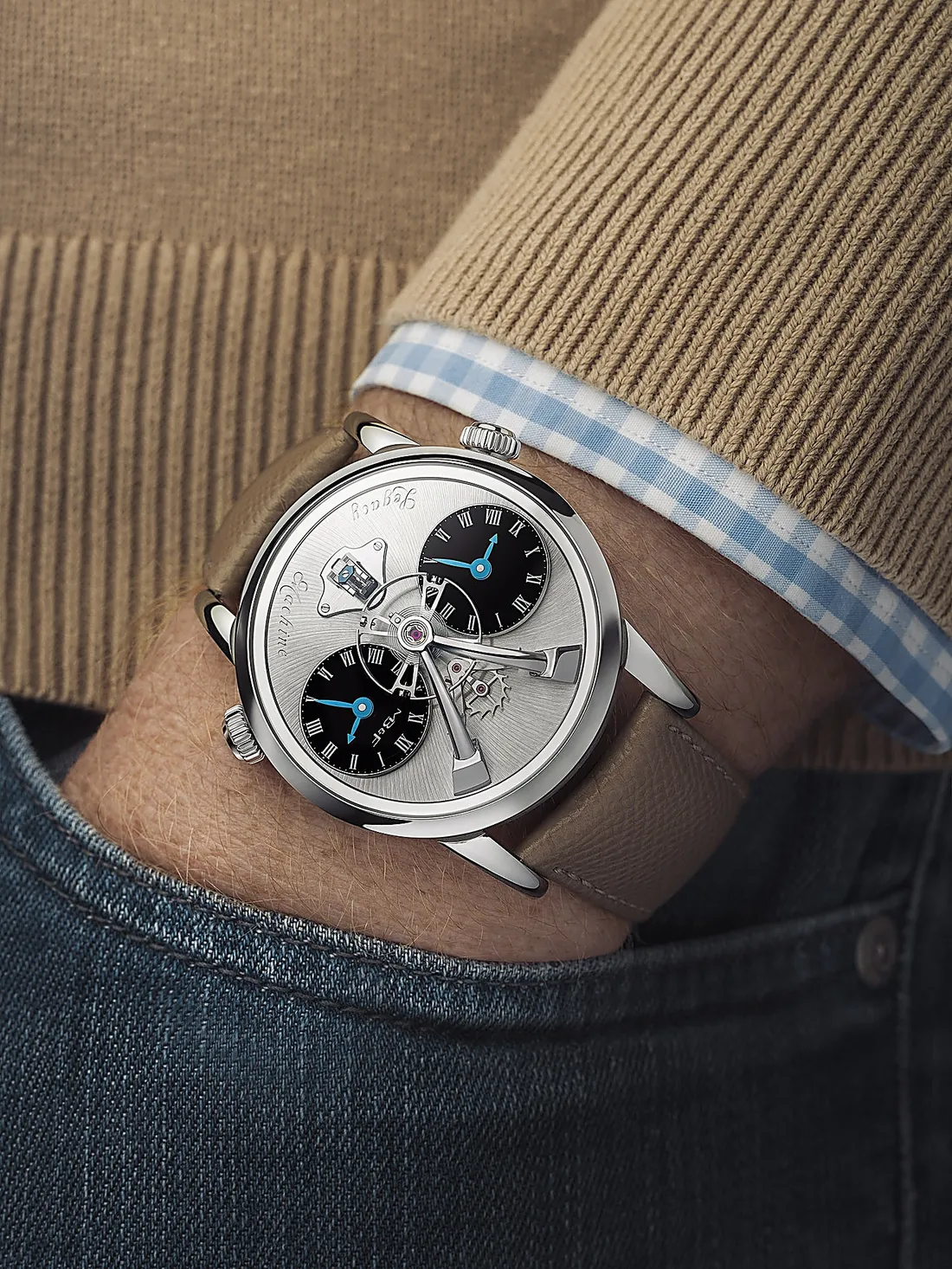
The real subject of this watch is a question. When Büsser asked himself what he would have made a century earlier, what he was really asking was this: is my taste actually mine, or does it belong to the year I was born?
Anyone can ask themselves that, and the answer is usually uncomfortable. Most of what we like is not ours; it was handed to us by the age, by our surroundings, by habit. Strip those away and what is left?
The Legacy Machine N°1 reads like an answer to that stripping. What remained was not a shape but an attention: to bring the most important part of the mechanism forward instead of hiding it. Whichever century you are born into, the wish to make the heart of a thing visible does not change. Only what you surround that heart with does.