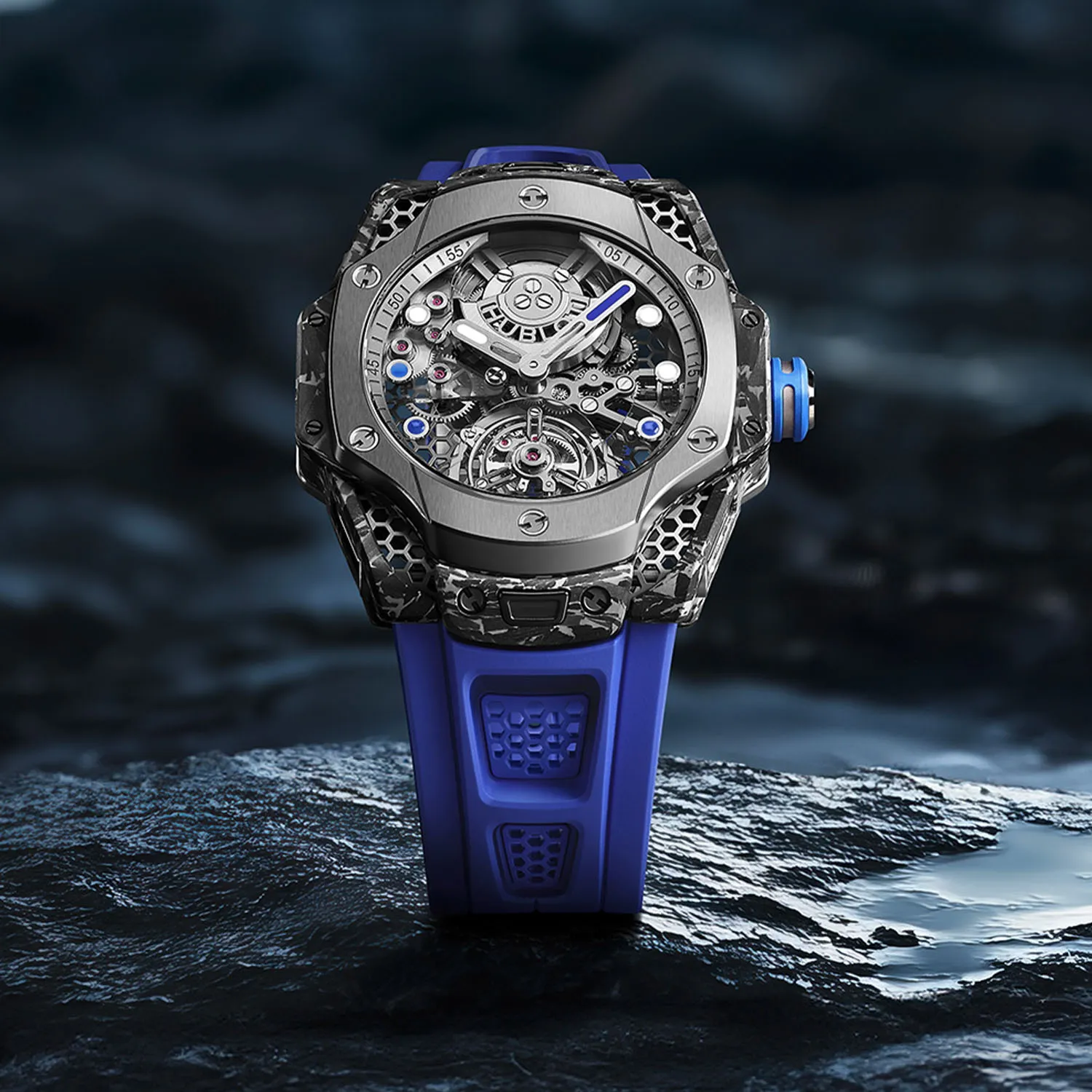
"All the honey a worker bee can make in its entire life amounts to one twelfth of a teaspoon. That small alchemist, visiting thousands of flowers one by one to offer the essence of the soil, the air and the Sun as a healing to us, glides along celestial paths that have been made easy for it. And a honeycomb on a wrist is the mechanical echo of that great architecture in nature."
On a warm summer afternoon, the smell of a smouldering smoker rose among the hives on the mountainside. Two friends stood side by side on the ground in full white bee suits, veiled hats and thick leather gloves, harvesting comb. One was the bee scientist Dr Arthur, the other Dr Victor, a specialist in materials physics and topological geometry.
Arthur eased the lid of the hive open with the smoker and puffed the calming smoke in. As he drew a heavy frame full of honey upwards, the right sleeve of his white suit slid back a little. Just above the leather glove, a matt black and perforated architecture caught the light.
Victor stopped his bee brush and locked onto his friend’s wrist.
"Arthur, what is that black matt armour and those perforated cells showing under your suit? Some special protector you put on before going in among the bees?"
Arthur smiled behind his mask.
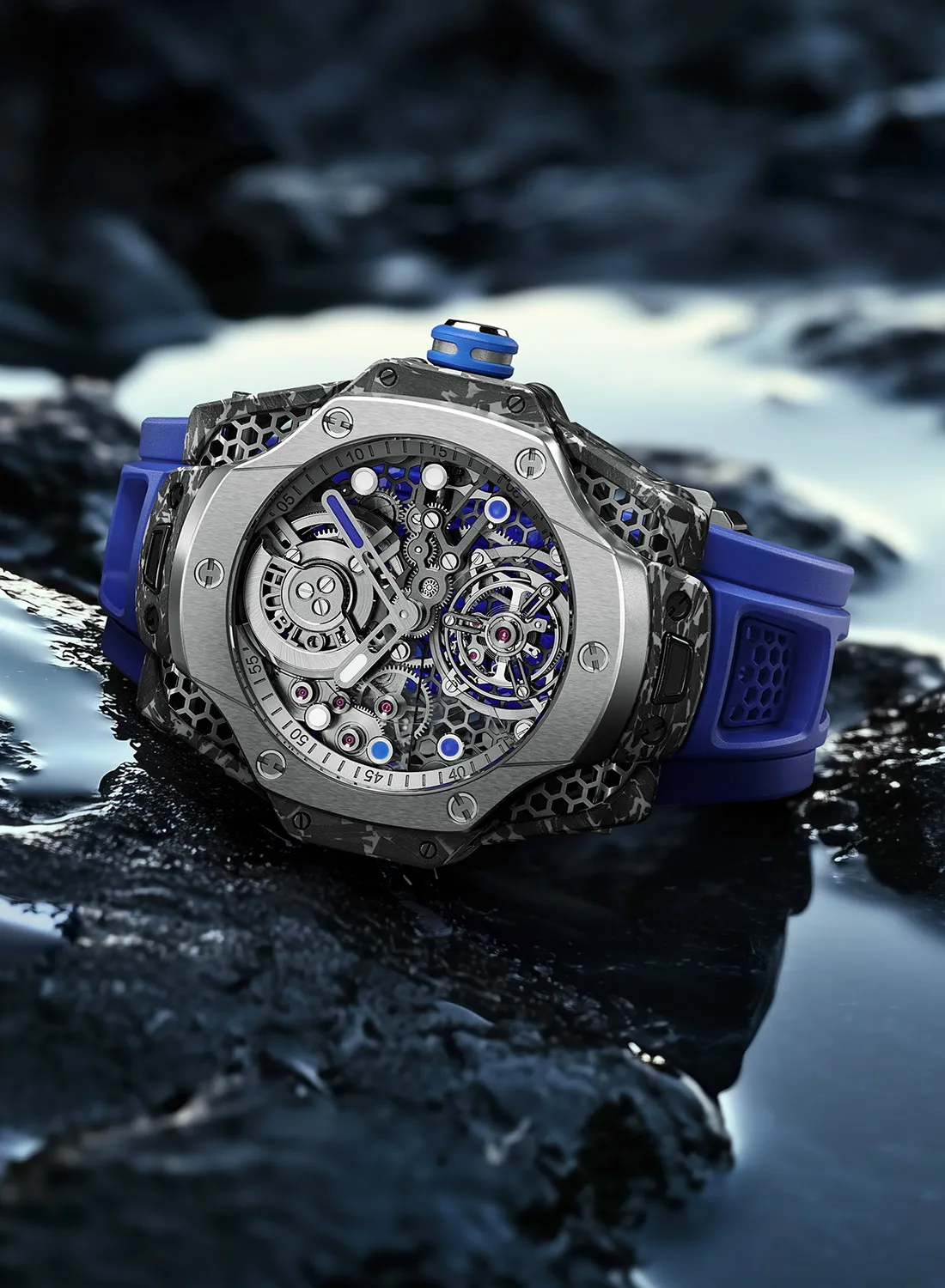
"It is a joint work by Hublot and the industrial designer Samuel Ross. I will spare you the model name; but look at this frame, then look at that dial. The honeycomb in nature and the carbon honeycomb that came out of those watchmakers’ hands speak the same geometric language."
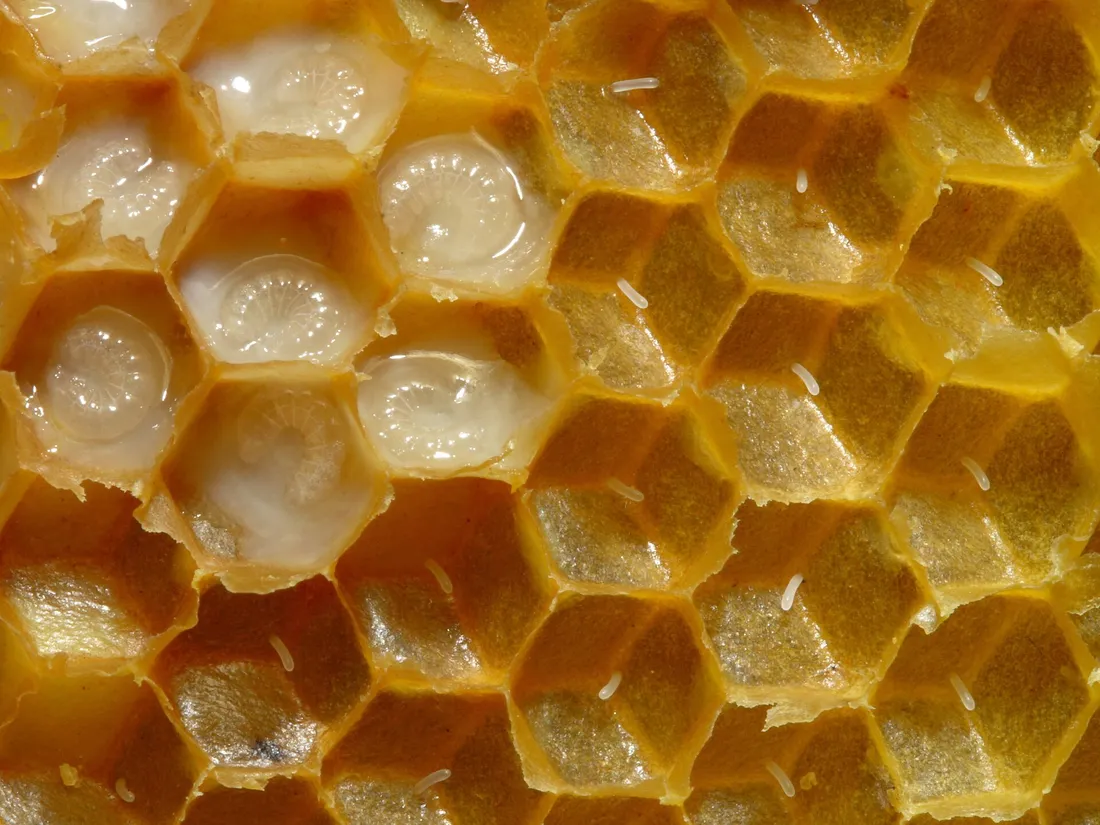
Victor narrowed his eyes behind the veil at the hexagonal openings on the watch.
"You are right, the language is identical. But as a physicist, what really strikes me is what these creatures do with those tiny minds. Without any apprenticeship at all, how can they apply this mathematics from the moment they are born?"
"Because it is not a learning process," said Arthur, holding the frame up to the light. "An ancient text puts it this way: the bee was inspired to take houses for itself in the mountains, in the trees and in what people build; and then to eat of every fruit and travel the paths made easy for it by its Lord. Notice the wording: the text does not say the bee was taught a piece of knowledge. It says the paths were made easy for it. The bee is not reading. It is walking a path that has been opened."
The Invisible Motorways in the Sky
"And what is that path, physically?"
"For a bee the sky is not empty space," said Arthur. "The light of a blue sky is polarised; the waves vibrate in a particular plane, and that plane forms an enormous pattern across the sky depending on where the Sun is. The human eye cannot see it. A special region along the upper rim of the bee’s compound eye sees nothing else."
"So the sky is a map to it."
"Better than that. Even under cloud, seeing a small patch of blue is enough; from that pattern it works out where the Sun is. You lose your bearings in overcast weather. The bee does not."
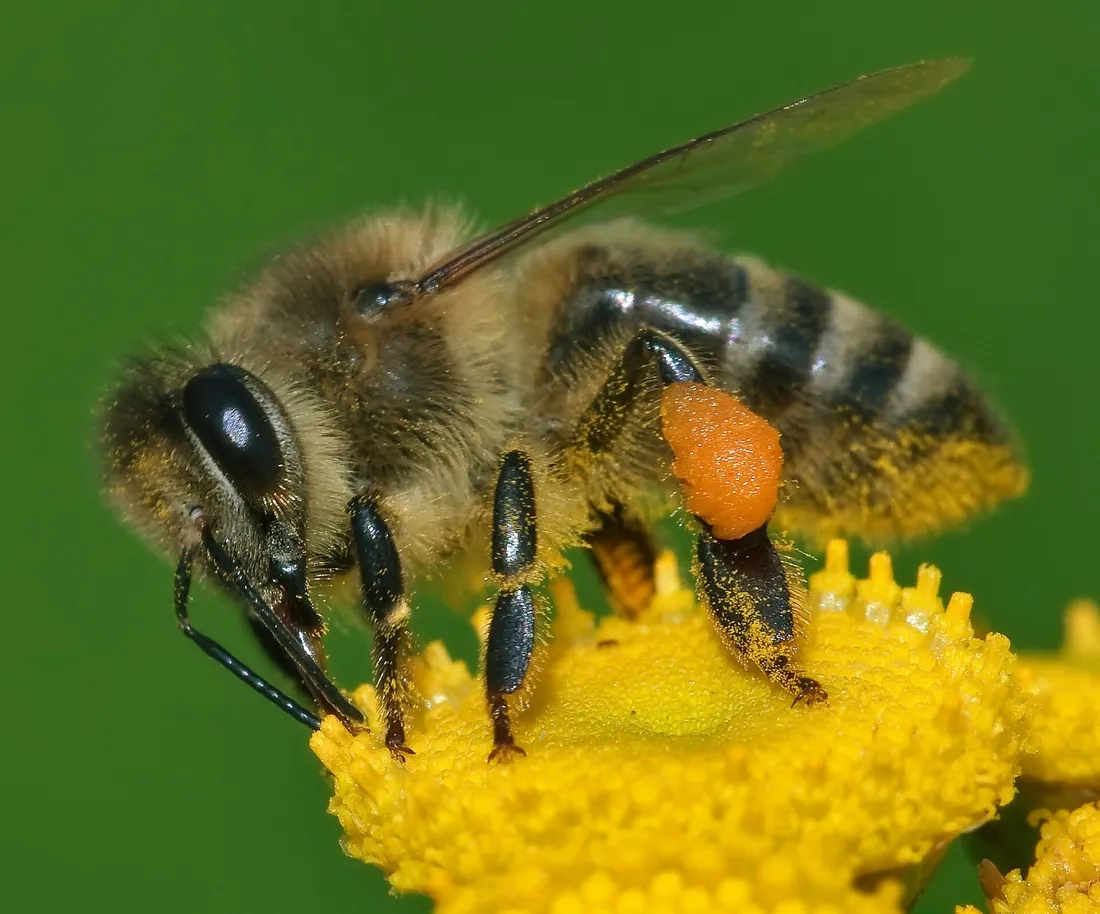
"And this brings us to the real marvel," Arthur went on. "The Sun does not stay put. It moves about fifteen degrees an hour. If a bee flew to a field at eleven in the morning and memorised the direction relative to the Sun, then used the same direction at two in the afternoon, it would miss the field by forty-five degrees."
"But it does not miss."
"It does not, because it allows for the Sun’s drift. We call it a time-compensated sun compass. Keep a bee in a dark box for a few hours and release it, and it flies off at a corrected angle, as though it knew how long it had been in the box. Which means there is a clock inside that small head, Victor. The bee is carrying a wristwatch."
Victor paused. "Put that next to the thing on your arm and it raises the hair on your neck."
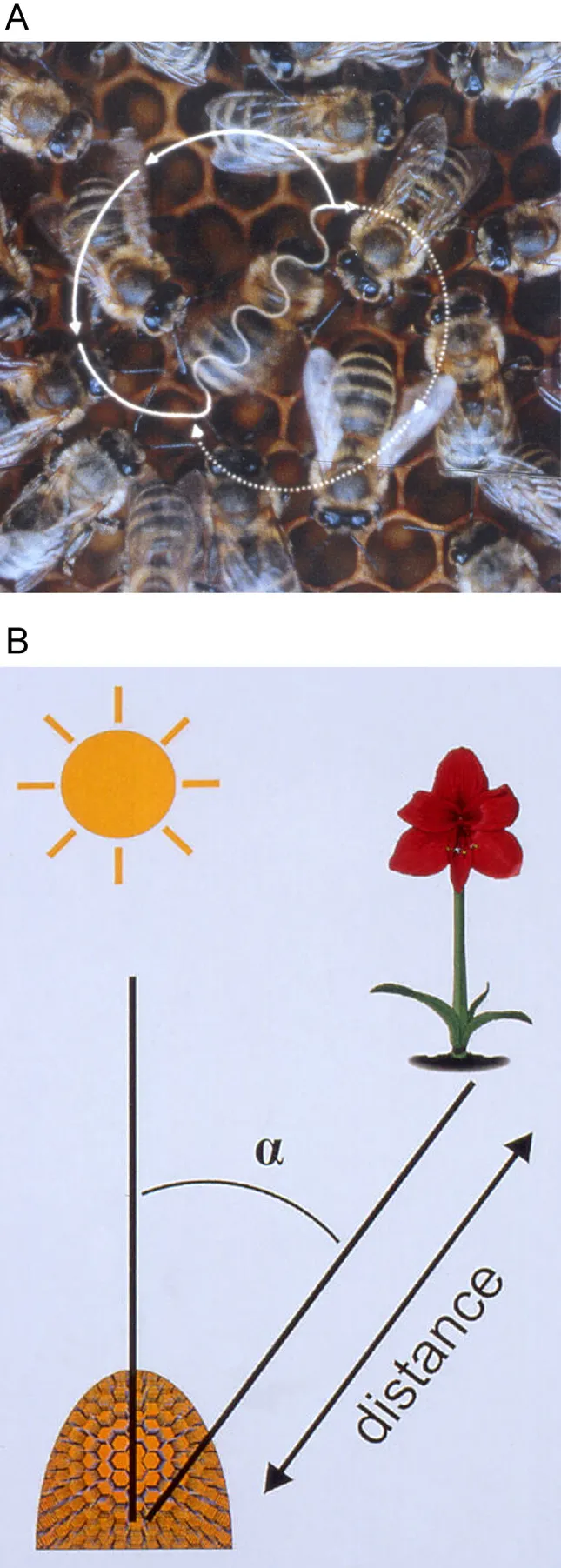
"And look at how it explains the location," said Arthur. "Karl von Frisch won the Nobel Prize in 1973 for working this out. Back at the hive, the bee dances a figure of eight on the vertical comb. Along the straight run in the middle of the dance it waggles its abdomen. The angle that straight run makes with the vertical is the angle the field makes with the Sun."
"Why does vertical stand for the Sun?"
"Because the inside of the hive is pitch dark and there is no Sun in there; but there is gravity. The bee substitutes up for the Sun. It is an act of translation: it converts an angle in the sky into an angle on the axis of gravity."
"And the distance?"
"By the duration of the waggle. Roughly one second per kilometre. And the dance happens in darkness; the bees watching it read it not with their eyes but with their antennae, by touch and by the vibration in the air. So one bee is handing another a coordinate containing an angle and a distance, in the dark, by touch."
"And there is the wind," said Victor. "That is where my side of it comes in."
"Right. The bee is solving a problem in vector addition. It adds the speed of the wind to its own flying speed and turns its nose into the wind at a certain angle in order to reach the target. Think of someone swimming to a tree on the far bank of a fast river: swim straight at it and the current carries you downstream, so you hold your body at an angle against the flow. The bee flies the same way. And the angle it reports in its dance is not its own slanted flying angle; it is the true angle with the wind correction already taken out."
Geometry Out of Wax
Scraping the wax cappings with his hive knife, Victor asked the question.
"So this hexagon. Why a hexagon?"
"First understand that the material is expensive," said Arthur. "Beeswax is secreted in flakes from eight glands under the abdomen of a worker. Each flake is about a tenth of a millimetre thick, and it takes more than a thousand of them to make a gram of wax. To make a kilogram of wax the bees have to eat six to eight kilograms of honey. These walls are built out of honey that was never eaten."
"Then every milligram counts."
"And that is where the mathematics comes in. Only three regular shapes tile a plane with no gaps: the triangle, the square and the hexagon. Work out the length of wall needed to enclose the same area and the hexagon spends the least. Imagine you have a limited amount of wrapping paper. Make round boxes and gaps are left between them. Make squares and the corners eat extra paper. The hexagon is the only form that both lines up with no gaps and gives the largest volume for the least paper."
"Was that ever proved?"
"Pappus of Alexandria wrote about it around the third century, but the actual proof waited until 1999. Thomas Hales proved that the hexagon is the most economical way to divide a plane into cells of equal area. So the problem the bee solves is one that mathematics struggled with for two thousand years and only closed at the end of the twentieth century."
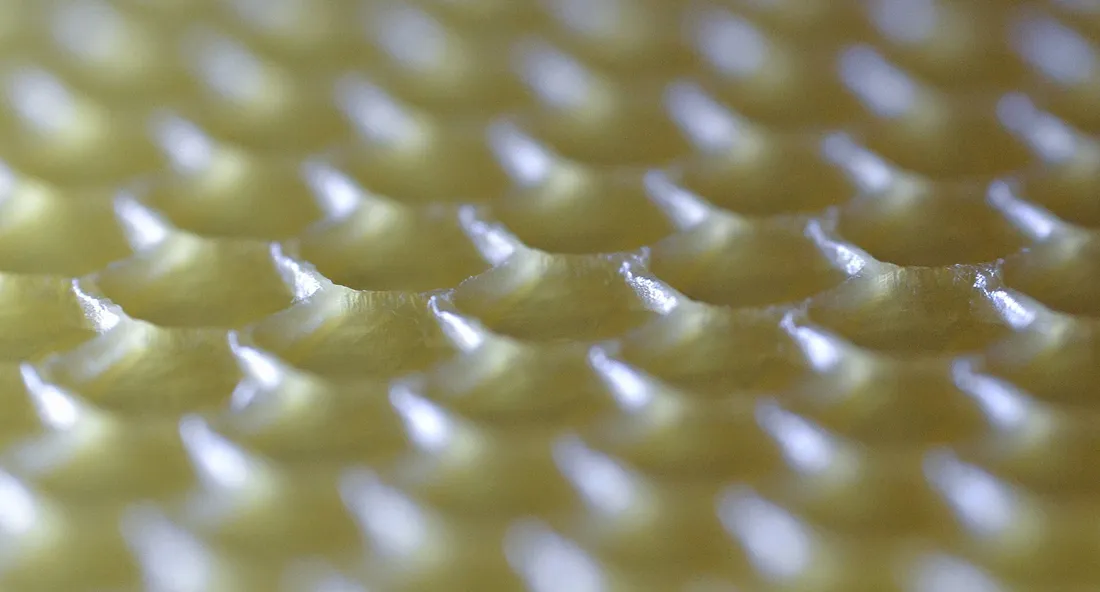
"And then there is the base of the cell," said Arthur. "The comb is double sided and the cells on the two faces interlock. The base is not flat but a pyramid of three rhombi, and the angles of those rhombi are a hundred and nine degrees and forty-seven minutes. That is the only angle at which four bonds can move away from a centre at equal distances; it turns up everywhere in nature, from the molecules of water to the crystal of diamond."
"And is that the most efficient?"
"Here is the loveliest part. It is not. In 1964 the Hungarian mathematician László Fejes Tóth showed that a different base, made of two hexagons and two rhombi, uses about three and a half parts in a thousand less wax. So the bee falls short of the possible by three and a half in a thousand. Nature is not perfect; it has come to within a third of one per cent of perfect and stopped there. That tells me more than an exact hit would."
"And how do they build these walls so evenly? They have no ruler."
"For a long time this was called collective instinct. But measurements published in 2013 showed something better. The bee does not start the cell as a hexagon; it starts it round. Then the inside of the hive warms, the wax begins to flow at around forty-five degrees, and the round walls standing side by side lean into one another under surface tension and become hexagons. Exactly the way soap bubbles pressed together on a tray turn hexagonal by themselves."
"So the shape is not built. It happens."
"Both at once. The bee builds the circle and physics finishes the hexagon. And that takes me back to the phrase in the ancient text: the paths were made easy for it. The bee was not taught the mathematics of the hexagon; it was given a physics that makes the hexagon inevitable."
"Speaking of heat," said Victor. "How warm is it inside a hive?"
"The brood area is held between thirty-four and thirty-five degrees, and that temperature is kept to within half a degree. When it cools, heater bees go to work: they uncouple their wings from the flight muscles and vibrate the muscles in neutral. They shiver without flapping, so all the energy goes straight into heat. When it warms, other bees line up at the entrance and fan; the water in the comb evaporates and the hive cools."
"They have built a building management system."
"And the consistency of the wax depends on it. Below thirty-five degrees the wax stiffens and will not work. Above forty-five it runs. The bee holds that narrow band summer and winter. The wall is seventy microns thick and that thickness is held across the whole comb to within a few microns."
"And the cells are not horizontal."
"Tilted about thirteen degrees upwards. Otherwise the honey would run out."
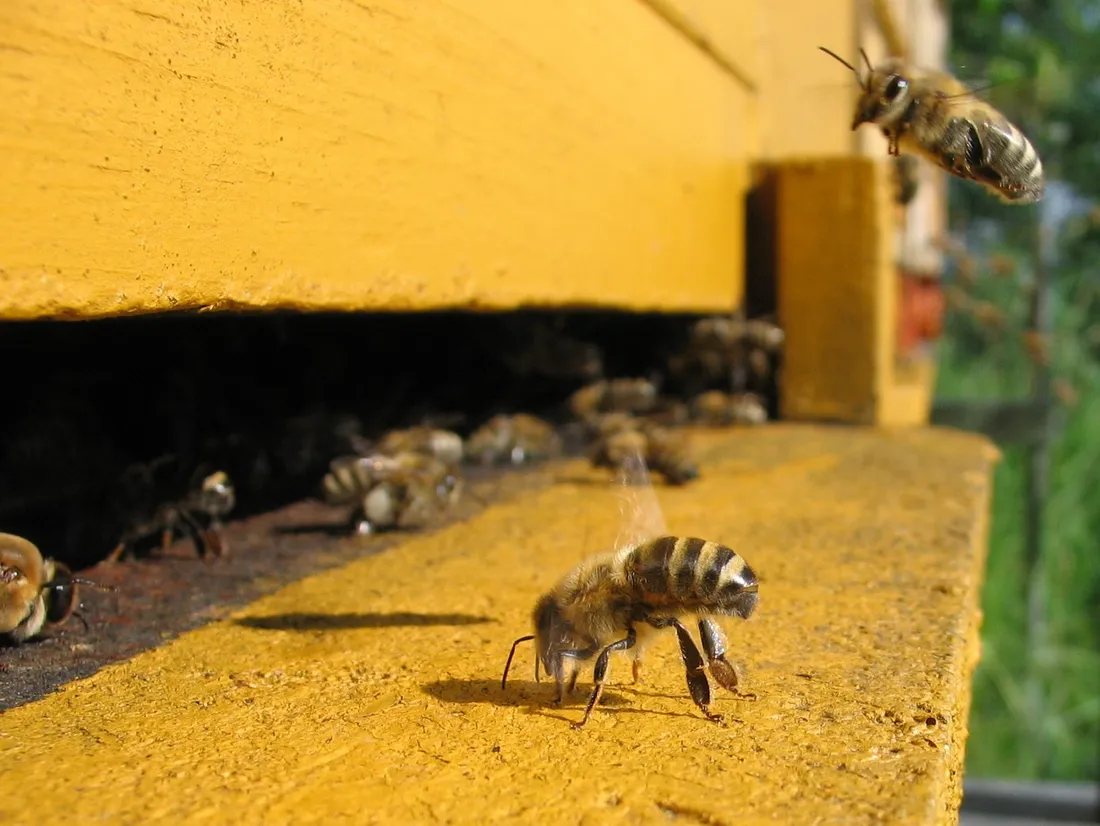
"And there is this," said Arthur, setting the frame into the extractor. "The cost of all of it. For a kilogram of honey the colony flies a total of about a hundred and fifty thousand kilometres, four times round the world. It makes roughly four million flower visits. And all the honey a single worker makes in its whole life is one twelfth of a teaspoon."
"And if there were no bees?"
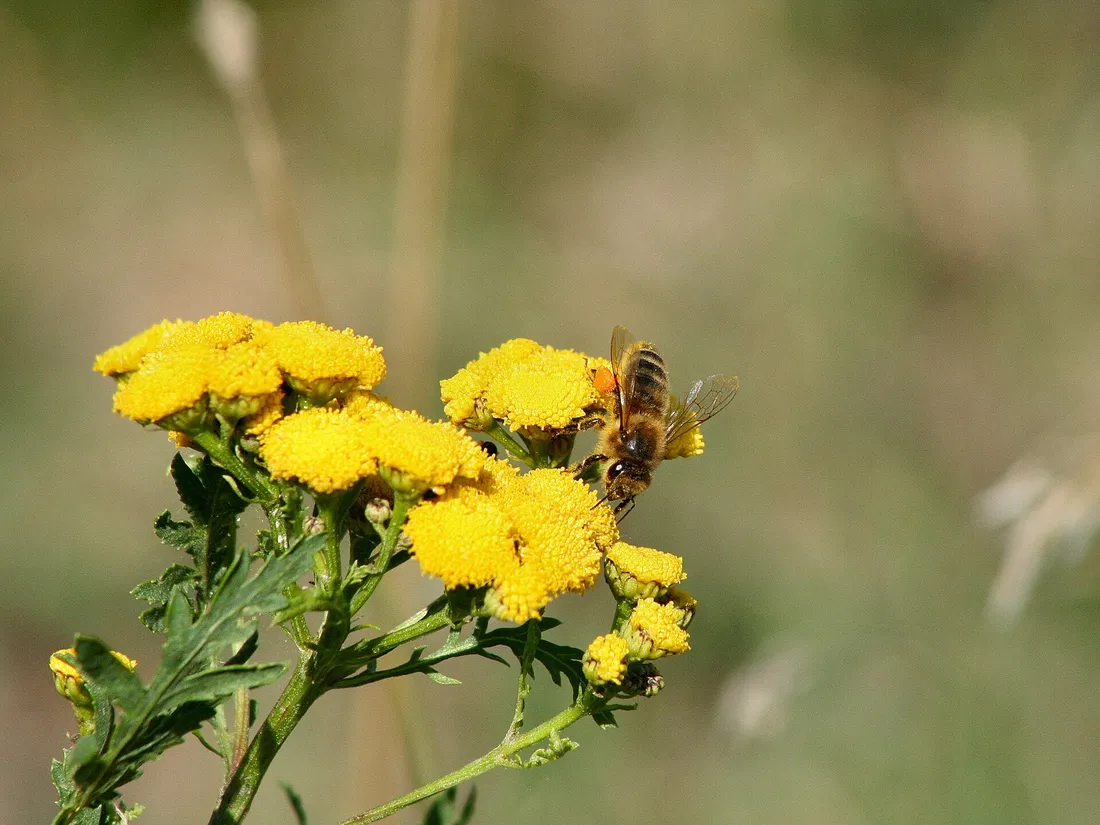
"Go to a supermarket and empty the shelves in your mind. Apples, almonds, strawberries, tomatoes, coffee, squash, cherries, cotton. Three quarters of the world’s leading food crops depend to some degree on animal pollination, and about a third of total production volume comes directly from that work. What is left is wind-pollinated wheat, rice and maize. You would not starve, but every colour on your plate would go."
Samuel Ross and the Honeycomb on a Wrist
Victor pulled off a glove and bent closer to see the watch.
"So who is this Samuel Ross?"
"Not a fashion designer, an industrial designer," said Arthur. "Born in London in 1991. At twenty-one Virgil Abloh invited him to Off-White and he became Abloh’s first design assistant. In 2015 he founded his own label, A-COLD-WALL, with his own money. In 2018 he was named emerging menswear designer of the year at the British Fashion Awards."
"And the Hublot connection?"
"He won the Hublot Design Prize in 2019. That same year, at the prize exhibition at the Serpentine Gallery in London, he announced SR_A, his industrial design studio, which works in architecture, furniture, interiors, sound and sculpture. In 2024 he was made an MBE for his services. So this is not a name being rented; the relationship began with a prize, continued with a sculpture, and only then turned into a watch. Development of the watch started in 2020 and took three years."
"And why the hexagon?"
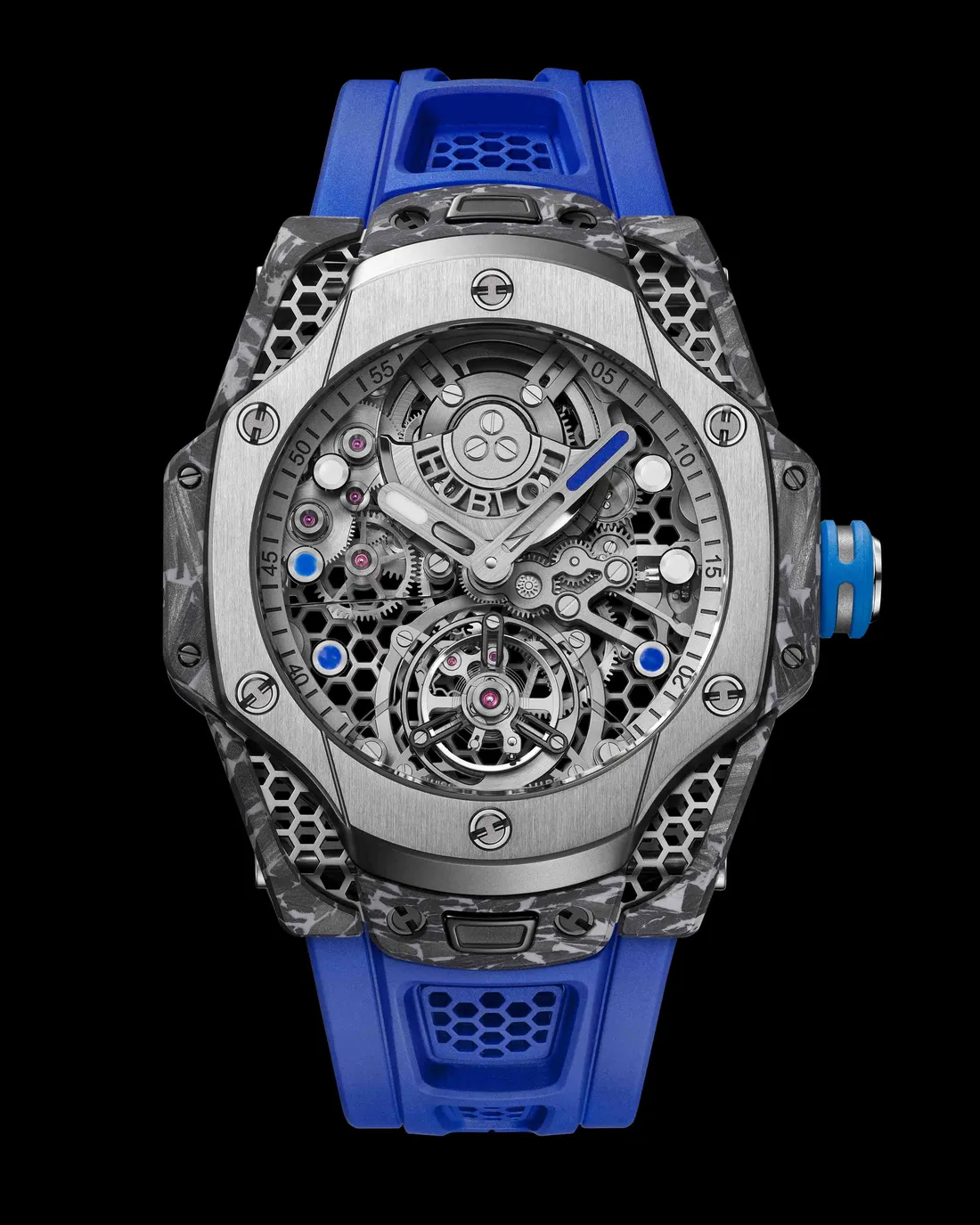
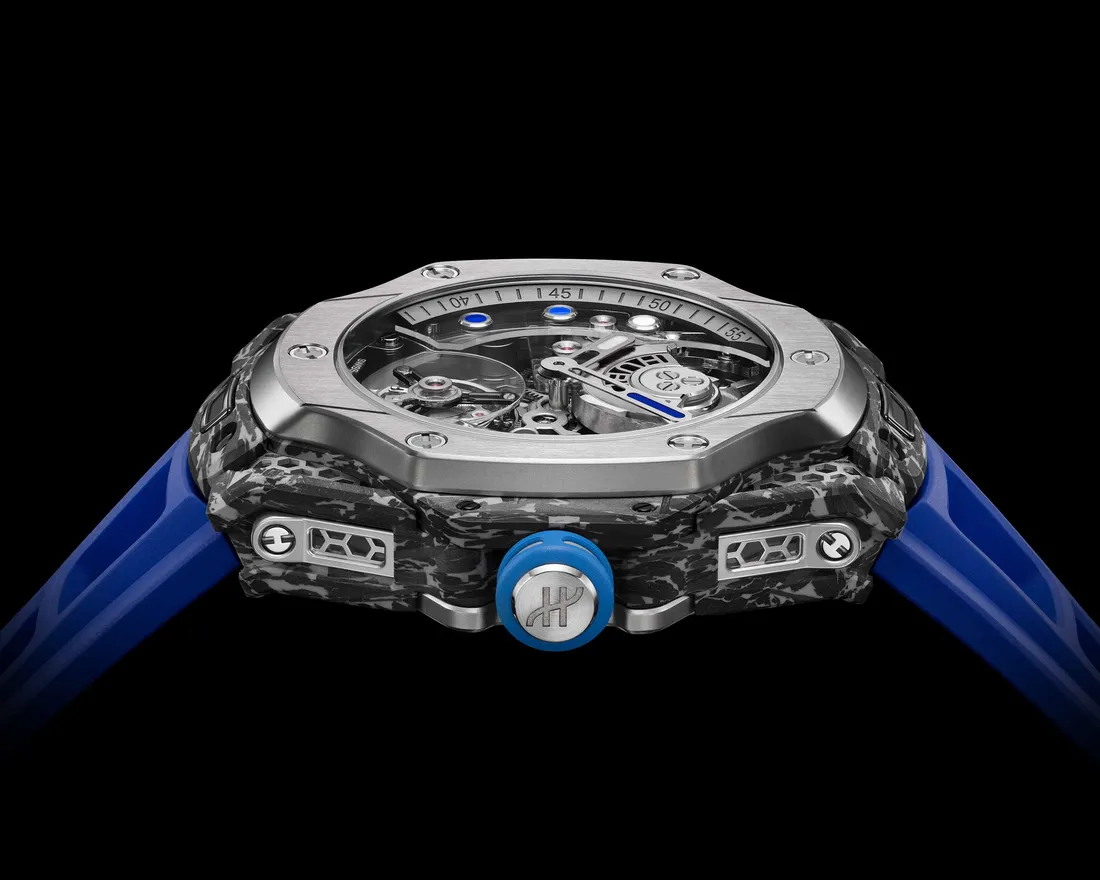
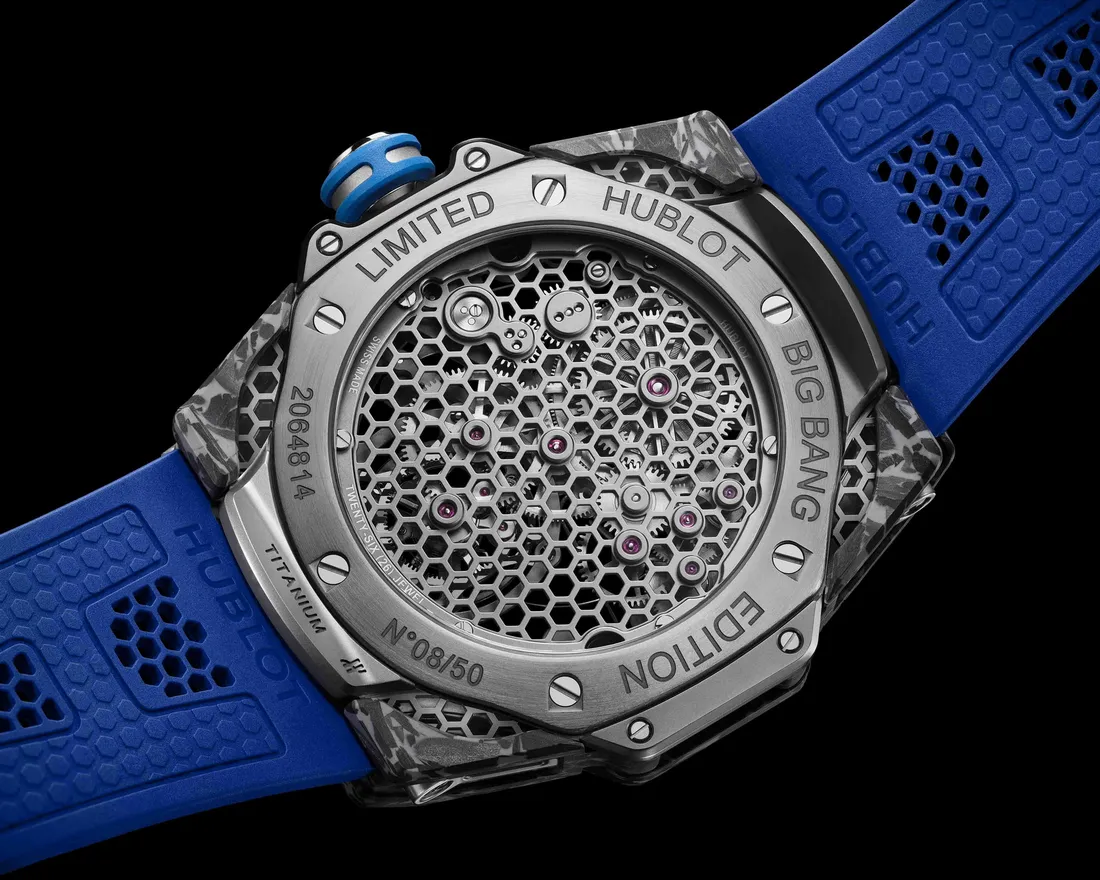
"The first thing Ross made for Hublot was not a watch but a sculpture, and its starting point was the geometry of nature itself. The honeycomb came from there. But notice this: the hexagon here has not been stamped onto a surface as a decorative pattern. It has been drilled through. The flanks of the case and the bridges are genuinely hollowed out."
"Which is exactly what the bee does."
"Exactly. The bee uses the hexagon to spend less material too. You assume that removing material from a structure removes strength; but removed from the right place, the weight goes and the strength stays. The hexagonal grid is the best known example of that; the inside of an aircraft wing, the core of a satellite panel, the floor of a racing car are all hexagonal honeycomb."
"What is it made of?"
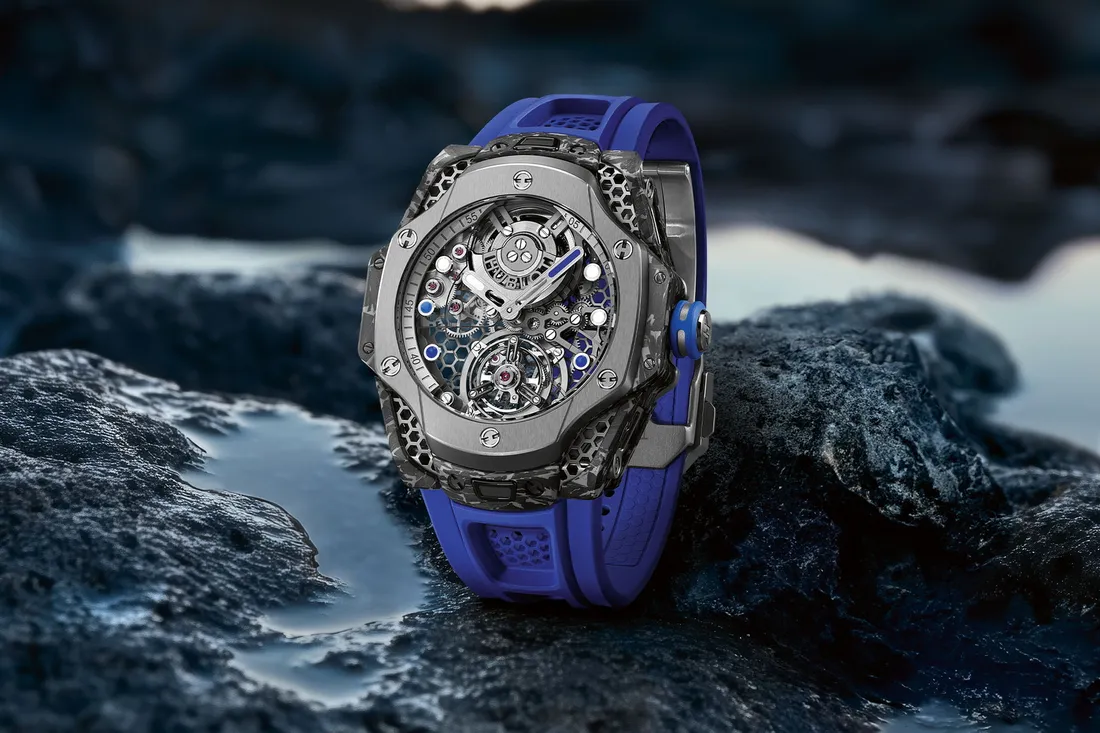
"Two different things side by side. The case parts are microblasted titanium, given a matt, granular surface by blasting so that it does not shine and it changes in the hand. The middle case is forged carbon, made by pressing carbon fibre chips with resin into a mould and curing them under high pressure, so the pattern of every piece comes out different, because the fibres settle randomly in the mould. No two of these watches have identical carbon."
"And the blue."
"The strap is dark blue rubber and note that the strap itself has hexagonal holes in it. The crown is overmoulded in blue rubber. A single high-frequency colour inside a cold, grey, industrial structure."
"What is inside?"
"A manufacture calibre called the HUB6035. Two hundred and eighty-two components, three oscillations a second and a full seventy-two hours of power reserve. In the upper half of the dial a skeletonised micro-rotor, in the lower half a tourbillon."
"What is a micro-rotor?"
"In an ordinary automatic watch the weight that winds the movement is a large half-moon covering the whole of it. A micro-rotor is small and is sunk into the movement, on the same plane. The price is that being small it gathers less energy, so everything else has to be more efficient. The gain is that the watch stays thin and everything under it stays visible."
"And the bee analogy?"
"The smallest movement of your wrist turns the rotor and that movement is stored in the mainspring. Like a heater bee producing warmth by vibrating its muscle without flapping its wing; there is no spectacular motion, only a quiet conversion."
"And the tourbillon?"
"At six o’clock, turning once a minute on its own axis. The reason is this: with a watch standing upright, gravity always pulls the balance wheel the same way and the watch changes rate with position. When the carriage turns, the centre of mass of the balance visits every direction within a minute; the error made in one direction is taken back in the other. The error is not eliminated, it is averaged."
"Like finding your way in the darkness of the hive."
"You could put it that way. Both are solving the same problem: how do you stay true when there is no fixed reference."
"Where is the dial, then?"
"There is none. Or rather the dial is a sheet of sapphire, carrying indexes only at four, seven and nine o’clock, coated in two different shades of blue luminous material. Both crystals are sapphire, water resistance thirty metres. The case is forty-four millimetres across and thirteen point seven five thick."
"How many?"
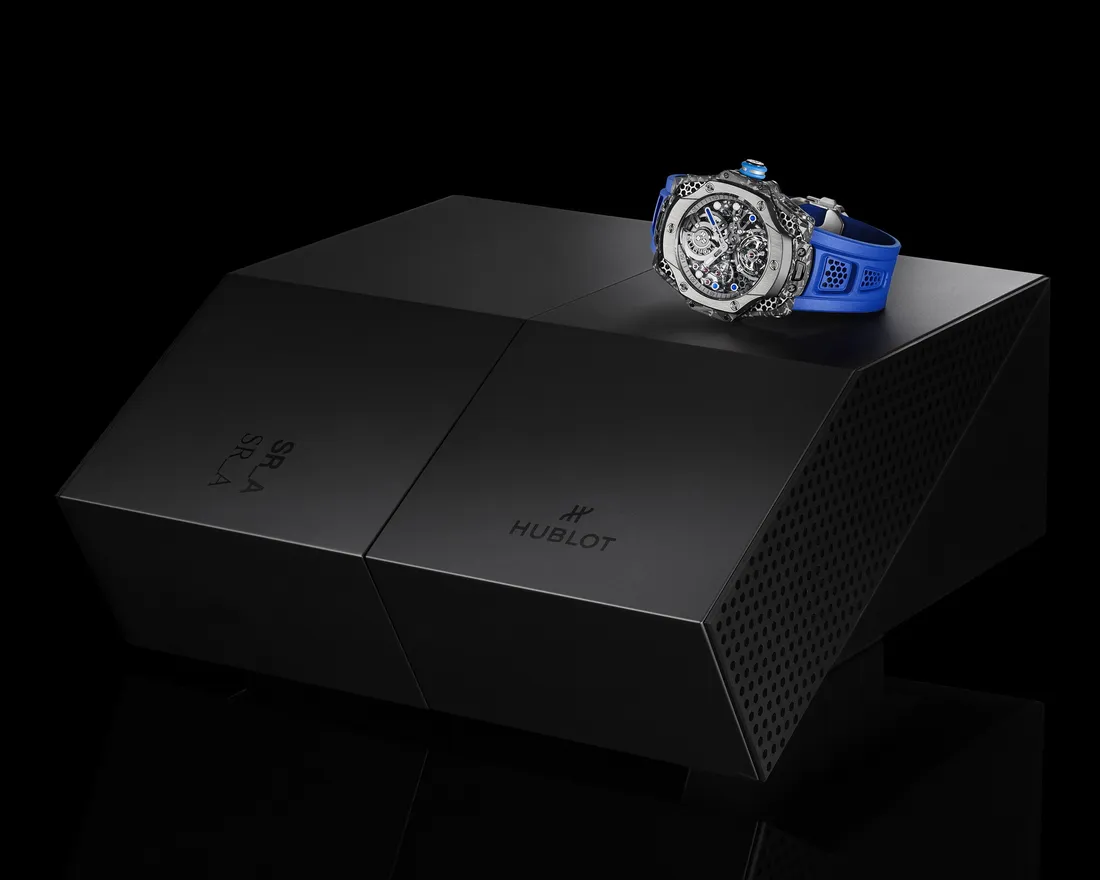
"Fifty. And the price is a hundred and fifty-seven thousand dollars."
Victor lifted his veiled hat slightly and smiled.
"Whether it is the bee that gives its life for a twelfth of a teaspoon and fills our shelves with colour, or this carbon tourbillon out of the hands of watchmakers. Both are doing the same thing: much work with little material."
"And both learned it in the same place," said Arthur, closing the frame. "One applies a mathematics written two thousand years ago without knowing it, the other imitates that mathematics knowing it perfectly well. Real art comes from paying respect to the geometry already there."
format_quote"The bee was not taught the mathematics of the hexagon; it was given a physics that makes the hexagon inevitable."
format_quote"Nature is not perfect; it has come to within three and a half parts in a thousand of perfect, and stopped there."
Hasan Bekmezci