The largest untruth in a wristwatch is the assumption that a mainspring delivers a constant force. It does not. A fully wound spring pushes hard, a spring near the end of its run pushes weakly, and across all the hours between, the force falls away.
That decline reaches the escapement and changes the amplitude of the balance. Change the amplitude and the period of the swing changes very slightly with it. So the watch keeps one rate in the first hour after winding and another in the last. This is precisely why chronometer certification measures in several positions and at several states of wind.
Every constant-force device in watchmaking, the fusée and chain included, was invented to refute that one sentence.
format_quote"The force of a mainspring fully wound is not the force of a mainspring about to stop. Every constant-force device exists to refute that one sentence."
Hasan Bekmezci
Girard-Perregaux found its answer somewhere else entirely, in buckling instability. Take a thin rod fixed at both ends and press those ends towards one another, and the rod will not stay straight. It bows to one side. It can bow either way, and both of those shapes are stable. The flat shape exactly in the middle is unstable; the rod cannot rest there.
Now push that buckled rod sideways at its centre. It resists for a while, then passes a threshold and snaps across to the other side. The decisive property of that snap is this: the energy it releases depends on the geometry of the rod, not on how hard you pushed. Push gently or push hard, the same quantity of energy comes out.
A light switch works the same way. You can press it slowly or quickly with your finger, and it always gives the same click, because what makes the click is not your finger but the buckled spring inside it.
format_quote"A buckled blade has two stable states and no middle. However hard you push it, it snaps with the same sound."
Hasan Bekmezci
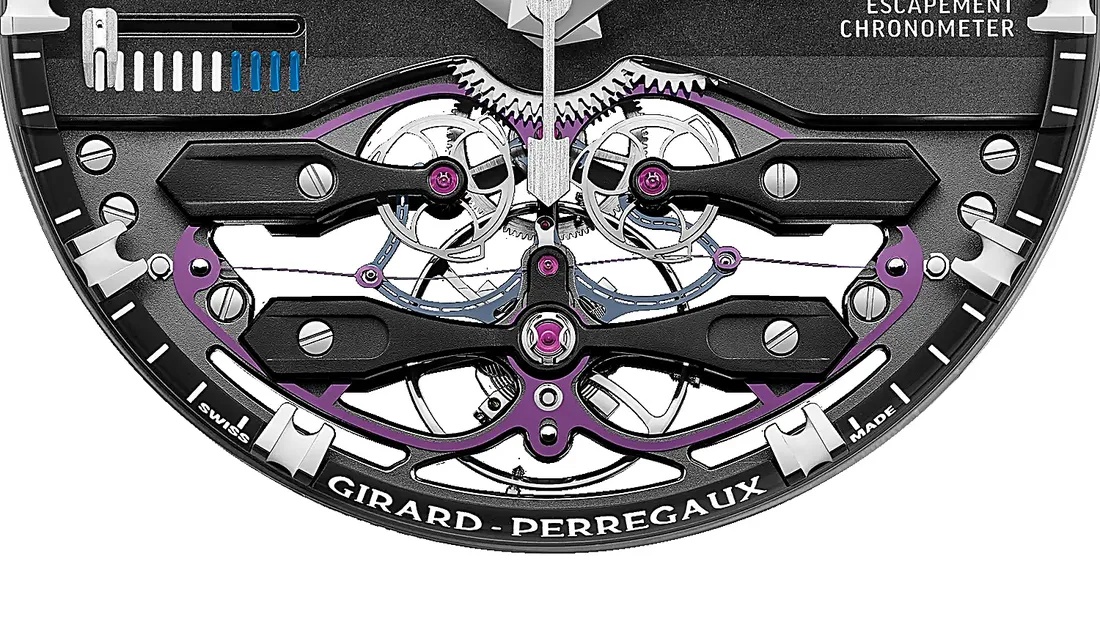
The Constant Escapement puts that switch inside a watch. The mainspring does not hand its energy to the balance directly; a buckled silicon blade stands between them, and with every swing the balance flips that blade from one side to the other. The impulse the balance receives is a fixed quantity set by the geometry of the blade, whatever the mainspring happens to be delivering at that moment.
The figures come from the maker’s own text and they are startling. The buckling blade is fourteen microns wide; the escapement spring around it is one hundred and twenty microns thick. A human hair measures between fifty and ninety microns. The blade, in other words, is four times finer than a hair.
A part like that cannot be turned on a lathe. It is made by photolithography, a method borrowed from semiconductor manufacture, in which the pattern is printed onto a silicon wafer with light. Silicon was chosen for one property alone: its high elasticity. In the maker’s own words, it is the only material that lets the blade buckle repeatedly and, in doing so, serve the balance with a constant force.
Picture two people at the bench arguing about the idea: the constructor who calculated the blade and the service manager who will have to repair this watch twenty years from now.
The service manager objects. Fourteen microns. A quarter of the thickness of a hair. What do I do when it breaks?
The constructor corrects the assumption first. It will not break, because it does not fatigue. A steel hairspring tires from the inside over millions of cycles as slip accumulates along its grain boundaries. Silicon is not a metal and has no such internal structure. It either works or it shatters, and shattering it takes a blow that would break other parts of the watch as well.
The service manager names the real loss. So I cannot repair it, only replace it. A good hand can coax a steel spring back into shape. Nobody can reshape this.
The constructor grants it and states the other side of the bargain. True. But a steel spring, being repairable, is also spoilable. This one does not spoil. You give up the possibility of repair and in exchange the fault itself disappears.
format_quote"You give up the possibility of repair and the fault itself disappears. Every change of material in this trade has been that bargain."
Hasan Bekmezci
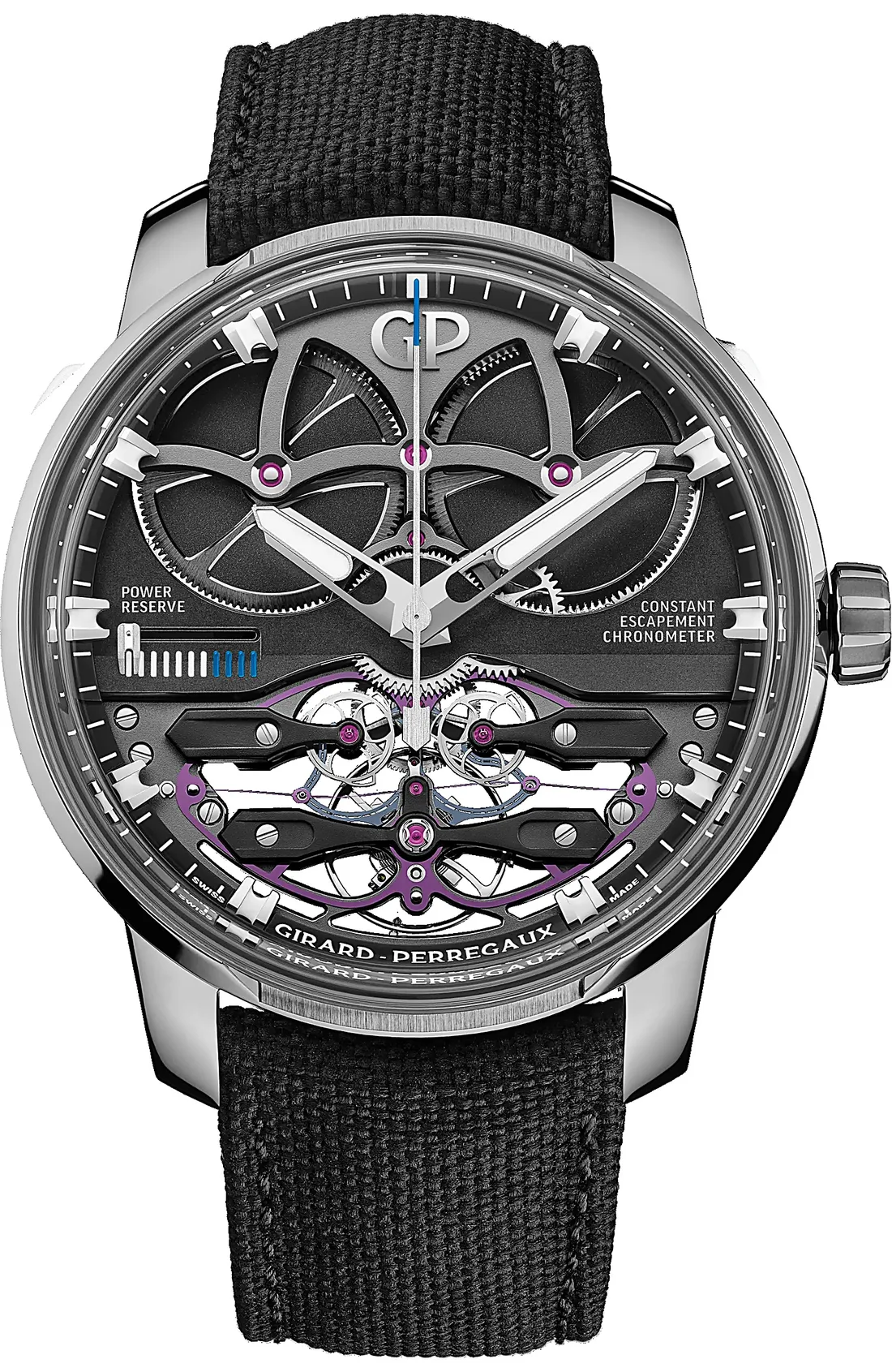
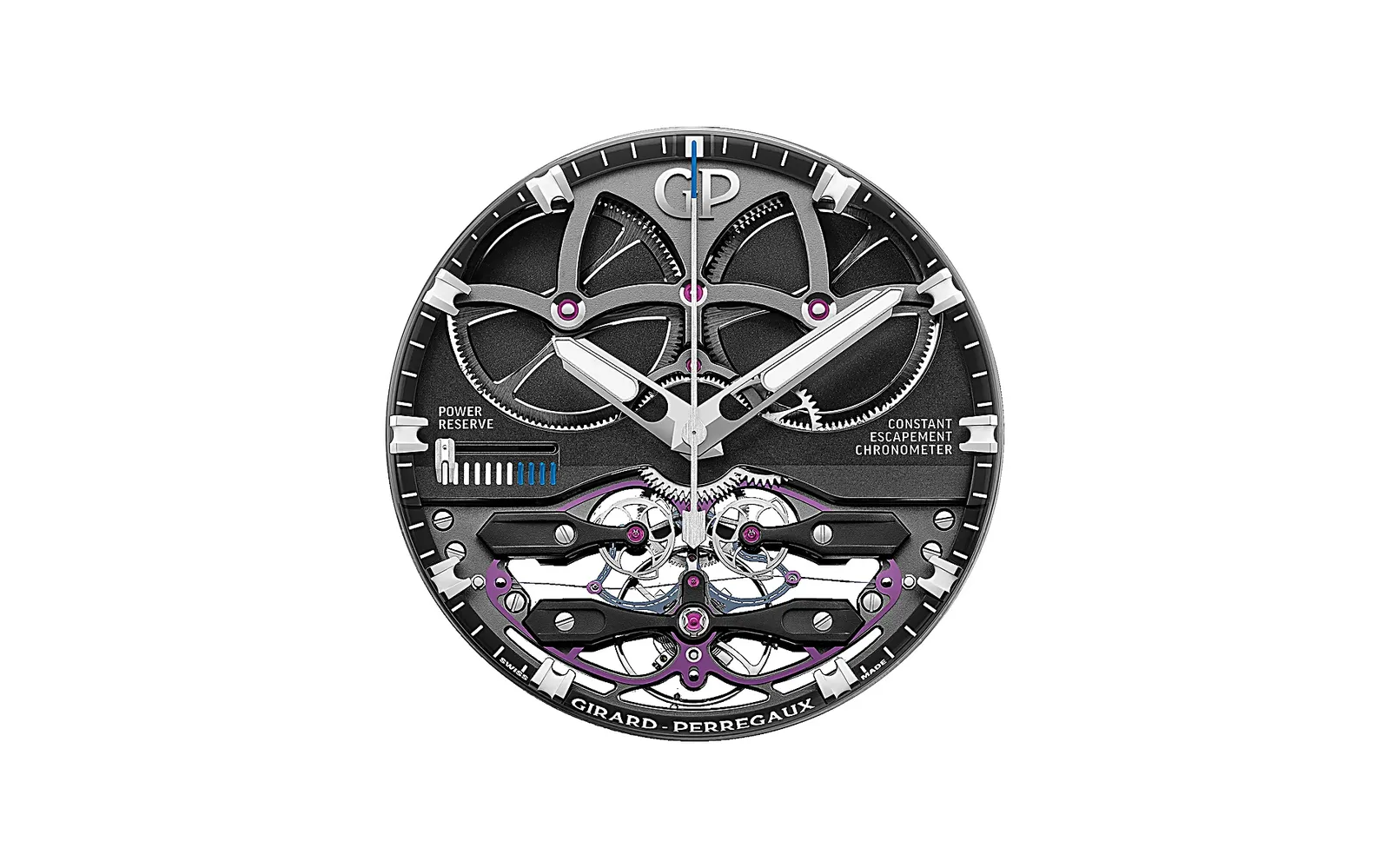
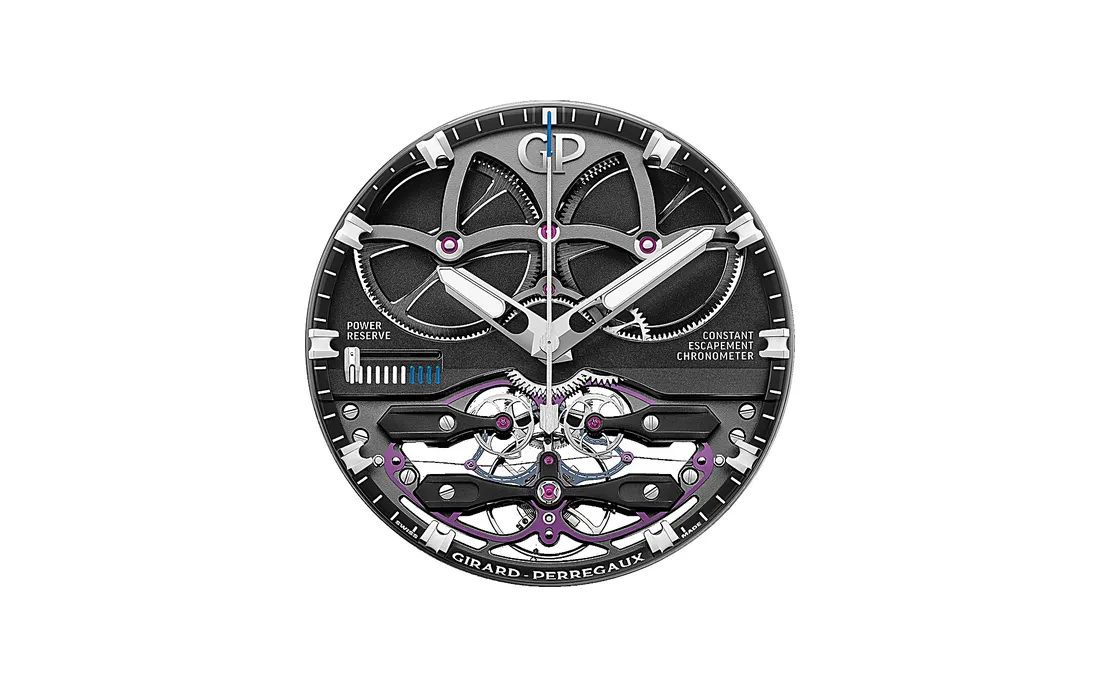
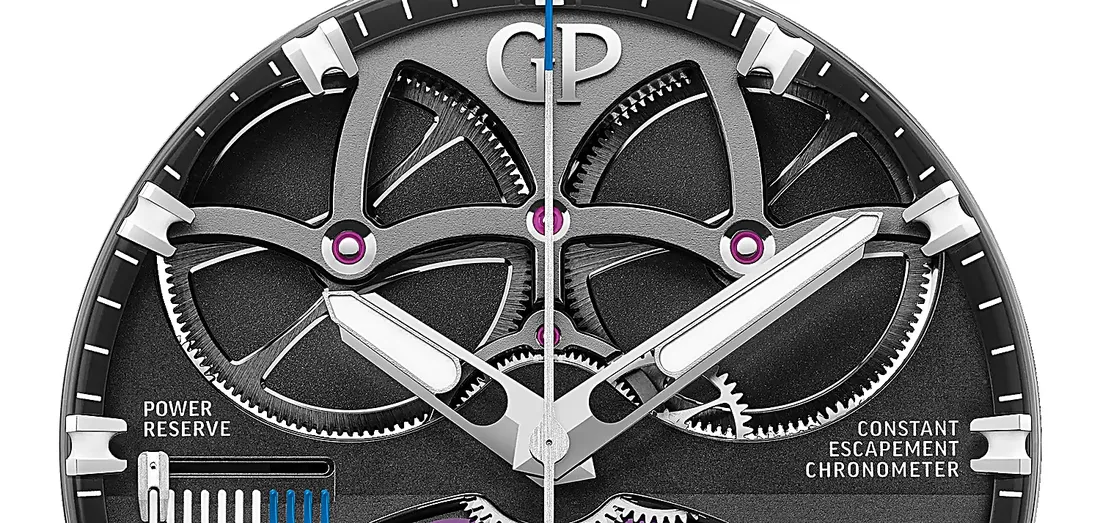
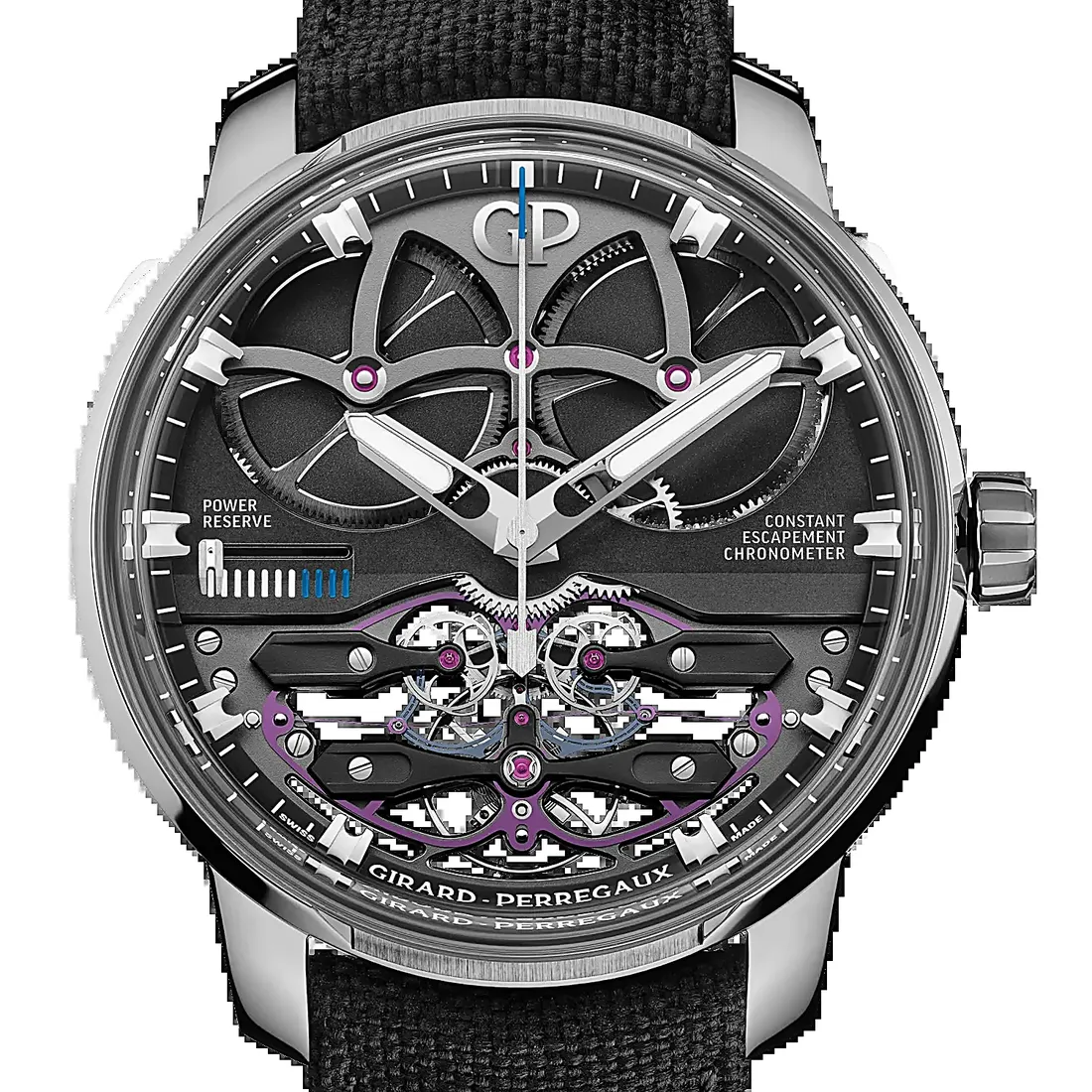
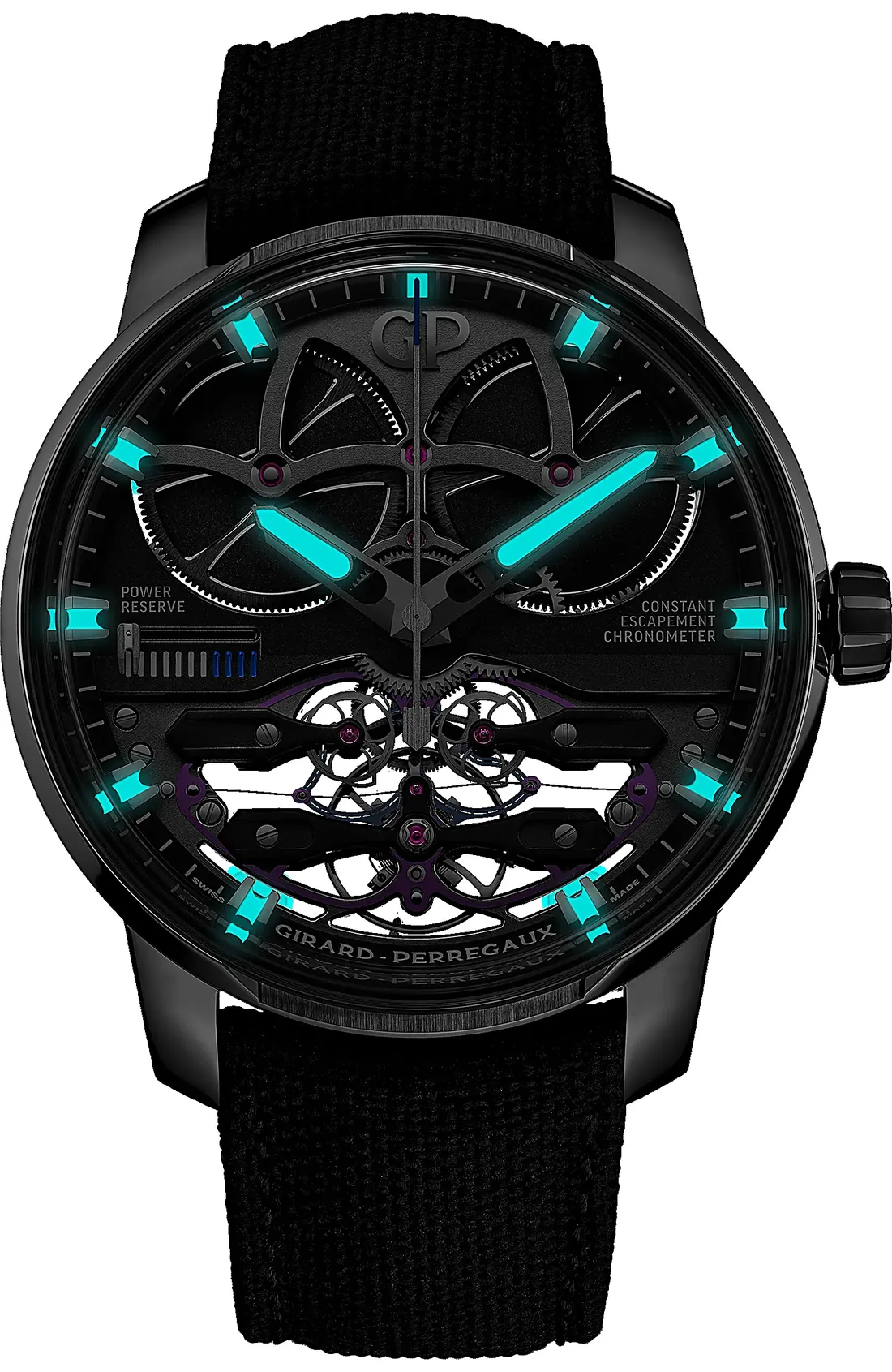
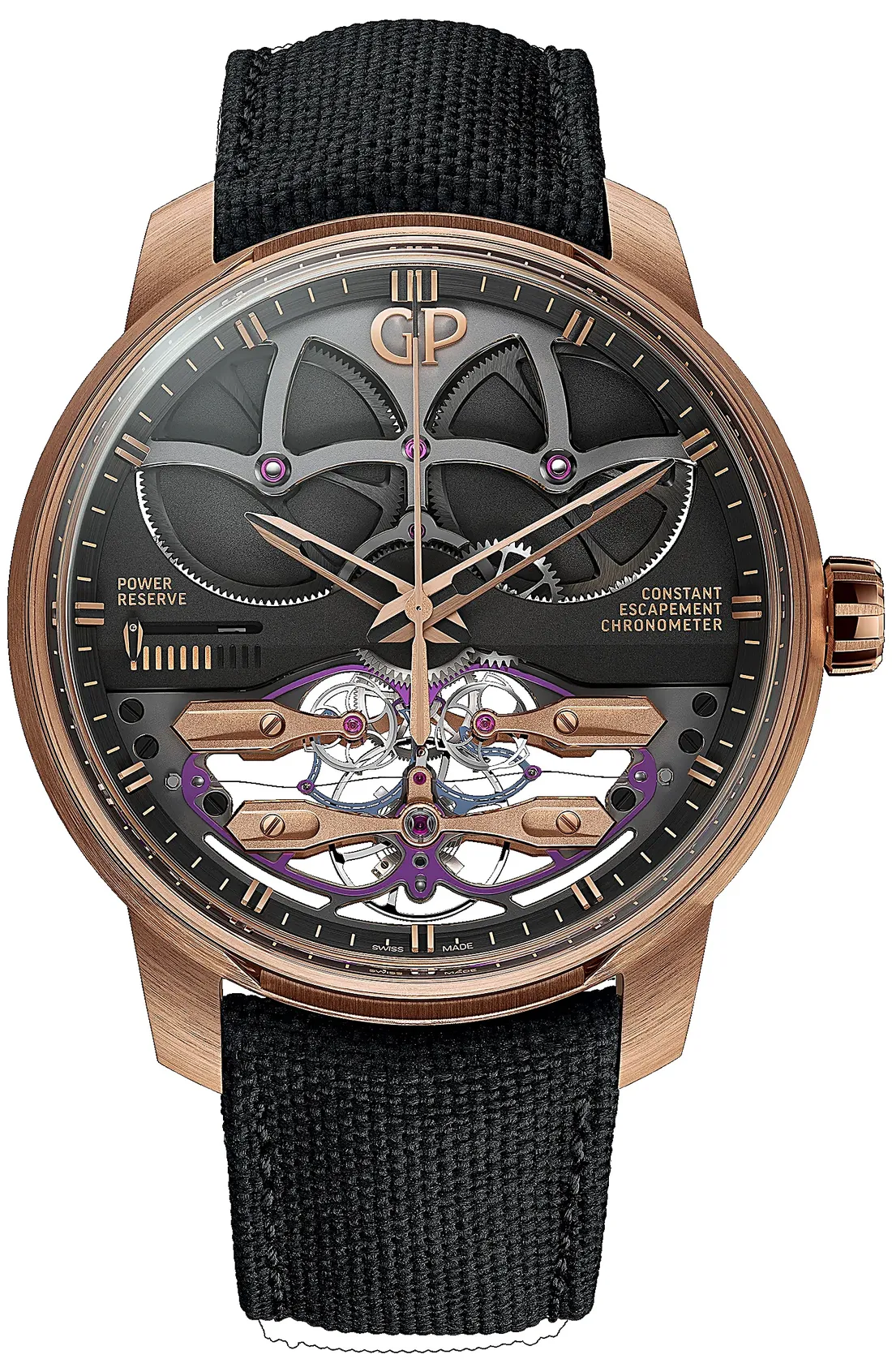
The rest of the figures run as follows. The calibre is called the GP09200, it is wound by hand and measures thirty-nine and a half millimetres across. Two barrels sit at the top of the dial and two arrow-shaped bridges at the bottom, while the linear indicator at nine o’clock reports the energy remaining. The twin barrels give a reserve of at least seven days, and the movement carries COSC chronometer certification.
The watch described here is the current Neo Constant Escapement, in a forty-five millimetre pink gold case at one hundred and thirty-four thousand dollars. The idea itself arrived with the Constant Escapement L.M. of 2013, which that year won the Aiguille d’Or, the highest prize of the Grand Prix d’Horlogerie de Genève.
The real oddity of this watch is that the job of its most important part is not to carry information but to erase it. The blade forgets everything about the state of the mainspring and reports to the balance nothing but its own geometry. All the noise in between is cut off at that point.
A person has no such part. The answer we give shifts with the force upon us at the time. We speak one way when tired and another when rested, one way under pressure and another at ease. The answer we give to a question in the morning and the answer we give to it at night are often not the same answer, and the reason is not that the question changed.
What the buckled blade does therefore starts to look like a moral property: refusing to let the force bearing down on it enter its answer. Giving the same click however hard it is pressed.
That a strip of silicon fourteen microns wide manages this makes our failure to manage it more worth thinking about. And the steadiness that holds that strip is not a rule we imposed either; it is a behaviour already placed in the material. All that was left to us was to notice it and put it in the right place.
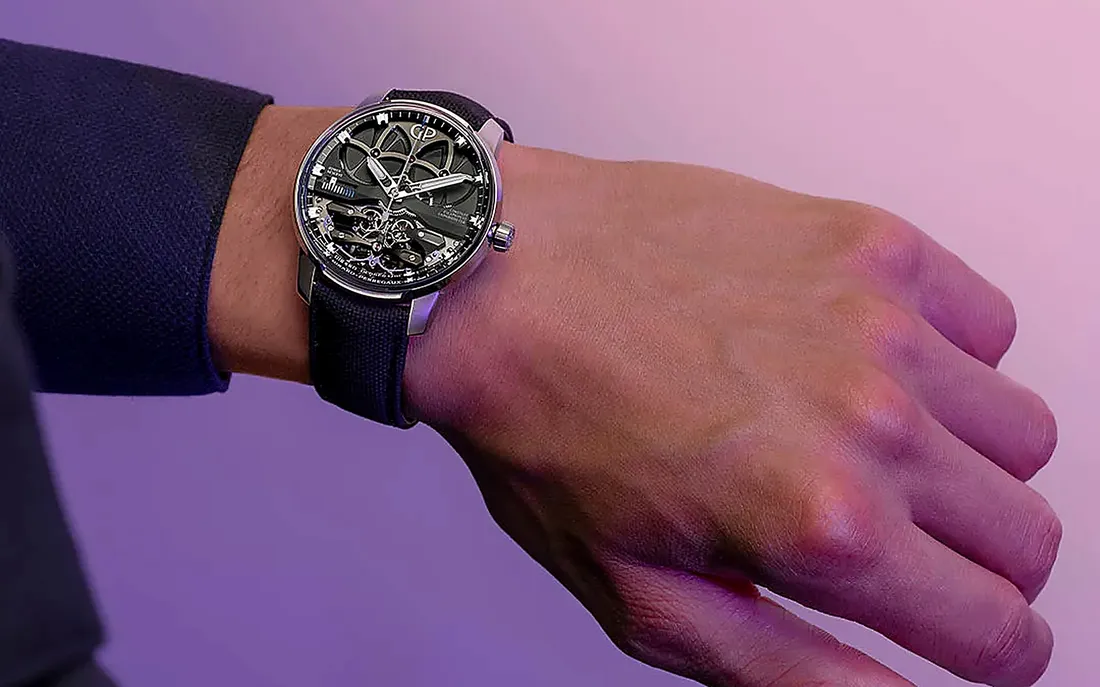
The watch on its maker’s own site: Girard-Perregaux, Neo Constant Escapement