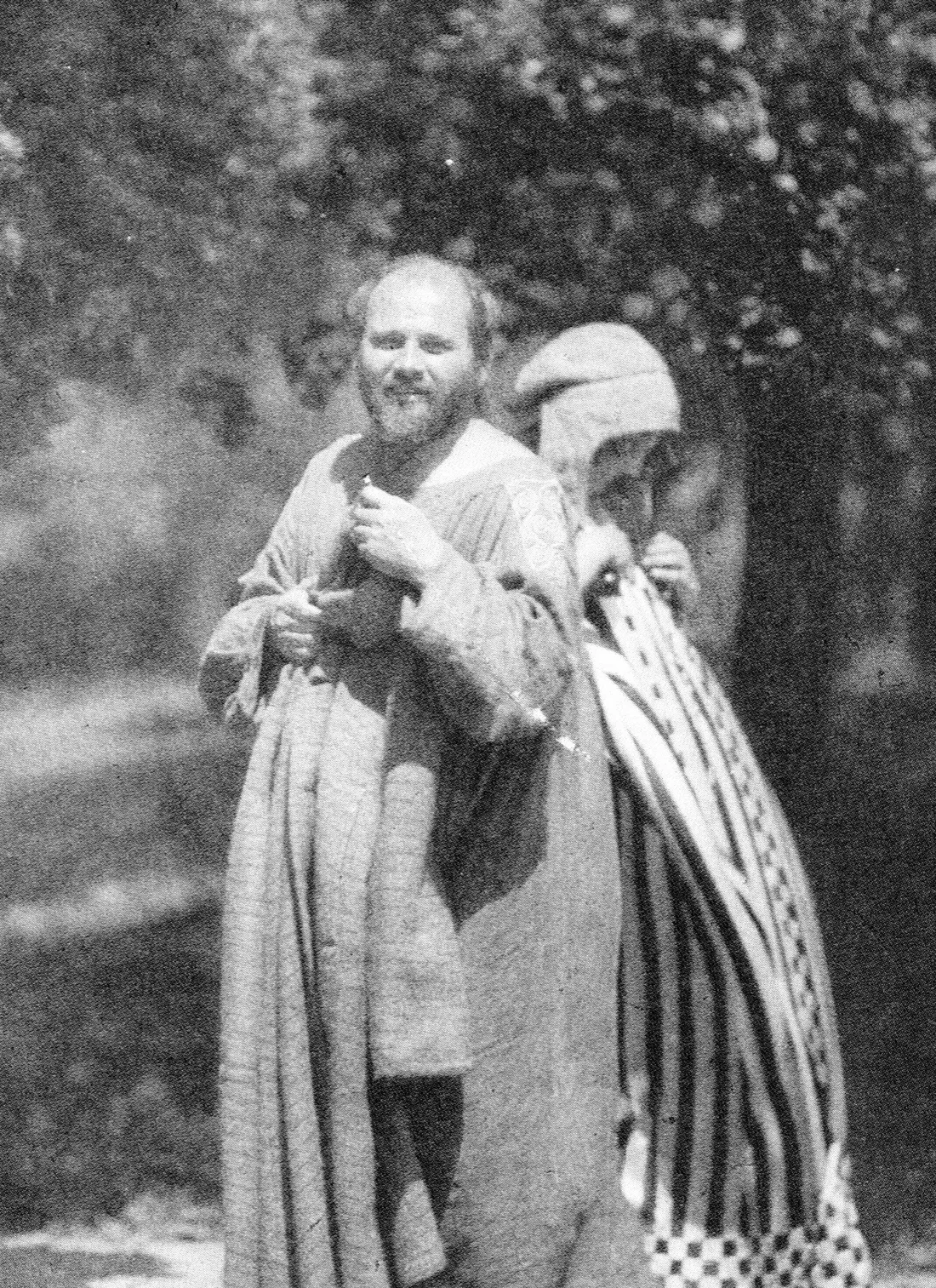
Vienna, 1907. Gustav Klimt stood beneath the pale light filtering down from his studio ceiling, a trembling brush in his hand. A storm raged within his soul. For this man had, not long before, been humiliated by his own city. The paintings he had made for the ceiling of the University of Vienna, 'Philosophy', 'Medicine' and 'Jurisprudence', had been declared 'obscene' and 'perverse' by more than eighty professors; his art had been branded a scandal. Deeply wounded, Klimt returned the money, took back the paintings, and swore he would never again work for the state: 'I have had enough of censorship. I want to be free.'
But this wound did not silence him; it turned him inward. The son of a gold engraver, Klimt took refuge in the bright metal of his childhood. He remembered the sacred golden grounds of the Byzantine mosaics he had seen in Ravenna, and built himself a private language no one could condemn: a world woven of gold, of spirals and of pure feeling. In defiance of all that dark clamour, he wanted to capture humanity's purest, most untouchable moment: the moment of perfect surrender.
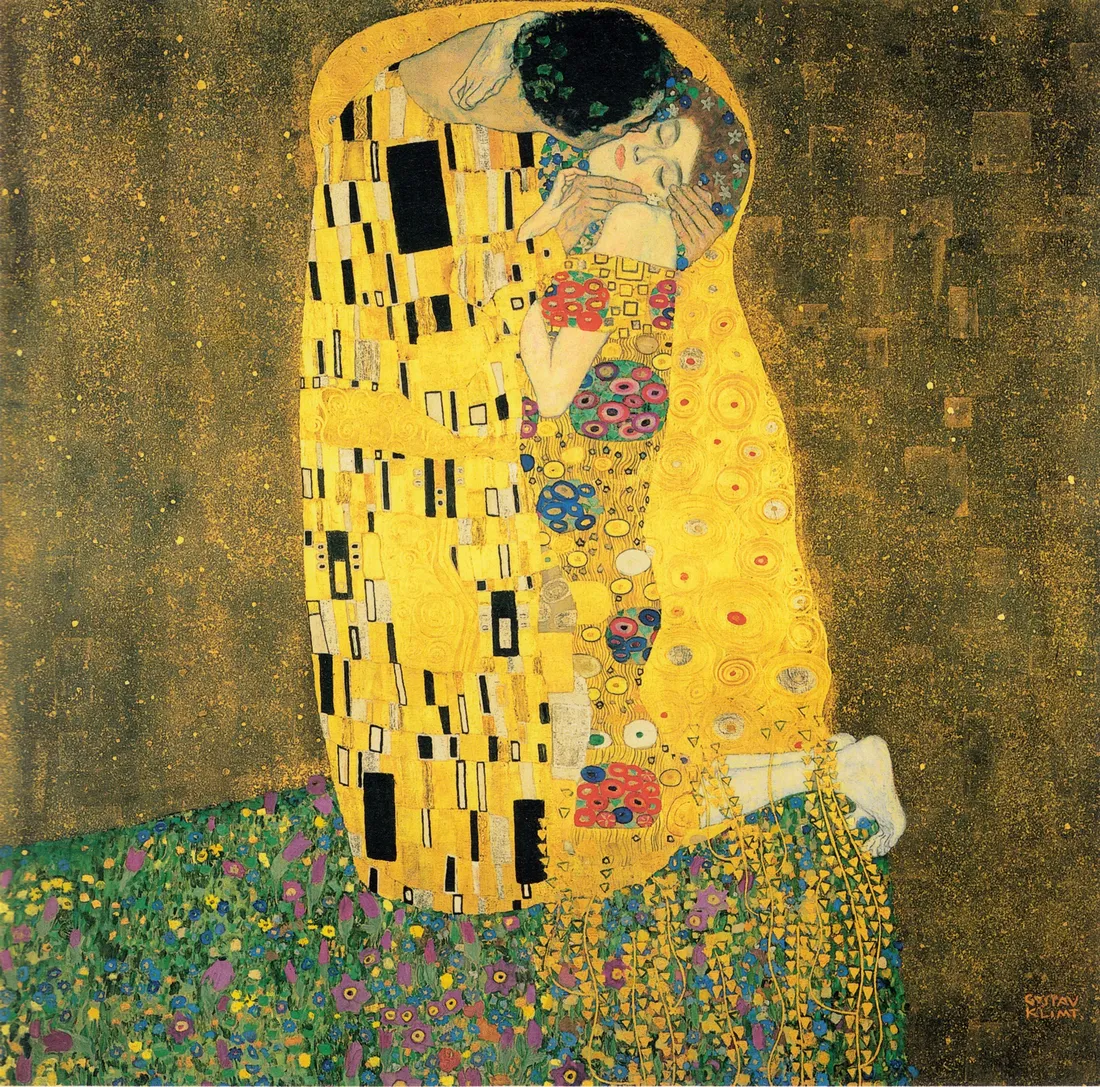
When his brush struck the canvas, the world fell silent. Two lovers kneel at the very edge of a cliff, a flower-strewn slope: the man holds the woman's face in his palms; she, eyes closed, has surrendered herself entirely. The vast cloak that pours over them like a golden mantle melts the two into a single body. In that instant there is no past and no future; only two souls losing themselves in one another, and the enchanted second in which time stops. In painting 'The Kiss', Klimt was inscribing on his canvas not a picture of love, but the very formula by which time itself might be defeated.
When the painting was exhibited in 1908, the city that had accused him of scandal fell silent; the work was bought by the state before it was even finished, and today it is the most precious treasure of the Belvedere Palace in Vienna. Klimt drew a deep breath. He could not have known that, more than a century later, in a snow-covered mountain village in Switzerland, there would be a woman who would bring this immortal state of soul back to life upon a piece of metal only a few centimetres wide.
The Woman Who Dances with Fire: Anita Porchet
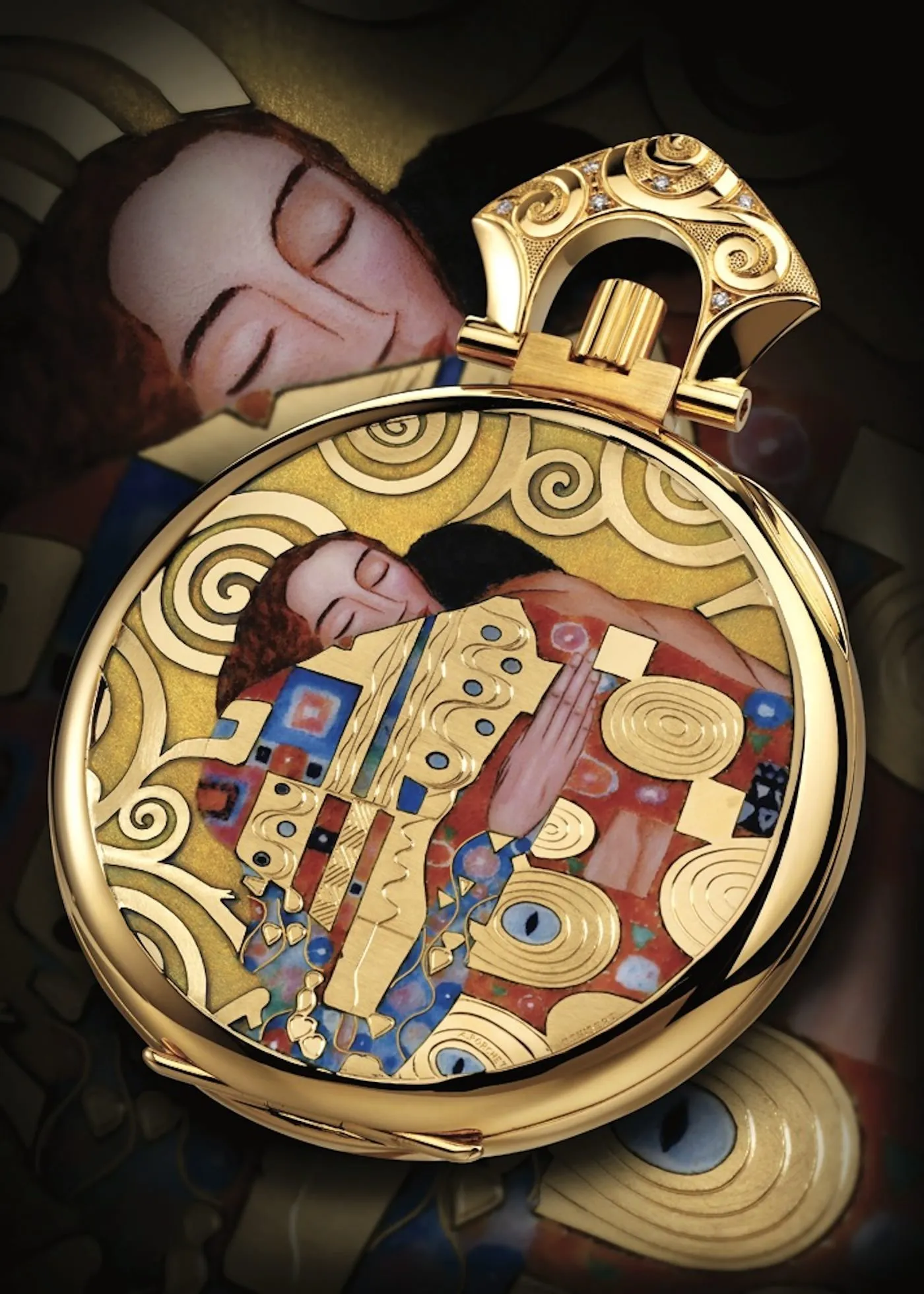
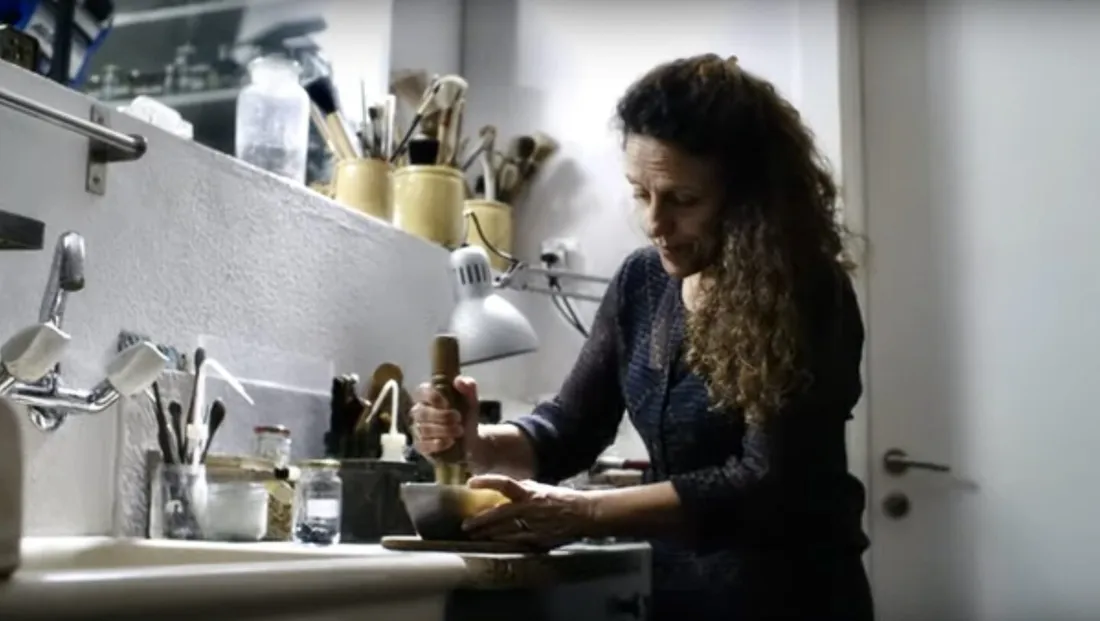
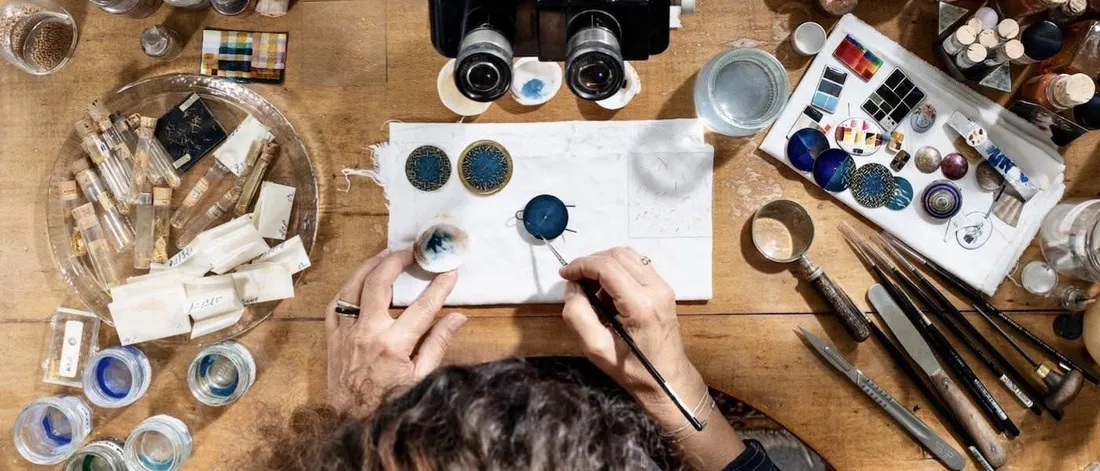
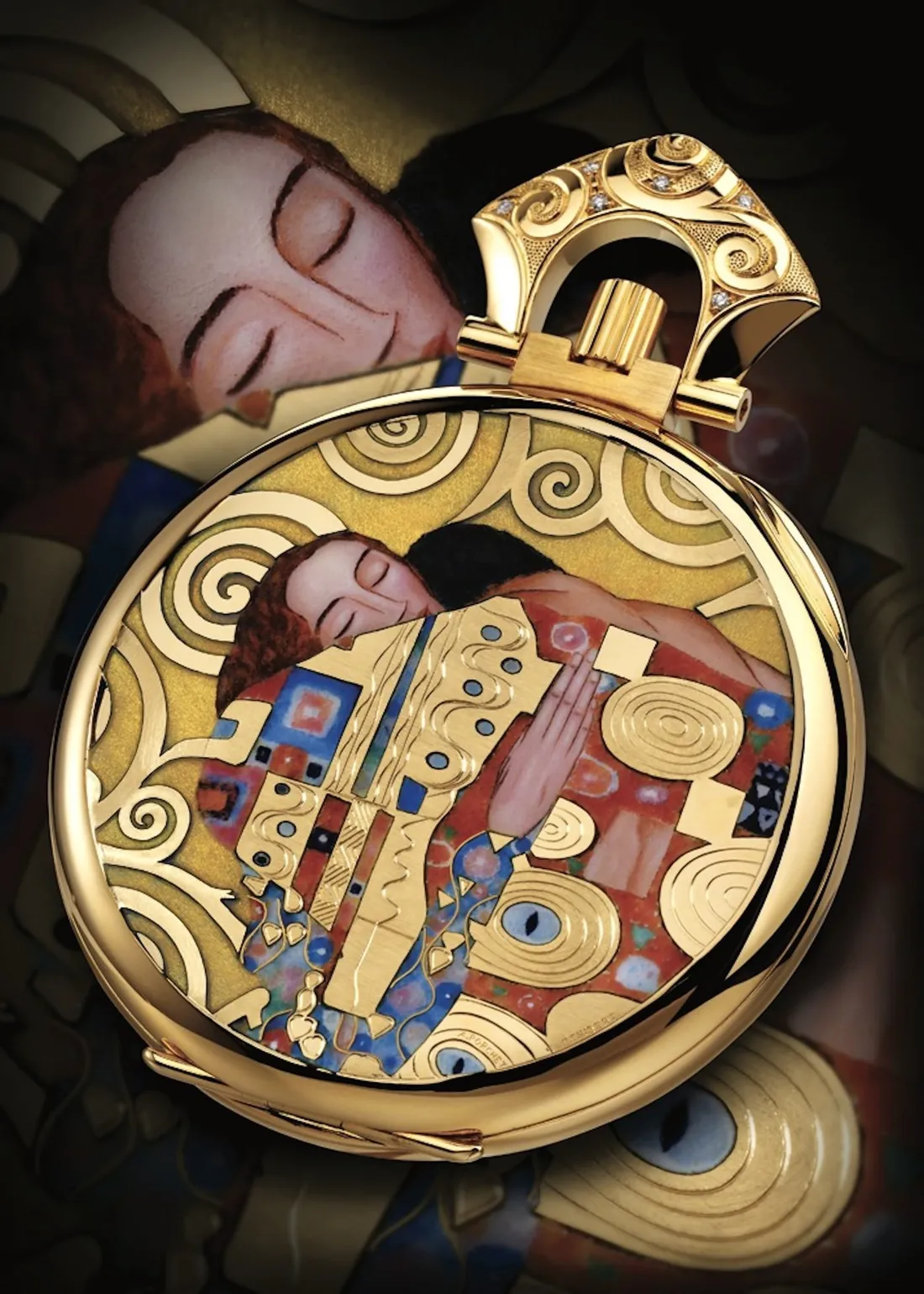
A century later, in her quiet workshop near Geneva, Anita Porchet shared in Klimt's stormy state of soul. On her table this time lay no vast canvas, but only the pure-gold cover of a pocket watch a few centimetres across: the Patek Philippe 992/108J-001, a unique piece in the world. Porchet is regarded as the greatest enamellist of our age; so much so that the signature 'A Porchet' in the corner of a dial means that the piece came entirely from her own hand; only five to ten per cent of her atelier's yearly output bears that signature. This watch carries one of those rare signatures.
When Porchet moved behind her microscope, before her lay not a single technique but the audacity of uniting four separate arts of enamel on one tiny surface. 'First I grind the coloured glass into grains as fine as sand,' she says; 'a handy reminder that glass is made from sand.' That powdered glass would become Klimt's palette.
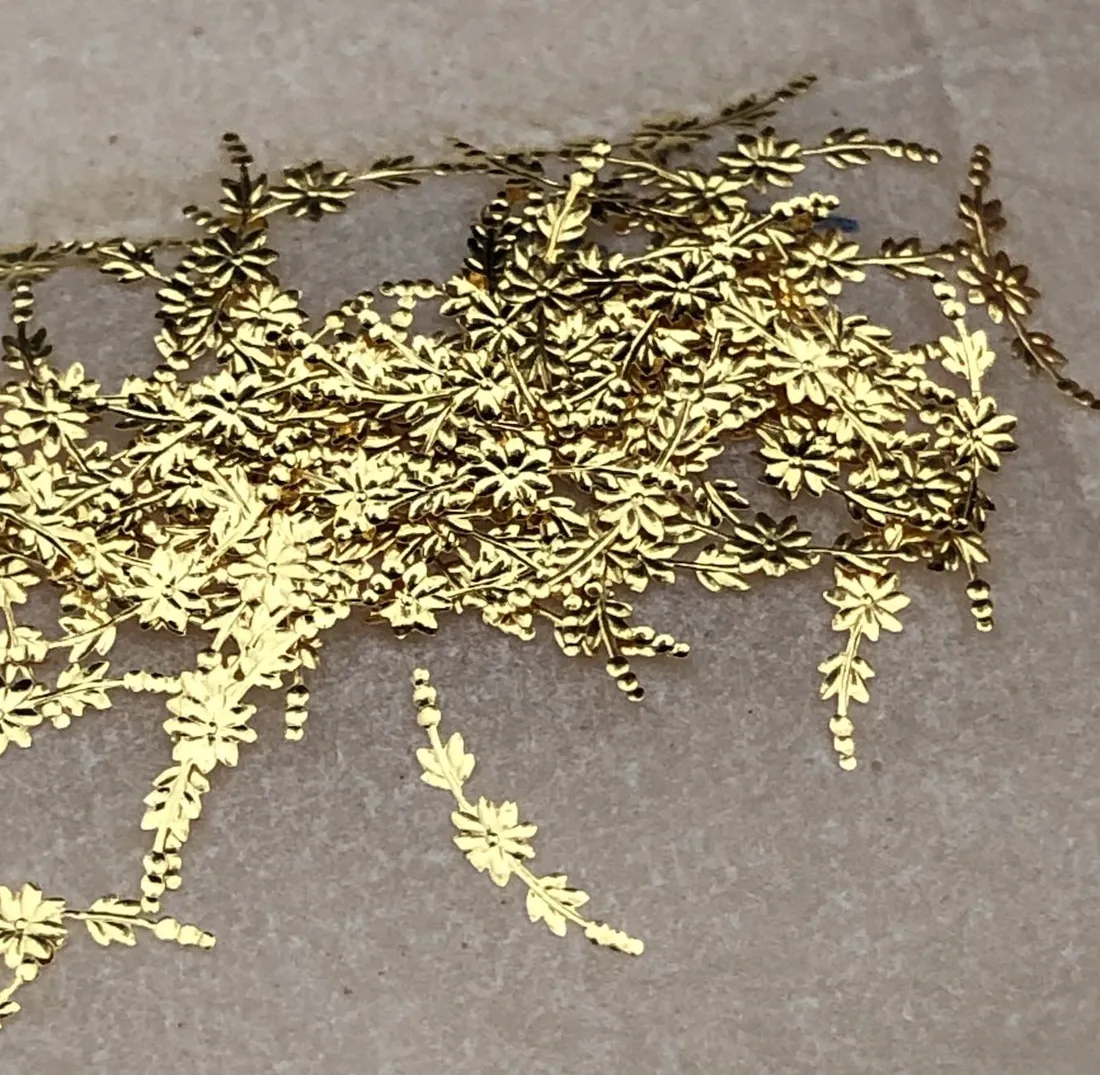
Four separate magics are interwoven on this single dial. Cloisonné (cell enamel): with her fingertips the artisan bends threads of pure gold finer than a hair, dividing the lovers' bodies, their interlaced hands and the spiralling patterns into tiny cells; like the lead lines of a stained-glass window or the black outlines of a colouring book, these threads keep each colour within its own compartment. Champlevé: the surface of the gold is carved, and the hollows thus opened are filled with enamel. Paillonné: between the layers of translucent enamel, minuscule hand-cut pieces of gold foil (paillons) are buried; when light dives into the enamel, these foils glimmer from the depths like sunlight trapped in amber. And miniature painting: the lovers' faces, that serene expression, are painted one by one with the finest brush.
But Porchet's canvas had to be fired. And this was the hardest part: the enamels of these four techniques do not melt at the same temperature. Each time she committed the watch to the 800-degree-Celsius fire, the gamble began again; what if one layer overfired and scorched another, what if the glass cracked, what if the colours ran together? 'The thing I love about enamel is that you are never in control,' says Porchet; 'you are always on a knife-edge.' But this time the fire obeyed the master. In each layer that emerged from the kiln, Klimt's famous 'Golden Period' was reborn, this time beneath the glassy brilliance of enamel, never to fade.
The Man Who Whispers to Gold: Christian Thibert
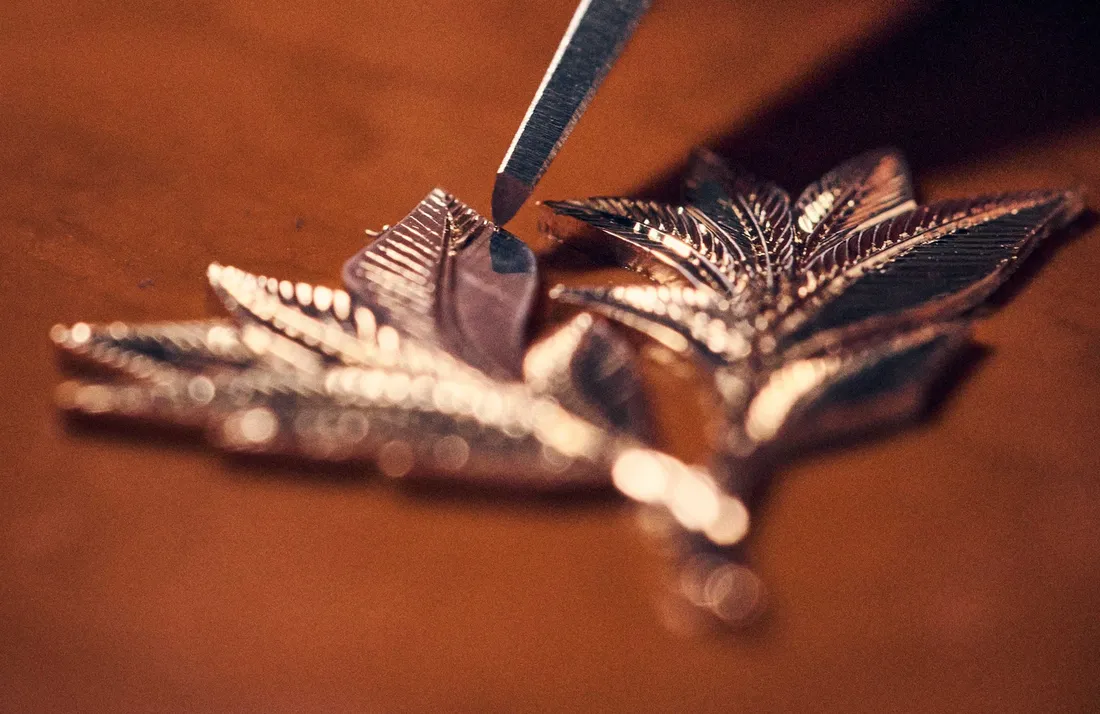
The story did not end at the dial. The spiralling energy of Klimt's painting could not remain imprisoned on the watch's cover alone; it had to spill onto the outside of the case, onto the winding crown and onto the noble bow that carries the watch. Here master engraver Christian Thibert stepped onto the stage. For Thibert, engraving is an art that allows no mistakes: 'Engraving requires that we seduce and capture light. The line must be cut perfectly, and the curve must let the light flow in harmony.' The way an artist directs light is his signature.
When Thibert began to carve the 18-karat yellow gold with his steel graver (burin), he held Klimt's spirals in his mind's eye. He struck the metal with blows so soft, so rhythmic, that the hard gold rippled like warm wax; the watch's bow took shape in curl upon curl, like the golden mantle that wraps Klimt's lovers. And with the pure diamonds he set one by one among the engravings, he trapped the painting's divine light within the metal.

The Single Second Where Three Geniuses Met
What truly makes this watch a masterpiece is the great risk that was taken. Porchet and Thibert knowingly accepted the danger of bringing together, in a single piece, enamels and techniques that do not work at the same temperature; and they did so purely 'for the beauty of the piece and for the thrill of a creative challenge.' Just as Klimt struck his brush in defiance of an entire city, they too faced down the fire.
Today, when you look at this piece, which Patek Philippe made in only one example in all the world, what you see is not a luxury pocket watch. There, all at once, you see Gustav Klimt's passionate search for love in 1907, Anita Porchet's microscopic patience in defying the fire, and Christian Thibert's firm fingertips giving life to gold. Three great souls, living a century apart, have met in humanity's noblest moment, an eternal kiss, and stopped time. And now that timelessness, with a heart that ticks softly, goes on beating right in the palm of your hand.