In the Mindo-Nambillo cloud forest on the flanks of the Ecuadorian Andes, the mist settles over the giant ferns and the passionflower vines wrapping the trees like a damp veil. This particular microclimate, some 2,800 metres above sea level, is no random geography; it is the only refuge on earth of the sword-billed hummingbird, Ensifera ensifera, the one bird species whose bill is longer than its own body.
In the dim light filtering through the dense leaves, Dr Thomas and his assistant Elena were recording the meeting of this miraculous creature with a purple Passiflora mixta flower, using a scanning microscope and a high-speed macro camera.
What appeared in the lens was beyond belief. The bird, its wings drawing a figure of eight too fast for the eye to follow, held itself nailed in place despite the turbulence of the air, and slid its eleven-centimetre bill into the narrow nectar tube of the flower with a millimetric fit.
Elena looked at the thermal analysis screen of her camera and shook her head in astonishment:
“Thomas, we are standing in freezing damp. At this altitude the air drops to 8 degrees at night. How does this tiny body hold its metabolism together in cold like this?”

Dr Thomas adjusted the lens and answered:
“Because this creature has been fitted out with a tremendous piece of biophysical programming, Elena. When night falls, the hypothalamus resets the internal thermostat. The bird throws the metabolic switch at cell level; it drops its heartbeat from 1,200 a minute to somewhere between 50 and 100 and cuts its oxygen consumption by 95 per cent. As cellular respiration slows, the production of body heat stops and its temperature falls to the edge of the surrounding air, right down to 18 degrees. This state of controlled hypothermia, which we call torpor, is the thinnest line there is between death and life.”
Elena listened without taking her eyes off the screen.
“It is like shutting down every heavy production line in a factory for the night and leaving a single pilot flame burning to stop the plant from freezing,” said Thomas. “If it tried to hold its body at 40 degrees through the night as well, that small frame would burn its entire store of glycogen within hours and die. When the sun comes up, the hypothalamus pulls the thermostat back up; the muscles shiver to make heat, the heart leaps straight back to 1,200 beats a minute, and the frozen engine fires again at full revs within seconds.”
format_quote"This state of controlled hypothermia, which we call torpor, is the thinnest line there is between death and life."
Hasan Bekmezci
Elena pointed at the flower on the monitor:
“And the fact that this Passiflora hides its nectar in a tube eleven centimetres deep? That cannot be a coincidence.”
“Never,” said Thomas. “Nature is not a scribe that writes; it is an enormous book in which we read the power and the design of the Creator. The flower and the bird are the work of the same divine pen. The Creator coded the flower to keep its nectar like a deep lock, and equipped the bird with the only key that opens it, which is this particular bill. The flower does not waste its nectar on bees or on the wind, and the bird takes pure energy straight from the source, energy no other creature can reach. A perfect balance of lock and key.”
format_quote"Nature is not a scribe that writes; it is an enormous book in which we read the power and the design of the Creator. The flower and the bird are the work of the same divine pen."
Hasan Bekmezci
Elena went on watching the flow of energy on the screen:
“Photons out of the nuclear fusion at the heart of the sun strike the leaf, the leaf turns light into sugar through photosynthesis, the bird draws that sugar up and turns it into mechanical torque in its breast muscles.”
“And through that torque, pollination happens,” Thomas completed. “Entropy, that fundamental rule of physics in the universe, says everything must scatter, decay and run towards chaos. Iron rusts, an abandoned house falls in. Yet life, through the energy it takes from the sun and the flawless code loaded into it, defies the chaotic drag of entropy; out of chaos it brings forth an order, a colour and a discipline as enchanting as this.”
Elena took a deep breath:
“I understand far better now why artistic effort made by human hands stands enchanted before these mechanisms in nature and tries to imitate them.”
format_quote"Life, through the energy it takes from the sun and the flawless code loaded into it, defies the chaotic drag of entropy; out of chaos it brings forth an order, a colour and a discipline as enchanting as this."
Hasan Bekmezci
Thomas smiled and drew back the cuff of his jacket a little. The warm tone of an 18-carat red gold case and the glow of the enamel on its dial shone in the gloom of the forest.
Elena’s eyes locked on the piece at once:
“Thomas. This thing on your wrist.”
“This is the Jaquet Droz Petite Heure Minute Red Gold Hummingbird,” said Thomas. “When Pierre Jaquet-Droz built the first singing bird automata in the 18th century, imitating the movements of living birds with mechanical wheels and bellows, he gave mechanical watchmaking an organic soul. The bird has been in this house since 1738: painted, drawn, often animated, put into cages and boxes and carried off to courts. Some of those pieces stand today in the maker’s own private museum in La Chaux-de-Fonds. This dial was made by the same art workshops, and not for a series: it was made to a collector’s commission, as a single piece.”
“How many were made?”
“One. Only one. This watch has no twin.”
Elena leaned forward and studied the details:
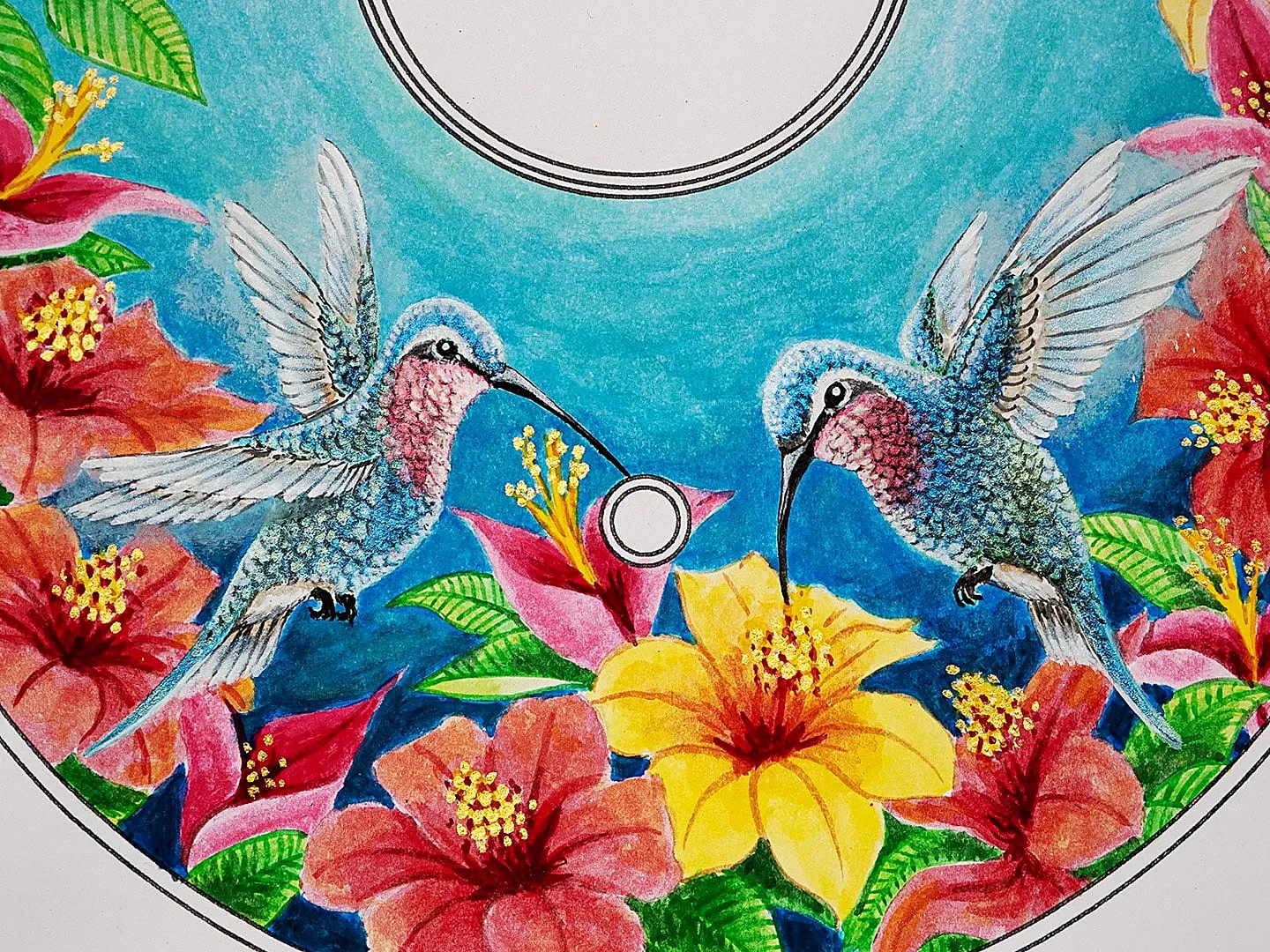
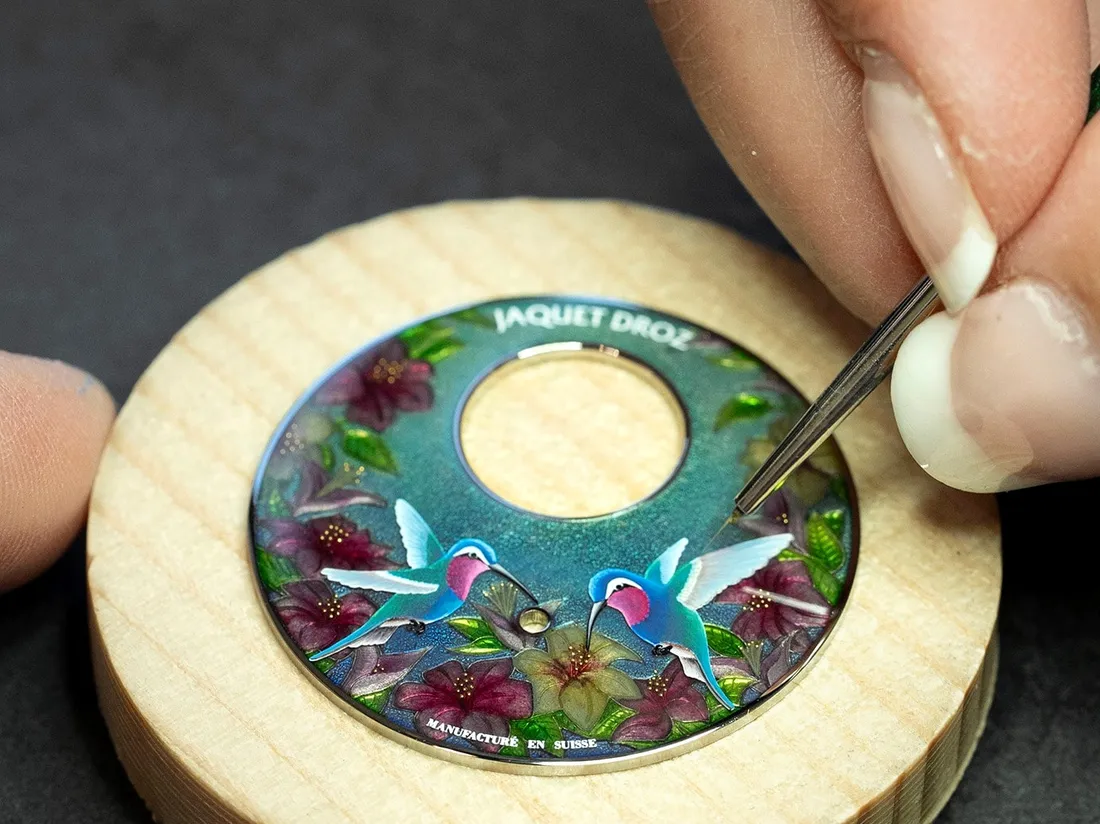
“The tropical flora on the ground and the two hummingbirds above it. The birds look like reliefs, they separate from the ground and rise off it. Are they gold appliques?”
Thomas shook his head and smiled:
“Here is the most surprising thing about this watch. They are not. They look like appliques, but they are not attached parts, they are paintings. Their thickness is about a tenth of a millimetre. Which means the artisan did not seat the birds on top of the dial; the shading is so thin and so calculated that the eye believes they have volume. The leaves lying underneath are covered by the bodies of those two birds, so the depth reads as though it were real. Fitting an applique is a craft; making a painting pass for an applique is something else.”
“And these colours?”
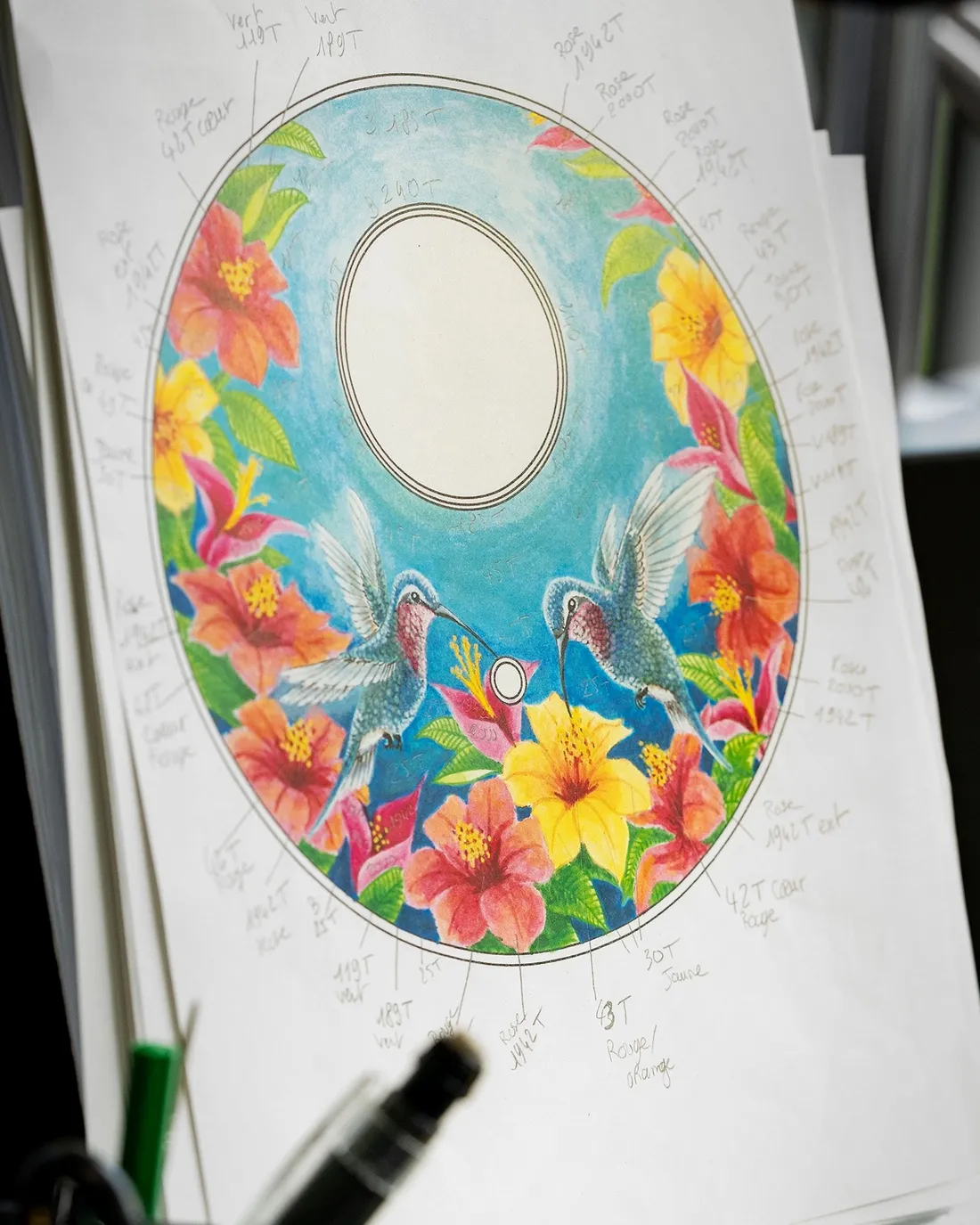
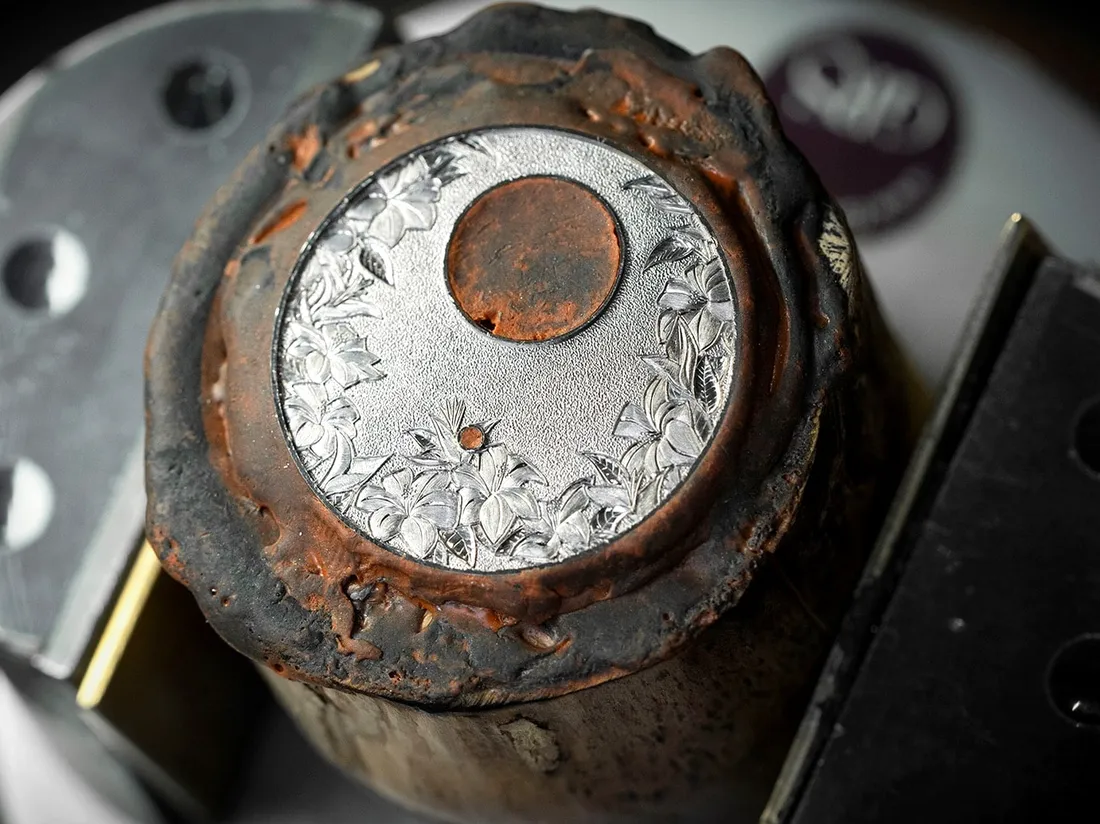
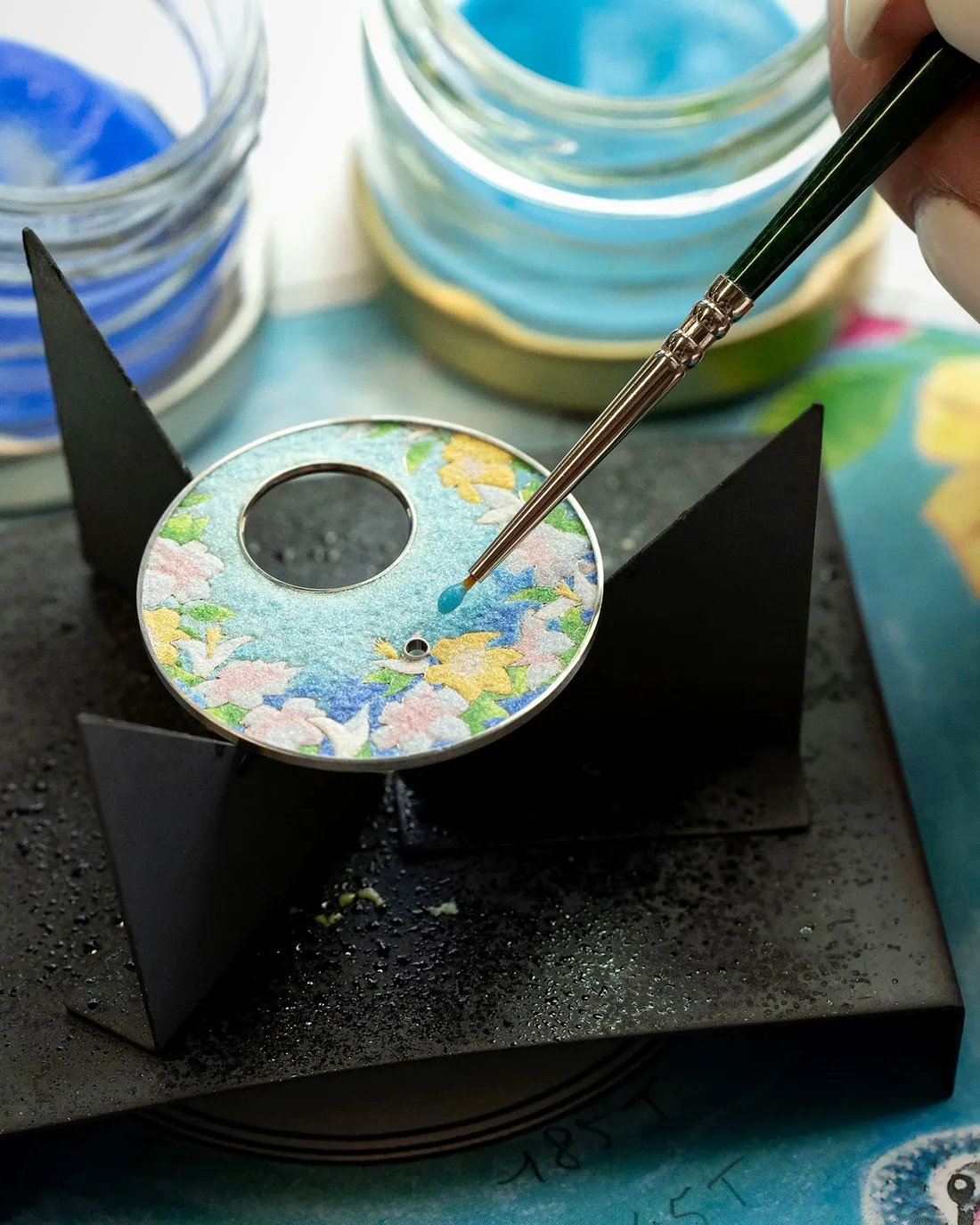
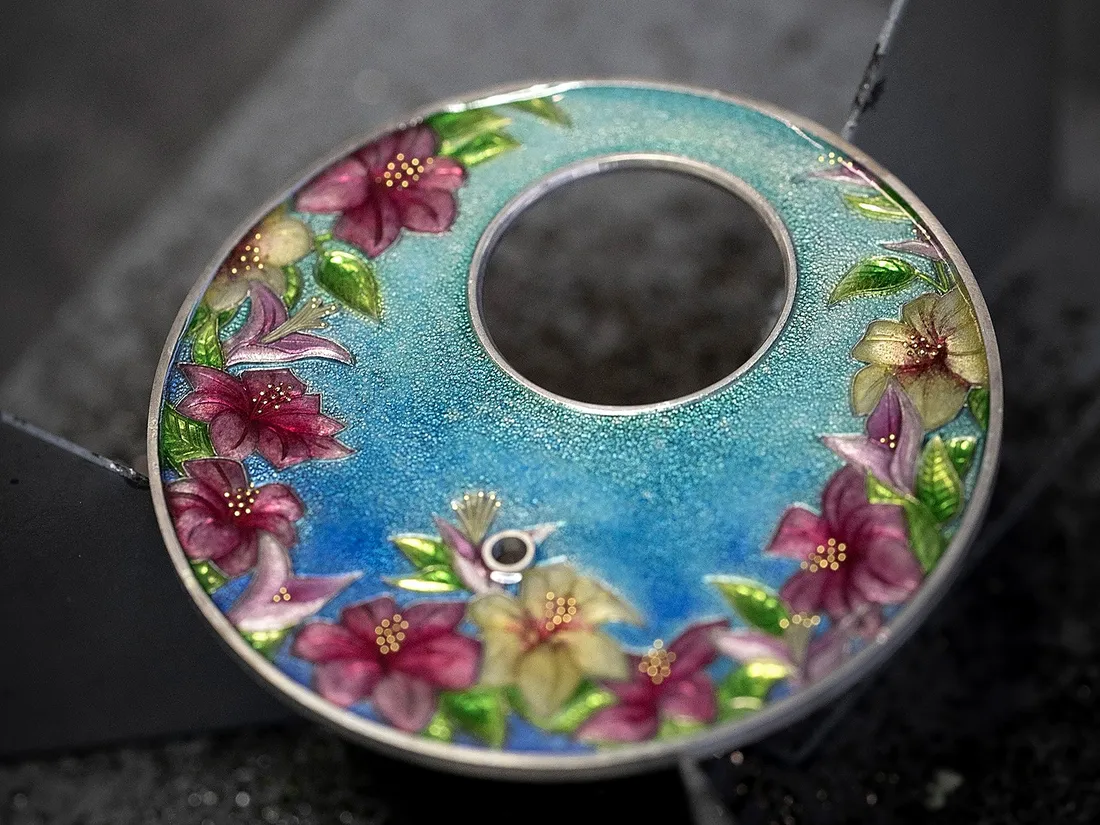
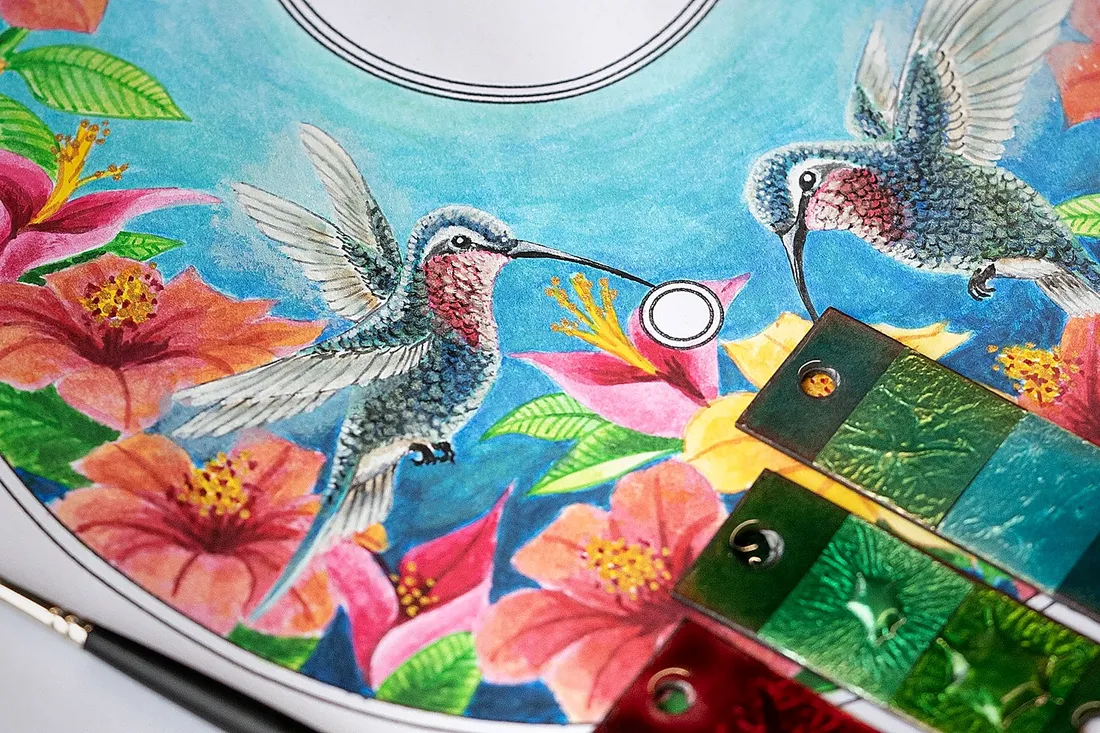
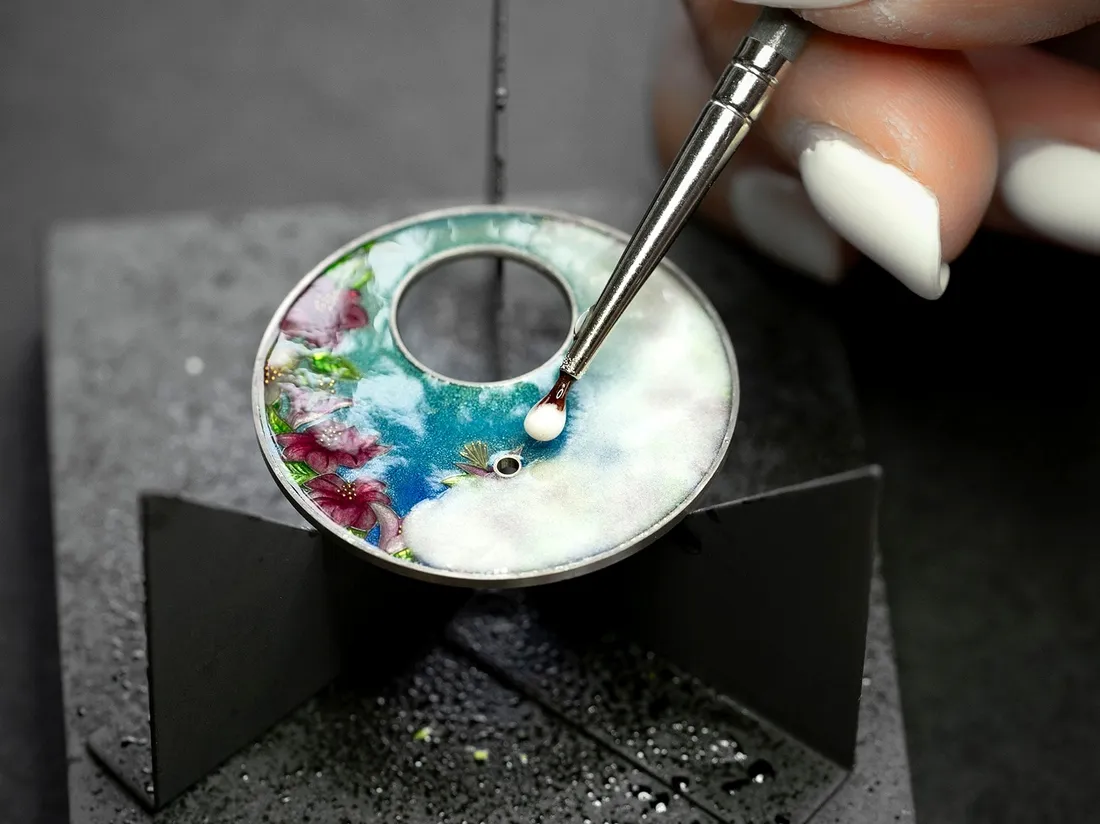
“The dial is 18-carat gold too, and entirely hand-worked. The flowers, the leaves and the birds are engraved first, then painted over in layers of enamel. Watch the transitions: in the flowers from red to a sunny yellow, on the birds’ wings through the subtlest variations of white, and in the sky from the navy at six o’clock to the brightness of the zenith at noon. Each colour is arrived at through more than one firing in the kiln, which is what grand feu means. And the work does not forgive: one minute too long in the kiln, or a few degrees too hot, and everything done up to that point is finished. The dial then has to be made again from scratch.”
“And those minute dots?”
“Pollen. Gold paillons, tiny cut discs of gold set in place. To decide that pollen grains on a dial should be made of a separate material is not finishing a job, it is being in love with one.”
“But the rhythmic pulse we were talking about a moment ago is beating on the dial as well!” said Elena, pointing at the opening towards twelve o’clock.
“Exactly,” said Thomas. “But what sits there is not an ordinary balance aperture. At twelve o’clock, at the point Jaquet Droz calls the very peak of high watchmaking, there is a tourbillon. Its cage and its bridge are made of translucent sapphire, which is why the turning organ looks as though it were suspended in the air. The tourbillon was patented in 1801, and by that date this house had long been founded and at work. So on this dial two ideas born two centuries apart stand side by side: the bird automaton of the 18th century and the balancing device of the early 19th.”
“Does it match the bird in rhythm as well?”
“It does not, and that is the beautiful part. That cage makes one full turn a minute. The bird’s heart goes up to twelve hundred. Which means the animal’s heart is many times faster than the most precise regulator a human being has built. Man is not trying to beat nature for speed here; he is trying to understand its order and repeat it at his own measure. The escapement is silicon as well, so it is untouched by magnetic fields and by changes in temperature, which is to say the seasons do not confuse this movement. Wound fully it runs for seven days, one of the highest figures there is for a watch carrying a tourbillon.”
“And behind it?”
“They did not give up there either. The oscillating weight that winds the movement is 18-carat gold as well, hand-engraved and painted in the colours of a hummingbird. So every time you move your arm, the bird at the back winds the bird at the front.”
Elena looked at the bills of the birds on the dial, reaching towards the flowers:
“The lock and key fit of art and mechanics.”
“And this is exactly why high watchmaking, beyond being a measurer of time, is an artistic respect paid to that great order in the universe,” Thomas completed.
In the misty cloud forest of Mindo, the two scientists watched with deep contemplation that immense order running from the light of the sun to the torque of a bird’s wing, and from there to the mechanical wheels on a wrist.
format_quote"High watchmaking, beyond being a measurer of time, is an artistic respect paid to that great order in the universe."
Hasan Bekmezci
The Craft and the Technical Detail
A unique piece: this watch is not a series but a single example made to a collector’s commission. It belongs to the Ateliers d’Art work with which Jaquet Droz carries on its nature-themed heritage.
Dial and enamel work: the dial is 18-carat gold and entirely hand-worked. The flowers, the leaves and the two birds are engraved first, then painted in layers of enamel, each layer fired separately. The transitions run from red to a sunny yellow in the flowers, through the subtlest whites on the wings, and in the sky from the navy at six o’clock towards the brightness of the zenith at noon. In the grand feu tradition every colour needs more than one firing, and a single mistake in the kiln means the dial has to be made again from the beginning.
The birds are not appliques: the two hummingbirds are not gold parts fixed to the dial but miniature paintings around a tenth of a millimetre thick. Because they are placed so as to cover the plant detail beneath them, they appear to rise off the ground.
Pollen in gold paillons: the pollen grains of the flowers are made from tiny cut discs of gold set in place.
A tourbillon at twelve: a tourbillon whose cage and bridge are made of translucent sapphire turns once a minute. The tourbillon was patented in 1801; Jaquet Droz had been founded and working long before that date.
Silicon escapement: resistant to magnetic fields and to changes in temperature, so shifts in season do not disturb the rate.
Seven days of power reserve: wound fully it runs for around 168 hours, among the highest figures for a movement carrying a tourbillon.
The oscillating weight: the mass that winds the movement is also 18-carat gold, hand-engraved and painted in the colours of a hummingbird.
Case: 39 mm, 18-carat red gold, richly worked.